Sketch2MinSurf: Vision-Language Guided Generation of Editable Minimal Surfaces from Hand-Drawn Sketches
Pith reviewed 2026-05-21 04:56 UTC · model grok-4.3
The pith
A hybrid vision-language framework generates editable 3D minimal surfaces from hand-drawn sketches using geometric optimization.
A machine-rendered reading of the paper's core claim, the machinery that carries it, and where it could break.
Core claim
Sketch2MinSurf is a hybrid vision-language and geometric optimization framework that integrates vision-language guidance with minimal-surface theory to generate smooth and editable 3D surfaces from hand-drawn sketches. The core of the approach is a spatial-topological encoding that represents geometry as tuples of node coordinates and real/virtual edge skeletons, enabling stable topological control during generation. The framework also introduces the Sketch2MinSurf Structural Loss, a reward-modulated objective that jointly constrains geometric reconstruction and topological coherence. This produces manifolds that are directly editable and free from non-manifold artifacts.
What carries the argument
The spatial-topological encoding that represents geometry as tuples of node coordinates and real/virtual edge skeletons to enable stable topological control during generation.
If this is right
- Generated surfaces integrate directly into design workflows without topology repair steps.
- Topological consistency is preserved across outputs, supporting reliable use in iterative modeling.
- Minimal-surface integration yields smooth results applicable to artistic and structural design tasks.
- The system enables creation of 3D forms for installations based on simple human sketches.
- Outputs avoid non-manifold issues that commonly disrupt downstream 3D processing.
Where Pith is reading between the lines
- The node-edge tuple representation could transfer to other 2D-to-3D tasks requiring strict topology, such as diagram-to-model conversion.
- Minimal-surface constraints might naturally produce forms with efficient material use when fabricated physically.
- Vision-language integration opens possibilities for text-refined adjustments during surface generation.
- Broader testing on varied sketch inputs could clarify generalization beyond the current evaluation set.
Load-bearing premise
The spatial-topological encoding enables stable topological control during generation and produces editable manifolds without non-manifold artifacts.
What would settle it
Loading the generated surfaces into a standard 3D modeling application and attempting direct edits to verify absence of artifacts or topology breaks, or evaluating the method on a new collection of sketches with known complex topologies to check consistency.
Figures


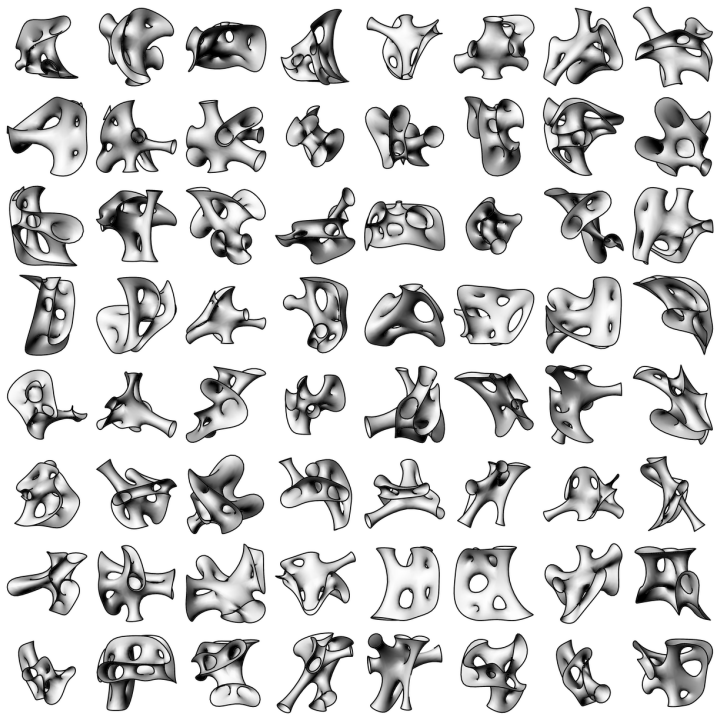


read the original abstract
Converting hand-drawn sketches into structured 3D geometries remains challenging due to the difficulty of representing non-Euclidean surfaces and maintaining topological consistency. Existing generative models such as GANs, NeRFs, and diffusion architectures often fail to produce editable manifolds directly usable in downstream design workflows. We present Sketch2MinSurf, a hybrid vision-language and geometric optimization framework that integrates vision-language guidance with minimal-surface theory to generate smooth and editable 3D surfaces from hand-drawn sketches. The core of our approach is a spatial-topological encoding that represents geometry as tuples of node coordinates and real/virtual edge skeletons, enabling stable topological control during generation. We further introduce the Sketch2MinSurf Structural Loss (S2MS-Loss), a reward-modulated objective that jointly constrains geometric reconstruction and topological coherence. On a test set of 100 sketches, Sketch2MinSurf achieves a topological similarity score of 0.844, outperforming existing sketch-to-shape baselines. The generated manifolds are directly editable and free from non-manifold artifacts. A public art installation at a university showcases the method's potential for human-intent-driven 3D form generation. The dataset and code are available at https://anonymous.4open.science/r/Sketch2MinSurf/.
Editorial analysis
A structured set of objections, weighed in public.
Referee Report
Summary. The paper presents Sketch2MinSurf, a hybrid vision-language and geometric optimization framework that converts hand-drawn sketches into smooth, editable 3D minimal surfaces. It introduces a spatial-topological encoding based on tuples of node coordinates and real/virtual edge skeletons for topological control, along with the reward-modulated S2MS-Loss for joint geometric reconstruction and coherence. On a test set of 100 sketches the method reports a topological similarity score of 0.844 that outperforms existing sketch-to-shape baselines; the outputs are claimed to be directly editable manifolds free of non-manifold artifacts, with a public art installation as demonstration.
Significance. If the outputs are verifiably minimal surfaces (zero mean curvature) that remain editable and artifact-free, the work would offer a useful bridge between vision-language models and classical differential geometry for sketch-driven design workflows. Public release of dataset and code strengthens reproducibility.
major comments (2)
- [Abstract] Abstract: the central performance claim (topological similarity 0.844 on 100 sketches, outperforming baselines) supplies no information on baseline methods, error bars, test-set construction, or validation procedures, leaving the quantitative superiority unsupported by visible evidence.
- [Method] Method overview / S2MS-Loss description: the manuscript asserts generation of minimal surfaces yet the S2MS-Loss is defined only as reward-modulated reconstruction plus coherence; no variational term minimizing surface area or driving mean curvature to zero is described, undermining the claim that the outputs lie in the minimal-surface class.
minor comments (1)
- [Abstract] The anonymous repository link should be replaced with a permanent identifier or additional reproducibility details once the review process allows.
Simulated Author's Rebuttal
We thank the referee for their constructive and insightful comments. We address each major comment below, indicating the revisions planned for the next version of the manuscript.
read point-by-point responses
-
Referee: [Abstract] Abstract: the central performance claim (topological similarity 0.844 on 100 sketches, outperforming baselines) supplies no information on baseline methods, error bars, test-set construction, or validation procedures, leaving the quantitative superiority unsupported by visible evidence.
Authors: We agree that the abstract, as a high-level summary, omits key experimental details. The manuscript provides this information in the Experiments section, specifying the baselines (GAN-based and diffusion-based sketch-to-shape methods), the construction of the 100-sketch test set drawn from diverse hand-drawn sources, and the topological similarity validation protocol. We will revise the abstract to briefly reference the outperforming baselines and evaluation on the 100-sketch test set. The reported score derives from a single deterministic run on the fixed test set; we will add a clarifying statement on this point. revision: yes
-
Referee: [Method] Method overview / S2MS-Loss description: the manuscript asserts generation of minimal surfaces yet the S2MS-Loss is defined only as reward-modulated reconstruction plus coherence; no variational term minimizing surface area or driving mean curvature to zero is described, undermining the claim that the outputs lie in the minimal-surface class.
Authors: The referee is correct that the S2MS-Loss is presented as a reward-modulated combination of reconstruction and coherence terms. The minimal-surface property is realized via the geometric optimization stage that applies minimal-surface theory to the spatial-topological encoding. We acknowledge that the manuscript does not explicitly describe the variational terms or mean-curvature minimization steps. We will revise the Method section to include a clear description of how the optimization enforces zero mean curvature, adding the relevant formulation or projection steps. revision: yes
Circularity Check
No significant circularity detected in derivation chain
full rationale
The paper introduces a spatial-topological encoding and S2MS-Loss as independent components within a hybrid vision-language and geometric optimization framework. The topological similarity score of 0.844 is presented as an empirical evaluation on a held-out test set of 100 sketches rather than a quantity derived tautologically from the model definition or loss formulation. No load-bearing step reduces the claim of producing minimal surfaces or editable manifolds to a self-definition, a fitted parameter renamed as prediction, or a self-citation chain. The derivation remains self-contained with external content from the proposed encoding, loss, and reported metrics.
Axiom & Free-Parameter Ledger
Reference graph
Works this paper leans on
-
[1]
S. Andersson, S.T. Hyde, K. Larsson, and S. Lidin. Minimal surfaces and structures: from inorganic and metal crystals to cell membranes and biopolymers.Chemical Reviews, 88(1):221–242, 1988
work page 1988
-
[2]
K.E. Asmar and H. Sareen. Machinic interpolations: A gan pipeline for integrating lateral thinking in computational tools of architecture. InCongreso SIGraDi, pages 60–66, São Paulo, 2020. Blucher
work page 2020
-
[3]
J. Bai, S. Bai, S. Yang, S. Wang, S. Tan, P. Wang, et al. Qwen-vl: A versatile vision-language model for understanding, localization, text reading, and beyond.arXiv preprint arXiv:2308.12966, 2023
work page internal anchor Pith review Pith/arXiv arXiv 2023
-
[4]
S. Bai, K. Chen, X. Liu, J. Wang, W. Ge, S. Song, et al. Qwen2.5-vl technical report.arXiv preprint arXiv:2502.13923, 2025
work page internal anchor Pith review Pith/arXiv arXiv 2025
-
[5]
B. Chen, Z. Xu, S. Kirmani, B. Ichter, D. Sadigh, L. Guibas, et al. Spatialvlm: Endowing vision-language models with spatial reasoning capabilities. InIEEE/CVF Conference on Computer Vision and Pattern Recognition (CVPR), pages 14455–14465, 2024
work page 2024
-
[6]
C. Chen, M. Poppe, S. Poppe, C. Tschierske, and F. Liu. Liquid organic frameworks: A liquid crystalline 8-connected network with body-centered cubic symmetry.Angewandte Chemie, 132:21006–21011, 2020
work page 2020
- [7]
-
[8]
Y .-C. Cheng, H.-Y . Lee, S. Tulyakov, A. Schwing, and L. Gui. Sdfusion: Multimodal 3d shape completion, reconstruction, and generation. InIEEE/CVF Conference on Computer Vision and Pattern Recognition (CVPR), pages 4456–4465, 2023
work page 2023
-
[9]
J. Douglas. Minimal surfaces of higher topological structure.Annals of Mathematics, 40:205–298, 1939
work page 1939
-
[10]
A. Fogden and S.T. Hyde. Continuous transformations of cubic minimal surfaces.European Physical Journal B: Condensed Matter and Complex Systems, 7(1):91–104, 1999
work page 1999
-
[11]
I. Goodfellow, J. Pouget-Abadie, M. Mirza, B. Xu, D. Warde-Farley, S. Ozair, et al. Generative adversarial networks.Communications of the ACM, 63(11):139–144, 2020
work page 2020
-
[12]
D. Han, M. Han, and Unsloth team. Unsloth, 2023
work page 2023
-
[13]
J. Ho, A. Jain, and P. Abbeel. Denoising diffusion probabilistic models. InAdvances in Neural Information Processing Systems (NeurIPS), pages 6840–6851, 2020
work page 2020
-
[14]
S.C. Kapfer, S.T. Hyde, K. Mecke, C.H. Arns, and G.E. Schröder-Turk. Minimal surface scaffold designs for tissue engineering.Biomaterials, 32(29):6875–6882, 2011
work page 2011
- [15]
-
[16]
S. Kim, D. Kim, and S. Choi. Citycraft: 3d virtual city creation from a single image.The Visual Computer, 36:911–924, 2020
work page 2020
-
[17]
A. Kirillov, E. Mintun, N. Ravi, H. Mao, C. Rolland, L. Gustafson, et al. Segment anything. InIEEE/CVF International Conference on Computer Vision (ICCV), pages 4015–4026, 2023. 10
work page 2023
-
[18]
J. Li, D. Li, S. Savarese, and S. Hoi. Blip-2: Bootstrapping language-image pre-training with frozen image encoders and large language models. InProceedings of the International Conference on Machine Learning (ICML), pages 19730–19742, 2023
work page 2023
-
[19]
C.H. Lin, C. Kong, and S. Lucey. Learning efficient point cloud generation for dense 3d object reconstruc- tion. InAAAI Conference on Artificial Intelligence (AAAI), pages 7114–7121, 2018
work page 2018
- [20]
- [21]
-
[22]
Chenyang Ma, Kai Lu, Ta-Ying Cheng, Niki Trigoni, and Andrew Markham. Spatialpin: Enhancing spatial reasoning capabilities of vision-language models through prompting and interacting 3d priors. InAdvances in Neural Information Processing Systems, pages 68803–68832, 2024
work page 2024
-
[23]
L. Melas-Kyriazi, I. Laina, C. Rupprecht, and A. Vedaldi. Realfusion: 360° reconstruction of any object from a single image. InIEEE/CVF Conference on Computer Vision and Pattern Recognition (CVPR), pages 8446–8455, 2023
work page 2023
-
[24]
B. Mildenhall, P.P. Srinivasan, M. Tancik, J.T. Barron, R. Ramamoorthi, and R. Ng. Nerf: Representing scenes as neural radiance fields for view synthesis.Communications of the ACM, 65(1):99–106, 2021
work page 2021
- [25]
-
[26]
Point-E: A System for Generating 3D Point Clouds from Complex Prompts
A. Nichol, H. Jun, P. Dhariwal, P. Mishkin, and M. Chen. Point-e: A system for generating 3d point clouds from complex prompts.arXiv preprint arXiv:2212.08751, 2022
work page internal anchor Pith review Pith/arXiv arXiv 2022
-
[27]
T. Oka. Transformation between inverse bicontinuous cubic phases of a lipid from diamond to primitive. Langmuir, 31:3180–3185, 2015
work page 2015
-
[28]
OpenAI, J. Achiam, S. Adler, S. Agarwal, L. Ahmad, I. Akkaya, et al. Gpt-4 technical report.arXiv preprint arXiv:2303.08774, 2023
work page internal anchor Pith review Pith/arXiv arXiv 2023
- [29]
-
[30]
L. Piegl and W. Tiller.The NURBS Book. Springer Science & Business Media, 2012
work page 2012
-
[31]
A. Radford, J.W. Kim, C. Hallacy, A. Ramesh, G. Goh, S. Agarwal, et al. Learning transferable visual models from natural language supervision. InProceedings of the International Conference on Machine Learning (ICML), pages 8748–8763, 2021
work page 2021
-
[32]
J.-F. Sadoc and J. Charvolin. Infinite periodic minimal surfaces and their crystallography in the hyperbolic plane.Foundations of Crystallography, 45:10–20, 1989
work page 1989
-
[33]
R. Shi, H. Chen, Z. Zhang, M. Liu, C. Xu, X. Wei, et al. Zero123++: A single image to consistent multi-view diffusion base model.arXiv preprint arXiv:2310.15110, 2023
work page internal anchor Pith review Pith/arXiv arXiv 2023
-
[34]
F. Sun, W. Liu, S. Gu, D. Lim, G. Bhat, F. Tombari, et al. Layoutvlm: Differentiable optimization of 3d layout via vision-language models. InIEEE/CVF Conference on Computer Vision and Pattern Recognition (CVPR), pages 29469–29478, 2025
work page 2025
-
[35]
S. Szymanowicz, C. Rupprecht, and A. Vedaldi. Viewset diffusion: (0-)image-conditioned 3d generative models from 2d data. InIEEE/CVF International Conference on Computer Vision (ICCV), pages 8863– 8873, 2023
work page 2023
-
[36]
A. Tono, H. Huang, A. Agrawal, and M. Fischer. Vitruvio: Conditional variational autoencoder to generate building meshes via single perspective sketches.Automation in Construction, 166:105498, 2024
work page 2024
-
[37]
P. Wang, S. Bai, S. Tan, S. Wang, Z. Fan, J. Bai, et al. Qwen2-vl: Enhancing vision-language model’s perception of the world at any resolution.arXiv preprint arXiv:2409.12191, 2024
work page internal anchor Pith review Pith/arXiv arXiv 2024
-
[38]
Y . Wang. Computing minkowski sum of periodic surface models.Computer-Aided Design and Applications, 6:825–837, 2009. 11
work page 2009
-
[39]
Y . Wei, G. V osselman, and M.Y . Yang. Buildiff: 3d building shape generation using single-image conditional point cloud diffusion models. InIEEE/CVF International Conference on Computer Vision Workshops (ICCVW), pages 2902–2911, 2023
work page 2023
-
[40]
Unique3d: High-quality and efficient 3d mesh generation from a single image
Kailu Wu, Fangfu Liu, Zhihan Cai, Runjie Yan, Hanyang Wang, Yating Hu, Yueqi Duan, and Kaisheng Ma. Unique3d: High-quality and efficient 3d mesh generation from a single image. InAdvances in Neural Information Processing Systems, pages 125116–125141, 2024
work page 2024
-
[41]
Direct3d: Scalable image-to-3d generation via 3d latent diffusion transformer
Shuang Wu, Youtian Lin, Feihu Zhang, Yifei Zeng, Jingxi Xu, Philip Torr, Xun Cao, and Yao Yao. Direct3d: Scalable image-to-3d generation via 3d latent diffusion transformer. InAdvances in Neural Information Processing Systems, pages 121859–121881, 2024
work page 2024
- [42]
-
[43]
G. Yang, X. Huang, Z. Hao, M.Y . Liu, S. Belongie, and B. Hariharan. Pointflow: 3d point cloud generation with continuous normalizing flows. InIEEE/CVF International Conference on Computer Vision (ICCV), pages 4541–4550, 2019
work page 2019
-
[44]
LlamaFactory: Unified Efficient Fine-Tuning of 100+ Language Models
Y . Zheng, R. Zhang, J. Zhang, Y . Ye, Z. Luo, Z. Feng, et al. Llamafactory: Unified efficient fine-tuning of 100+ language models.arXiv preprint arXiv:2403.13372, 2024. 12 A Extended Related Work Overall, prior research has advanced image-to-3D reconstruction, multimodal spatial reasoning, and minimal-surface generation across three complementary directi...
work page internal anchor Pith review Pith/arXiv arXiv 2024
discussion (0)
Sign in with ORCID, Apple, or X to comment. Anyone can read and Pith papers without signing in.