pith. sign in

arxiv: 2211.11776 · v1 · submitted 2022-11-21 · ❄️ cond-mat.mtrl-sci

Catalogue of topological phonon materials

Pith reviewed 2026-05-24 10:43 UTC · model grok-4.3

classification ❄️ cond-mat.mtrl-sci
keywords topological phononsphonon band topologytopological quantum chemistryphonon databasesurface phonon modesreal space invariantscrystalline materialsband representations
0
0 comments X

The pith

The first catalogue classifies topological phonon bands across more than ten thousand materials and flags over one thousand ideal cases.

A machine-rendered reading of the paper's core claim, the machinery that carries it, and where it could break.

This paper adapts the symmetry-based classification tools of topological quantum chemistry from electrons to phonons. It processes existing phonon databases to compute band representations, compatibility relations, and topologies for every isolated set of phonon bands in more than ten thousand three-dimensional crystals. Trivial bands are further sorted into atomic or obstructed atomic types using real-space invariants, and surface dispersions are calculated on multiple cleavage planes. The central output is a public Topological Phonon Database together with a shortlist of more than one thousand ideal non-trivial materials chosen to guide experiments. If the classification holds, researchers gain a systematic way to search for phonon-mediated effects in heat transport, neutron scattering, and superconductivity.

Core claim

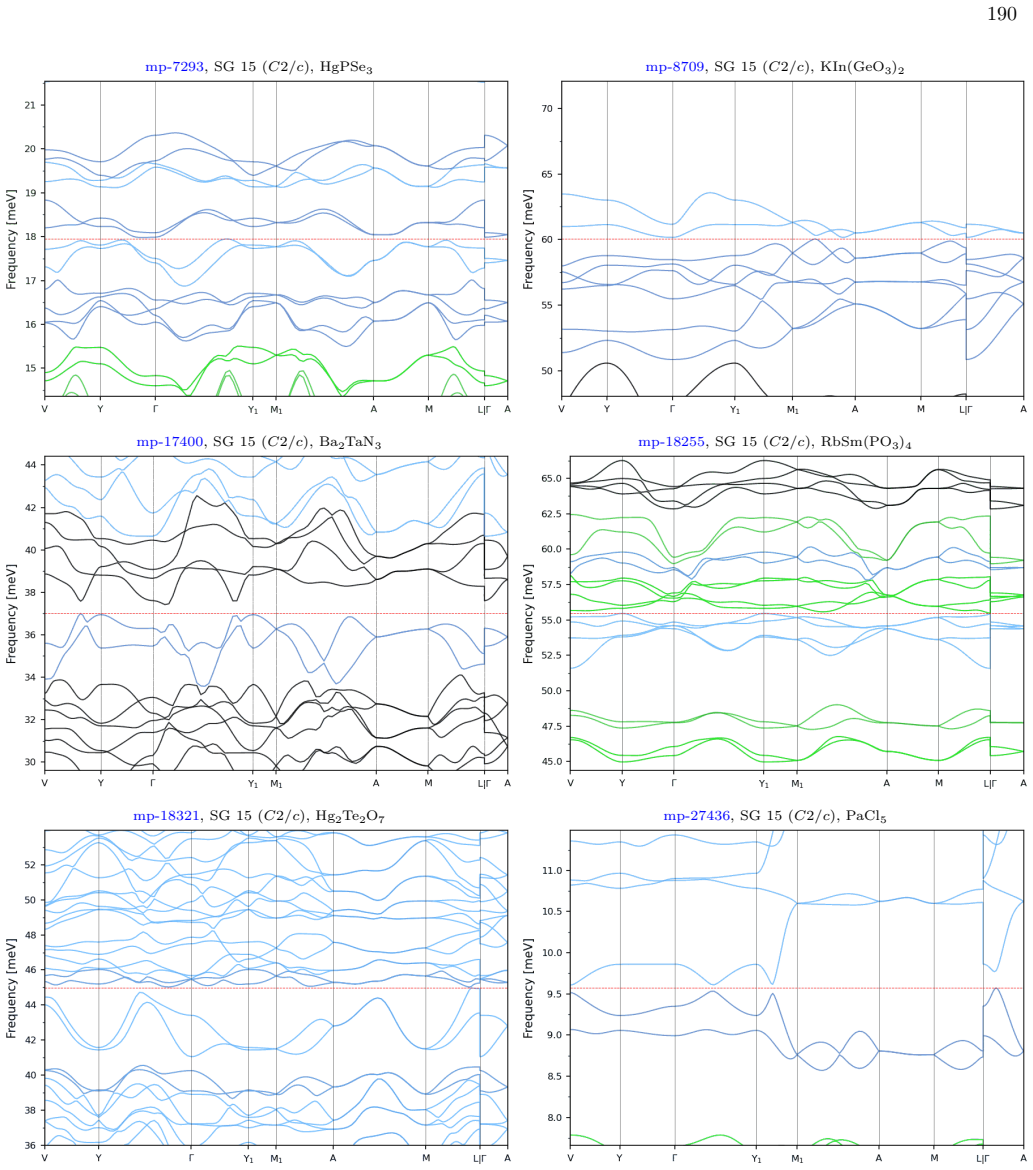
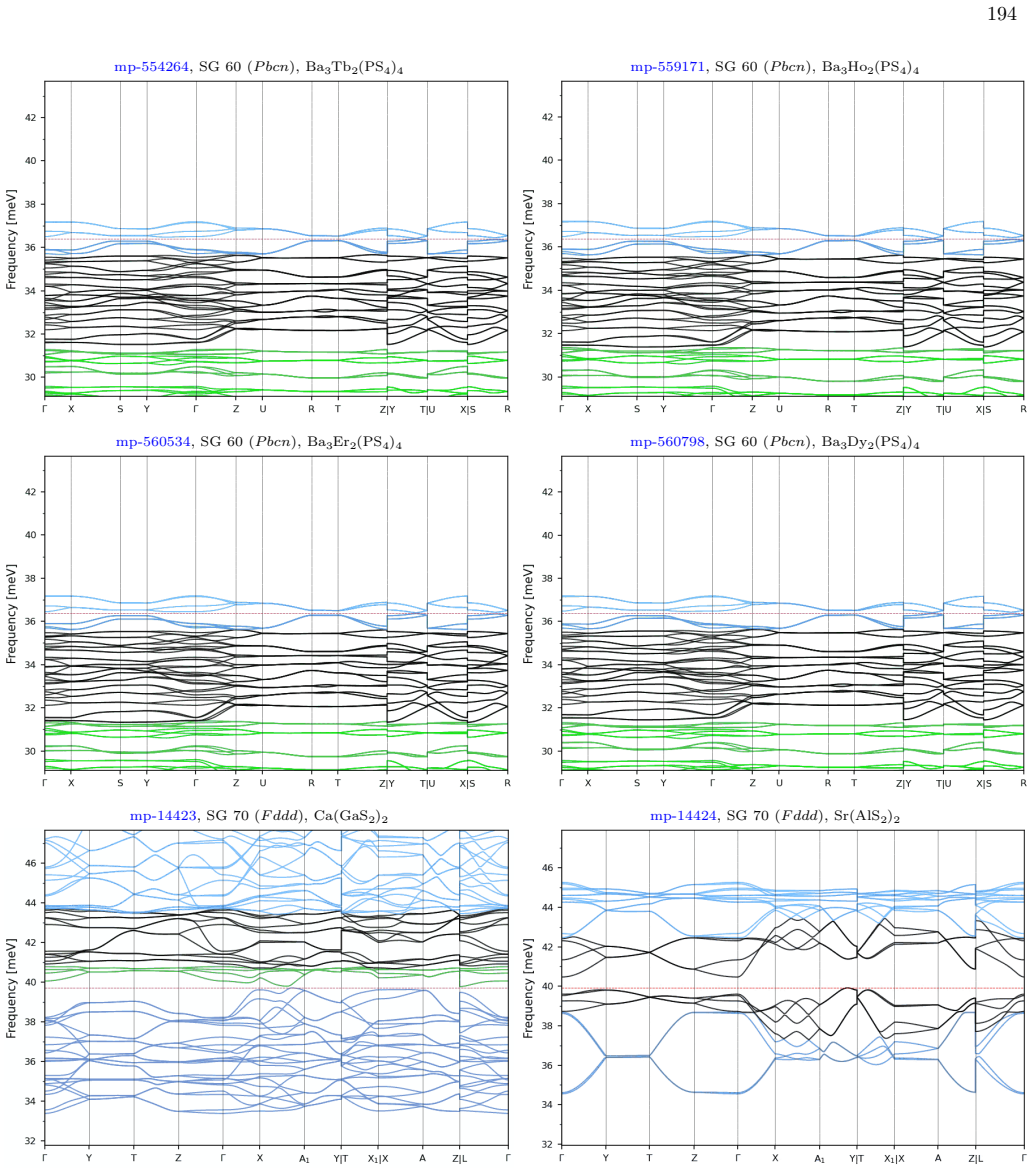
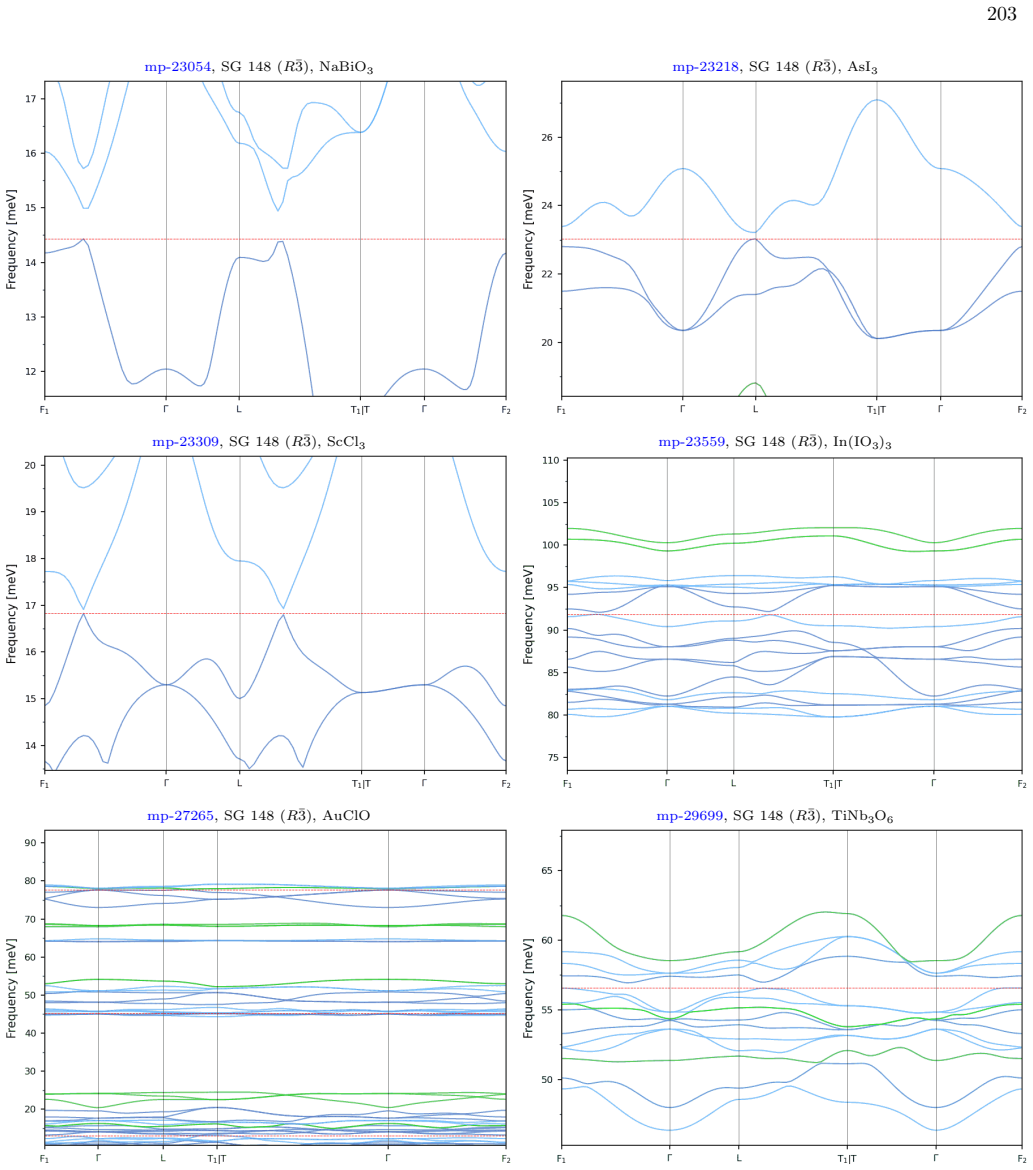
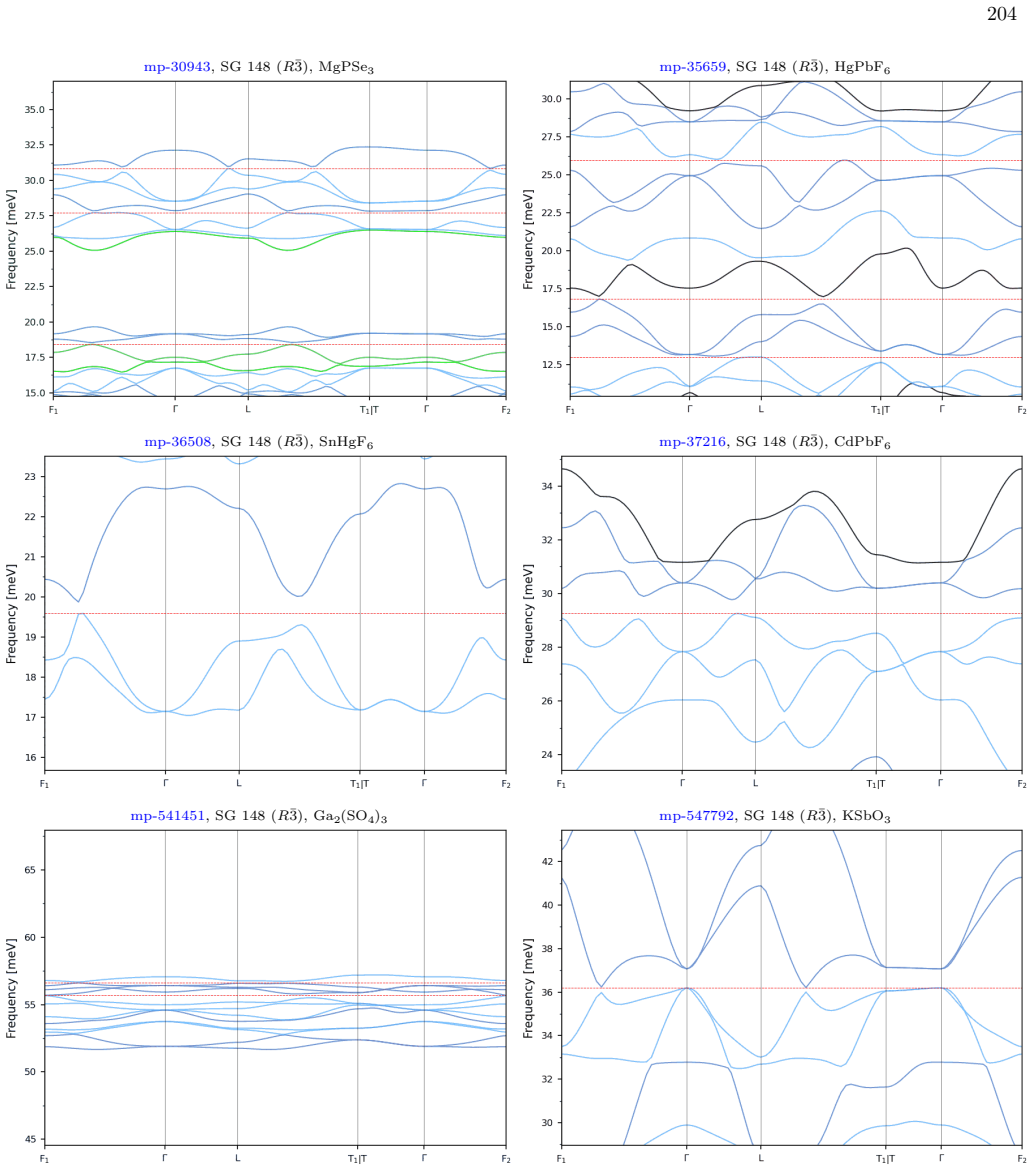
Using topological quantum chemistry on phonon databases, we catalogue the band representations, compatibility relations, and topologies of phonon bands for more than ten thousand three-dimensional crystalline materials, classify all trivial bands via real space invariants, compute surface phonon modes on different planes, and select more than one thousand ideal non-trivial materials while releasing a Topological Phonon Database.

What carries the argument

Adaptation of topological quantum chemistry to phonons: symmetry eigenvalues of harmonic phonon eigenvectors determine band representations and topology in the same manner as for electronic bands.

If this is right

  • Surface phonon spectra are now tabulated for thousands of materials on multiple cleavage planes.
  • Experimental groups can focus first on the shortlist of one thousand ideal materials rather than screening at random.
  • The released database supplies a searchable resource for linking specific phonon topologies to measurable thermal or scattering signatures.
  • Obstructed atomic phonon bands can be examined for possible real-space localization effects.

Where Pith is reading between the lines

These are editorial extensions of the paper, not claims the author makes directly.

  • Topological phonon bands could couple to electronic states in hybrid systems and alter superconducting transition temperatures in ways not captured by the present harmonic analysis.
  • Extending the same symmetry pipeline to anharmonic phonon calculations would test how robust the present classifications remain under realistic temperature conditions.
  • The catalogue supplies a ready test set for machine-learning models that predict phonon topology directly from crystal structure.

Load-bearing premise

Harmonic phonon eigenvectors stored in existing databases are accurate enough that their symmetry properties determine the correct topological classification without anharmonic corrections or computational errors changing the result.

What would settle it

High-resolution inelastic neutron scattering or X-ray measurements on one of the catalogued materials that reveal a phonon band gap closing or reopening inconsistent with the predicted symmetry eigenvalues or topological invariant.

Figures

Figures reproduced from arXiv: 2211.11776 by B. Andrei Bernevig, Da-Shuai Ma, Juan L. Ma\~nes, Luis Elcoro, M. G. Vergniory, Nicolas Regnault, Yuanfeng Xu, Zhi-Da Song.

Figure 1
Figure 1. Figure 1: FIG. 1. Workflow scheme of the construction of the [PITH_FULL_IMAGE:figures/full_fig_p003_1.png] view at source ↗
Figure 2
Figure 2. Figure 2: FIG. 2. Statistics of non-trivial phonon band sets for the phonon materials from [PITH_FULL_IMAGE:figures/full_fig_p005_2.png] view at source ↗
Figure 3
Figure 3. Figure 3: FIG. 3. Phonon band dispersion of our relation of six prototypical materials. (a)Al [PITH_FULL_IMAGE:figures/full_fig_p006_3.png] view at source ↗
Figure 4
Figure 4. Figure 4: FIG. 4. Surface state calculations for three prototypical topological phonon materials. (a-b)Surface state calculation for [PITH_FULL_IMAGE:figures/full_fig_p008_4.png] view at source ↗
Figure 5
Figure 5. Figure 5: FIG. 5. (a) Phonon band dispersion in an energy window around the topological band gap between the bands of indices 18 [PITH_FULL_IMAGE:figures/full_fig_p022_5.png] view at source ↗
Figure 6
Figure 6. Figure 6: FIG. 6. (a) Phonon band dispersion around the topological band gaps at [PITH_FULL_IMAGE:figures/full_fig_p024_6.png] view at source ↗
Figure 7
Figure 7. Figure 7: FIG. 7. (a) Phonon band dispersion around the topological band gaps. (b) Distribution of the 3 pairs of topological nodal rings [PITH_FULL_IMAGE:figures/full_fig_p025_7.png] view at source ↗
Figure 8
Figure 8. Figure 8: FIG. 8. Band structure and symmetry analysis of the symmetry-enforced band crossings for the six prototypical phonon [PITH_FULL_IMAGE:figures/full_fig_p026_8.png] view at source ↗
Figure 9
Figure 9. Figure 9: FIG. 9. Phonon band spectrum and Wilson loop spectrum of the fragile phonon bands in HfIN. (a) The band dispersion [PITH_FULL_IMAGE:figures/full_fig_p027_9.png] view at source ↗
Figure 10
Figure 10. Figure 10: FIG. 10. The two search modes of the [PITH_FULL_IMAGE:figures/full_fig_p028_10.png] view at source ↗
Figure 11
Figure 11. Figure 11: FIG. 11. Information for each compound as provided on the [PITH_FULL_IMAGE:figures/full_fig_p029_11.png] view at source ↗
Figure 12
Figure 12. Figure 12: FIG. 12. The detail results provided for each type of data set, without or with NAC for a compound on the [PITH_FULL_IMAGE:figures/full_fig_p030_12.png] view at source ↗
Figure 13
Figure 13. Figure 13: FIG. 13. Six materials from the Kyoto database exemplifying the different types of negativities in a phonon spectrum. [PITH_FULL_IMAGE:figures/full_fig_p031_13.png] view at source ↗
Figure 14
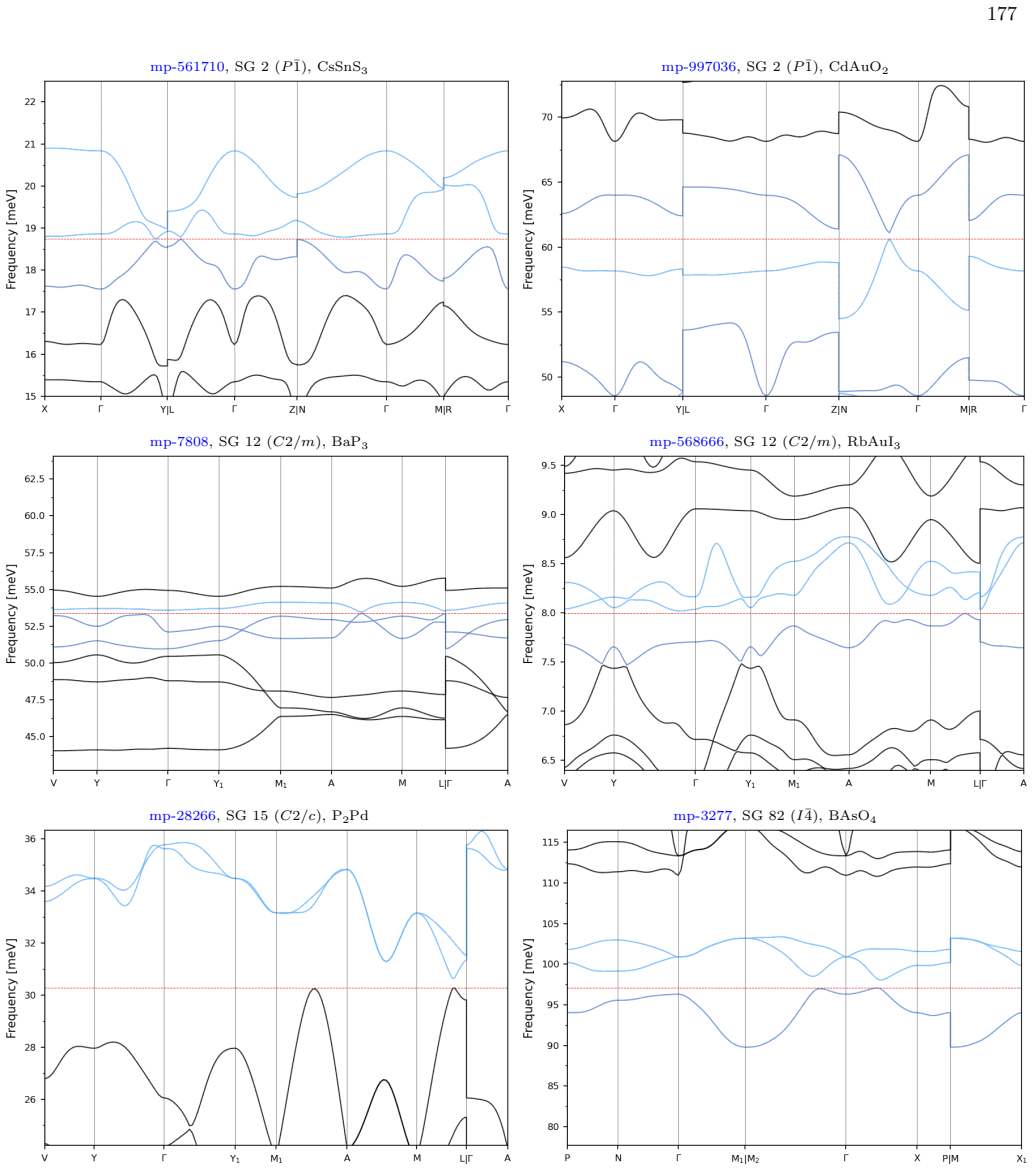
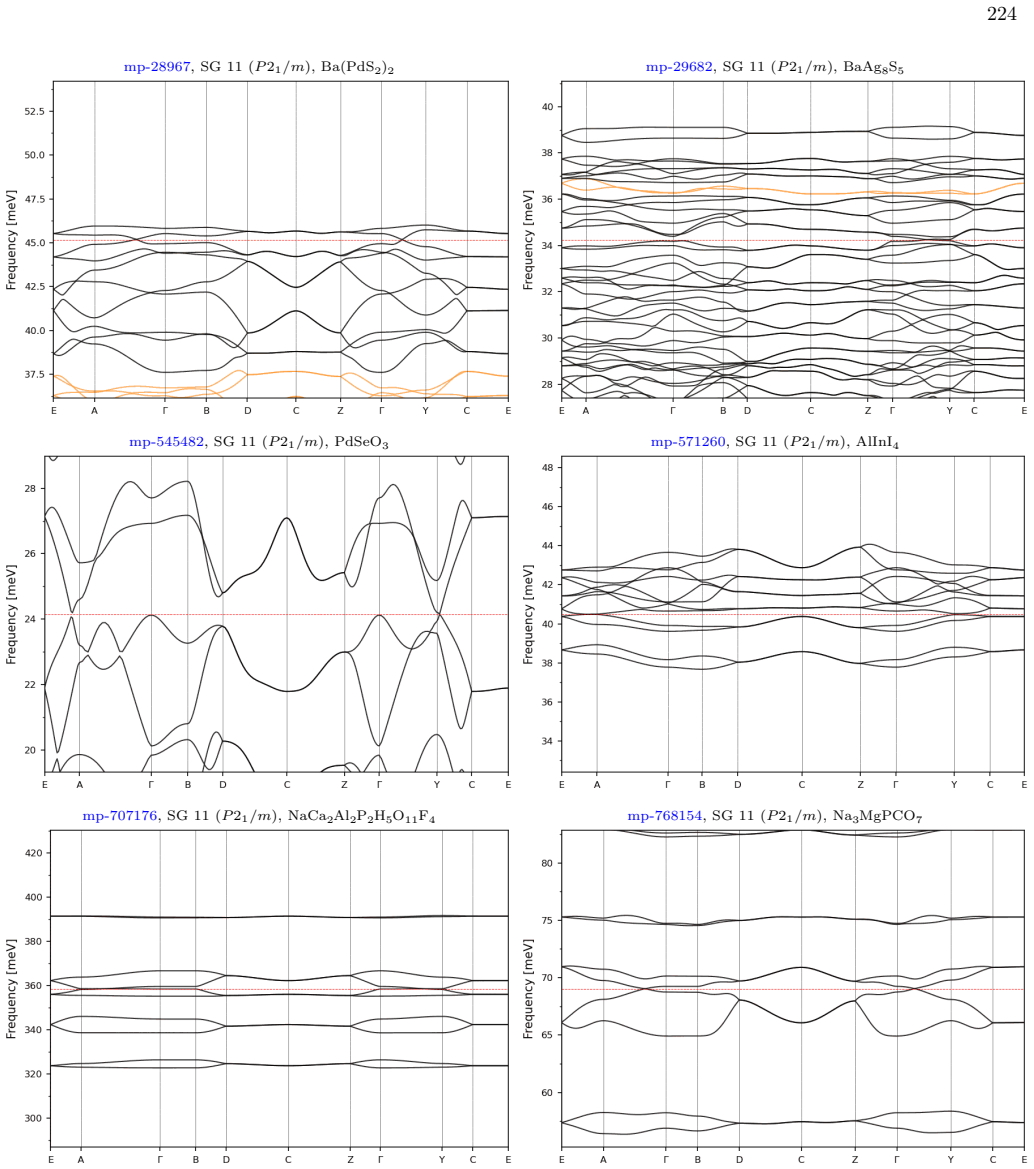
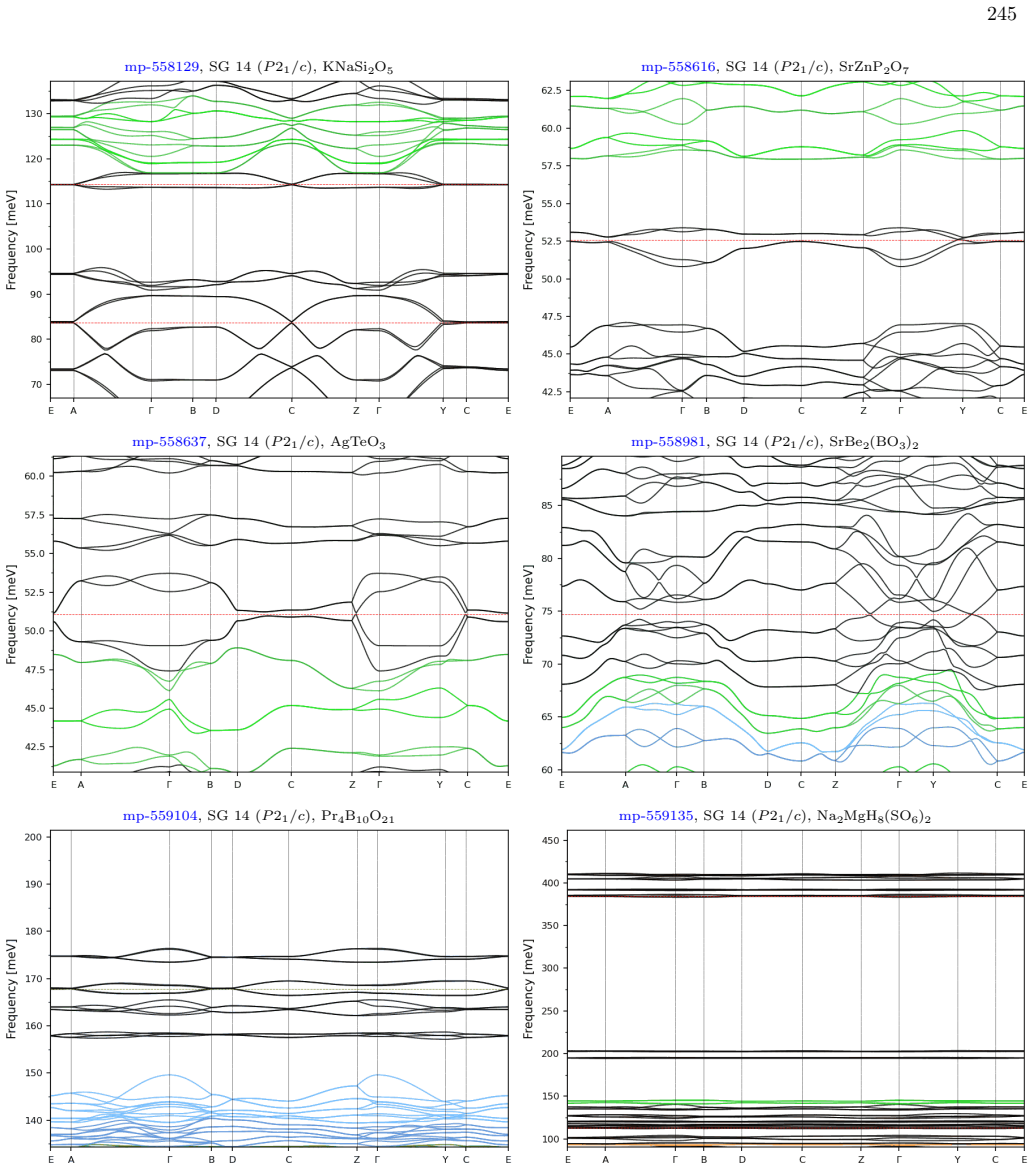
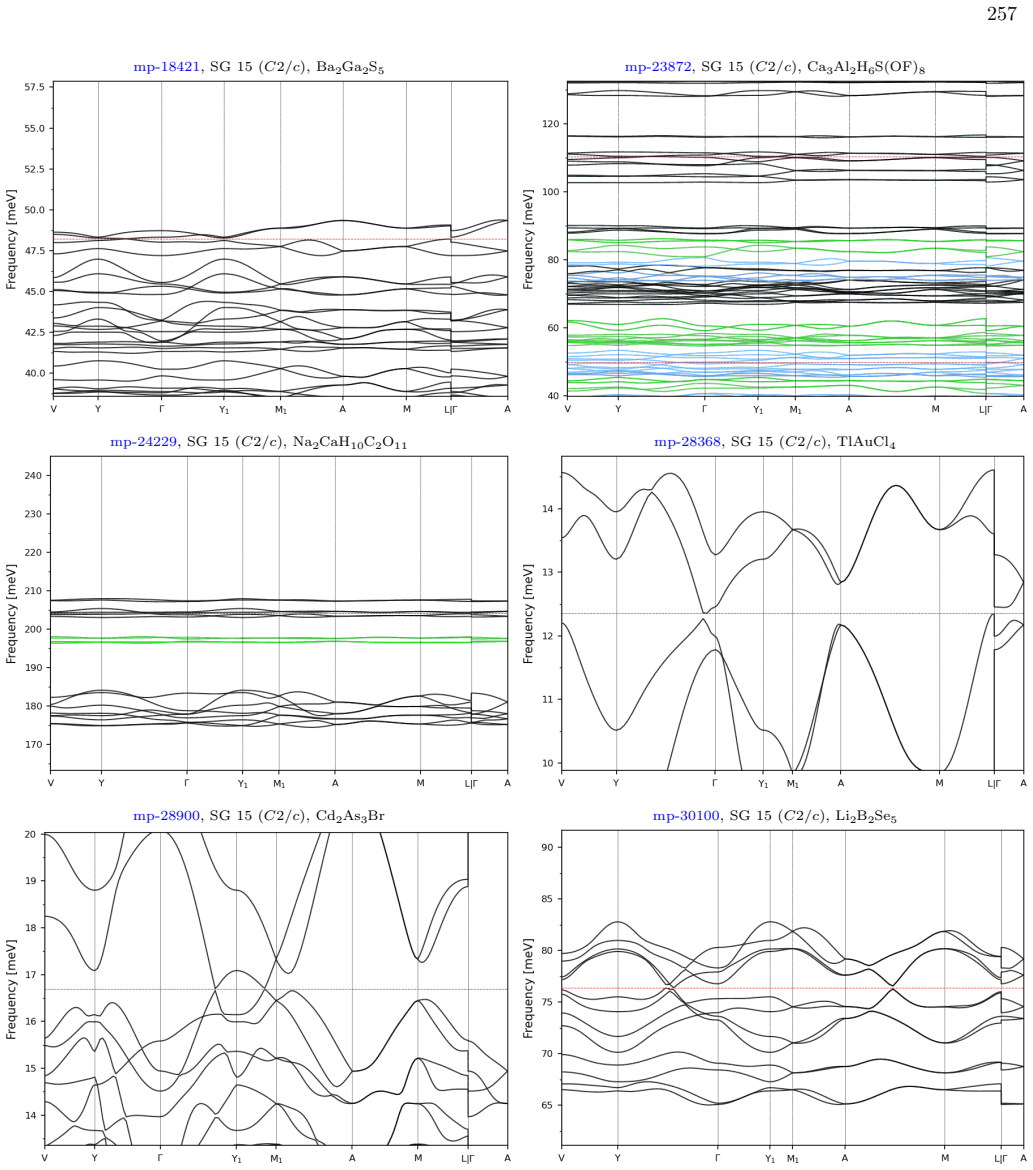
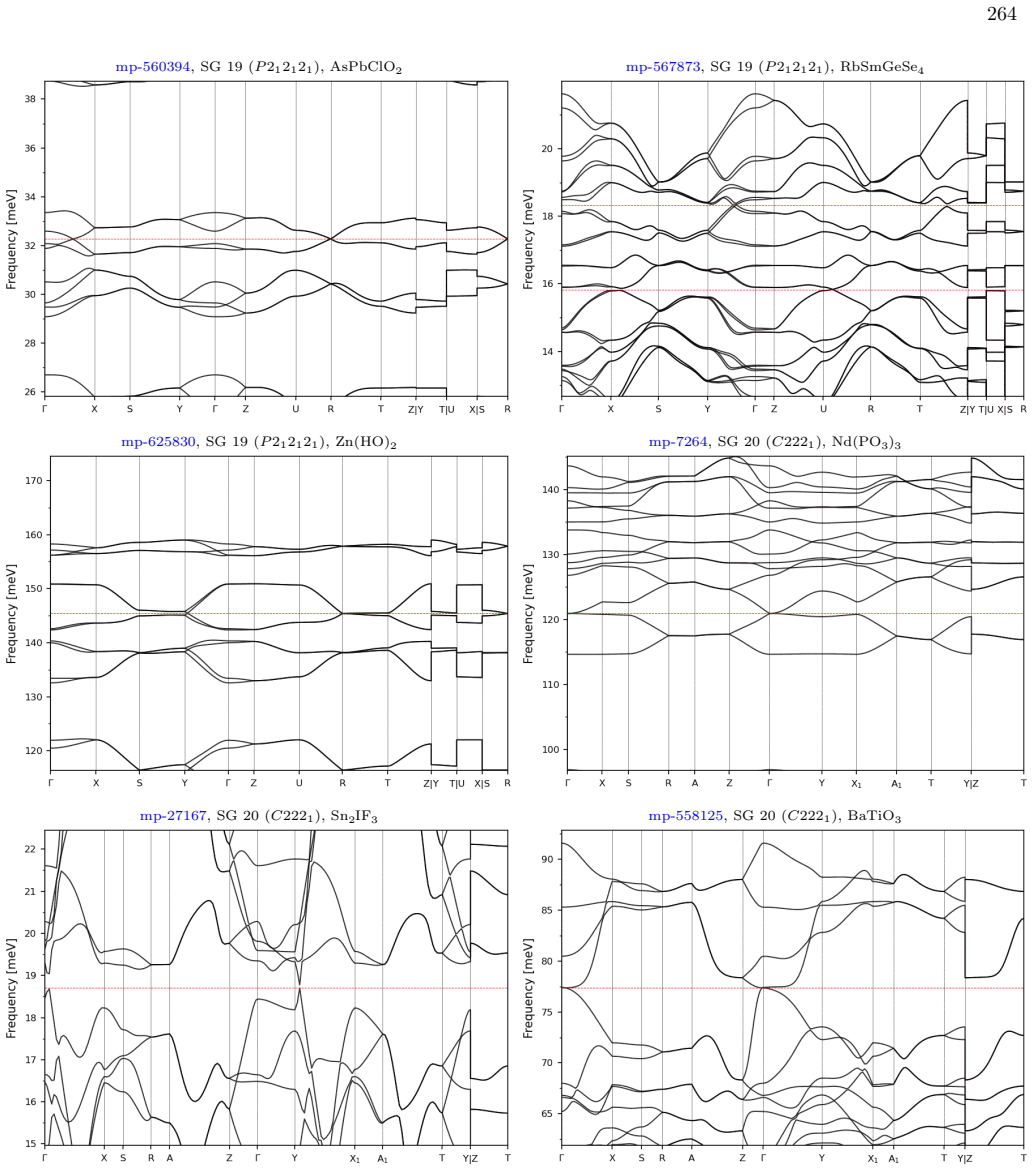
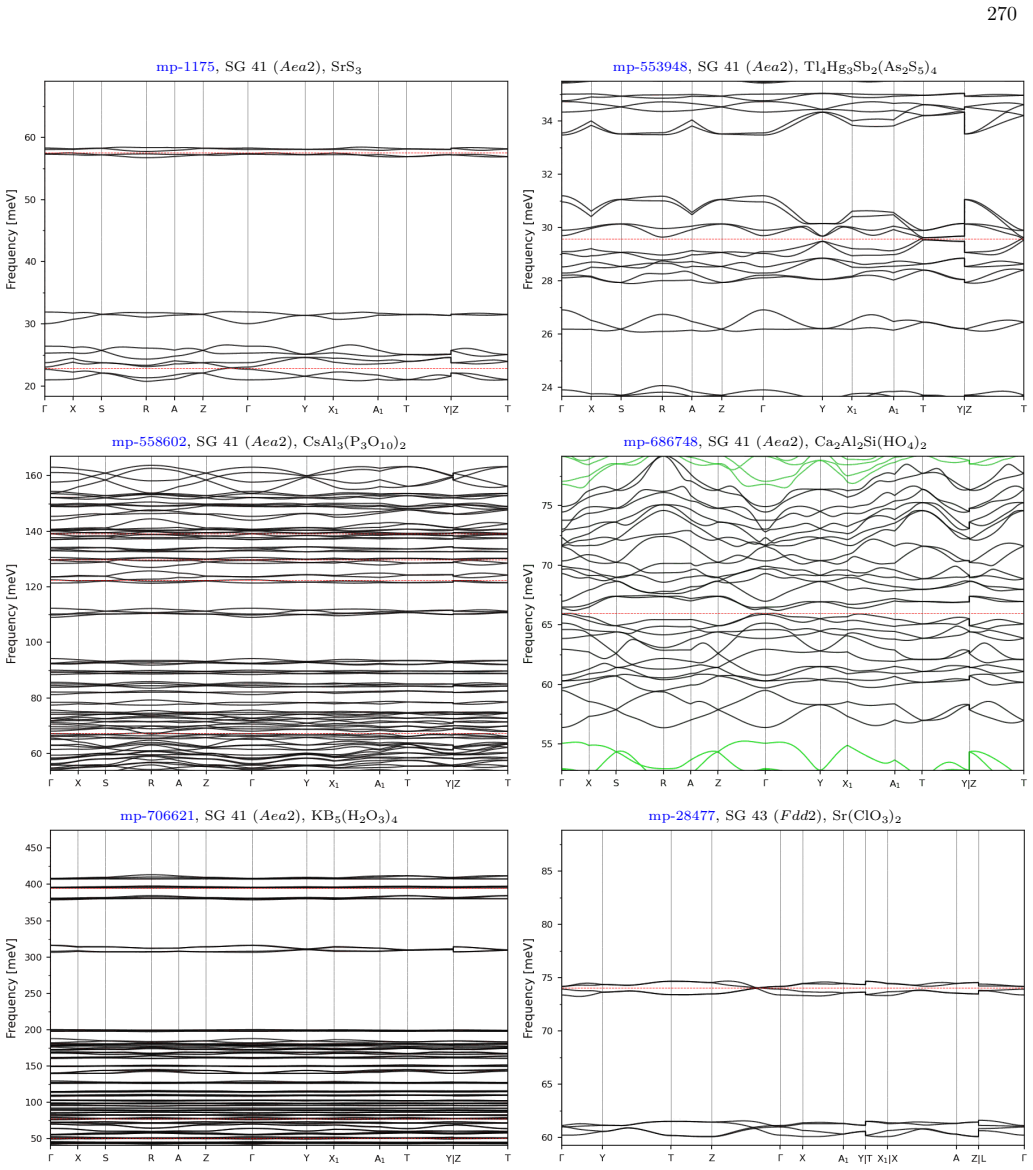
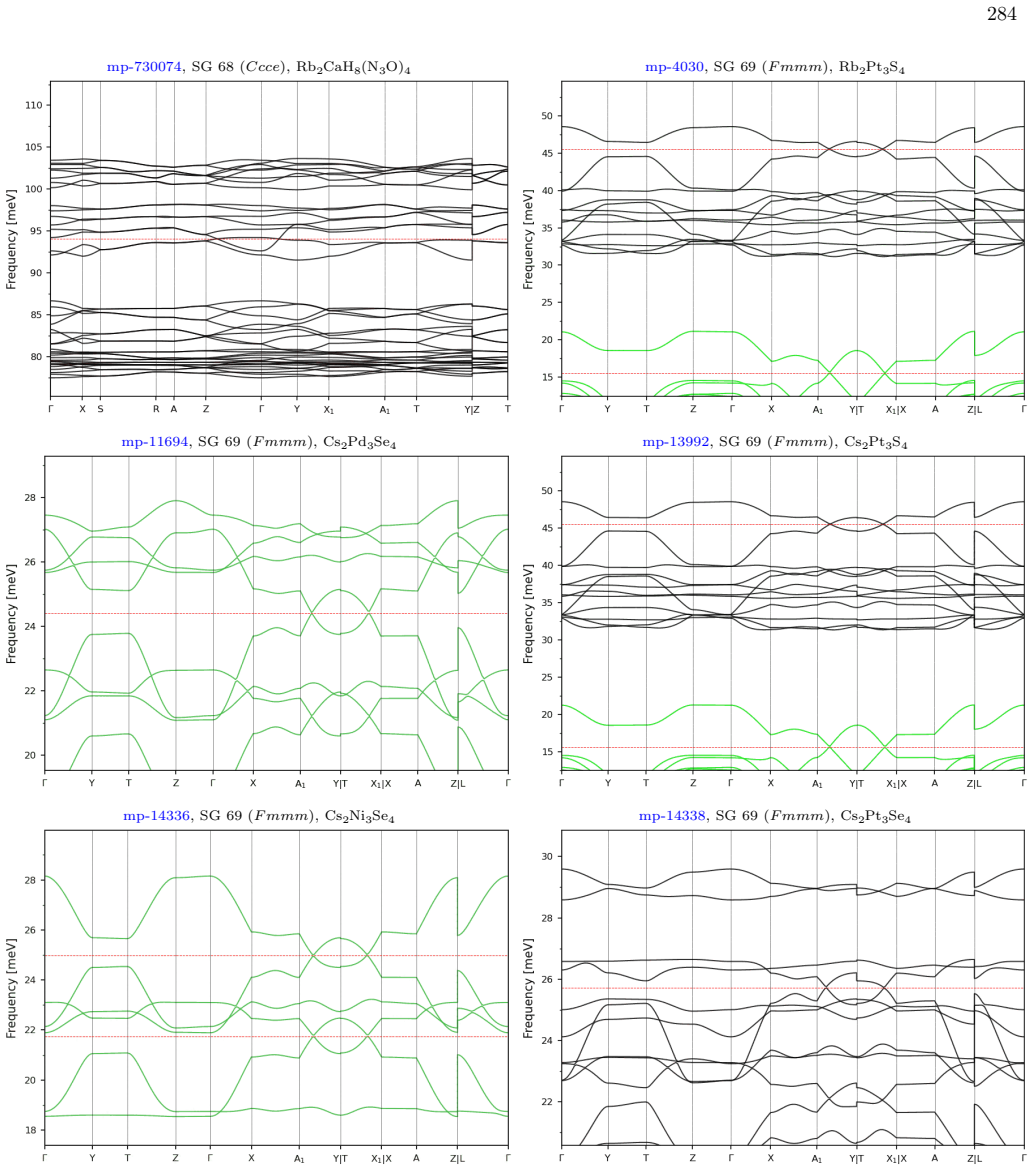
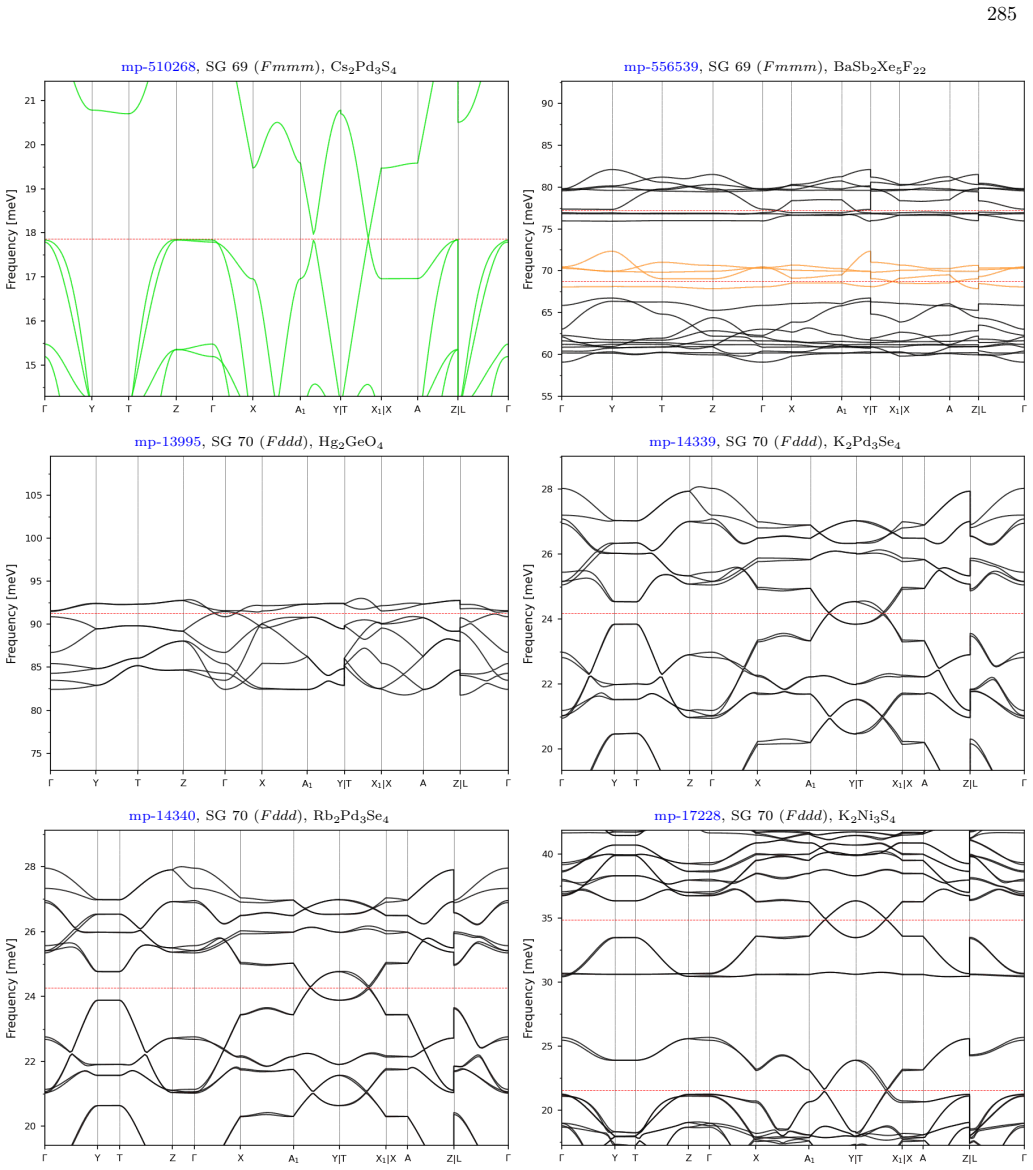
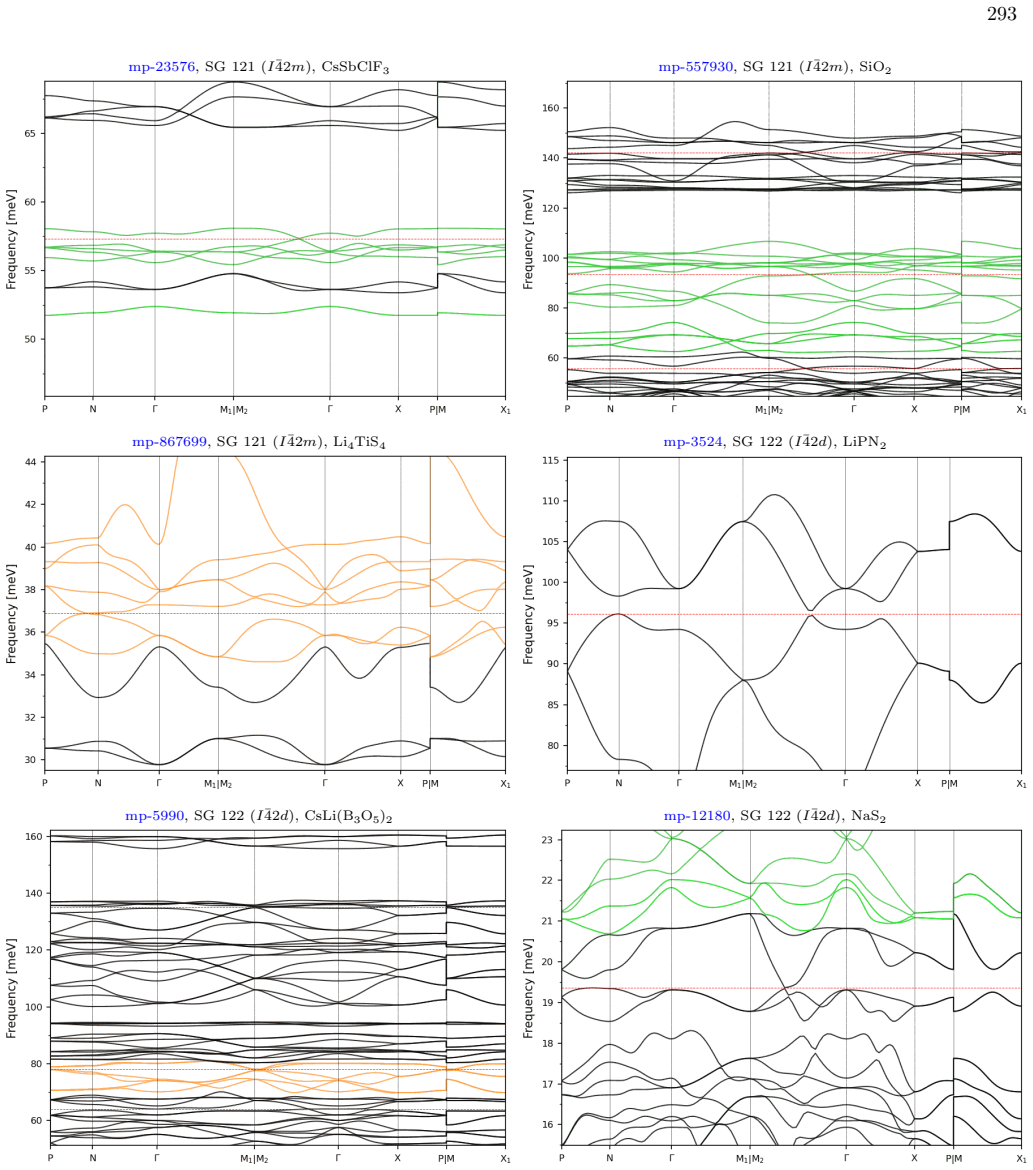
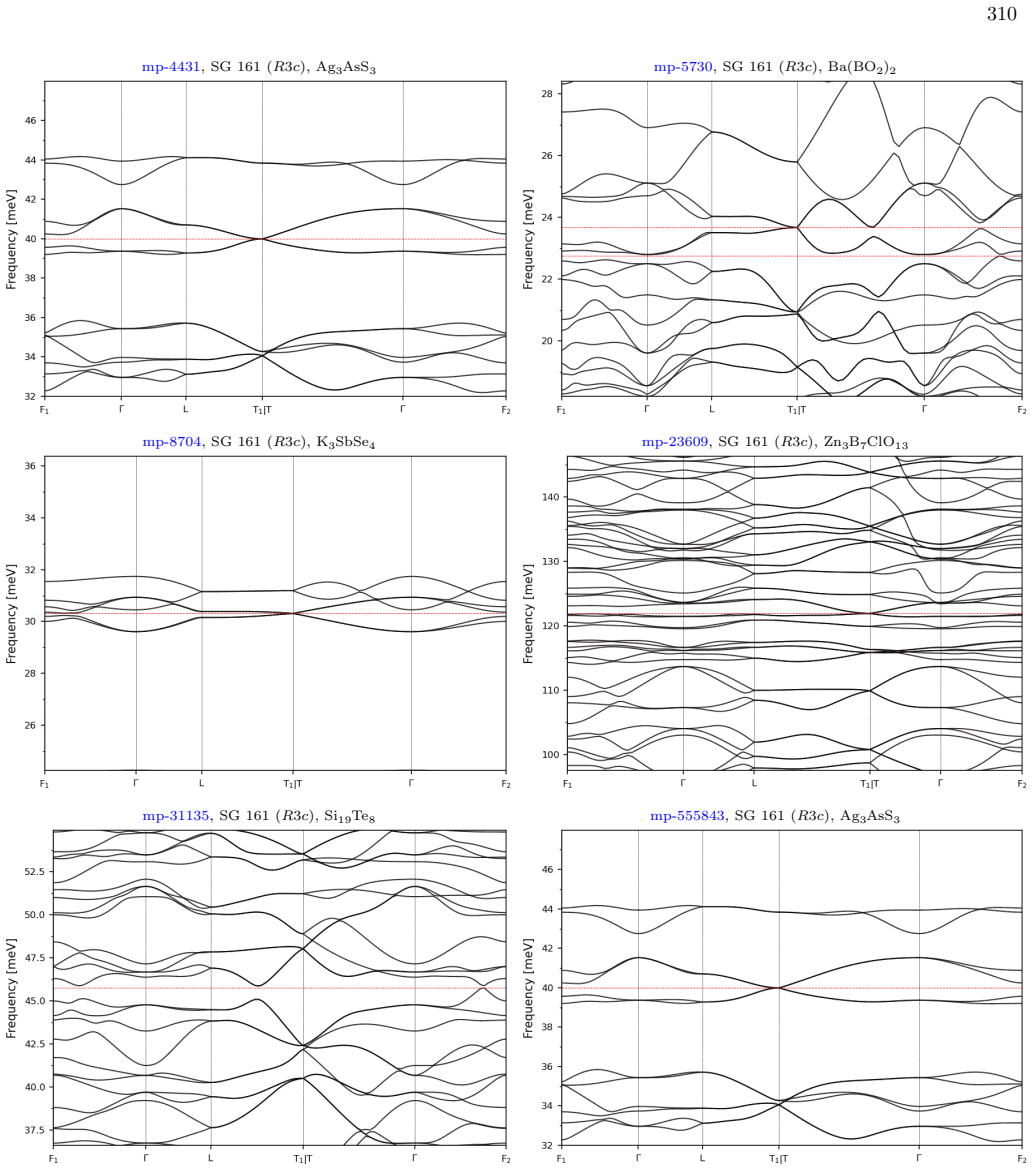
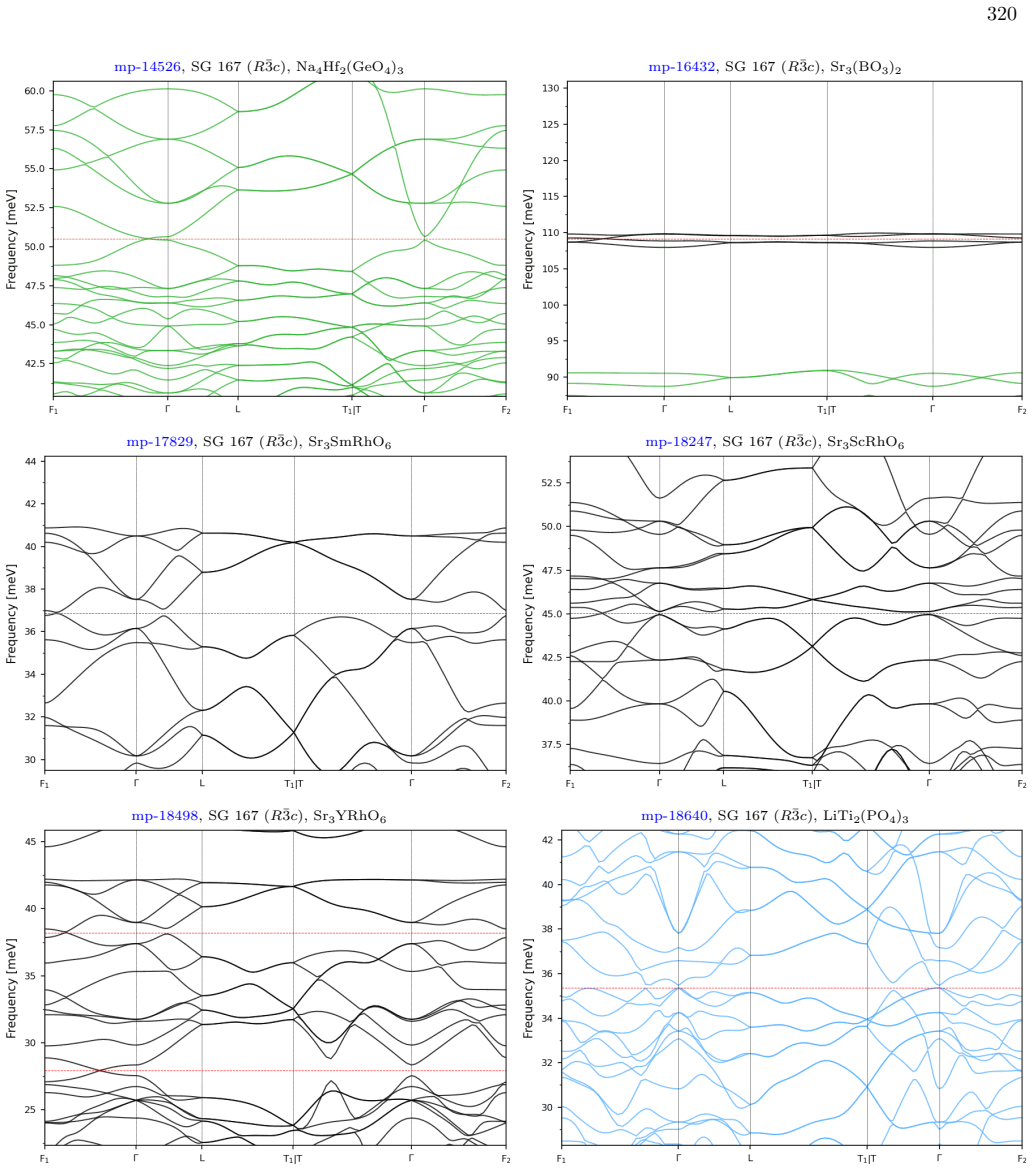
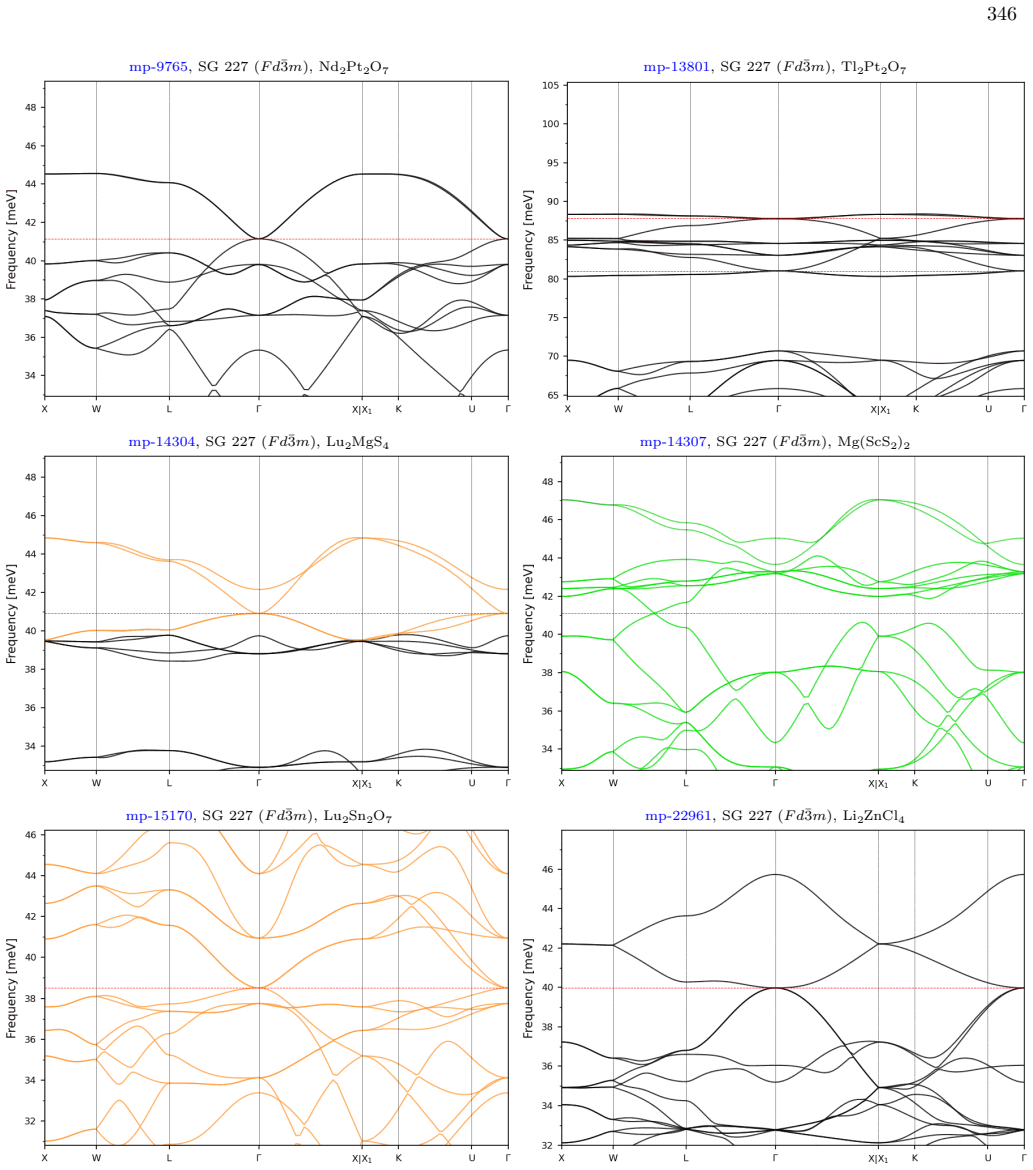
Figure 14. Figure 14: FIG. 14. Band structures of the “ideal” topological phonon bands with cumulative strong topology on the Material Project. [PITH_FULL_IMAGE:figures/full_fig_p177_14.png] view at source ↗
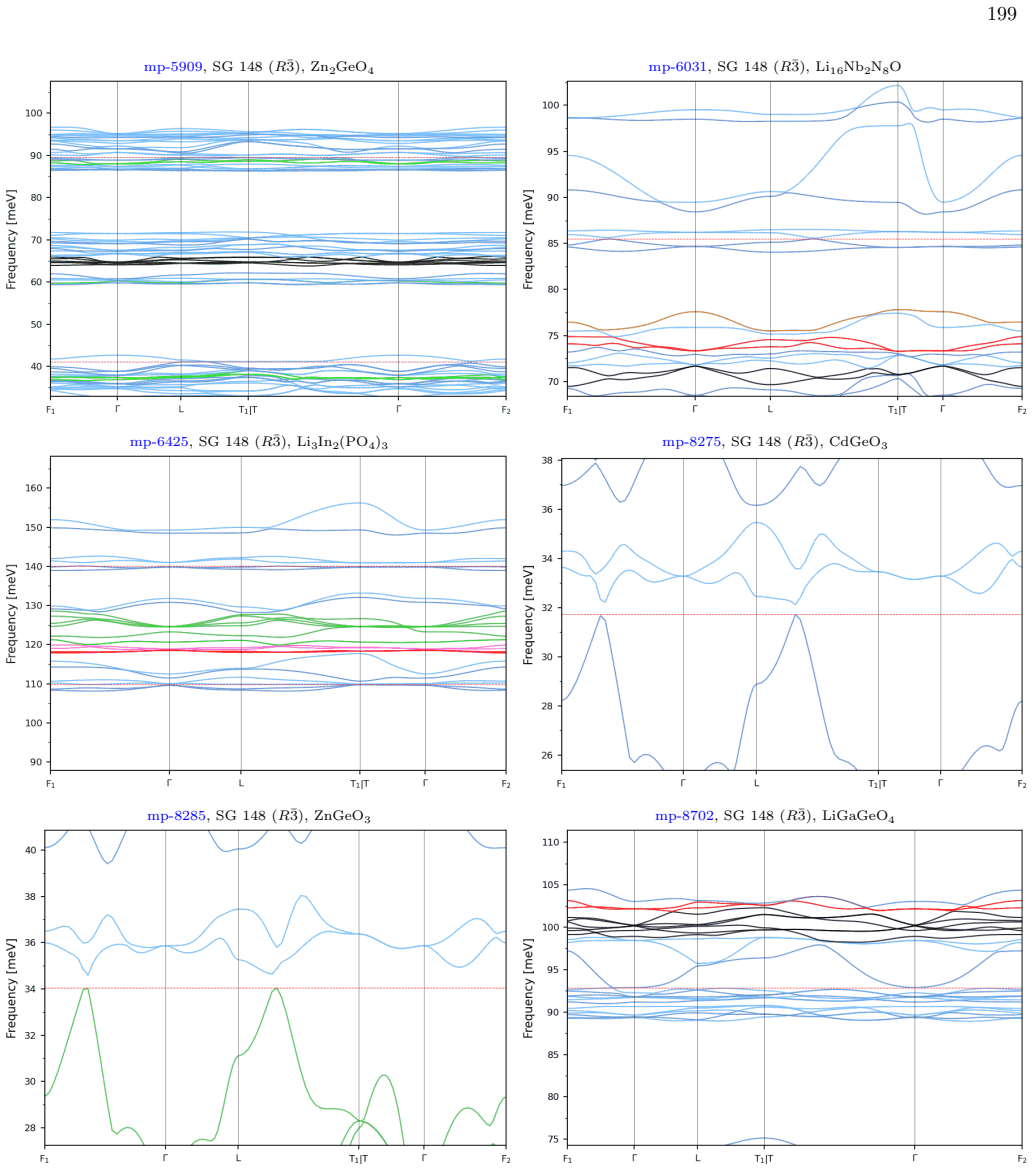
Figure 15
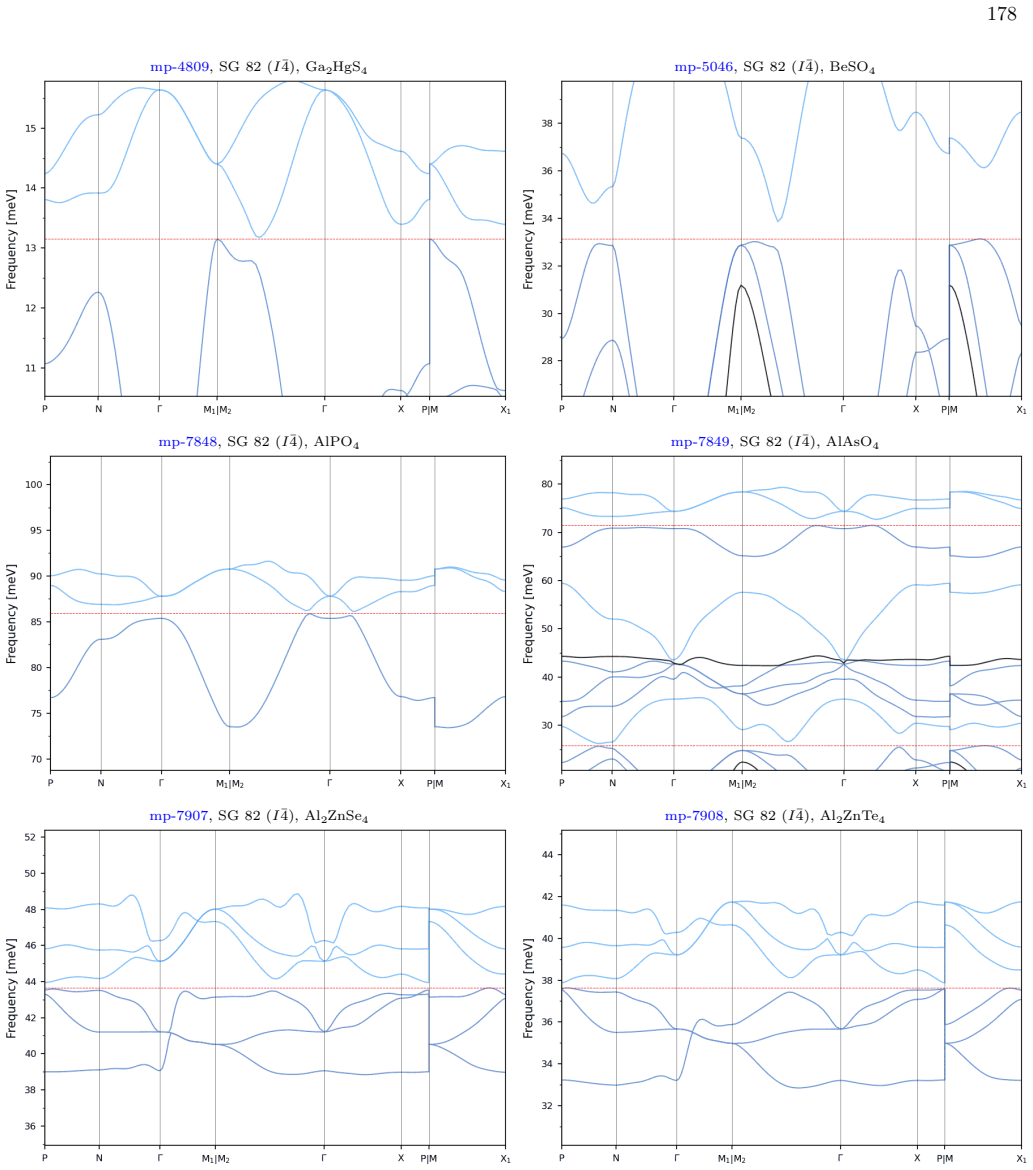
Figure 15. Figure 15: FIG. 15. Band structures of the “ideal” topological phonon bands with cumulative strong topology on the Material Project. [PITH_FULL_IMAGE:figures/full_fig_p178_15.png] view at source ↗
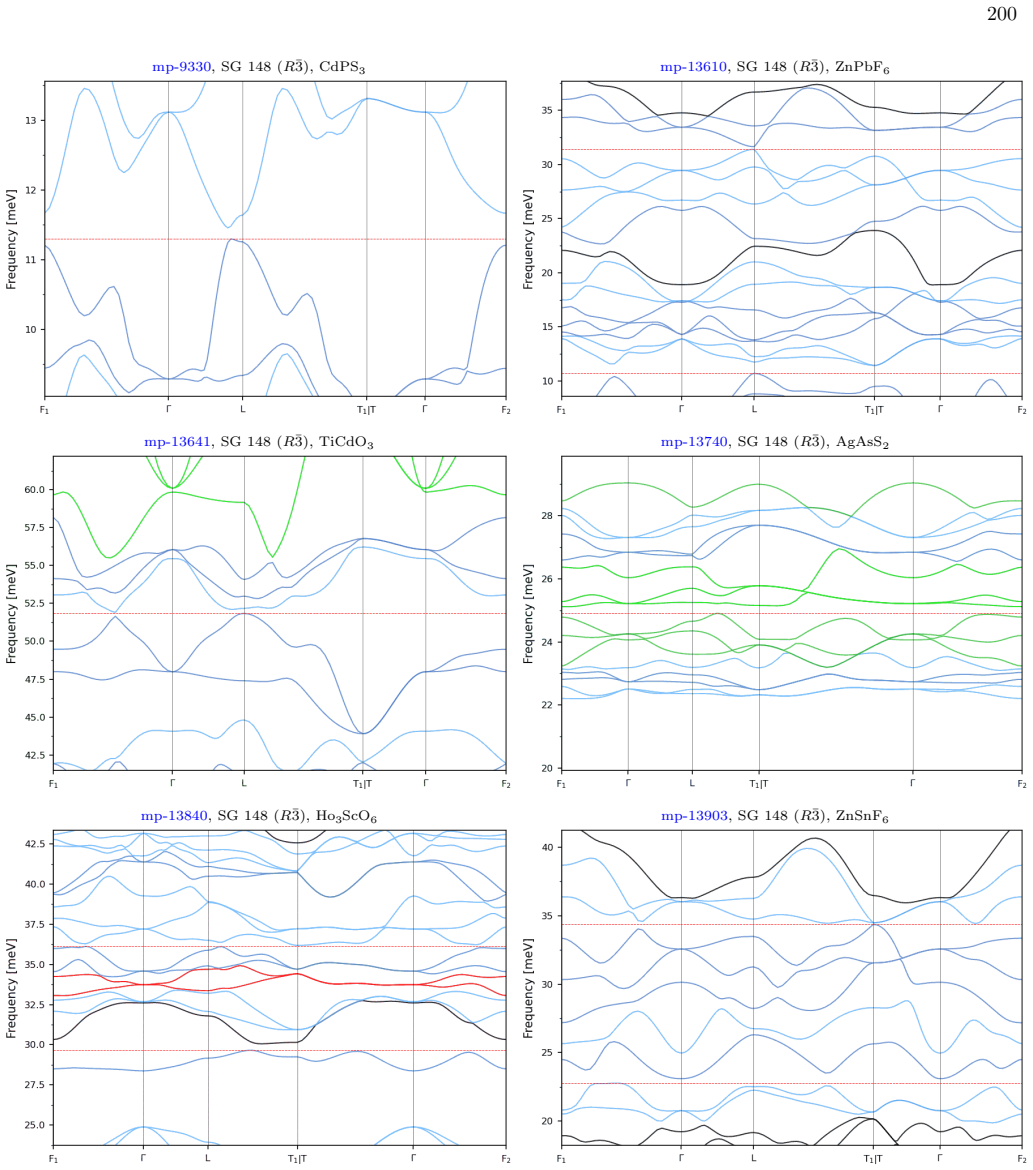
Figure 16
Figure 16. Figure 16: FIG. 16. Band structures of the “ideal” topological phonon bands with cumulative strong topology on the Material Project. [PITH_FULL_IMAGE:figures/full_fig_p179_16.png] view at source ↗
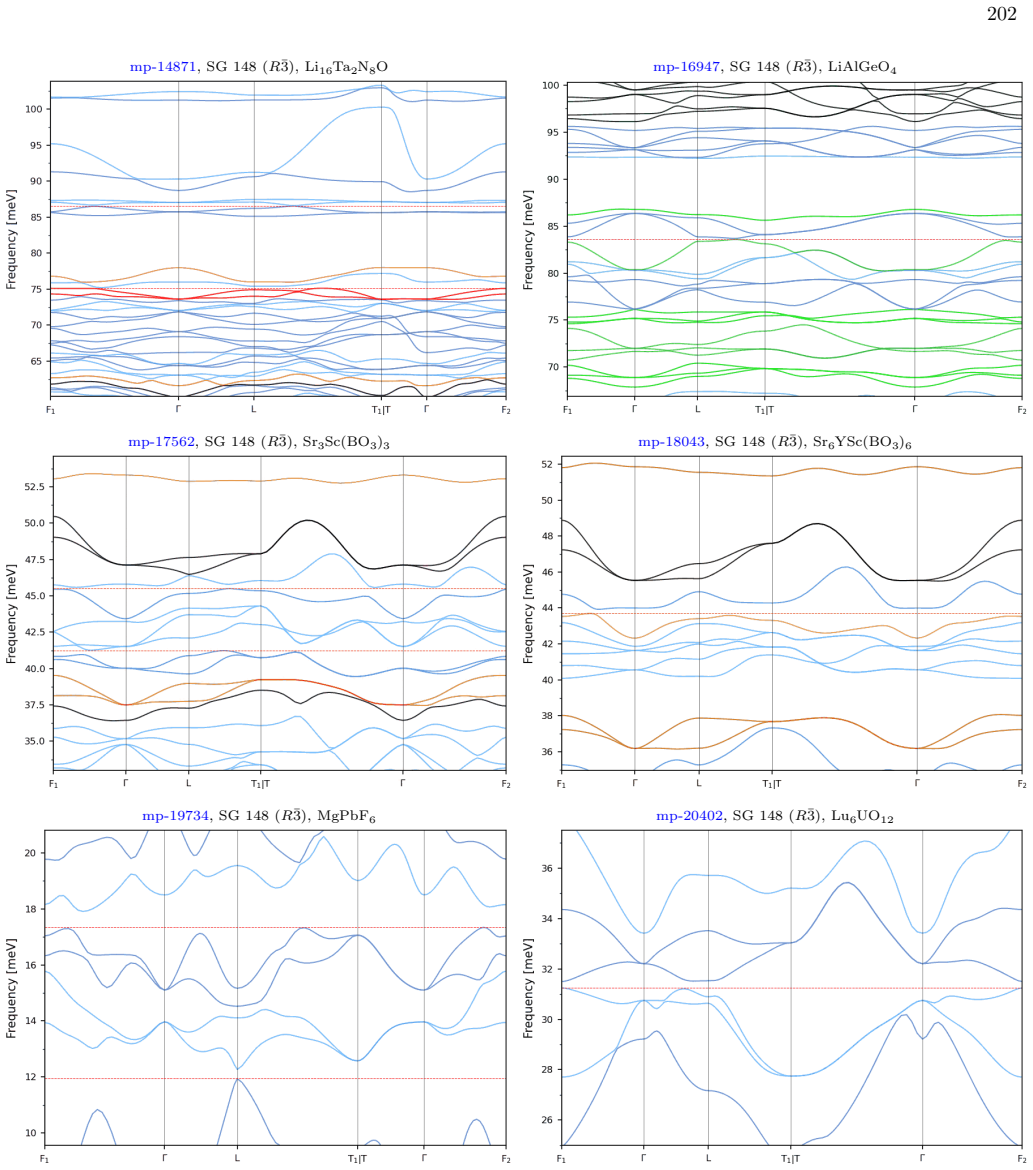
Figure 17
Figure 17. Figure 17: FIG. 17. Band structures of the “ideal” topological phonon bands with cumulative strong topology on the Material Project. [PITH_FULL_IMAGE:figures/full_fig_p180_17.png] view at source ↗
Figure 18
Figure 18. Figure 18: FIG. 18. Band structures of the “ideal” topological phonon bands with cumulative strong topology on the Material Project. [PITH_FULL_IMAGE:figures/full_fig_p181_18.png] view at source ↗
Figure 19
Figure 19. Figure 19: FIG. 19. Band structures of the “ideal” topological phonon bands with cumulative strong topology on the PhononDB@kyoto-u. [PITH_FULL_IMAGE:figures/full_fig_p182_19.png] view at source ↗
Figure 20
Figure 20. Figure 20: FIG. 20. Band structures of the “ideal” topological phonon bands with cumulative strong topology on the PhononDB@kyoto-u. [PITH_FULL_IMAGE:figures/full_fig_p183_20.png] view at source ↗
Figure 21
Figure 21. Figure 21: FIG. 21. Band structures of the “ideal” topological phonon bands with cumulative strong topology on the PhononDB@kyoto-u. [PITH_FULL_IMAGE:figures/full_fig_p184_21.png] view at source ↗
Figure 22
Figure 22. Figure 22: FIG. 22. Band structures of the “ideal” topological phonon bands with cumulative strong topology on the PhononDB@kyoto-u. [PITH_FULL_IMAGE:figures/full_fig_p185_22.png] view at source ↗
Figure 23
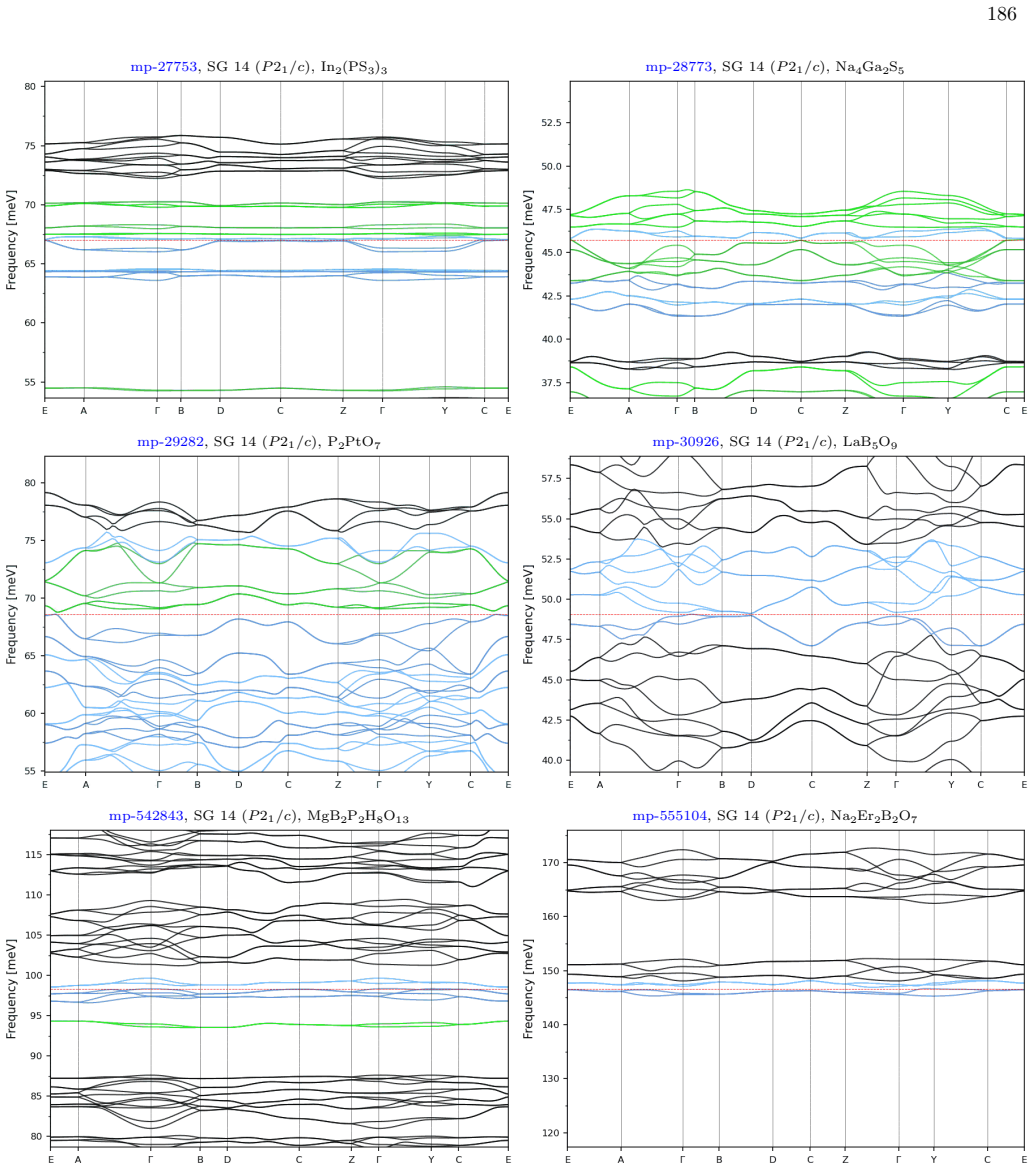
Figure 23. Figure 23: FIG. 23. Band structures of the “ideal” topological phonon bands with cumulative strong topology on the PhononDB@kyoto-u. [PITH_FULL_IMAGE:figures/full_fig_p186_23.png] view at source ↗
Figure 24
Figure 24. Figure 24: FIG. 24. Band structures of the “ideal” topological phonon bands with cumulative strong topology on the PhononDB@kyoto-u. [PITH_FULL_IMAGE:figures/full_fig_p187_24.png] view at source ↗
Figure 25
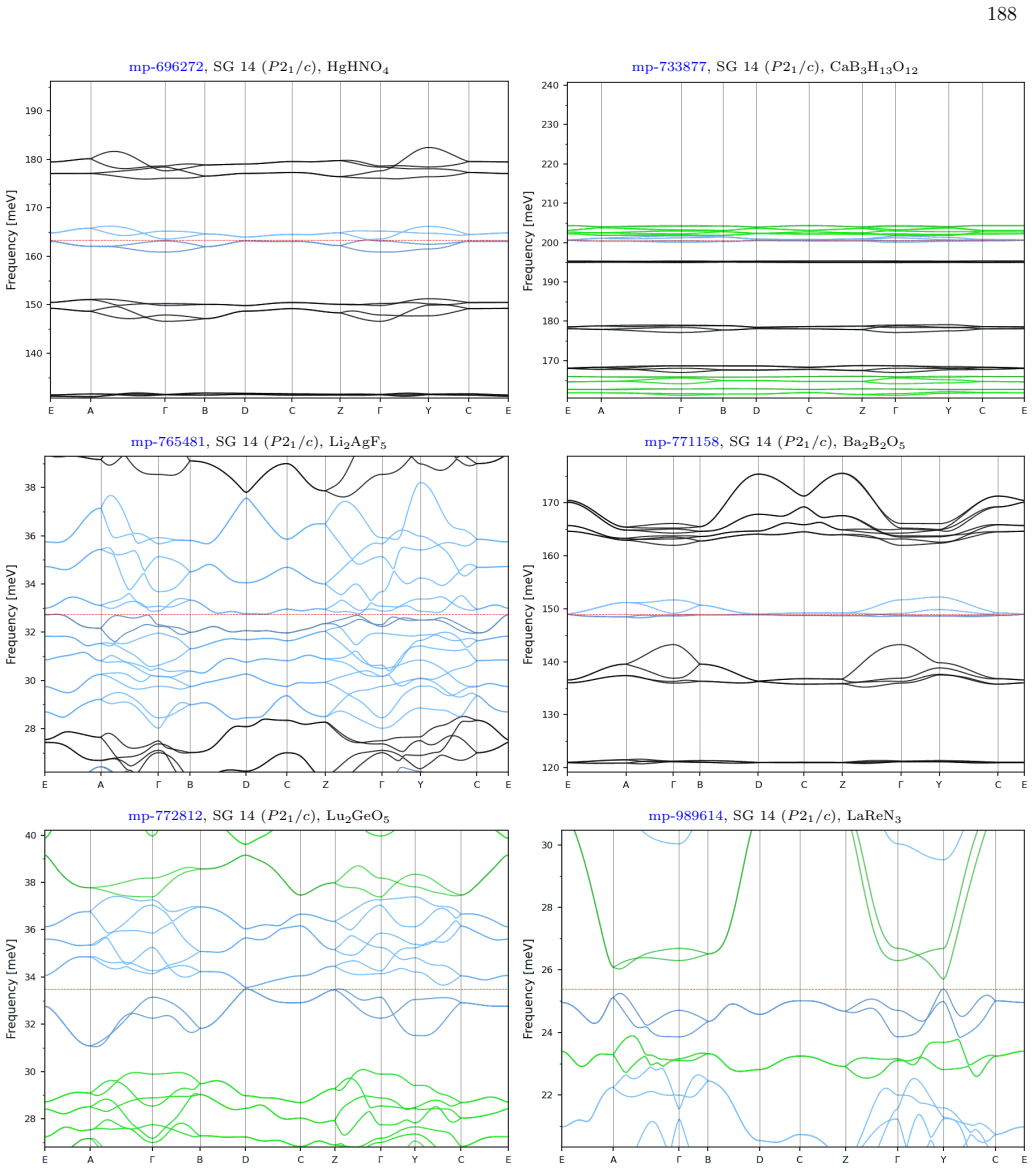
Figure 25. Figure 25: FIG. 25. Band structures of the “ideal” topological phonon bands with cumulative strong topology on the PhononDB@kyoto-u. [PITH_FULL_IMAGE:figures/full_fig_p188_25.png] view at source ↗
Figure 26
Figure 26. Figure 26: FIG. 26. Band structures of the “ideal” topological phonon bands with cumulative strong topology on the PhononDB@kyoto-u. [PITH_FULL_IMAGE:figures/full_fig_p189_26.png] view at source ↗
Figure 27
Figure 27. Figure 27: FIG. 27. Band structures of the “ideal” topological phonon bands with cumulative strong topology on the PhononDB@kyoto-u. [PITH_FULL_IMAGE:figures/full_fig_p190_27.png] view at source ↗
Figure 28
Figure 28. Figure 28: FIG. 28. Band structures of the “ideal” topological phonon bands with cumulative strong topology on the PhononDB@kyoto-u. [PITH_FULL_IMAGE:figures/full_fig_p191_28.png] view at source ↗
Figure 29
Figure 29. Figure 29: FIG. 29. Band structures of the “ideal” topological phonon bands with cumulative strong topology on the PhononDB@kyoto-u. [PITH_FULL_IMAGE:figures/full_fig_p192_29.png] view at source ↗
Figure 30
Figure 30. Figure 30: FIG. 30. Band structures of the “ideal” topological phonon bands with cumulative strong topology on the PhononDB@kyoto-u. [PITH_FULL_IMAGE:figures/full_fig_p193_30.png] view at source ↗
Figure 31
Figure 31. Figure 31: FIG. 31. Band structures of the “ideal” topological phonon bands with cumulative strong topology on the PhononDB@kyoto-u. [PITH_FULL_IMAGE:figures/full_fig_p194_31.png] view at source ↗
Figure 32
Figure 32. Figure 32: FIG. 32. Band structures of the “ideal” topological phonon bands with cumulative strong topology on the PhononDB@kyoto-u. [PITH_FULL_IMAGE:figures/full_fig_p195_32.png] view at source ↗
Figure 33
Figure 33. Figure 33: FIG. 33. Band structures of the “ideal” topological phonon bands with cumulative strong topology on the PhononDB@kyoto-u. [PITH_FULL_IMAGE:figures/full_fig_p196_33.png] view at source ↗
Figure 34
Figure 34. Figure 34: FIG. 34. Band structures of the “ideal” topological phonon bands with cumulative strong topology on the PhononDB@kyoto-u. [PITH_FULL_IMAGE:figures/full_fig_p197_34.png] view at source ↗
Figure 35
Figure 35. Figure 35: FIG. 35. Band structures of the “ideal” topological phonon bands with cumulative strong topology on the PhononDB@kyoto-u. [PITH_FULL_IMAGE:figures/full_fig_p198_35.png] view at source ↗
Figure 36
Figure 36. Figure 36: FIG. 36. Band structures of the “ideal” topological phonon bands with cumulative strong topology on the PhononDB@kyoto-u. [PITH_FULL_IMAGE:figures/full_fig_p199_36.png] view at source ↗
Figure 37
Figure 37. Figure 37: FIG. 37. Band structures of the “ideal” topological phonon bands with cumulative strong topology on the PhononDB@kyoto-u. [PITH_FULL_IMAGE:figures/full_fig_p200_37.png] view at source ↗
Figure 38
Figure 38. Figure 38: FIG. 38. Band structures of the “ideal” topological phonon bands with cumulative strong topology on the PhononDB@kyoto-u. [PITH_FULL_IMAGE:figures/full_fig_p201_38.png] view at source ↗
Figure 39
Figure 39. Figure 39: FIG. 39. Band structures of the “ideal” topological phonon bands with cumulative strong topology on the PhononDB@kyoto-u. [PITH_FULL_IMAGE:figures/full_fig_p202_39.png] view at source ↗
Figure 40
Figure 40. Figure 40: FIG. 40. Band structures of the “ideal” topological phonon bands with cumulative strong topology on the PhononDB@kyoto-u. [PITH_FULL_IMAGE:figures/full_fig_p203_40.png] view at source ↗
Figure 41
Figure 41. Figure 41: FIG. 41. Band structures of the “ideal” topological phonon bands with cumulative strong topology on the PhononDB@kyoto-u. [PITH_FULL_IMAGE:figures/full_fig_p204_41.png] view at source ↗
Figure 42
Figure 42. Figure 42: FIG. 42. Band structures of the “ideal” topological phonon bands with cumulative strong topology on the PhononDB@kyoto-u. [PITH_FULL_IMAGE:figures/full_fig_p205_42.png] view at source ↗
Figure 43
Figure 43. Figure 43: FIG. 43. Band structures of the “ideal” topological phonon bands with cumulative strong topology on the PhononDB@kyoto-u. [PITH_FULL_IMAGE:figures/full_fig_p206_43.png] view at source ↗
Figure 44
Figure 44. Figure 44: FIG. 44. Band structures of the “ideal” topological phonon bands with cumulative strong topology on the PhononDB@kyoto-u. [PITH_FULL_IMAGE:figures/full_fig_p207_44.png] view at source ↗
Figure 45
Figure 45. Figure 45: FIG. 45. Band structures of the “ideal” topological phonon bands with cumulative strong topology on the PhononDB@kyoto-u. [PITH_FULL_IMAGE:figures/full_fig_p208_45.png] view at source ↗
Figure 46
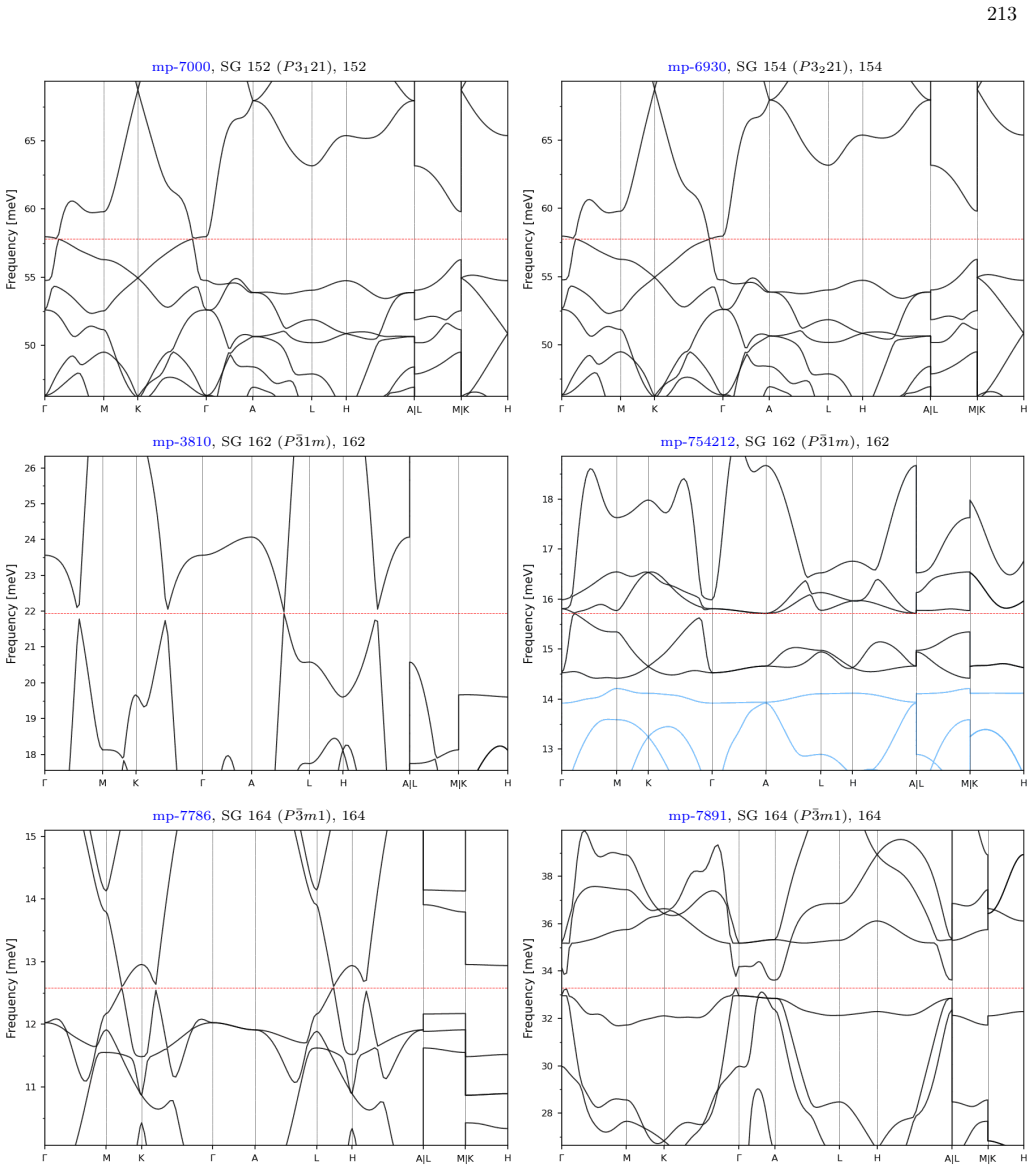
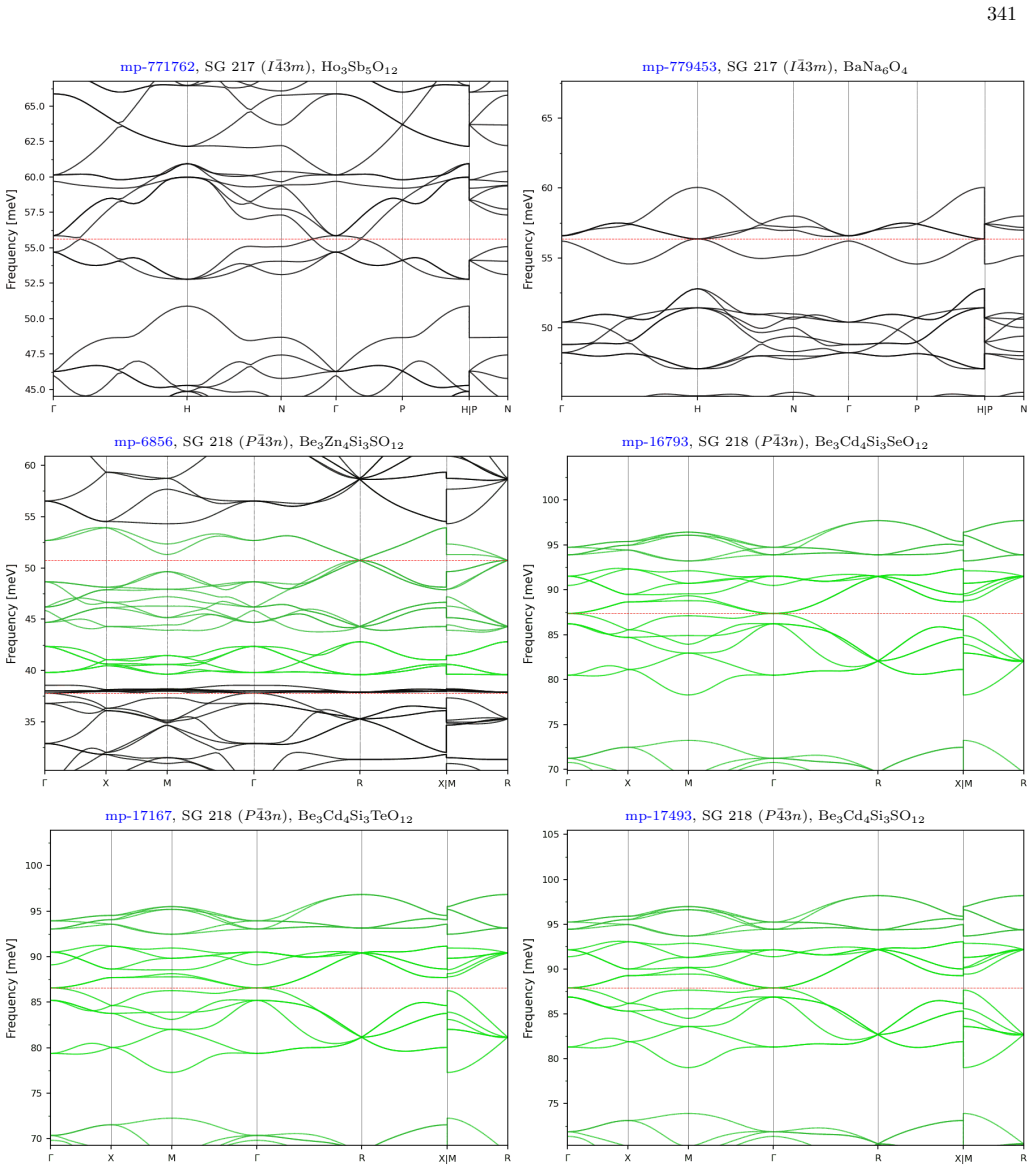
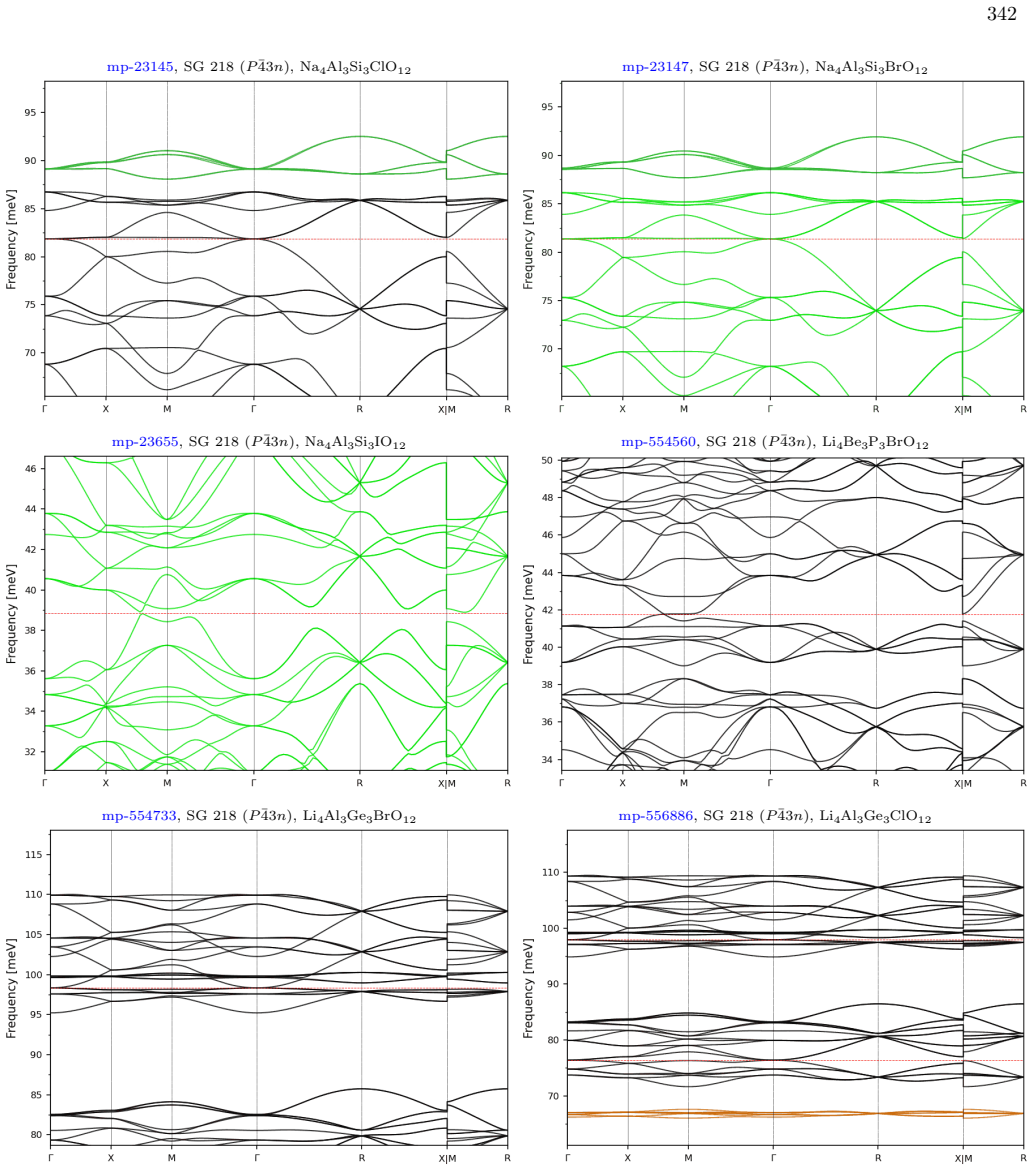
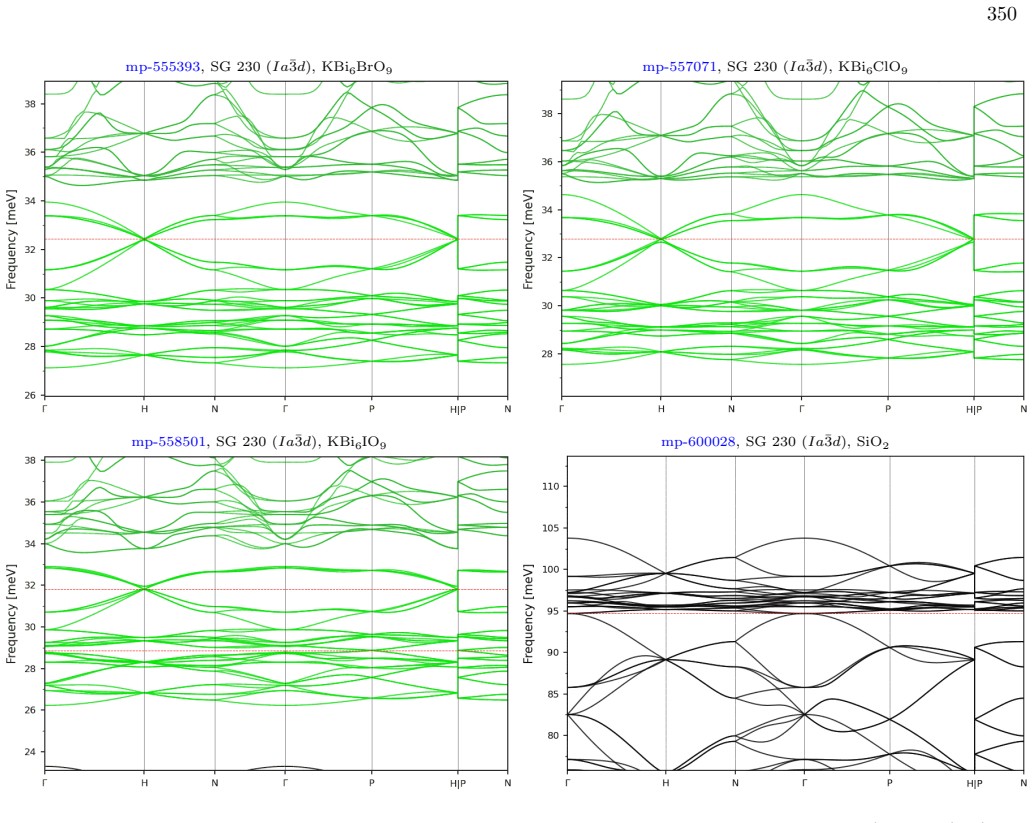
Figure 46. Figure 46: FIG. 46. Band structures of the “ideal” symmetry-enforced phonon band nodes on the Material Project. (part 1/10) [PITH_FULL_IMAGE:figures/full_fig_p209_46.png] view at source ↗
Figure 47
Figure 47. Figure 47: FIG. 47. Band structures of the “ideal” symmetry-enforced phonon band nodes on the Material Project. (part 2/10) [PITH_FULL_IMAGE:figures/full_fig_p210_47.png] view at source ↗
Figure 48
Figure 48. Figure 48: FIG. 48. Band structures of the “ideal” symmetry-enforced phonon band nodes on the Material Project. (part 3/10) [PITH_FULL_IMAGE:figures/full_fig_p211_48.png] view at source ↗
Figure 49
Figure 49. Figure 49: FIG. 49. Band structures of the “ideal” symmetry-enforced phonon band nodes on the Material Project. (part 4/10) [PITH_FULL_IMAGE:figures/full_fig_p212_49.png] view at source ↗
Figure 50
Figure 50. Figure 50: FIG. 50. Band structures of the “ideal” symmetry-enforced phonon band nodes on the Material Project. (part 5/10) [PITH_FULL_IMAGE:figures/full_fig_p213_50.png] view at source ↗
Figure 51
Figure 51. Figure 51: FIG. 51. Band structures of the “ideal” symmetry-enforced phonon band nodes on the Material Project. (part 6/10) [PITH_FULL_IMAGE:figures/full_fig_p214_51.png] view at source ↗
Figure 52
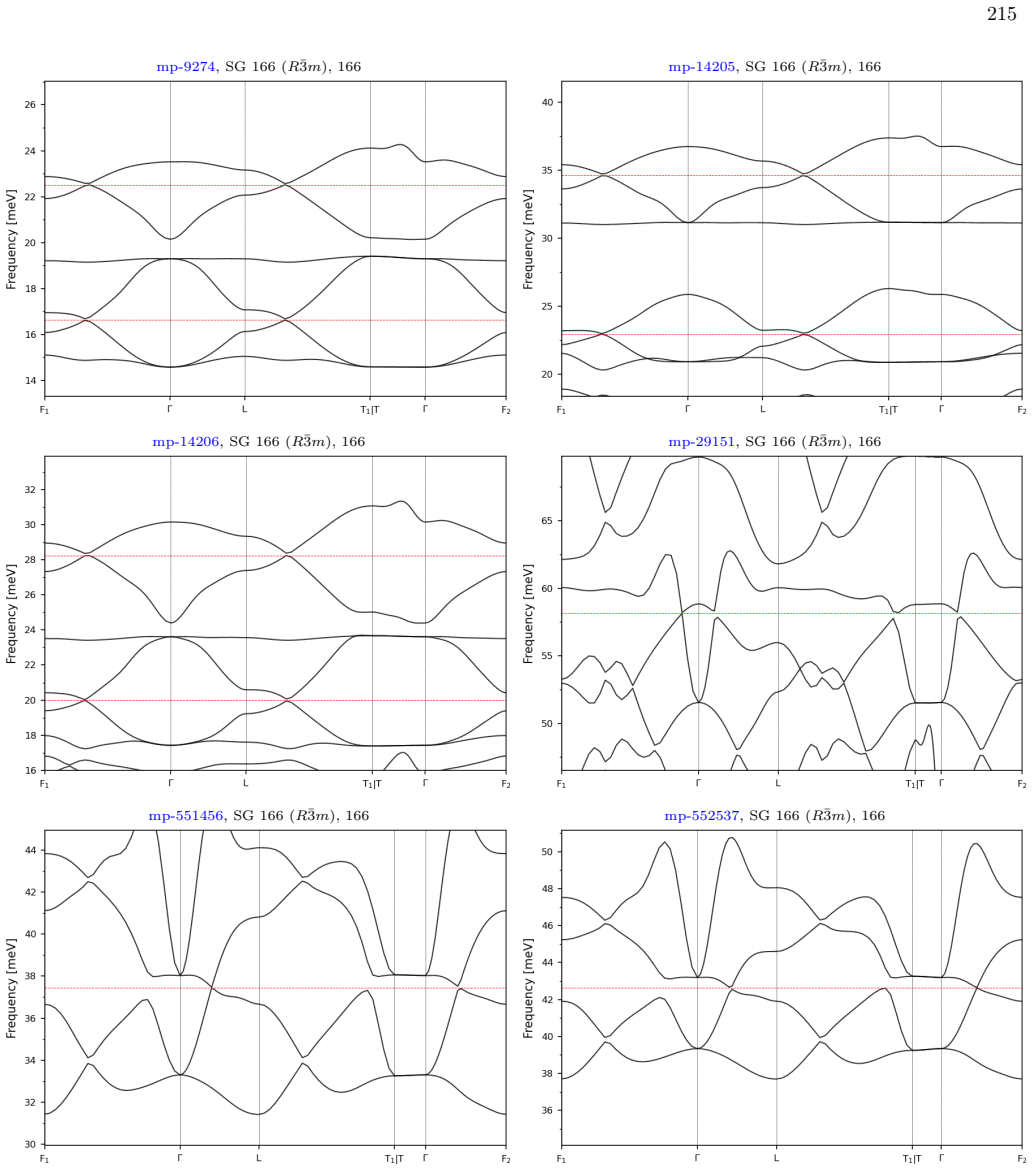
Figure 52. Figure 52: FIG. 52. Band structures of the “ideal” symmetry-enforced phonon band nodes on the Material Project. (part 7/10) [PITH_FULL_IMAGE:figures/full_fig_p215_52.png] view at source ↗
Figure 53
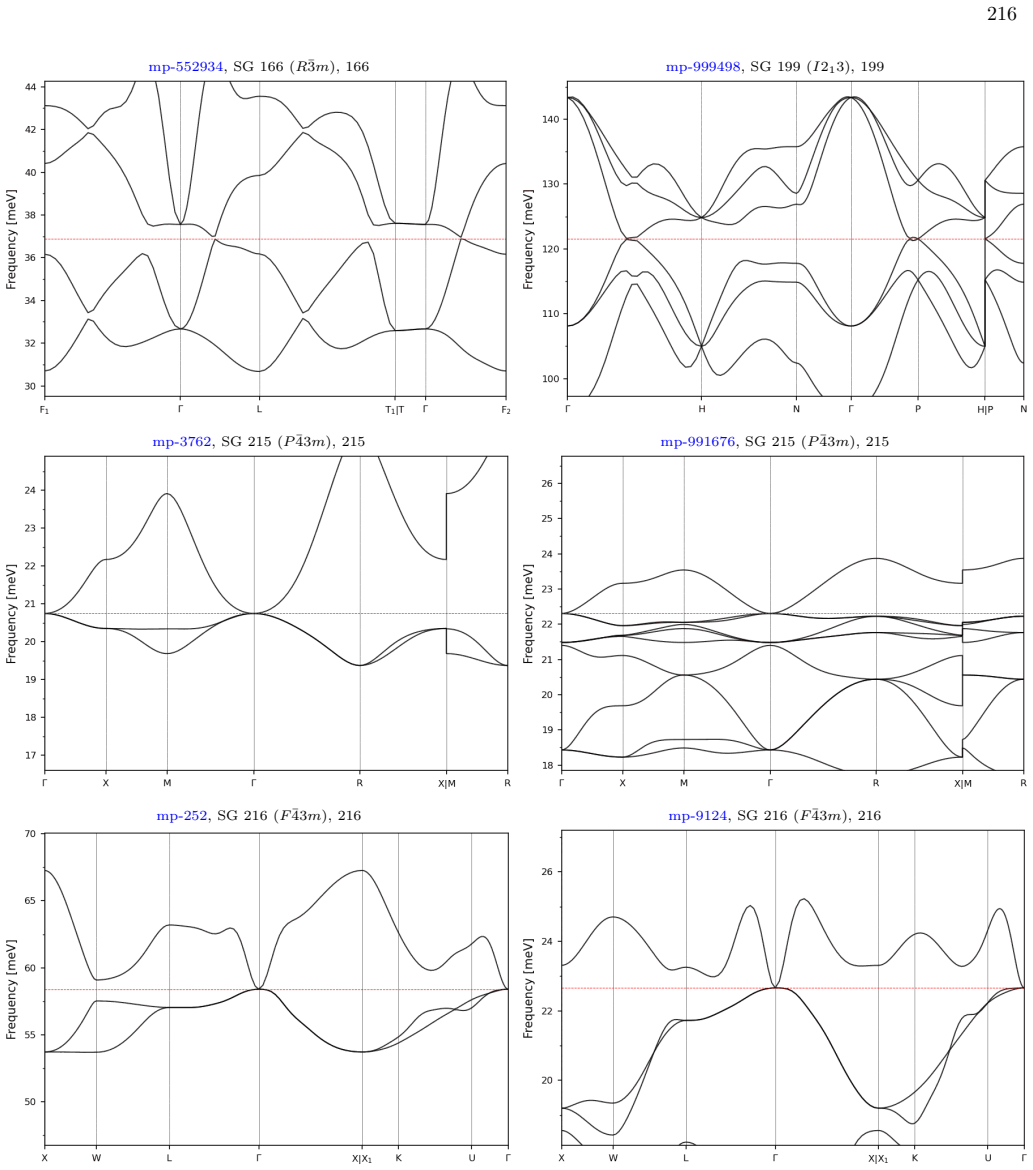
Figure 53. Figure 53: FIG. 53. Band structures of the “ideal” symmetry-enforced phonon band nodes on the Material Project. (part 8/10) [PITH_FULL_IMAGE:figures/full_fig_p216_53.png] view at source ↗
Figure 54
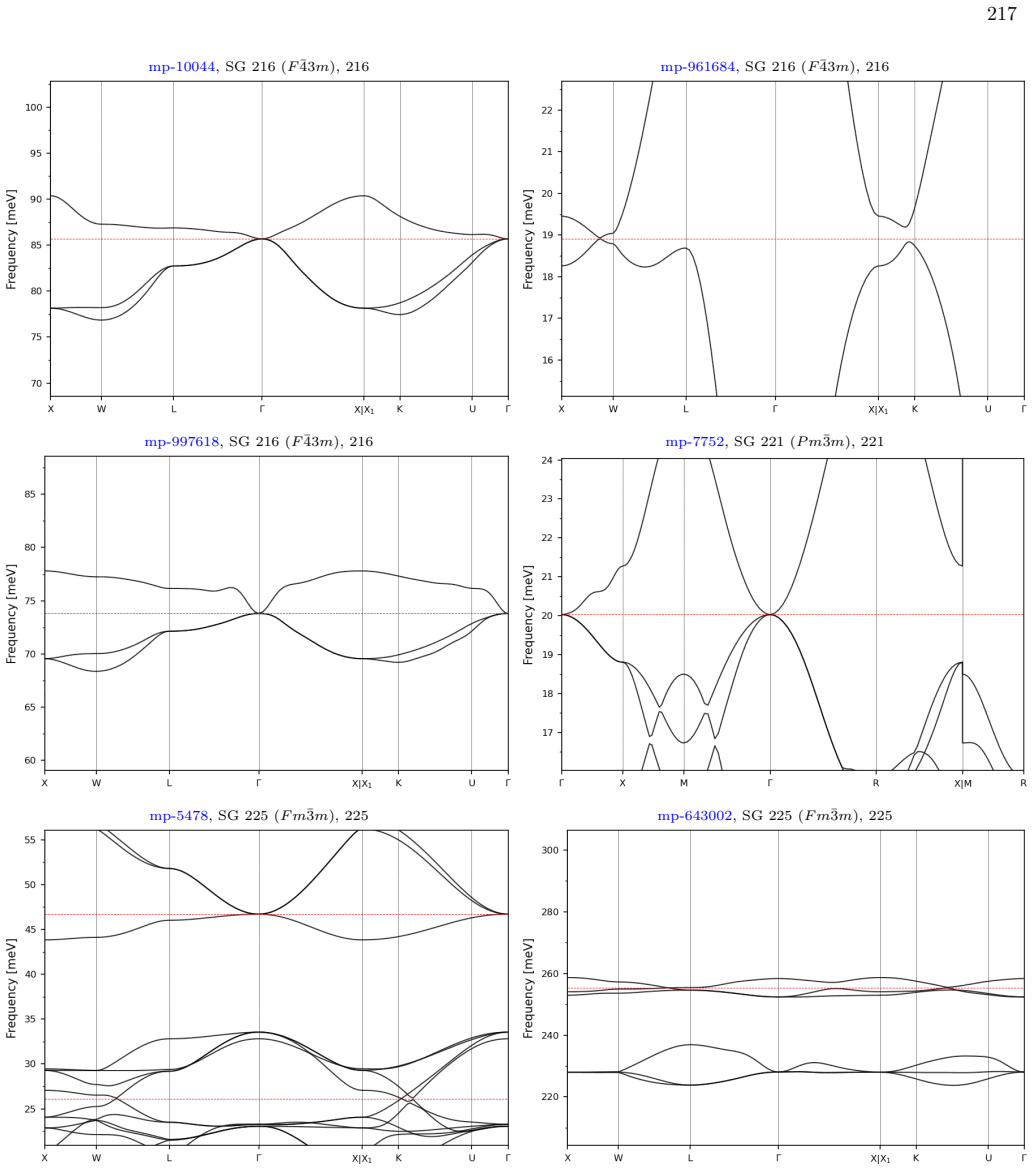
Figure 54. Figure 54: FIG. 54. Band structures of the “ideal” symmetry-enforced phonon band nodes on the Material Project. (part 9/10) [PITH_FULL_IMAGE:figures/full_fig_p217_54.png] view at source ↗
Figure 55
Figure 55. Figure 55: FIG. 55. Band structures of the “ideal” symmetry-enforced phonon band nodes on the Material Project. (part 10/10) [PITH_FULL_IMAGE:figures/full_fig_p218_55.png] view at source ↗
Figure 56
Figure 56. Figure 56: FIG. 56. Band structures of the “ideal” symmetry-enforced band crossing in the PhononDB@kyoto-u. (part 1/132) [PITH_FULL_IMAGE:figures/full_fig_p219_56.png] view at source ↗
Figure 57
Figure 57. Figure 57: FIG. 57. Band structures of the “ideal” symmetry-enforced band crossing in the PhononDB@kyoto-u. (part 2/132) [PITH_FULL_IMAGE:figures/full_fig_p220_57.png] view at source ↗
Figure 58
Figure 58. Figure 58: FIG. 58. Band structures of the “ideal” symmetry-enforced band crossing in the PhononDB@kyoto-u. (part 3/132) [PITH_FULL_IMAGE:figures/full_fig_p221_58.png] view at source ↗
Figure 59
Figure 59. Figure 59: FIG. 59. Band structures of the “ideal” symmetry-enforced band crossing in the PhononDB@kyoto-u. (part 4/132) [PITH_FULL_IMAGE:figures/full_fig_p222_59.png] view at source ↗
Figure 60
Figure 60. Figure 60: FIG. 60. Band structures of the “ideal” symmetry-enforced band crossing in the PhononDB@kyoto-u. (part 5/132) [PITH_FULL_IMAGE:figures/full_fig_p223_60.png] view at source ↗
Figure 61
Figure 61. Figure 61: FIG. 61. Band structures of the “ideal” symmetry-enforced band crossing in the PhononDB@kyoto-u. (part 6/132) [PITH_FULL_IMAGE:figures/full_fig_p224_61.png] view at source ↗
Figure 62
Figure 62. Figure 62: FIG. 62. Band structures of the “ideal” symmetry-enforced band crossing in the PhononDB@kyoto-u. (part 7/132) [PITH_FULL_IMAGE:figures/full_fig_p225_62.png] view at source ↗
Figure 63
Figure 63. Figure 63: FIG. 63. Band structures of the “ideal” symmetry-enforced band crossing in the PhononDB@kyoto-u. (part 8/132) [PITH_FULL_IMAGE:figures/full_fig_p226_63.png] view at source ↗
Figure 64
Figure 64. Figure 64: FIG. 64. Band structures of the “ideal” symmetry-enforced band crossing in the PhononDB@kyoto-u. (part 9/132) [PITH_FULL_IMAGE:figures/full_fig_p227_64.png] view at source ↗
Figure 65
Figure 65. Figure 65: FIG. 65. Band structures of the “ideal” symmetry-enforced band crossing in the PhononDB@kyoto-u. (part 10/132) [PITH_FULL_IMAGE:figures/full_fig_p228_65.png] view at source ↗
Figure 66
Figure 66. Figure 66: FIG. 66. Band structures of the “ideal” symmetry-enforced band crossing in the PhononDB@kyoto-u. (part 11/132) [PITH_FULL_IMAGE:figures/full_fig_p229_66.png] view at source ↗
Figure 67
Figure 67. Figure 67: FIG. 67. Band structures of the “ideal” symmetry-enforced band crossing in the PhononDB@kyoto-u. (part 12/132) [PITH_FULL_IMAGE:figures/full_fig_p230_67.png] view at source ↗
Figure 68
Figure 68. Figure 68: FIG. 68. Band structures of the “ideal” symmetry-enforced band crossing in the PhononDB@kyoto-u. (part 13/132) [PITH_FULL_IMAGE:figures/full_fig_p231_68.png] view at source ↗
Figure 69
Figure 69. Figure 69: FIG. 69. Band structures of the “ideal” symmetry-enforced band crossing in the PhononDB@kyoto-u. (part 14/132) [PITH_FULL_IMAGE:figures/full_fig_p232_69.png] view at source ↗
Figure 70
Figure 70. Figure 70: FIG. 70. Band structures of the “ideal” symmetry-enforced band crossing in the PhononDB@kyoto-u. (part 15/132) [PITH_FULL_IMAGE:figures/full_fig_p233_70.png] view at source ↗
Figure 71
Figure 71. Figure 71: FIG. 71. Band structures of the “ideal” symmetry-enforced band crossing in the PhononDB@kyoto-u. (part 16/132) [PITH_FULL_IMAGE:figures/full_fig_p234_71.png] view at source ↗
Figure 72
Figure 72. Figure 72: FIG. 72. Band structures of the “ideal” symmetry-enforced band crossing in the PhononDB@kyoto-u. (part 17/132) [PITH_FULL_IMAGE:figures/full_fig_p235_72.png] view at source ↗
Figure 73
Figure 73. Figure 73: FIG. 73. Band structures of the “ideal” symmetry-enforced band crossing in the PhononDB@kyoto-u. (part 18/132) [PITH_FULL_IMAGE:figures/full_fig_p236_73.png] view at source ↗
Figure 74
Figure 74. Figure 74: FIG. 74. Band structures of the “ideal” symmetry-enforced band crossing in the PhononDB@kyoto-u. (part 19/132) [PITH_FULL_IMAGE:figures/full_fig_p237_74.png] view at source ↗
Figure 75
Figure 75. Figure 75: FIG. 75. Band structures of the “ideal” symmetry-enforced band crossing in the PhononDB@kyoto-u. (part 20/132) [PITH_FULL_IMAGE:figures/full_fig_p238_75.png] view at source ↗
Figure 76
Figure 76. Figure 76: FIG. 76. Band structures of the “ideal” symmetry-enforced band crossing in the PhononDB@kyoto-u. (part 21/132) [PITH_FULL_IMAGE:figures/full_fig_p239_76.png] view at source ↗
Figure 77
Figure 77. Figure 77: FIG. 77. Band structures of the “ideal” symmetry-enforced band crossing in the PhononDB@kyoto-u. (part 22/132) [PITH_FULL_IMAGE:figures/full_fig_p240_77.png] view at source ↗
Figure 78
Figure 78. Figure 78: FIG. 78. Band structures of the “ideal” symmetry-enforced band crossing in the PhononDB@kyoto-u. (part 23/132) [PITH_FULL_IMAGE:figures/full_fig_p241_78.png] view at source ↗
Figure 79
Figure 79. Figure 79: FIG. 79. Band structures of the “ideal” symmetry-enforced band crossing in the PhononDB@kyoto-u. (part 24/132) [PITH_FULL_IMAGE:figures/full_fig_p242_79.png] view at source ↗
Figure 80
Figure 80. Figure 80: FIG. 80. Band structures of the “ideal” symmetry-enforced band crossing in the PhononDB@kyoto-u. (part 25/132) [PITH_FULL_IMAGE:figures/full_fig_p243_80.png] view at source ↗
Figure 81
Figure 81. Figure 81: FIG. 81. Band structures of the “ideal” symmetry-enforced band crossing in the PhononDB@kyoto-u. (part 26/132) [PITH_FULL_IMAGE:figures/full_fig_p244_81.png] view at source ↗
Figure 82
Figure 82. Figure 82: FIG. 82. Band structures of the “ideal” symmetry-enforced band crossing in the PhononDB@kyoto-u. (part 27/132) [PITH_FULL_IMAGE:figures/full_fig_p245_82.png] view at source ↗
Figure 83
Figure 83. Figure 83: FIG. 83. Band structures of the “ideal” symmetry-enforced band crossing in the PhononDB@kyoto-u. (part 28/132) [PITH_FULL_IMAGE:figures/full_fig_p246_83.png] view at source ↗
Figure 84
Figure 84. Figure 84: FIG. 84. Band structures of the “ideal” symmetry-enforced band crossing in the PhononDB@kyoto-u. (part 29/132) [PITH_FULL_IMAGE:figures/full_fig_p247_84.png] view at source ↗
Figure 85
Figure 85. Figure 85: FIG. 85. Band structures of the “ideal” symmetry-enforced band crossing in the PhononDB@kyoto-u. (part 30/132) [PITH_FULL_IMAGE:figures/full_fig_p248_85.png] view at source ↗
Figure 86
Figure 86. Figure 86: FIG. 86. Band structures of the “ideal” symmetry-enforced band crossing in the PhononDB@kyoto-u. (part 31/132) [PITH_FULL_IMAGE:figures/full_fig_p249_86.png] view at source ↗
Figure 87
Figure 87. Figure 87: FIG. 87. Band structures of the “ideal” symmetry-enforced band crossing in the PhononDB@kyoto-u. (part 32/132) [PITH_FULL_IMAGE:figures/full_fig_p250_87.png] view at source ↗
Figure 88
Figure 88. Figure 88: FIG. 88. Band structures of the “ideal” symmetry-enforced band crossing in the PhononDB@kyoto-u. (part 33/132) [PITH_FULL_IMAGE:figures/full_fig_p251_88.png] view at source ↗
Figure 89
Figure 89. Figure 89: FIG. 89. Band structures of the “ideal” symmetry-enforced band crossing in the PhononDB@kyoto-u. (part 34/132) [PITH_FULL_IMAGE:figures/full_fig_p252_89.png] view at source ↗
Figure 90
Figure 90. Figure 90: FIG. 90. Band structures of the “ideal” symmetry-enforced band crossing in the PhononDB@kyoto-u. (part 35/132) [PITH_FULL_IMAGE:figures/full_fig_p253_90.png] view at source ↗
Figure 91
Figure 91. Figure 91: FIG. 91. Band structures of the “ideal” symmetry-enforced band crossing in the PhononDB@kyoto-u. (part 36/132) [PITH_FULL_IMAGE:figures/full_fig_p254_91.png] view at source ↗
Figure 92
Figure 92. Figure 92: FIG. 92. Band structures of the “ideal” symmetry-enforced band crossing in the PhononDB@kyoto-u. (part 37/132) [PITH_FULL_IMAGE:figures/full_fig_p255_92.png] view at source ↗
Figure 93
Figure 93. Figure 93: FIG. 93. Band structures of the “ideal” symmetry-enforced band crossing in the PhononDB@kyoto-u. (part 38/132) [PITH_FULL_IMAGE:figures/full_fig_p256_93.png] view at source ↗
Figure 94
Figure 94. Figure 94: FIG. 94. Band structures of the “ideal” symmetry-enforced band crossing in the PhononDB@kyoto-u. (part 39/132) [PITH_FULL_IMAGE:figures/full_fig_p257_94.png] view at source ↗
Figure 95
Figure 95. Figure 95: FIG. 95. Band structures of the “ideal” symmetry-enforced band crossing in the PhononDB@kyoto-u. (part 40/132) [PITH_FULL_IMAGE:figures/full_fig_p258_95.png] view at source ↗
Figure 96
Figure 96. Figure 96: FIG. 96. Band structures of the “ideal” symmetry-enforced band crossing in the PhononDB@kyoto-u. (part 41/132) [PITH_FULL_IMAGE:figures/full_fig_p259_96.png] view at source ↗
Figure 97
Figure 97. Figure 97: FIG. 97. Band structures of the “ideal” symmetry-enforced band crossing in the PhononDB@kyoto-u. (part 42/132) [PITH_FULL_IMAGE:figures/full_fig_p260_97.png] view at source ↗
Figure 98
Figure 98. Figure 98: FIG. 98. Band structures of the “ideal” symmetry-enforced band crossing in the PhononDB@kyoto-u. (part 43/132) [PITH_FULL_IMAGE:figures/full_fig_p261_98.png] view at source ↗
Figure 99
Figure 99. Figure 99: FIG. 99. Band structures of the “ideal” symmetry-enforced band crossing in the PhononDB@kyoto-u. (part 44/132) [PITH_FULL_IMAGE:figures/full_fig_p262_99.png] view at source ↗
Figure 100
Figure 100. Figure 100: FIG. 100. Band structures of the “ideal” symmetry-enforced band crossing in the PhononDB@kyoto-u. (part 45/132) [PITH_FULL_IMAGE:figures/full_fig_p263_100.png] view at source ↗
Figure 101
Figure 101. Figure 101: FIG. 101. Band structures of the “ideal” symmetry-enforced band crossing in the PhononDB@kyoto-u. (part 46/132) [PITH_FULL_IMAGE:figures/full_fig_p264_101.png] view at source ↗
Figure 102
Figure 102. Figure 102: FIG. 102. Band structures of the “ideal” symmetry-enforced band crossing in the PhononDB@kyoto-u. (part 47/132) [PITH_FULL_IMAGE:figures/full_fig_p265_102.png] view at source ↗
Figure 103
Figure 103. Figure 103: FIG. 103. Band structures of the “ideal” symmetry-enforced band crossing in the PhononDB@kyoto-u. (part 48/132) [PITH_FULL_IMAGE:figures/full_fig_p266_103.png] view at source ↗
Figure 104
Figure 104. Figure 104: FIG. 104. Band structures of the “ideal” symmetry-enforced band crossing in the PhononDB@kyoto-u. (part 49/132) [PITH_FULL_IMAGE:figures/full_fig_p267_104.png] view at source ↗
Figure 105
Figure 105. Figure 105: FIG. 105. Band structures of the “ideal” symmetry-enforced band crossing in the PhononDB@kyoto-u. (part 50/132) [PITH_FULL_IMAGE:figures/full_fig_p268_105.png] view at source ↗
Figure 106
Figure 106. Figure 106: FIG. 106. Band structures of the “ideal” symmetry-enforced band crossing in the PhononDB@kyoto-u. (part 51/132) [PITH_FULL_IMAGE:figures/full_fig_p269_106.png] view at source ↗
Figure 107
Figure 107. Figure 107: FIG. 107. Band structures of the “ideal” symmetry-enforced band crossing in the PhononDB@kyoto-u. (part 52/132) [PITH_FULL_IMAGE:figures/full_fig_p270_107.png] view at source ↗
Figure 108
Figure 108. Figure 108: FIG. 108. Band structures of the “ideal” symmetry-enforced band crossing in the PhononDB@kyoto-u. (part 53/132) [PITH_FULL_IMAGE:figures/full_fig_p271_108.png] view at source ↗
Figure 109
Figure 109. Figure 109: FIG. 109. Band structures of the “ideal” symmetry-enforced band crossing in the PhononDB@kyoto-u. (part 54/132) [PITH_FULL_IMAGE:figures/full_fig_p272_109.png] view at source ↗
Figure 110
Figure 110. Figure 110: FIG. 110. Band structures of the “ideal” symmetry-enforced band crossing in the PhononDB@kyoto-u. (part 55/132) [PITH_FULL_IMAGE:figures/full_fig_p273_110.png] view at source ↗
Figure 111
Figure 111. Figure 111: FIG. 111. Band structures of the “ideal” symmetry-enforced band crossing in the PhononDB@kyoto-u. (part 56/132) [PITH_FULL_IMAGE:figures/full_fig_p274_111.png] view at source ↗
Figure 112
Figure 112. Figure 112: FIG. 112. Band structures of the “ideal” symmetry-enforced band crossing in the PhononDB@kyoto-u. (part 57/132) [PITH_FULL_IMAGE:figures/full_fig_p275_112.png] view at source ↗
Figure 113
Figure 113. Figure 113: FIG. 113. Band structures of the “ideal” symmetry-enforced band crossing in the PhononDB@kyoto-u. (part 58/132) [PITH_FULL_IMAGE:figures/full_fig_p276_113.png] view at source ↗
Figure 114
Figure 114. Figure 114: FIG. 114. Band structures of the “ideal” symmetry-enforced band crossing in the PhononDB@kyoto-u. (part 59/132) [PITH_FULL_IMAGE:figures/full_fig_p277_114.png] view at source ↗
Figure 115
Figure 115. Figure 115: FIG. 115. Band structures of the “ideal” symmetry-enforced band crossing in the PhononDB@kyoto-u. (part 60/132) [PITH_FULL_IMAGE:figures/full_fig_p278_115.png] view at source ↗
Figure 116
Figure 116. Figure 116: FIG. 116. Band structures of the “ideal” symmetry-enforced band crossing in the PhononDB@kyoto-u. (part 61/132) [PITH_FULL_IMAGE:figures/full_fig_p279_116.png] view at source ↗
Figure 117
Figure 117. Figure 117: FIG. 117. Band structures of the “ideal” symmetry-enforced band crossing in the PhononDB@kyoto-u. (part 62/132) [PITH_FULL_IMAGE:figures/full_fig_p280_117.png] view at source ↗
Figure 118
Figure 118. Figure 118: FIG. 118. Band structures of the “ideal” symmetry-enforced band crossing in the PhononDB@kyoto-u. (part 63/132) [PITH_FULL_IMAGE:figures/full_fig_p281_118.png] view at source ↗
Figure 119
Figure 119. Figure 119: FIG. 119. Band structures of the “ideal” symmetry-enforced band crossing in the PhononDB@kyoto-u. (part 64/132) [PITH_FULL_IMAGE:figures/full_fig_p282_119.png] view at source ↗
Figure 120
Figure 120. Figure 120: FIG. 120. Band structures of the “ideal” symmetry-enforced band crossing in the PhononDB@kyoto-u. (part 65/132) [PITH_FULL_IMAGE:figures/full_fig_p283_120.png] view at source ↗
Figure 121
Figure 121. Figure 121: FIG. 121. Band structures of the “ideal” symmetry-enforced band crossing in the PhononDB@kyoto-u. (part 66/132) [PITH_FULL_IMAGE:figures/full_fig_p284_121.png] view at source ↗
Figure 122
Figure 122. Figure 122: FIG. 122. Band structures of the “ideal” symmetry-enforced band crossing in the PhononDB@kyoto-u. (part 67/132) [PITH_FULL_IMAGE:figures/full_fig_p285_122.png] view at source ↗
Figure 123
Figure 123. Figure 123: FIG. 123. Band structures of the “ideal” symmetry-enforced band crossing in the PhononDB@kyoto-u. (part 68/132) [PITH_FULL_IMAGE:figures/full_fig_p286_123.png] view at source ↗
Figure 124
Figure 124. Figure 124: FIG. 124. Band structures of the “ideal” symmetry-enforced band crossing in the PhononDB@kyoto-u. (part 69/132) [PITH_FULL_IMAGE:figures/full_fig_p287_124.png] view at source ↗
Figure 125
Figure 125. Figure 125: FIG. 125. Band structures of the “ideal” symmetry-enforced band crossing in the PhononDB@kyoto-u. (part 70/132) [PITH_FULL_IMAGE:figures/full_fig_p288_125.png] view at source ↗
Figure 126
Figure 126. Figure 126: FIG. 126. Band structures of the “ideal” symmetry-enforced band crossing in the PhononDB@kyoto-u. (part 71/132) [PITH_FULL_IMAGE:figures/full_fig_p289_126.png] view at source ↗
Figure 127
Figure 127. Figure 127: FIG. 127. Band structures of the “ideal” symmetry-enforced band crossing in the PhononDB@kyoto-u. (part 72/132) [PITH_FULL_IMAGE:figures/full_fig_p290_127.png] view at source ↗
Figure 128
Figure 128. Figure 128: FIG. 128. Band structures of the “ideal” symmetry-enforced band crossing in the PhononDB@kyoto-u. (part 73/132) [PITH_FULL_IMAGE:figures/full_fig_p291_128.png] view at source ↗
Figure 129
Figure 129. Figure 129: FIG. 129. Band structures of the “ideal” symmetry-enforced band crossing in the PhononDB@kyoto-u. (part 74/132) [PITH_FULL_IMAGE:figures/full_fig_p292_129.png] view at source ↗
Figure 130
Figure 130. Figure 130: FIG. 130. Band structures of the “ideal” symmetry-enforced band crossing in the PhononDB@kyoto-u. (part 75/132) [PITH_FULL_IMAGE:figures/full_fig_p293_130.png] view at source ↗
Figure 131
Figure 131. Figure 131: FIG. 131. Band structures of the “ideal” symmetry-enforced band crossing in the PhononDB@kyoto-u. (part 76/132) [PITH_FULL_IMAGE:figures/full_fig_p294_131.png] view at source ↗
Figure 132
Figure 132. Figure 132: FIG. 132. Band structures of the “ideal” symmetry-enforced band crossing in the PhononDB@kyoto-u. (part 77/132) [PITH_FULL_IMAGE:figures/full_fig_p295_132.png] view at source ↗
Figure 133
Figure 133. Figure 133: FIG. 133. Band structures of the “ideal” symmetry-enforced band crossing in the PhononDB@kyoto-u. (part 78/132) [PITH_FULL_IMAGE:figures/full_fig_p296_133.png] view at source ↗
Figure 134
Figure 134. Figure 134: FIG. 134. Band structures of the “ideal” symmetry-enforced band crossing in the PhononDB@kyoto-u. (part 79/132) [PITH_FULL_IMAGE:figures/full_fig_p297_134.png] view at source ↗
Figure 135
Figure 135. Figure 135: FIG. 135. Band structures of the “ideal” symmetry-enforced band crossing in the PhononDB@kyoto-u. (part 80/132) [PITH_FULL_IMAGE:figures/full_fig_p298_135.png] view at source ↗
Figure 136
Figure 136. Figure 136: FIG. 136. Band structures of the “ideal” symmetry-enforced band crossing in the PhononDB@kyoto-u. (part 81/132) [PITH_FULL_IMAGE:figures/full_fig_p299_136.png] view at source ↗
Figure 137
Figure 137. Figure 137: FIG. 137. Band structures of the “ideal” symmetry-enforced band crossing in the PhononDB@kyoto-u. (part 82/132) [PITH_FULL_IMAGE:figures/full_fig_p300_137.png] view at source ↗
Figure 138
Figure 138. Figure 138: FIG. 138. Band structures of the “ideal” symmetry-enforced band crossing in the PhononDB@kyoto-u. (part 83/132) [PITH_FULL_IMAGE:figures/full_fig_p301_138.png] view at source ↗
Figure 139
Figure 139. Figure 139: FIG. 139. Band structures of the “ideal” symmetry-enforced band crossing in the PhononDB@kyoto-u. (part 84/132) [PITH_FULL_IMAGE:figures/full_fig_p302_139.png] view at source ↗
Figure 140
Figure 140. Figure 140: FIG. 140. Band structures of the “ideal” symmetry-enforced band crossing in the PhononDB@kyoto-u. (part 85/132) [PITH_FULL_IMAGE:figures/full_fig_p303_140.png] view at source ↗
Figure 141
Figure 141. Figure 141: FIG. 141. Band structures of the “ideal” symmetry-enforced band crossing in the PhononDB@kyoto-u. (part 86/132) [PITH_FULL_IMAGE:figures/full_fig_p304_141.png] view at source ↗
Figure 142
Figure 142. Figure 142: FIG. 142. Band structures of the “ideal” symmetry-enforced band crossing in the PhononDB@kyoto-u. (part 87/132) [PITH_FULL_IMAGE:figures/full_fig_p305_142.png] view at source ↗
Figure 143
Figure 143. Figure 143: FIG. 143. Band structures of the “ideal” symmetry-enforced band crossing in the PhononDB@kyoto-u. (part 88/132) [PITH_FULL_IMAGE:figures/full_fig_p306_143.png] view at source ↗
Figure 144
Figure 144. Figure 144: FIG. 144. Band structures of the “ideal” symmetry-enforced band crossing in the PhononDB@kyoto-u. (part 89/132) [PITH_FULL_IMAGE:figures/full_fig_p307_144.png] view at source ↗
Figure 145
Figure 145. Figure 145: FIG. 145. Band structures of the “ideal” symmetry-enforced band crossing in the PhononDB@kyoto-u. (part 90/132) [PITH_FULL_IMAGE:figures/full_fig_p308_145.png] view at source ↗
Figure 146
Figure 146. Figure 146: FIG. 146. Band structures of the “ideal” symmetry-enforced band crossing in the PhononDB@kyoto-u. (part 91/132) [PITH_FULL_IMAGE:figures/full_fig_p309_146.png] view at source ↗
Figure 147
Figure 147. Figure 147: FIG. 147. Band structures of the “ideal” symmetry-enforced band crossing in the PhononDB@kyoto-u. (part 92/132) [PITH_FULL_IMAGE:figures/full_fig_p310_147.png] view at source ↗
Figure 148
Figure 148. Figure 148: FIG. 148. Band structures of the “ideal” symmetry-enforced band crossing in the PhononDB@kyoto-u. (part 93/132) [PITH_FULL_IMAGE:figures/full_fig_p311_148.png] view at source ↗
Figure 149
Figure 149. Figure 149: FIG. 149. Band structures of the “ideal” symmetry-enforced band crossing in the PhononDB@kyoto-u. (part 94/132) [PITH_FULL_IMAGE:figures/full_fig_p312_149.png] view at source ↗
Figure 150
Figure 150. Figure 150: FIG. 150. Band structures of the “ideal” symmetry-enforced band crossing in the PhononDB@kyoto-u. (part 95/132) [PITH_FULL_IMAGE:figures/full_fig_p313_150.png] view at source ↗
Figure 151
Figure 151. Figure 151: FIG. 151. Band structures of the “ideal” symmetry-enforced band crossing in the PhononDB@kyoto-u. (part 96/132) [PITH_FULL_IMAGE:figures/full_fig_p314_151.png] view at source ↗
Figure 152
Figure 152. Figure 152: FIG. 152. Band structures of the “ideal” symmetry-enforced band crossing in the PhononDB@kyoto-u. (part 97/132) [PITH_FULL_IMAGE:figures/full_fig_p315_152.png] view at source ↗
Figure 153
Figure 153. Figure 153: FIG. 153. Band structures of the “ideal” symmetry-enforced band crossing in the PhononDB@kyoto-u. (part 98/132) [PITH_FULL_IMAGE:figures/full_fig_p316_153.png] view at source ↗
Figure 154
Figure 154. Figure 154: FIG. 154. Band structures of the “ideal” symmetry-enforced band crossing in the PhononDB@kyoto-u. (part 99/132) [PITH_FULL_IMAGE:figures/full_fig_p317_154.png] view at source ↗
Figure 155
Figure 155. Figure 155: FIG. 155. Band structures of the “ideal” symmetry-enforced band crossing in the PhononDB@kyoto-u. (part 100/132) [PITH_FULL_IMAGE:figures/full_fig_p318_155.png] view at source ↗
Figure 156
Figure 156. Figure 156: FIG. 156. Band structures of the “ideal” symmetry-enforced band crossing in the PhononDB@kyoto-u. (part 101/132) [PITH_FULL_IMAGE:figures/full_fig_p319_156.png] view at source ↗
Figure 157
Figure 157. Figure 157: FIG. 157. Band structures of the “ideal” symmetry-enforced band crossing in the PhononDB@kyoto-u. (part 102/132) [PITH_FULL_IMAGE:figures/full_fig_p320_157.png] view at source ↗
Figure 158
Figure 158. Figure 158: FIG. 158. Band structures of the “ideal” symmetry-enforced band crossing in the PhononDB@kyoto-u. (part 103/132) [PITH_FULL_IMAGE:figures/full_fig_p321_158.png] view at source ↗
Figure 159
Figure 159. Figure 159: FIG. 159. Band structures of the “ideal” symmetry-enforced band crossing in the PhononDB@kyoto-u. (part 104/132) [PITH_FULL_IMAGE:figures/full_fig_p322_159.png] view at source ↗
Figure 160
Figure 160. Figure 160: FIG. 160. Band structures of the “ideal” symmetry-enforced band crossing in the PhononDB@kyoto-u. (part 105/132) [PITH_FULL_IMAGE:figures/full_fig_p323_160.png] view at source ↗
Figure 161
Figure 161. Figure 161: FIG. 161. Band structures of the “ideal” symmetry-enforced band crossing in the PhononDB@kyoto-u. (part 106/132) [PITH_FULL_IMAGE:figures/full_fig_p324_161.png] view at source ↗
Figure 162
Figure 162. Figure 162: FIG. 162. Band structures of the “ideal” symmetry-enforced band crossing in the PhononDB@kyoto-u. (part 107/132) [PITH_FULL_IMAGE:figures/full_fig_p325_162.png] view at source ↗
Figure 163
Figure 163. Figure 163: FIG. 163. Band structures of the “ideal” symmetry-enforced band crossing in the PhononDB@kyoto-u. (part 108/132) [PITH_FULL_IMAGE:figures/full_fig_p326_163.png] view at source ↗
Figure 164
Figure 164. Figure 164: FIG. 164. Band structures of the “ideal” symmetry-enforced band crossing in the PhononDB@kyoto-u. (part 109/132) [PITH_FULL_IMAGE:figures/full_fig_p327_164.png] view at source ↗
Figure 165
Figure 165. Figure 165: FIG. 165. Band structures of the “ideal” symmetry-enforced band crossing in the PhononDB@kyoto-u. (part 110/132) [PITH_FULL_IMAGE:figures/full_fig_p328_165.png] view at source ↗
Figure 166
Figure 166. Figure 166: FIG. 166. Band structures of the “ideal” symmetry-enforced band crossing in the PhononDB@kyoto-u. (part 111/132) [PITH_FULL_IMAGE:figures/full_fig_p329_166.png] view at source ↗
Figure 167
Figure 167. Figure 167: FIG. 167. Band structures of the “ideal” symmetry-enforced band crossing in the PhononDB@kyoto-u. (part 112/132) [PITH_FULL_IMAGE:figures/full_fig_p330_167.png] view at source ↗
Figure 168
Figure 168. Figure 168: FIG. 168. Band structures of the “ideal” symmetry-enforced band crossing in the PhononDB@kyoto-u. (part 113/132) [PITH_FULL_IMAGE:figures/full_fig_p331_168.png] view at source ↗
Figure 169
Figure 169. Figure 169: FIG. 169. Band structures of the “ideal” symmetry-enforced band crossing in the PhononDB@kyoto-u. (part 114/132) [PITH_FULL_IMAGE:figures/full_fig_p332_169.png] view at source ↗
Figure 170
Figure 170. Figure 170: FIG. 170. Band structures of the “ideal” symmetry-enforced band crossing in the PhononDB@kyoto-u. (part 115/132) [PITH_FULL_IMAGE:figures/full_fig_p333_170.png] view at source ↗
Figure 171
Figure 171. Figure 171: FIG. 171. Band structures of the “ideal” symmetry-enforced band crossing in the PhononDB@kyoto-u. (part 116/132) [PITH_FULL_IMAGE:figures/full_fig_p334_171.png] view at source ↗
Figure 172
Figure 172. Figure 172: FIG. 172. Band structures of the “ideal” symmetry-enforced band crossing in the PhononDB@kyoto-u. (part 117/132) [PITH_FULL_IMAGE:figures/full_fig_p335_172.png] view at source ↗
Figure 173
Figure 173. Figure 173: FIG. 173. Band structures of the “ideal” symmetry-enforced band crossing in the PhononDB@kyoto-u. (part 118/132) [PITH_FULL_IMAGE:figures/full_fig_p336_173.png] view at source ↗
Figure 174
Figure 174. Figure 174: FIG. 174. Band structures of the “ideal” symmetry-enforced band crossing in the PhononDB@kyoto-u. (part 119/132) [PITH_FULL_IMAGE:figures/full_fig_p337_174.png] view at source ↗
Figure 175
Figure 175. Figure 175: FIG. 175. Band structures of the “ideal” symmetry-enforced band crossing in the PhononDB@kyoto-u. (part 120/132) [PITH_FULL_IMAGE:figures/full_fig_p338_175.png] view at source ↗
Figure 176
Figure 176. Figure 176: FIG. 176. Band structures of the “ideal” symmetry-enforced band crossing in the PhononDB@kyoto-u. (part 121/132) [PITH_FULL_IMAGE:figures/full_fig_p339_176.png] view at source ↗
Figure 177
Figure 177. Figure 177: FIG. 177. Band structures of the “ideal” symmetry-enforced band crossing in the PhononDB@kyoto-u. (part 122/132) [PITH_FULL_IMAGE:figures/full_fig_p340_177.png] view at source ↗
Figure 178
Figure 178. Figure 178: FIG. 178. Band structures of the “ideal” symmetry-enforced band crossing in the PhononDB@kyoto-u. (part 123/132) [PITH_FULL_IMAGE:figures/full_fig_p341_178.png] view at source ↗
Figure 179
Figure 179. Figure 179: FIG. 179. Band structures of the “ideal” symmetry-enforced band crossing in the PhononDB@kyoto-u. (part 124/132) [PITH_FULL_IMAGE:figures/full_fig_p342_179.png] view at source ↗
Figure 180
Figure 180. Figure 180: FIG. 180. Band structures of the “ideal” symmetry-enforced band crossing in the PhononDB@kyoto-u. (part 125/132) [PITH_FULL_IMAGE:figures/full_fig_p343_180.png] view at source ↗
Figure 181
Figure 181. Figure 181: FIG. 181. Band structures of the “ideal” symmetry-enforced band crossing in the PhononDB@kyoto-u. (part 126/132) [PITH_FULL_IMAGE:figures/full_fig_p344_181.png] view at source ↗
Figure 182
Figure 182. Figure 182: FIG. 182. Band structures of the “ideal” symmetry-enforced band crossing in the PhononDB@kyoto-u. (part 127/132) [PITH_FULL_IMAGE:figures/full_fig_p345_182.png] view at source ↗
Figure 183
Figure 183. Figure 183: FIG. 183. Band structures of the “ideal” symmetry-enforced band crossing in the PhononDB@kyoto-u. (part 128/132) [PITH_FULL_IMAGE:figures/full_fig_p346_183.png] view at source ↗
Figure 184
Figure 184. Figure 184: FIG. 184. Band structures of the “ideal” symmetry-enforced band crossing in the PhononDB@kyoto-u. (part 129/132) [PITH_FULL_IMAGE:figures/full_fig_p347_184.png] view at source ↗
Figure 185
Figure 185. Figure 185: FIG. 185. Band structures of the “ideal” symmetry-enforced band crossing in the PhononDB@kyoto-u. (part 130/132) [PITH_FULL_IMAGE:figures/full_fig_p348_185.png] view at source ↗
Figure 186
Figure 186. Figure 186: FIG. 186. Band structures of the “ideal” symmetry-enforced band crossing in the PhononDB@kyoto-u. (part 131/132) [PITH_FULL_IMAGE:figures/full_fig_p349_186.png] view at source ↗
Figure 187
Figure 187. Figure 187: FIG. 187. Band structures of the “ideal” symmetry-enforced band crossing in the PhononDB@kyoto-u. (part 132/132) [PITH_FULL_IMAGE:figures/full_fig_p350_187.png] view at source ↗
read the original abstract

Phonons play a crucial role in many properties of solid state systems, such as thermal and electrical conductivity, neutron scattering and associated effects or superconductivity. Hence, it is expected that topological phonons will also lead to rich and unconventional physics and the search of materials hosting topological phonons becomes a priority in the field. In electronic crystalline materials, a large part of the topological properties of Bloch states can be indicated by their symmetry eigenvalues in reciprocal space. This has been adapted to the high-throughput calculations of topological materials, and more than half of the stoichiometric materials on the databases are found to be topological insulators or semi-metals. Based on the existing phonon materials databases, here we have performed the first catalogue of topological phonon bands for more than ten thousand three-dimensional crystalline materials. Using topological quantum chemistry, we calculate the band representations, compatibility relations, and band topologies of each isolated set of phonon bands for the materials in the phonon databases. We have also calculated the real space invariants for all the topologically trivial bands and classified them as atomic and obstructed atomic bands. In particular, surface phonon modes (dispersion) are calculated on different cleavage planes for all the materials. Remarkably, we select more than one thousand "ideal" non-trivial phonon materials to fascinate the future experimental studies. All the data-sets obtained in the the high-throughput calculations are used to build a Topological Phonon Database.

Editorial analysis

A structured set of objections, weighed in public.

Desk editor's note, referee report, simulated authors' rebuttal, and a circularity audit. Tearing a paper down is the easy half of reading it; the pith above is the substance, this is the friction.

Referee Report

2 major / 2 minor

Summary. The manuscript presents the first high-throughput catalogue of topological phonon bands across more than 10,000 three-dimensional crystalline materials drawn from existing phonon databases. It applies topological quantum chemistry to compute band representations, compatibility relations, and band topologies for isolated phonon bands, classifies trivial bands via real-space invariants into atomic and obstructed atomic types, computes surface phonon dispersions on multiple cleavage planes, and identifies more than 1,000 'ideal' non-trivial materials for experimental study, while releasing the results as a Topological Phonon Database.

Significance. If the symmetry assignments prove robust, the scale of the catalogue and the inclusion of surface-mode data would constitute a useful community resource comparable to existing electronic topological-materials databases, directly supporting targeted searches for topological phonon phenomena.

major comments (2)
  1. [Abstract] Abstract: the central claim that >1,000 'ideal' non-trivial phonon materials have been identified rests on the transfer of symmetry eigenvalues from precomputed harmonic phonon eigenvectors; no validation metrics, error estimates, or cross-checks against independent phonon calculations are supplied to confirm that irrep labels remain stable under typical DFT variations (k-mesh, pseudopotential, or residual anharmonicity).
  2. [Abstract] Workflow description (Abstract and implied methods): the adaptation of the electronic topological-quantum-chemistry pipeline assumes that database phonon eigenvectors are sufficiently accurate to fix band representations and compatibility relations without additional corrections; this assumption is load-bearing for the entire classification but is not tested even on a subset of the selected materials.
minor comments (2)
  1. [Abstract] Abstract: 'to fascinate the future experimental studies' is a typographical error and should read 'to facilitate'.
  2. [Abstract] Abstract: duplicate definite article in 'the the high-throughput calculations'.

Simulated Author's Rebuttal

2 responses · 0 unresolved

We thank the referee for their detailed review and valuable comments on our manuscript. We address each major comment below.

read point-by-point responses
  1. Referee: [Abstract] Abstract: the central claim that >1,000 'ideal' non-trivial phonon materials have been identified rests on the transfer of symmetry eigenvalues from precomputed harmonic phonon eigenvectors; no validation metrics, error estimates, or cross-checks against independent phonon calculations are supplied to confirm that irrep labels remain stable under typical DFT variations (k-mesh, pseudopotential, or residual anharmonicity).

    Authors: The phonon data originates from established public databases (PhononDB, Materials Project) that have been validated across many independent studies. Our classification uses symmetry eigenvalues from these eigenvectors via topological quantum chemistry; for materials with well-separated bands the irrep assignments are stable against small parameter changes. We agree explicit cross-checks on a subset are absent and will add a short discussion of database reliability and typical DFT convergence in the methods section. revision: partial

  2. Referee: [Abstract] Workflow description (Abstract and implied methods): the adaptation of the electronic topological-quantum-chemistry pipeline assumes that database phonon eigenvectors are sufficiently accurate to fix band representations and compatibility relations without additional corrections; this assumption is load-bearing for the entire classification but is not tested even on a subset of the selected materials.

    Authors: The workflow applies the same symmetry-based framework already validated for phonons in prior literature. High-throughput catalogues routinely rely on database eigenvectors without per-material re-computation; the 'ideal' selection criterion itself requires clear gaps, which protects against minor eigenvector inaccuracies. We do not view subset testing as required for this catalogue-style study and therefore make no change on this point. revision: no

Circularity Check

0 steps flagged

No circularity detected; derivation applies external data to established TQC

full rationale

The paper computes band representations and topologies for phonons by feeding pre-existing database eigenvectors into the standard topological quantum chemistry pipeline (symmetry eigenvalues, compatibility relations, real-space invariants). No equations reduce outputs to fitted parameters, no predictions are constructed from the same inputs, and no load-bearing step collapses to a self-citation chain. The method is applied to independent external benchmarks, satisfying the self-contained criterion.

Axiom & Free-Parameter Ledger

0 free parameters · 1 axioms · 0 invented entities

The central claim rests on the transferability of electronic topological quantum chemistry to phonons computed in external databases, without new free parameters or postulated entities.

axioms (1)
  • domain assumption Phonon bands computed in existing databases can be classified by symmetry eigenvalues and compatibility relations in the same manner as electronic Bloch bands.
    Abstract states the method was adapted from electronic topological quantum chemistry.

pith-pipeline@v0.9.0 · 5810 in / 1179 out tokens · 63135 ms · 2026-05-24T10:43:44.878627+00:00 · methodology

discussion (0)

Sign in with ORCID, Apple, or X to comment. Anyone can read and Pith papers without signing in.

Lean theorems connected to this paper

Citations machine-checked in the Pith Canon. Every link opens the source theorem in the public Lean library.

What do these tags mean?
matches
The paper's claim is directly supported by a theorem in the formal canon.
supports
The theorem supports part of the paper's argument, but the paper may add assumptions or extra steps.
extends
The paper goes beyond the formal theorem; the theorem is a base layer rather than the whole result.
uses
The paper appears to rely on the theorem as machinery.
contradicts
The paper's claim conflicts with a theorem or certificate in the canon.
unclear
Pith found a possible connection, but the passage is too broad, indirect, or ambiguous to say the theorem truly supports the claim.

Forward citations

Cited by 1 Pith paper

Reviewed papers in the Pith corpus that reference this work. Sorted by Pith novelty score.

  1. Topological phonon analysis of the 2D buckled honeycomb lattice: an application to real materials

    cond-mat.mtrl-sci 2022-11 unverdicted novelty 6.0

    Symmetry and first-principles analysis of 2D buckled honeycomb phonons identifies nine topological phases but places real Si, Ge, P, As, Sb crystals in the trivial phase, with Monte Carlo showing why topological reali...

Reference graph

Works this paper leans on

61 extracted references · 61 canonical work pages · cited by 1 Pith paper

  1. [1]

    Topological insulators in three dimensions,

    Liang Fu, C. L. Kane, and E. J. Mele, “Topological insulators in three dimensions,” Phys. Rev. Lett. 98, 106803 (2007)

  2. [2]

    Topological quantum chemistry,

    Barry Bradlyn, L. Elcoro, Jennifer Cano, M. G. Vergniory, Zhijun Wang, C. Felser, M. I. Aroyo, and B. Andrei Bernevig, “Topological quantum chemistry,” Nature 547, 298–305 (2017)

  3. [3]

    Magnetic topological quantum chemistry,

    Luis Elcoro, Benjamin J Wieder, Zhida Song, Yuanfeng Xu, Barry Bradlyn, and B Andrei Bernevig, “Magnetic topological quantum chemistry,” arXiv preprint arXiv:2010.00598 (2020)

  4. [4]

    Symmetry-based indicators of band topology in the 230 space groups,

    Hoi Chun Po, Ashvin Vishwanath, and Haruki Watanabe, “Symmetry-based indicators of band topology in the 230 space groups,” Nature Communications 8, 50 (2017)

  5. [5]

    Structure and topology of band structures in the 1651 magnetic space groups,

    Haruki Watanabe, Hoi Chun Po, and Ashvin Vishwanath, “Structure and topology of band structures in the 1651 magnetic space groups,” Science advances 4, eaat8685 (2018)

  6. [6]

    Topological classification of crystalline insulators through band structure combinatorics,

    Jorrit Kruthoff, Jan de Boer, Jasper van Wezel, Charles L. Kane, and Robert-Jan Slager, “Topological classification of crystalline insulators through band structure combinatorics,” Phys. Rev. X 7, 041069 (2017)

  7. [7]

    (d-2)-Dimensional Edge States of Rotation Symmetry Protected Topological States,

    Zhida Song, Zhong Fang, and Chen Fang, “(d-2)-Dimensional Edge States of Rotation Symmetry Protected Topological States,” Physical Review Letters 119, 246402 (2017)

  8. [8]

    A complete catalogue of high-quality topological materials,

    M. G. Vergniory, L. Elcoro, Claudia Felser, Nicolas Regnault, B. Andrei Bernevig, and Zhijun Wang, “A complete catalogue of high-quality topological materials,” Nature 566, 480–485 (2019)

  9. [9]

    Catalogue of topological electronic materials,

    Tiantian Zhang, Yi Jiang, Zhida Song, He Huang, Yuqing He, Zhong Fang, Hongming Weng, and Chen Fang, “Catalogue of topological electronic materials,” Nature 566, 475–479 (2019)

  10. [10]

    Comprehensive search for topological materials using symmetry indicators,

    Feng Tang, Hoi Chun Po, Ashvin Vishwanath, and Xiangang Wan, “Comprehensive search for topological materials using symmetry indicators,” Nature 566, 486–489 (2019)

  11. [11]

    High-throughput calculations of magnetic topological materials,

    Yuanfeng Xu, Luis Elcoro, Zhi-Da Song, Benjamin J Wieder, MG Vergniory, Nicolas Regnault, Yulin Chen, Claudia Felser, and B Andrei Bernevig, “High-throughput calculations of magnetic topological materials,” Nature 586, 702–707 (2020)

  12. [12]

    All topological bands of all nonmagnetic stoichiometric materials,

    Maia G. Vergniory, Benjamin J. Wieder, Luis Elcoro, Stuart S. P. Parkin, Claudia Felser, B. Andrei Bernevig, and Nicolas Regnault, “All topological bands of all nonmagnetic stoichiometric materials,” Science 376, eabg9094 (2022)

  13. [13]

    The inorganic crystal structure data base,

    G. Bergerhoff, R. Hundt, R. Sievers, and I. D. Brown, “The inorganic crystal structure data base,” Journal of Chemical Information and Computer Sciences 23, 66–69 (1983)

  14. [14]

    Double-weyl phonons in transition-metal monosilicides,

    Tiantian Zhang, Zhida Song, A. Alexandradinata, Hongming Weng, Chen Fang, Ling Lu, and Zhong Fang, “Double-weyl phonons in transition-metal monosilicides,” Phys. Rev. Lett. 120, 016401 (2018)

  15. [15]

    Observation of double weyl phonons in parity-breaking fesi,

    H. Miao, T. T. Zhang, L. Wang, D. Meyers, A. H. Said, Y. L. Wang, Y. G. Shi, H. M. Weng, Z. Fang, and M. P. M. Dean, “Observation of double weyl phonons in parity-breaking fesi,” Phys. Rev. Lett. 121, 035302 (2018)

  16. [16]

    Phononic helical nodal lines with PT protection in mob 2,

    T. T. Zhang, H. Miao, Q. Wang, J. Q. Lin, Y. Cao, G. Fabbris, A. H. Said, X. Liu, H. C. Lei, Z. Fang, H. M. Weng, and M. P. M. Dean, “Phononic helical nodal lines with PT protection in mob 2,” Phys. Rev. Lett. 123, 245302 (2019)

  17. [17]

    Phonons as a platform for non-abelian braiding and its manifestation in layered silicates,

    Bo Peng, Adrien Bouhon, Bartomeu Monserrat, and Robert-Jan Slager, “Phonons as a platform for non-abelian braiding and its manifestation in layered silicates,” Nature communications 13, 1–15 (2022)

  18. [18]

    Multigap topology and non-abelian braiding of phonons from first principles,

    Bo Peng, Adrien Bouhon, Robert-Jan Slager, and Bartomeu Monserrat, “Multigap topology and non-abelian braiding of phonons from first principles,” Phys. Rev. B 105, 085115 (2022)

  19. [19]

    Symmetry-enforced straight nodal-line phonons,

    Guang Liu, Yuanjun Jin, Zhongjia Chen, and Hu Xu, “Symmetry-enforced straight nodal-line phonons,” Phys. Rev. B 104, 024304 (2021)

  20. [20]

    Symmetry-enforced nodal chain phonons,

    Jiaojiao Zhu, Weikang Wu, Jianzhou Zhao, Hao Chen, Lifa Zhang, and Shengyuan A Yang, “Symmetry-enforced nodal chain phonons,” npj Quantum Materials 7, 1–6 (2022)

  21. [21]

    Computation and data driven discovery of topological phononic materials,

    Jiangxu Li, Jiaxi Liu, Stanley A Baronett, Mingfeng Liu, Lei Wang, Ronghan Li, Yun Chen, Dianzhong Li, Qiang Zhu, and Xing-Qiu Chen, “Computation and data driven discovery of topological phononic materials,” Nature communications 12, 1–12 (2021)

  22. [22]

    Fragile phonon topology on the honeycomb lattice with time-reversal symmetry,

    Juan L. Ma˜ nes, “Fragile phonon topology on the honeycomb lattice with time-reversal symmetry,” Phys. Rev. B 102, 024307 (2020)

  23. [23]

    High-throughput density-functional perturbation theory phonons for inorganic materials,

    Guido Petretto, Shyam Dwaraknath, Henrique PC Miranda, Donald Winston, Matteo Giantomassi, Michiel J Van Setten, Xavier Gonze, Kristin A Persson, Geoffroy Hautier, and Gian-Marco Rignanese, “High-throughput density-functional perturbation theory phonons for inorganic materials,” Scientific data 5, 1–12 (2018)

  24. [24]

    Twisted bulk-boundary correspondence of fragile topology,

    Zhi-Da Song, Luis Elcoro, and B. Andrei Bernevig, “Twisted bulk-boundary correspondence of fragile topology,” Science 367, 794–797 (2020)

  25. [25]

    Three-dimensional real space invariants, obstructed atomic insulators and a new principle for active catalytic sites,

    Yuanfeng Xu, Luis Elcoro, Guowei Li, Zhi-Da Song, Nicolas Regnault, Qun Yang, Yan Sun, Stuart Parkin, Claudia Felser, and B Andrei Bernevig, “Three-dimensional real space invariants, obstructed atomic insulators and a new principle for active catalytic sites,” arXiv preprint arXiv:2111.02433 (2021)

  26. [26]

    First principles phonon calculations in materials science,

    A Togo and I Tanaka, “First principles phonon calculations in materials science,” Scr. Mater. 108, 1–5 (2015)

  27. [27]

    First-principles computation of material properties: the abinit software project,

    Xavier Gonze, J-M Beuken, Razvan Caracas, F Detraux, M Fuchs, G-M Rignanese, Luc Sindic, Matthieu Verstraete, G Zerah, F Jollet, et al., “First-principles computation of material properties: the abinit software project,” Computational Materials Science 25, 478–492 (2002)

  28. [28]

    Abinit: First-principles approach to material and nanosystem properties,

    Xavier Gonze, Bernard Amadon, P-M Anglade, J-M Beuken, Fran¸ cois Bottin, Paul Boulanger, Fabien Bruneval, Damien Caliste, Razvan Caracas, Michel Cˆ ot´ e,et al., “Abinit: First-principles approach to material and nanosystem properties,” Computer Physics Communications 180, 2582–2615 (2009)

  29. [29]

    Recent developments in the abinit software package,

    Xavier Gonze, Fran¸ cois Jollet, F Abreu Araujo, Donat Adams, Bernard Amadon, Thomas Applencourt, Christophe Au- douze, J-M Beuken, Jordan Bieder, A Bokhanchuk,et al., “Recent developments in the abinit software package,” Computer 544 Physics Communications 205, 106–131 (2016)

  30. [30]

    Wanniertools : An open-source software package for novel topological materials,

    QuanSheng Wu, ShengNan Zhang, Hai-Feng Song, Matthias Troyer, and Alexey A. Soluyanov, “Wanniertools : An open-source software package for novel topological materials,” Computer Physics Communications 224, 405 – 416 (2018)

  31. [31]

    Filling-enforced obstructed atomic insulators,

    Yuanfeng Xu, Luis Elcoro, Zhi-Da Song, MG Vergniory, Claudia Felser, Stuart SP Parkin, Nicolas Regnault, Juan L Ma˜ nes, and B Andrei Bernevig, “Filling-enforced obstructed atomic insulators,” arXiv preprint arXiv:2106.10276 (2021)

  32. [32]

    Unconventional materials: the mismatch between electronic charge centers andatomic positions,

    Jiacheng Gao, Yuting Qian, Huaxian Jia, Zhaopeng Guo, Zhong Fang, Miao Liu, Hongming Weng, and Zhijun Wang, “Unconventional materials: the mismatch between electronic charge centers andatomic positions,” arXiv preprint arXiv:2106.08035 (2021)

  33. [33]

    Phonons and related crystal properties from density-functional perturbation theory,

    Stefano Baroni, Stefano de Gironcoli, Andrea Dal Corso, and Paolo Giannozzi, “Phonons and related crystal properties from density-functional perturbation theory,” Rev. Mod. Phys. 73, 515–562 (2001)

  34. [34]

    Dynamical matrices, born effective charges, dielectric permittivity tensors, and inter- atomic force constants from density-functional perturbation theory,

    Xavier Gonze and Changyol Lee, “Dynamical matrices, born effective charges, dielectric permittivity tensors, and inter- atomic force constants from density-functional perturbation theory,” Physical Review B 55, 10355 (1997)

  35. [35]

    A mixed-space approach to first- principles calculations of phonon frequencies for polar materials,

    Yuedong Wang, JJ Wang, WY Wang, ZG Mei, SL Shang, LQ Chen, and ZK Liu, “A mixed-space approach to first- principles calculations of phonon frequencies for polar materials,” Journal of Physics: Condensed Matter 22, 202201 (2010)

  36. [36]

    Diagnosis for Nonmagnetic Topological Semimetals in the Absence of Spin-Orbital Coupling,

    Zhida Song, Tiantian Zhang, and Chen Fang, “Diagnosis for Nonmagnetic Topological Semimetals in the Absence of Spin-Orbital Coupling,” Physical Review X 8, 031069 (2018)

  37. [37]

    Beyond dirac and weyl fermions: Unconventional quasiparticles in conventional crystals,

    Barry Bradlyn, Jennifer Cano, Zhijun Wang, MG Vergniory, C Felser, Robert Joseph Cava, and B Andrei Bernevig, “Beyond dirac and weyl fermions: Unconventional quasiparticles in conventional crystals,” Science 353, aaf5037 (2016)

  38. [39]

    Band topology and linking structure of nodal line semimetals with Z2 monopole charges,

    Junyeong Ahn, Dongwook Kim, Youngkuk Kim, and Bohm-Jung Yang, “Band topology and linking structure of nodal line semimetals with Z2 monopole charges,” Phys. Rev. Lett. 121, 106403 (2018)

  39. [40]

    Highly convergent schemes for the calculation of bulk and surface green functions,

    MP Lopez Sancho, JM Lopez Sancho, JM Lopez Sancho, and J Rubio, “Highly convergent schemes for the calculation of bulk and surface green functions,” Journal of Physics F: Metal Physics 15, 851 (1985)

  40. [41]

    Quantitative mappings between symmetry and topology in solids,

    Zhida Song, Tiantian Zhang, Zhong Fang, and Chen Fang, “Quantitative mappings between symmetry and topology in solids,” Nature Communications 9, 3530 (2018)

  41. [42]

    Building blocks of topological quantum chemistry: Elementary band representations,

    Jennifer Cano, Barry Bradlyn, Zhijun Wang, L. Elcoro, M. G. Vergniory, C. Felser, M. I. Aroyo, and B. Andrei Bernevig, “Building blocks of topological quantum chemistry: Elementary band representations,” Physical Review B 97, 035139 (2018)

  42. [43]

    Double crystallographic groups and their representations on the Bilbao Crystallographic Server,

    Luis Elcoro, Barry Bradlyn, Zhijun Wang, Maia G. Vergniory, Jennifer Cano, Claudia Felser, B. Andrei Bernevig, Danel Orobengoa, Gemma de la Flor, and Mois I. Aroyo, “Double crystallographic groups and their representations on the Bilbao Crystallographic Server,” Journal of Applied Crystallography 50, 1457–1477 (2017)

  43. [44]

    Graph theory data for topological quantum chemistry,

    M. G. Vergniory, L. Elcoro, Zhijun Wang, Jennifer Cano, C. Felser, M. I. Aroyo, B. Andrei Bernevig, and Barry Bradlyn, “Graph theory data for topological quantum chemistry,” Phys. Rev. E 96, 023310 (2017)

  44. [45]

    Symmetry specification of bands in solids,

    J Zak, “Symmetry specification of bands in solids,” Physical Review Letters 45, 1025 (1980)

  45. [46]

    Band representations and symmetry types of bands in solids,

    J Zak, “Band representations and symmetry types of bands in solids,” Physical Review B 23, 2824 (1981)

  46. [47]

    Band representations of space groups,

    J Zak, “Band representations of space groups,” Physical Review B 26, 3010 (1982)

  47. [48]

    Inhomogeneous electron gas,

    P. Hohenberg and W. Kohn, “Inhomogeneous electron gas,” Phys. Rev. 136, B864–B871 (1964)

  48. [49]

    Self-consistent equations including exchange and correlation effects,

    W. Kohn and L. J. Sham, “Self-consistent equations including exchange and correlation effects,” Phys. Rev. 140, A1133– A1138 (1965)

  49. [50]

    Efficiency of ab-initio total energy calculations for metals and semiconductors using a plane-wave basis set,

    G. Kresse and J. Furthm¨ uller, “Efficiency of ab-initio total energy calculations for metals and semiconductors using a plane-wave basis set,” Computational Materials Science 6, 15 – 50 (1996)

  50. [51]

    Ab initio molecular dynamics for open-shell transition metals,

    G. Kresse and J. Hafner, “ Ab initio molecular dynamics for open-shell transition metals,” Phys. Rev. B 48, 13115–13118 (1993)

  51. [52]

    From ultrasoft pseudopotentials to the projector augmented-wave method,

    G. Kresse and D. Joubert, “From ultrasoft pseudopotentials to the projector augmented-wave method,” Phys. Rev. B 59, 1758–1775 (1999)

  52. [53]

    Generalized gradient approximation made simple,

    John P. Perdew, Kieron Burke, and Matthias Ernzerhof, “Generalized gradient approximation made simple,” Phys. Rev. Lett. 77, 3865–3868 (1996)

  53. [54]

    Symmetry-based indicators of band topology in the 230 space groups,

    Hoi Chun Po, Ashvin Vishwanath, and Haruki Watanabe, “Symmetry-based indicators of band topology in the 230 space groups,” Nature communications 8, 50 (2017)

  54. [55]

    Efficient iterative schemes for ab initio total-energy calculations using a plane-wave basis set,

    G. Kresse and J. Furthm¨ uller, “Efficient iterative schemes for ab initio total-energy calculations using a plane-wave basis set,” Phys. Rev. B 54, 11169–11186 (1996)

  55. [56]

    Dirac line nodes in inversion-symmetric crystals,

    Youngkuk Kim, Benjamin J. Wieder, C. L. Kane, and Andrew M. Rappe, “Dirac line nodes in inversion-symmetric crystals,” Phys. Rev. Lett. 115, 036806 (2015)

  56. [57]

    Topological nodal line semimetals with and without spin-orbital coupling,

    Chen Fang, Yige Chen, Hae-Young Kee, and Liang Fu, “Topological nodal line semimetals with and without spin-orbital coupling,” Phys. Rev. B 92, 081201 (2015)

  57. [58]

    Fragile phases as affine monoids: Classification and material examples,

    Zhi-Da Song, Luis Elcoro, Yuan-Feng Xu, Nicolas Regnault, and B. Andrei Bernevig, “Fragile phases as affine monoids: Classification and material examples,” Phys. Rev. X 10, 031001 (2020)

  58. [59]

    All magic angles in twisted bilayer graphene are topological,

    Zhida Song, Zhijun Wang, Wujun Shi, Gang Li, Chen Fang, and B Andrei Bernevig, “All magic angles in twisted bilayer graphene are topological,” Physical review letters 123, 036401 (2019)

  59. [60]

    Failure of nielsen-ninomiya theorem and fragile topology in two- dimensional systems with space-time inversion symmetry: application to twisted bilayer graphene at magic angle,

    Junyeong Ahn, Sungjoon Park, and Bohm-Jung Yang, “Failure of nielsen-ninomiya theorem and fragile topology in two- dimensional systems with space-time inversion symmetry: application to twisted bilayer graphene at magic angle,” Physical Review X 9, 021013 (2019). 545

  60. [61]

    Faithful tight-binding models and fragile topology of magic-angle bilayer graphene,

    Hoi Chun Po, Liujun Zou, T. Senthil, and Ashvin Vishwanath, “Faithful tight-binding models and fragile topology of magic-angle bilayer graphene,” Phys. Rev. B 99, 195455 (2019)

  61. [62]

    Catalogue of flat-band stoichiometric materials,

    Nicolas Regnault, Yuanfeng Xu, Ming-Rui Li, Da-Shuai Ma, Milena Jovanovic, Ali Yazdani, Stuart S. P. Parkin, Claudia Felser, Leslie M. Schoop, N. Phuan Ong, Robert J. Cava, Luis Elcoro, Zhi-Da Song, and B. Andrei Bernevig, “Catalogue of flat-band stoichiometric materials,” Nature 603, 824–828 (2022)