Capacitive Sensor Based 2D Subsurface Imaging Technology for Non Destructive Evaluation of Building Surfaces
Pith reviewed 2026-05-24 18:18 UTC · model grok-4.3
The pith
A capacitive sensor generates real-time 2D subsurface images of building surfaces without damage.
A machine-rendered reading of the paper's core claim, the machinery that carries it, and where it could break.
Core claim
The capacitive sensing technology can see through common building materials like wood and concrete and generate useful 2D subsurface images for non-destructive evaluation.
What carries the argument
The custom capacitive sensor head, optimized via finite element analysis, that produces real-time 2D images of subsurface structures.
If this is right
- Building maintenance can proceed with visual guidance on hidden pipes, wires, or reinforcements.
- Non-destructive checks become possible on floors and walls during modifications.
- The real-time aspect allows immediate feedback during scanning.
- Laboratory validation confirms detection through wood and concrete samples.
Where Pith is reading between the lines
- Future versions could be mounted on robots for automated building inspections.
- Integration with other sensors might improve accuracy in complex environments.
- Applications could extend to detecting moisture or damage in historical structures.
Load-bearing premise
The performance observed in controlled lab tests on wood and concrete samples holds for actual building surfaces with varying moisture, thickness, and composition.
What would settle it
Conducting the sensor tests on real building walls and floors under different environmental conditions and comparing the images to known subsurface features or destructive verification.
Figures
read the original abstract
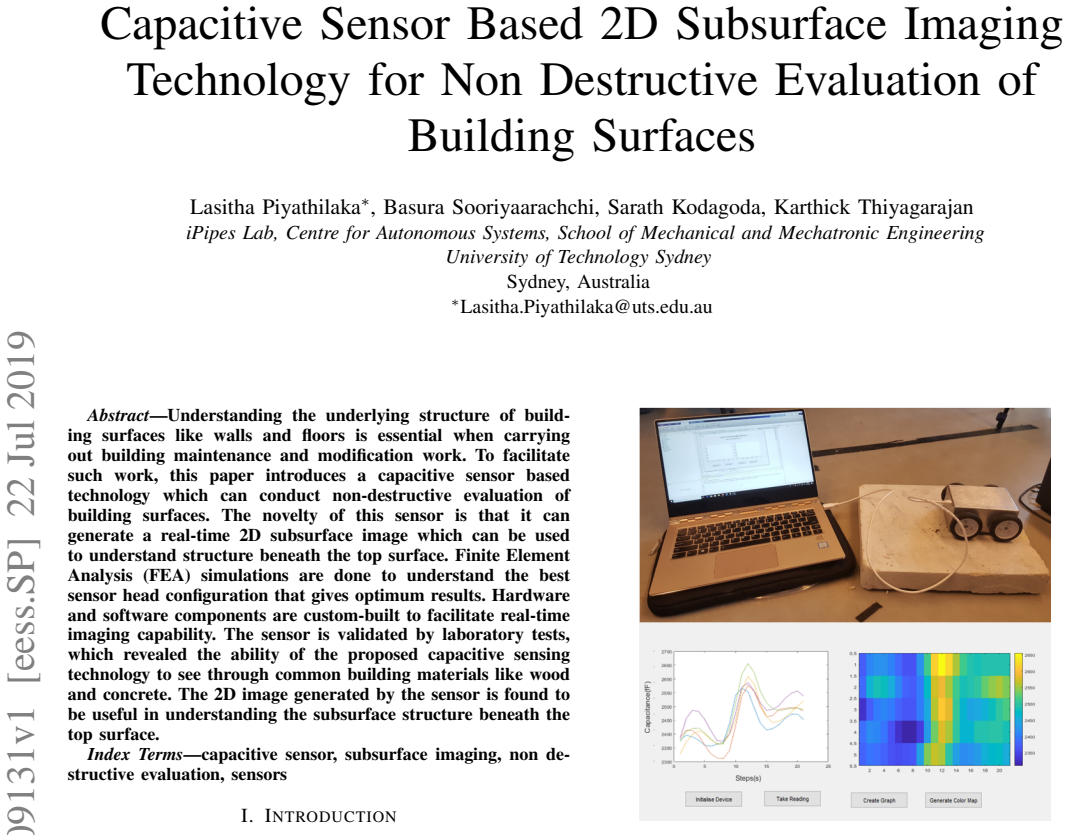
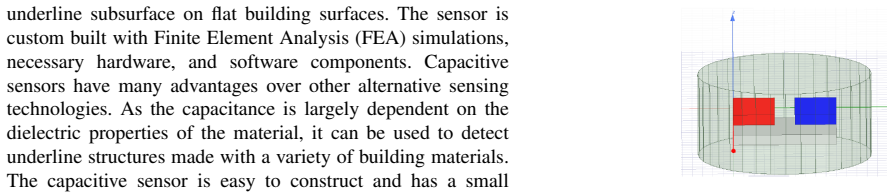
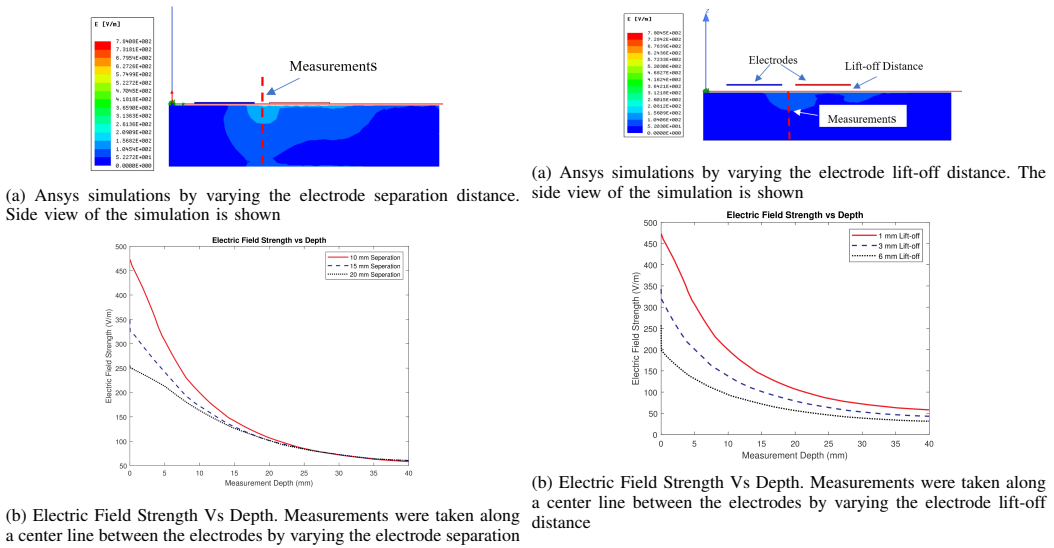
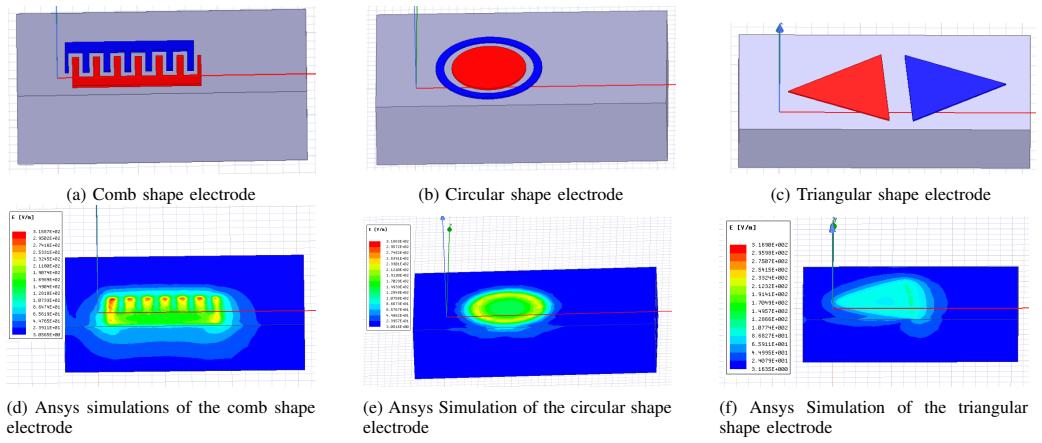
Understanding the underlying structure of building surfaces like walls and floors is essential when carrying out building maintenance and modification work. To facilitate such work, this paper introduces a capacitive sensor-based technology which can conduct non-destructive evaluation of building surfaces. The novelty of this sensor is that it can generate a real-time 2D subsurface image which can be used to understand structure beneath the top surface. Finite Element Analysis (FEA) simulations are done to understand the best sensor head configuration that gives optimum results. Hardware and software components are custom-built to facilitate real-time imaging capability. The sensor is validated by laboratory tests, which revealed the ability of the proposed capacitive sensing technology to see through common building materials like wood and concrete. The 2D image generated by the sensor is found to be useful in understanding the subsurface structure beneath the top surface.
Editorial analysis
A structured set of objections, weighed in public.
Referee Report
Summary. The paper claims to introduce a capacitive sensor-based technology for non-destructive evaluation of building surfaces that generates real-time 2D subsurface images. It uses FEA simulations to optimize the sensor head configuration, develops custom hardware and software for real-time operation, and validates the system via laboratory tests on wood and concrete samples, asserting that the sensor can image subsurface structures through these common building materials.
Significance. If supported by quantitative evidence, the approach could provide a practical NDE tool for building maintenance by enabling non-destructive subsurface visualization. The use of FEA for design optimization and the emphasis on real-time imaging represent engineering strengths in sensor development.
major comments (1)
- [Abstract] Abstract: the manuscript states that FEA simulations and laboratory validation were performed and that tests 'revealed the ability' to see through materials and generate 'useful' 2D images, but supplies no quantitative results, error metrics, resolution figures, depth penetration data, or image quality statistics. This is load-bearing for the central claim, as the performance assertions cannot be evaluated from the given information.
Simulated Author's Rebuttal
We thank the referee for their review and the recommendation for major revision. We address the single major comment point by point below.
read point-by-point responses
-
Referee: [Abstract] Abstract: the manuscript states that FEA simulations and laboratory validation were performed and that tests 'revealed the ability' to see through materials and generate 'useful' 2D images, but supplies no quantitative results, error metrics, resolution figures, depth penetration data, or image quality statistics. This is load-bearing for the central claim, as the performance assertions cannot be evaluated from the given information.
Authors: We agree that the abstract would be strengthened by the inclusion of quantitative performance metrics. The body of the manuscript reports specific results from the FEA optimization (sensor head geometry yielding maximum sensitivity) and laboratory validation (measured capacitance variations and resulting 2D image fidelity on wood and concrete specimens). In the revised manuscript we will update the abstract to include key figures such as achieved penetration depth and spatial resolution drawn from those sections, thereby making the central claims directly evaluable from the abstract as well. revision: yes
Circularity Check
No circularity: experimental engineering validation with no derivation chain
full rationale
The paper describes an engineering prototype using FEA for sensor design, custom hardware/software for real-time 2D imaging, and laboratory validation on wood/concrete samples. No mathematical derivation, parameter fitting to data, self-referential predictions, or load-bearing self-citations are present. The central claim rests on empirical test results rather than any closed logical loop reducing outputs to inputs by construction. This is a standard non-circular experimental development paper.
Axiom & Free-Parameter Ledger
Reference graph
Works this paper leans on
-
[1]
Pulsed eddy current sensing for condition assessment of reinforced concrete,
N. Ulapane, S. Wickramanayake, and S. Kodagoda, “Pulsed eddy current sensing for condition assessment of reinforced concrete,” in 14th IEEE Conference on Industrial Electronics and Applications , 2020
work page 2020
-
[2]
Some convolution and scale transformation techniques to enhance gpr images,
N. Ulapane, L. Piyathilaka, and S. Kodagoda, “Some convolution and scale transformation techniques to enhance gpr images,” in The 14th IEEE Conference on Industrial Electronics and Applications (ICIEA 2019), 2019
work page 2019
-
[3]
A. Gunatilake, L. Piyathilaka, S. Kodagoda, S. Barclay, and D. Vitanage, “Real-time 3d profiling with rgb-d mapping in pipelines using stereo camera vision and structured ir laser ring,” in The 14th IEEE Conference on Industrial Electronics and Applications 2019 , 2019
work page 2019
-
[4]
K. Thiyagarajan, “Robust Sensor Technologies Combined with Smart Predictive Analytics for Hostile Sewer Infrastructures,” Ph.D. disserta- tion, University of Technology Sydney, 2018
work page 2018
-
[5]
S. Wickramanayake, K. Thiyagarajan, S. Kodagoda, and L. Piyathilaka, “Frequency sweep based sensing technology for non-destructive electri- cal resistivity measurement of concrete,” in 36 International Symposium on Automation and Robotics in Construction , 2019
work page 2019
-
[6]
N. Giovanangelia, L. Piyathilaka, S. Kodagoda, K. Thiyagarajan, S. Bar- clay, and D. Vitanage, “Design and development of drill-resistance sensor technology for accurately measuring microbiologically corroded concrete depths,” in 36 International Symposium on Automation and Robotics in Construction , 2019
work page 2019
-
[7]
Robust sensing suite for measuring temporal dynamics of surface temperature in sewers,
K. Thiyagarajan, S. Kodagoda, R. Ranasinghe, D. Vitanage, and G. Iori, “Robust sensing suite for measuring temporal dynamics of surface temperature in sewers,” Scientific Reports, vol. 8, no. 1, 2018
work page 2018
-
[8]
X. Yin, D. Hutchins, G. Diamond, and P. Purnell, “Non-destructive evaluation of concrete using a capacitive imaging technique: Preliminary modelling and experiments,” Cement and Concrete Research , vol. 40, no. 12, pp. 1734–1743, 2010
work page 2010
-
[9]
Soft capacitive sensor for structural health monitoring of large-scale systems,
S. Laflamme, M. Kollosche, J. J. Connor, and G. Kofod, “Soft capacitive sensor for structural health monitoring of large-scale systems,”Structural Control and Health Monitoring , vol. 19, no. 1, pp. 70–81, 2012
work page 2012
-
[10]
Studies of the factors influencing the imaging performance of the capacitive imaging technique,
X. Yin, D. A. Hutchins, G. Chen, W. Li, and Z. Xu, “Studies of the factors influencing the imaging performance of the capacitive imaging technique,” NDT & E International , vol. 60, pp. 1–10, 2013
work page 2013
-
[11]
4 Channel Capacitance to Digital Converter for Capacitive Sensing (Cap Sensing) Solutions,
“4 Channel Capacitance to Digital Converter for Capacitive Sensing (Cap Sensing) Solutions,” accessed 12-07-2019. [Online]. Available: http://www.ti.com/product/FDC1004
work page 2019
-
[12]
Gaussian Markov Random Fields for Localizing Reinforcing Bars in Concrete Infrastructure,
K. Thiyagarajan, S. Kodagoda, L. V . Nguyen, and S. Wickramanayake, “Gaussian Markov Random Fields for Localizing Reinforcing Bars in Concrete Infrastructure,” in 2018 Proceedings of the 35th International Symposium on Automation and Robotics in Construction . Berlin: IAARC, 2018, pp. 1052–1058
work page 2018
discussion (0)
Sign in with ORCID, Apple, or X to comment. Anyone can read and Pith papers without signing in.