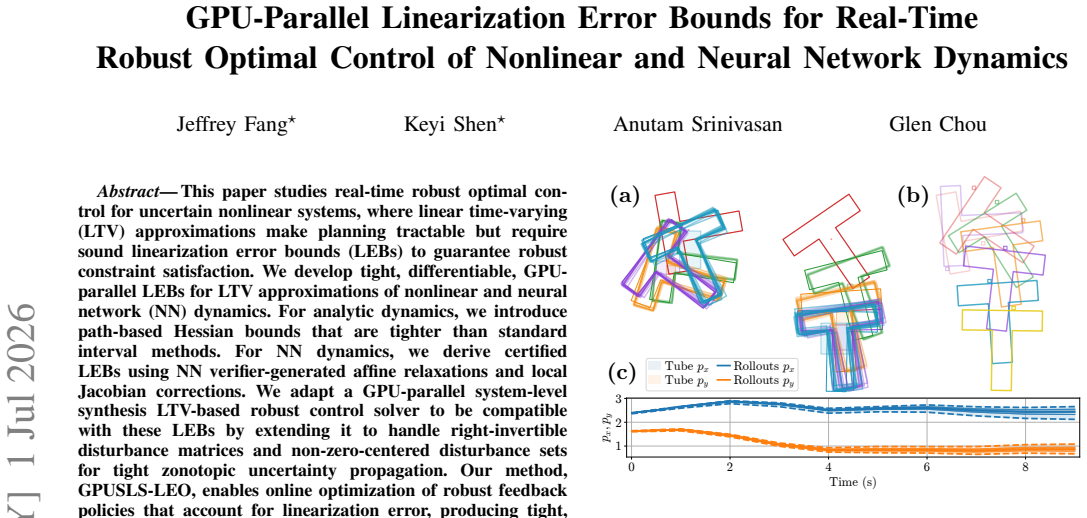
Three scalar equations close SBL's high-dimensional stationary behavior
Adaptive response replaces frozen resolvent trace in a reoptimization-corrected Gaussian law, yielding branchwise consistency and a…
Electrical Engineering and Systems Science
sort pith recommended most recent
Adaptive response replaces frozen resolvent trace in a reoptimization-corrected Gaussian law, yielding branchwise consistency and a…
Fine-tuning and sampling share one iteration with global descent and quadratic convergence.
· “Newton Matching for Generative Modeling: A Unified Framework for Fine-Tuning and Sampling”
The best you can do is project the source onto the mixture line; leaving the class while minimising MSE is self-defeating
· “Geometric Ceilings on Time-Frequency Masking for Single-Channel Separation”
The first-order constant is computed and two estimators provably achieve it in Gaussian models.
· “Fundamental Limits of Adaptive Beamforming Under Finite Training”
Covariance radius eliminates auxiliary matrices from Riccati stability condition, matching Lyapunov's theorem.
The main result (Theorem 3.1) establishes that the following are equivalent for any non-empty null class P and alternative class Q of…
· “A complete characterization of sequential testability and change detectability in i.i.d. models”
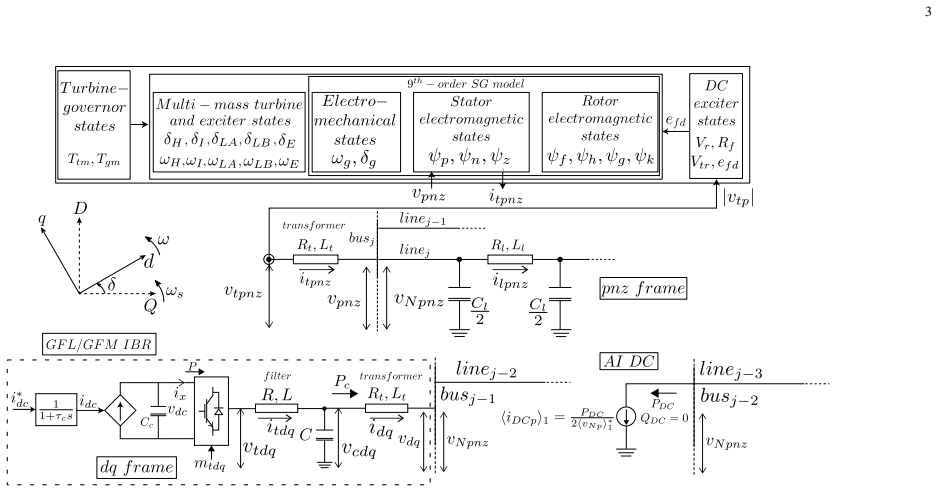
The result fills a gap for three-body trajectory problems, where endpoint orbits resist algebraic equations.
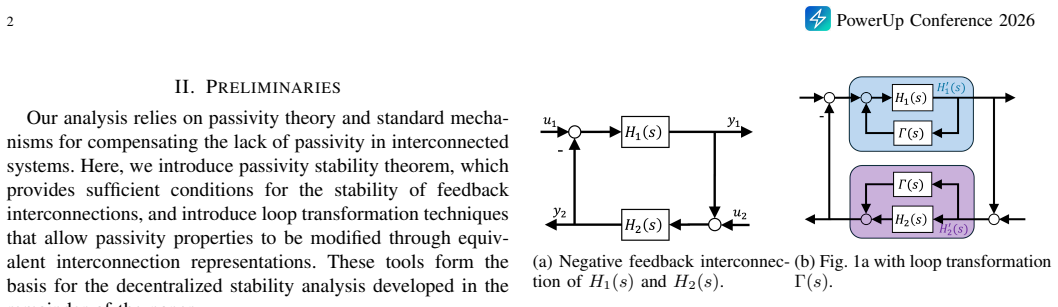
· “Transversality Conditions for Boundary Constraints Defined by Differential Equations”
Structure-Behavior Coalescence says system identity arises from mutual determination, not from matching separate descriptions
· “Structure-Behavior Coalescence and the Limits of Traditional Systems Theory”
Locally, compressed tone rate is R^{-1/(r+c)}; globally, symmetric-edge projector is uniquely optimal and regularly identifying for m≥4.
A divisor and a shear name each support; the diagonalizing waveform comes in closed form.
· “On Diagonalizable Delay-Doppler Channels and Their Diagonalizing Waveforms”
Under ETH for PPAD, polynomial CCE computation is impossible; first radically uncoupled algorithm matches the hardness bound.
· “Independent Reinforcement Learning in Discounted Markov Games”
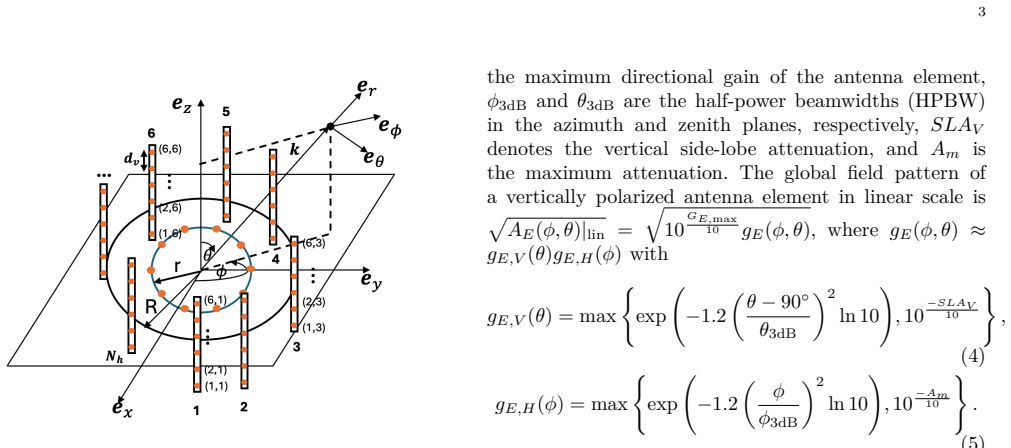
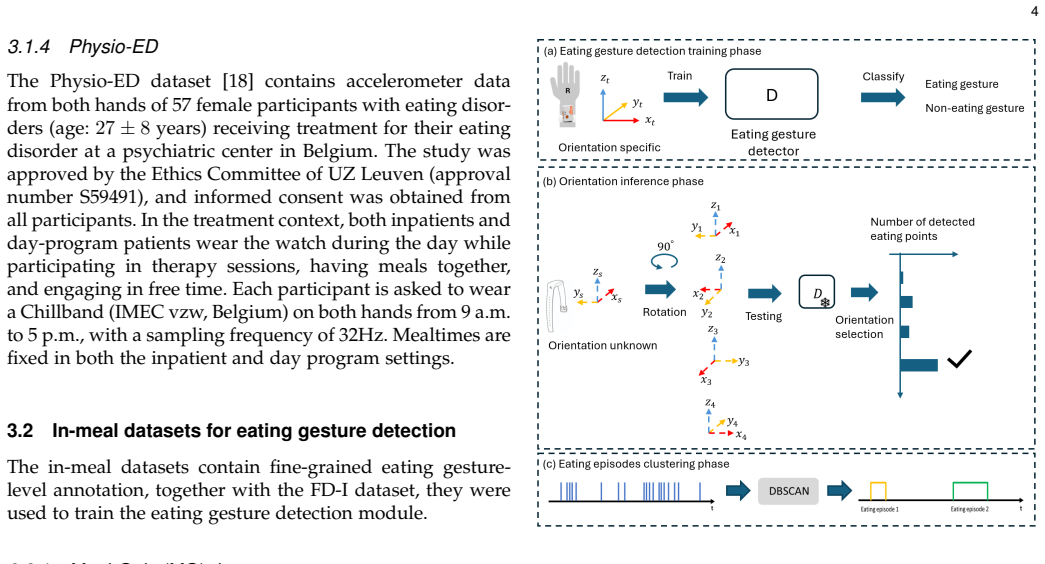
A differentiable point renderer with explicit material models trains in three minutes per scene and outputs complex range profiles.
· “3D Point Splatting for mmWave Radar Novel View Synthesis”
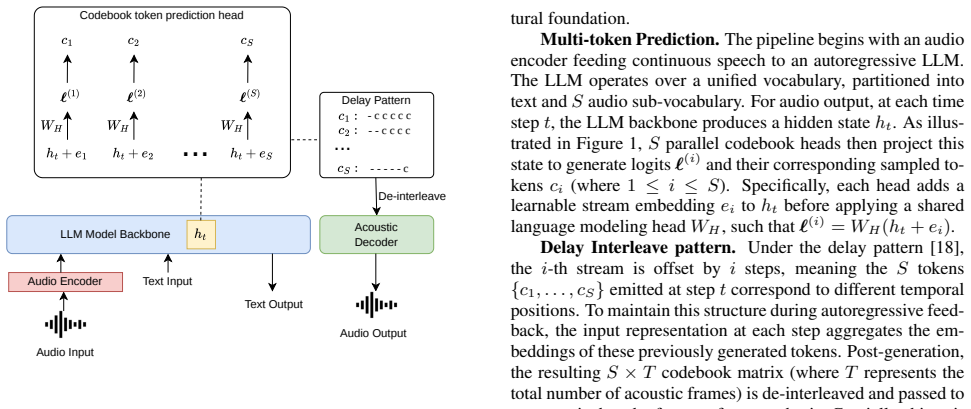
Trained to verify every reasoning step, the model fixes its own errors mid-flight — at no extra latency.
· “RetroThinker: Enabling Retrospective Thinking in Speech LLMs”
In two-player coordination games, tunable noise guarantees recurrent states beat the classic 50% bound and avoid bad equilibria.
· “Truncated Noisy Best-Response Algorithms: Toward Game Theoretic Learning with Safety Guarantees”
Its controller pools spectrum, services, and base stations so sparse services can ride cellular infrastructure.
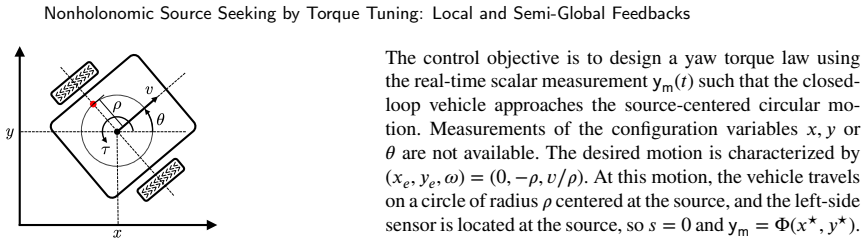
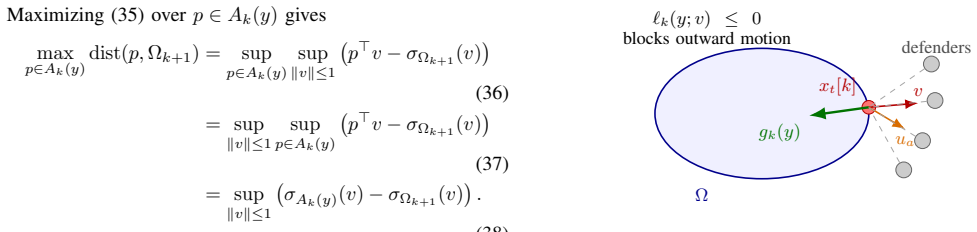
No camera needed; dual USBL sensors guide holonomic vehicle in turbid water.
· “Acoustic-based Guidance for Automatic Docking of Holonomic AUVs”
A predefined-time resilient integral reinforcement learning framework for input-constrained nonlinear systems with unknown dynamics under…
A switching sliding-mode protocol achieves leaderless consensus after a prescribed total attack-free period, despite bounded disturbances…
· “Predefined-Time Leaderless Consensus Under Denial-of-Service Attacks”
A 17-patient clinical case study shows that Gaussian and Laplace DP noise destroys class separability and downstream classification.
Open-source pipeline for cross-cultural researchers yields usable transcripts from YouTube videos with modest data.
Lifts cross-dataset EER by up to 38% and balances VC and TTS performance.
· “Not All Attacks Are Learned Equally in Speech Deepfake Detection”
The CLBF decrease condition depends only on κ; the paper constructs explicit families via a first-order PDE.
· “Construction of Control Lyapunov-Barrier Functions from CLF-CBF Pairs”
Receding horizon and Bayesian optimization make long-horizon flight and maintenance planning feasible and improve scaling alignment.
· “Mixed-integer optimization for multi-year military aircraft fleet management”
Combining greedy refinement choice with error-cost pruning beats pure h-refinement and prior hp methods on MRI, climate, and image data.
A joint least-squares estimator approaches perfect interference knowledge by observing the same channel across multiple coherence intervals.
· “Leveraging Slowly Time-Varying AP-AP Channels for Interference Mitigation in Dynamic TDD”
SSEMG-Net achieves 22.1 dB SNR improvement and halves mean frequency error versus prior methods, preserving muscle fatigue biomarkers.
· “SSEMG-Net: A Spectrogram-Based Mamba Network for Surface Electromyography Denoising”
Proof settles a conjecture by Ferrante using Horner polynomials; discrete-time counterexamples show the result is specific to continuous…
· “Elementwise Positivity of the Solution to Lyapunov Equation for Hurwitz Companion Matrices”
A three-level stability framework connects rack, facility, and grid dynamics to prevent oscillations and enable flexible load response.
· “From Grid to Chip: Power Architecture, Stability, and Flexibility of AI Data Centers”
Conditional generation of year-long sub-hourly load curves matches real data in forecasting and appliance detection, enabling safe energy…
· “LoaDiff: Conditional Generation of Electricity Consumption Time Series for Energy Analytics”
By learning only state trajectories instead of raw actions, model-based RL cuts overflow and training cycles on a real testbed.
A unified math framework maps signal randomness to recorded crossing distributions, verified for Poisson arrivals.
· “Multi-Threshold Sampling: Signal Space, Sampling Operators, and Crossing-Time Distributions”
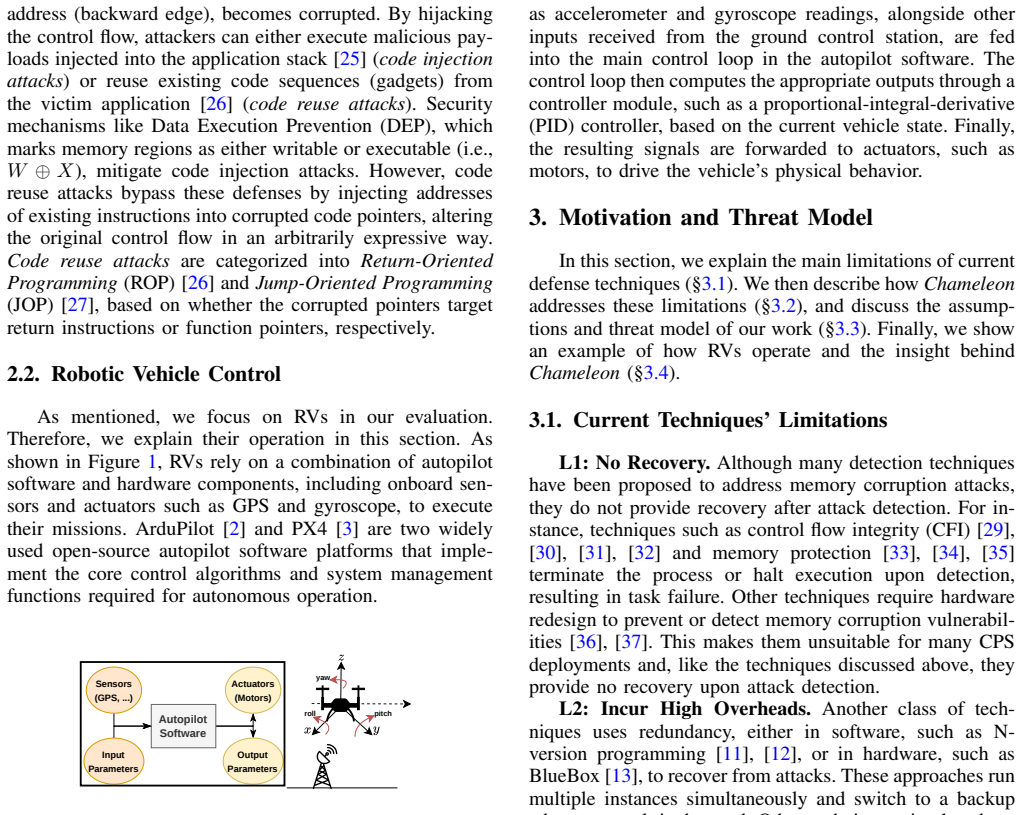
New policy-space Riccati iteration updates gains without ever estimating the value matrix, slashing computation and memory.
· “Critic-Free Policy Iteration for Continuous-Time Zero-Sum Games: A Policy-Space Riccati Approach”
A generative shape prior and a differentiable physics proxy collaborate at test time to produce complete 3D vertebrae from artifact-laden…
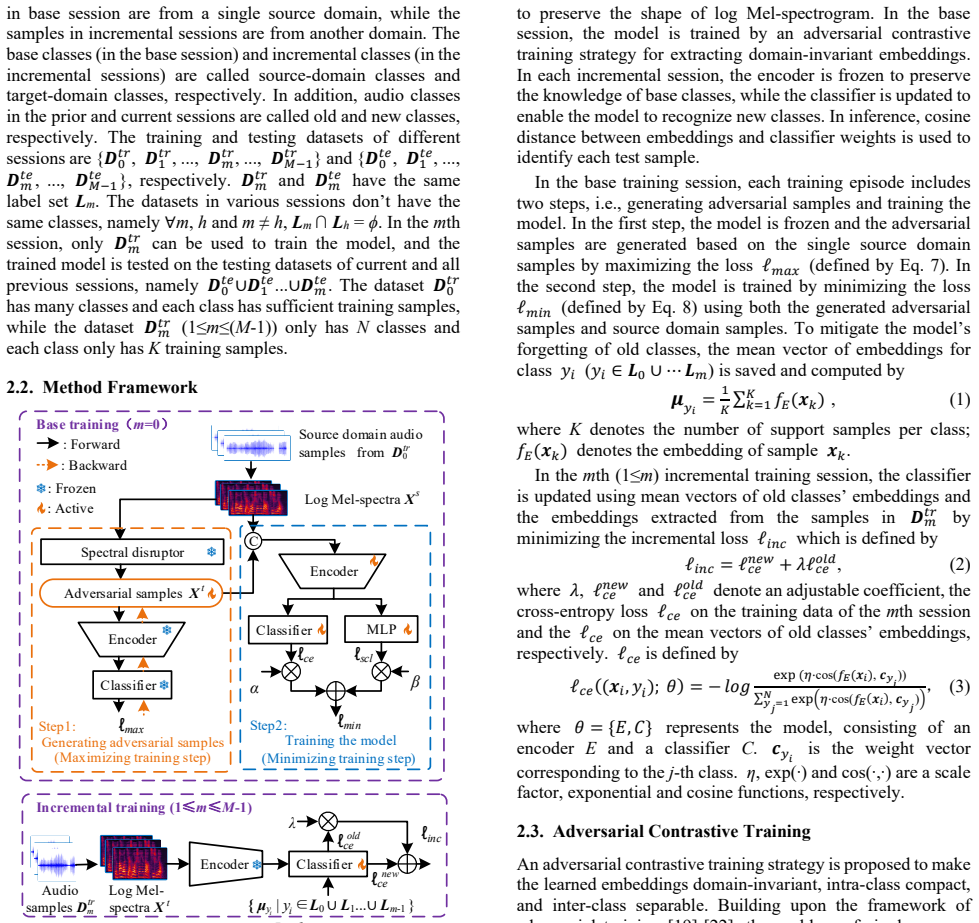
A study on FSD50K and AudioSet shows that complex feature-level continual learning methods are unnecessary for in-domain audio…
· “Investigating catastrophic forgetting in sound event classification”
Leaf-off and low-sensitivity shots become as reliable as summer data, expanding calibration dataset for forest carbon models.
· “Optimizing GEDI Simulator Configuration for European Temperate Forests”
New market rule ensures all generators recover costs through transparent energy and ancillary service prices, no uplift payments needed
Using Peak Age of Information, 11 features replace 23 while boosting F1-score to 99.38% and lowering false positives.
· “AoI-driven Anomaly Detection Framework for Communication Networks”
In two-population LQ mean field games, each population’s local aggregate observation can determine the state–plan pair needed for revision…
Active frequency and voltage control on diesel generators prevents protection thresholds from being reached, regardless of inertia.
· “Quantifying the Unintentional Islanding Risk: A Comparative Study on Active Distribution Network”
A new probabilist evaluation method corrects for annotation noise, revealing that S4VAD beats CNN, RNN and Trnsformer baselines on…
· “Low-Latency State Space Voice Activity Detection with Robust Onset Time Evaluation”
Prompt-extension with prompt-dependent loss improves ASR WER while maintaining speech quality
In a 20-participant study, all 42 self-drawn formations were physically realized, scoring 84/100 on usability.
· “Freehand Sketching for End-User Programming of Robot Swarms”
Adding text increases false alarms without improving F1 in streaming end-of-turn detection on English telephony conversations.
· “Less can be More: What Aspects of Speech Drive End-of-Turn Detection”
Bayesian and greedy rules infer the likely data arrangement, and an EM module learns shuffle probabilities when they are unknown.
· “Fusion Estimation in Multi-sensor Systems for Data Packets with Disrupted Identities”
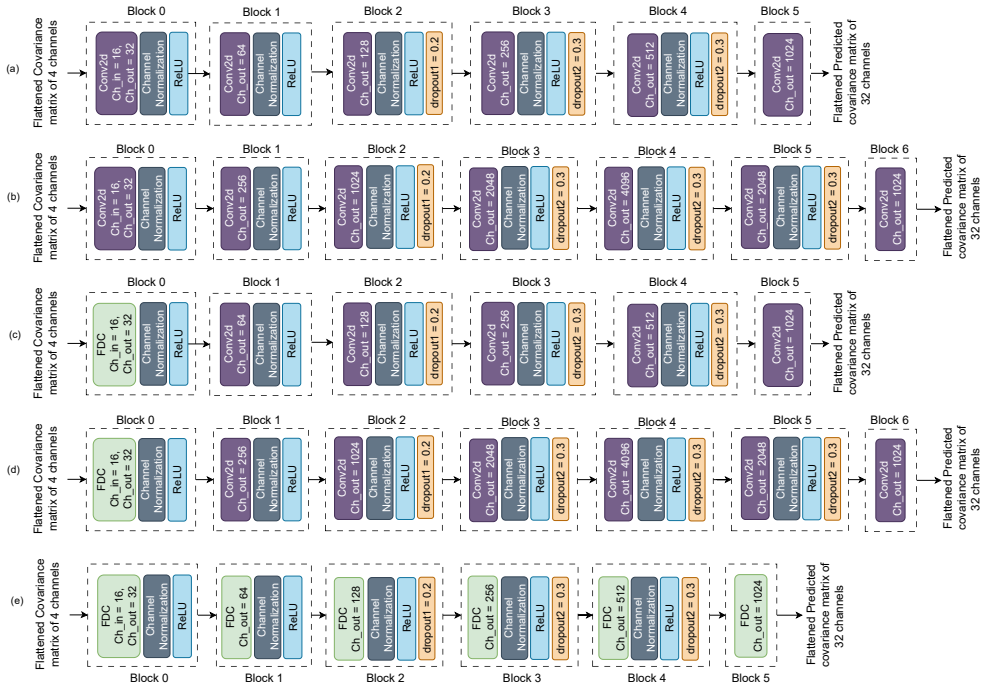
The central claim is that a graph filter implemented as a polynomial of the covariance matrix is conceptually equivalent to a PCA-based…
· “Learning with Covariance Matrices: Principal Component Analysis Meets Learning with Graphs”
For piecewise-linear gains, the optimal POVM comes from solving a finite set of semidefinite programs.
· “Risk-Averse Decision Making via Quantum Measurement Design”
A lightweight model runs on an FPGA in 6.9 ms, bringing real-time electrical health monitoring closer for more-electric aircraft.
No partitions or variances supplied: QZ-IPCA estimates them all and beats least squares on all 32 configurations.
· “Multivariate linear regression without prior assumptions”
Tying each speech segment to its intended English phoneme beats whole-utterance pooling on unseen speakers.
· “Phoneme-Aware Pronunciation Representations for L2-English L1-Background Accent Identification”
A study finds that shared upgrade costs create a feedback loop that can amplify withdrawals, threatening clean energy deployment.
New mobility information capacity measure gives exact limit on observable motion patterns under resource and uncertainty constraints.
· “Mobility Information Capacity in the Sky: A Gaussian Channel Perspective”
A ConvNeXt-MHSA-BiGRU framework improves subject-independent continuous activity recognition by 2.45 percentage points over the CNN-RNN…
· “Robust Continuous Human Activity Recognition Using Deep Learning and Distributed Radar Sensors”
Simulations show optimal altitude near 200 meters delivers biggest gains for users on cell edges.
Audio-only WER rises from 1% on LRS3 to 17–24% on natural dyadic speech, and visual gains quadruple after conversational training.
· “Candor-LR: A Dyadic Conversational Dataset for Audio-Visual Speech Recognition”
An EMA copy of the student supplies all trajectory supervision while cutting training cost.
· “Teacher-Free Self-Distilled Consistency Trajectory Learning for Fast Speech Enhancement”
A planning model that couples charger siting with EV uptake also unlocks 91% of vehicle-to-grid energy value.
· “Economic Evaluation of V2G-Enabled Fast Charging Stations Under Endogenous EV Adoption Dynamics”
Three models drop from sub-1% to 66–313% WER; audio-visual fusion often hurts; LLM decoders hallucinate.
Writing the notes and how they are played into one readable format beats ABC, score images, and MIDI text.
· “Unifying Score and Performance for Fine-Grained Music Understanding in Audio-Language Models”
On the Indian Pines benchmark, the combination reaches 95.5% accuracy, outperforming five other pipelines.
· “Dimensionality Reduction for Hyperspectral Image Classification”
Trainable block-unitary transforms shape the delay-Doppler map while keeping OFDM's single-tap equalization intact.
New method cuts correlation evaluations from exponential to linear while keeping position error near the information-theoretic limit.
· “Efficient LOS-Sampled GNSS Direct Position Estimation: An Information-Loss CRB Analysis”
Open-loop walking over rough terrain achieves a positive task dimension per contact, just below the chance any footstep lands firmly.
New PI-DTW alignment algorithm enables scalable word-level SOT training from real conversations.
Vehicle-in-the-loop tests: intention sharing avoids all collisions while status-only sharing crashes repeatedly
CUB and the CougarTail mast shrink a torpedo UUV's electronics from 709 g to 156 g, freeing room for payload and buoyancy.
Full-vector covariance optimization beats coordinate-wise baselines as near-field users dominate.
· “Covariance-Aware MM-PGD for Mixed Near-/Far-Field Activity Detection”
All three field capacity checks land inside predicted intervals; end-of-life spreads across roughly three years.
A distributed algorithm jointly estimates the emission time and position, allowing each receiver to compute closed-form updates without a…
Runtime layer rejects wrong-source, substituted, or stale observations across authority boundaries
· “Can AI Agents Deliver Verifiable Network-Wide Outcomes Across Authority Boundaries?”
Optimal histogram recovery scales linearly with users and bins, with exponential error decay
· “Low-Complexity Maximum Likelihood Detection for Type-Based Over-the-Air Computation”
Formal context units plus verification checks turn raw LLM model code into architecture models engineers can review.
A base station can update its transmit covariance from past echoes and provably minimize the next tracking error bound.
· “Sequential Transmit Covariance Optimization for Wireless Tracking Exploiting Observation History”
Sixteen stages run on shared codebooks and beat every compared PSNR baseline on Cityscapes.
· “Storage-Scalable Progressive Semantic Communication via Knowledge-Base Reuse”
Why a 126-eigenvector basis cannot capture local nonlinearity and how condensation fixes it
· “Joint nonlinearity in a stiffened aluminium wingbox panel and what it requires of a reduced basis”
A hybrid cascade-VLM system recognizes 14 fabric structures at 93.9% top-1 accuracy while using cloud AI on only 28% of inputs.
Reliability gating filters oscillating BP estimates while preserving logical error rate.
· “Accelerating A*-Based Algorithms for Decoding Quantum Low-Density Parity-Check Codes”
At one-eighth the size of its biggest rival, it tops PESQ, pitch accuracy, and MOS on unseen speakers.
Elastoformer shrinks vision models up to 85% while sharing all weights across runtime configurations.
· “Elastoformer: Enabling Dynamic Adaptivity via Elastic Model Transformation”
A review of 88 studies: batteries for short runs, hydrogen for seasons, boreholes for heat, diesel as backup.
Three targeted modifications to pseudo-label generation reduce missed detections and improve downstream ASR.
· “Over-Tightening-Aware Pseudo-Labeling for Tight-Boundary Speaker Diarization”