Hybrid blood biomarker intervals outperform pure personalization
Pure personalization overflags up to 68 percent of results without outcome links, but conditioning on group normals boosts precision for
Quantitative Biology
sort pith recommended most recent
Pure personalization overflags up to 68 percent of results without outcome links, but conditioning on group normals boosts precision for
One backbone forecasts patient trajectories and beats multi-task risk baselines without fine-tuning
CA-DEL pairs screens for three carbonic anhydrase isoforms with ChEMBL validation data to check generalization from indirect signals.
· “CA-DEL: An Open Multi-Target, Multi-Modal Benchmark for Learning from DNA-Encoded Library Screens”
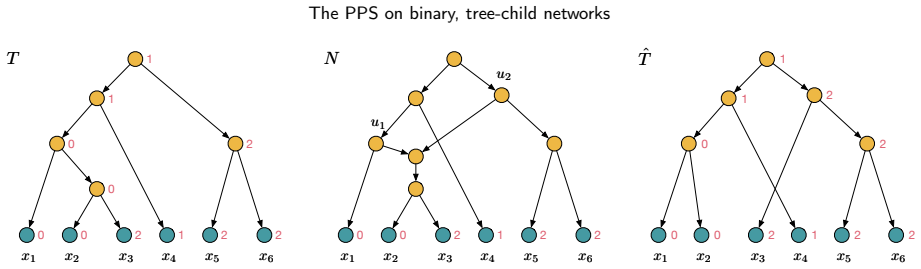
It uniquely identifies binary semidirected networks and enables polynomial-time comparisons of evolutionary histories with reticulations.
· “A μ-distance for semidirected orchard phylogenetic networks”
Isolated tests show dropout and confounders erase causal advantages over simple correlations in single-cell data
One-stage model on atom coordinates and types outperforms staged methods and supports non-canonical amino acids.
· “A-CODE: Fully Atomic Protein Co-Design with Unified Multimodal Diffusion”
A Metropolis-Hastings sampler using masked conditionals avoids out-of-distribution artifacts when forecasting gene-knockout responses.
Models using experimental mosquito EIP distributions produce lower but longer outbreaks than exponential assumptions, with little change in
Thermal fluctuations from discrete ions set a hard bound on 10 microsecond gating timescales close to observed performance.
· “Thermal fluctuations set fundamental limits on ion channel function”
Synthetic reasoning traces deliver state-of-the-art PerturbQA results, 87% accuracy on new cell types, and strong gains from 2% of the data.
Resampled calcium traces and consensus connectomes let labs compare activity across animals and studies.
· “Homogenized textit{C. elegans} Neural Activity and Connectivity Data”
On bounded-degree graphs, the outbreak probability can be continuous yet non-monotone in the infection rate.
Reformulating dynamics on the circle shows the Cauchy law is the sole rotation-invariant measure, unifying exact mean-field reductions.
· “Geometric Origin of Exact Mean-Field Reductions: M{\"o}bius Symmetry and the Lorentzian Ansatz”
Even mild dependencies shift spread from explosive to polynomial rates on networks with geometry.
Benchmark on two cohorts shows CFN edges linear CLR in colon while compartment labels remove spurious dependency instability.
Synthetic epidemics with true case counts and R_t give modelers what real surveillance cannot.
· “Reservoir: A Large-Scale Simulated Dataset for Training and Evaluating Epidemiological Models”
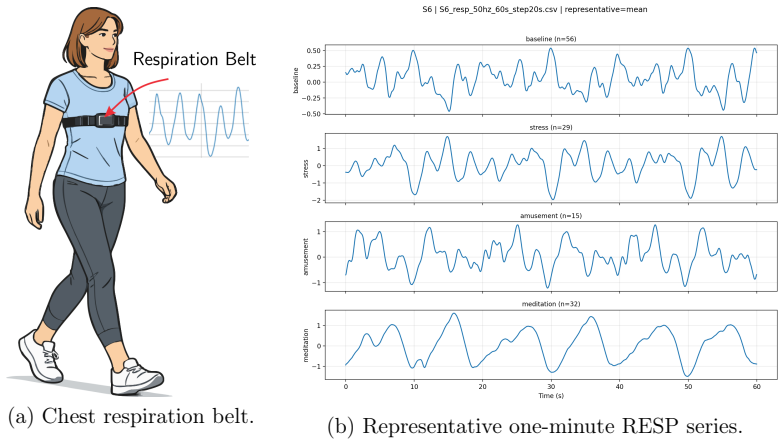
In an eight-strategy ECG-PPG fusion comparison, gates reweight sharply at dropout but barely track graded corruption.
New formula tracks the genome size at which mating-threshold populations fragment, verified against full simulations.
· “What sets the critical genome length for sympatric speciation? A closed form and asymptotic theory”
A curvature-sensing spinal loop times tail beats to a neighbor's wake; removing it dissolves the school.
On a new 18-item GenAI exam, teens who used chatbots most often scored lowest, while perceived usefulness tracked nothing.
Two protein models can match on test accuracy yet store interaction structure at very different stages.
· “Beyond Tokens: Probing Higher-Order Epistasis in Learned Protein Representations”
Finch reaches R² 0.90–0.92 on mixture toxicity curves using only mole-fraction-weighted embeddings.
· “Finch: Toxicity Dose Response Curve Prediction of Chemical Compounds and Mixtures”
Temporal integration alone fails; only predictive world models approach the brain's appearance-invariant motion coding.
· “Primate vision reveals a missing principle for robust dynamic AI”
Pooled screening of 100,000 random templates trains a model to prioritize candidates before any synthesis.
· “Optimizing RNA yield using deep neural networks coupled to massively parallel screening”
Host, microbiome, and association each get their own testable share of evolutionary change.
A sparse Potts model orders ten A2A ensembles along activation with no labels, and backmaps its samples to atoms.
· “PHASE: encoding global protein ensembles with local Hamiltonians and all-atom backmapping”
A fast log-linear test of adjacent dwell times tells a two-state channel from a multi-state one in under a second.
Six wavebands plus attenuation data improve estimates of eight pigments, especially alloxanthin and two fucoxanthin markers.
A polynomial feasibility test plus exact search recovers whole-genome events under reticulation.
Previous quartet-based bound was n^4; a graph-and-charging proof cuts it to n^{5/2}.
· “On the maximum size of 2-weakly compatible split systems”
Without compartments, synapses lack local error signals for deep learning without separate phases.
Maps all enzyme subsets of three central-carbon networks, flagging essential enzymes before wet-lab work.
· “Systematic pathway comparison on the powerset of rule-based biochemical systems”
GmGM jointly infers cell and gene networks from PBMCs, finding monocyte subsets and proliferating cells that marker-based labels miss.
· “Uncovering Cellular Resolution in scRNAseq via Unbiased Cell and Gene Network Analysis”
Filling blank intervals in a visual metronome with a colored disk improved tapping stability and was associated with reduced visual…
· “Temporal filling-in reduces attentional fluctuations in sustained visual attention”
Q-learning agents in spatial prisoner's dilemma cooperate most when they observe roughly three to four neighbors, a non-monotonic effect…
· “Evolution of cooperation with Q-learning: how much information do we need?”
Pairwise split-coupling variance at the path-count cost of common reaction paths, applied to three estimation settings.
A multilevel-selection model locates the first great transition at a protocell–replicator union.
· “The first major transition: Origin of life from a multilevel selection perspective”
Stepping the pump wavelength across transient absorptions turns it into a state-selective filter for femtosecond Raman spectra.
· “From Steady-State to Ultrafast: Resonance Raman Approaches for Biological Samples”
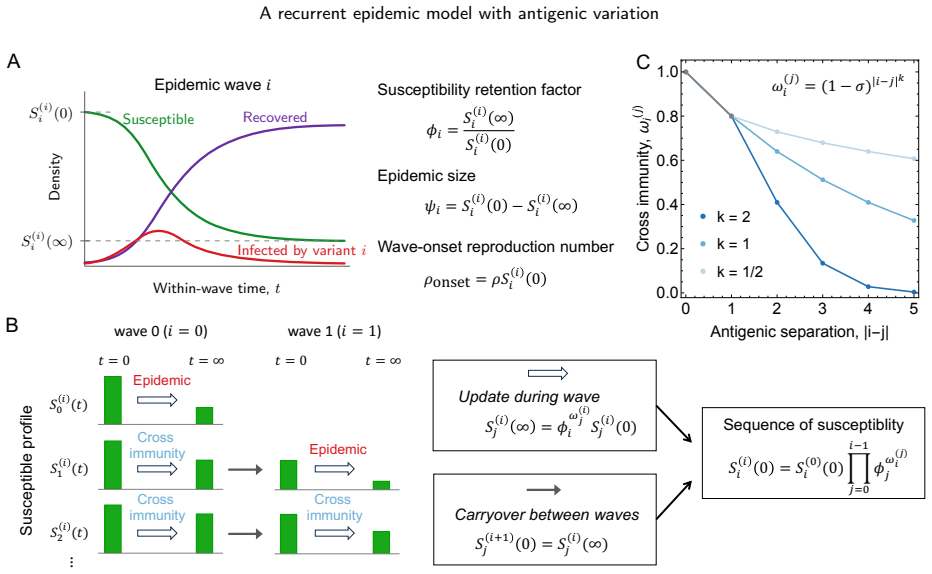
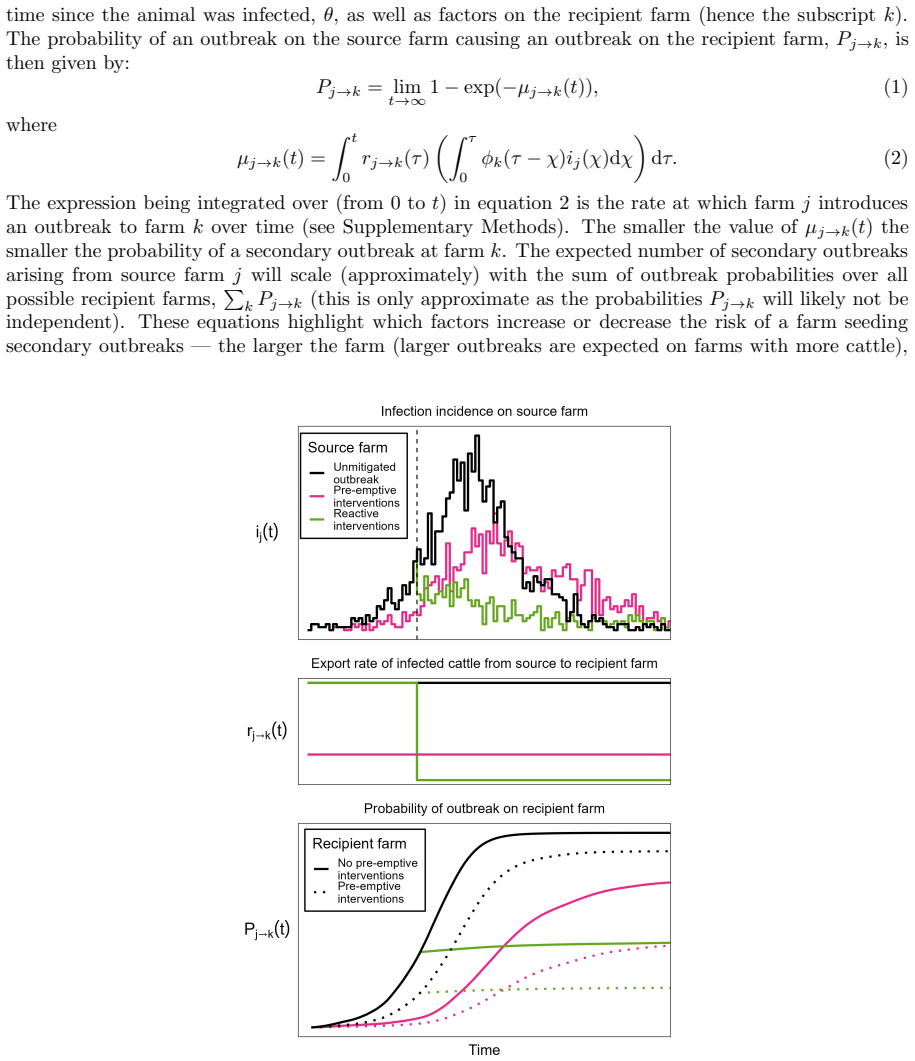
Same individual-level process yields power-law, logarithmic, and multigroup incidence closures.
· “From Individual-Based Stochastic Epidemics to Heterogeneous SIR Equations”
Theory: the compact-cell approximation emerges at late times, not from the start, on a microsecond scale.
· “Voltage dynamics of spherical membranes from single ion channel currents”
A baseline scan identifies the 25% of complete responders who still recur, changing how pCR is interpreted.
DigiPhen couples automated multi-omics data with modular models so engineers can design first, test later.
· “DigiPhen: a new paradigm for building predictive models of biological systems”
Trained on 3,330 structures, ARCHER matches per-dataset estimators and keeps conformational signal.
· “ARCHER: Amortized cross-specimen pose estimation for cryo-electron microscopy”
On finite phenotype spaces, cooperation requires sharp recognition, stable strategies, and an intermediate mutation rate.
· “Phenotypic Assortment and the Evolution of Cooperation in Finite Periodic Phenotype Spaces”
A delay-coupled ring model replays forward and backward at quantized speeds, without symmetric plasticity.
· “Forward and reverse delay-driven hippocampal replay without symmetric plasticity”
New hybrid generator joins ribosome load, GC content, folding energy, and structure control in one design pass.
Adding libration and dihedral terms to network Hamiltonian models flips low-T aggregation to droplets.
· “Motional Degrees of Freedom in Network Hamiltonian Models”
Explainable AI on 502 nights produces concrete thresholds for snacks and insulin adjustments in type 1 diabetes.
· “Explainable AI-based Decision Support for Nocturnal Hypoglycemia Prevention in Type 1 Diabetes”
Single-electrode shear hit AUC 0.820, matching multielectrode phase arrays.
A frozen single-cell perturbation model adds displacement features that beat patient-drug baselines on TCGA and PDX.
· “PerturbRx: Learning Treatment-Conditioned Latent Transitions for Patient Drug Response Prediction”
Random rewiring that preserves degree cannot reproduce metabolism's clustering or community structure.
· “Metabolic Network Properties: Comprehensive Analysis Across Domains”
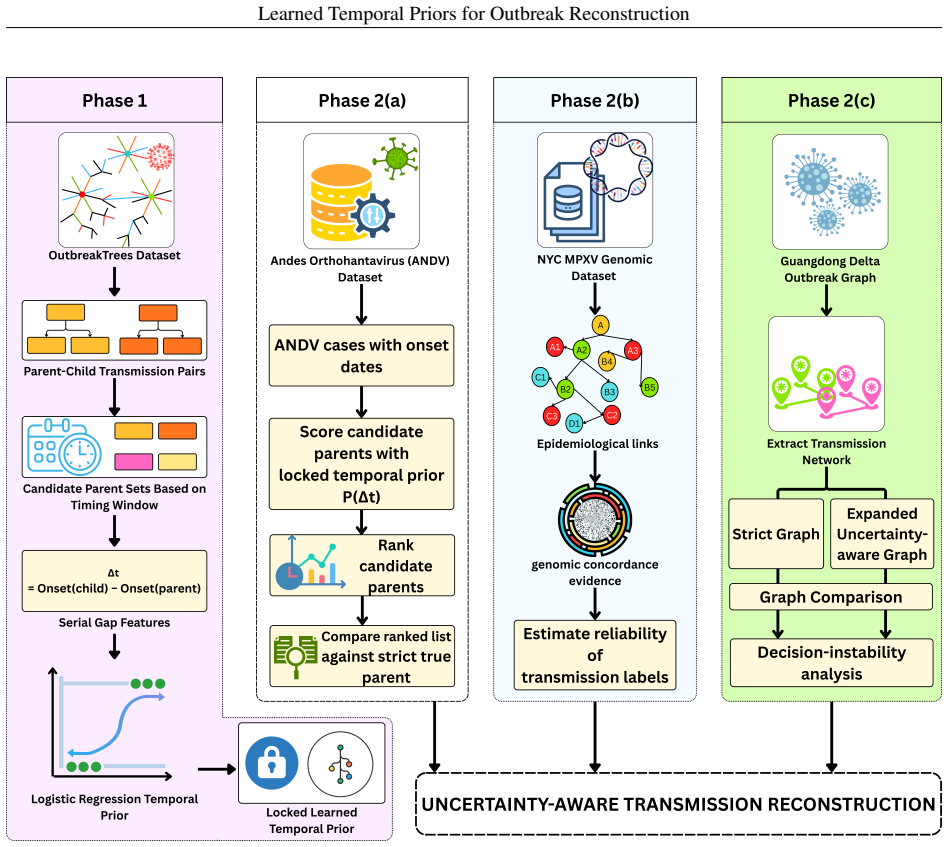
Adding transmission graphs to household SIR models separates within-household and external spread in simulated outbreaks.
TracingFlow learns acceleration fields from sparse snapshots, so trajectories can cross and match every observed distribution.
· “TracingFlow: A Simulation-Free Trajectory Inference Framework Based on Second-Order Dynamics”
Train one model for enhancers, promoters and CTCF sites; get calibrated probabilities and 80x faster interpretation.
· “mLS-GKM: Efficient Multi-class Regulatory Sequence Classification with Gapped k-mer SVMs”
GENIE turns costly agent-based simulations into fast, location-aware probabilistic forecasts of hospital burden.
Because the optimum and stabilizing-selection strength are inseparable, new OU models of trait evolution emerge.
Active viscoelastic model unifies determinate, indeterminate and proportionate growth in one framework.
· “Growth phases of an active tissue: determinate, indeterminate, and proportionate”
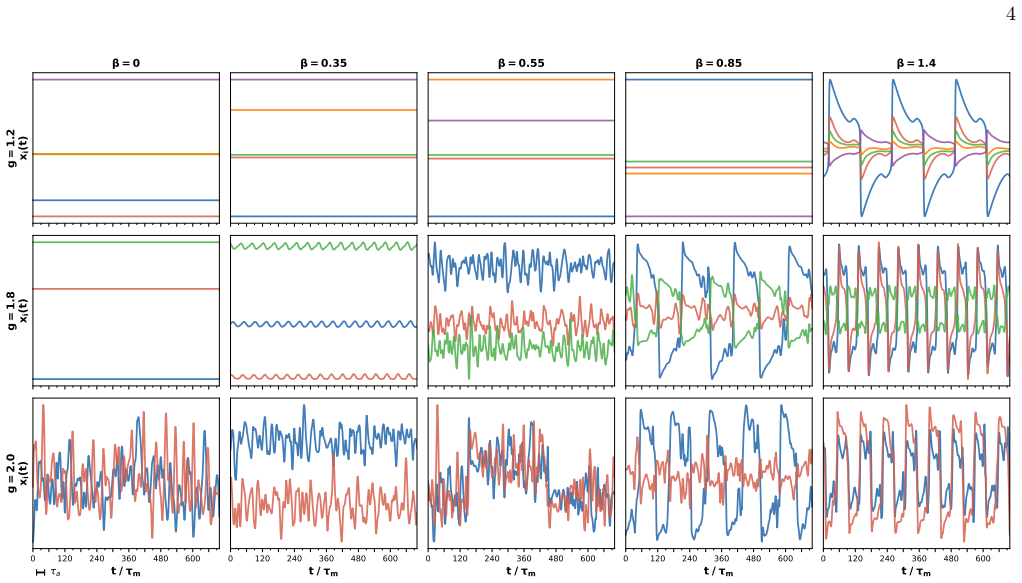
Even near instability, soft modes stay invisible unless their forcing beats the background; correlations cap near 0.6.
Warming and air travel shift Europe from imported outbreaks to environment-driven dengue transmission.
· “Climate change and human mobility will shape dengue emergence risk in Europe”
A trust-weighted blend of own and neighbors' payoffs creates a discontinuous, bistable cooperative phase in a spatial Q-learning model.
· “Emergence of cooperation: A reputation-modulated reinforcement learning”
The same model segments portal, cerebral, and coronary vessels with better overlap and continuity in three steps.
· “Flow Matching Meets 3D Curvilinear Structure Segmentation in Medical Imaging”
Governed agentic neuroimaging: sealed plans, audited claims, and verified evidence grounding up nearly fivefold.
A stochastic model of snake fungal disease shows extinction risk swings with introduction route and season.
· “A stochastic dose-response framework for environmentally persistent pathogens”
A Bayesian model turns repeated diffusion MRI into a continuous disease score with uncertainty, beating discrete diagnosis.
Balanced, evenly fragmented training data lift HCV genotype precision from 48 percent to near-perfect.
· “Hepatitis C Virus Genotyping with a Transformer Neural Network”
A two-state transition of 6–10 kT marks local untwisting of the triple helix before rupture.
Adapting a photo codec to contact maps preserves TADs and stripes but not A/B compartments; the cause is fixed-size tiling.
Partial-Bayesian models plus supervised PCA gave strongest accuracy and calibration across 27 protein datasets
· “Multitask Bayesian Neural Networks for Multiparameter Protein Engineering”
A periodic internal spatial code disambiguates visually identical locations that boundary cues alone confuse.
· “The Role of Grid Cells in Reducing Spatial Aliasing in Hippocampal Place Representations”
A row-pattern check on the stoichiometric matrix decides degeneracy; steady states are binomial.
· “Characterization of Minimal Degenerate Zero-One Reaction Networks”
Counting connections and loops in a network of possible experiences yields structural markers for unity, self, and time.
Training ECG reconstruction and AF detection on one shared codebook keeps accuracy high with as few as one lead.
Fitted to 73 prostate-cancer patients, the model maps the trade-off and shows why schedules don't transfer.
· “Adaptive therapy under parametric, structural, and measurement uncertainty”
Fine-tuned TxGemma-9B reaches 0.731 ROC-AUC and LlaSMol finds 5x actives at top 1%; Gemini and o3 stay near random.
A layer-restricted Boltzmann machine constructs functional chorismate mutases up to 53% divergent from nature.
Multi-scale codon graphs and spectral features separate four lineages without alignment, in under a second per genome.
Memory cells watch residual disease; effectors clear niche blasts; initial burden drives CD19-negative relapse.
· “Mathematical modelling of immune persistence and relapse pathways in CAR T-cell therapy for B-ALL”
A rotation-group gradient flow deforms a template until its projections match noisy images—no density map needed.
Record-separated evaluation puts AUROC at 0.493; resampling must match the clinical unit of prediction.
A mutual-information split reproduces why C1 and I1 loops dominate E. coli and yeast networks.
· “An information-theoretic perspective on feed-forward loop abundances in transcriptional networks”