Filtration-Based Learning of Multiscale Shared Structures for Multiple Functional Predictors
Pith reviewed 2026-05-19 10:16 UTC · model grok-4.3
The pith
A filtration-based framework learns multiscale shared structures among multiple functional predictors by organizing them into a hierarchical forest that identifies common effects progressively from coarse to fine layers.
A machine-rendered reading of the paper's core claim, the machinery that carries it, and where it could break.
Core claim
The central claim is that response-predictor dependencies vary across representation dimensions and emerge at multiple resolutions ranging from globally shared effects to predictor-specific effects; therefore a hierarchical forest structure built through successive filtration layers can progressively identify them. Building on this structure, the authors develop a filtration-based pursuit pipeline for shared structure discovery together with a filtrated functional partial least squares method for shared component extraction and coefficient estimation. Simulation studies show that the framework recovers the dominant coarse-to-fine organization and yields improved prediction performance; the同じ
What carries the argument
hierarchical forest structure through successive filtration layers, which progressively identifies shared and predictor-specific components from coarse to fine scales
If this is right
- Simulation studies recover the dominant coarse-to-fine organization of the underlying shared structures.
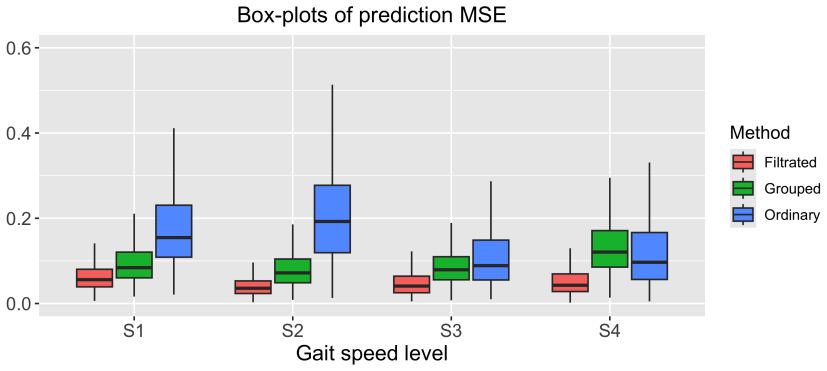
- The framework yields improved prediction performance relative to competing methods.
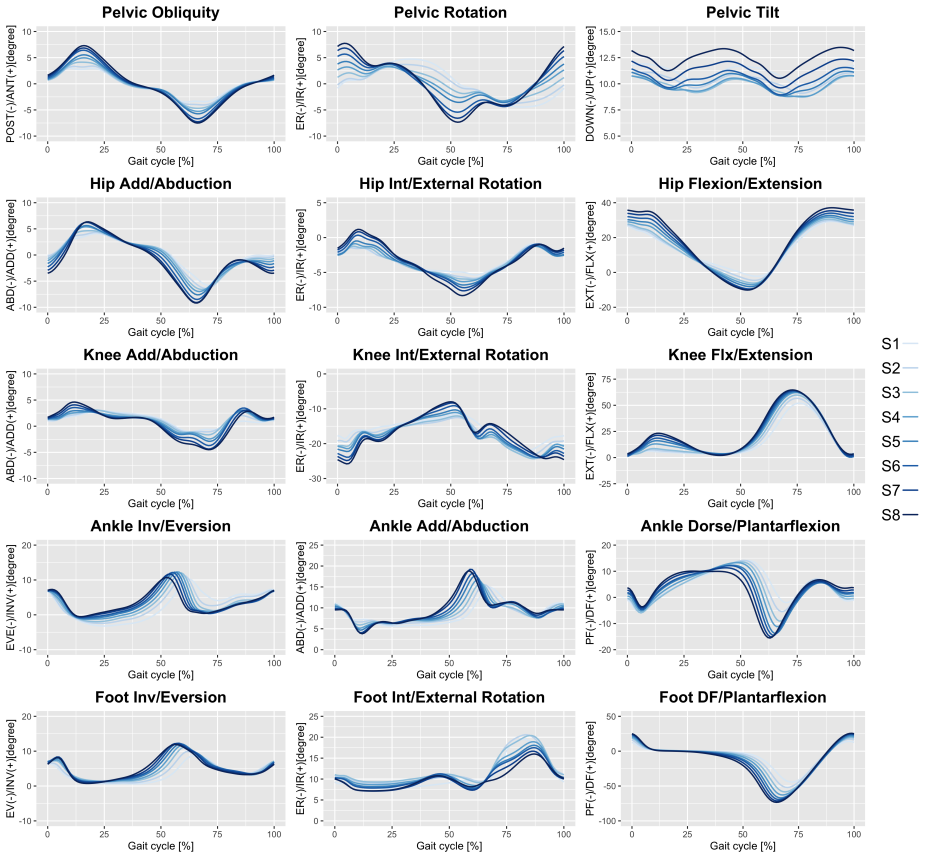
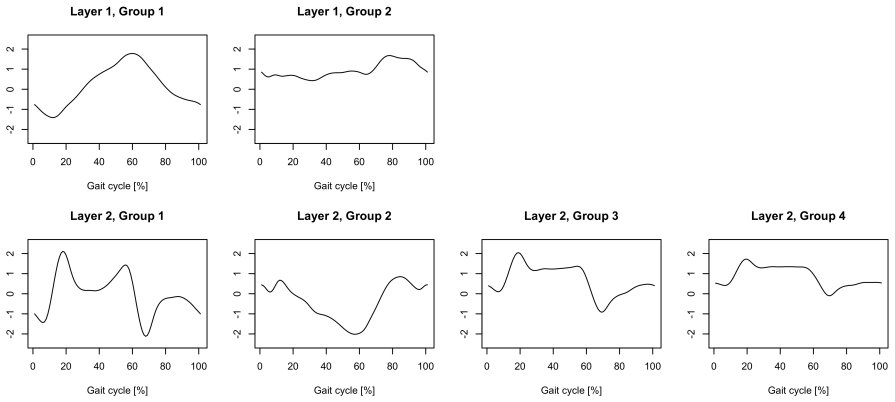
- Application to lower-limb angular kinematics improves evaluation accuracy and reveals interpretable joint coordination patterns associated with aging.
Where Pith is reading between the lines
- The same filtration layering could be applied to other collections of curves or surfaces, such as multichannel time series in neuroscience or environmental monitoring, to test whether comparable coarse-to-fine shared patterns appear.
- If the learned forest layers align with physically meaningful scales, they might serve as an automatic way to choose resolution-specific features before fitting downstream regression models.
- The approach supplies a concrete way to represent how multiple objects interact at different levels of detail, which could be useful for problems that currently treat all dimensions as equally shared or equally distinct.
Load-bearing premise
Response-predictor dependencies vary across representation dimensions and emerge at multiple resolutions ranging from globally shared effects to predictor-specific effects, allowing successive filtration layers to separate them.
What would settle it
In simulated data constructed with known multiscale shared effects at distinct resolutions, the method should fail to recover the hierarchical organization or show no prediction gain over ordinary functional partial least squares; the same outcome on the lower-limb kinematics dataset would also falsify the utility claim.
Figures


read the original abstract
It is crucial to learn the shared structures among functional predictors, as these structures characterize how predictor components exert common effects and, more generally, how predictors are homogeneously associated with the response. However, learning from multiple functional predictors is challenging because response-predictor dependencies may vary across representation dimensions and emerge at multiple resolutions, ranging from globally shared effects to predictor-specific effects. To address this issue, we propose a filtration-based shared structure learning framework for multiple functional predictors. The proposed framework organizes predictors through a hierarchical forest structure, in which shared and predictor-specific components are progressively identified from coarse to fine filtration layers. Building on this structure, we develop a filtration-based pursuit pipeline for shared structure discovery, together with a filtrated functional partial least squares method for shared component extraction and coefficient estimation under the learned shared structures. Simulation studies show that the proposed framework is able to recover the dominant coarse-to-fine organization of the underlying shared structures and yield improved prediction performance relative to competing methods. Applied to lower-limb angular kinematics, the proposed framework improves evaluation accuracy and reveals interpretable joint coordination patterns associated with aging. More broadly, it provides a new multiscale representation-learning perspective for complex data consisting of multiple multidimensional objects.
Editorial analysis
A structured set of objections, weighed in public.
Referee Report
Summary. The manuscript proposes a filtration-based framework for learning multiscale shared structures among multiple functional predictors. Predictors are organized into a hierarchical forest structure via successive filtration layers that progressively isolate globally shared effects down to predictor-specific components. A filtration-based pursuit pipeline discovers the structure, and a filtrated functional partial least squares procedure extracts shared components and estimates coefficients. Simulation studies are reported to recover the coarse-to-fine organization and improve prediction relative to competitors; an application to lower-limb angular kinematics data is said to yield higher accuracy and interpretable aging-related coordination patterns.
Significance. If the hierarchical filtration reliably isolates scale-specific dependencies without strong model assumptions, the work supplies a new multiscale representation-learning tool for functional data with multiple predictors. The emphasis on progressive identification from coarse to fine layers and the real-data interpretability in biomechanics could be useful for applications involving coordinated multidimensional objects.
major comments (2)
- [Simulation studies] Simulation studies section: the reported recovery of the 'dominant coarse-to-fine organization' is demonstrated only under data-generating processes that match the assumed hierarchical forest structure. When shared effects are instead non-hierarchical (e.g., overlapping groups at one scale or non-tree dependencies), the progressive filtration layers have no guaranteed mechanism to isolate the correct components, undermining the general claim that the framework recovers underlying shared structures.
- [Methods] Filtration-based pursuit pipeline subsection: the construction of the hierarchical forest and the definition of filtration layers rely on unspecified tuning parameters and stopping rules. Without explicit criteria or sensitivity analysis, it is unclear whether the progressive identification is robust or whether results depend on ad-hoc choices that could be tuned to favor the method.
minor comments (2)
- [Abstract] Abstract: quantitative details on prediction metrics, error bars, and the exact competing methods are omitted, making it difficult to gauge the magnitude of the reported improvements.
- [Methods] Notation: the distinction between 'filtration layers' and 'forest structure' is introduced without a clear diagram or pseudocode, complicating replication of the pipeline.
Simulated Author's Rebuttal
We thank the referee for the constructive feedback on our manuscript. We address each major comment point by point below, indicating planned revisions where appropriate to improve clarity and strengthen the presentation of our results.
read point-by-point responses
-
Referee: [Simulation studies] Simulation studies section: the reported recovery of the 'dominant coarse-to-fine organization' is demonstrated only under data-generating processes that match the assumed hierarchical forest structure. When shared effects are instead non-hierarchical (e.g., overlapping groups at one scale or non-tree dependencies), the progressive filtration layers have no guaranteed mechanism to isolate the correct components, undermining the general claim that the framework recovers underlying shared structures.
Authors: We agree that the reported simulations focus on data-generating processes consistent with the hierarchical forest structure for which the method is developed. The framework is intended to identify multiscale shared structures under this progressive coarse-to-fine organization, and the simulations demonstrate recovery and improved prediction in that setting. To address the concern about scope, we will add new simulation scenarios with non-hierarchical dependencies (such as overlapping groups or non-tree structures) in the revised manuscript. These will illustrate the method's behavior outside the primary assumption and help delineate the conditions under which the filtration approach is most appropriate. revision: yes
-
Referee: [Methods] Filtration-based pursuit pipeline subsection: the construction of the hierarchical forest and the definition of filtration layers rely on unspecified tuning parameters and stopping rules. Without explicit criteria or sensitivity analysis, it is unclear whether the progressive identification is robust or whether results depend on ad-hoc choices that could be tuned to favor the method.
Authors: We acknowledge that the current description of the filtration-based pursuit pipeline leaves the tuning parameters and stopping rules insufficiently detailed. In the revision, we will explicitly specify the criteria for constructing the hierarchical forest, the definition of filtration layers, and the stopping rules employed. We will also include a sensitivity analysis examining how variations in these parameters affect the recovered structure and downstream prediction performance, thereby demonstrating robustness and improving reproducibility. revision: yes
Circularity Check
No circularity: derivation defines new filtration hierarchy independently of fitted outputs
full rationale
The paper defines a filtration-based framework that organizes multiple functional predictors into a hierarchical forest structure, with shared and predictor-specific components identified progressively across coarse-to-fine layers. It then specifies a pursuit pipeline and filtrated functional PLS for extraction and estimation under that structure. Simulation recovery and real-data kinematics results serve as external benchmarks rather than tautological re-derivations; no equation or claim reduces a prediction to a fitted parameter by construction, and no load-bearing step relies on self-citation chains or imported uniqueness theorems. The central claims remain self-contained against the stated model assumptions and validation experiments.
Axiom & Free-Parameter Ledger
axioms (1)
- domain assumption Response-predictor dependencies vary across representation dimensions and emerge at multiple resolutions ranging from globally shared effects to predictor-specific effects.
Lean theorems connected to this paper
-
IndisputableMonolith/Foundation/RealityFromDistinction.leanreality_from_one_distinction unclear?
unclearRelation between the paper passage and the cited Recognition theorem.
The covariates are grouped iteratively in each layer of filtration, leading to dimension-specific grouping structures... The homogeneous components are extracted in a hierarchical manner, resulting in group indices {Kd,i} that follow a forest structure
-
IndisputableMonolith/Foundation/AlexanderDuality.leanalexander_duality_circle_linking unclear?
unclearRelation between the paper passage and the cited Recognition theorem.
we develop a filtration-based shared structure learning framework... progressive identification from coarse to fine filtration layers
What do these tags mean?
- matches
- The paper's claim is directly supported by a theorem in the formal canon.
- supports
- The theorem supports part of the paper's argument, but the paper may add assumptions or extra steps.
- extends
- The paper goes beyond the formal theorem; the theorem is a base layer rather than the whole result.
- uses
- The paper appears to rely on the theorem as machinery.
- contradicts
- The paper's claim conflicts with a theorem or certificate in the canon.
- unclear
- Pith found a possible connection, but the passage is too broad, indirect, or ambiguous to say the theorem truly supports the claim.
Reference graph
Works this paper leans on
-
[1]
Anderson, A. S. and Loeser, R. F. [2010], ‘Why is osteoarthritis an age-related disease?’, Best practice & research Clinical rheumatology 24(1), 15–26
work page 2010
- [2]
-
[3]
Cheng, Y., Shi, J. Q. and Eyre, J. [2020], ‘Nonlinear mixed-effects scalar-on- function models and variable selection’, Statistics and Computing 30(1), 129–140
work page 2020
-
[4]
Chiou, J.-M., M¨ uller, H.-G. and Wang, J.-L. [2003], ‘Functional quasi-likelihood regression models with smooth random effects’, Journal of the Royal Statistical Society Series B: Statistical Methodology 65(2), 405–423
work page 2003
-
[5]
Chiou, J.-M., M¨ uller, H.-G. and Wang, J.-L. [2004], ‘Functional response models’, Statistica Sinica pp. 675–693
work page 2004
-
[6]
Chiou, J.-M., Yang, Y.-F. and Chen, Y.-T. [2016], ‘Multivariate functional linear regression and prediction’, Journal of Multivariate Analysis 146, 301–312. 23
work page 2016
-
[7]
Dannenmaier, J., Kaltenbach, C., K¨ olle, T. and Krischak, G. [2020], ‘Application of functional data analysis to explore movements: walking, running and jumping-a systematic review’, Gait & Posture 77, 182–189
work page 2020
-
[8]
Delaigle, A. and Hall, P. [2012], ‘Methodology and theory for partial least squares applied to functional data’, 40(1), 322–352
work page 2012
-
[9]
Dussault-Picard, C., Cherni, Y., Ferron, A., Robert, M. and Dixon, P. [2023], ‘The effect of uneven surfaces on inter-joint coordination during walking in children with cerebral palsy’, Scientific Reports 13(1), 21779
work page 2023
-
[10]
Edelsbrunner, H., Harer, J. et al. [2008], ‘Persistent homology-a survey’, Contem- porary mathematics 453(26), 257–282
work page 2008
- [11]
-
[12]
Ferraty, F., Van Keilegom, I. and Vieu, P. [2012], ‘Regression when both response and predictor are functions’, Journal of Multivariate Analysis 109, 10–28
work page 2012
-
[13]
Fukuchi, C. A., Fukuchi, R. K. and Duarte, M. [2018], ‘A public dataset of over- ground and treadmill walking kinematics and kinetics in healthy individuals’,PeerJ 6, e4640
work page 2018
-
[14]
Hofer, C., Graf, F., Rieck, B., Niethammer, M. and Kwitt, R. [2020], Graph filtration learning, in ‘International Conference on Machine Learning’, PMLR, pp. 4314–4323
work page 2020
-
[15]
Jiao, S., Aue, A. and Ombao, H. [2023], ‘Functional time series prediction un- der partial observation of the future curve’, Journal of the American Statistical Association 118(541), 315–326
work page 2023
-
[16]
Jiao, S. and Chan, N.-H. [2024], ‘Coefficient shape alignment in multiple functional linear regression’, Journal of the American Statistical Association (online), 1–14
work page 2024
-
[17]
Jiao, S., Frostig, R. and Ombao, H. [2024], ‘Filtrated common functional prin- cipal component analysis of multigroup functional data’, The Annals of Applied Statistics 18(2), 1160–1177
work page 2024
-
[18]
Jiao, S. and Ombao, H. [2021], ‘Shape-preserving prediction for stationary func- tional time series’, Electronic Journal of Statistics 15(2), 3996–4026
work page 2021
-
[19]
M., Dennis, S., Rethlefsen, S., Skaggs, D
Kay, R. M., Dennis, S., Rethlefsen, S., Skaggs, D. L. and Tolo, V. T. [2000], ‘Impact of postoperative gait analysis on orthopaedic care’, Clinical Orthopaedics and Related Research® 374, 259–264
work page 2000
-
[20]
Ke, Z. T., Fan, J. and Wu, Y. [2015], ‘Homogeneity pursuit’, Journal of the Amer- ican Statistical Association 110(509), 175–194
work page 2015
-
[21]
Lee, H., Chung, M. K., Kang, H., Kim, B.-N. and Lee, D. S. [2011], Computing the shape of brain networks using graph filtration and gromov-hausdorff metric, in ‘Medical Image Computing and Computer-Assisted Intervention–MICCAI 2011: 24 14th International Conference, Toronto, Canada, September 18-22, 2011, Proceed- ings, Part II 14’, Springer, pp. 302–309
work page 2011
-
[22]
Li, Y., Wei, X., Zhou, J. and Wei, L. [2013], ‘The age-related changes in cartilage and osteoarthritis’, BioMed research international 2013(1), 916530
work page 2013
-
[23]
Loeser, R. F. [2010], ‘Age-related changes in the musculoskeletal system and the development of osteoarthritis’, Clinics in geriatric medicine 26(3), 371
work page 2010
-
[24]
Lofterød, B., Terjesen, T., Skaaret, I., Huse, A.-B. and Jahnsen, R. [2007], ‘Pre- operative gait analysis has a substantial effect on orthopedic decision making in children with cerebral palsy: comparison between clinical evaluation and gait anal- ysis in 60 patients’, Acta orthopaedica 78(1), 74–80
work page 2007
-
[25]
Ma, S. and Huang, J. [2017], ‘A concave pairwise fusion approach to subgroup analysis’, Journal of the American Statistical Association 112(517), 410–423
work page 2017
-
[26]
Morris, J. S. [2015], ‘Functional regression’, Annual Review of Statistics and Its Application 2, 321–359
work page 2015
-
[27]
M¨ uller, H.-G. and Stadtm¨ uller, U. [2005], ‘Generalized functional linear models’, The Annals of Statistics 33(2), 774–805
work page 2005
-
[28]
M¨ uller, H.-G. and Yao, F. [2008], ‘Functional additive models’, Journal of the American Statistical Association 103(484), 1534–1544
work page 2008
-
[29]
Ramsay, J. O. and Silverman, B. W. [2004], ‘Functional data analysis’, Encyclo- pedia of Statistical Sciences 4
work page 2004
-
[30]
Rao, A. K., Muratori, L., Louis, E. D., Moskowitz, C. B. and Marder, K. S. [2008], ‘Spectrum of gait impairments in presymptomatic and symptomatic huntington’s disease’, Movement disorders: official journal of the Movement Disorder Society 23(8), 1100–1107
work page 2008
-
[31]
Ren, X., Lutter, C., Kebbach, M., Bruhn, S., Bader, R. and Tischer, T. [2022], ‘Lower extremity joint compensatory effects during the first recovery step following slipping and stumbling perturbations in young and older subjects’, BMC geriatrics 22(1), 656
work page 2022
-
[32]
She, Y., Shen, J. and Zhang, C. [2022], ‘Supervised multivariate learning with simultaneous feature auto-grouping and dimension reduction’,Journal of the Royal Statistical Society Series B: Statistical Methodology 84(3), 912–932
work page 2022
-
[33]
Shen, X. and Huang, H.-C. [2010], ‘Grouping pursuit through a regularization solution surface’, Journal of the American Statistical Association 105(490), 727– 739
work page 2010
-
[34]
Spiegelhalter, D. [2016], ‘How old are you, really? communicating chronic risk through ‘effective age’of your body and organs’, BMC medical informatics and decision making 16, 1–6
work page 2016
-
[35]
Wang, B., Luo, X., Zhao, Y. and Caffo, B. [2019], ‘Semiparametric partial common principal component analysis for covariance matrices’, Biometrics pp. 1175–1186. 25
work page 2019
-
[36]
Xu, Q.-S. and Liang, Y.-Z. [2001], ‘Monte carlo cross validation’, Chemometrics and Intelligent Laboratory Systems 56(1), 1–11
work page 2001
-
[37]
Yao, F., M¨ uller, H.-G. and Wang, J.-L. [2005], ‘Functional data analysis for sparse longitudinal data’, Journal of the American Statistical Association 100(470), 577– 590
work page 2005
-
[38]
Zhang, C.-H. [2010], ‘Nearly unbiased variable selection under minimax concave penalty’, The Annals of Statistics 38(2), 894–942
work page 2010
-
[39]
Zhang, Y., Li, R. and Tsai, C.-L. [2010], ‘Regularization parameter selections via generalized information criterion’, Journal of the American Statistical Association 105(489), 312–323
work page 2010
-
[40]
Zhou, J., Wang, N.-Y. and Wang, N. [2013], ‘Functional linear model with zero- value coefficient function at sub-regions’, Statistica Sinica 23(1), 25–50. 26
work page 2013
discussion (0)
Sign in with ORCID, Apple, or X to comment. Anyone can read and Pith papers without signing in.