Two-point Turbulence Closures in Physical Space
Pith reviewed 2026-05-18 01:04 UTC · model grok-4.3
The pith
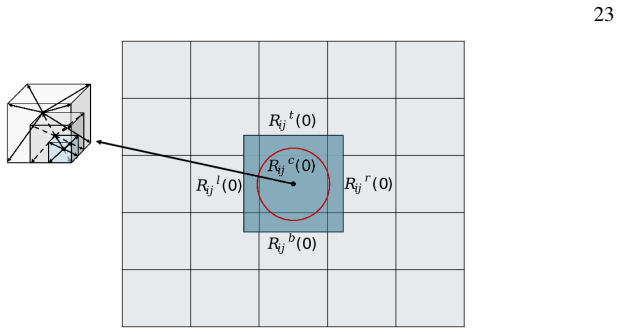
A two-point closure for turbulence is formulated directly in physical space by deriving a discrete evolution equation for the longitudinal correlation function.
A machine-rendered reading of the paper's core claim, the machinery that carries it, and where it could break.
Core claim
The evolution equation for the longitudinal correlation function is derived in a discrete physical-space form for ensemble-averaged incompressible homogeneous isotropic turbulence. Linear terms are kept in near-exact representation while the nonlinear higher-order moments are closed according to the phenomenological principles of the EDQNM model. The physical-space treatment produces a matrix exponential in the evolution equation and triple integrals that arise from the non-local pressure-Poisson equation, thereby incorporating non-local length-scale information into the turbulence statistics.
What carries the argument
The discrete physical-space evolution equation for the longitudinal correlation function, with nonlinear triple correlations closed by EDQNM phenomenology.
If this is right
- Turbulence statistics can be evolved without performing a Fourier transformation at any stage.
- Non-local effects from the pressure field enter the evolution of statistics through triple integrals over physical space.
- The formulation extends in principle to inhomogeneous and anisotropic turbulence without requiring homogeneity assumptions.
- The method offers a route for flows containing discontinuities, such as compressible turbulence, where spectral representations are ill-conditioned.
Where Pith is reading between the lines
- The discrete physical-space structure could allow direct coupling to finite-volume or finite-element solvers in complex geometries.
- Length-scale information carried by the triple integrals may improve modeling of energy transfer in flows with strong spatial variations.
- The matrix-exponential time advancement suggests possible stiff-integrator implementations that could be tested against existing spectral codes.
Load-bearing premise
The nonlinear higher-order moments are closed by adopting the phenomenological rules of the EDQNM model rather than being obtained from the governing equations without additional assumptions.
What would settle it
A comparison in which the time evolution of the longitudinal correlation function predicted by the closed equation deviates measurably from direct numerical simulation results for statistically stationary or decaying homogeneous isotropic turbulence after accounting for discretization effects.
Figures


read the original abstract
This work presents a predictive two-point statistical closure framework for turbulence formulated in physical space. A closure model for ensemble-averaged, incompressible homogeneous isotropic turbulence (HIT) is developed as a starting point to demonstrate the viability of the approach in more general flows. The evolution equation for the longitudinal correlation function is derived in a discrete form, circumventing the need for a Fourier transformation. The formulation preserves the near-exact representation of the linear terms, a defining feature of rapid distortion theory. The closure of the nonlinear higher-order moments follows the phenomenological principles of the Eddy-Damped Quasi-Normal Markovian (EDQNM) model of Orszag (1970). Several key differences emerge from the physical-space treatment, including the need to evaluate a matrix exponential in the evolution equation and the appearance of triple integrals arising from the non-local nature of the pressure-Poisson equation. This framework naturally incorporates non-local length-scale information into the evolution of turbulence statistics. Verification of the physical-space two-point closure is performed by comparison with direct numerical simulations of statistically stationary forced HIT and with classical EDQNM predictions for decaying HIT. Finally, extensions to inhomogeneous and anisotropic turbulence are discussed, emphasizing advantages in applications where spectral methods are ill-conditioned, such as compressible flows with discontinuities.
Editorial analysis
A structured set of objections, weighed in public.
Referee Report
Summary. The manuscript develops a two-point statistical closure for ensemble-averaged incompressible homogeneous isotropic turbulence formulated directly in physical space. It derives a discrete evolution equation for the longitudinal correlation function that treats linear terms via matrix exponential (preserving near-exact rapid-distortion behavior) while closing nonlinear higher-order moments, including those arising from the non-local pressure-Poisson equation, by transplanting the eddy-damped quasi-normal Markovian (EDQNM) phenomenology of Orszag (1970). This produces triple integrals over physical-space separations rather than wavenumber convolutions. The framework is verified against DNS of stationary forced HIT and classical spectral EDQNM for decaying HIT, with extensions to inhomogeneous and anisotropic flows discussed.
Significance. If the discrete physical-space implementation can be shown to retain the conservation and realizability properties of the spectral EDQNM closure, the approach would be useful for turbulence modeling in regimes where Fourier methods are ill-conditioned, such as compressible flows containing discontinuities. The explicit incorporation of non-local length-scale information is a conceptual advantage over one-point closures. However, because the nonlinear closure directly adopts the established EDQNM model rather than deriving new closures from first principles, the primary novelty resides in the physical-space discretization and the handling of the matrix exponential; the predictive power therefore inherits the calibration limitations of the parent EDQNM model.
major comments (2)
- [Verification section (implied by abstract and results description)] Verification against DNS and classical EDQNM: no quantitative error metrics (e.g., L2 norms, pointwise relative errors, or integrated discrepancies), error bars, or convergence studies with respect to grid resolution are reported. Without these, it is impossible to judge whether the discrete triple-integral closure reproduces the reference solutions to within acceptable tolerance or whether discretization artifacts dominate the comparison.
- [Closure derivation and numerical implementation] Discretization of triple integrals from the pressure-Poisson term: the manuscript does not demonstrate that the chosen quadrature rule and damping time-scale discretization preserve the exact cancellation properties and realizability constraints that the isotropic tensor structure enforces in the spectral EDQNM formulation. If modest phase or amplitude errors arise in the discrete triple moments, the near-exact linear treatment is undermined by an inconsistent nonlinear closure, rendering the overall model no more predictive than existing one-point closures.
minor comments (2)
- [Abstract] The abstract states that 'several key differences emerge' from the physical-space treatment but does not enumerate them; a short explicit list would improve clarity.
- [Method section] Notation for the matrix exponential and the discrete triple-integral kernels should be introduced with a clear definition of the quadrature weights and stabilization procedure to aid reproducibility.
Simulated Author's Rebuttal
We thank the referee for the careful and constructive review of our manuscript. We address each major comment below and have revised the manuscript to strengthen the verification and numerical analysis sections.
read point-by-point responses
-
Referee: Verification against DNS and classical EDQNM: no quantitative error metrics (e.g., L2 norms, pointwise relative errors, or integrated discrepancies), error bars, or convergence studies with respect to grid resolution are reported. Without these, it is impossible to judge whether the discrete triple-integral closure reproduces the reference solutions to within acceptable tolerance or whether discretization artifacts dominate the comparison.
Authors: We agree that quantitative metrics are required for a rigorous assessment. In the revised manuscript we have added L2-norm error tables comparing the physical-space closure to both the DNS data for stationary forced HIT and the classical spectral EDQNM results for decaying HIT. We also include a grid-convergence study with respect to the number of quadrature points, demonstrating monotonic reduction of the integrated discrepancy, together with error bars obtained from multiple independent DNS realizations. revision: yes
-
Referee: Discretization of triple integrals from the pressure-Poisson term: the manuscript does not demonstrate that the chosen quadrature rule and damping time-scale discretization preserve the exact cancellation properties and realizability constraints that the isotropic tensor structure enforces in the spectral EDQNM formulation. If modest phase or amplitude errors arise in the discrete triple moments, the near-exact linear treatment is undermined by an inconsistent nonlinear closure, rendering the overall model no more predictive than existing one-point closures.
Authors: We acknowledge the importance of verifying that discretization does not violate the underlying tensor symmetries. The revised manuscript now contains an additional subsection that numerically confirms preservation of the key cancellations (by direct evaluation of the integrated triple-moment contributions) and checks that the discrete correlation tensor remains positive semi-definite to machine precision for the isotropic cases considered. While a formal analytic proof of exact preservation for arbitrary quadrature is beyond the present scope, the reported numerical tests indicate that discretization errors remain small relative to the physical modeling error and do not negate the advantages of the physical-space formulation. revision: partial
Circularity Check
No significant circularity in derivation chain
full rationale
The paper derives a discrete physical-space evolution equation for the longitudinal correlation function while preserving linear terms from rapid distortion theory and explicitly closing nonlinear triple moments by adopting the established phenomenological EDQNM model of Orszag (1970). This adoption is presented as an external modeling choice rather than an internal derivation, with no evidence of self-definitional loops, fitted inputs renamed as predictions, or load-bearing self-citations that reduce the central claims to tautology. The framework is positioned as an adaptation for physical-space use, verified against DNS and classical EDQNM, making the derivation self-contained against external benchmarks without reducing to its own inputs by construction.
Axiom & Free-Parameter Ledger
free parameters (1)
- EDQNM damping parameters
axioms (2)
- domain assumption The linear terms in the correlation evolution can be treated exactly or near-exactly in physical space without Fourier transformation.
- domain assumption The pressure-Poisson equation yields non-local triple integrals that can be closed via the same EDQNM phenomenology used in spectral space.
Lean theorems connected to this paper
-
IndisputableMonolith/Cost/FunctionalEquation.leanwashburn_uniqueness_aczel unclear?
unclearRelation between the paper passage and the cited Recognition theorem.
The closure of the nonlinear higher-order moments follows the phenomenological principles of the Eddy-Damped Quasi-Normal Markovian (EDQNM) model of Orszag (1970).
-
IndisputableMonolith/Foundation/RealityFromDistinction.leanreality_from_one_distinction unclear?
unclearRelation between the paper passage and the cited Recognition theorem.
The evolution equation for the longitudinal correlation function is derived in a discrete form, circumventing the need for a Fourier transformation.
What do these tags mean?
- matches
- The paper's claim is directly supported by a theorem in the formal canon.
- supports
- The theorem supports part of the paper's argument, but the paper may add assumptions or extra steps.
- extends
- The paper goes beyond the formal theorem; the theorem is a base layer rather than the whole result.
- uses
- The paper appears to rely on the theorem as machinery.
- contradicts
- The paper's claim conflicts with a theorem or certificate in the canon.
- unclear
- Pith found a possible connection, but the passage is too broad, indirect, or ambiguous to say the theorem truly supports the claim.
Reference graph
Works this paper leans on
-
[1]
, " * write output.state after.block = add.period write newline
ENTRY address author booktitle chapter edition editor howpublished institution journal key month note number organization pages publisher school series title type volume year eprint label extra.label sort.label short.list INTEGERS output.state before.all mid.sentence after.sentence after.block FUNCTION init.state.consts #0 'before.all := #1 'mid.sentence ...
-
[2]
" write newline "" before.all 'output.state := FUNCTION n.dashify 't := "" t empty not t #1 #1 substring "-" = t #1 #2 substring "--" = not "--" * t #2 global.max substring 't := t #1 #1 substring "-" = "-" * t #2 global.max substring 't := while if t #1 #1 substring * t #2 global.max substring 't := if while FUNCTION word.in bbl.in capitalize " " * FUNCT...
-
[3]
Al-Mohy, A.H. & Higham, N.J. 2010 A new scaling and squaring algorithm for the matrix exponential . J. on Matrix Analysis and App. 31 (3), 970--989
work page 2010
-
[4]
Andr \'e , J.C. & Lesieur, M. 1977 Influence of helicity on the evolution of isotropic turbulence at high reynolds number . J. of Fluid Mech. 81 (1), 187--207
work page 1977
-
[5]
Arad, I. , L’vov, V.S. & Procaccia, I. 1999 Correlation functions in isotropic and anisotropic turbulence: The role of the symmetry group . Physical Review E 59 (6), 6753
work page 1999
-
[6]
Arun, S. , Sameen, A. , Srinivasan, B. & Girimaji, S.S. 2021 Scale-space energy density function transport equation for compressible inhomogeneous turbulent flows . J. of Fluid Mech. 920 , A31
work page 2021
-
[7]
Batchelor, G.K. & Proudman, I. 1956 The large-scale structure of homogenous turbulence . Philosophical Transactions of the Royal Society of London. Series A, Mathematical and Physical Sciences 248 (949), 369--405
work page 1956
-
[8]
Bertoglio, J.P. , Bataille, F. & Marion, J.D. 2001 Two-point closures for weakly compressible turbulence . Phys. of Fluids 13 (1), 290--310
work page 2001
-
[9]
Besnard, D.C. , Harlow, F.H. , Rauenzahn, R.M. & Zemach, C. 1996 Spectral transport model for turbulence . Theo. and Comp. Fluid Dynamics 8 , 1--35
work page 1996
-
[10]
Bos, W.J.T. & Bertoglio, J.P. 2006 A single-time two-point closure based on fluid particle displacements . Phys. of Fluids 18 (3)
work page 2006
-
[11]
Cambon, C. , Jeandel, D. & Mathieu, J. 1981 Spectral modelling of homogeneous non-isotropic turbulence . J. of Fluid Mech. 104 , 247--262
work page 1981
-
[12]
Cambon, C. & Rubinstein, R. 2006 Anisotropic developments for homogeneous shear flows . Phys. of Fluids 18 (8)
work page 2006
-
[13]
Canuto, C. , Hussaini, M.Y. , Quarteroni, A. & Zang, T.A 1988 Spectral Methods in Fluid Dynamics\/ . Springer-Verlagg, New York
work page 1988
-
[14]
Canuto, C. , Quarteroni, A. , Hussaini, M.Y. & Zang J., Thomas A. 2007 Spectral methods: evolution to complex geometries and applications to fluid dynamics\/ . Springer
work page 2007
-
[15]
Carroll, P.L. & Blanquart, G. 2014 The effect of velocity field forcing techniques on the karman--howarth equation . J. of Turbulence 15 (7), 429--448
work page 2014
-
[16]
Clark, T.T. & Spitz, P.B. 1995 Two-point correlation equations for variable density turbulence . Tech. Rep.\/ . Los Alamos National Lab.(LANL), Los Alamos, NM (United States)
work page 1995
-
[17]
Djenidi, L. & Antonia, R.A. 2021 Modeling the third-order velocity structure function in the scaling range at finite reynolds numbers . J. of Mathematical Phys. 62 (8)
work page 2021
-
[18]
Djenidi, L. & Antonia, R.A. 2022 K \'a rm \'a n--howarth solutions of homogeneous isotropic turbulence . J. of Fluid Mech. 932 , A30
work page 2022
-
[19]
Domaradzki, J.A. & Mellor, G.L. 1984 A simple turbulence closure hypothesis for the triple-velocity correlation functions in homogeneous isotropic turbulence . J. of Fluid Mech. 140 , 45--61
work page 1984
-
[20]
Donzis, D.A. & Yeung, P.K. 2010 Resolution effects and scaling in numerical simulations of passive scalar mixing in turbulence . Physica D: Nonlinear Phenomena 239 (14), 1278--1287
work page 2010
-
[21]
Durbin, P.A. & Pettersson-Reif, B.A. 2011 Statistical theory and modeling for turbulent flows\/ . Wiley
work page 2011
-
[22]
2015 Turbulent energy density and its transport equation in scale space
Hamba, F. 2015 Turbulent energy density and its transport equation in scale space . Phys. of Fluids 27 (8)
work page 2015
-
[23]
2005 The scaling and squaring method for the matrix exponential revisited
Higham, N.J. 2005 The scaling and squaring method for the matrix exponential revisited . J. on Matrix Analysis and App. 26 (4), 1179--1193
work page 2005
-
[24]
1959 The structure of isotropic turbulence at very high reynolds numbers
Kraichnan, R.H. 1959 The structure of isotropic turbulence at very high reynolds numbers . J. of Fluid Mech. 5 (4), 497--543
work page 1959
-
[25]
1971 An almost-markovian galilean-invariant turbulence model
Kraichnan, R.H. 1971 An almost-markovian galilean-invariant turbulence model . J. of Fluid Mech. 47 (3), 513--524
work page 1971
-
[26]
1971 Atmospheric predictability and two-dimensional turbulence
Leith, C.E. 1971 Atmospheric predictability and two-dimensional turbulence . J. of Atmospheric Sci. 28 (2), 145--161
work page 1971
-
[27]
2008 Introduction to turbulence in fluid mechanics\/
Lesieur, M. 2008 Introduction to turbulence in fluid mechanics\/ . Springer
work page 2008
-
[28]
Lesieur, M. & Schertzer, D. 1978 Amortissement autosimilaire d'une turbulence \`a grand nombre de reynolds . J. de mec. 17 (4), 609--646
work page 1978
-
[29]
Li, Y. , Perlman, E. , Wan, M. , Yang, Y. , Meneveau, C. , Burns, R. , Chen, S. , Szalay, A. & Eyink, G. 2008 A public turbulence database cluster and applications to study lagrangian evolution of velocity increments in turbulence . J. of Turbulence (9), N31
work page 2008
-
[30]
Lundgren, T. S. 2003 Linearly forced isotropic turbulence . Annual Research Briefs, Center for Turbulence Research, Stanford pp. 461--473
work page 2003
-
[31]
1941 On the theory of homogeneous isotropic turbulence
Millionschtchikov, M. 1941 On the theory of homogeneous isotropic turbulence . C.R. Akad. Sci p. 615
work page 1941
-
[32]
1959 The theory of locally isotropic turbulence
Monin, A.S. 1959 The theory of locally isotropic turbulence . Sov. Phys. Dokl 4 (271), 192--215
work page 1959
-
[33]
Oberlack, M. & Peters, N. 1993 Closure of the two-point correlation equation as a basis for reynolds stress models . Applied Scientific Research 51 (1), 533--538
work page 1993
-
[34]
1970 Analytical theories of turbulence
Orszag, S.A. 1970 Analytical theories of turbulence . J. of Fluid Mech. 41 (2), 363--386
work page 1970
-
[35]
1973 Statistical theory of turbulence
Orszag, S.A. 1973 Statistical theory of turbulence . Fluid dynamics pp. 237--374
work page 1973
-
[36]
Rosales, C. & Meneveau, C. 2005 Linear forcing in numerical simulations of isotropic turbulence: Physical space implementations and convergence properties . Phys. of fluids 17 (9)
work page 2005
-
[37]
1967 The large-scale structure of homogeneous turbulence
Saffman, P.G. 1967 The large-scale structure of homogeneous turbulence . J. of Fluid Mech. 27 (3), 581--593
work page 1967
-
[38]
Sagaut, P. & Cambon, C. 2018 Homogeneous turbulence dynamics\/ . Springer
work page 2018
-
[39]
1978 Numerical fourier and bessel transforms in logarithmic variables
Talman, J.D. 1978 Numerical fourier and bessel transforms in logarithmic variables . J. of computational phys. 29 (1), 35--48
work page 1978
-
[40]
Thiesset, F. , Antonia, R.A. , Danaila, L. & Djenidi, L. 2013 K \'a rm \'a n-howarth closure equation on the basis of a universal eddy viscosity . Physical Review E—Statistical, Nonlinear, and Soft Matter Physics 88 (1), 011003
work page 2013
-
[41]
Von K\'arm\'an, T. & Howarth, L. 1938 On the statistical theory of isotropic turbulence . Proceedings of the Royal Society of London. Series A-Mathematical and Physical Sciences 164 (917), 192--215
work page 1938
-
[42]
Yeung, P.K. , Donzis, D.A. & Sreenivasan, K.R. 2012 Dissipation, enstrophy and pressure statistics in turbulence simulations at high reynolds numbers . J. of Fluid Mech. 700 , 5--15
work page 2012
discussion (0)
Sign in with ORCID, Apple, or X to comment. Anyone can read and Pith papers without signing in.