A Representation of Explicit Knowledge and Epistemic Indistinguishability in a Logic of Awareness
Pith reviewed 2026-05-16 19:46 UTC · model grok-4.3
The pith
A refined logic of awareness defines explicit knowledge via awareness-dependent indistinguishability to block unwanted inferences from implicit knowledge.
A machine-rendered reading of the paper's core claim, the machinery that carries it, and where it could break.
Core claim
In the semantics of AIL an agent’s explicit knowledge of a formula holds only when the formula is true in all worlds indistinguishable under the awareness relation and the agent is aware of the formula; aware implicit knowledge is permitted to remain non-explicit. This relation is defined so that the indistinguishability classes shrink precisely when awareness increases, thereby avoiding the derivation of explicit knowledge from implicit knowledge alone via classical rules such as Modus Ponens.
What carries the argument
Awareness-based indistinguishability relation: a binary relation on possible worlds whose equivalence classes are determined by the agent’s current awareness set, used to interpret explicit knowledge separately from implicit knowledge.
If this is right
- AIL can express distinctions between explicit and aware-implicit knowledge that the earlier logic collapses.
- The Fagin-Halpern logic is faithfully embeddable inside AIL, so all prior results remain available as a special case.
- A sound and complete axiomatic system exists for AIL, enabling formal verification of epistemic statements.
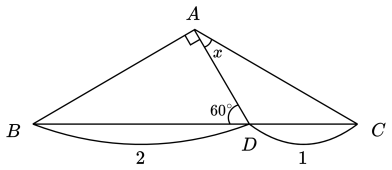
- The geometry example demonstrates that different awareness sets produce different explicit-knowledge conclusions even when implicit knowledge is identical.
Where Pith is reading between the lines
- The same indistinguishability construction could be used to model agents that acquire new explicit knowledge precisely when they become aware of a bridging lemma.
- If awareness sets are allowed to change over time, AIL could serve as the static fragment of a dynamic epistemic logic for learning.
- The framework supplies a natural setting for comparing the explicit knowledge of human reasoners who share the same implicit background but differ in noticed facts.
Load-bearing premise
The proposed awareness-dependent indistinguishability relation correctly separates explicit from merely aware implicit knowledge without letting classical rules generate new explicit propositions that the intended distinction rules out.
What would settle it
A concrete counter-example in which the geometry scenario yields an explicit-knowledge proposition under AIL that the original Fagin-Halpern definition also counts as explicit, or vice versa, would falsify the claimed improvement.
Figures


read the original abstract
The logic of awareness, first proposed by Fagin and Halpern, addressed the problem of logical omniscience by introducing the notion of awareness and distinguishing explicit knowledge from implicit knowledge. In their framework, explicit knowledge was defined as the conjunction of implicit knowledge and awareness, each of which was represented by modal operators. Their definition, however, may derive undesirable propositions that cannot be considered explicit knowledge when Modus Ponens is applied within implicit knowledge. Hence, focusing on indistinguishability among possible worlds, dependent on awareness, we refine the definition of explicit knowledge. In our semantics, we require that the aware implicit knowledge is not necessarily explicit knowledge, though explicit knowledge must be aware as well as implicit. We employ an example of elementary geometry, where different students may or may not reach the final answer, depending on whether they are aware of learned mathematical facts. Thereafter, we formally present the syntax and the semantics of our language, named Awareness-Based Indistinguishability Logic ($\mathrm{AIL}$). We prove that $\mathrm{AIL}$ has more expressive power than the logic of Fagin and Halpern, and show that the latter is embeddable in $\mathrm{AIL}$. Furthermore, we provide an axiomatic system of $\mathrm{AIL}$ and prove its soundness and completeness.
Editorial analysis
A structured set of objections, weighed in public.
Referee Report
Summary. The manuscript introduces Awareness-Based Indistinguishability Logic (AIL) as a refinement of Fagin and Halpern's logic of awareness. It redefines explicit knowledge via an awareness-dependent indistinguishability relation on possible worlds, ensuring explicit knowledge requires both implicit knowledge and awareness while allowing aware implicit knowledge to fall short of explicit knowledge. This blocks certain undesirable propositions derivable by modus ponens on implicit knowledge alone. The paper proves AIL is strictly more expressive than Fagin-Halpern logic, exhibits an embedding of the latter into AIL, and supplies an axiomatic system together with soundness and completeness proofs. The distinction is motivated by an elementary geometry example involving students' awareness of learned facts.
Significance. If the metatheoretic claims hold, the work supplies a semantically grounded improvement to the modeling of explicit knowledge that avoids a known shortcoming of the original Fagin-Halpern definition. The strict expressivity increase combined with the embedding result positions AIL as a conservative yet stronger framework. The provision of a sound and complete axiomatization is a concrete strength that supports further technical development and potential applications in multi-agent epistemic reasoning.
major comments (1)
- §5 (Axiomatization and metatheory): the manuscript asserts soundness and completeness for the proposed axiomatic system, yet the detailed derivations, key lemmas, and canonical-model construction are not exhibited. Without these, it is impossible to verify that the axioms fully capture the awareness-dependent indistinguishability relation and that no unintended validities are introduced.
minor comments (3)
- Introduction and §2: the geometry example illustrates the intended distinction but remains informal; translating the scenario into explicit AIL formulas (e.g., showing a concrete instance where aware implicit knowledge fails to be explicit) would make the motivation sharper and easier to check against the semantics.
- §3 (Semantics): the definition of the new indistinguishability relation R_a^w should be accompanied by a short verification that it preserves the frame properties needed for the modal fragment (reflexivity, etc.) so that standard modal validity results continue to hold where expected.
- Notation throughout: ensure uniform typesetting of the explicit-knowledge operator and the awareness-dependent accessibility relation across all sections and figures.
Simulated Author's Rebuttal
We thank the referee for the constructive review and the recommendation for minor revision. The single major comment is addressed point-by-point below.
read point-by-point responses
-
Referee: §5 (Axiomatization and metatheory): the manuscript asserts soundness and completeness for the proposed axiomatic system, yet the detailed derivations, key lemmas, and canonical-model construction are not exhibited. Without these, it is impossible to verify that the axioms fully capture the awareness-dependent indistinguishability relation and that no unintended validities are introduced.
Authors: We agree that the detailed derivations, key lemmas, and canonical-model construction must be exhibited for the metatheoretic claims to be verifiable. The current manuscript presents the axiomatization and states the soundness and completeness results but condenses the supporting arguments. In the revised version we will expand §5 to include the full set of key lemmas, the explicit construction of the canonical model, and the step-by-step verification that the axioms characterize precisely the awareness-dependent indistinguishability relation without introducing extraneous validities. revision: yes
Circularity Check
No significant circularity detected
full rationale
The paper defines a new semantics for AIL that refines explicit knowledge via an awareness-dependent indistinguishability relation, proves greater expressive power than Fagin-Halpern logic plus embeddability, and supplies a sound and complete axiomatization. All steps use standard modal-logic semantic arguments and metatheoretic techniques on the newly introduced structures; none reduce by construction to prior inputs, fitted parameters, or self-citations. The geometry example appears only as informal motivation and does not enter any formal derivation or equation. No load-bearing self-citation chains or ansatz smuggling are present.
Axiom & Free-Parameter Ledger
axioms (1)
- standard math Standard Kripke semantics for modal operators of knowledge and awareness
Lean theorems connected to this paper
-
IndisputableMonolith/Foundation/RealityFromDistinction.leanreality_from_one_distinction unclear?
unclearRelation between the paper passage and the cited Recognition theorem.
We prove that AIL has more expressive power than the logic of Fagin and Halpern... axiomatic system of AIL and prove its soundness and completeness.
-
IndisputableMonolith/Cost/FunctionalEquation.leanwashburn_uniqueness_aczel unclear?
unclearRelation between the paper passage and the cited Recognition theorem.
E_i φ ↔ A_i φ ∧ [◦+]i φ (EK-accessibility via (∼_i ◦ ≈_i)+)
What do these tags mean?
- matches
- The paper's claim is directly supported by a theorem in the formal canon.
- supports
- The theorem supports part of the paper's argument, but the paper may add assumptions or extra steps.
- extends
- The paper goes beyond the formal theorem; the theorem is a base layer rather than the whole result.
- uses
- The paper appears to rely on the theorem as machinery.
- contradicts
- The paper's claim conflicts with a theorem or certificate in the canon.
- unclear
- Pith found a possible connection, but the passage is too broad, indirect, or ambiguous to say the theorem truly supports the claim.
Reference graph
Works this paper leans on
-
[1]
Thomas ˚Agotnes and Natasha Alechina. A logic for reasoning about knowledge of unaware- ness.Journal of Logic, Language and Information, 23(2):197–217, 2014
work page 2014
-
[2]
A logical theory of be- lief dynamics for resource-bounded agents
Philippe Balbiani, David Fern´ andez-Duque, and Emiliano Lorini. A logical theory of be- lief dynamics for resource-bounded agents. In15th International Joint Conference on Au- tonomous Agents and Multiagent Systems (AAMAS 2016), pages 644–652, 2016
work page 2016
- [3]
- [4]
-
[5]
Michael Bergmann.Justification without awareness: A defense of epistemic externalism. Clarendon Press, 2006
work page 2006
-
[6]
Chellas.Modal logic: an introduction
Brian F. Chellas.Modal logic: an introduction. Cambridge University Press, 1980
work page 1980
-
[7]
Ronald Fagin and Joseph Y. Halpern. Belief, awareness, and limited reasoning.Artificial Intelligence, 34:39–76, 1988
work page 1988
-
[8]
Halpern, Yoram Moses, and Moshe Y
Ronald Fagin, Joseph Y. Halpern, Yoram Moses, and Moshe Y. Vardi.Reasoning About Knowledge. MIT Press, 1995
work page 1995
-
[9]
Claudia Fern´ andez-Fern´ andez.Awareness in Logic and Epistemology: A Conceptual Schema and Logical Study of the Underlying Main Epistemic Concepts. Springer, 2021. 26
work page 2021
-
[10]
Claudia Fern´ andez-Fern´ andez and Fernando R. Vel´ azquez-Quesada. Awareness of and awareness that: their combination and dynamics.Logic Journal of the IGPL, 29(4):601–626, 2021
work page 2021
-
[11]
Davide Grossi. A note on brute vs. institutional facts. InNormative Multi-Agent Systems, 15.03. - 20.03.2009, volume 09121 ofDagstuhl Seminar Proceedings, 2009
work page 2009
-
[12]
Davide Grossi, Emiliano Lorini, and Fran¸ cois Schwarzentruber. The ceteris paribus structure of logics of game forms.Journal of Artificial Intelligence Research, 53:91–126, 2015
work page 2015
-
[13]
Davide Grossi and Fernando R. Vel´ azquez-Quesada. Syntactic awareness in logical dynamics. Synthese, 192(12):4071–4105, 2015
work page 2015
-
[14]
Joseph Y. Halpern. Alternative semantics for unawareness.Games and Economic Behavior, 37(2):321–339, 2001
work page 2001
-
[15]
Joseph Y. Halpern and Leandro C. Rˆ ego. Interactive unawareness revisited.Games and Economic Behavior, 62(1):232–262, 2008
work page 2008
- [16]
- [17]
- [18]
- [19]
-
[20]
Logic of awareness in agent’s reason- ing
Yudai Kubono, Teeradaj Racharak, and Satoshi Tojo. Logic of awareness in agent’s reason- ing. InProceedings of the 15th International Conference on Agents and Artificial Intelligence - Volume 1: ICAART, pages 207–216, 2023. [Errata arXiv:2309.09214]
-
[21]
Grounding awareness on belief bases
Emiliano Lorini and Pengfei Song. Grounding awareness on belief bases. InInternational Workshop on Dynamic Logic, pages 170–186. Springer, 2020
work page 2020
- [22]
-
[23]
Course Technology, second edition, 2006
Michael Sipser.Introduction to the Theory of Computation. Course Technology, second edition, 2006
work page 2006
-
[24]
Globally rigid awareness logic with static abstrac- tion operators
Kosuke Udatsu and Katsuhiko Sano. Globally rigid awareness logic with static abstrac- tion operators. InInternational Workshop on Logical Aspects in Multi-Agent Systems and Strategic Reasoning (LAMAS&SR2024), 2024
work page 2024
-
[25]
Cambridge University Press, 2011
Johan van Benthem.Logical dynamics of information and interaction. Cambridge University Press, 2011
work page 2011
-
[26]
Johan van Benthem and Fernando R. Vel´ azquez-Quesada. The dynamics of awareness. Synthese, 177(1):5–27, 2010. 27
work page 2010
-
[27]
Awareness and forgetting of facts and agents
Hans van Ditmarsch and Tim French. Awareness and forgetting of facts and agents. In 2009 IEEE/WIC/ACM International Joint Conference on Web Intelligence and Intelligent Agent Technology, pages 478–483, 2009
work page 2009
-
[28]
Becoming aware of propositional variables
Hans van Ditmarsch and Tim French. Becoming aware of propositional variables. InLogic and Its Applications, pages 204–218, 2011
work page 2011
-
[29]
Vel´ azquez-Quesada, and Y` ı N
Hans van Ditmarsch, Tim French, Fernando R. Vel´ azquez-Quesada, and Y` ı N. W´ ang. Im- plicit, explicit and speculative knowledge.Artificial Intelligence, 256:35–67, 2018
work page 2018
-
[30]
Springer Science & Business Media, 2007
Hans van Ditmarsch, Wiebe van der Hoek, and Barteld Kooi.Dynamic Epistemic Logic. Springer Science & Business Media, 2007
work page 2007
-
[31]
Inexact knowledge.Mind, 101(402):217–242, 1992
Timothy Williamson. Inexact knowledge.Mind, 101(402):217–242, 1992. 28
work page 1992
discussion (0)
Sign in with ORCID, Apple, or X to comment. Anyone can read and Pith papers without signing in.