A Construction of C^(r) Conforming Finite Elements on the Alfeld Split in Any Dimension
Pith reviewed 2026-05-13 19:18 UTC · model grok-4.3
The pith
A first unified construction of C^r conforming finite elements on the Alfeld split works in any dimension with relaxed supersmoothness and degree conditions.
A machine-rendered reading of the paper's core claim, the machinery that carries it, and where it could break.
Core claim
The central discovery is a unified construction of C^r conforming finite element spaces on the Alfeld split of simplicial triangulations in arbitrary dimensions. This is achieved by imposing relaxed supersmoothness conditions and using polynomials of lower degree than required for general triangulations, with the spaces proven to be conforming through appropriate choice of degrees of freedom.
What carries the argument
The Alfeld split of a simplex, which divides it into smaller simplices meeting at the barycenter, serves as the local refinement that enables the definition of local polynomial spaces with the necessary continuity properties.
If this is right
- These finite element spaces can be applied to solve elliptic PDEs requiring C^r continuity in high dimensions.
- The lower polynomial degrees reduce the number of degrees of freedom per element.
- The construction is dimension-independent, allowing the same method to be used from 2D to higher dimensions.
- Global C^r conformity is achieved without additional constraints beyond the relaxed conditions.
Where Pith is reading between the lines
- Since Alfeld splits are a common refinement technique, this could facilitate adaptive mesh refinement strategies in smooth finite element methods.
- Lower degrees might improve conditioning of the resulting stiffness matrices.
- Future work could extend this to other types of splits or to non-conforming variants.
Load-bearing premise
The Alfeld split must allow local polynomial spaces and degrees of freedom that together enforce the global C^r continuity with only the relaxed supersmoothness and degree requirements.
What would settle it
Finding a specific triangulation in dimension 3 where the proposed spaces fail to achieve C^r conformity under the stated conditions would falsify the claim.
Figures




read the original abstract
Constructing $C^r$ conforming finite element spaces in any dimension is a long-standing problem. For general triangulations, this problem was recently addressed by Hu-Lin-Wu (2024), under certain conditions on supersmoothness and polynomial degree. In this paper, a first unified construction on the Alfeld split in any dimension is given, where the supersmoothness conditions and the polynomial degree requirement are relaxed.
Editorial analysis
A structured set of objections, weighed in public.
Referee Report
Summary. The paper presents a unified construction of C^r-conforming finite element spaces on the Alfeld split of a d-simplex for arbitrary dimension d and smoothness r. It relaxes the supersmoothness requirements and lowers the minimal polynomial degree relative to the Hu-Lin-Wu (2024) result for general triangulations, supplying explicit degrees of freedom, local polynomial spaces on each subsimplex, a unisolvency proof, and an interface-matching argument that establishes global C^r continuity.
Significance. If the construction and proofs hold, the result supplies the first dimension-independent explicit family of C^r elements on a standard split, reducing the polynomial degree and supersmoothness overhead. This could simplify high-order implementations for fourth-order and higher PDEs in any dimension and provide a concrete benchmark for future work on split-based elements.
major comments (2)
- [§3.2] §3.2, the unisolvency argument: the dimension-dependent count of degrees of freedom on the interior of each subsimplex must be shown to match the dimension of the local polynomial space exactly; the current sketch leaves open whether the relaxed supersmoothness conditions over- or under-constrain the system for d>3.
- [Theorem 4.1] Theorem 4.1, interface matching: the proof that the relaxed supersmoothness suffices for C^r continuity across faces relies on a specific cancellation identity; an explicit verification for the lowest nontrivial case (r=1, d=3) should be added to confirm the relaxation does not introduce hidden jumps.
minor comments (3)
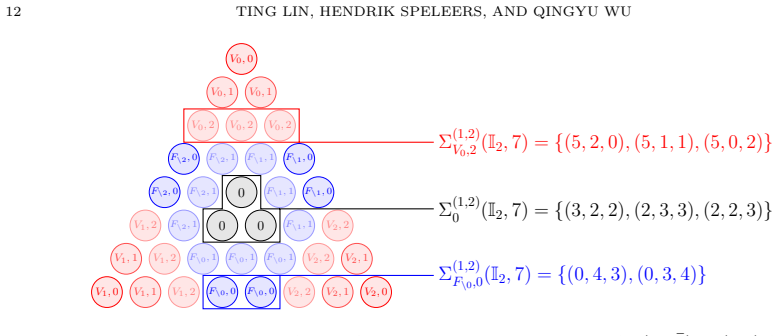
- [Figure 1] Figure 1: the labeling of the Alfeld split vertices and barycentric coordinates is difficult to read; a larger, annotated diagram with explicit coordinate expressions would improve clarity.
- [Notation] Notation section: the symbol for the global space on the split should be introduced once and used consistently; occasional reuse of the same letter for local and global spaces creates ambiguity.
- [References] References: the Hu-Lin-Wu 2024 citation is missing the arXiv identifier or journal details; add the full bibliographic entry.
Simulated Author's Rebuttal
We thank the referee for the positive evaluation and the constructive comments on the unisolvency argument and the interface-matching proof. We address both points below and will revise the manuscript accordingly.
read point-by-point responses
-
Referee: [§3.2] §3.2, the unisolvency argument: the dimension-dependent count of degrees of freedom on the interior of each subsimplex must be shown to match the dimension of the local polynomial space exactly; the current sketch leaves open whether the relaxed supersmoothness conditions over- or under-constrain the system for d>3.
Authors: We agree that the unisolvency argument in §3.2 would be strengthened by an explicit dimension count for general d. In the revised manuscript we will expand the argument to include the precise formula for the dimension of the local polynomial space on each subsimplex and verify that it equals the number of interior degrees of freedom for arbitrary d, thereby confirming that the relaxed supersmoothness conditions are exactly sufficient. revision: yes
-
Referee: [Theorem 4.1] Theorem 4.1, interface matching: the proof that the relaxed supersmoothness suffices for C^r continuity across faces relies on a specific cancellation identity; an explicit verification for the lowest nontrivial case (r=1, d=3) should be added to confirm the relaxation does not introduce hidden jumps.
Authors: We thank the referee for this suggestion. In the revised version we will insert an explicit verification of the cancellation identity for the case r=1, d=3 directly into the proof of Theorem 4.1. This calculation will confirm that the relaxed supersmoothness produces C^1 continuity across faces with no residual jumps. revision: yes
Circularity Check
No significant circularity in the construction
full rationale
The paper presents an explicit unified construction of C^r conforming finite elements on the Alfeld split in any dimension, supplying degrees of freedom, local polynomial spaces on subsimplices, unisolvency proofs, and interface matching to establish global conformity. The central claim relaxes supersmoothness and degree conditions relative to the cited Hu-Lin-Wu 2024 result on general triangulations but does not derive from or reduce to that citation by construction; the logical chain from local data to global C^r continuity is internally complete with independent content. No self-definitional steps, fitted inputs renamed as predictions, or load-bearing self-citations appear. The minor citation overlap is contextual and not tautological.
Axiom & Free-Parameter Ledger
axioms (1)
- standard math Standard polynomial approximation properties and conformity conditions for finite element spaces on simplicial meshes hold.
Lean theorems connected to this paper
-
IndisputableMonolith/Foundation/AbsoluteFloorClosure.leanreality_from_one_distinction unclear?
unclearRelation between the paper passage and the cited Recognition theorem.
Theorem 3.3: ... degrees of freedom (3.2)–(3.4) form a finite element ... C^{r_1} conforming ... on the Alfeld split
What do these tags mean?
- matches
- The paper's claim is directly supported by a theorem in the formal canon.
- supports
- The theorem supports part of the paper's argument, but the paper may add assumptions or extra steps.
- extends
- The paper goes beyond the formal theorem; the theorem is a base layer rather than the whole result.
- uses
- The paper appears to rely on the theorem as machinery.
- contradicts
- The paper's claim conflicts with a theorem or certificate in the canon.
- unclear
- Pith found a possible connection, but the passage is too broad, indirect, or ambiguous to say the theorem truly supports the claim.
Reference graph
Works this paper leans on
-
[1]
P. Alfeld. A bivariateC 2 Clough–Tocher scheme.Computer Aided Geometric Design, 1(3):257–267, 1984
work page 1984
-
[2]
P. Alfeld. A trivariate Clough–Tocher scheme for tetrahedral data.Computer Aided Geometric Design, 1(2):169– 181, 1984
work page 1984
-
[3]
P. Alfeld and L. L. Schumaker. Smooth macro-elements based on Clough–Tocher triangle splits.Numerische Mathematik, 90(4):597–616, 2002
work page 2002
-
[4]
P. Alfeld and L. L. Schumaker. Smooth macro-elements based on Powell–Sabin triangle splits.Advances in Computational Mathematics, 16:29–46, 2002
work page 2002
-
[5]
P. Alfeld and L. L. Schumaker. AC 2 trivariate macro-element based on the Clough–Tocher-split of a tetrahedron. Computer Aided Geometric Design, 22(7):710–721, 2005
work page 2005
-
[6]
P. Alfeld and T. Sorokina. Two tetrahedralC 1 cubic macro elements.Journal of Approximation Theory, 157(1):53–69, 2009
work page 2009
-
[7]
J. H. Argyris, I. Fried, and D. W. Scharpf. The TUBA family of plate elements for the matrix displacement method.The Aeronautical Journal, 72(692):701–709, 1968
work page 1968
-
[8]
G. Awanou and M. J. Lai.C 1 quintic spline interpolation over tetrahedral partitions. InApproximation Theory X: Wavelets, Splines, and Applications, pages 1–16. Vanderbilt University Press, 2002
work page 2002
-
[9]
C. de Boor.B-form basics. Mathematics Research Center, University of Wisconsin-Madison, 1986
work page 1986
-
[10]
P. G. Ciarlet. Sur l’´ el´ ement de Clough et Tocher.RAIRO Analyse Num´ erique, 8(2):19–27, 1974
work page 1974
-
[11]
R. W. Clough and J. L. Tocher. Finite element stiffness matrices for analysis of plate bending. InProceedings of Conference on Matrix Methods in Structural Mechanics, pages 515–545. Wright-Patterson Air Force Base, Ohio, 1965
work page 1965
-
[12]
J. Douglas, T. Dupont, P. Percell, and R. Scott. A family ofC 1 finite elements with optimal approximation properties for various Galerkin methods for 2nd and 4th order problems.RAIRO Analyse Num´ erique, 13(3):227– 255, 1979
work page 1979
-
[13]
M. S. Floater and K. Hu. A characterization of supersmoothness of multivariate splines.Advances in Computa- tional Mathematics, 46:70, 2020. A CONSTRUCTION OFC r FINITE ELEMENTS ON THE ALFELD SPLIT 33
work page 2020
- [14]
-
[15]
J. Groˇ selj and M. Knez. GeneralizedC 1 Clough–Tocher splines for CAGD and FEM.Computer Methods in Applied Mechanics and Engineering, 395:114983, 2022
work page 2022
-
[16]
J. Hu, T. Lin, and Q. Wu. A construction ofC r conforming finite element spaces in any dimension.Foundations of Computational Mathematics, 24(6):1941–1977, 2024
work page 1941
-
[17]
J. Hu, T. Lin, Q. Wu, and B. Yuan. The sharpness condition for constructing a finite element from a superspline. Mathematics of Computation, 2025
work page 2025
-
[18]
A. Kolesnikov and T. Sorokina. MultivariateC 1-continuous splines on the Alfeld split of a simplex. InApprox- imation theory XIV, volume 83 ofSpringer Proceedings in Mathematics & Statistics, pages 283–294. Springer, Cham, 2014
work page 2014
- [19]
- [20]
- [21]
- [22]
- [23]
- [24]
-
[25]
T. Lyche, J.-L. Merrien, and H. Speleers. AC 1 simplex-spline basis for the Alfeld split inR s.Computer Aided Geometric Design, 117:102412, 2025
work page 2025
-
[26]
M. J. D. Powell and M. A. Sabin. Piecewise quadratic approximations on triangles.ACM Transactions on Mathematical Software, 3:316–325, 1977
work page 1977
-
[27]
H. Schenck. Splines on the Alfeld split of a simplex and type A root systems.Journal of Approximation Theory, 182:1–6, 2014
work page 2014
-
[28]
L. L. Schumaker and T. Sorokina. Smooth macro-elements on Powell–Sabin-12 splits.Mathematics of Compu- tation, 75(254):711–726, 2006
work page 2006
-
[29]
L. L. Schumaker, T. Sorokina, and A. J. Worsey. AC 1 quadratic trivariate macro-element space defined over arbitrary tetrahedral partitions.Journal of Approximation Theory, 158(1):126–142, 2009
work page 2009
-
[30]
T. Sorokina and A. J. Worsey. A multivariate Powell–Sabin interpolant.Advances in Computational Mathemat- ics, 29:71–89, 2008
work page 2008
- [31]
- [32]
-
[33]
R.-H. Wang and X.-Q. Shi.S µ µ+1 surface interpolations over triangulations. InApproximation, Optimization and Computing: Theory and Applications, pages 205–208. Elsevier Science Publishers B.V., 1990
work page 1990
-
[34]
T. Wang. AC 2-quintic spline interpolation scheme on triangulation.Computer Aided Geometric Design, 9(5):379–386, 1992
work page 1992
-
[35]
A. J. Worsey and G. Farin. Ann-dimensional Clough–Tocher interpolant.Constructive Approximation, 3(1):99– 110, 1987
work page 1987
-
[36]
A. J. Worsey and B. Piper. A trivariate Powell–Sabin interpolant.Computer Aided Geometric Design, 5(3):177– 186, 1988
work page 1988
-
[37]
A. ˇZen´ ıˇ sek. Polynomial approximation on tetrahedrons in the finite element method.Journal of Approximation Theory, 7(4):334–351, 1973
work page 1973
-
[38]
A. ˇZen´ ıˇ sek. A general theorem on triangular finiteC(m)-elements.RAIRO Analyse Num´ erique, 8(2):119–127, 1974. 34 TING LIN, HENDRIK SPELEERS, AND QINGYU WU School of Mathematical Sciences, Peking University, Beijing 100871, P. R. China Email address:lintingsms@pku.edu.cn Department of Mathematics, University of Rome Tor Vergata, Rome 00133, Italy Ema...
work page 1974
discussion (0)
Sign in with ORCID, Apple, or X to comment. Anyone can read and Pith papers without signing in.