Minimal Filling K-Systems of Curves
Pith reviewed 2026-06-27 22:52 UTC · model grok-4.3
The pith
The exact minimal number of curves in a filling k-system on an oriented surface of genus g is determined for all positive integers k and g.
A machine-rendered reading of the paper's core claim, the machinery that carries it, and where it could break.
Core claim
We determine the exact minimal number of curves in a filling k-system on an oriented surface of genus g for any positive integers k and g.
What carries the argument
A combinatorial or topological derivation that produces a closed-form expression for the minimal count of curves.
If this is right
- For every pair of positive integers k and g there exists a concrete integer N(k,g) that is the minimal possible size.
- There exist explicit collections of curves on the surface that achieve exactly N(k,g) curves while forming a filling k-system.
- Every filling k-system on the surface must contain at least N(k,g) curves.
Where Pith is reading between the lines
- The closed-form expression for N(k,g) could serve as a benchmark when enumerating curve systems by computer on surfaces of moderate genus.
- The same counting technique might extend to related questions about minimal configurations with bounded intersection numbers on surfaces with boundary.
Load-bearing premise
The standard definitions of filling k-system and oriented surface of genus g from prior literature are sufficient to admit an exact closed-form minimal count that can be derived combinatorially or topologically without additional constraints or exceptions for large k or g.
What would settle it
An explicit construction of a filling k-system on some genus-g surface that uses strictly fewer curves than the derived minimum, or a proof that no collection of that size can fill the surface.
Figures
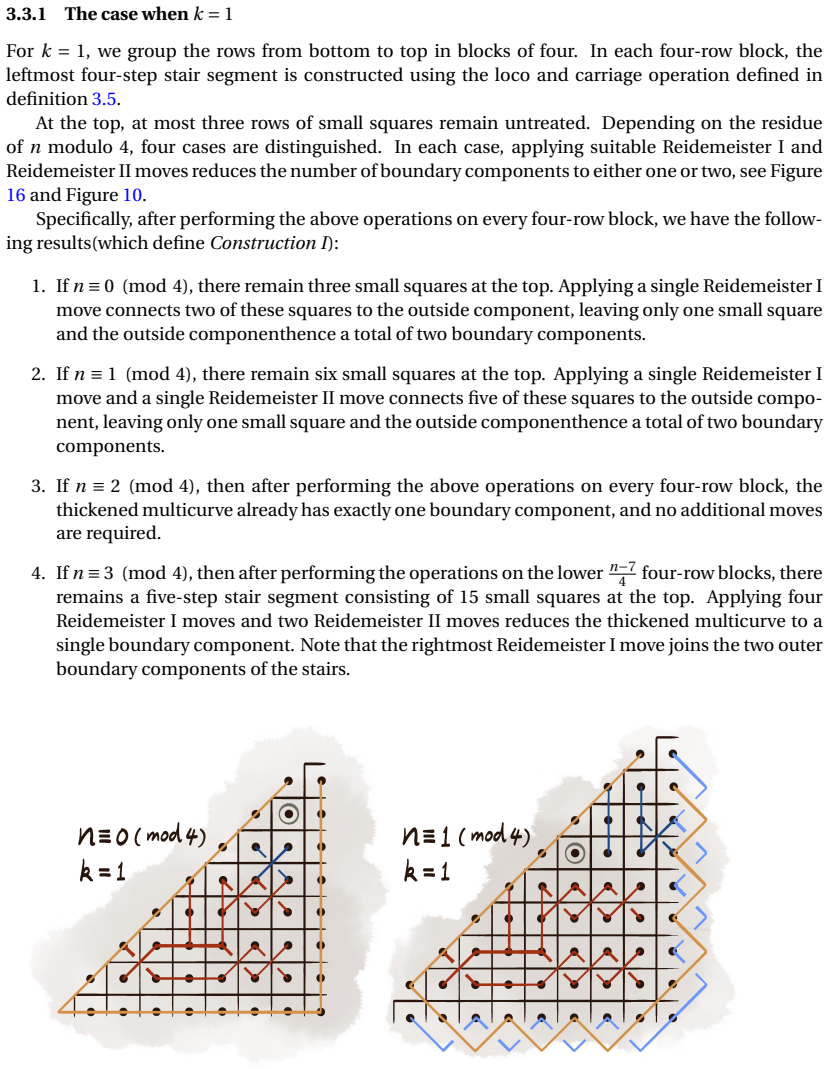
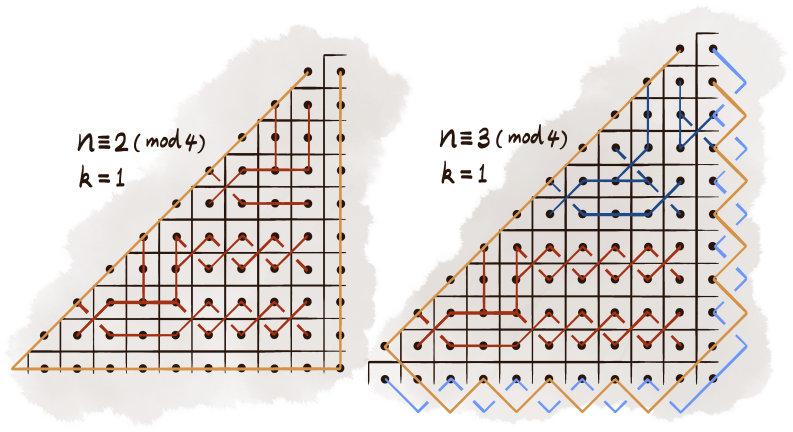
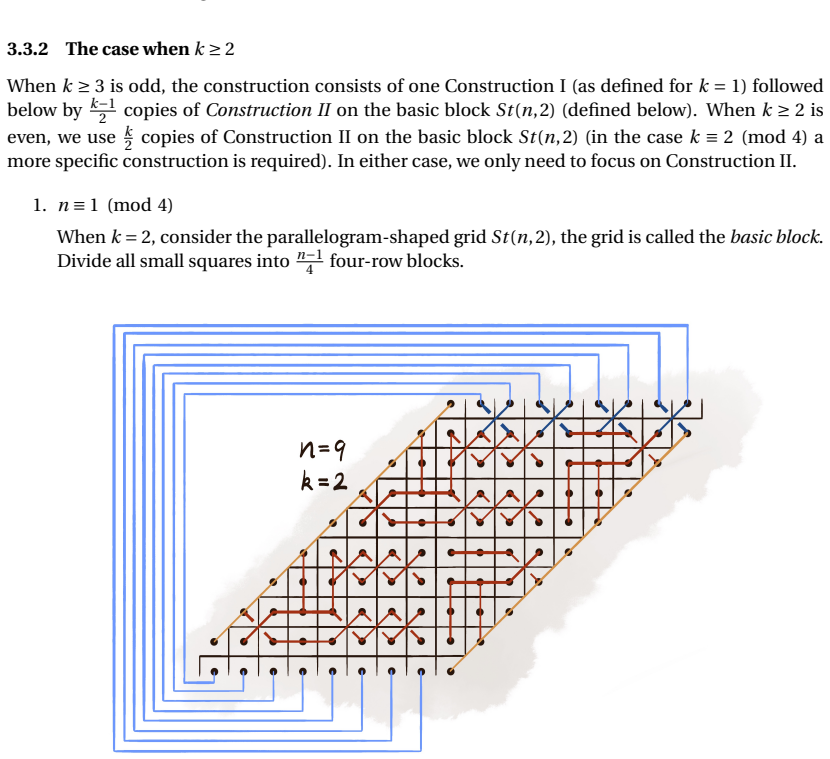
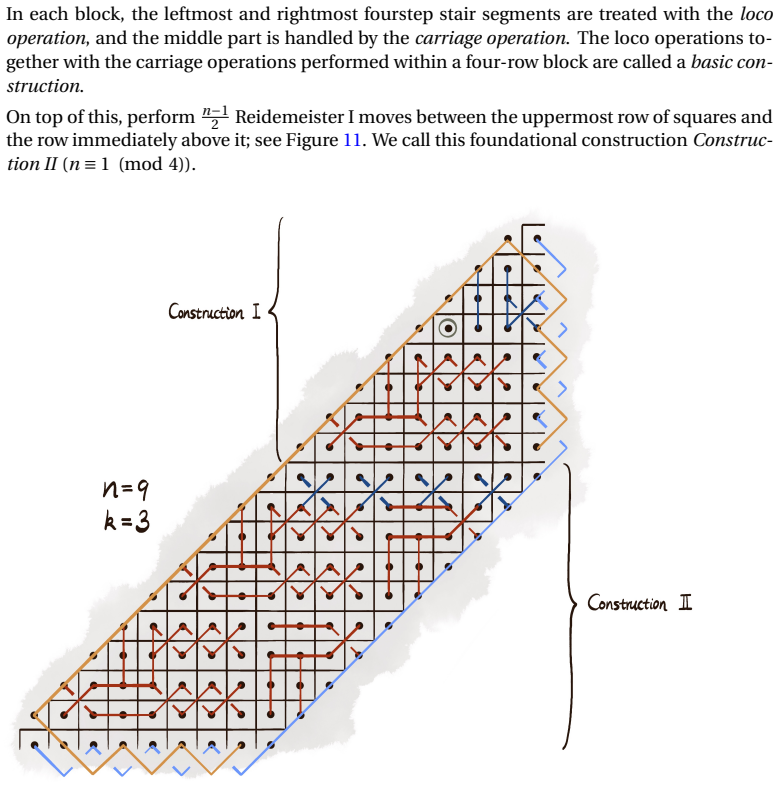
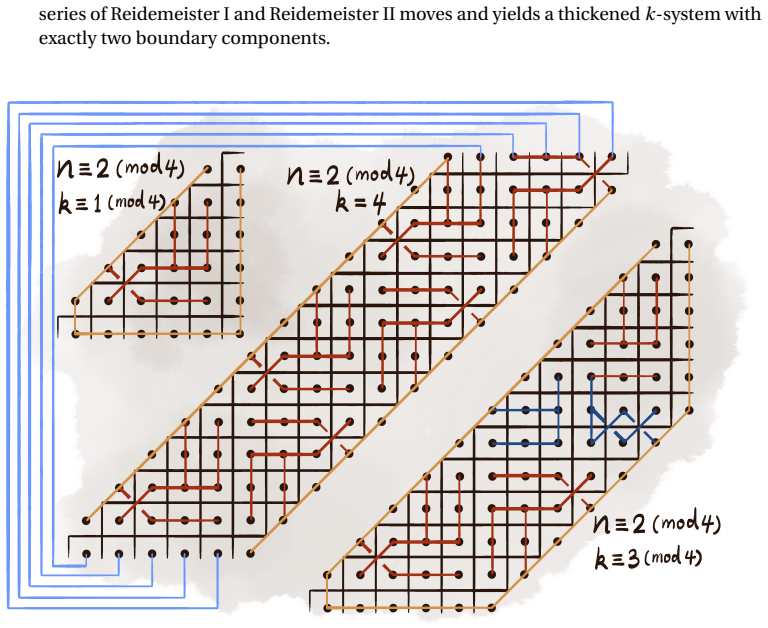
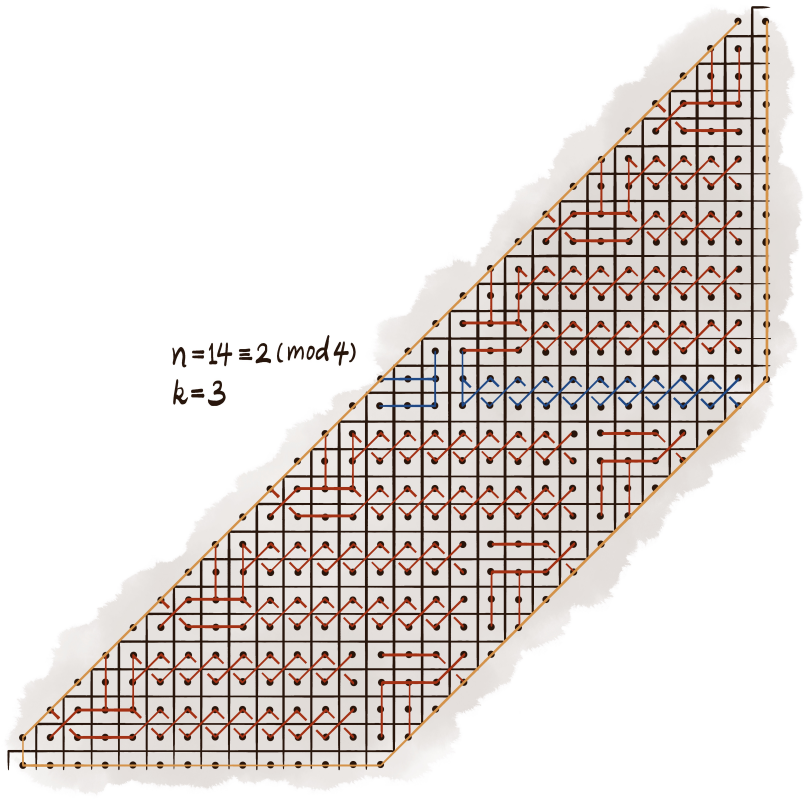
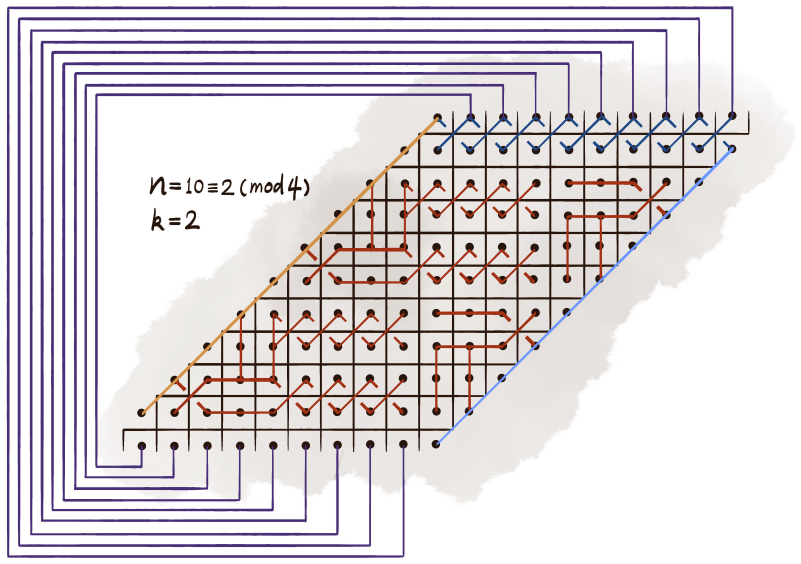
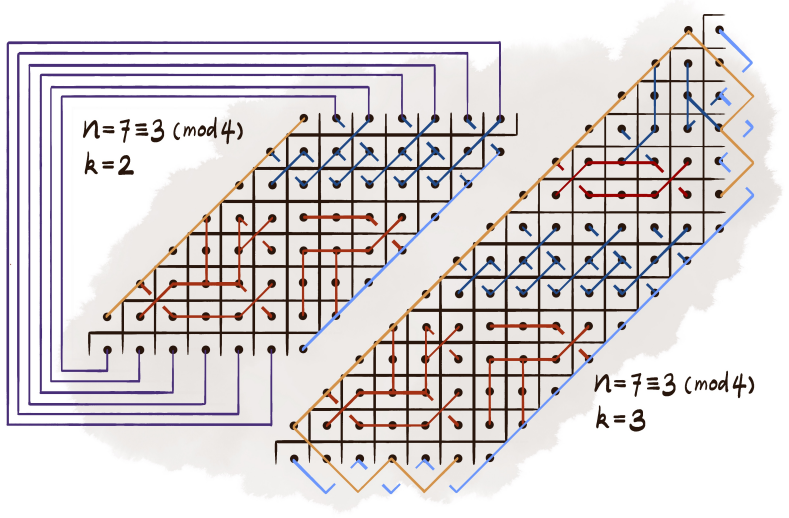
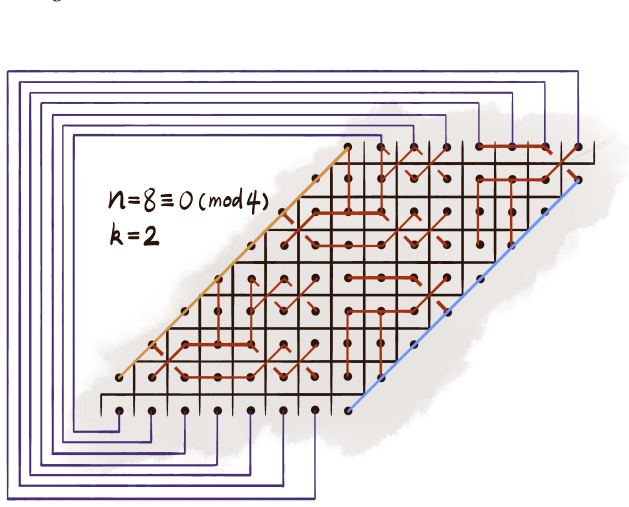
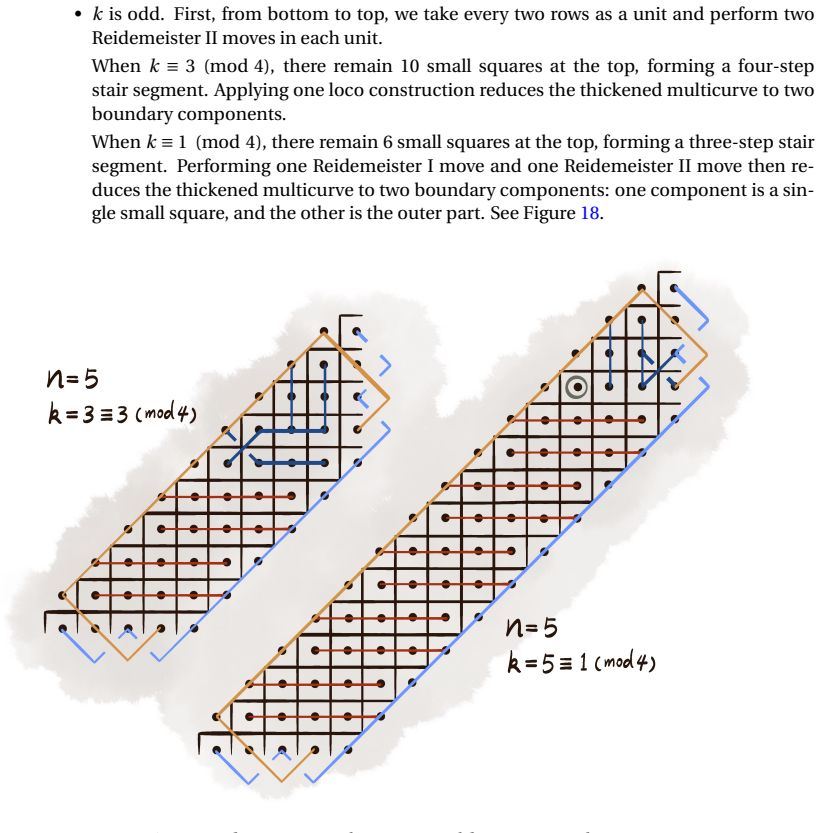
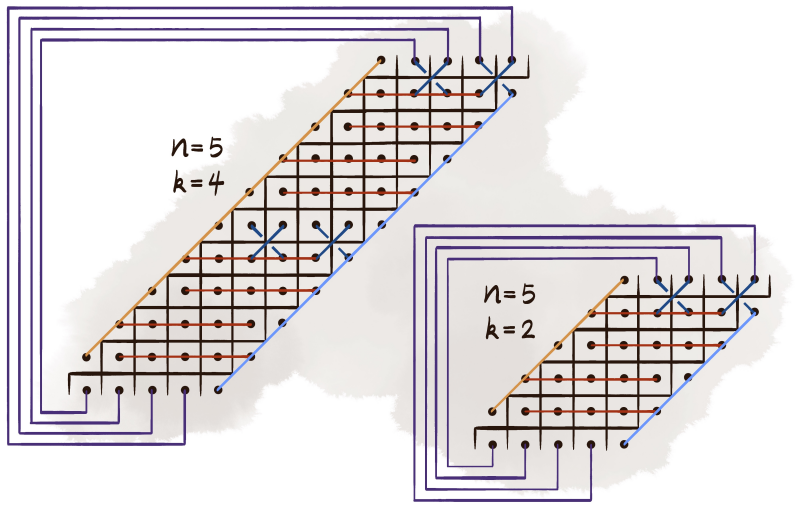
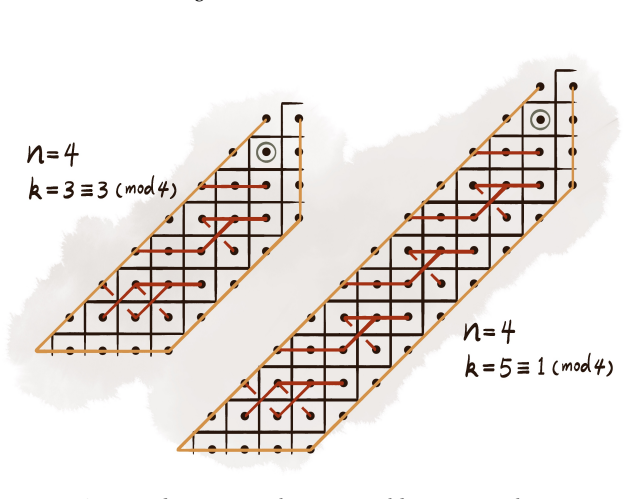
read the original abstract
In this paper, we determine the exact minimal number of curves in a filling $k$-system on an oriented surface of genus $g$ for any positive integers $k$ and $g$.
Editorial analysis
A structured set of objections, weighed in public.
Referee Report
Summary. The manuscript claims to determine the exact minimal number of curves in a filling k-system on an oriented surface of genus g, for arbitrary positive integers k and g.
Significance. If substantiated, an exact closed-form count for minimal filling k-systems would constitute a concrete combinatorial result in surface topology, potentially useful for questions about curve complexes and filling properties. The abstract, however, supplies neither the formula nor any derivation, so the potential significance cannot be assessed.
major comments (1)
- Abstract: the central claim of an exact closed-form minimal count is stated without any supporting derivation, formula, or argument. This prevents verification of whether the result follows from the standard definitions of filling k-systems.
Simulated Author's Rebuttal
We thank the referee for their feedback. We address the single major comment below.
read point-by-point responses
-
Referee: [—] Abstract: the central claim of an exact closed-form minimal count is stated without any supporting derivation, formula, or argument. This prevents verification of whether the result follows from the standard definitions of filling k-systems.
Authors: Abstracts are conventionally limited to a high-level statement of the main result. The manuscript body supplies the explicit closed-form expression for the minimal cardinality of a filling k-system (as a function of k and g), together with the complete derivation and proof that this bound is achieved and is minimal. These arguments rely only on the standard definitions of filling systems and k-systems and are developed in full detail after the introduction. The abstract therefore does not impede verification; the full text does so directly. revision: no
Circularity Check
No significant circularity detected
full rationale
The paper asserts an exact closed-form minimal count for filling k-systems on genus-g surfaces derived from standard prior definitions of those objects. No equations, fitted parameters, self-citations as load-bearing premises, or ansatzes are exhibited in the abstract or claim description that would reduce the result to its inputs by construction. The derivation is presented as holding uniformly from combinatorial or topological reasoning on the given definitions, making the central claim self-contained against external benchmarks.
Axiom & Free-Parameter Ledger
Reference graph
Works this paper leans on
-
[1]
Automorphisms of the k-curve graph
Shuchi Agrawal et al. “ Automorphisms of the k-curve graph”. In: Michigan Math. J. 73.2 (2023), pp. 305–343. ISSN : 0026-2285,1945-2365
2023
-
[2]
Curves on the torus intersecting at most k times
T arik Aougab and Jonah Gaster. “Curves on the torus intersecting at most k times”. In: Math. Proc. Cambridge Philos. Soc. 174.3 (2023), pp. 569–584. ISSN : 0305-0041,1469-8064
2023
-
[3]
Minimally intersecting filling pairs on surfaces
T arik Aougab and Shinnyih Huang. “Minimally intersecting filling pairs on surfaces”. In: Al- gebr . Geom. Topol.15.2 (2015), pp. 903–932. ISSN : 1472-2747,1472-2739
2015
-
[4]
Origamis associated to minimally inter- secting filling pairs
T arik Aougab, William Menasco, and Mark Nieland. “Origamis associated to minimally inter- secting filling pairs”. In: Pacific J. Math. 317.1 (2022), pp. 1–20. ISSN : 0030-8730,1945-5844
2022
-
[5]
Automorphisms of curve complexes on nonorientable surfaces
Ferihe Atalan and Mustafa Korkmaz. “Automorphisms of curve complexes on nonorientable surfaces”. In: Groups Geom. Dyn. 8.1 (2014), pp. 39–68
2014
-
[6]
Surgery on simply-connected manifolds
William Browder. Surgery on simply-connected manifolds. Vol. Band 65. Ergebnisse der Math- ematik und ihrer Grenzgebiete [Results in Mathematics and Related Areas]. Springer-Verlag, New York-Heidelberg, 1972, pp. ix+132
1972
-
[7]
A construction of minimal coherent filling pairs
Hong Chang and William W . Menasco. “A construction of minimal coherent filling pairs”. In: Mathematical Proceedings of the Cambridge Philosophical Society (2025), pp. 122
2025
-
[8]
A primer on mapping class groups
Benson Farb and Dan Margalit. A primer on mapping class groups . Vol. 49. Princeton Mathe- matical Series. Princeton University Press, Princeton, NJ, 2012, pp. xiv+472. 25
2012
-
[9]
Thurston’s Work on Surfaces (MN-48)
Albert Fathi et al. Thurston’s Work on Surfaces (MN-48). Vol. 48. Princeton University Press,
-
[10]
ISBN : 9780691147352
-
[11]
Boundary structure of the modular group
William J. Harvey. “Boundary structure of the modular group”. In: Riemann surfaces and re- lated topics: Proceedings of the 1978 Stony Brook Conference (State Univ. New York, Stony Brook, N.Y., 1978). Vol. No. 97. Ann. of Math. Stud. Princeton Univ. Press, Princeton, NJ, 1981, pp. 245–251
1978
-
[12]
Automorphism of complexes of curves and of T eichmüller spaces
Nikolai V . Ivanov. “ Automorphism of complexes of curves and of T eichmüller spaces”. In:In- ternat. Math. Res. Notices 14 (1997), pp. 651–666
1997
-
[13]
Single-cylinder square-tiled surfaces and the ubiquity of ratio-optimising pseudo-Anosovs
Luke Jeffreys. “Single-cylinder square-tiled surfaces and the ubiquity of ratio-optimising pseudo-Anosovs”. In: Trans. Amer . Math. Soc. 374.8 (2021), pp. 5739–5781. ISSN : 0002- 9947,1088-6850
2021
-
[14]
Systems of curves on surfaces
M. Juvan, A. Malniˇ c, and B. Mohar. “Systems of curves on surfaces”. In: J. Combin. Theory Ser . B68.1 (1996), pp. 7–22. ISSN : 0095-8956,1096-0902
1996
-
[15]
Filling systems of maximum size
Rakesh Kumar and Shiv Parsad. Filling systems of maximum size . 2025. arXiv: 2503.04116 [math.GT]2503.04116 [math.GT]
-
[16]
Automorphisms of the complex of curves
Feng Luo. “Automorphisms of the complex of curves”. In: Topology 39.2 (2000), pp. 283–298
2000
-
[17]
Filling systems on surfaces
Shiv Parsad and Bidyut Sanki. “Filling systems on surfaces”. In: J. Topol. Anal. 17.3 (2025), pp. 805–821. ISSN : 1793-5253,1793-7167
2025
-
[18]
A construction of pseudo-Anosov homeomorphisms
Robert C. Penner. “A construction of pseudo-Anosov homeomorphisms”. In: Trans. Amer . Math. Soc. 310.1 (1988), pp. 179–197. ISSN : 0002-9947,1088-6850. 26
1988
discussion (0)
Sign in with ORCID, Apple, or X to comment. Anyone can read and Pith papers without signing in.