Reconfiguration Algorithms for High Precision Communications in Time Sensitive Networks: Time-Aware Shaper Configuration with IEEE 802.1Qcc (Extended Version)
Pith reviewed 2026-05-25 14:05 UTC · model grok-4.3
The pith
IEEE 802.1Qcc configuration of Time-Aware Shapers delivers ultra-low latency, zero loss, and minimal jitter for scheduled traffic on TSN networks.
A machine-rendered reading of the paper's core claim, the machinery that carries it, and where it could break.
Core claim
The central claim is that accurate configuration of TAS-enabled switches using the IEEE 802.1Qcc management protocol ensures ultra-low latency, zero packet loss, and minimal jitter for scheduled TSN traffic. This holds in both the centralized network/distributed user (hybrid) model and the fully-distributed model when applied to a typical industrial control network, allowing maximization of scheduled traffic streams.
What carries the argument
The IEEE 802.1Qcc management protocol configuring Gate Control Lists (GCLs) with Gate Control Entries (GCEs) to set transmission windows in Time-Aware Shapers (TAS).
Load-bearing premise
The hybrid and fully-distributed 802.1Qcc models achieve the deterministic properties on a typical industrial control network without requiring post-hoc adjustments or additional unstated assumptions about the network.
What would settle it
A simulation or measurement showing that jitter exceeds minimal levels or packet loss occurs for scheduled traffic when using the 802.1Qcc configured GCLs in the hybrid or distributed model on the industrial control network.
Figures
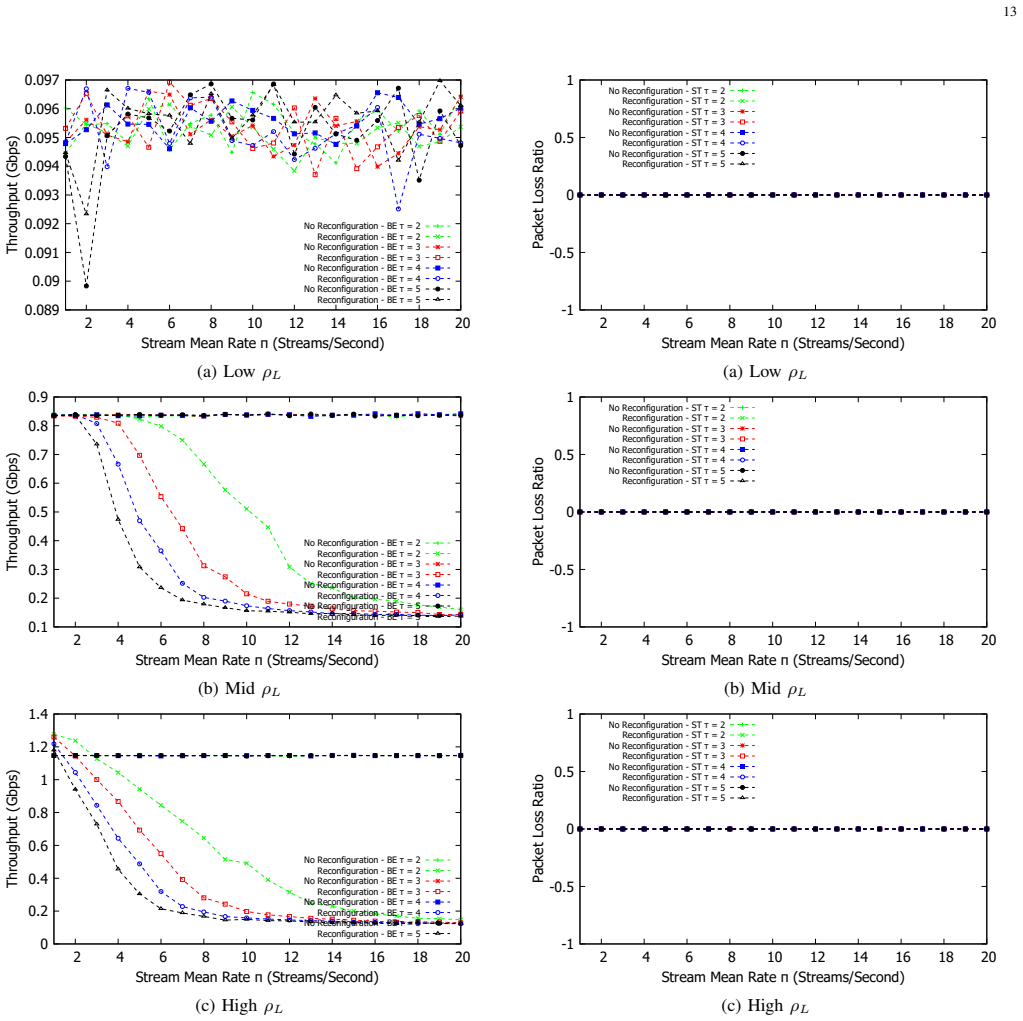
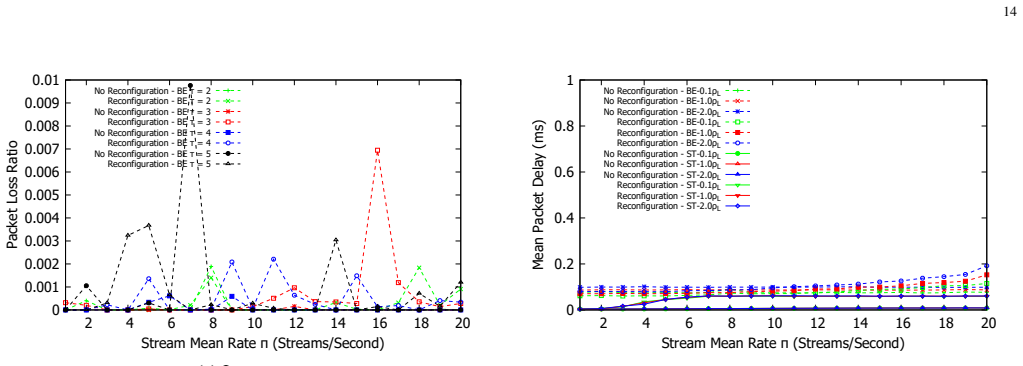
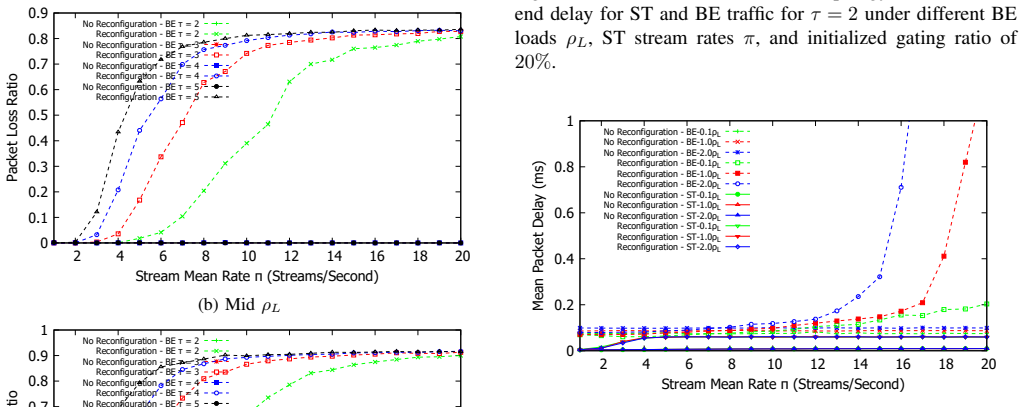
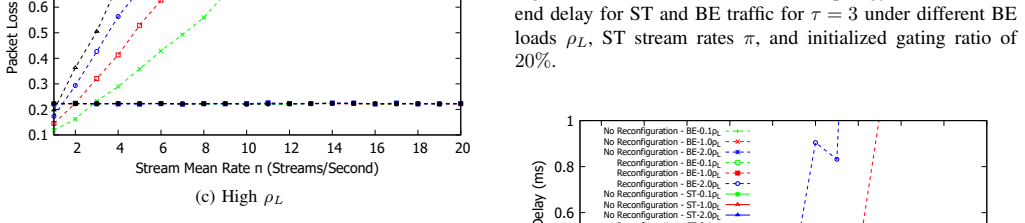

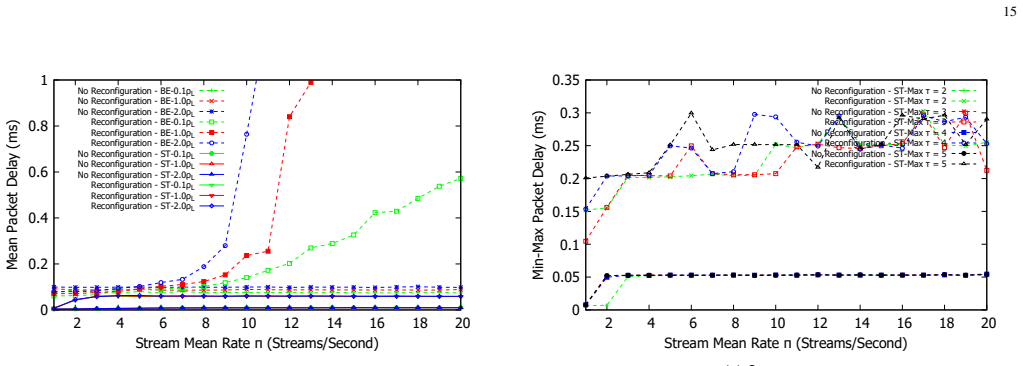
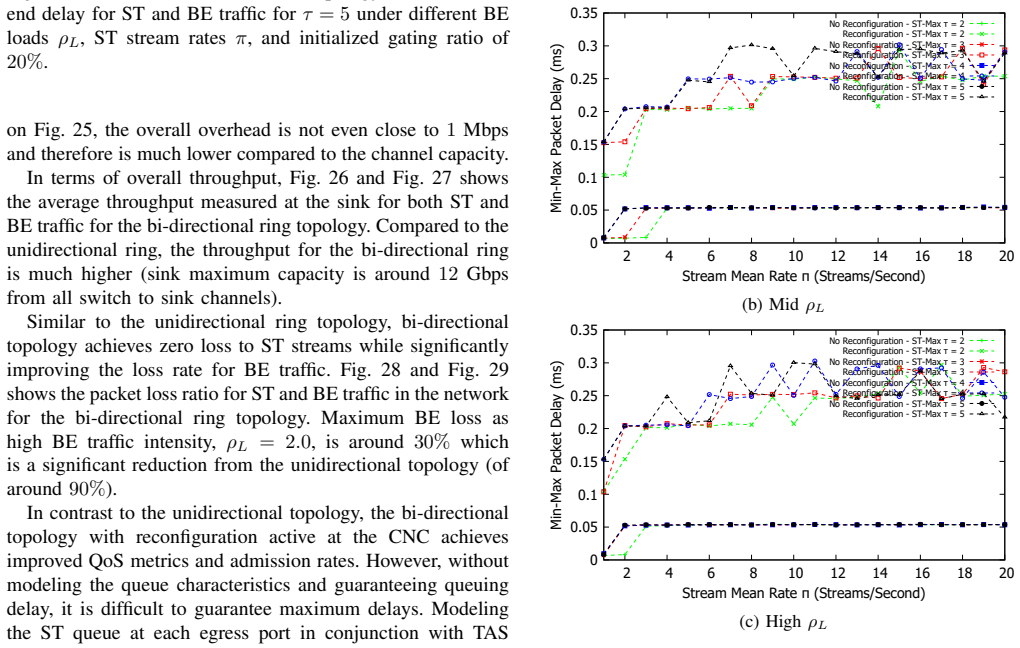
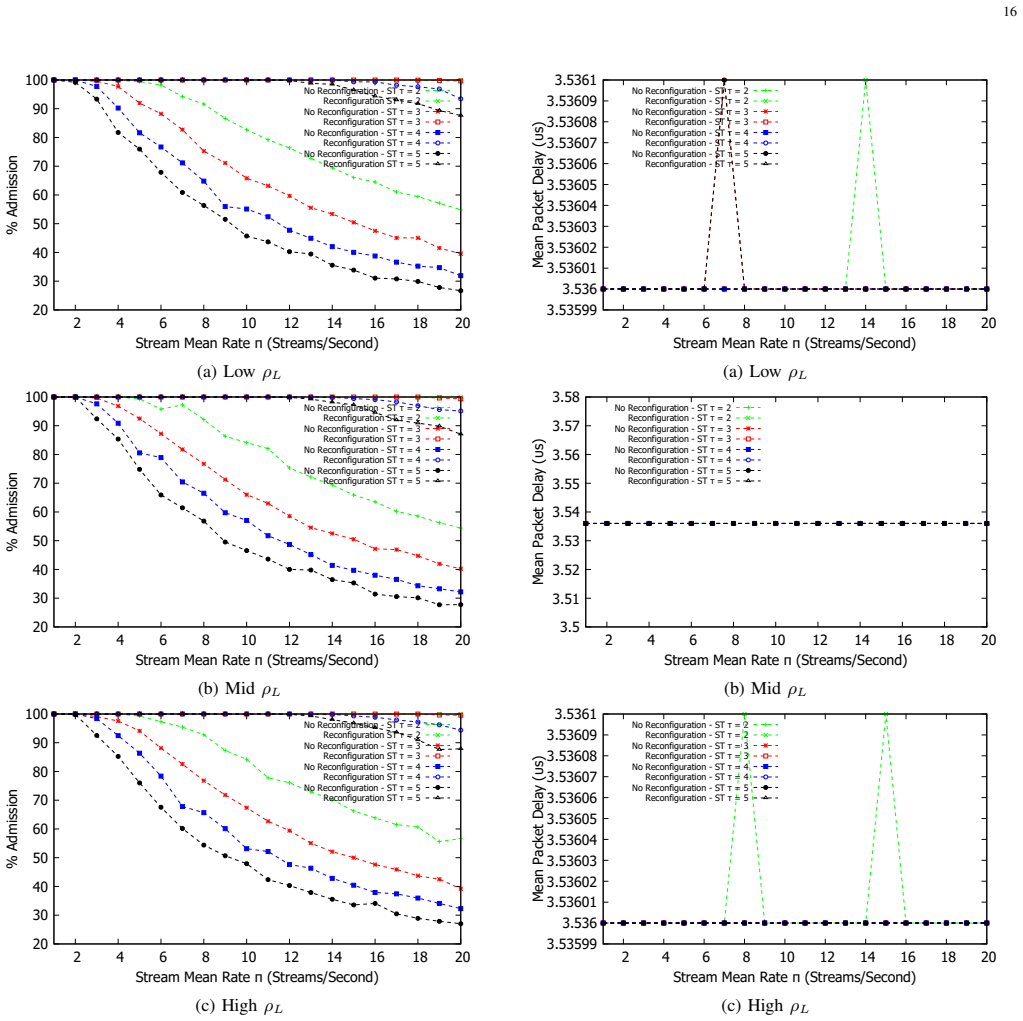
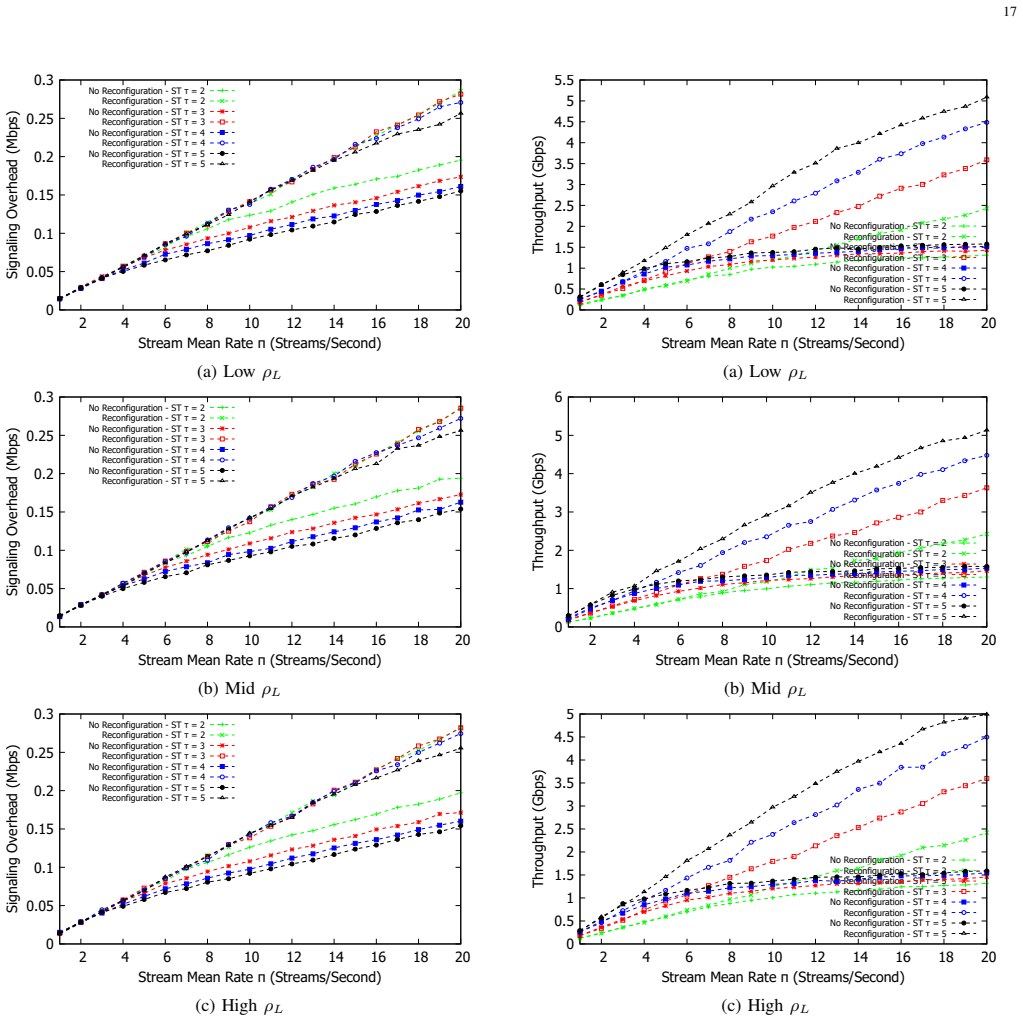
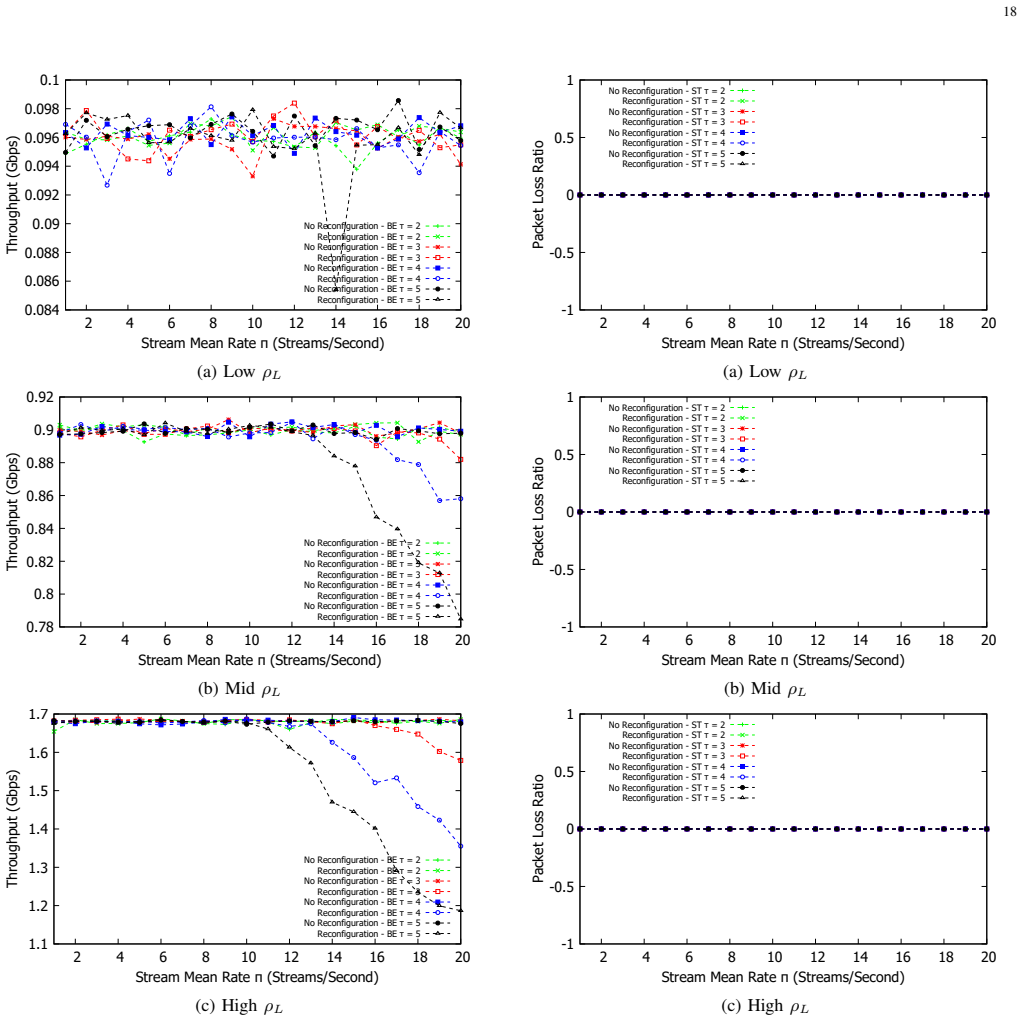
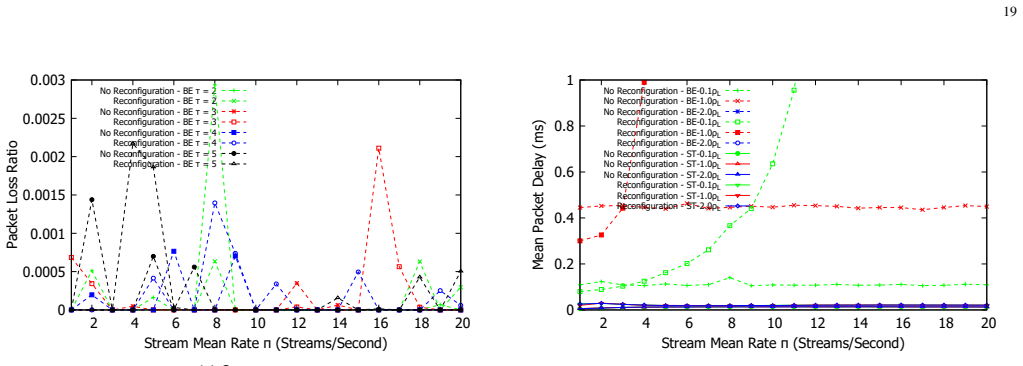
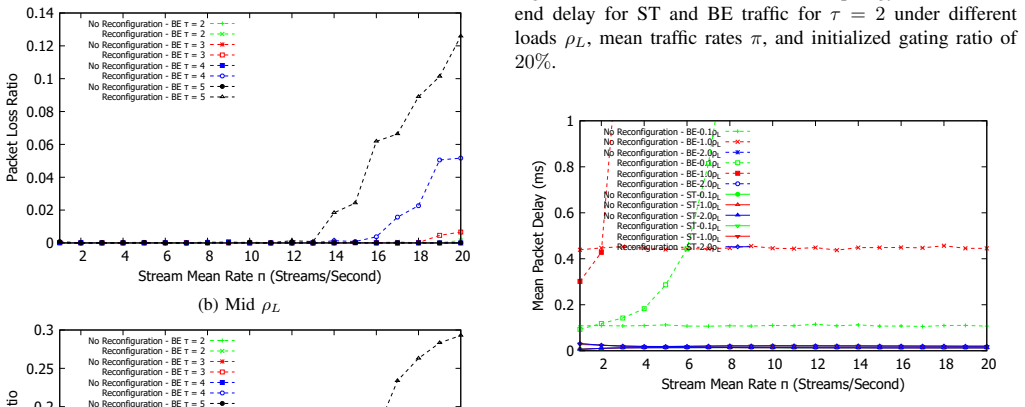
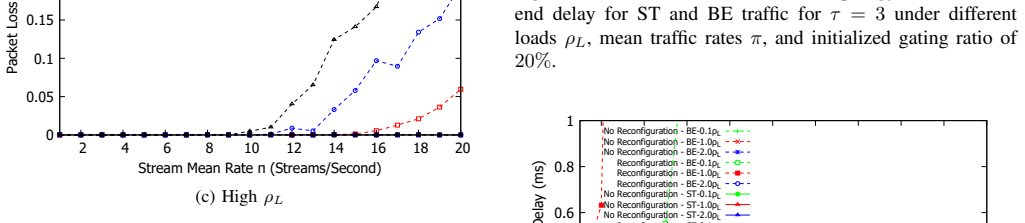

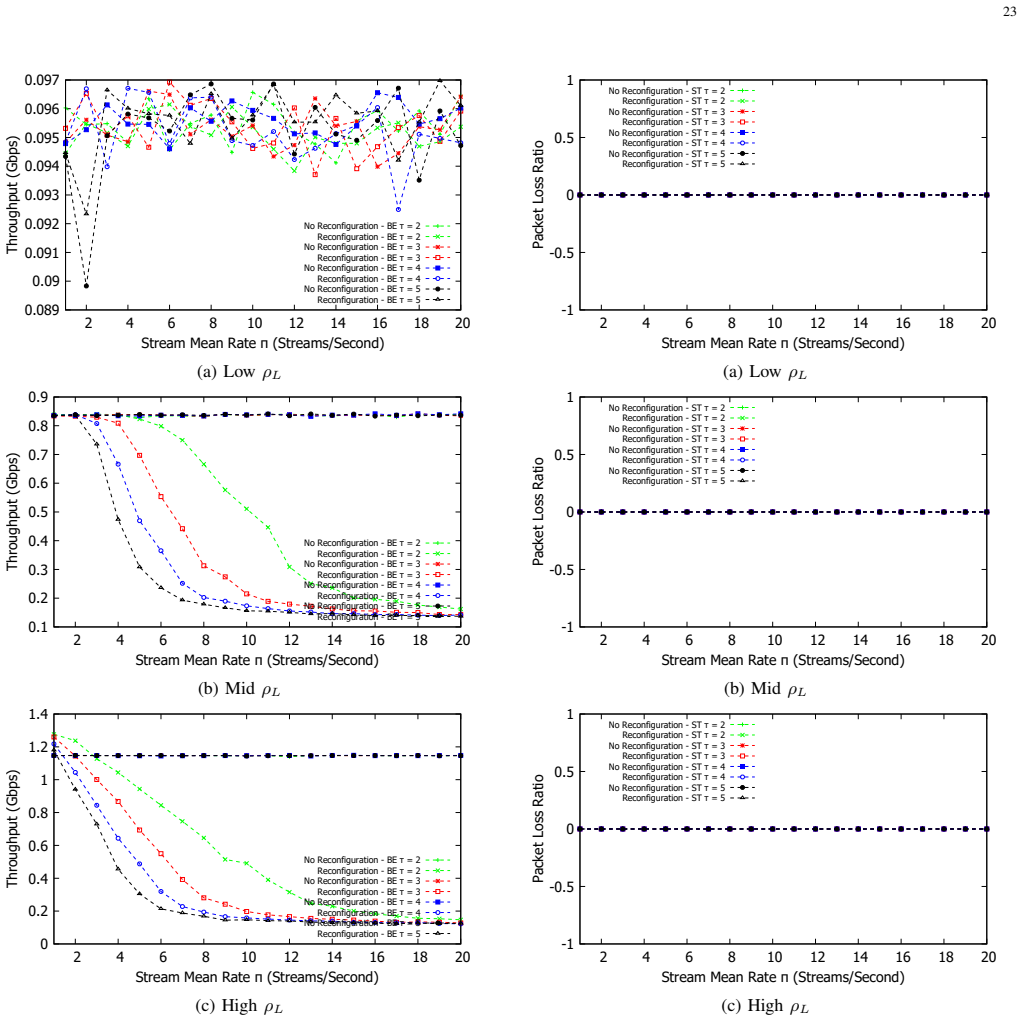
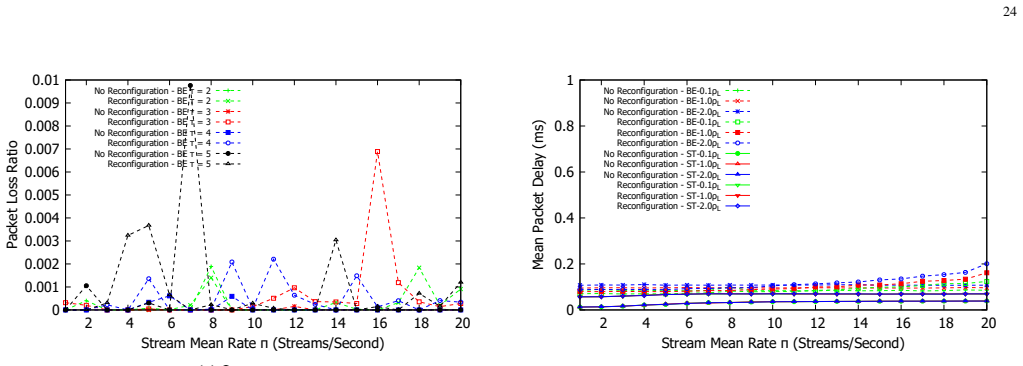
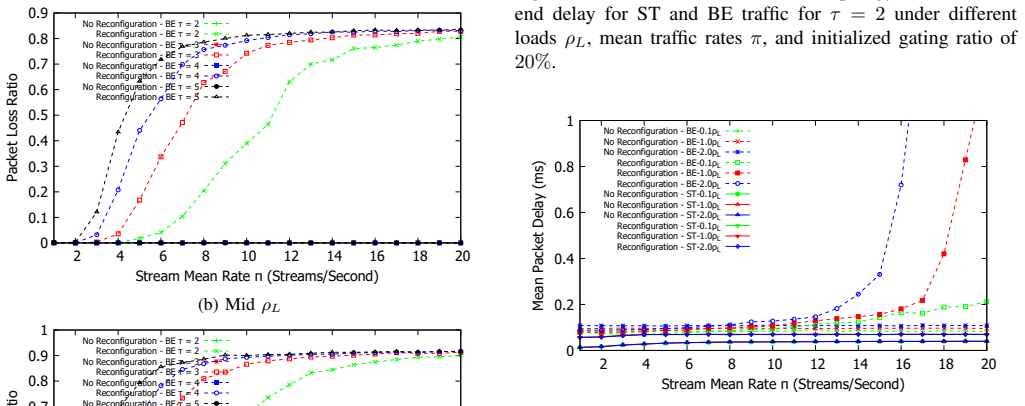

read the original abstract
As new networking paradigms emerge for different networking applications, e.g., cyber-physical systems, and different services are handled under a converged data link technology, e.g., Ethernet, certain applications with mission critical traffic cannot coexist on the same physical networking infrastructure using traditional Ethernet packet-switched networking protocols. The IEEE 802.1Q Time Sensitive Networking (TSN) task group is developing protocol standards to provide deterministic properties on Ethernet based packet-switched networks. In particular, the IEEE 802.1Qcc, centralized management and control, and the IEEE 802.1Qbv, Time-Aware Shaper, can be used to manage and control scheduled traffic streams with periodic properties along with best-effort traffic on the same network infrastructure. In this paper, we investigate the effects of using the IEEE 802.1Qcc management protocol to accurately and precisely configure TAS enabled switches (with transmission windows governed by gate control lists (GCLs) with gate control entries (GCEs)) ensuring ultra-low latency, zero packet loss, and minimal jitter for scheduled TSN traffic. We examine both a centralized network/distributed user model (hybrid model) and a fully-distributed (decentralized) 802.1Qcc model on a typical industrial control network with the goal of maximizing scheduled traffic streams.
Editorial analysis
A structured set of objections, weighed in public.
Referee Report
Summary. The paper investigates the use of the IEEE 802.1Qcc management protocol to configure Time-Aware Shaper (TAS) switches governed by Gate Control Lists (GCLs) in TSN networks. It examines both the hybrid (centralized network/distributed user) and fully-distributed 802.1Qcc models on a typical industrial control network, with the goal of maximizing the number of scheduled traffic streams while achieving ultra-low latency, zero packet loss, and minimal jitter for scheduled TSN traffic.
Significance. If the reconfiguration algorithms are shown to produce conflict-free GCLs that deliver the claimed deterministic properties under realistic conditions, the work would provide concrete guidance on applying 802.1Qcc and 802.1Qbv together for converged industrial networks, addressing a gap between TSN standards and deployable configurations.
major comments (2)
- [Abstract and evaluation description] The central claim that the hybrid and fully-distributed models ensure zero loss, ultra-low latency, and minimal jitter while maximizing streams rests on the unexamined assumptions that (a) the algorithms resolve all gate conflicts without residual interference and (b) the network model captures all relevant timing/queuing effects. No evidence is presented that clock drift, link variability, or non-ideal traffic patterns were included in the evaluation.
- [Abstract] The manuscript does not report quantitative results (e.g., measured latency distributions, loss rates, or jitter values) or the specific network topology/traffic parameters used, making it impossible to assess whether the stated deterministic properties were actually achieved or whether post-hoc adjustments were required.
Simulated Author's Rebuttal
We thank the referee for the constructive feedback. We address each major comment below, indicating planned revisions where appropriate.
read point-by-point responses
-
Referee: [Abstract and evaluation description] The central claim that the hybrid and fully-distributed models ensure zero loss, ultra-low latency, and minimal jitter while maximizing streams rests on the unexamined assumptions that (a) the algorithms resolve all gate conflicts without residual interference and (b) the network model captures all relevant timing/queuing effects. No evidence is presented that clock drift, link variability, or non-ideal traffic patterns were included in the evaluation.
Authors: The algorithms compute GCLs to eliminate transmission overlaps for scheduled streams under the periodic model of 802.1Qbv. The evaluation uses a simulator implementing the idealized TSN timing and queuing behavior. We agree that clock drift, link variability, and non-ideal patterns are not modeled and will add an explicit limitations discussion plus future-work directions on these effects in the revised manuscript. revision: yes
-
Referee: [Abstract] The manuscript does not report quantitative results (e.g., measured latency distributions, loss rates, or jitter values) or the specific network topology/traffic parameters used, making it impossible to assess whether the stated deterministic properties were actually achieved or whether post-hoc adjustments were required.
Authors: The abstract is a high-level summary. The full manuscript reports the quantitative results (latency, loss, jitter) and the industrial topology plus traffic parameters in the evaluation section. We will revise the abstract to include key quantitative findings and reference the topology/traffic parameters. revision: yes
Circularity Check
No circularity: investigative study of standards with no derivations or fitted predictions
full rationale
The paper investigates the application of IEEE 802.1Qcc models (hybrid and fully-distributed) to configure TAS/GCLs on an industrial network topology. No equations, parameter fits, or mathematical derivations are presented that could reduce to inputs by construction. The central claims rest on simulation/examination of standard-defined reconfiguration behaviors rather than any self-definitional loop, fitted-input prediction, or self-citation uniqueness theorem. This matches the default expectation for non-derivational papers; the reader's score of 2.0 is consistent with minor self-citation that is not load-bearing.
Axiom & Free-Parameter Ledger
axioms (1)
- domain assumption IEEE 802.1Qcc and 802.1Qbv can be used to manage scheduled traffic streams with periodic properties along with best-effort traffic on the same network infrastructure.
Lean theorems connected to this paper
-
IndisputableMonolith/Foundation/RealityFromDistinction.leanreality_from_one_distinction unclear?
unclearRelation between the paper passage and the cited Recognition theorem.
We examine both a centralized network/distributed user model (hybrid model) and a fully-distributed (decentralized) 802.1Qcc model on a typical industrial control network with the goal of maximizing scheduled traffic streams.
-
IndisputableMonolith/Cost/FunctionalEquation.leanwashburn_uniqueness_aczel unclear?
unclearRelation between the paper passage and the cited Recognition theorem.
TAS’s main operation is to schedule critical traffic streams in reserved time-triggered windows... Gate Control List (GCL) represents Gate Control Entries (GCEs)
What do these tags mean?
- matches
- The paper's claim is directly supported by a theorem in the formal canon.
- supports
- The theorem supports part of the paper's argument, but the paper may add assumptions or extra steps.
- extends
- The paper goes beyond the formal theorem; the theorem is a base layer rather than the whole result.
- uses
- The paper appears to rely on the theorem as machinery.
- contradicts
- The paper's claim conflicts with a theorem or certificate in the canon.
- unclear
- Pith found a possible connection, but the passage is too broad, indirect, or ambiguous to say the theorem truly supports the claim.
Reference graph
Works this paper leans on
-
[1]
Introduction to time-sensitive networking,
N. Finn, “Introduction to time-sensitive networking,” IEEE Communi- cations Standards Magazine , vol. 2, no. 2, pp. 22–28, 2018. 22 0 10 20 30 40 50 60 70 80 90 100 2 4 6 8 10 12 14 16 18 20 Signaling Overhead (Mbps) Stream Mean Rate π (Streams/Second) No Reconfiguration - ST τ = 2 Reconfiguration - ST τ = 2 No Reconfiguration - ST τ = 3 Reconfiguration -...
work page 2018
-
[2]
A. Nasrallah, A. S. Thyagaturu, Z. Alharbi, C. Wang, X. Shao, M. Reisslein, and H. ElBakoury, “Ultra-low latency (ULL) networks: The IEEE TSN and IETF DetNet standards and related 5G ULL research,” IEEE Commun. Surv. & Tut. , vol. 21, no. 1, pp. 88–145, 2019
work page 2019
-
[3]
——, “Performance comparison of IEEE 802.1 TSN Time Aware Shaper (TAS) and Asynchronous Traffic Shaper (ATS),” IEEE Access , vol. 7, pp. 44 165–44 181, 2019
work page 2019
-
[4]
Use Cases IEC/IEEE 60802, V1.3,
R. Belliardi, J. Dorr, T. Enzinger, F. Essler, J. Farkas, M. Hantel, M. Riegel, M.-P. Stanica, G. Steindl, R. Wamßer, K. Weber, and S. A. Zuponcic, “Use Cases IEC/IEEE 60802, V1.3,” pp. 1–74, Sep. 2018, available from http://www.ieee802.org/1/files/public/docs2018/60802- industrial-use-cases-0918-v13.pdf; Last accessed Feb. 19, 2019
work page 2018
-
[5]
“IEEE Standard for Local and metropolitan area networks – Bridges and Bridged Networks - Amendment 25: Enhancements for Scheduled Traffic,” IEEE Std 802.1Qbv-2015 (Amendment to IEEE Std 802.1Q— as amended by IEEE Std 802.1Qca-2015, IEEE Std 802.1Qcd-2015, and IEEE Std 802.1Q—/Cor 1-2015) , pp. 1–57, Mar. 2016. 0 0.5 1 1.5 2 2.5 2 4 6 8 10 12 14 16 18 20 Th...
work page 2015
-
[6]
“IEEE Draft Standard for Local and metropolitan area networks–Media Access Control (MAC) Bridges and Virtual Bridged Local Area Net- works Amendment: Stream Reservation Protocol (SRP) Enhancements and Performance Improvements,” IEEE P802.1Qcc/D2.0, October 2017, pp. 1–207, Jan. 2017
work page 2017
-
[7]
F. Chen, “Resource Allocation Protocol (RAP) based on LRP for Distributed Configuration of Time-Sensitive Streams,” 2017, http://ieee802.org/1/files/public/docs2017/tsn-chen-RAP-whitepaper- 0917-v01.pdf
work page 2017
-
[8]
N. Finn, “IEEE Draft Standard for Local and metropolitan area networks–Media Access Control (MAC) Bridges and Virtual Bridged Local Area Networks Amendment: Link-local Registration Protocol,” IEEE P802.1CS/D1.2 December 2017 , Dec. 2017
work page 2017
-
[9]
“IEEE Standard for Local and Metropolitan Area Networks—Virtual Bridged Local Area Networks Amendment 14: Stream Reservation Pro- tocol (SRP),” IEEE Std 802.1Qat-2010 (Revision of IEEE Std 802.1Q- 2005), pp. 1–119, Sep. 2010
work page 2010
-
[10]
M. Lander, P. Raagaard, M. G. Pop, and W. Steiner, “Runtime reconfigu- 23 0.089 0.09 0.091 0.092 0.093 0.094 0.095 0.096 0.097 2 4 6 8 10 12 14 16 18 20 Throughput (Gbps) Stream Mean Rate π (Streams/Second) No Reconfiguration - BE τ = 2 Reconfiguration - BE τ = 2 No Reconfiguration - BE τ = 3 Reconfiguration - BE τ = 3 No Reconfiguration - BE τ = 4 Reconfi...
work page 2017
-
[11]
Enabling fog computing for industrial automation through time-sensitive networking (tsn),
P. Pop, M. L. Raagaard, M. Gutierrez, and W. Steiner, “Enabling fog computing for industrial automation through time-sensitive networking (tsn),” IEEE Communications Standards Magazine , vol. 2, no. 2, pp. 55–61, 2018
work page 2018
-
[12]
Software-defined networks supporting time-sensitive in-vehicular communication,
T. H ¨ackel, P. Meyer, F. Korf, and T. C. Schmidt, “Software-defined networks supporting time-sensitive in-vehicular communication,” arXiv preprint arXiv:1903.08039, 2019
-
[13]
Proof-of-concept for a software-defined real-time ethernet,
M. Herlich, J. L. Du, F. Sch ¨orghofer, and P. Dorfinger, “Proof-of-concept for a software-defined real-time ethernet,” in Proc. IEEE International Conference on Emerging Technologies and Factory Automation (ETFA), 2016, pp. 1–4
work page 2016
-
[14]
Time-sensitive software- defined network (TSSDN) for real-time applications,
N. G. Nayak, F. D ¨urr, and K. Rothermel, “Time-sensitive software- defined network (TSSDN) for real-time applications,” in Proc. ACM Int. Conf. on Real-Time Networks and Systems , 2016, pp. 193–202
work page 2016
-
[15]
Incremental Flow Scheduling & Routing in Time-sensitive Software-defined Networks,
——, “Incremental Flow Scheduling & Routing in Time-sensitive Software-defined Networks,” IEEE Transactions on Industrial Informat- -1 -0.5 0 0.5 1 2 4 6 8 10 12 14 16 18 20 Packet Loss Ratio Stream Mean Rate π (Streams/Second) No Reconfiguration - ST τ = 2 Reconfiguration - ST τ = 2 No Reconfiguration - ST τ = 3 Reconfiguration - ST τ = 3 No Reconfiguratio...
work page 2066
-
[16]
Routing Algorithms for IEEE802. 1Qbv Networks,
N. G. Nayak, F. Duerr, and K. Rothermel, “Routing Algorithms for IEEE802. 1Qbv Networks,” in Proc. RTN Workshop, ECRTS , 2017
work page 2017
-
[17]
Secure and time-sensitive communication for remote process control and monitoring,
T. Kobzan, S. Schriegel, S. Althoff, A. Boschmann, J. Otto, and J. Jasperneite, “Secure and time-sensitive communication for remote process control and monitoring,” in Proc. IEEE Int. Conf. on Emerging Techn. and Factory Autom. (ETFA), vol. 1, 2018, pp. 1105–1108
work page 2018
-
[18]
Network Configuration Protocol (NETCONF),
R. Enns, M. Bjorklund, A. Bierman, and J. Schnwlder, “Network Configuration Protocol (NETCONF),” RFC 6241, Jun. 2011. [Online]. Available: https://rfc-editor.org/rfc/rfc6241.txt
work page 2011
-
[19]
A. Bierman, M. Bjorklund, and K. Watsen, “RESTCONF Protocol,” RFC 8040, Jan. 2017. [Online]. Available: https://rfc-editor.org/rfc/ rfc8040.txt
work page 2017
-
[20]
J. W. Guck, M. Reisslein, and W. Kellerer, “Function split between delay-constrained routing and resource allocation for centrally managed QoS in industrial networks,” IEEE Transactions on Industrial Informat- ics, vol. 12, no. 6, pp. 2050–2061, 2016
work page 2050
-
[21]
A. Varga and R. Hornig, “An overview of the OMNeT++ simulation 24 0 0.001 0.002 0.003 0.004 0.005 0.006 0.007 0.008 0.009 0.01 2 4 6 8 10 12 14 16 18 20 Packet Loss Ratio Stream Mean Rate π (Streams/Second) No Reconfiguration - BE τ = 2 Reconfiguration - BE τ = 2 No Reconfiguration - BE τ = 3 Reconfiguration - BE τ = 3 No Reconfiguration - BE τ = 4 Reconf...
work page 2008
-
[22]
TSN Algorithms for Large Scale Networks: A Survey and Conceptual Comparison
A. Nasrallah, V . Balasubramanian, A. Thyagaturu, M. Reisslein, and H. ElBakoury, “TSN algorithms for large scale networks: A survey and conceptual comparison,” arXiv preprint arXiv:1905.08478 , 2019
work page internal anchor Pith review Pith/arXiv arXiv 1905
-
[23]
Paternoster policing and scheduling, Revision 2.1,
M. Seaman, “Paternoster policing and scheduling, Revision 2.1,” May 2019, available from http://www.ieee802.org/1/files/public/docs2019/cr- seaman-paternoster-policing-scheduling-0519-v04.pdf, Last accessed May 25, 2019
work page 2019
-
[24]
Preferred Path Routing - a next- generation routing framework beyond Segment Routing,
U. Chunduri, A. Clemm, and R. Li, “Preferred Path Routing - a next- generation routing framework beyond Segment Routing,” in Proc. IEEE Global Commun. Conf. (GLOBECOM) , Dec 2018, pp. 1–7
work page 2018
-
[25]
Unicast QoS routing algorithms for SDN: A comprehensive survey and performance evaluation,
J. W. Guck, A. Van Bemten, M. Reisslein, and W. Kellerer, “Unicast QoS routing algorithms for SDN: A comprehensive survey and performance evaluation,” IEEE Communications Surveys & Tutorials , vol. 20, no. 1, pp. 388–415, First Qu. 2018
work page 2018
-
[26]
Programmable first: Automated orchestration between MEC and NFV platforms,
T. Doan-Van, A. Kropp, G. T. Nguyen, H. Salah, and F. H. Fitzek, 0 0.2 0.4 0.6 0.8 1 2 4 6 8 10 12 14 16 18 20 Mean Packet Delay (ms) Stream Mean Rate π (Streams/Second) No Reconfiguration - BE-0.1ρL No Reconfiguration - BE-1.0ρL No Reconfiguration - BE-2.0ρL Reconfiguration - BE-0.1ρL Reconfiguration - BE-1.0ρL Reconfiguration - BE-2.0ρL No Reconfigurati...
work page 2019
-
[27]
Dynamic social-aware computation offloading for low-latency communications in iot,
Y . Gao, W. Tang, M. Wu, P. Yang, and L. Dan, “Dynamic social-aware computation offloading for low-latency communications in iot,” IEEE 25 0 0.2 0.4 0.6 0.8 1 2 4 6 8 10 12 14 16 18 20 Mean Packet Delay (ms) Stream Mean Rate π (Streams/Second) No Reconfiguration - BE-0.1ρL No Reconfiguration - BE-1.0ρL No Reconfiguration - BE-2.0ρL Reconfiguration - BE-0.1...
work page 2019
-
[28]
Modeling mobile edge computing deployments for low latency multimedia services,
J. Mart ´ın-P´erez, L. Cominardi, C. J. Bernardos, A. De la Oliva, and A. Azcorra, “Modeling mobile edge computing deployments for low latency multimedia services,” IEEE Transactions on Broadcasting, in print, 2019
work page 2019
-
[29]
P. Shantharama, A. S. Thyagaturu, N. Karakoc, L. Ferrari, M. Reisslein, and A. Scaglione, “LayBack: SDN management of multi-access edge computing (MEC) for network access services and radio resource sharing,” IEEE Access, vol. 6, pp. 57 545–57 561, 2018
work page 2018
-
[30]
Toward low- latency and ultra-reliable virtual reality,
M. S. Elbamby, C. Perfecto, M. Bennis, and K. Doppler, “Toward low- latency and ultra-reliable virtual reality,” IEEE Network, vol. 32, no. 2, pp. 78–84, 2018
work page 2018
-
[31]
Reducing latency in virtual machines: Enabling tactile internet for human-machine co-working,
Z. Xiang, F. Gabriel, E. Urbano, G. T. Nguyen, M. Reisslein, and F. H. Fitzek, “Reducing latency in virtual machines: Enabling tactile internet for human-machine co-working,” IEEE Journal on Selected Areas in Communications, vol. 37, no. 5, pp. 1098–1116, 2019
work page 2019
-
[32]
Mobile edge computing and networking for green and low-latency Internet of Things,
K. Zhang, S. Leng, Y . He, S. Maharjan, and Y . Zhang, “Mobile edge computing and networking for green and low-latency Internet of Things,” IEEE Communications Magazine , vol. 56, no. 5, pp. 39–45, 2018
work page 2018
-
[33]
Hybrid SDN networks: A survey of existing approaches,
R. Amin, M. Reisslein, and N. Shah, “Hybrid SDN networks: A survey of existing approaches,” IEEE Communications Surveys & Tutorials , vol. 20, no. 4, pp. 3259–3306, 2018
work page 2018
-
[34]
Coupling VNF orchestration and SDN virtual network reconfiguration,
N. Deric, A. Varasteh, A. Basta, A. Blenk, R. Pries, M. Jarschel, and W. Kellerer, “Coupling VNF orchestration and SDN virtual network reconfiguration,” in Proc. Int. Conf. on Networked Systems (NetSys) , 2019
work page 2019
-
[35]
Min- imum cost SDN routing with reconfiguration frequency constraints,
A. Destounis, S. Paris, L. Maggi, G. S. Paschos, and J. Leguay, “Min- imum cost SDN routing with reconfiguration frequency constraints,” IEEE/ACM Transactions on Networking, vol. 26, no. 4, pp. 1577–1590, 2018
work page 2018
-
[36]
Adaptable and data-driven softwarized networks: Review, opportunities, and challenges,
W. Kellerer, P. Kalmbach, A. Blenk, A. Basta, M. Reisslein, and S. Schmid, “Adaptable and data-driven softwarized networks: Review, opportunities, and challenges,” Proceedings of the IEEE, vol. 107, no. 4, pp. 711–731, April 2019
work page 2019
-
[37]
Infrastructure and framework for response and reconfiguration in Industry 4.0,
H. S ´andor, B. Genge, and Z. Sz ´ant´o, “Infrastructure and framework for response and reconfiguration in Industry 4.0,” in Proc. IEEE Int. Symp. on Digital Forensic and Security (ISDFS) , 2018, pp. 1–6
work page 2018
-
[38]
J. Acevedo, R. Scheffel, S. Wunderlich, M. Hasler, S. Pandi, J. Cabrera, F. Fitzek, G. Fettweis, and M. Reisslein, “Hardware acceleration for RLNC: A case study based on the xtensa processor with the tensilica instruction-set extension,” Electronics, vol. 7, no. 9, p. 180, 2018
work page 2018
-
[39]
Adaptive causal network coding with feedback for delay and throughput guarantees,
A. Cohen, D. Malak, V . B. Bracha, and M. Medard, “Adaptive causal network coding with feedback for delay and throughput guarantees,” arXiv preprint arXiv:1905.02870 , 2019
-
[40]
Exploiting parallelism with random linear network coding in high-speed Ethernet systems,
A. Engelmann, W. Bziuk, A. Jukan, and M. M ´edard, “Exploiting parallelism with random linear network coding in high-speed Ethernet systems,” IEEE/ACM Transactions on Networking (TON), vol. 26, no. 6, pp. 2829–2842, 2018
work page 2018
-
[41]
Caterpillar RLNC with feedback (CRLNC-FB): Reducing delay in selective repeat ARQ through coding,
F. Gabriel, S. Wunderlich, S. Pandi, F. H. Fitzek, and M. Reisslein, “Caterpillar RLNC with feedback (CRLNC-FB): Reducing delay in selective repeat ARQ through coding,” IEEE Access, vol. 6, pp. 44 787– 44 802, 2018. 0.05 0.1 0.15 0.2 0.25 0.3 2 4 6 8 10 12 14 16 18 20 Min-Max Packet Delay (ms) Stream Mean Rate π (Streams/Second) No Reconfiguration - ST-Ma...
work page 2018
-
[42]
Fulcrum: Flexible network coding for heterogeneous devices,
D. E. Lucani, M. V . Pedersen, D. Ruano, C. W. Sørensen, F. H. Fitzek, J. Heide, O. Geil, V . Nguyen, and M. Reisslein, “Fulcrum: Flexible network coding for heterogeneous devices,” IEEE Access , vol. 6, pp. 77 890–77 910, 2018
work page 2018
-
[43]
Z. Ma, M. Xiao, Y . Xiao, Z. Pang, H. V . Poor, and B. Vucetic, “High- reliability and low-latency wireless communication for internet of things: Challenges, fundamentals and enabling technologies,” IEEE Internet of Things Journal, in print , 2019
work page 2019
-
[44]
Caterpillar RLNC (CRLNC): A practical finite sliding window RLNC approach,
S. Wunderlich, F. Gabriel, S. Pandi, F. H. Fitzek, and M. Reisslein, “Caterpillar RLNC (CRLNC): A practical finite sliding window RLNC approach,” IEEE Access, vol. 5, pp. 20 183–20 197, 2017. 26 20 30 40 50 60 70 80 90 100 2 4 6 8 10 12 14 16 18 20 % Admission Stream Mean Rate π (Streams/Second) No Reconfiguration - ST τ = 2 Reconfiguration ST τ = 2 No Rec...
work page 2017
discussion (0)
Sign in with ORCID, Apple, or X to comment. Anyone can read and Pith papers without signing in.