Wake Characterisation of 3-Dimensional Multiscale Porous Obstacles
Pith reviewed 2026-05-24 21:51 UTC · model grok-4.3
The pith
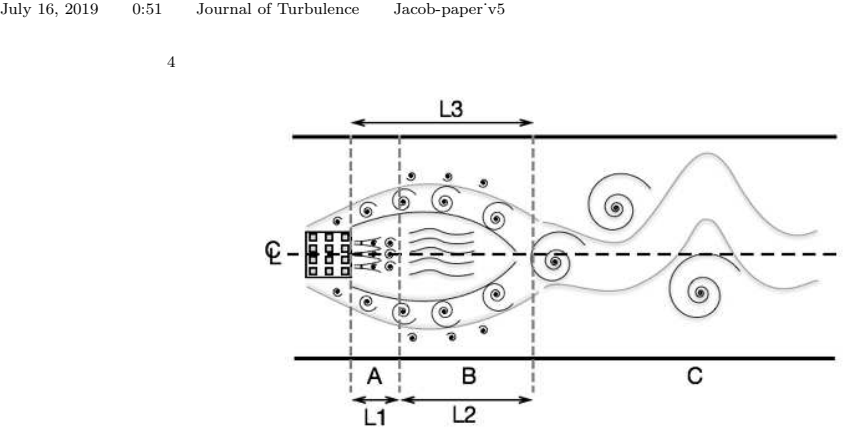
Fractal dimension and lacunarity control formation of the steady wake behind 3D multiscale porous obstacles while succolarity affects the recirculation region position.
A machine-rendered reading of the paper's core claim, the machinery that carries it, and where it could break.
Core claim
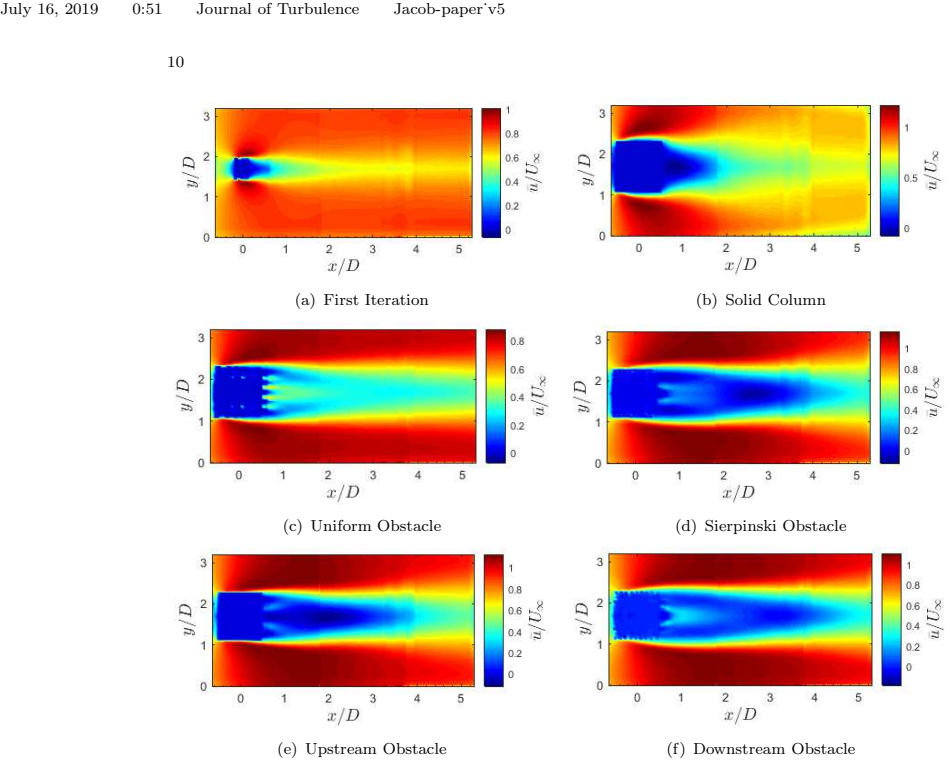
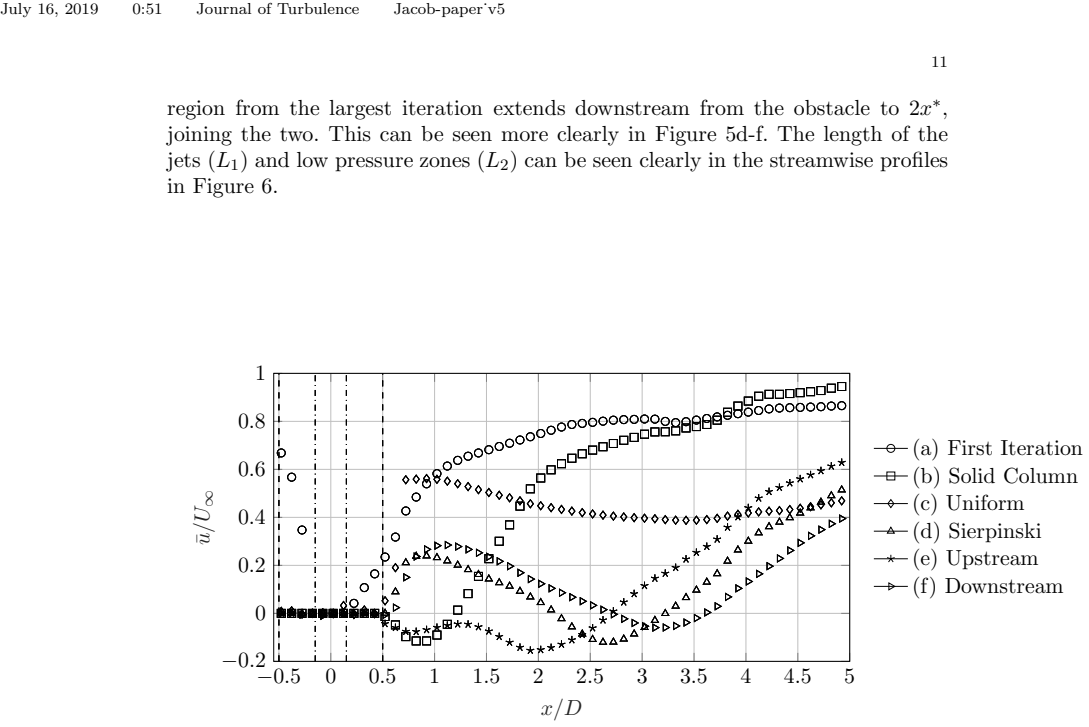
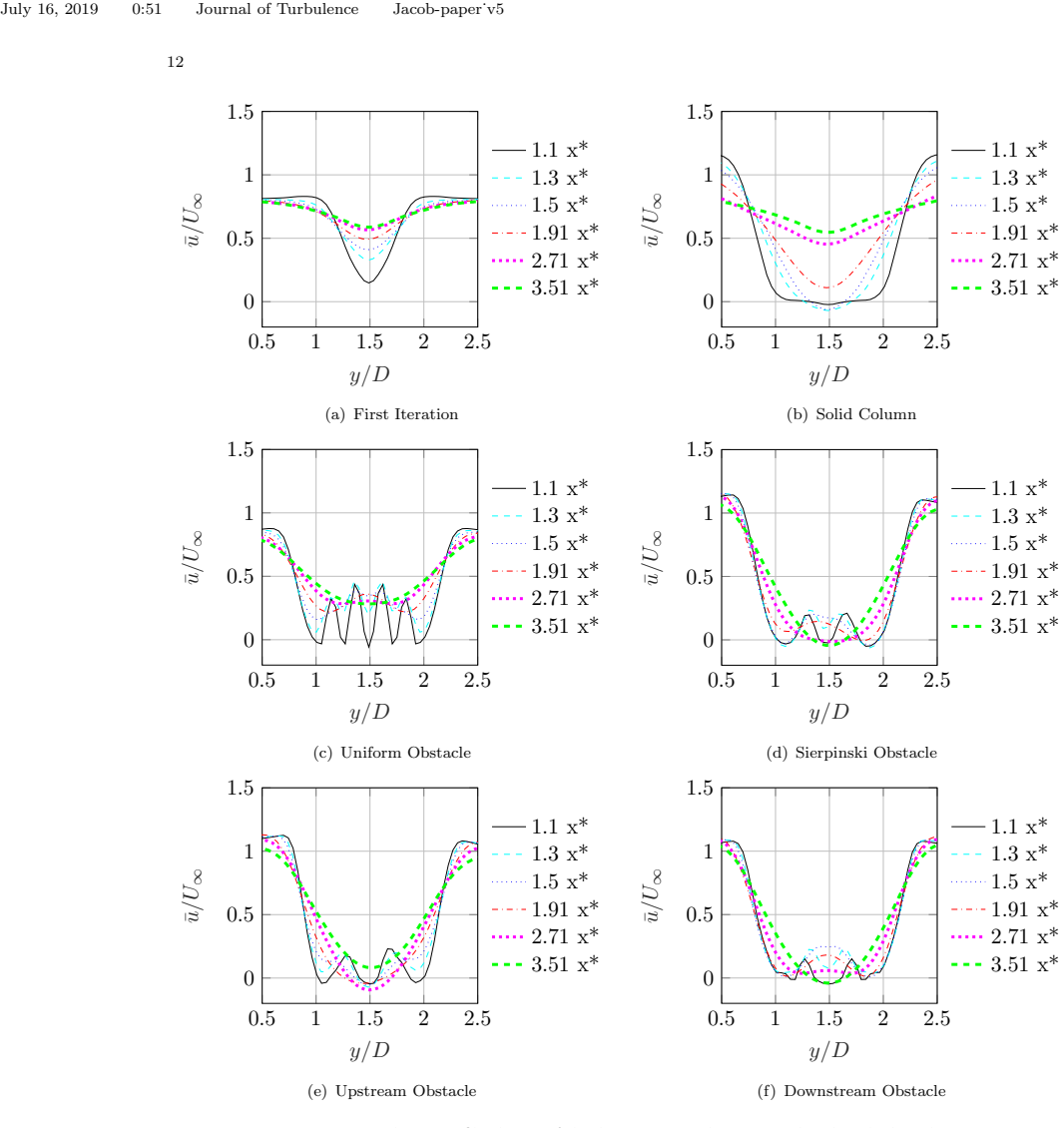
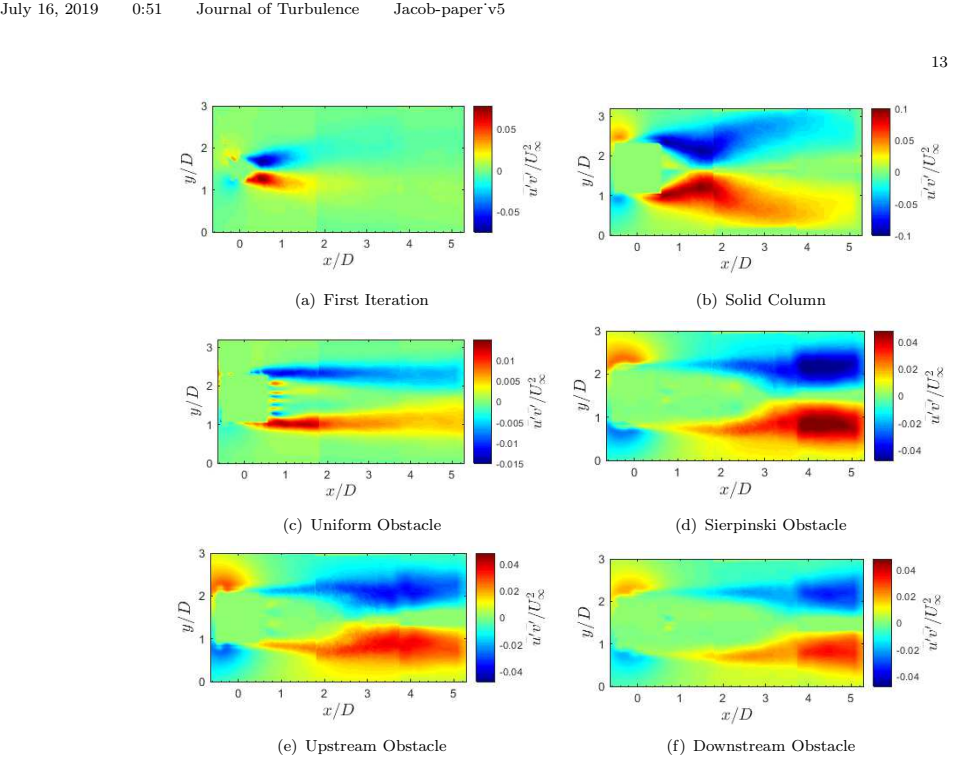
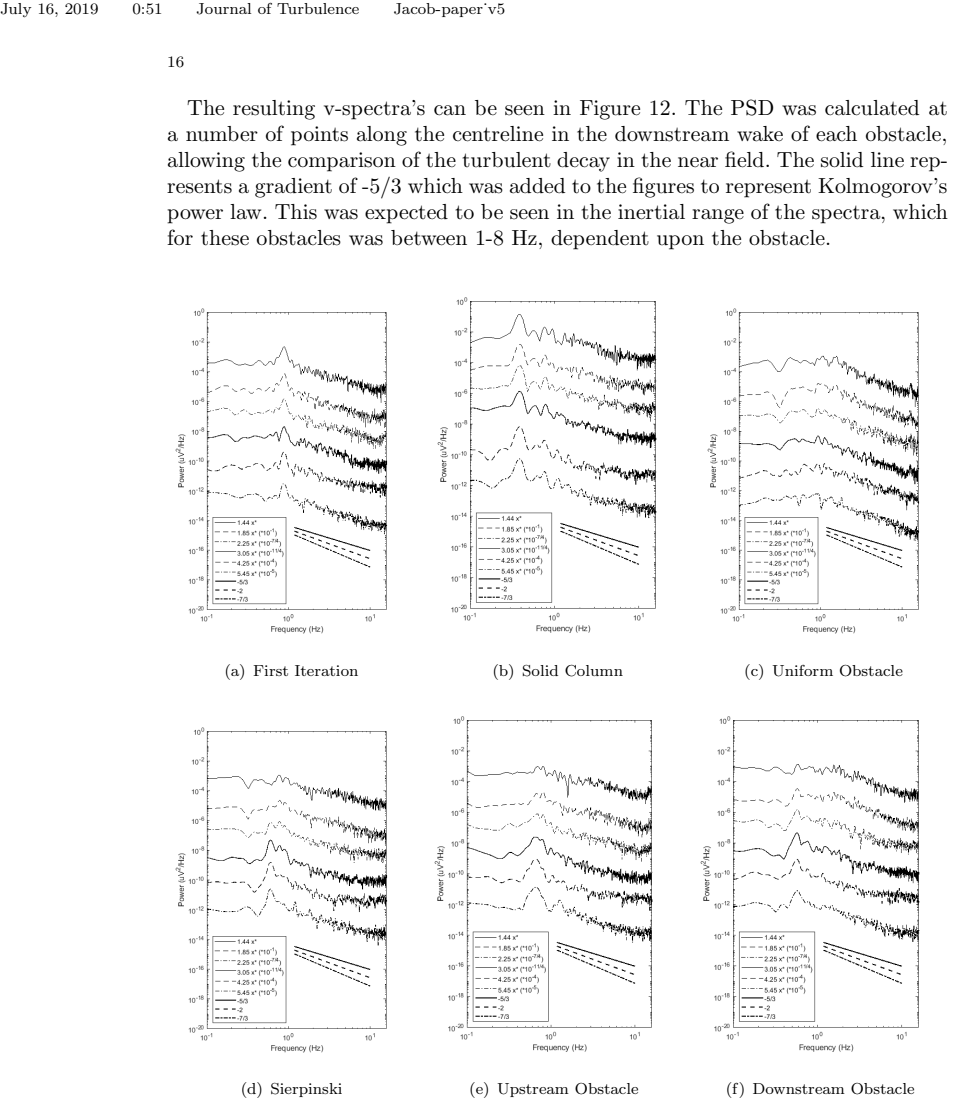
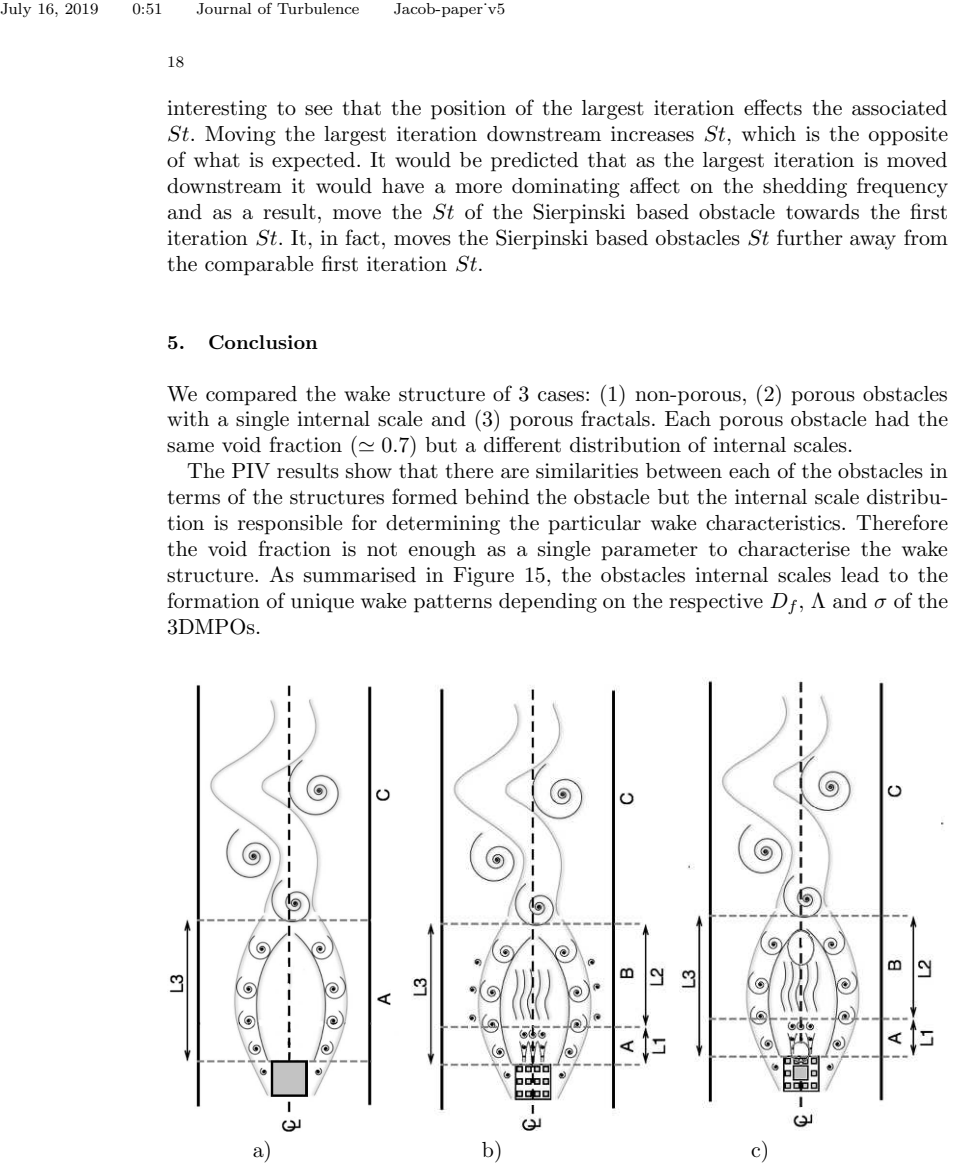
With external dimensions and void fraction held constant, the fractal dimension and lacunarity govern whether and how a steady wake region develops downstream, while succolarity sets the streamwise location of the detached low-velocity recirculation zone. In the fractal cases the power spectral densities also depart from Kolmogorov's -5/3 scaling in a manner tied to succolarity.
What carries the argument
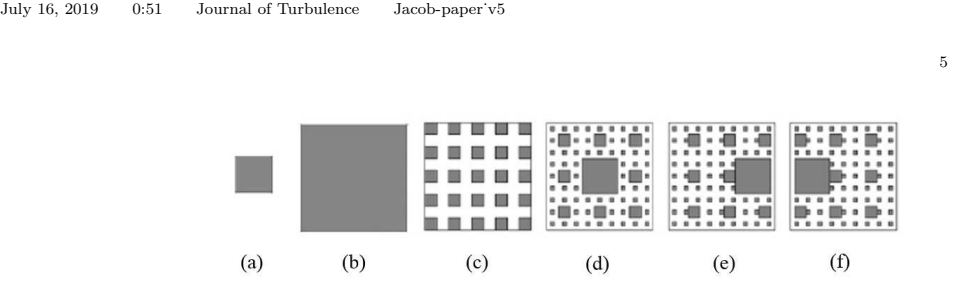
Topological parameters fractal dimension (Df), lacunarity (Λ), and succolarity (σ) applied to 3-dimensional multiscale porous obstacles (3DMPOs) of fixed void fraction and outer size to classify wake behaviour from PIV data.
If this is right
- Changing Df and Λ independently alters the presence and extent of the downstream steady wake region.
- Varying σ shifts the position of the detached low-velocity recirculation zone.
- Power spectra in fractal obstacles show succolarity-dependent departures from the -5/3 energy cascade.
- Wake features become predictable from internal topological parameters at constant porosity and size.
Where Pith is reading between the lines
- The same parameters could be tested in other flow regimes or Reynolds numbers to see if the wake relations remain consistent.
- Volumetric velocity measurements would test whether the single-plane results generalise to the full three-dimensional flow field.
- The independent control of Df, Λ, and σ offers a route to design porous objects that produce wakes with prescribed steady and recirculation features.
Load-bearing premise
The topological parameters can be varied independently while holding void fraction and external dimensions fixed, and measurements in one horizontal plane capture representative three-dimensional wake behaviour.
What would settle it
Repeating the PIV measurements across several horizontal planes at different heights and checking whether the reported links between Df, Λ, σ and the wake regions persist.
Figures
read the original abstract
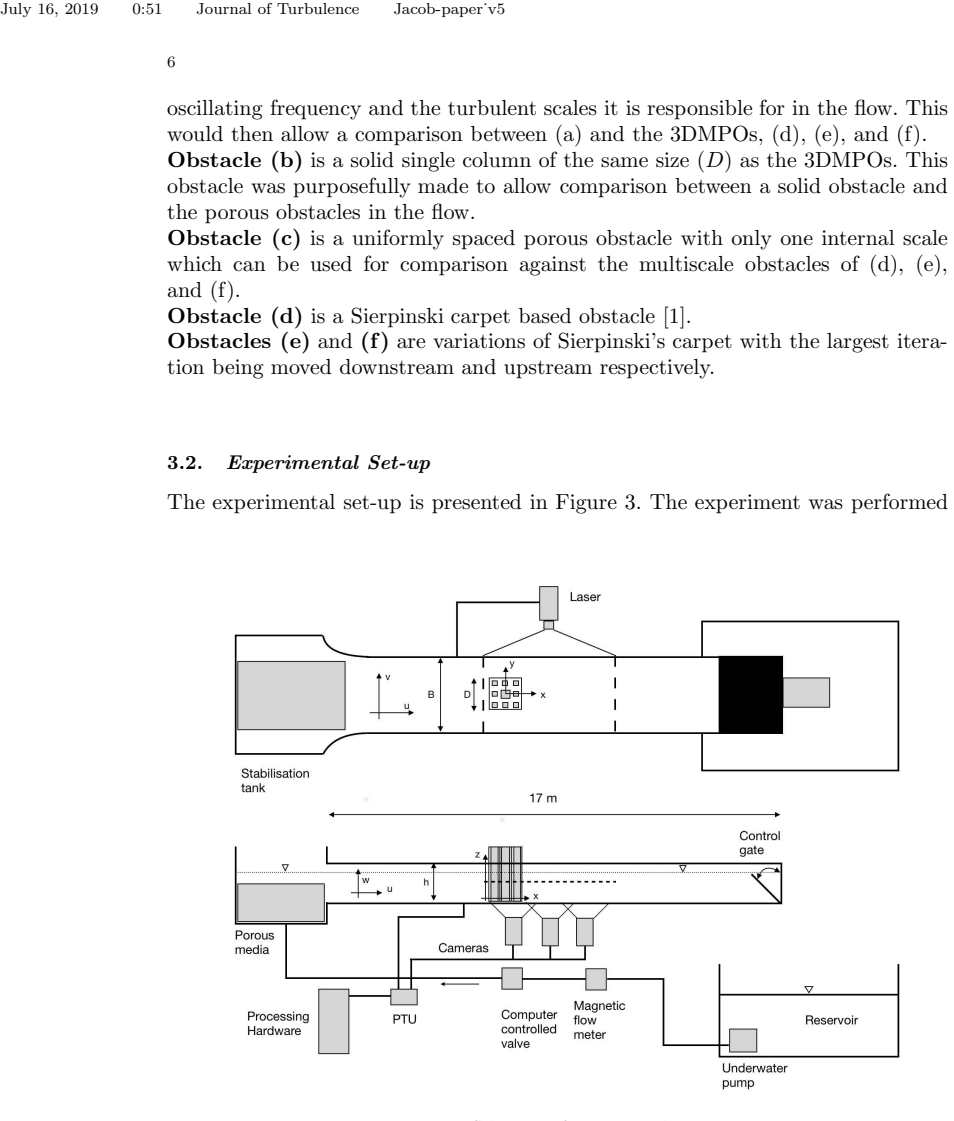
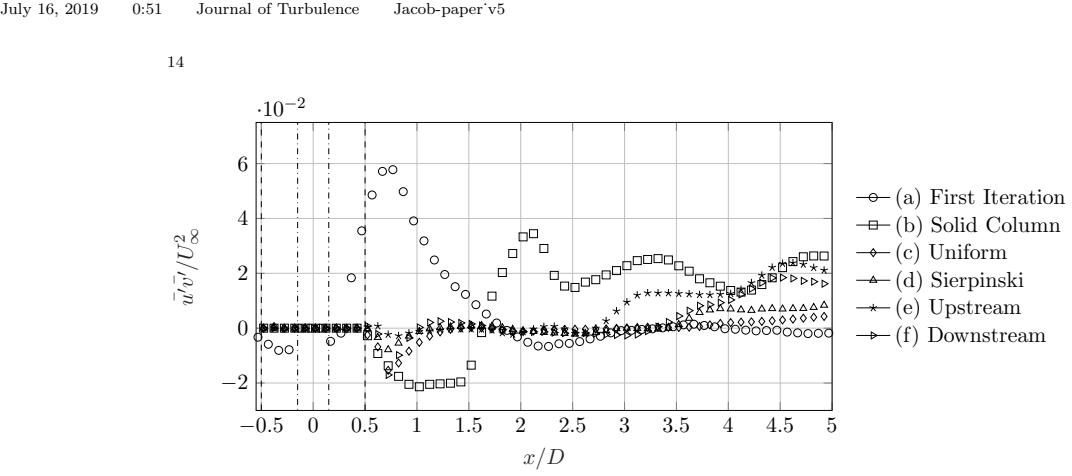
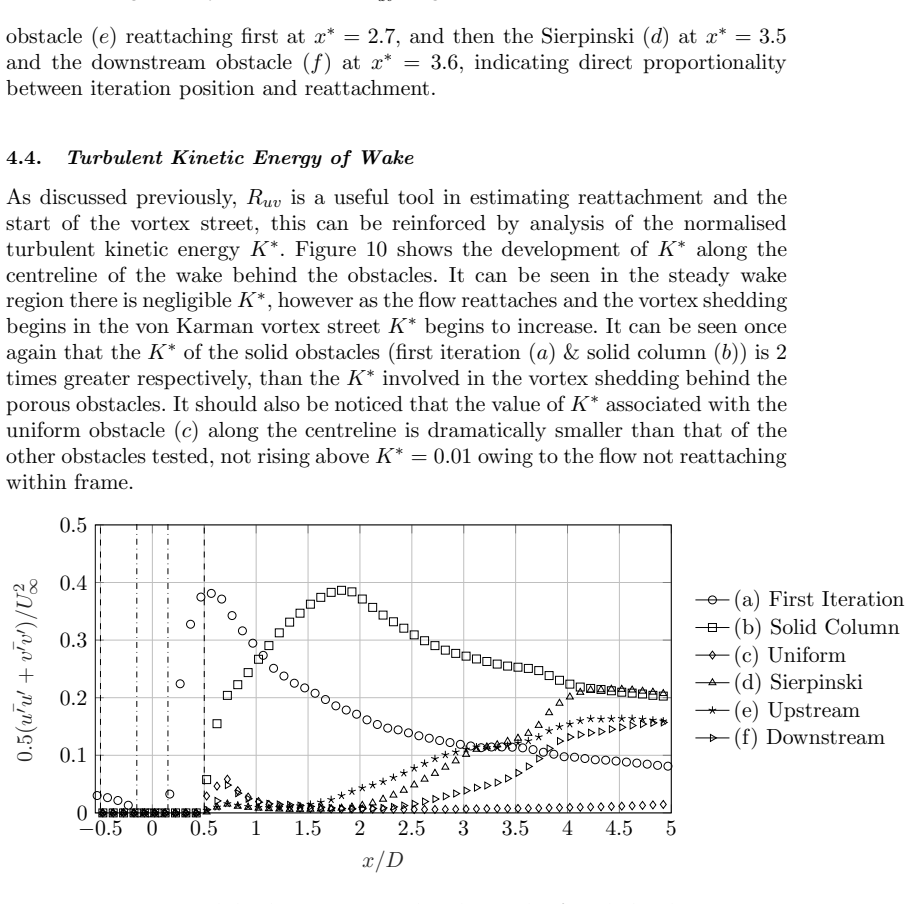
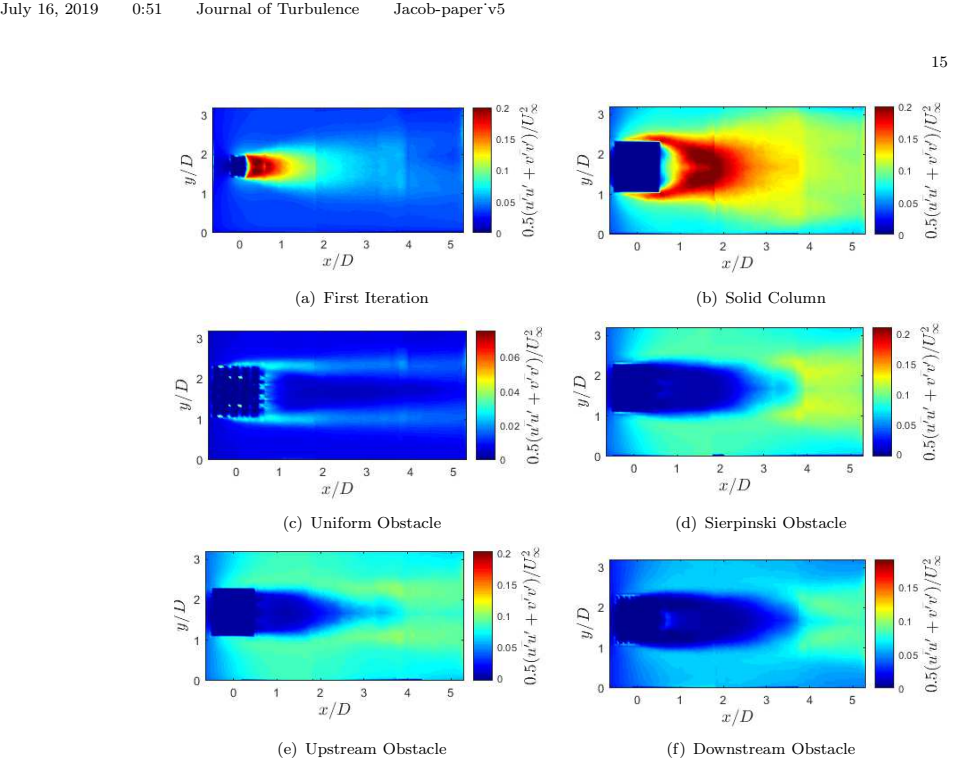
In this research article we study the wake formation behind 3-Dimensional Multi-scale Porous Obstacles (3DMPOs). Particle Imaging Velocimetry (PIV) is used in a non-shallow ($B/h =1.5$) water flume, with measurements carried out across the $x$ - $y$ plane (at $z$ = 130 mm) and with $Re=70,000$ based on the free-stream velocity ($U_{\infty}$). To characterise the downstream wake characteristics of 3DMPOs the obstacles are split into 3 regimes; (1) non-porous, (2) porous with a single internal scale and (3) porous fractals (based on the Sierpinski carpet). The void fraction ($\phi=0.7$) and external dimensions ($D$) of the obstacles remained constant, whilst the internal geometrical parameters such as fractal dimension ($D_f$), lacunarity ($\Lambda$) and succolarity ($\sigma$) were varied. We are able to identify a relationship between these topological parameters characterising the 3DMPOs and the resultant wake characteristics. The fractal dimension ($D_f$) and lacunarity ($\Lambda$) are found to be responsible for the formation of the downstream steady wake region, whilst the succolarity ($\sigma$) affects the position of the detached low velocity recirculation region. The power spectral energy densities (PSDs) of the 3DMPOs are also seen to be affected by the succolarity ($\sigma$) in case (3), and indicate movement away from Kolomogorov's -5/3 power law.
Editorial analysis
A structured set of objections, weighed in public.
Referee Report
Summary. The paper reports PIV measurements (Re=70,000, φ=0.7 fixed, external D fixed) of wakes behind three classes of 3D obstacles—non-porous, single-scale porous, and Sierpinski-carpet fractals—performed in the x-y plane at z=130 mm. It claims that fractal dimension Df and lacunarity Λ govern formation of the downstream steady wake region while succolarity σ controls the streamwise location of the detached low-velocity recirculation zone; PSDs in the fractal case are also said to deviate from Kolmogorov -5/3 scaling in a manner controlled by σ.
Significance. If the reported parametric relationships survive quantitative scrutiny and multi-plane validation, the work would supply concrete experimental links between specific topological descriptors and wake topology for multiscale porous bodies, a topic of interest for drag reduction, mixing, and environmental flows. The controlled variation of internal geometry while holding φ and outer dimensions constant is a methodological strength.
major comments (3)
- [Abstract and §3] Abstract and §3 (experimental methods): the central claims are presented as direct observational relationships, yet the text supplies no quantitative metrics (e.g., wake lengths, recirculation centroids, velocity-deficit profiles), error bars, number of independent realisations, or statistical tests. Without these, the attribution of wake features to Df, Λ, and σ cannot be evaluated.
- [Abstract and §3] Abstract and §3 (PIV plane): all data are acquired in a single horizontal plane at z=130 mm. For genuinely three-dimensional obstacles the wake contains vertical velocity components and height-dependent topology; a mid-height slice alone does not establish that the observed steady region or recirculation location is representative rather than an artifact of the chosen measurement plane.
- [Abstract] Abstract: the claim that Df, Λ, and σ can be varied independently while holding φ=0.7 and external D fixed is asserted but not demonstrated with explicit parameter tables or sensitivity checks; any unintended covariation would undermine the attribution of distinct wake effects to each topological measure.
minor comments (1)
- [Abstract] Notation for succolarity (σ) and lacunarity (Λ) should be defined explicitly on first use and kept consistent with standard fractal-geometry literature.
Simulated Author's Rebuttal
We thank the referee for the constructive report and the opportunity to address these points. We respond to each major comment below, indicating planned revisions where appropriate.
read point-by-point responses
-
Referee: [Abstract and §3] Abstract and §3 (experimental methods): the central claims are presented as direct observational relationships, yet the text supplies no quantitative metrics (e.g., wake lengths, recirculation centroids, velocity-deficit profiles), error bars, number of independent realisations, or statistical tests. Without these, the attribution of wake features to Df, Λ, and σ cannot be evaluated.
Authors: We agree that quantitative metrics, error bars, and details on realisations are needed to support the claims. In the revised manuscript we will add explicit values for wake lengths, recirculation centroids and velocity-deficit profiles (extracted from the existing PIV fields), report error bars from the five independent realisations performed per geometry, and include a brief statistical note on the observed trends. revision: yes
-
Referee: [Abstract and §3] Abstract and §3 (PIV plane): all data are acquired in a single horizontal plane at z=130 mm. For genuinely three-dimensional obstacles the wake contains vertical velocity components and height-dependent topology; a mid-height slice alone does not establish that the observed steady region or recirculation location is representative rather than an artifact of the chosen measurement plane.
Authors: The measurements were performed at the mid-height plane z=130 mm. We will revise the text to state this choice explicitly and note that preliminary checks at neighbouring heights showed consistent wake topology. Full multi-plane validation, however, lies outside the present dataset. revision: partial
-
Referee: [Abstract] Abstract: the claim that Df, Λ, and σ can be varied independently while holding φ=0.7 and external D fixed is asserted but not demonstrated with explicit parameter tables or sensitivity checks; any unintended covariation would undermine the attribution of distinct wake effects to each topological measure.
Authors: We will insert a table in §2 listing the measured values of Df, Λ and σ for every fractal geometry, together with a short sensitivity check confirming that the three parameters can be varied with negligible unintended covariation while φ and D remain fixed. revision: yes
- Full confirmation that the single mid-height PIV plane captures the representative three-dimensional wake topology (requires additional experiments not present in the current dataset).
Circularity Check
No circularity: purely observational experimental claims with no derivation or fitted model
full rationale
The paper presents direct PIV measurements on 3D obstacles with fixed void fraction φ=0.7 and external dimension D, varying only internal topological parameters Df, Λ, σ across three regimes. The central claims (Df and Λ control steady wake formation; σ controls recirculation position; PSDs affected by σ) are stated as observed relationships from the data, with no equations, models, predictions, or derivations that could reduce to self-definition or fitted inputs. No self-citations are invoked as load-bearing uniqueness theorems or ansatzes. The single-plane measurement at z=130 mm is an experimental choice whose representativeness is an assumption, but this is not a circular reduction; it is a standard limitation of the setup rather than a self-referential construction. The study is self-contained as empirical observation and receives score 0.
Axiom & Free-Parameter Ledger
axioms (2)
- domain assumption Wake statistics measured in a single horizontal plane at z=130 mm are representative of the overall 3D wake structure.
- domain assumption Void fraction and external dimensions can be held exactly constant while independently varying Df, Λ and σ.
Reference graph
Works this paper leans on
-
[1]
Adler, P. M. [1987] Fractal porous media iii: Transversal stokes flow through random and sierpinski carpets. Transport in Porous Media 3, 185–198
work page 1987
-
[2]
Adrian, R. J. and Westerweel, J. [2011] Particle Image Velocimetry , 1st ed. (Cam- bridge University Press)
work page 2011
-
[3]
Allain, C. and Cloitre, M. [1991] Characterizing the lacunarity of ra ndom and deter- ministic fractal sets, Phys. Rev. A 44, 3552–3558
work page 1991
-
[4]
Castro, I. P. [1971] Wake characteristics of two-dimensional p erforated plates normal to an air-stream, J Fluid Mech. 46(3), 599609
work page 1971
-
[5]
Chang, K. and Constantinescu, G. [2015] Numerical investigatio n of flow and turbu- lence structure through and around a circular array of rigid cylinde rs, J Fluid Mech. 776, 161199
work page 2015
-
[6]
Chen, D. and Jirka, G. H. [1995] Experimental study of plane tur bulent wakes in a shallow water layer, Fluid Dyn. Res. 16(1), 11–41. July 16, 2019 0:51 Journal of Turbulence Jacob-paper˙v5 20 REFERENCES
work page 1995
-
[7]
de Melo, R. H. C. and Conci, A. [2013] How succolarity could be used as another fractal measure in image analysis, Telecommunication Systems 52(3), 1643–1655
work page 2013
-
[8]
Higham, J. E., Brevis, W. and Keylock, C. J. [2016] A rapid non-iter ative proper orthogonal decomposition based outlier detection and correction for piv data, Meas. Sci. Technol. 27, 125303
work page 2016
-
[9]
J¨ arvel¨ a, J. [2002] Flow resistance of flexible and stiff vegetatio n: a flume study with natural plants, Journal of Hydrology 269(1), 44 – 54
work page 2002
-
[10]
K. SanJensen and M. L. Pedersen [2008] Streamlining of plant pa tches in streams, Freshwater Biology 53(4), 714–726
work page 2008
-
[11]
Kouwen, N., Li, R. M. and Simons, D. B. [1981] Flow resistance in ve getated water- ways, ASAE 24(3), 684698.tar
work page 1981
-
[12]
Nicolle, A. and Eames, I. [2011] umerical study of flow through a nd around a circular array of cylinders, Journal of Fluid Mechanics 679, 1–31
work page 2011
-
[13]
Okamoto, S. and Sunabashiri, Y. [1992] Vortex shedding from a circular cylinder of finite length placed on a ground plane, ASME. J. Fluids Eng. 114(4), 512–521
work page 1992
-
[14]
Sakamoto, H. and Arie, M. [1983] Vortex shedding from a recta ngular prism and a circular cylinder placed vertically in a turbulent boundary layer, Journal of Fluid Mechanics 126, 147165
work page 1983
-
[15]
[2016] Turbulent flows interacting with groups of obstacles , PhD thesis, University of Southampton
Taddei, S. [2016] Turbulent flows interacting with groups of obstacles , PhD thesis, University of Southampton
work page 2016
-
[16]
Takemura, T. and Tanaka, N. [2007] Flow structures and drag characteristics of a colony-type emergent roughness model mounted on a flat plate in u niform flow, Fluid Dynamics Research 39(9-10), 694–710
work page 2007
-
[17]
Wang, H. F. and Zhou, Y. [2009] The finite-length square cylinde r near wake, J Fluid Mechanics 638, 453490
work page 2009
-
[18]
Zong, L. and Nepf, H. [2012] Vortex development behind a finite porous obstruction in a channel, J Fluid Mech. 691, 368391
work page 2012
discussion (0)
Sign in with ORCID, Apple, or X to comment. Anyone can read and Pith papers without signing in.