REVIEW 4 major objections 6 minor 12 references
Requirement for preclinical prioritization of neuroprotective strategies in stroke: Incorporation of preconditioning
T0 review · 4 major / 6 minor · reviewed 2026-08-14 · deepseek-v4-flash
Pith's one-line read The stroke neuroprotection field should rank candidates early by deliberately making cultured neurons fail, using progressively longer oxygen-glucose deprivation, and then design combinations from each therapy's failure point.
desk verdict A useful, honest perspective proposing graded OGD as an early filter for stroke neuroprotectants, but the core predictive claim is unvalidated and the paper's own ALA example admits a major exception. read the letter →
The pith
A machine-rendered reading of the paper's core claim, the machinery that carries it, and where it could break.
The reading
What carries the argument
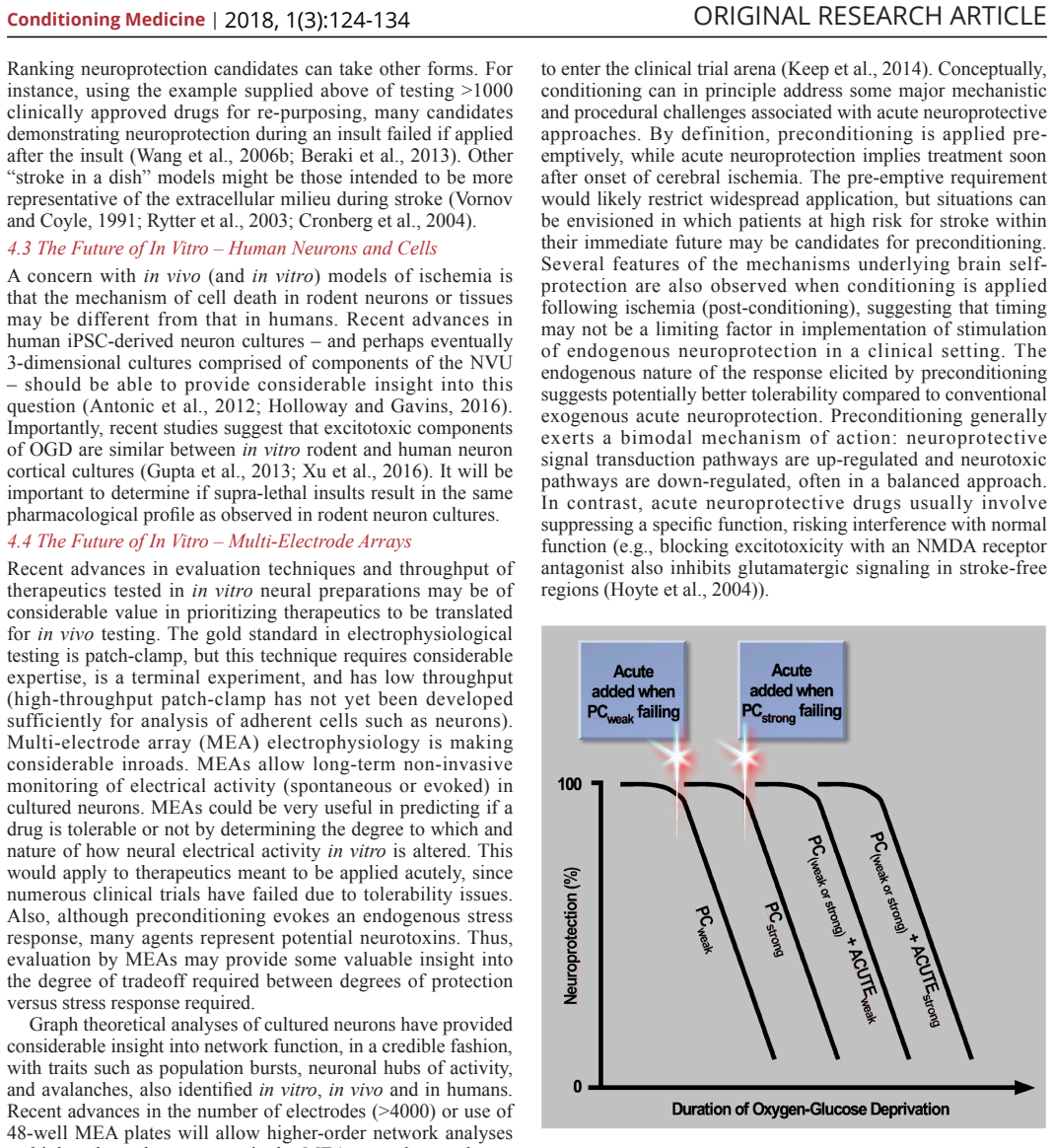
The central object is the supra-lethal oxygen-glucose deprivation (OGD) continuum: progressively longer durations of glucose and oxygen withdrawal in cultured neurons or brain slices, from lethal to supra-lethal insults. It functions as a severity ladder that converts neuroprotection from a binary outcome into a measurable rank order. Each therapy hits a plateau at a characteristic insult duration, combinations push the plateau further, and the point of failure marks the neurotoxic pathway that must be targeted next.
What would settle it
Take a blinded panel of preconditioners and acute drugs, rank them by their OGD plateau in cultured neurons, then test the same panel in a standardized animal model with graded ischemia severity; a near-zero or negative correlation between the in vitro and in vivo rank orders would refute the prioritization claim.
Extended reading notes
Core claim
The central claim is that an appropriately designed in vitro approach, neuron cultures or brain slices exposed to increasing durations of oxygen-glucose deprivation (OGD), can identify the best acute neuroprotective therapy and the best preconditioning stimulus, and show how to combine them. In this framework, each monotherapy or conditioner protects up to a characteristic OGD duration and then fails, and the duration at which protection collapses provides a rank order of efficacy. At supra-lethal durations all tested preconditioners fail, coinciding with unchecked glutamate release, and protection can be restored by timely addition of an NMDA receptor antagonist; extending the insult further requires a cocktail of anti-Ca$^{2+}$ agents. Preconditioning thus buys time during the insult, after which acute pharmacology is needed. The authors also contend that pleiotropic agents acting on the neurovascular unit rather than only on neurons, with $\alpha$-linolenic acid as their example, may fail the neuron-only test and need adapted in vitro models.
Load-bearing premise
The whole ranking scheme assumes that how long cultured neurons survive increasingly severe oxygen starvation predicts which therapies work in real strokes, even though the paper concedes that neuron-only cultures may miss therapies that protect blood vessels and support cells.
Editorial extensions
If this is right
- A candidate that protects only against mild OGD can be deprioritized before resources are spent on animal models.
- Preconditioning should be evaluated not as protection per se but as a delay in the onset of failure, quantifying how much time it buys before acute therapy is required.
- Combination strategies can be designed rationally from the failure point of the lead therapy: when a single pathway is overwhelmed, add an agent against the next pathway.
- The plateau of in vitro protection implies that current single-drug clinical regimens are likely underdosed relative to what the brain requires, supporting combination or higher-potency approaches.
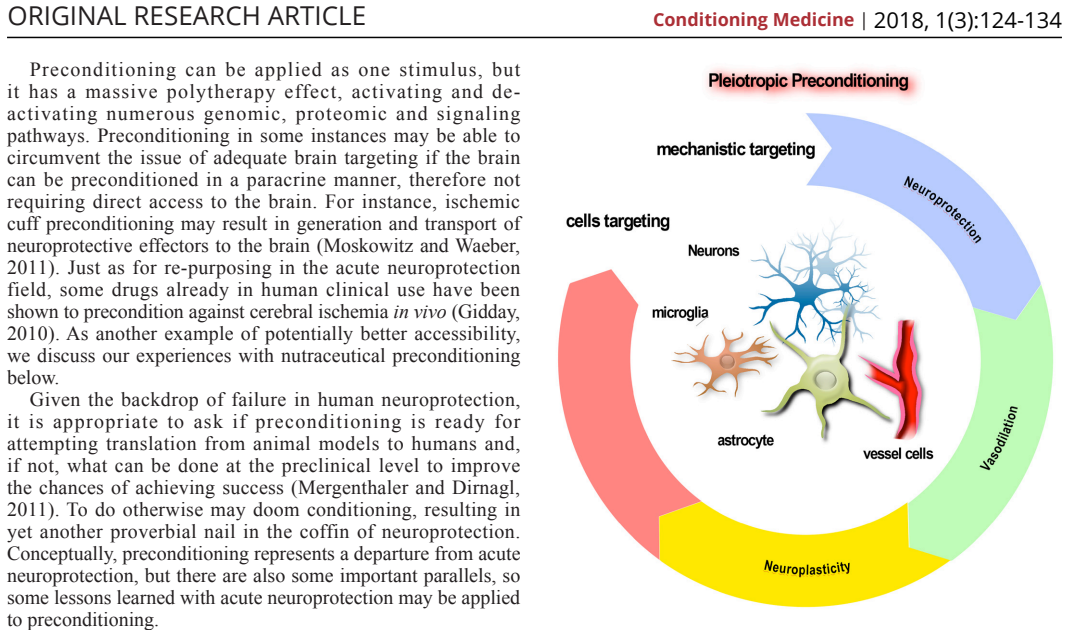
- Pleiotropic therapies aimed at the neurovascular unit need separate in vitro assays because they may fail the neuron-only OGD test yet still succeed in vivo.
Reading between the lines
- If the OGD continuum were applied to human iPSC-derived neurons with multi-electrode-array readouts, the same ranking logic could test whether rodent-derived rank orders hold for human tissue, directly addressing a major translational gap the paper identifies.
- A systematic record of failure modes, which pathway saturates at which insult duration, could become a shared map for designing rational polytherapy, much as drug-repurposing libraries are shared today.
- The framework implies that negative in vitro results should be published as informative data, since the current bias toward positive neuroprotection would hide exactly the failure curves the approach depends on.
- Extending the same graded-insult logic to postconditioning and remote conditioning would test whether the buy-time relationship holds across conditioning modalities and species.
Signed reviews
Editorial analysis
A structured set of objections, weighed in public.
Referee Report
Summary. This review/perspective addresses the failure of acute neuroprotection in human stroke trials and argues that the field lacks a strategy for prioritizing among the many candidate neuroprotective therapies and conditioning paradigms. The authors propose an in vitro framework in which cultured neurons or brain slices are subjected to progressively longer oxygen-glucose deprivation (OGD), generating a continuum of insult severity. They argue that rank orders of neuroprotection determined in this way can identify the 'best' acute therapies and preconditioning stimuli, and can guide the rational design of combinations, based on evidence that each intervention reaches a plateau and fails at some OGD duration. They illustrate this with their own studies of preconditioning and MK-801, and with alpha-linolenic acid (ALA) as a pleiotropic conditioner that may act through the neurovascular unit. The paper concludes by recommending the adoption of this prioritization mindset before committing to in vivo studies.
Significance. If the central claim were validated, the framework would provide a cheap, early, falsifiable filter for ranking neuroprotective candidates and combinations, addressing a genuine and important gap in stroke translational research. The paper usefully synthesizes the clinical and preclinical failure literature, identifies the prioritization problem clearly, and proposes concrete, testable in vitro strategies (OGD continuum, multi-electrode arrays). It also makes a constructive distinction between neuron-targeted and neurovascular-unit-targeting therapies. However, the significance is currently limited by the lack of external validation of the core predictive claim, the acknowledged counterexample of pleiotropic agents, and the heavy reliance on the authors' own prior work for the key rank-order evidence.
major comments (4)
- [Abstract and §5.4] The abstract's unqualified claim that an appropriately designed in vitro approach can identify the 'best' conditioner or acute neuroprotective therapy is contradicted by the paper's own acknowledgment in Section 5.4 that pleiotropic agents such as ALA 'may fail the supra-lethal OGD test in vitro but may well yield higher efficacy in vivo.' Since ALA is presented as a lead candidate and a paradigm shift, the proposed filter would systematically deprioritize an entire therapeutic class that the authors themselves advocate. The claim must be restricted to neuron-targeted, direct-acting agents, or the paper must specify how the in vitro framework will be extended to incorporate neurovascular readouts. As written, the framework cannot serve as a general prioritization tool.
- [§4.1] The evidence that in vitro OGD rank orders predict in vivo and clinical outcome is limited to a single family of NMDA-type antagonists (MK-801 > memantine > Mg). This demonstrates ordering within a mechanistic class, not across mechanistically diverse candidates. The paper provides no example in which an OGD-continuum rank order was independently confirmed by prospective in vivo translation. Without such external validation, the central claim that the assay can identify the 'best' therapy or conditioner remains an assertion rather than an evidence-based conclusion.
- [§5.2] The core ranking result for preconditioning rests almost entirely on one study from the authors' laboratory (Tauskela et al., 2016). The independent evidence cited (Liu et al., 1992; Shamloo and Wieloch, 1999; Ueda and Nowak, 2005) supports the more general plateau concept, but not the specific rank ordering of different preconditioners. The two additional references cited for ranking (Meloni et al., 2002; Freiberger et al., 2006) are explicitly described by the authors as 'limited in scope.' The manuscript should either provide a more systematic review of independent evidence or clearly frame the ranking as a working hypothesis that requires multi-laboratory confirmation.
- [§6] The conclusion calls for a 'parallel process' for neurovascular-unit-targeting therapies, but this process is not integrated into the proposed prioritization framework. It is therefore unclear how an investigator would choose between a top-ranked neuron-targeted drug from the OGD assay and a pleiotropic agent like ALA that fails the assay. The manuscript would benefit from explicit decision criteria or a flowchart specifying when the OGD-continuum assay is applicable and which alternative assays are required for pleiotropic candidates.
minor comments (6)
- [References (Wang et al.)] References Wang et al. 2006a and Wang et al. 2006b appear to be identical in title, journal, and page numbers; this is likely a duplication error that should be corrected.
- [§5.2] In the text, 'Nietzche' should be spelled 'Nietzsche' in both instances.
- [§2.3] The text reads 'the ongoing FRONTIER trail'; 'trail' should be 'trial'.
- [References (Vornov)] In the reference list, 'V ornov JJ' contains an erroneous space and should read 'Vornov JJ'.
- [§2.3 and §4.1] The trial name is spelled inconsistently as 'FASTMAG' in Section 2.3 and 'FAST-MAG' in Section 4.1; please standardize.
- [Figure 1] The terms 'ACUTE weak' and 'ACUTE strong' appear in the figure caption but are not defined in the main text; adding a brief definition would improve clarity.
Circularity Check
No circular derivation: the OGD-continuum ranking is an empirical proposal supported by cited experiments; self-citations are falsifiable evidence, and the ALA caveat is a generality limitation, not circularity.
full rationale
This is a narrative perspective rather than a derivation with equations, so most circularity patterns do not apply. The central claim—that an in vitro OGD continuum can prioritize neuroprotective therapies—is presented as an empirical ranking strategy, not as a quantity defined in terms of its own output. No parameter is fitted and then renamed a prediction, and no uniqueness theorem is imported from the authors' prior work. The main self-citation, Tauskela et al. 2016, is used as experimental evidence for the rank order of preconditioning stimuli; it is an externally falsifiable study, not an unverified axiom invoked to forbid alternatives. Independent support for the plateau concept is also cited (Liu et al. 1992; Shamloo and Wieloch 1999; Ueda and Nowak 2005). Section 5.4 explicitly concedes that ALA, the authors' own recommended pleiotropic conditioner, 'may fail the supra-lethal OGD test in vitro but may well yield higher efficacy in vivo.' This is an honest limitation that weakens the generality of the proposed filter, but it is an empirical-validity concern rather than a circular reduction. The score reflects the paper's heavy reliance on the authors' own experimental series for the specific rank-order claims, not a finding of definitional or self-citational circularity.
Assumptions & free parameters
assumptions (3)
- domain assumption Increasing OGD duration in neuron cultures is a valid model for increasing the severity of clinical ischemic stroke.
- domain assumption In vitro rank order of neuroprotection predicts in vivo rank order and clinical translation success.
- domain assumption Preconditioning and acute neuroprotection can be additively combined by 'buying time' before acute drug intervention.
Cite this review
Pith. "Pith review of Requirement for preclinical prioritization of neuroprotective strategies in stroke: Incorporation of preconditioning." pith.science (2026). https://pith.science/paper/CJJDQM7M
@misc{pith2026190803332,
  author       = {Pith},
  title        = {Pith review of: Requirement for preclinical prioritization of neuroprotective strategies in stroke: Incorporation of preconditioning},
  year         = {2026},
  howpublished = {\url{https://pith.science/paper/CJJDQM7M}},
  note         = {Machine review of arXiv:1908.03332}
}
read the original abstract
Acute neuroprotection in numerous human clinical trials has been an abject failure. Major systemic-and procedural-based issues have subsequently been identified in both clinical trials and preclinical animal model experimentation. As well, issues related to the neuroprotective moiety itself have contributed to clinical trial failures, including late delivery, mono-targeting, low potency and poor tolerability. Conditioning (pre-or post-) strategies can potentially address these issues and are therefore gaining increasing attention as approaches to protect the brain from cerebral ischemia. In principle, conditioning can address concerns of timing (preconditioning could be pre-emptively applied in high-risk patients, and post-conditioning after patients experience an unannounced brain infarction) and signaling (multi-modal). However, acute neuroprotection and conditioning strategies face a common translational issue: a myriad of possibilities exist, but with no strategy to select optimal candidates. In this review, we argue that what is required is a neuroprotective framework to identify the "best" agent(s), at the earliest investigational stage possible. This may require switching mindsets from identifying how neuroprotection can be achieved to determining how neuroprotection can fail, for the vast majority of candidates. Understanding the basis for failure can in turn guide supplementary treatment, thereby forming an evidence-based rationale for selecting combinations of therapies. An appropriately designed in vitro (neuron culture, brain slices) approach, based on increasing the harshness of the ischemic-like insult, can be useful in identifying the "best" conditioner or acute neuroprotective therapy, as well as how the two modalities can be combined to overcome individual limitations. This would serve as a base from which to launch further investigation into therapies required to protect the neurovascular unit in in vivo animal models of cerebral ischemia. Based on these respective approaches, our laboratories suggest that there is merit in examining synaptic activity-and nutraceutical-based preconditioning / acute neuroprotection.
Figures
Reference graph
Works this paper leans on
-
[1]
Stroke Therapy Academic Industry Roundtable (STAIR) (1999) Recommendations for Standards Regarding Preclinical Neuroprotective and Restorative Drug Development. Stroke 30:2752-2758. Aarts M, Iihara K, Wei W L, Xiong Z G, Arundine M, Cerwinski W, MacDonald J F and Tymianski M (2003) A Key Role for TRPM7 Channels in Anoxic Neuronal Death. Cell 115:863-877. ...
work page 1999
-
[2]
Stroke 47:2355-2359. McMurtrey RJ and Zuo Z (2010) Isoflurane Preconditioning and Postconditioning in Rat Hippocampal Neurons. Brain Res 1358:184-90. Meloni BP, Cross J L, Brookes L M, Clark V W, Campbell K and Knuckey N W (2013) FAST-Mag Protocol With or Without Mild Hypothermia (35 Degrees C) Does Not Improve Outcome After Permanent MCAO in Rats. Magnes...
work page 2010
-
[106]
Proc Natl Acad Sci U S A 103:10461- 10466
Wang JK, Portbury S, Thomas M B, Barney S, Ricca D J, Morris D L, Warner D S and Lo D C (2006a) Cardiac Glycosides Provide Neuroprotection Against Ischemic Stroke: Discovery by a Brain Slice-Based Compound Screening Platform. Proc Natl Acad Sci U S A 103:10461- 10466. Wang JK, Portbury S, Thomas M B, Barney S, Ricca D J, Morris D L, Warner D S and Lo D C ...
work page 2006
-
[124]
J Neurochem 139 Suppl 2:271-279
Llovera G and Liesz A (2016) The Next Step in Translational Research: Lessons Learned From the First Preclinical Randomized Controlled Trial. J Neurochem 139 Suppl 2:271-279. Lo EH (2008) Experimental Models, Neurovascular Mechanisms and Translational Issues in Stroke Research. Br J Pharmacol 153 Suppl 1:S396-405. Luengo-Fernandez R, Leal J and Gray A (20...
work page 2016
-
[337]
Labiche LA and Grotta J C (2004) Clinical Trials for Cytoprotection in Stroke. NeuroRx 1:46-70. Lang-Lazdunski L, Blondeau N, Jarretou G, Lazdunski M and Heurteaux C (2003) Linolenic Acid Prevents Neuronal Cell Death and Paraplegia After Transient Spinal Cord Ischemia in Rats. J Vasc Surg 38:564-575. Lapchak PA (2011) Emerging Therapies: Pleiotropic Multi...
work page 2004
-
[341]
Zamboni G, Griffanti L, Jenkinson M, Mazzucco S, Li L, Kuker W, Pendlebury S T and Rothwell P M (2017) White Matter Imaging Correlates of Early Cognitive Impairment Detected by the Montreal Cognitive Assessment After Transient Ischemic Attack and Minor Stroke. Stroke 48:1539-1547. Zerna C, Hegedus J and Hill M D (2016) Evolving Treatments for Acute Ischem...
work page 2017
-
[389]
Ginsberg MD, Palesch Y Y , Hill M D, Martin R H, Moy C S, Barsan W G, Waldman B D, Tamariz D and Ryckborst K J (2013) High-Dose Albumin Treatment for Acute Ischaemic Stroke (ALIAS) Part 2: a Randomised, Double- Blind, Phase 3, Placebo-Controlled Trial. Lancet Neurol 12:1049-1058. Gorgulu A, Kins T, Cobanoglu S, Unal F, Izgi N I, Yanik B and Kucuk M (2000)...
work page 2013
-
[563]
Cook DJ, Teves L and Tymianski M (2012) Treatment of Stroke With a PSD-95 Inhibitor in the Gyrencephalic Primate Brain. Nature 483:213-217. Cronberg T, Rytter A, Asztely F, Soder A and Wieloch T (2004) Glucose but Not Lactate in Combination With Acidosis Aggravates Ischemic Neuronal Death in Vitro. Stroke 35:753-757. Dirnagl U (2016) Thomas Willis Lecture...
work page 2012
Show all 12 references
-
[758]
EMBO J 23:2684-2695
REVIEW ARTICLE Conditioning Medicine 2018 | www.conditionmed.org Conditioning Medicine | 2018, 1(3):124-134 132 Heurteaux C, Guy N, Laigle C, Blondeau N, Duprat F, Mazzuca M, Lang-Lazdunski L, Widmann C, Zanzouri M, Romey G and Lazdunski M (2004) TREK-1, a K+ Channel Involved ...
2004
-
[975]
Ischemia
O'Collins VE, Macleod M R, Donnan G A, Horky L L, van der Worp B H and Howells D W (2006) 1,026 Experimental Treatments in Acute Stroke. Ann Neurol 59:467-477. Percie du SN, Alfieri A, Allan S M, Carswell H V , Deuchar G A, Farr T D, Flecknell P, Gallagher L, Gibson C L, Haley...
2006
-
[1208]
Martin RH, Yeatts S D, Hill M D, Moy C S, Ginsberg M D and Palesch Y Y (2016) ALIAS (Albumin in Acute Ischemic Stroke) Trials: Analysis of the Combined Data From Parts 1 and
2016
-
[1292]
Stroke 33:306-307
Grotta J (2002) Neuroprotection Is Unlikely to Be Effective in Humans Using Current Trial Designs. Stroke 33:306-307. Gupta K, Hardingham G E and Chandran S (2013) NMDA Receptor-Dependent Glutamate Excitotoxicity in Human Embryonic Stem Cell-Derived Neurons. Neurosci Lett 543:...
2002
Reviewed August 14, 2026 · model on record in the stance chip above.
Discussion (0). Continue with ORCID to comment.