REVIEW 4 major objections 5 minor 16 references
Speaker Verification Using Simple Temporal Features and Pitch Synchronous Cepstral Coefficients
T0 review · 4 major / 5 minor · reviewed 2026-08-14 · deepseek-v4-flash
Pith's one-line read Four simple waveform counts plus cepstral coefficients verify speakers at 91.04% on accepted trials.
desk verdict The 91.04% accuracy is conditional on the 134 accepted trials; counted over the full 500-trial test set, the combined system gets 24.4%, so the abstract's central claim does not survive. read the letter →
The pith
A machine-rendered reading of the paper's core claim, the machinery that carries it, and where it could break.
The reading
What carries the argument
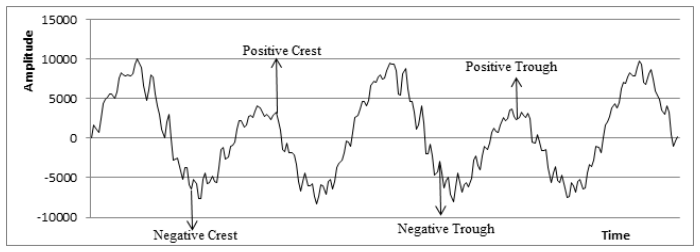
The central object is the four-count intrapitch temporal feature set extracted from steady-state vowel frames: within each pitch period, a three-sample window slides across the waveform and counts local maxima in the positive half (positive crest), local minima in the positive half (positive trough), and the corresponding extrema in the negative half. These counts are normalized by the number of frames and averaged over 20 training utterances to form a speaker model. The cepstral branch computes standard linear-prediction cepstral coefficients over frames spanning three pitch periods, shifted by one pitch period. The combined decision uses Tokhura distance, a weighted distance between feature vectors: the system accepts a test utterance only when both the cepstral distances and the temporal-feature distances point to the same speaker.
What would settle it
Run the identical training and testing protocol on the same 20 speakers, but obtain the vowel regions with an automatic segmenter instead of manual marking, and compare accepted-case accuracy; a large drop below 91.04% would show the result depends on manual segmentation.
Extended reading notes
Core claim
The central claim is that a speaker verification system can be built from the steady-state region of five cardinal English vowels using a 16-dimensional feature vector, and that the four temporal features are complementary to the cepstral coefficients. Tested on 20 male speakers, cepstral coefficients alone scored 69.81% (347/500), the new temporal features alone scored 28.97% (144/500), and the combined decision rule—accept only when both feature sets name the same speaker—scored 91.04% on the accepted subset (122/134). The paper also claims that vowel identity matters: /i/ from 'bee', /u/, and /e/ had the highest per-vowel verification accuracy, while /o/ and /u/ had narrow margins that made misrecognition more likely.
Load-bearing premise
Manually labeled steady-state vowel regions are the input, so the reported accuracy is not evidence about how the system would behave when it must find those regions itself.
Editorial extensions
If this is right
- A usable speaker model can be built from a small, deliberately chosen vowel segment rather than from whole sentences.
- Combining an independent feature set with a strict agreement rule trades away many test cases (366 of 500) for a large gain in precision on the accepted cases.
- The choice of word and vowel matters: /i/ from 'bee' worked better than /i/ from 'river', and /i/, /u/, and /e/ had the highest per-vowel verification accuracy.
- Because the temporal features alone score only 28.97%, they are not a replacement for cepstral coefficients; their value is complementary.
- The system's model is a simple average of feature vectors over 20 utterances, and its decision rule is a nearest-distance comparison, so the reported accuracy does not depend on a complex classifier.
Reading between the lines
- The strongest unstated consequence is practical: automating vowel-region detection would decide whether the 91.04% figure survives outside hand-labeled data; the paper's own future-work section names this automation as the next step.
- Because all 20 speakers are male and age-matched, the claimed accuracy has no demonstrated gender or age generalization; a natural test is the same protocol on female and mixed-age speakers.
- The four temporal features are cheap local-extrema counts, so they could be evaluated as a low-complexity complement to MFCCs in embedded or real-time verification settings.
- The accept-reject rule could be softened into a distance threshold on the two feature sets, creating a continuous accuracy-versus-acceptance tradeoff instead of a hard rejection.
Signed reviews
Editorial analysis
A structured set of objections, weighed in public.
Referee Report
Summary. The paper proposes a speaker verification system using four simple intrapitch temporal features (positive crest, positive trough, negative crest, negative trough) combined with 12 pitch-synchronous cepstral coefficients. The system is trained on 20 male speakers with 20 utterances per speaker and tested on 500 utterances from the same speakers. The authors report 91.04% accuracy for the combined system, based on 122 correct recognitions out of 134 accepted trials, while cepstral coefficients alone achieve 69.81% and the new feature set alone achieves 28.97%. The vowel regions are manually extracted, and the system selects the closest speaker model among the 20 enrolled speakers.
Significance. If the reported 91.04% accuracy were a valid measure on the full test set, the paper would demonstrate that simple temporal features can usefully complement cepstral features for speaker recognition. The feature set is simple and interpretable, and the paper includes an analysis of misrecognized speakers. However, the reported accuracy is conditional on a rejection rule that excludes 366 of 500 test trials, so the headline number is not the accuracy of the combined system on the test set. The manual extraction of vowel regions further limits the practical significance, as the authors themselves note that automating this step is future work. The paper also frames the task as speaker verification, but the experimental protocol is closed-set speaker identification with no impostor trials or verification threshold. For these reasons, the central claim as stated is not supported.
major comments (4)
- [Abstract and Table 1] The abstract claims an accuracy of 91.04% for a database of twenty speakers of 100 utterances per speaker, but Table 1 shows this value is 122 correct out of 134 accepted trials. The other 366 test trials are rejected and excluded from the denominator. If rejected trials are counted as errors, the combined system recognizes only 122 of 500 test trials, i.e., 24.4%, well below the cepstral-only accuracy of 69.81%. The conditional nature of the reported accuracy is not disclosed in the abstract, so the headline claim is misleading.
- [Section 3, acceptance rule] The rejection rule selects exactly those trials in which the cepstral system and the new feature set agree on the top speaker: if the cepstral system picks speaker i and the feature set picks speaker j with i != j, the trial is rejected. Consequently, the accepted subset is defined by agreement between the two systems, and the combined system is equivalent to the cepstral system with a rejection option. High conditional accuracy on the accepted subset does not by itself demonstrate that fusion adds information; the paper does not compare against a cepstral-only system with a similarly tuned rejection rule, for example rejecting trials based on a distance margin. Such a comparison is needed before claiming that the combined system is more accurate.
- [Section 3, experimental protocol] The paper describes the task as speaker verification, but the experimental protocol is closed-set speaker identification: for each test utterance, the system computes distances to all 20 speaker models and declares the closest speaker. There are no impostor trials and no acceptance/rejection threshold based on a claimed identity. Therefore the reported numbers do not evaluate a verification system, and the claim that the system performs speaker verification is not supported by the experiments.
- [Section 3, data preparation] The authors state that 'the vowel regions were extracted manually and the preprocessing and the processing were applied on the extracted vowel regions.' The reported accuracy is therefore measured on hand-segmented steady-state vowel segments, and the authors acknowledge in Section 4 that automating this separation is future work. The performance of the system when vowel regions are located automatically, as would be required in any realistic deployment, is unknown and likely to be materially lower.
minor comments (5)
- [Section 2.2] The distance measure is referred to as 'Tokhuras distance', but the name is not spelled consistently and no reference or definition is provided; the authors should give the exact formula and a citation.
- [Table 2] The caption says 'Accuracy of the individual vowels in speaker verification with the proposed feature set', but the table reports accepted and rejected cases for the combined system. The caption should be clarified to indicate which system's accuracy is being reported.
- [Section 3, misrecognition analysis] The analysis of misrecognized speakers is qualitative, based on visual inspection of feature plots and spectrograms. The paper should provide quantitative evidence, such as within-speaker variance measures, to support the claim that high intra-speaker variability causes misrecognition.
- [References] Several references are incomplete or inconsistently formatted, for example reference [6] is a book title without chapter or page numbers, and reference [16] has an unusual author name ordering. The reference list should be corrected and unified.
- [Abstract and Section 4] The abstract and conclusions state the accuracy as 91.04% without noting that this figure excludes rejected trials; a clear statement of the rejection rule and the full-test-set performance should be included whenever the number is quoted.
Circularity Check
The reported 91.04% combined-system accuracy is computed on the 134 of 500 trials accepted by the agreement filter, so the headline figure is a self-selected conditional statistic rather than a measured accuracy on the test set.
-
self definitional
[Section 3, Table 1 (Combined row: 500 total, 122(out of 134) correct) and preceding paragraph]
"Even though the rejection rate is high, in the case where it is valid, the new system is much more accurate than the standard cepstral-based speaker recognition system."
The headline accuracy is 122/134 = 91.04%, where 134 is the number of test utterances that survived the rejection rule requiring cepstral and temporal feature sets to name the same speaker. The acceptance set is therefore generated by the very decision rule whose accuracy is being reported. On all 500 trials, counting rejected trials as errors gives 122/500 = 24.4%, far below the cepstral-only 69.81%. The table compares 122/134 with 347/500, using different denominators, so the conclusion that the combined system is 'much more accurate' is an artifact of the conditional denominator rather than a measured property of the fusion. The reported 'accuracy' reduces by construction to the rule that performance is measured only where the two feature sets agree.
full rationale
The only circular step is in the evaluation of the combined system. The feature extraction, pitch marking, and distance computation are described algorithmically and are not derived from the final accuracy figure. The manual segmentation of vowel regions is a serious limitation on end-to-end validity but not a circular inference. The paper does not rely on load-bearing self-citation: the cited external work on vowel onset information is used only to motivate pitch-based features, not to establish the reported accuracy. However, the central claim that the combined system achieves 'an accuracy of 91.04%' is defined over the 134 accepted trials after the rejection rule has discarded the 366 trials in which the two feature sets disagree. Because the acceptance rule is itself the combined decision function, the conditional accuracy is not an independent measure of the system's performance on the 500-utterance test set; it is an artifact of the denominator. This makes the comparison with the cepstral-only row (347/500) invalid as stated and makes the headline superiority of the combined system reduce, in its published form, to a redefinition of accuracy.
Assumptions & free parameters
free parameters (7)
- Sample normalization value =
10,000
- Silence energy factor =
110% of average silence energy
- Frame size and shift =
100 samples, 50-sample shift
- Steady-state frame count =
10 frames before and 10 after the normalized frame
- Pitch threshold interval count =
10 intervals
- Cepstral coefficient count =
12
- Cepstral frame length and shift =
3 pitch periods, shift by 1
assumptions (4)
- domain assumption Steady-state vowel regions carry sufficient speaker identity information.
- domain assumption The pitch detection algorithm correctly identifies pitch period boundaries.
- standard math Durbin's algorithm and Tokhura's distance are appropriate for speaker comparison.
- domain assumption The 20-speaker dataset is representative of the speaker verification task.
Cite this review
Pith. "Pith review of Speaker Verification Using Simple Temporal Features and Pitch Synchronous Cepstral Coefficients." pith.science (2026). https://pith.science/paper/TTQB2X3P
@misc{pith2026190805553,
  author       = {Pith},
  title        = {Pith review of: Speaker Verification Using Simple Temporal Features and Pitch Synchronous Cepstral Coefficients},
  year         = {2026},
  howpublished = {\url{https://pith.science/paper/TTQB2X3P}},
  note         = {Machine review of arXiv:1908.05553}
}
read the original abstract
Speaker verification is the process by which a speakers claim of identity is tested against a claimed speaker by his or her voice. Speaker verification is done by the use of some parameters (features) from the speakers voice which can be used to differentiate among many speakers. The efficiency of speaker verification system mainly depends on the feature set providing high inter-speaker variability and low intra-speaker variability. There are many methods used for speaker verification. Some systems use Mel Frequency Cepstral Coefficients as features (MFCCs), while others use Hidden Markov Models (HMM) based speaker recognition, Support Vector Machines (SVM), GMMs . In this paper simple intra-pitch temporal information in conjunction with pitch synchronous cepstral coefficients forms the feature set. The distinct feature of a speaker is determined from the steady state part of five cardinal spoken English vowels. The performance was found to be average when these features were used independently. But very encouraging results were observed when both features were combined to form a decision for speaker verification. For a database of twenty speakers of 100 utterances per speaker, an accuracy of 91.04% has been observed. The analysis of speakers whose recognition was incorrect is conducted and discussed .
Figures


Reference graph
Works this paper leans on
-
[1]
Efficient acoustic parameters for speaker recog- nition
Bolt Beranek and Newman. Efficient acoustic parameters for speaker recog- nition. Journal of Acoustical Society of America , 51:2044–2056, 1972
work page 1972
-
[2]
Sandipan Chakroborty, Anindya Roy, and Goutam Saha. Fusion of a com- 11 plementary feature set with mfcc for improved closed set text-independent speaker identification. IEEE International Conference on Industrial Tech- nology, pages 387–390, 2006
work page 2006
-
[3]
Michael F. Dorman and David Isenberg. Acoustic cues for a fricative- affricate contrast in word final position. Journal of Phonetics , 8:397–405, 1980
work page 1980
-
[4]
Exploiting prosodic information for speaker recognition
Yanhua Long, Wu Guo, Lirong Dai, Bin Ma, Haizhou Li, and Eng Siong Chng. Exploiting prosodic information for speaker recognition. IEEE In- ternational Conference on Acoustics, Speech and Signal Processing , pages 4225–4228, 2009
work page 2009
-
[5]
Acoustic segment modeling for speaker recognition
Bin Ma, Donglai Zhu, and Haizhou Li. Acoustic segment modeling for speaker recognition. IEEE International Conference on Multimedia and Expo, pages 1668–1671, 2009
work page 2009
-
[6]
Topics in Integrative Neuroscience
David Poeppel and Martin Hackl. Topics in Integrative Neuroscience. Cam- bridge University Press, The Edinburgh Building, Cambridge, 2008
work page 2008
-
[7]
Gayadhar Pradhan and S. R. Mahadeva Prasanna. Significance of vowel onset point information for speaker verification. International Journal of Computer and Communication Technology , 2:60–66, 2011
work page 2011
-
[8]
Joaquin Gonzalez Rodriguez, Daniel Ramos Castro, Doroteo Torre Toledano, Alberto Montero Asenjo, Javier Gonzalez Dominguez, Igna- cio Lopez Moreno, Julian Fierrez Aguilar, Daniel Garcia Romero, and Javier Ortega Garcia. Speaker recognition. IEEE Aerospace and Electronic Systems Magazine , 22:15–21, 2007
work page 2007
Show all 16 references
-
[9]
Exploiting speaker specific characteristics with deep learning
Ahmad Salman and Ke Chen. Exploiting speaker specific characteristics with deep learning. International Joint Conference on Neural Networks , 22:103–110, 2011
2011
-
[10]
Saratxaga, I
I. Saratxaga, I. Hernaez, D. Erro, E. Navas, and J. Sanchez. Simple repre- sentation of signal phase for harmonic speech models. Electronic Letters, 45:381–383, 2009
2009
-
[11]
Voice signatures
Izhak Shafran, Michael Riley, and Mehryar Mohri. Voice signatures. IEEE Workshop on Automatic Speech Recognition and Understanding , pages 31– 36, 2003
2003
-
[12]
Hierarchical speaker identification using speaker clustering
Bing Sun, Wenju Liu, and Qiuhai Zhong. Hierarchical speaker identification using speaker clustering. International Conference on Natural Language Processing and Knowldge Engineering , pages 299–304, 2003
2003
-
[13]
Suzuki, H
H. Suzuki, H. Zen, Y. Nankaku, C. Miyajima, K. Tokuda, and T Kitamura. Speech recognition using voice-characteristics-dependent acoustic models. IEEE International Conference on Acoustics , 1:I.740–I.743, 2003. 12
2003
-
[14]
P. D. Templeton and B. J. Guillemin. Speaker identification based on vowel sounds using neural networks. Australian Speech Science and Technology Association Proceedings, pages 280–285, 1990
1990
-
[15]
Robust speaker identification and verification
Jia-Ching Wang, Chung Hsien Yang, Jhing Fa Wang, and Hsiao Ping Lee. Robust speaker identification and verification. IEEE Computational Intel- ligence Magazine, 2:52–59, 2007
2007
-
[16]
Espy Wilson, Sandeep Manocha, and Srikanth Vishnubhotla
Carol Y. Espy Wilson, Sandeep Manocha, and Srikanth Vishnubhotla. A new set of features for text-independent speaker identification. Interna- tional Conference on Spoken Language Processing , 2006. 13
2006
Reviewed August 14, 2026 · model on record in the stance chip above.
Discussion (0). Continue with ORCID to comment.