REVIEW 1 major objections 6 minor 34 references
Optimal scheduling strategy for networked estimation with energy harvesting
T0 review · 1 major / 6 minor · reviewed 2026-08-14 · deepseek-v4-flash
Pith's one-line read For two symmetric unimodal sources, the globally optimal scheduling-estimation strategy is a threshold rule that transmits the observation farthest from its center only when its distance exceeds a threshold depending on time and battery…
desk verdict The two-sensor theorem is the real thing, but the missing finite-second-moment assumption and unproved Section IX extensions need to be addressed before this is taken as fully correct. read the letter →
The pith
A machine-rendered reading of the paper's core claim, the machinery that carries it, and where it could break.
The reading
What carries the argument
The central proof device is the combination of an information-structure expansion with the common information approach. Adding the scheduler's energy history and past transmission outcomes to each estimator's information creates common information among all decision makers, allowing the team problem to be re-expressed as a single coordinator POMDP whose state is $(X_t,E_t)$ and whose belief on $X_t$ is simply the product density $\pi_1\pi_2$. The coordinator's dynamic program reduces, for fixed estimation defaults, to a finite-dimensional optimization over those defaults. The Hardy-Littlewood rearrangement inequality then closes the argument: after centering, the error-minimization term is a symmetric decreasing function of the distance from the default, so the zero default—the source center—is a global minimizer. This rearrangement step is what converts an infinite-dimensional team problem into a scalar threshold rule.
What would settle it
Run a one-shot version with two independent scalar sources whose densities are not symmetric and unimodal (for example, one exponential and one bimodal mixture), and search numerically over estimation defaults and thresholds for the best achievable cost; if any nonzero default beats the center default when the other sensor's packet is transmitted, Lemma 5 collapses. A sharper test is to evaluate the auxiliary function $J_t^e(\tilde x_t)$ of Eq. (79) at $\tilde x_t=0$ and at small perturbations: under the paper's assumption the minimum must occur at zero, so any perturbation that lowers the cost is a counterexample.
Extended reading notes
Core claim
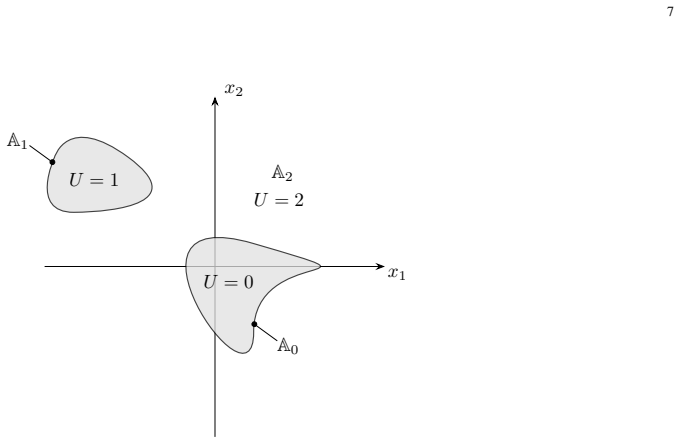
The paper claims that the sequential team problem—two sensors feeding two estimators over a shared network that carries one packet per time slot, with a scheduler whose finite battery harvests random energy—is exactly solvable. Provided each source density is symmetric and unimodal around its center $a_i$ in the radial sense of Definition 1, the strategy profile $(f^\star, g_1^\star, g_2^\star)$ of Theorem 1 is globally optimal for Problem 1. The scheduler's rule is a distance threshold: at time $t$ with energy $e$, it sends nothing if both $\|x_i-a_i\| \le \tau_t^\star(e)$, and otherwise it sends the sensor with the largest distance $\|x_i-a_i\|$. The estimators use $x_i$ when a packet arrives and $a_i$ when none does. The proof expands the estimators' information so that a coordinator with common information can solve a POMDP, then uses the Hardy-Littlewood rearrangement inequality to show the center default is globally optimal; because the optimal solution is adapted to the original information structure, it is also optimal there.
Load-bearing premise
The entire result depends on each source distribution being symmetric and unimodal in the strong sense that points closer to the center always have density at least as high as points farther away, together with each source having a finite second moment; if those fail, the threshold policy may stop being globally optimal.
Editorial extensions
If this is right
- The optimal thresholds can be computed offline by backward recursion, so the scheduler only needs to compare current distances with a precomputed table indexed by time and battery level.
- When the remaining battery energy exceeds the remaining time slots, the optimal threshold is zero and the scheduler always transmits the observation farthest from its center; as the battery depletes, it waits for observations of increasingly large magnitude.
- The optimal estimators are memoryless defaults: use the received sample if it arrives, otherwise use the known center; no signaling benefit changes the default estimate.
- The same threshold structure holds for any number of sensors: transmit the argmax over all distances if the maximum exceeds the threshold.
- With unequal sensor weights and communication costs, the no-transmission region becomes a rectangle defined by two thresholds and the boundary between transmitting sensor 1 and sensor 2 becomes a hyperbola-like curve.
Reading between the lines
- Editorial inference: for correlated or Markov sources, the paper's rearrangement step fails, but the threshold rule remains a natural heuristic, and its suboptimality gap could be quantified against a dynamic-programming lower bound.
- Editorial inference: because the value-of-information curves in the examples are nonmonotone in battery capacity, the threshold recursion could be repurposed as a battery-sizing tool that selects the capacity maximizing the benefit of closed-loop scheduling.
- Editorial inference: the information-expansion-plus-common-information argument is not tied to the squared-error cost, so similar threshold policies are plausible for other symmetric performance measures, such as $p$-norm errors, with the threshold recursion adjusted accordingly.
Signed reviews
Editorial analysis
A structured set of objections, weighed in public.
Referee Report
Summary. The paper studies a finite-horizon remote estimation problem with two sensor-estimator pairs sharing a communication channel managed by an energy-harvesting scheduler. The scheduler observes both source realizations and decides, at each time, which (if any) measurement is transmitted, subject to a battery state. The goal is to jointly minimize the sum of mean-squared estimation errors and a transmission cost. The main contribution is a structural result: when the source densities are symmetric and unimodal around their means, the optimal policy is a threshold policy that transmits the source with the largest deviation from its mean only if that deviation exceeds a threshold depending on time and energy; estimators use the received value or the source mean otherwise. The proof uses an expansion of the estimators' information, a common-information-based POMDP formulation, and a rearrangement inequality to show that the optimal estimator prescriptions are the source means. A recursive algorithm computes the thresholds, and numerical examples compare the policy with a blind scheduling benchmark.
Significance. If established, this is a notable exact solution to a non-convex team decision problem with non-classical information structure and energy constraints. The result extends prior one-shot and single-sensor analyses. The proof is largely coherent: Lemma 4's pointwise minimization and Lemma 5's rearrangement argument are valid under the stated assumptions, and the threshold computation is explicit. The paper would be strengthened by stating the necessary finite-second-moment condition, which is currently implicit. The techniques (information structure expansion, common information) are of interest to the networked estimation community.
major comments (1)
- [Theorem 1, Eq. (8)] The theorem assumes only that π1 and π2 are symmetric and unimodal in the sense of Definition 1. This does not guarantee that the cost functional J in Eq. (8) is finite: if a source has infinite second moment (e.g., a Cauchy distribution), then at every time the untransmitted source contributes E[||X_i - a_i||^2] = ∞, making J infinite for every admissible strategy. Under those conditions the global optimality statement is vacuous and the minimization in Eq. (8) is not well-posed as a finite-valued problem. The proof of Lemma 5 in Appendix B, specifically the Hardy-Littlewood step in Eq. (86) and the subsequent integration over the other source, presumes finite second moments. Please add the explicit assumption E[||X_i - a_i||^2] < ∞ for i=1,2 to Theorem 1, and note that Section IX inherits this requirement.
minor comments (6)
- [Section IX-B, Eqs. (68)-(69)] The claimed global optimality for the unequal-weights and unequal-communication-cost extension is asserted without proof; the paper should either provide a proof or explicitly label this as a conjecture.
- [Section IX-A] The statement that Theorem 1 extends to an arbitrary number of sensors is given without proof; a brief indication of how the proof in Lemmas 4-5 generalizes would be helpful.
- [Section VI, Lemma 4] The definition of the threshold τ*_t(e) in Lemma 4 contains a stray '1' after the square root, and the tie-breaking rule for arg max in Section II-D should be explicitly invoked in Theorem 1 to make (11) well-defined when ‖x1-a1‖ = ‖x2-a2‖.
- [Section VIII, Eq. (60)] The displayed equation for the blind scheduling strategy is missing a closing brace, and the text 'the is given by' should be corrected.
- [Section I] There are typographical errors, including 'transmismitted' and 'accross,' that should be corrected in a revision.
- [Appendix B, proof of Lemma 5] The monotonicity of Vπ_t(e) in e is used but not proved; a brief sentence justifying that more energy cannot increase the optimal cost would be useful.
Circularity Check
No significant circularity: the threshold policy is derived from the dynamic program and the estimation structure is proven self-contained.
full rationale
Theorem 1's scheduling strategy is not assumed or fitted: Lemma 4 derives the threshold policy from a pointwise minimization of the coordinator's dynamic-programming instantaneous cost, and the threshold tau*_t(e) is defined as sqrt(C^1_{t+1}(e)-C^0_{t+1}(e)) in terms of the value functions C^0 and C^1, which are computed recursively by Algorithm 1 rather than chosen to force the result. Lemma 5 proves that the zero estimate prescription is a global minimizer of Eq. (43) using the Hardy-Littlewood rearrangement inequality; this proof does not presuppose the form of f* or g*. The information-structure expansion and coordinator POMDP are used to convert the team problem into a single-agent dynamic program, after which the optimal solution is shown to be adapted to the original information structure, so the relaxed problem does not smuggle in the conclusion. Citations to the authors' prior works [10], [20], and [30] describe related techniques or prior one-shot results, but the proof in the paper reproduces the needed arguments and does not rely on those citations as load-bearing. The only concern identified is a correctness/assumption gap, not circularity: Theorem 1 states only symmetry and unimodality with no finite-second-moment assumption, so sources such as Cauchy distributions make the MSE objective in Eq. (8) infinite and the Hardy-Littlewood step in Eq. (86) non-integrable. That is a matter of missing hypotheses or proof validity, not an equivalence between inputs and outputs. Consequently, no circular step is present and the paper's derivation chain is self-contained with respect to its stated model assumptions.
Assumptions & free parameters
assumptions (6)
- domain assumption Source densities π1,π2 are symmetric and unimodal around their centers (radial monotonicity).
- domain assumption Sources are independent across sensors and i.i.d. in time, and the harvest process is independent of sources.
- domain assumption Each source has finite second moment.
- standard math Standard dynamic programming and POMDP optimality results.
- standard math Hardy-Littlewood rearrangement inequality.
- domain assumption Noiseless unicast channel model with erasure value ∅.
Cite this review
Pith. "Pith review of Optimal scheduling strategy for networked estimation with energy harvesting." pith.science (2026). https://pith.science/paper/IYCSUZK7
@misc{pith2026190806070,
  author       = {Pith},
  title        = {Pith review of: Optimal scheduling strategy for networked estimation with energy harvesting},
  year         = {2026},
  howpublished = {\url{https://pith.science/paper/IYCSUZK7}},
  note         = {Machine review of arXiv:1908.06070}
}
read the original abstract
Joint optimization of scheduling and estimation policies is considered for a system with two sensors and two non-collocated estimators. Each sensor produces an independent and identically distributed sequence of random variables, and each estimator forms estimates of the corresponding sequence with respect to the mean-squared error sense. The data generated by the sensors is transmitted to the corresponding estimators, over a bandwidth-constrained wireless network that can support a single packet per time slot. The access to the limited communication resources is determined by a scheduler who decides which sensor measurement to transmit based on both observations. The scheduler has an energy-harvesting battery of limited capacity, which couples the decision-making problem in time. Despite the overall lack of convexity of the team decision problem, it is shown that this system admits globally optimal scheduling and estimation strategies under the assumption that the distributions of the random variables at the sensors are symmetric and unimodal. Additionally, the optimal scheduling policy has a structure characterized by a threshold function that depends on the time index and energy level. A recursive algorithm for threshold computation is provided.
Figures


Figures from the paper (6 more)


Reference graph
Works this paper leans on
-
[1]
Cyber–physical systems: A perspective at the centennial,
K.-D. Kim and P. R. Kumar, “Cyber–physical systems: A perspective at the centennial,” Proceedings of the IEEE, vol. 100, pp. 1287–1308, May 2012
work page 2012
-
[2]
A. Bemporad, M. Heemels, and M. Johansson, Networked control systems . Hidelberg: Springer, 2010, vol. 406
work page 2010
-
[3]
Optimal estimation over the collision channel,
M. M. Vasconcelos and N. C. Martins, “Optimal estimation over the collision channel,” IEEE Transactions on Automatic Control , vol. 62, no. 1, pp. 321–336, January 2017
work page 2017
-
[4]
Optimal remote estimation of discrete random variables over the collision channel,
——, “Optimal remote estimation of discrete random variables over the collision channel,” IEEE Transactions on Automatic Control , vol. 64, no. 4, pp. 1519 – 1534, April 2019
work page 2019
-
[5]
S. Yuksel and T. Basar, Stochastic Networked Control Systems . Springer, 2013
work page 2013
-
[6]
KNOW-ME: a case study in wireless body area sensor network design,
U. Mitra, A. Emken, S. Lee, M. Li, V . Rozgic, G. Thatte, H. Vathsangam, D.-S. Zois, M. Annavaram, S. Narayanan, M. Levorato, D. Spruijt-Metz, and G. S. Sukhatme, “KNOW-ME: a case study in wireless body area sensor network design,” IEEE Communications Magazine, vol. 50, no. 5, pp. 116–125, May 2012
work page 2012
-
[7]
D.-S. Zois, M. Levorato, and U. Mitra, “Energy-efficient, heterogeneous sensor selection for physical activity detection in wireless body area networks,” IEEE Transactions on Signal Processing , vol. 61, no. 7, pp. 1581–1594, April 2013
work page 2013
-
[8]
D.-S. Zois, “Sequential decision-making in healthcare iot: Real-time health monitoring, treatments and interventions,” in IEEE 3rd World Forum on Internet of Things , 2016
work page 2016
Show all 34 references
-
[9]
Remote state estimation with communication costs for first-order LTI systems,
G. M. Lipsa and N. C. Martins, “Remote state estimation with communication costs for first-order LTI systems,” IEEE Transactions on Automatic Control, vol. 56, no. 9, pp. 2013–2025, September 2011
2013
-
[10]
Optimal strategies for communication and remote estimation with an energy harvesting sensor,
A. Nayyar, T. Basar, D. Teneketzis, and V . Veeravalli, “Optimal strategies for communication and remote estimation with an energy harvesting sensor,” IEEE Transactions on Automatic Control , vol. 58, no. 9, pp. 2246–2260, September 2013
2013
-
[11]
Transmission scheduling for remote state estimation and control with an energy harvesting sensor,
A. S. Leong, S. Dey, and D. E. Quevedo, “Transmission scheduling for remote state estimation and control with an energy harvesting sensor,” Automatica, vol. 91, pp. 54–60, May 2018
2018
-
[12]
Stability analysis of networked control systems,
G. C. Walsh, H. Ye, and L. G. Bushnell, “Stability analysis of networked control systems,”IEEE Transaction on Control Systems Technology, vol. 10, no. 3, pp. 438–446, May 2002
2002
-
[13]
Scheduling of event-triggered controllers on a shared network,
A. Cervin and T. Henningsson, “Scheduling of event-triggered controllers on a shared network,” in Proceedings of the 47th IEEE Conference on Decision and Control , 2008, pp. 3601–3606
2008
-
[14]
Networked estimation under contention-based medium access,
M. Rabi, L. Stabellini, A. Proutiere, and M. Johansson, “Networked estimation under contention-based medium access,” International Journal of Robust and Nonlinear Control , vol. 20, no. 2, pp. 140–155, January 2010
2010
-
[15]
Random access design for wireless control systems,
K. Gatsis, A. Ribeiro, and G. J. Pappas, “Random access design for wireless control systems,” Automatica, vol. 91, pp. 1–9, May 2018
2018
-
[16]
Multiple loop self-triggered model predictive control for network scheduling and control,
E. Henriksson, D. E. Quevedo, E. G. W. Peters, H. Sandberg, and K. H. Johansson, “Multiple loop self-triggered model predictive control for network scheduling and control,” IEEE Transaction on Control Systems Technology , vol. 23, no. 6, pp. 2167–2181, 2015
2015
-
[17]
Price-based adaptive scheduling in multi-loop control systems with resource constraints,
A. Molin and S. Hirche, “Price-based adaptive scheduling in multi-loop control systems with resource constraints,” IEEE Transactions on Automatic Control, vol. 59, no. 12, pp. 3282–3295, December 2014. August 19, 2019 DRAFT 25
2014
-
[18]
Observation-driven scheduling for remote estimation of two Gaussian random variables,
M. M. Vasconcelos and U. Mitra, “Observation-driven scheduling for remote estimation of two Gaussian random variables,” IEEE Transactions on Control of Network Systems , to appear
-
[19]
Networked state estimation over a shared communication medium,
M. Xia, V . Gupta, and P. J. Antsaklis, “Networked state estimation over a shared communication medium,” IEEE Transactions on Automatic Control, 2017
2017
-
[20]
Optimal sensor scheduling strategies in networked estimation,
M. M. Vasconcelos, A. Nayyar, and U. Mitra, “Optimal sensor scheduling strategies in networked estimation,” in Proceedings of the 56th IEEE Conference on Decision and Control , 2017
2017
-
[21]
Information-theoretic analysis of an energy harvesting communication system,
O. Ozel and S. Ulukus, “Information-theoretic analysis of an energy harvesting communication system,” in IEEE 21st International Symposium on Personal, Indoor and Mobile Radio Communications Workshops , October 2010
2010
-
[22]
State estimation in energy harvesting systems,
O. Ozel and V . Anantharam, “State estimation in energy harvesting systems,” in Proceedings of the Information Theory and Applications Workshop, La Jolla, CA, 2016
2016
-
[23]
Optimal packet scheduling in an energy harvesting communication system,
J. Yang and S. Ulukus, “Optimal packet scheduling in an energy harvesting communication system,” IEEE Transactions on Communications, vol. 60, no. 1, pp. 220–230, January 2012
2012
-
[24]
Transmission policies for energy harvesting sensors with time-correlated energy supply,
N. Michelusi, K. Stamatiou, and M. Zorzi, “Transmission policies for energy harvesting sensors with time-correlated energy supply,” IEEE Transactions on Communications , vol. 61, no. 7, pp. 2988–3001, July 2013
2013
-
[25]
Energy management policies for harvesting-based wireless sensor devices with battery degradation,
N. Michelusi, L. Badia, R. Carli, L. Corradini, and M. Zorzi, “Energy management policies for harvesting-based wireless sensor devices with battery degradation,” IEEE Transactions on Communications , vol. 61, no. 12, pp. 4934–4947, December 2013
2013
-
[26]
Optimal adaptive random multiaccess in energy harvesting wireless sensor networks,
N. Michelusi and M. Zorzi, “Optimal adaptive random multiaccess in energy harvesting wireless sensor networks,” IEEE Transactions on Communications, vol. 63, no. 4, pp. 1355–1372, April 2015
2015
-
[27]
Channels, learning, queueing and remote estimation systems with a utilization-dependent component,
V . Jog, R. J. La, and N. C. Martins, “Channels, learning, queueing and remote estimation systems with a utilization-dependent component,” arXiv:1905.04362v1, 2019
1905 arXiv
-
[28]
Teams, signaling, and information theory,
Y .-C. Ho, M. Kastner, and E. Wong, “Teams, signaling, and information theory,” IEEE Transactions on Automatic Control , vol. 23, no. 2, pp. 305–312, April 1978
1978
-
[29]
A counter-example in stochastic optimum control,
H. S. Witsenhausen, “A counter-example in stochastic optimum control,” SIAM Journal on Control , vol. 6, no. 1, pp. 131–147, 1968
1968
-
[30]
Decentralized stochastic control with partial history sharing: A common information approach,
A. Nayyar, A. Mahajan, and D. Teneketzis, “Decentralized stochastic control with partial history sharing: A common information approach,” IEEE Transactions on Automatic Control , vol. 58, no. 7, pp. 1644 – 1658, July 2013
2013
-
[31]
Kumar and P
P. Kumar and P. Varaiya, Stochastic systems: Estimation, Identification and Adaptive Control . Englewood Cliffs, NJ: Prentice-Hall, 1986
1986
-
[32]
Scheduling and estimation strategies in a sequential networked estimation problem,
M. Gagrani, M. M. Vasconcelos, and A. Nayyar, “Scheduling and estimation strategies in a sequential networked estimation problem,” in 56th Annual Allerton Conference on Communication, Control, and Computing (Allerton) , 2018, pp. 871–878
2018
-
[33]
A short course on rearrangement inequalities,
A. Burchard, “A short course on rearrangement inequalities,” in Lecture notes of the IMDEA Winter School , 2009
2009
-
[34]
G. H. Hardy, J. E. Littlewood, and G. P ´olya, Inequalities. Cambridge University Press, 1952. August 19, 2019 DRAFT
1952
Reviewed August 14, 2026 · model on record in the stance chip above.
Discussion (0). Continue with ORCID to comment.