REVIEW 3 major objections 5 minor 71 references
Improving Controllability and Editability for Pretrained Text-to-Music Generation Models
T0 review · 3 major / 5 minor · reviewed 2026-08-12 · deepseek-v4-flash
Pith's one-line read The thesis claims that Instruct-MusicGen, a lightly tuned version of MusicGen, achieves precise text-based editing of musical stems—adding, removing, and extracting instruments—with better instruction adherence and audio quality than…
desk verdict A solid compilation thesis whose central Instruct-MusicGen claim is conditional on synthetic stem-mix evaluations; the author's own limitations section says as much. read the letter →
The pith
A machine-rendered reading of the paper's core claim, the machinery that carries it, and where it could break.
The reading
What carries the argument
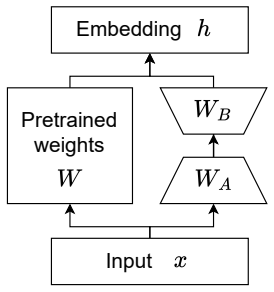
The load-bearing mechanism is the dual-modality fusion built on top of a frozen MusicGen backbone. A text fusion module inserts low-rank adapters into the cross-attention layers so the decoder can read the editing instruction, such as "Add piano," while an audio fusion module—a duplicated encoder—embeds the input audio and feeds it into the same decoder; the text encoder stays frozen. Training uses synthetic instruction triples: source audio built by mixing stems, target audio built by adding, removing, or extracting one stem, and a templated instruction describing that operation. Around this core, the earlier chapters contribute two supporting mechanisms: the Global Attribute Table, a blackboard-style data structure that keeps musical attributes consistent during iterative editing, and the MusicMagus editing-direction vector in a diffusion latent space, a zero-shot alternative that motivated the instruction-tuned solution.
What would settle it
Collect a set of open-ended editing requests written by musicians in their own words, none of which appear in the training templates, then run the trained model on each request and measure stem-level accuracy against a ground-truth mix; if instruction adherence on those requests falls to the level of the baselines, the synthetic-triple assumption is the point of failure.
Extended reading notes
Core claim
The central discovery on the paper's own terms is that instruction tuning turns a pretrained music language model into a precise stem editor. Instruct-MusicGen freezes MusicGen's text encoder and most of its decoder, inserts a text fusion module that modifies the cross-attention layers, and adds an audio fusion module built from a duplicated encoder that embeds the input audio, so the decoder attends to both the instruction text and the source audio at the same time. Supervised fine-tuning on synthetic triples—an instruction, a source stem mixture, and the corresponding target mixture—teaches the model to add, remove, or extract instruments. On the Slakh and MoisesDB benchmarks, the resulting model reports higher instruction-adherence and audio-quality scores than baselines including AUDIT, InstructME, and DITTO, while using the smallest parameter budget and only 5,000 training steps. A secondary claim is that MusicMagus can change timbre and style zero-shot while preserving musical structure, but that it falls short on complex real-world stem-level editing, which motivates the instruction-tuned approach.
Load-bearing premise
The load-bearing premise is that synthetic instruction triples built from stem mixtures—"Add piano" paired with the audio made by mixing stems—capture both the wording and the musical intent of real-world editing requests.
Editorial extensions
If this is right
- A music language model can be turned into an editing tool with modest compute—5,000 training steps—rather than training a dedicated editor from scratch.
- Stem-level operations of adding, removing, and extracting instruments suffice to cover a broad class of text instructions, and template-generated instruction data can train an accurate editor.
- Instruction adherence and audio quality improve together relative to zero-shot diffusion editing and inference-time optimization baselines.
- Fusing text and audio conditions into a frozen backbone is parameter-efficient: the smallest trainable budget yields the best reported editing accuracy among the compared systems.
- The instruction-tuned model extends the applicability of music language models from one-shot generation to iterative production workflows.
Reading between the lines
- Editorial inference — the same recipe of a frozen backbone plus text and audio fusion plus synthetic triples likely transfers to other audio domains, such as sound effects or dialogue, wherever stem-like edits are well defined.
- Editorial inference — template-generated instructions probably under-cover real user phrasing; a testable extension is to augment the training triples with LLM-paraphrased instructions and measure whether adherence on open-ended commands closes the gap.
- Editorial inference — the thesis does not fully separate how much of the gain comes from the fusion architecture versus the synthetic mixture targets; an ablation that replaces the fusion with simpler audio conditioning would identify the active ingredient.
- Editorial inference — because the method edits by regenerating stem mixtures conditioned on audio, it is naturally limited to edits representable as stem operations; requests like "make the snare punchier" or "change the mix balance" would need a different formulation.
Editorial analysis
A structured set of objections, weighed in public.
Referee Report
Summary. This PhD thesis addresses controllability and editability of pretrained text-to-music generation models through three progressively built systems. Loop Copilot is an LLM-orchestrated multi-model system that supports iterative music generation and editing via a conversational interface, using a Global Attribute Table to preserve musical coherence. MusicMagus is a zero-shot editing approach that manipulates the latent space of a pretrained diffusion model to change attributes such as timbre or genre while preserving structure. Instruct-MusicGen applies instruction tuning to MusicGen, adding a text fusion module and an audio fusion module so that the model can perform stem-level edits (add, remove, extract, replace) from natural-language instructions. The central claim is that Instruct-MusicGen achieves precise text-based stem editing with better instruction adherence and audio quality than existing baselines, while using the smallest trainable parameter budget and only 5,000 training steps (Table 5.1, Section 5.4).
Significance. If the central claims hold, the thesis makes a useful contribution to the under-explored area of text-guided editing for music foundation models. The Instruct-MusicGen design is parameter-efficient and builds on a standard backbone (MusicGen), and the thesis reports objective evaluations on common benchmarks (Slakh, MoisesDB) and subjective ratings against baselines. The release of code and use of reproducible datasets are strengths. However, the significance is currently conditional: the evaluations are conducted almost entirely on synthetic stem-mixture data constructed with template instructions, and the claimed subjective superiority lacks statistical verification. The thesis itself acknowledges key limitations in Sections 6.2.1 and 6.2.2, and these limitations directly affect the strength of the conclusions that generalize to 'complex and dynamic production environments.'
major comments (3)
- [Section 5.4.2, Table 5.4] The subjective evaluation table reports that the model shows 'significant improvements' on both Instruction Adherence (IA) and Audio Quality (AQ) over baselines, but no confidence intervals, significance tests, rater counts, or inter-rater agreement statistics are provided. Without such statistical support, the reader cannot verify that these improvements are reliable rather than due to chance or rater variability. Since this table is a load-bearing piece of evidence for the central claim of superiority over baselines, please either add the missing statistical analysis or temper the claim to state that the model receives higher mean ratings.
- [Sections 5.3.1, 5.4.1, and 6.2.2] The central claim that Instruct-MusicGen performs precise text-based editing is established only within the synthetic data distribution used for training and evaluation. Training triplets are constructed by deterministically mixing or removing a small set of instrument stems, with instructions generated from template commands (similar to those in Table 2.3), and the test sets (Slakh, MoisesDB) are the same type of stem-mixture data. The thesis acknowledges in Section 6.2.2 'Dependence on Paired Data' and in Section 6.2.1 'Precision in Music Editing,' yet the conclusion in Chapter 6 generalizes to 'complex and dynamic production environments.' No evaluation on real recordings with human-typed, open-ended instructions is reported. Please either add an out-of-distribution evaluation with real user instructions or explicitly restrict the conclusions to the synthetic, stem-level editing setting.
- [Tables 5.2 and 5.3, Section 2.6.3] The objective metrics used for editing evaluation, particularly SI-SDR and the instruction-accuracy metric, measure how well the model reconstructs a deterministic ground-truth mixture (the exact stem mix used to construct the triplet), rather than whether the edit is musically valid or matches the user's broader intent. For example, a high SI-SDR on the 'Add piano' task essentially measures fidelity to a specific synthesized mixture, not the quality of the musical addition. The thesis would be strengthened by complementing these metrics with a human evaluation on more open-ended editing requests, or at least by explicitly acknowledging that SI-SDR and the current IA metric capture reconstruction accuracy rather than musical edit quality.
minor comments (5)
- [Table 5.1] The caption says 'param count numbers are the number of trainable parameters and total parameters respectively,' but the table likely has two numeric columns without clear headers. Please use explicit column headings such as 'Trainable params' and 'Total params' to avoid ambiguity.
- [Section 2.2.1, Table 2.1] The sample-rate column contains inconsistent notation, e.g., '16KHz' for Stable Audio but '16kHz' for other models. Please standardize the units.
- [Equations (2.31) and (2.32)] The same equation numbers are reused for the VQ-VAE section and later for the EnCodec section, with identical equation text. This is confusing; please renumber the later equations or merge the descriptions.
- [Section 3.4.4] The heading reads 'Quantitive Results'; this should be 'Quantitative Results.'
- [Section 2.6.3 and Section 5.4] The acronym 'IA' is used both for 'instruction accuracy' (in the metrics section) and for 'instruction adherence' (in the subjective evaluation). This ambiguity should be resolved by using distinct terms or defining each occurrence explicitly.
Circularity Check
No circular derivation: the thesis’s central claims rest on external baselines, independent metrics, and transparently stated limitations, not on self-referential fits or self-citation chains.
full rationale
The claimed derivation chain is not circular. Loop Copilot is an LLM-orchestrated system whose contribution (Global Attribute Table, multi-model chaining) is evaluated through a user study; no result is defined in terms of its output. MusicMagus computes an editing direction as the difference between text-embedding means, which is a methodological construction rather than a prediction fitted to the evaluation metrics; its evaluations use human ratings and external baseline comparisons. Instruct-MusicGen is trained on synthetic instruction triples built from stem mixtures and evaluated on Slakh and MoisesDB, which are datasets of the same general kind. This is a supervised learning setup on a matched distribution; it raises an external-validity concern, not a tautology, because the objective metrics (SI-SDR, CLAP score) and subjective Instruction Adherence / Audio Quality ratings are not fitted parameters of the model and the ground-truth mixtures are not reproduced by construction. The thesis itself flags the relevant limitations in §5.5, §6.2.1 (“Precision in Music Editing”) and §6.2.2 (“Dependence on Paired Data”), which further confirms that the gap between synthetic training/evaluation and real-world edits is acknowledged as a validity risk rather than hidden by a self-referential argument. Self-citations are present, notably the Coco-mulla precursor work in Chapter 5, but the thesis describes the architecture in the text and does not use those citations as load-bearing proof; the comparisons to external baselines and independent metrics carry the central claims. No uniqueness theorem, ansatz-smuggling citation, or fitted-input-renamed-as-prediction step was found. Therefore the paper is self-contained with respect to its own derivation chain, and the appropriate finding is no significant circularity.
Assumptions & free parameters
free parameters (3)
- Editing direction scale (lambda) in MusicMagus =
not reported
- Classifier-free guidance scale =
not reported
- LoRA rank for Instruct-MusicGen text fusion =
not reported
assumptions (3)
- domain assumption Pretrained backbone models (MusicGen, EnCodec, T5, CLAP) are used as fixed feature extractors and generators without modification.
- domain assumption The instruction dataset for Instruct-MusicGen, constructed from stem mixtures and template texts, represents the distribution of real editing requests.
- domain assumption Linear interpolation in the CLAP/text embedding space corresponds to semantically meaningful musical attribute changes.
Cite this review
Pith. "Pith review of Improving Controllability and Editability for Pretrained Text-to-Music Generation Models." pith.science (2026). https://pith.science/paper/HKQFP6NQ
@misc{pith2026241112641,
  author       = {Pith},
  title        = {Pith review of: Improving Controllability and Editability for Pretrained Text-to-Music Generation Models},
  year         = {2026},
  howpublished = {\url{https://pith.science/paper/HKQFP6NQ}},
  note         = {Machine review of arXiv:2411.12641}
}
read the original abstract
The field of AI-assisted music creation has made significant strides, yet existing systems often struggle to meet the demands of iterative and nuanced music production. These challenges include providing sufficient control over the generated content and allowing for flexible, precise edits. This thesis tackles these issues by introducing a series of advancements that progressively build upon each other, enhancing the controllability and editability of text-to-music generation models. First, we introduce Loop Copilot, a system that tries to address the need for iterative refinement in music creation. Loop Copilot leverages a large language model (LLM) to coordinate multiple specialised AI models, enabling users to generate and refine music interactively through a conversational interface. Central to this system is the Global Attribute Table, which records and maintains key musical attributes throughout the iterative process, ensuring that modifications at any stage preserve the overall coherence of the music. While Loop Copilot excels in orchestrating the music creation process, it does not directly address the need for detailed edits to the generated content. To overcome this limitation, MusicMagus is presented as a further solution for editing AI-generated music. MusicMagus introduces a zero-shot text-to-music editing approach that allows for the modification of specific musical attributes, such as genre, mood, and instrumentation, without the need for retraining. By manipulating the latent space within pre-trained diffusion models, MusicMagus ensures that these edits are stylistically coherent and that non-targeted attributes remain unchanged. This system is particularly effective in maintaining the structural integrity of the music during edits, but it encounters challenges with more complex and real-world audio scenarios. ...
Figures


Figures from the paper (22 more)




Reference graph
Works this paper leans on
-
[1]
MusicLM: Generating music from text
Andrea Agostinelli, Timo I Denk, Zal´ an Borsos, Jesse Engel, Mauro Verzetti, Antoine Caillon, Qingqing Huang, Aren Jansen, Adam Roberts, Marco Tagliasacchi, et al. MusicLM: Generating music from text. arXiv preprint arXiv:2301.11325,
-
[6]
Look, listen, and learn more: Design choices for deep audio embeddings
Aurora Linh Cramer, Ho-Hsiang Wu, Justin Salamon, and Juan Pablo Bello. Look, listen, and learn more: Design choices for deep audio embeddings. In ICASSP 2019-2019 IEEE International Conference on Acoustics, Speech and Signal Processing (ICASSP), pages 3852–3856. IEEE,
work page 2019
-
[7]
BERT: Pre-training of deep bidirectional transformers for language understanding
Jacob Devlin, Ming-Wei Chang, Kenton Lee, and Kristina Toutanova. BERT: Pre-training of deep bidirectional transformers for language understanding. arXiv preprint arXiv:1810.04805 ,
-
[10]
LP-MusicCaps: LLM-based pseudo music captioning
SeungHeon Doh, Keunwoo Choi, Jongpil Lee, and Juhan Nam. LP-MusicCaps: LLM-based pseudo music captioning. arXiv preprint arXiv:2307.16372,
-
[11]
Singsong: Generating musical accompaniments from singing
Chris Donahue, Antoine Caillon, Adam Roberts, Ethan Manilow, Philippe Es- ling, Andrea Agostinelli, Mauro Verzetti, Ian Simon, Olivier Pietquin, Neil 164 Zeghidour, et al. Singsong: Generating musical accompaniments from singing. arXiv preprint arXiv:2301.12662 ,
-
[12]
Joint music and language attention models for zero-shot music tagging
Xingjian Du, Zhesong Yu, Jiaju Lin, Bilei Zhu, and Qiuqiang Kong. Joint music and language attention models for zero-shot music tagging. In ICASSP 2024-2024 IEEE International Conference on Acoustics, Speech and Signal Processing (ICASSP), pages 1126–1130. IEEE,
work page 2024
-
[13]
Fast timing-conditioned latent audio diffusion
Zach Evans, CJ Carr, Josiah Taylor, Scott H Hawley, and Jordi Pons. Fast timing-conditioned latent audio diffusion. In Forty-first International Con- ference on Machine Learning , 2024a. Zach Evans, Julian D Parker, CJ Carr, Zack Zukowski, Josiah Taylor, and Jordi Pons. Long-form music generation with latent diffusion. arXiv preprint arXiv:2404.10301, 202...
-
[14]
Hugo Flores Garcia, Prem Seetharaman, Rithesh Kumar, and Bryan Pardo
URL https://riffusion.com/about. Hugo Flores Garcia, Prem Seetharaman, Rithesh Kumar, and Bryan Pardo. VampNet: Music generation via masked acoustic token modeling. arXiv preprint arXiv:2307.04686,
Show all 71 references
-
[15]
Audio set: An ontology and human-labeled dataset for audio events
Jort F Gemmeke, Daniel PW Ellis, Dylan Freedman, Aren Jansen, Wade Lawrence, R Channing Moore, Manoj Plakal, and Marvin Ritter. Audio set: An ontology and human-labeled dataset for audio events. In 2017 IEEE international conference on acoustics, speech and signal processing (...
2017
-
[16]
Compa: Addressing the gap in compositional reasoning in audio-language models
Sreyan Ghosh, Ashish Seth, Sonal Kumar, Utkarsh Tyagi, Chandra Kiran Evuru, S Ramaneswaran, S Sakshi, Oriol Nieto, Ramani Duraiswami, and Dinesh Manocha. Compa: Addressing the gap in compositional reasoning in audio-language models. arXiv preprint arXiv:2310.08753 ,
-
[17]
Instructme: An instruction guided music edit and remix framework with latent diffusion models
Bing Han, Junyu Dai, Xuchen Song, Weituo Hao, Xinyan He, Dong Guo, Jitong Chen, Yuxuan Wang, and Yanmin Qian. Instructme: An instruction guided music edit and remix framework with latent diffusion models. arXiv preprint arXiv:2308.14360,
-
[19]
Cheng-Zhi Anna Huang, Tim Cooijmans, Adam Roberts, Aaron Courville, and Douglas Eck
URL https://arxiv.org/abs/ 2106.09685. Cheng-Zhi Anna Huang, Tim Cooijmans, Adam Roberts, Aaron Courville, and Douglas Eck. Counterpoint by convolution. arXiv preprint arXiv:1903.07227,
1903 arXiv
-
[21]
M 2ugen: Multi-modal music understanding and generation with the power of large language models
Atin Sakkeer Hussain, Shansong Liu, Chenshuo Sun, and Ying Shan. M 2ugen: Multi-modal music understanding and generation with the power of large language models. arXiv preprint arXiv:2311.11255 ,
-
[22]
Yusuf Ziya Isik, Jonathan Le Roux, Zhuo Chen, Shinji Watanabe, and John R. Hershey. Single-channel multi-speaker separation using deep clus- tering. In Nelson Morgan, editor, Interspeech 2016, 17th Annual Con- ference of the International Speech Communication Association, San ...
2016
-
[24]
Re- trieval augmented generation of symbolic music with llms
Nicolas Jonason, Luca Casini, Carl Thom´ e, and Bob LT Sturm. Re- trieval augmented generation of symbolic music with llms. arXiv preprint arXiv:2311.10384,
-
[25]
Fr\’echet audio distance: A metric for evaluating music enhancement algo- rithms
Kevin Kilgour, Mauricio Zuluaga, Dominik Roblek, and Matthew Sharifi. Fr\’echet audio distance: A metric for evaluating music enhancement algo- rithms. arXiv preprint arXiv:1812.08466 ,
-
[27]
Auto-encoding variational Bayes
167 Diederik P Kingma and Max Welling. Auto-encoding variational Bayes. arXiv preprint arXiv:1312.6114,
-
[29]
Smitin: Self-monitored inference-time intervention for generative music transformers
Junghyun Koo, Gordon Wichern, Francois G Germain, Sameer Khurana, and Jonathan Le Roux. Smitin: Self-monitored inference-time intervention for generative music transformers. arXiv preprint arXiv:2404.02252 ,
-
[30]
Efficient training of audio transformers with patchout
Khaled Koutini, Jan Schl¨ uter, Hamid Eghbal-Zadeh, and Gerhard Widmer. Efficient training of audio transformers with patchout. arXiv preprint arXiv:2110.05069,
-
[31]
Peike Li, Boyu Chen, Yao Yao, Yikai Wang, Allen Wang, and Alex Wang
URL https://arxiv.org/abs/ 2410.02060. Peike Li, Boyu Chen, Yao Yao, Yikai Wang, Allen Wang, and Alex Wang. Jen-1: Text-guided universal music generation with omnidirectional diffusion models. arXiv preprint arXiv:2308.04729 ,
-
[32]
Content-based controls for music large language modeling
Liwei Lin, Gus Xia, Junyan Jiang, and Yixiao Zhang. Content-based controls for music large language modeling. arXiv preprint arXiv:2310.17162 ,
-
[33]
Arrange, inpaint, and refine: Steerable long-term music audio generation and editing via content- based controls
Liwei Lin, Gus Xia, Yixiao Zhang, and Junyan Jiang. Arrange, inpaint, and refine: Steerable long-term music audio generation and editing via content- based controls. arXiv preprint arXiv:2402.09508 ,
-
[34]
Audioldm: Text-to-audio generation with latent diffusion models
Haohe Liu, Zehua Chen, Yi Yuan, Xinhao Mei, Xubo Liu, Danilo Mandic, Wenwu Wang, and Mark D Plumbley. Audioldm: Text-to-audio generation with latent diffusion models. arXiv preprint arXiv:2301.12503 ,
-
[35]
Audi- oldm 2: Learning holistic audio generation with self-supervised pretraining
168 Haohe Liu, Yi Yuan, Xubo Liu, Xinhao Mei, Qiuqiang Kong, Qiao Tian, Yup- ing Wang, Wenwu Wang, Yuxuan Wang, and Mark D Plumbley. Audi- oldm 2: Learning holistic audio generation with self-supervised pretraining. IEEE/ACM Transactions on Audio, Speech, and Language Processi...
2024 arXiv
-
[36]
Novice-AI music co-creation via AI-steering tools for deep generative models
Ryan Louie, Andy Coenen, Cheng Zhi Huang, Michael Terry, and Carrie J Cai. Novice-AI music co-creation via AI-steering tools for deep generative models. In Proceedings of the 2020 CHI Conference on Human Factors in Computing Systems, pages 1–13,
2020
-
[37]
MuseCoco: Generating symbolic music from text
Peiling Lu, Xin Xu, Chenfei Kang, Botao Yu, Chengyi Xing, Xu Tan, and Jiang Bian. MuseCoco: Generating symbolic music from text. arXiv preprint arXiv:2306.00110,
-
[38]
Learning disentangled repre- sentations of timbre and pitch for musical instrument sounds using gaussian mixture variational autoencoders
Yin-Jyun Luo, Kat Agres, and Dorien Herremans. Learning disentangled repre- sentations of timbre and pitch for musical instrument sounds using gaussian mixture variational autoencoders. arXiv preprint arXiv:1906.08152 ,
1906 arXiv
-
[39]
The Song Describer Dataset: A corpus of audio captions for music-and- language evaluation
Ilaria Manco, Benno Weck, Seungheon Doh, Minz Won, Yixiao Zhang, Dmitry Bodganov, Yusong Wu, Ke Chen, Philip Tovstogan, Emmanouil Benetos, et al. The Song Describer Dataset: A corpus of audio captions for music-and- language evaluation. arXiv preprint arXiv:2311.10057 ,
-
[40]
Cutting music source separation some Slakh: A dataset to study the impact of training data quality and quantity
Ethan Manilow, Gordon Wichern, Prem Seetharaman, and Jonathan Le Roux. Cutting music source separation some Slakh: A dataset to study the impact of training data quality and quantity. In 2019 IEEE Workshop on Applications of Signal Processing to Audio and Acoustics, WASPAA 201...
2019
-
[41]
2019.8937170
doi: 10.1109/W ASPAA. 2019.8937170. URL https://doi.org/10.1109/WASPAA.2019.8937170. Hila Manor and Tomer Michaeli. Zero-shot unsupervised and text-based audio editing using ddpm inversion. arXiv preprint arXiv:2402.10009 ,
2019
-
[44]
Stem- gen: A music generation model that listens
Julian D Parker, Janne Spijkervet, Katerina Kosta, Furkan Yesiler, Boris Kuznetsov, Ju-Chiang Wang, Matt Avent, Jitong Chen, and Duc Le. Stem- gen: A music generation model that listens. In ICASSP 2024-2024 IEEE In- ternational Conference on Acoustics, Speech and Signal Proces...
2024
-
[45]
Zero-shot image-to-image translation
170 Gaurav Parmar, Krishna Kumar Singh, Richard Zhang, Yijun Li, Jingwan Lu, and Jun-Yan Zhu. Zero-shot image-to-image translation. In ACM SIG- GRAPH 2023 Conference Proceedings, pages 1–11,
2023
-
[46]
Glove: Global vectors for word representation
Jeffrey Pennington, Richard Socher, and Christopher D Manning. Glove: Global vectors for word representation. In Proceedings of the 2014 conference on empirical methods in natural language processing (EMNLP), pages 1532–1543,
2014
-
[49]
Karol J Piczak
URL http://arxiv.org/abs/ 1802.05365. Karol J Piczak. Esc: Dataset for environmental sound classification. In Proceed- ings of the 23rd ACM international conference on Multimedia , pages 1015– 1018,
-
[50]
Generalized multi-source inference for text conditioned music diffusion models
Emilian Postolache, Giorgio Mariani, Luca Cosmo, Emmanouil Benetos, and Emanuele Rodol` a. Generalized multi-source inference for text conditioned music diffusion models. In ICASSP 2024-2024 IEEE International Confer- ence on Acoustics, Speech and Signal Processing (ICASSP), p...
2024
-
[51]
Paguri: a user experience study of creative interaction with text-to-music models
Francesca Ronchini, Luca Comanducci, Gabriele Perego, and Fabio Antonacci. Paguri: a user experience study of creative interaction with text-to-music models. arXiv preprint arXiv:2407.04333 ,
-
[52]
Audio conditioning for music generation via discrete bottleneck features
Simon Rouard, Yossi Adi, Jade Copet, Axel Roebel, and Alexandre D´ efossez. Audio conditioning for music generation via discrete bottleneck features. arXiv preprint arXiv:2407.12563 ,
-
[53]
Jonathan Le Roux, Scott Wisdom, Hakan Erdogan, and John R. Hershey. SDR - half-baked or well done? In IEEE International Conference on Acoustics, Speech and Signal Processing, ICASSP 2019, Brighton, United Kingdom, May 12-17, 2019, pages 626–630. IEEE,
2019
-
[54]
URL https://doi.org/10.1109/ICASSP.2019.8683855
doi: 10.1109/ICASSP.2019.8683855. URL https://doi.org/10.1109/ICASSP.2019.8683855. Flavio Schneider, Zhijing Jin, and Bernhard Sch¨ olkopf. M¨ ousai: Text- to-music generation with long-context latent diffusion. arXiv preprint arXiv:2301.11757,
2019
-
[55]
Joint audio and sym- bolic conditioning for temporally controlled text-to-music generation
172 Or Tal, Alon Ziv, Itai Gat, Felix Kreuk, and Yossi Adi. Joint audio and sym- bolic conditioning for temporally controlled text-to-music generation. arXiv preprint arXiv:2406.10970,
-
[56]
Music FaderNets: Controllable music generation based on high-level features via low-level feature modelling
Hao Hao Tan and Dorien Herremans. Music FaderNets: Controllable music generation based on high-level features via low-level feature modelling. arXiv preprint arXiv:2007.15474,
2007 arXiv
-
[57]
Llama: Open and efficient foundation language models
Hugo Touvron, Thibaut Lavril, Gautier Izacard, Xavier Martinet, Marie-Anne Lachaux, Timoth´ ee Lacroix, Baptiste Rozi` ere, Naman Goyal, Eric Hambro, Faisal Azhar, et al. Llama: Open and efficient foundation language models. arXiv preprint arXiv:2302.13971 ,
-
[58]
Plug-and-play diffusion features for text-driven image-to-image translation
Narek Tumanyan, Michal Geyer, Shai Bagon, and Tali Dekel. Plug-and-play diffusion features for text-driven image-to-image translation. In Proceedings of the IEEE/CVF Conference on Computer Vision and Pattern Recognition , pages 1921–1930,
1921
-
[59]
Wavenet: A generative model for raw audio
Aaron Van Den Oord, Sander Dieleman, Heiga Zen, Karen Simonyan, Oriol Vinyals, Alex Graves, Nal Kalchbrenner, Andrew Senior, Koray Kavukcuoglu, et al. Wavenet: A generative model for raw audio. arXiv preprint arXiv:1609.03499, 12,
-
[61]
Shiqi Wei, Gus Xia, Yixiao Zhang, Liwei Lin, and Weiguo Gao
URL https://arxiv.org/abs/ 1804.03209. Shiqi Wei, Gus Xia, Yixiao Zhang, Liwei Lin, and Weiguo Gao. Music phrase inpainting using long-term representation and contrastive loss. InIEEE Inter- national Conference on Acoustics, Speech and Signal Processing (ICASSP) , pages 186–190. IEEE,
-
[62]
Exploring the efficacy of pre-trained checkpoints in text-to-music generation task
Shangda Wu and Maosong Sun. Exploring the efficacy of pre-trained checkpoints in text-to-music generation task. arXiv preprint arXiv:2211.11216 ,
-
[63]
Large-scale contrastive language-audio pretraining with feature fusion and keyword-to-caption augmentation
Yusong Wu, Ke Chen, Tianyu Zhang, Yuchen Hui, Taylor Berg-Kirkpatrick, and Shlomo Dubnov. Large-scale contrastive language-audio pretraining with feature fusion and keyword-to-caption augmentation. In ICASSP 2023-2023 IEEE International Conference on Acoustics, Speech and Sign...
2023 arXiv
-
[64]
Iteratta: An interface for exploring both text prompts and audio priors in generating music with text-to-audio models
174 Hiromu Yakura and Masataka Goto. Iteratta: An interface for exploring both text prompts and audio priors in generating music with text-to-audio models. In Ismir 2023 Hybrid Conference ,
2023
-
[65]
UniAudio: An audio foundation model to- ward universal audio generation.CoRR, abs/2310.00704,
Dongchao Yang, Jinchuan Tian, Xu Tan, Rongjie Huang, Songxiang Liu, Xu- ankai Chang, Jiatong Shi, Sheng Zhao, Jiang Bian, Xixin Wu, Zhou Zhao, Shinji Watanabe, and Helen Meng. UniAudio: An audio foundation model to- ward universal audio generation.CoRR, abs/2310.00704,
-
[66]
URL https://doi.org/10.48550/arxiv.2310.00704
doi: 10.48550/ arxiv.2310.00704. URL https://doi.org/10.48550/arxiv.2310.00704. Yao-Yuan Yang, Moto Hira, Zhaoheng Ni, Anjali Chourdia, Artyom Astafurov, Caroline Chen, Ching-Feng Yeh, Christian Puhrsch, David Pollack, Dmitriy Genzel, Donny Greenberg, Edward Z. Yang, Jason Lia...
-
[67]
Jen-1 composer: A uni- fied framework for high-fidelity multi-track music generation
Yao Yao, Peike Li, Boyu Chen, and Alex Wang. Jen-1 composer: A uni- fied framework for high-fidelity multi-track music generation. arXiv preprint arXiv:2310.19180,
-
[68]
Chatmusician: Understanding and generating music intrinsically with llm
Ruibin Yuan, Hanfeng Lin, Yi Wang, Zeyue Tian, Shangda Wu, Tianhao Shen, Ge Zhang, Yuhang Wu, Cong Liu, Ziya Zhou, et al. Chatmusician: Understanding and generating music intrinsically with llm. arXiv preprint arXiv:2402.16153, 2024a. Yi Yuan, Zhuo Chen, Xubo Liu, Haohe Liu, X...
2024 arXiv
-
[69]
LLaMA-Adapter: Efficient fine- tuning of language models with zero-init attention
Renrui Zhang, Jiaming Han, Aojun Zhou, Xiangfei Hu, Shilin Yan, Pan Lu, Hongsheng Li, Peng Gao, and Yu Qiao. LLaMA-Adapter: Efficient fine- tuning of language models with zero-init attention. CoRR, abs/2303.16199, 2023a. doi: 10.48550/arxiv.2303.16199. URL https://doi.org/10.4...
-
[70]
Cosmic: A conversational interface for human-ai music co-creation
Yixiao Zhang, Gus Xia, Mark Levy, and Simon Dixon. Cosmic: A conversational interface for human-ai music co-creation. In NIME 2021 . PubPub,
2021
-
[71]
Interpreting song lyrics with an audio-informed pre-trained language model
Yixiao Zhang, Junyan Jiang, Gus Xia, and Simon Dixon. Interpreting song lyrics with an audio-informed pre-trained language model. arXiv preprint arXiv:2208.11671, 2022b. Yixiao Zhang, Akira Maezawa, Gus Xia, Kazuhiko Yamamoto, and Simon Dixon. Loop copilot: Conducting ai ensem...
-
[72]
Wayne Xin Zhao, Kun Zhou, Junyi Li, Tianyi Tang, Xiaolei Wang, Yupeng Hou, Yingqian Min, Beichen Zhang, Junjie Zhang, Zican Dong, et al
URL https://archives.ismir.net/ ismir2021/paper/000104.pdf. Wayne Xin Zhao, Kun Zhou, Junyi Li, Tianyi Tang, Xiaolei Wang, Yupeng Hou, Yingqian Min, Beichen Zhang, Junjie Zhang, Zican Dong, et al. A survey of large language models. arXiv preprint arXiv:2303.18223 ,
-
[73]
Masked audio generation using a single non-autoregressive transformer
Alon Ziv, Itai Gat, Gael Le Lan, Tal Remez, Felix Kreuk, Alexandre D´ efossez, Jade Copet, Gabriel Synnaeve, and Yossi Adi. Masked audio generation using a single non-autoregressive transformer. arXiv preprint arXiv:2401.04577 ,
-
[1986]
Diff-a-riff: Musical accompaniment co-creation via latent diffusion models
Javier Nistal, Marco Pasini, Cyran Aouameur, Maarten Grachten, and Stefan Lattner. Diff-a-riff: Musical accompaniment co-creation via latent diffusion models. arXiv preprint arXiv:2406.08384 ,
-
[1996]
Exploring xai for the arts: Explaining latent space in generative music
Nick Bryan-Kinns, Berker Banar, Corey Ford, Courtney N Reed, Yixiao Zhang, Simon Colton, and Jack Armitage. Exploring xai for the arts: Explaining latent space in generative music. arXiv preprint arXiv:2308.05496 ,
-
[2004]
2003.819861
doi: 10.1109/TIP. 2003.819861. URL https://doi.org/10.1109/TIP.2003.819861. Ziyu Wang, Ke Chen, Junyan Jiang, Yiyi Zhang, Maoran Xu, Shuqi Dai, and Gus Xia. POP909: A pop-song dataset for music arrangement generation. In Julie Cumming, Jin Ha Lee, Brian McFee, Markus Schedl, J...
2003
-
[2013]
Improving text- to-audio models with synthetic captions
Zhifeng Kong, Sang-gil Lee, Deepanway Ghosal, Navonil Majumder, Ambuj Mehrish, Rafael Valle, Soujanya Poria, and Bryan Catanzaro. Improving text- to-audio models with synthetic captions. arXiv preprint arXiv:2406.15487 ,
-
[2014]
MoisesDB: A dataset for source separation beyond 4-stems
Igor Pereira, Felipe Ara´ ujo, Filip Korzeniowski, and Richard Vogl. MoisesDB: A dataset for source separation beyond 4-stems. In Augusto Sarti, Fabio Antonacci, Mark Sandler, Paolo Bestagini, Simon Dixon, Beici Liang, Ga¨ el Richard, and Johan Pauwels, editors, Proceedings of...
2023
-
[2015]
Mustango: Toward controllable text-to- music generation
Jan Melechovsky, Zixun Guo, Deepanway Ghosal, Navonil Majumder, Dorien Herremans, and Soujanya Poria. Mustango: Toward controllable text-to- music generation. In Proceedings of the 2024 Conference of the North Amer- ican Chapter of the Association for Computational Linguistics...
2024 arXiv
-
[2016]
URL https://doi.org/10.21437/ Interspeech.2016-1176
doi: 10.21437/INTERSPEECH.2016-1176. URL https://doi.org/10.21437/ Interspeech.2016-1176. Shulei Ji, Jing Luo, and Xinyu Yang. A comprehensive survey on deep music generation: Multi-level representations, algorithms, evaluations, and future directions. arXiv preprint arXiv:201...
2016 arXiv
-
[2018]
Au- diocaps: Generating captions for audios in the wild
Chris Dongjoo Kim, Byeongchang Kim, Hyunmin Lee, and Gunhee Kim. Au- diocaps: Generating captions for audios in the wild. In Proceedings of the 2019 Conference of the North American Chapter of the Association for Com- putational Linguistics: Human Language Technologies, Volume...
2019
-
[2019]
Masked autoencoders that listen
Po-Yao Huang, Hu Xu, Juncheng Li, Alexei Baevski, Michael Auli, Wojciech Galuba, Florian Metze, and Christoph Feichtenhofer. Masked autoencoders that listen. Advances in Neural Information Processing Systems , 35:28708– 28720, 2022a. Qingqing Huang, Aren Jansen, Joonseok Lee, ...
-
[2020]
Songcomposer: A large language model for lyric and melody composition in song generation
Shuangrui Ding, Zihan Liu, Xiaoyi Dong, Pan Zhang, Rui Qian, Conghui He, Dahua Lin, and Jiaqi Wang. Songcomposer: A large language model for lyric and melody composition in song generation. arXiv preprint arXiv:2402.17645,
-
[2021]
Jukebox: A generative model for music
Prafulla Dhariwal, Heewoo Jun, Christine Payne, Jong Wook Kim, Alec Rad- ford, and Ilya Sutskever. Jukebox: A generative model for music. arXiv preprint arXiv:2005.00341,
2005 arXiv
-
[2022]
Musicldm: Enhancing novelty in text- to-music generation using beat-synchronous mixup strategies
Ke Chen, Yusong Wu, Haohe Liu, Marianna Nezhurina, Taylor Berg- Kirkpatrick, and Shlomo Dubnov. Musicldm: Enhancing novelty in text- to-music generation using beat-synchronous mixup strategies. In ICASSP 2024-2024 IEEE International Conference on Acoustics, Speech and Signal P...
2024
-
[2023]
Hts-at: A hierarchical token-semantic audio transformer for sound classification and detection
Ke Chen, Xingjian Du, Bilei Zhu, Zejun Ma, Taylor Berg-Kirkpatrick, and Shlomo Dubnov. Hts-at: A hierarchical token-semantic audio transformer for sound classification and detection. In ICASSP 2022-2022 IEEE International Conference on Acoustics, Speech and Signal Processing (...
2022
-
[2024]
W2v-bert: Combining contrastive learning and masked language modeling for self-supervised speech pre-training
Yu-An Chung, Yu Zhang, Wei Han, Chung-Cheng Chiu, James Qin, Ruom- ing Pang, and Yonghui Wu. W2v-bert: Combining contrastive learning and masked language modeling for self-supervised speech pre-training. In 2021 IEEE Automatic Speech Recognition and Understanding Workshop (ASR...
2021
Reviewed August 12, 2026 · model on record in the stance chip above.
Discussion (0). Continue with ORCID to comment.