REVIEW 4 major objections 5 minor 283 references
A Survey on Machine and Deep Learning for Optical Communications
T0 review · 4 major / 5 minor · reviewed 2026-08-11 · deepseek-v4-flash
Pith's one-line read The survey claims that 282 prior studies, organized by algorithm, reveal where machine learning and deep learning improve optical fiber, network, and wireless systems over conventional baselines.
desk verdict A useful, algorithm-centric survey of ML/DL in optical communications whose quantitative tables are inconsistent enough that they need an audit before the paper can be trusted. read the letter →
The pith
A machine-rendered reading of the paper's core claim, the machinery that carries it, and where it could break.
The reading
What carries the argument
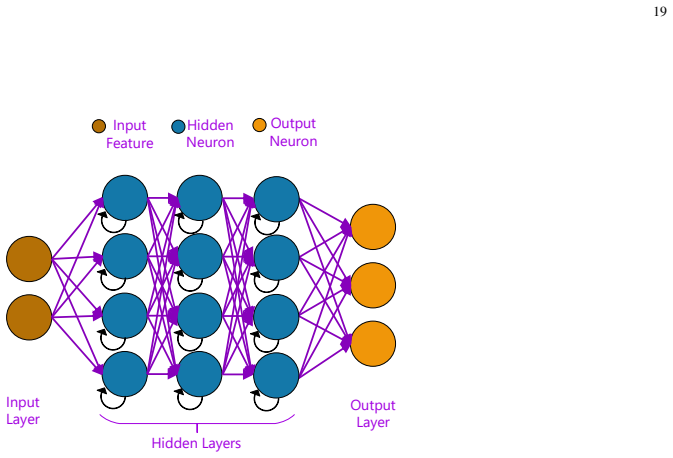
The organizing machinery is a two-level taxonomy: three application domains, namely optical fiber communication, optical communication networking, and optical wireless communication, each subdivided into machine learning (supervised, unsupervised, and reinforcement learning) and deep learning (DNN, RNN, CNN, and DRL). Six summary tables, Tables III through VIII, carry the argument; each row reports performance, complexity, train/test data type, objective, input features, metrics, and adopted algorithm for the reviewed studies. This structure is what lets the survey compare quantitative gains across heterogeneous setups.
What would settle it
Randomly sample a dozen quantitative entries in Tables III through VIII, read the original papers behind the cited markers, and recompute or repeat each measurement under the stated conditions; finding that the reproduced values or their experimental conditions diverge materially from the table entries would undercut the survey's comparative conclusions.
Extended reading notes
Core claim
The paper's central claim is that the literature on machine learning and deep learning for optical communication can be organized by algorithm rather than only by application, and that doing so exposes consistent patterns. Supervised and unsupervised learning methods, including support vector machines, artificial neural networks, k-nearest neighbors, clustering, principal and independent component analysis, regression, and ensemble learning, are widely used for nonlinear equalization, detection, quality-of-transmission estimation, and optical performance monitoring. Deep architectures, including deep neural networks, recurrent networks, convolutional networks, and deep reinforcement learning, push reported performance further in many cases while often claiming lower complexity than classical nonlinear equalizers. The survey asserts, with quantitative entries in Tables III through VIII, that these approaches improve Q-factor, bit error rate, OSNR estimation accuracy, spectrum utilization, blocking probability, throughput, and positioning error relative to conventional baselines. The discovery, if the survey is right, is not any single algorithm but the landscape itself: which algorithm families are attached to which optical tasks, and where the reported gains are largest.
Load-bearing premise
The position rests on the assumption that the performance numbers drawn from the cited studies are accurate and can be fairly compared across different simulators, fiber lengths, modulation formats, and data rates.
Editorial extensions
If this is right
- For nonlinear equalization in fiber links, the tables show several viable families, including SVM, ANN, clustering, RNN, CNN, and DRL-optimized Volterra equalizers, so a system designer can trade reported performance against complexity.
- For monitoring and quality-of-transmission estimation, image-based CNN and feature-based RF/DNN methods report high accuracy for joint OSNR and modulation-format identification, supporting consolidation of several monitoring functions into one model.
- For network-level control, RL and DRL agents are reported to reduce blocking probability and improve throughput or spectrum utilization in routing, spectrum assignment, handover, and power allocation problems.
- The survey's future-directions argument implies that continual learning, transfer learning, active learning, explainable AI, and open datasets are the next needed steps if these methods are to be deployed in dynamic optical networks.
Reading between the lines
- If the reported quantitative gains are taken at face value, the strongest cross-cutting pattern is that hybrid methods, such as DNN/RNN cascades for equalization and CNN/RF for monitoring, appear most often; this suggests a design heuristic the paper does not state explicitly.
- The comparability problem in the tables is the main editorial risk; a standardized benchmark suite with common fiber lengths, modulation formats, and link setups would sharpen the comparisons the survey can only approximate.
- The algorithm-centric map highlights gaps, for instance the sparse use of some unsupervised methods in optical networking and optical wireless communication relative to optical fiber communication; these gaps are candidate targets for the next wave of applications.
- A testable extension would be to use the survey's table entries as training data for a meta-analysis, regressing reported gains against algorithm family, data rate, distance, and simulation-versus-experiment status to see which factors predict success.
Signed reviews
Editorial analysis
A structured set of objections, weighed in public.
Referee Report
Summary. This manuscript surveys applications of machine learning (ML) and deep learning (DL) in three optical communication domains: optical fiber communication (OFC), optical communication networking (OCN), and optical wireless communication (OWC). It organizes roughly 282 cited works according to ML/DL algorithm families, provides schematic figures of each algorithm type, and presents six comparison tables (Tables III–VIII) that summarize performance, complexity, train/test data type, objective, input features, metrics, and adopted algorithms. The paper also reviews motivation, discusses challenges, and outlines future research directions.
Significance. If the comparison tables are faithful to the cited sources, this survey would provide a useful, up-to-date, algorithm-centric map of ML/DL in optical communications, with broader domain coverage than several prior surveys, particularly through its inclusion of OWC. The organizational contribution is real: grouping by algorithm rather than only by application helps readers compare methods. However, the survey's central value is explicitly claimed to be its quantitative/qualitative comparison tables, so the reliability of those tables is load-bearing. The internal inconsistencies identified below directly affect that reliability and must be resolved before the survey can serve its stated purpose.
major comments (4)
- [Section III.A / Table V, row [104]] The text states that the SVM-based QoT estimator in [104] achieves 99.95% accuracy in lightpath classification, while Table V reports 95-99% accuracy for the same reference. These numbers are mutually incompatible. Because Table V is one of the key quantitative comparison tables that the paper presents as a contribution, this discrepancy is not cosmetic. Please correct the entry and audit other table-text pairs for the same reference; for example, reference [133] is reported in Table V as detecting 95% of malicious nodes, while the text in Section III.A reports up to 90% accuracy for the K-means-based scheme.
- [Table III, row [131] / Section III.A] Reference [131] is listed in Table III as an ML application in OFC, with a fault-localization objective based on optical time-domain reflectometry measurements, but the text discusses the same work in Section III.A under OCN regression algorithms. This is a domain misplacement in the paper's central taxonomy. Since the survey's contribution includes a clear algorithm/domain classification, the placement must be corrected and other table entries checked for similar cross-domain inconsistencies.
- [Table VI, row [174] / Section III.B] Table VI reports for reference [174] a mean absolute error of 0.18 dB for OSNR estimation, while the text in Section III.B states that the same reference achieved a MAE of 0.05 dB. Both cannot be correct for the same reported result. The discrepancy changes the stated performance gain and undermines confidence in the quantitative summaries; please reconcile the entry against the cited work.
- [Fig. 1] Several branches of the taxonomy have empty reference slots, including PCA in OFC, policy-based and value-based RL in OFC, ensemble learning in OFC, hierarchical clustering in OCN, ICA in OCN, and PCA in OWC. If no works exist in these categories, the survey should state that explicitly; if works were omitted, the 'comprehensive' claim is weakened. As printed, the unexplained gaps leave the central organizational figure incomplete.
minor comments (5)
- [Section II.B heading] The heading 'Deap Learning' contains a typo; it should be 'Deep Learning'.
- [Section IV.A] The paragraph beginning 'hese RL-based approaches...' is missing the initial T; it should be 'These RL-based approaches'.
- [Fig. 13] The text 'Receive Rewrard and New State' contains a typo; it should be 'Receive Reward and New State'.
- [Section I.C] The phrase 'OFC, OCW, and OCN' uses 'OCW', which is not defined in the acronym list; this should be 'OWC'.
- [Table I] The acronym table lists both 'Principal Component PC' and 'Principal Component Analysis PCA'; this is redundant and potentially confusing.
Circularity Check
No circularity: the paper is a survey that summarizes external results, and its claimed contribution is organizational rather than a derivation or prediction fitted to its own inputs.
full rationale
The manuscript is a survey paper with no derivation chain, fitted parameters, or first-principles predictions. Its stated contributions are (1) an up-to-date taxonomy of ML/DL applications in OFC, OCN, and OWC, (2) summaries of roughly 282 external studies, and (3) quantitative/qualitative comparison tables. Each Section II–IV describes algorithms and then reports results cited from prior work; no equation is derived from a premise that relies on the conclusion, and no fitted quantity is renamed as a prediction. The paper does self-cite the authors' own previous surveys in Table II, but that self-citation is used only to position the survey relative to prior reviews, not to justify a load-bearing technical claim. The skeptical concern about internally inconsistent table entries (e.g., Table V row [104] reporting 95–99% accuracy while Section III.A states 99.95%; Table VI row [174] reporting 0.18 dB MAE while the text reports 0.05 dB) is a correctness/fidelity risk in the survey's secondary reporting, not a circularity of derivation. Because the survey's content is organizational and externally sourced, the circularity score is 0.
Assumptions & free parameters
assumptions (3)
- domain assumption Reported performance gains in the surveyed papers are accurate as cited.
- domain assumption The ML/DL taxonomy (SL/USL/RL and DNN/RNN/CNN/DRL) is a meaningful organizational structure for the literature.
- domain assumption The cited set of 282 papers is representative enough to support the claim of a comprehensive survey.
Cite this review
Pith. "Pith review of A Survey on Machine and Deep Learning for Optical Communications." pith.science (2026). https://pith.science/paper/NFNQQ2KD
@misc{pith2026241217826,
  author       = {Pith},
  title        = {Pith review of: A Survey on Machine and Deep Learning for Optical Communications},
  year         = {2026},
  howpublished = {\url{https://pith.science/paper/NFNQQ2KD}},
  note         = {Machine review of arXiv:2412.17826}
}
read the original abstract
The ever-growing complexity of optical communication systems and networks demands sophisticated methodologies to extract meaningful insights from vast amounts of heterogeneous data. Machine learning (ML) and deep learning (DL) have emerged as frontrunners in this domain, offering a transformative approach to data analysis and enabling automated self-configuration in optical communication systems. The adoption of ML and DL in optical communication is driven by the exponential increase in system and link complexity, stemming from the introduction of numerous adjustable and interdependent parameters. This is particularly evident in areas like coherent transceivers, advanced digital signal processing, optical performance monitoring, cross-layer network optimizations, and nonlinearity compensation. While the potential benefits of ML and DL are immense, the extent to which these methods can revolutionize optical communication remains largely unexplored. Additionally, many ML and DL algorithms have yet to be deployed in this field, highlighting the nascent nature of this research area.
Figures


Figures from the paper (14 more)




Reference graph
Works this paper leans on
-
[104]
A SVM Approach for Lightpath QoT Estimation in Optical Transport Networks
J. Mata, I. de Miguel, R. J. Dur ´an, J. C. Aguado, N. Merayo, L. Ruiz, P. Fern ´andez, R. M. Lorenzo, and E. J. Abril, “A SVM Approach for Lightpath QoT Estimation in Optical Transport Networks”, in 2017 IEEE International Conference on Big Data (Big Data), IEEE , December 2017, pp. 4795-4797
2017
-
[174]
Long Short-Term Memory Neural Network (LSTM-NN) Enabled Accurate Optical Signal-to-Noise Ratio (OSNR) Monitoring
C. Wang, S. Fu, Z. Xiao, M. Tang, and D. Liu, “Long Short-Term Memory Neural Network (LSTM-NN) Enabled Accurate Optical Signal-to-Noise Ratio (OSNR) Monitoring”, Journal of Lightwave Technology , vol. 37, no. 16, pp. 4140-4146, 2019
2019
-
[131]
Predicting the actual location of faults in underground optical networks using linear regression
O. Nyarko-Boateng, A. F. Adekoya, and B. A. Weyori, “Predicting the actual location of faults in underground optical networks using linear regression”, Engineering Reports, vol. 3, no. 3, eng212304, 2021
2021
-
[133]
A semi-supervised machine learning approach using K-means algorithm to prevent burst header packet flooding attack in optical burst switching network
M. K. H. Hossain, “A semi-supervised machine learning approach using K-means algorithm to prevent burst header packet flooding attack in optical burst switching network”, Baghdad Science Journal , vol. 16, no. 3 (Suppl.), pp. 0804-0804, 2019
2019
-
[1]
Supervised Learning
P. Cunningham, M. Cord, and S. J. Delany, “Supervised Learning”, in Machine Learning Techniques for Multimedia, Springer, Berlin, Heidelberg, 2008, pp. 21-49
2008
-
[2]
On-line Support Vector Machine Regression
M. Martin, “On-line Support Vector Machine Regression”, in European Conference on Machine Learning, Springer, Berlin, Heidelberg , August 2002, pp. 282-294
2002
-
[3]
Artificial Neural Networks
B. Yegnanarayana, “Artificial Neural Networks”, PHI Learning Pvt. Ltd. , 2009
2009
-
[4]
An Efficient Instance Selection Algorithm for k Nearest Neighbor Regression
Y . Song, J. Liang, J. Lu, and X. Zhao, “An Efficient Instance Selection Algorithm for k Nearest Neighbor Regression”, Neurocomputing, vol. 251, pp. 26-34, 2017
2017
Show all 283 references
-
[5]
Ensemble Learning
T. G. Dietterich, “Ensemble Learning”, The Handbook of Brain Theory and Neural Networks , vol. 2, no. 1, pp. 110-125, 2002. 57
2002
-
[6]
Linear Regression Analysis
G. A. Seber and A. J. Lee, “Linear Regression Analysis”, John Wiley & Sons , 2012
2012
-
[7]
Ridge regression: some simulations
A. E. Hoerl, R. W. Kannard, and K. F. Baldwin, “Ridge regression: some simulations”, Communications in Statistics—Theory and Methods, vol. 4, no. 2, pp. 105-123, 1975
1975
-
[8]
LASSO regression
J. Ranstam and J. A. Cook, “LASSO regression”, Journal of British Surgery , vol. 105, no. 10, pp. 1348-1348, 2018
2018
-
[9]
Unsupervised learning
Z. Ghahramani, “Unsupervised learning”, in Summer School on Machine Learning , pp. 72-112, Springer, Berlin, Heidelberg, Feb. 2003
2003
-
[10]
Introduction to HPC with MPI for Data Science
F. Nielsen, “Introduction to HPC with MPI for Data Science”, Springer, pp. 195-211, 2016
2016
-
[11]
Unsupervised K-means clustering algorithm
K. P. Sinaga and M. S. Yang, “Unsupervised K-means clustering algorithm”, IEEE Access, vol. 8, pp. 80716-80727, 2020
2020
-
[12]
What is the expectation maximization algorithm?
C. B. Do and S. Batzoglou, “What is the expectation maximization algorithm?”, Nature Biotechnology, vol. 26, no. 8, pp. 897-899, 2008
2008
-
[13]
Principal component analysis
H. Abdi and L. J. Williams, “Principal component analysis”, Wiley Interdisciplinary Reviews: Computational Statistics , vol. 2, no. 4, pp. 433-459, 2010
2010
-
[14]
Independent component analysis: an introduction
J. V . Stone, “Independent component analysis: an introduction”, Trends in Cognitive Sciences , vol. 6, no. 2, pp. 59-64, 2002
2002
-
[15]
Reinforcement learning
M. A. Wiering and M. Van Otterlo, “Reinforcement learning”, Adaptation, Learning, and Optimization , vol. 12, no. 3, p. 729, 2012
2012
-
[16]
Bridging the gap between value and policy based reinforcement learning
O. Nachum, M. Norouzi, K. Xu, and D. Schuurmans, “Bridging the gap between value and policy based reinforcement learning”, in Advances in Neural Information Processing Systems , vol. 30, 2017
2017
-
[17]
Deep learning
Y . LeCun, Y . Bengio, and G. Hinton, “Deep learning”, Nature, vol. 521, no. 7553, pp. 436-444, 2015
2015
-
[18]
Evaluating the visualization of what a deep neural network has learnt
W. Samek, A. Binder, G. Montavon, S. Lapuschkin, and K. R. M ¨uller, “Evaluating the visualization of what a deep neural network has learnt”, IEEE Transactions on Neural Networks and Learning Systems , vol. 28, no. 11, pp. 2660-2673, 2016
2016
-
[19]
Recurrent neural networks. Design and applications
L. R. Medsker and L. C. Jain, “Recurrent neural networks. Design and applications”, vol 5, pp. 64-67, 2001
2001
-
[20]
Understanding of a Convolutional Neural Network
S. Albawi, T. A. Mohammed and S. Al-Zawi, “Understanding of a Convolutional Neural Network”, 2017 International Conference on Engineering and Technology (ICET) , pp. 1-6, Aug. 2017
2017
-
[21]
Deep reinforcement learning: A brief survey
K. Arulkumaran, M. P. Deisenroth, M. Brundage, and A. A. Bharath, “Deep reinforcement learning: A brief survey”, IEEE Signal Processing Magazine, vol. 34, no. 6, pp. 26-38, 2017
2017
-
[22]
A Tutorial on Machine Learning for Failure Management in Optical Networks
F. Musumeci, C. Rottondi, G. Corani, S. Shahkarami, F. Cugini, and M. Tornatore, “A Tutorial on Machine Learning for Failure Management in Optical Networks”, Journal of Lightwave Technology , vol. 37, no. 16, pp. 4125-4139, 2019
2019
-
[23]
A Survey on Machine Learning Techniques for Routing Optimization in SDN
R. Amin, E. Rojas, A. Aqdus, S. Ramzan, D. Casillas-Perez, and J. M. Arco, “A Survey on Machine Learning Techniques for Routing Optimization in SDN”, IEEE Access, vol. 9, pp. 104582-104611, 2021
2021
-
[24]
Overview on Routing and Resource Allocation Based Machine Learning in Optical Networks
Y . Zhang, J. Xin, X. Li, and S. Huang, “Overview on Routing and Resource Allocation Based Machine Learning in Optical Networks”, Optical Fiber Technology, vol. 60, p. 102355, 2020
2020
-
[25]
Machine Learning for Network Automation: Overview, Architecture, and Applications [Invited Tutorial]
D. Rafique and L. Velasco, “Machine Learning for Network Automation: Overview, Architecture, and Applications [Invited Tutorial]”, Journal of Optical Communications and Networking , vol. 10, no. 10, pp. D126-D143, 2018
2018
-
[26]
Machine Learning for Intelligent Optical Networks: A Comprehensive Survey
R. Gu, Z. Yang, and Y . Ji, “Machine Learning for Intelligent Optical Networks: A Comprehensive Survey”, Journal of Network and Computer Applications, vol. 157, p. 102576, 2020
2020
-
[27]
Artificial Intelligence (AI) Methods in Optical Networks: A Comprehensive Survey
J. Mata, I. de Miguel, R. J. Duran, N. Merayo, S. K. Singh, A. Jukan, and M. Chamania, “Artificial Intelligence (AI) Methods in Optical Networks: A Comprehensive Survey”, Optical Switching and Networking , vol. 28, pp. 43-57, 2018
2018
-
[28]
An Overview on Application of Machine Learning Techniques in Optical Networks
F. Musumeci, C. Rottondi, A. Nag, I. Macaluso, D. Zibar, M. Ruffini, and M. Tornatore, “An Overview on Application of Machine Learning Techniques in Optical Networks”, IEEE Communications Surveys & Tutorials , vol. 21, no. 2, pp. 1383-1408, 2018
2018
-
[29]
An Optical Communication’s Perspective on Machine Learning and Its Applications
F. N. Khan, Q. Fan, C. Lu, and A. P. T. Lau, “An Optical Communication’s Perspective on Machine Learning and Its Applications”, Journal of Lightwave Technology , vol. 37, no. 2, pp. 493-516, 2019
2019
-
[30]
A Survey of Machine Learning Techniques Applied to Software Defined Networking (SDN): Research Issues and Challenges
J. Xie, F. R. Yu, T. Huang, R. Xie, J. Liu, C. Wang, and Y . Liu, “A Survey of Machine Learning Techniques Applied to Software Defined Networking (SDN): Research Issues and Challenges”, IEEE Communications Surveys & Tutorials , vol. 21, no. 1, pp. 393-430, 2018
2018
-
[31]
Artificial Intelligence in Optical Communications: From Machine Learning to Deep Learning
D. Wang and M. Zhang, “Artificial Intelligence in Optical Communications: From Machine Learning to Deep Learning”, Frontiers in Communications and Networks , vol. 2, p. 656786, 2021
2021
-
[32]
Harnessing Machine Learning for Fiber-Induced Nonlinearity Mitigation in Long-Haul Coherent Optical OFDM
E. Giacoumidis, Y . Lin, J. Wei, I. Aldaya, A. Tsokanos, and L. P. Barry, “Harnessing Machine Learning for Fiber-Induced Nonlinearity Mitigation in Long-Haul Coherent Optical OFDM”, Future Internet, vol. 11, no. 1, p. 2, 2018
2018
-
[33]
A Survey on QoT Prediction Using Machine Learning in Optical Networks
L. Zhang, X. Li, Y . Tang, J. Xin, and S. Huang, “A Survey on QoT Prediction Using Machine Learning in Optical Networks”, Optical Fiber Technology, vol. 68, p. 102804, 2022
2022
-
[34]
Machine Learning-Aided Optical Performance Monitoring Techniques: A Review
D. K. Tizikara, J. Serugunda, and A. Katumba, “Machine Learning-Aided Optical Performance Monitoring Techniques: A Review”, Frontiers in Communications and Networks , vol. 2, p. 756513, 2022. 58
2022
-
[35]
Nonlinear Decision Boundary Created by a Machine Learning-Based Classifier to Mitigate Nonlinear Phase Noise
D. Wang, M. Zhang, Z. Li, Y . Cui, J. Liu, Y . Yang, and H. Wang, “Nonlinear Decision Boundary Created by a Machine Learning-Based Classifier to Mitigate Nonlinear Phase Noise”, in 2015 European Conference on Optical Communication (ECOC), IEEE , September 2015, pp. 1-3
2015
-
[36]
An SVM-Based Detection for Coherent Optical APSK Systems with Nonlinear Phase Noise
Y . Han, S. Yu, M. Li, J. Yang, and W. Gu, “An SVM-Based Detection for Coherent Optical APSK Systems with Nonlinear Phase Noise”, IEEE Photonics Journal , vol. 6, no. 5, pp. 1-10, 2014
2014
-
[37]
Nonparameter Nonlinear Phase Noise Mitigation by Using M-ary Support Vector Machine for Coherent Optical Systems
M. Li, S. Yu, J. Yang, Z. Chen, Y . Han, and W. Gu, “Nonparameter Nonlinear Phase Noise Mitigation by Using M-ary Support Vector Machine for Coherent Optical Systems”, IEEE Photonics Journal , vol. 5, no. 6, pp. 7800312-7800312, 2013
2013
-
[38]
Combatting Nonlinear Phase Noise in Coherent Optical Systems with an Optimized Decision Processor Based on Machine Learning
D. Wang, M. Zhang, Z. Cai, Y . Cui, Z. Li, H. Han, M. Fu, and B. Luo, “Combatting Nonlinear Phase Noise in Coherent Optical Systems with an Optimized Decision Processor Based on Machine Learning”, Optics Communications, vol. 369, pp. 199-208, 2016
2016
-
[39]
Machine Learning Assisted Optical Interconnection
J. Du, L. Sun, G. Chen, and Z. He, “Machine Learning Assisted Optical Interconnection”, in 2017 Opto-Electronics and Communications Conference (OECC) and Photonics Global Conference (PGC), IEEE , July 2017, pp. 1-3
2017
-
[40]
Machine Learning Techniques for Optical Performance Monitoring from Directly Detected PDM-QAM Signals
J. Thrane, J. Wass, M. Piels, J. C. Diniz, R. Jones, and D. Zibar, “Machine Learning Techniques for Optical Performance Monitoring from Directly Detected PDM-QAM Signals”, Journal of Lightwave Technology , vol. 35, no. 4, pp. 868-875, 2017
2017
-
[41]
Research of Fiber-Optical Fault Diagnosis Based on Support Vector Machine (SVM) Mining
Z. Hui-Ping, H. Hong-Yan, and G. Meng-Xia, “Research of Fiber-Optical Fault Diagnosis Based on Support Vector Machine (SVM) Mining”, in 2014 Fifth International Conference on Intelligent Systems Design and Engineering Applications, IEEE , June 2014, pp. 803-807
2014
-
[42]
Bit-Based Support Vector Machine Nonlinear Detector for Millimeter-Wave Radio-over-Fiber Mobile Fronthaul Systems
Y . Cui, M. Zhang, D. Wang, S. Liu, Z. Li, and G. K. Chang, “Bit-Based Support Vector Machine Nonlinear Detector for Millimeter-Wave Radio-over-Fiber Mobile Fronthaul Systems”, Optics Express, vol. 25, no. 21, pp. 26186-26197, 2017
2017
-
[43]
Blind Modulation Format Identification Using Decision Tree Twin Support Vector Machine in Optical Communication System
X. Sun, S. Su, Z. Huang, Z. Zuo, X. Guo, and J. Wei, “Blind Modulation Format Identification Using Decision Tree Twin Support Vector Machine in Optical Communication System”, Optics Communications, vol. 438, pp. 67-77, 2019
2019
-
[44]
Equalization Algorithm Based on CMA and SVM for Carrierless Amplitude Phase Modulation in Optical Access Networks
Y . Sun, J. Hu, Z. Tian, X. Liu, and H. Lu, “Equalization Algorithm Based on CMA and SVM for Carrierless Amplitude Phase Modulation in Optical Access Networks”, in 2017 16th International Conference on Optical Communications and Networks (ICOCN), IEEE , August 2017, pp. 1-3
2017
-
[45]
Machine-Learning Detector Based on Support Vector Machine for 122-Gbps Multi-CAP Optical Communication System
L. Sun, J. Du, G. Chen, Z. He, X. Chen, and G. T. Reed, “Machine-Learning Detector Based on Support Vector Machine for 122-Gbps Multi-CAP Optical Communication System”, in 2017 Opto-Electronics and Communications Conference (OECC) and Photonics Global Conference (PGC), IEEE , ...
2017
-
[46]
Experimental Study of Support Vector Machine Based Nonlinear Equalizer for VCSEL Based Optical Interconnect
A. Liang, C. Yang, C. Zhang, Y . Liu, F. Zhang, Z. Zhang, and H. Li, “Experimental Study of Support Vector Machine Based Nonlinear Equalizer for VCSEL Based Optical Interconnect”, Optics Communications, vol. 427, pp. 641-647, 2018
2018
-
[47]
QAM Classification Methods by SVM Machine Learning for Improved Optical Interconnection
C. Wang, J. Du, G. Chen, H. Wang, L. Sun, K. Xu, B. Liu, and Z. He, “QAM Classification Methods by SVM Machine Learning for Improved Optical Interconnection”, Optics Communications, vol. 441, pp. 1-8, 2019
2019
-
[48]
Reduction of Nonlinear Intersubcarrier Intermixing in Coherent Optical OFDM by a Fast Newton-Based Support Vector Machine Nonlinear Equalizer
E. Giacoumidis, S. Mhatli, M. F. Stephens, A. Tsokanos, J. Wei, M. E. McCarthy, N. J. Doran, and A. D. Ellis, “Reduction of Nonlinear Intersubcarrier Intermixing in Coherent Optical OFDM by a Fast Newton-Based Support Vector Machine Nonlinear Equalizer”, Journal of Lightwave T...
2017
-
[49]
Nonlinear Blind Equalization for 16-QAM Coherent Optical OFDM Using Support Vector Machines
E. Giacoumidis, S. Mhatli, S. T. Le, I. Aldaya, M. E. McCarthy, A. D. Ellis, and B. J. Eggleton, “Nonlinear Blind Equalization for 16-QAM Coherent Optical OFDM Using Support Vector Machines”, in ECOC 2016; 42nd European Conference on Optical Communication, vDE , September 2016...
2016
-
[50]
Fiber Nonlinearity Equalizer Based on Support Vector Classification for Coherent Optical OFDM
T. Nguyen, S. Mhatli, E. Giacoumidis, L. Van Compernolle, M. Wuilpart, and P. M ´egret, “Fiber Nonlinearity Equalizer Based on Support Vector Classification for Coherent Optical OFDM”, IEEE Photonics Journal , vol. 8, no. 2, pp. 1-9, 2016
2016
-
[51]
Unsupervised Support Vector Machines for Nonlinear Blind Equalization in CO-OFDM
E. Giacoumidis, A. Tsokanos, M. Ghanbarisabagh, S. Mhatli, and L. P. Barry, “Unsupervised Support Vector Machines for Nonlinear Blind Equalization in CO-OFDM”, IEEE Photonics Technology Letters , vol. 30, no. 12, pp. 1091-1094, 2018
2018
-
[52]
Fiber Nonlinearity-Induced Penalty Reduction in CO-OFDM by ANN-Based Nonlinear Equalization
E. Giacoumidis, S. T. Le, M. Ghanbarisabagh, M. McCarthy, I. Aldaya, S. Mhatli, M. A. Jarajreh, P. A. Haigh, N. J. Doran, A. D. Ellis, and B. J. Eggleton, “Fiber Nonlinearity-Induced Penalty Reduction in CO-OFDM by ANN-Based Nonlinear Equalization”, Optics Letters, vol. 40, no...
2015
-
[53]
Traffic Prediction Based on Machine Learning for Elastic Optical Networks
M. Aibin, “Traffic Prediction Based on Machine Learning for Elastic Optical Networks”, Optical Switching and Networking , vol. 30, pp. 33-39, 2018
2018
-
[54]
Radial Basis Function Neural Network Nonlinear Equalizer for 16-QAM Coherent Optical OFDM
S. T. Ahmad and K. P. Kumar, “Radial Basis Function Neural Network Nonlinear Equalizer for 16-QAM Coherent Optical OFDM”, IEEE Photonics Technology Letters, vol. 28, no. 22, pp. 2507-2510, 2016
2016
-
[55]
Multi-Layer Perceptron Equalizer for Optical Communication Systems
T. F. de Sousa and M. A. Fernandes, “Multi-Layer Perceptron Equalizer for Optical Communication Systems”, in 2013 SBMO/IEEE MTT-S International Microwave Optoelectronics Conference (IMOC), IEEE , August 2013, pp. 1-5. 59
2013
-
[56]
Novel Suboptimal Approaches for Hyperparameter Tuning of Deep Neural Network [Under the Shelf of Optical Communication]
M. A. Amirabadi, M. H. Kahaei, and S. A. Nezamalhosseini, “Novel Suboptimal Approaches for Hyperparameter Tuning of Deep Neural Network [Under the Shelf of Optical Communication]”, Physical Communication, vol. 41, p. 101057, 2020
2020
-
[57]
Fibre Impairment Compensation Using Artificial Neural Network Equalizer for High-Capacity Coherent Optical OFDM Signals
M. A. K. Jarajreh, S. Rajbhandari, E. Giacoumidis, N. J. Doran, and Z. Ghassemlooy, “Fibre Impairment Compensation Using Artificial Neural Network Equalizer for High-Capacity Coherent Optical OFDM Signals”, in 2014 9th International Symposium on Communication Systems, Networks...
2014
-
[58]
Artificial Neural Network Nonlinear Equalizer for Coherent Optical OFDM
M. A. Jarajreh, E. Giacoumidis, I. Aldaya, S. T. Le, A. Tsokanos, Z. Ghassemlooy, and N. J. Doran, “Artificial Neural Network Nonlinear Equalizer for Coherent Optical OFDM”, IEEE Photonics Technology Letters , vol. 27, no. 4, pp. 387-390, 2015
2015
-
[59]
Self-Adaptive Erbium-Doped Fiber Amplifiers Using Machine Learning
E. D. A. Barboza, C. J. Bastos-Filho, J. F. Martins-Filho, U. C. de Moura, and J. R. de Oliveira, “Self-Adaptive Erbium-Doped Fiber Amplifiers Using Machine Learning”, in 2013 SBMO/IEEE MTT-S International Microwave Optoelectronics Conference (IMOC), IEEE , August 2013, pp. 1-5
2013
-
[60]
K-Nearest Neighbor Detector for Enhancing Performance of Optical Phase Conjugation System in the Presence of Nonlinear Phase Noise
L. Jiang, L. Yan, A. Yi, Y . Pan, W. Pan, and B. Luo, “K-Nearest Neighbor Detector for Enhancing Performance of Optical Phase Conjugation System in the Presence of Nonlinear Phase Noise”, IEEE Photonics Journal , vol. 10, no. 2, pp. 1-8, 2018
2018
-
[61]
Nonlinearity Mitigation Using a Machine Learning Detector Based on k-Nearest Neighbors
D. Wang, M. Zhang, M. Fu, Z. Cai, Z. Li, H. Han, Y . Cui, and B. Luo, “Nonlinearity Mitigation Using a Machine Learning Detector Based on k-Nearest Neighbors”, IEEE Photonics Technology Letters , vol. 28, no. 19, pp. 2102-2105, 2016
2016
-
[62]
Non-data-aided k-nearest neighbors technique for optical fiber nonlinearity mitigation
J. Zhang, M. Gao, W. Chen, and G. Shen, “Non-data-aided k-nearest neighbors technique for optical fiber nonlinearity mitigation”, Journal of Lightwave Technology, vol. 36, no. 17, pp. 3564-3572, 2018
2018
-
[63]
Sparse identification for nonlinear optical communication systems: SINO method
M. Sorokina, S. Sygletos, and S. Turitsyn, “Sparse identification for nonlinear optical communication systems: SINO method”, Optics Express, vol. 24, no. 26, pp. 30433-30443, 2016
2016
-
[64]
Sparse identification for nonlinear optical communication systems
Sorokina, M., Sygletos, S., and Turitsyn, S., “Sparse identification for nonlinear optical communication systems”, in 2017 19th International Conference on Transparent Optical Networks (ICTON) , July 2017, pp. 1-4
2017
-
[65]
Fractionally spaced clustering based equalizer for optical channels
K. Georgoulakis, C. Matrakidis, G. O. Glentis, and A. Stavdas, “Fractionally spaced clustering based equalizer for optical channels”, in Signal Processing in Photonic Communications , 2010, p. SPWC3
2010
-
[66]
Blind nonlinearity equalization by machine-learning-based clustering for single-and multi-channel coherent optical OFDM
E. Giacoumidis, A. Matin, J. Wei, N. J. Doran, L. P. Barry, and X. Wang, “Blind nonlinearity equalization by machine-learning-based clustering for single-and multi-channel coherent optical OFDM”, Journal of Lightwave Technology , vol. 36, no. 3, pp. 721-727, 2018
2018
-
[67]
Mitigation of time-varying distortions in Nyquist-WDM systems using machine learning
J. J. G. Torres, S. Varughese, v. A. Thomas, A. Chiuchiarelli, S. E. Ralph, A. M. C. Soto, and N. G. Gonz ´alez, “Mitigation of time-varying distortions in Nyquist-WDM systems using machine learning”, Optical Fiber Technology, vol. 38, pp. 130-135, 2017
2017
-
[68]
DBSCAN for nonlinear equalization in high-capacity multi-carrier optical communications
E. Giacoumidis, Y . Lin, and L. P. Barry, “DBSCAN for nonlinear equalization in high-capacity multi-carrier optical communications”, arXiv preprint arXiv:1902.01198 , 2019
1902 arXiv
-
[69]
A Machine Learning-Based Detection Technique for Optical Fiber Nonlinearity Mitigation
A. Amari, X. Lin, O. A. Dobre, R. Venkatesan, and A. Alvarado, “A Machine Learning-Based Detection Technique for Optical Fiber Nonlinearity Mitigation”, IEEE Photonics Technology Letters , vol. 31, no. 22, pp. 1836-1839, 2019
2019
-
[70]
K-means-clustering-based fiber nonlinearity equalization techniques for 64-QAM coherent optical communication system
J. Zhang, W. Chen, M. Gao, and G. Shen, “K-means-clustering-based fiber nonlinearity equalization techniques for 64-QAM coherent optical communication system”, Optics Express, vol. 25, no. 22, pp. 27570-27580, 2017
2017
-
[71]
Spectrally efficient digitized radio-over-fiber system with K-means clustering-based multi-dimensional quantization
L. Zhang, X. Pang, O. Ozolins, A. Udalcovs, S. Popov, S. Xiao, W. Hu, and J. Chen, “Spectrally efficient digitized radio-over-fiber system with K-means clustering-based multi-dimensional quantization”, Optics Letters, vol. 43, no. 7, pp. 1546-1549, 2018
2018
-
[72]
Optical phase-modulated radio-over-fiber links with K-means algorithm for digital demodulation of 8PSK subcarrier multiplexed signals
N. G. Gonzalez, D. Zibar, X. Yu, and I. T. Monroy, “Optical phase-modulated radio-over-fiber links with K-means algorithm for digital demodulation of 8PSK subcarrier multiplexed signals”, in Optical Fiber Communication Conference , 2010, p. OML3
2010
-
[73]
Experimental 2.5-Gb/s QPSK WDM Phase-Modulated Radio-Over-Fiber Link With Digital Demodulation by a K-Means Algorithm
N. G. Gonzalez, D. Zibar, A. Caballero, and I. T. Monroy, “Experimental 2.5-Gb/s QPSK WDM Phase-Modulated Radio-Over-Fiber Link With Digital Demodulation by a K-Means Algorithm”, IEEE Photonics Technology Letters , vol. 22, no. 5, pp. 335-337, 2010
2010
-
[74]
Application of machine learning techniques for amplitude and phase noise characterization
D. Zibar, L. H. H. de Carvalho, M. Piels, A. Doberstein, J. Diniz, B. Nebendahl, C. Franciscangelis, J. Estaran, H. Haisch, N. G. Gonzalez, and J. C. R. de Oliveira, “Application of machine learning techniques for amplitude and phase noise characterization”, Journal of Lightwa...
2015
-
[75]
Machine learning techniques in optical communication
D. Zibar, M. Piels, R. Jones, and C. G. Sch ¨aeffer, “Machine learning techniques in optical communication”, Journal of Lightwave Technology, vol. 34, no. 6, pp. 1442-1452, 2016
2016
-
[76]
Optical Nonlinear Phase Noise Compensation for 9 × 32-Gbaud PolDM-16 QAM Transmission Using a Code-Aided Expectation-Maximization Algorithm
C. Pan, H. B ¨ulow, W. Idler, L. Schmalen, and F. R. Kschischang, “Optical Nonlinear Phase Noise Compensation for 9 × 32-Gbaud PolDM-16 QAM Transmission Using a Code-Aided Expectation-Maximization Algorithm”, Journal of Lightwave Technology , vol. 33, no. 17, pp. 3679-3686, 2015
2015
-
[77]
Blind equalization in optical communications using independent component analysis
A. Nafta, P. Johannisson, and M. Shtaif, “Blind equalization in optical communications using independent component analysis”, Journal of Lightwave Technology, vol. 31, no. 12, pp. 2043-2049, 2013. 60
2013
-
[78]
Polarization demultiplexing based on independent component analysis in optical coherent receivers
H. Zhang, Z. Tao, L. Liu, S. Oda, T. Hoshida, and J. C. Rasmussen, “Polarization demultiplexing based on independent component analysis in optical coherent receivers”, in 2008 34th European Conference on Optical Communication , pp. 1-2, September 2008
2008
-
[79]
Channel equalization in optical OFDM systems using independent component analysis
X. Li, W. D. Zhong, A. Alphones, C. Yu, and Z. Xu, “Channel equalization in optical OFDM systems using independent component analysis”, Journal of Lightwave Technology , vol. 32, no. 18, pp. 3206-3214, 2014
2014
-
[80]
Deep learning for interference cancellation in non-orthogonal signal based optical communication systems
T. Xu, T. Xu, and I. Darwazeh, “Deep learning for interference cancellation in non-orthogonal signal based optical communication systems”, in 2018 Progress in Electromagnetics Research Symposium (PIERS-Toyama) , pp. 241-248, August 2018
2018
-
[81]
Exceeding the nonlinear Shannon-limit in coherent optical communications using 3D adaptive machine learning
E. Giacoumidis, J. Wei, I. Aldaya, and L. P. Barry, “Exceeding the nonlinear Shannon-limit in coherent optical communications using 3D adaptive machine learning”, arXiv preprint arXiv:1802.09120 , 2018
2018 arXiv
-
[82]
Nonlinear interference mitigation via deep neural networks
C. H ¨ager and H. D. Pfister, “Nonlinear interference mitigation via deep neural networks”, in 2018 Optical Fiber Communications Conference and Exposition (OFC) , pp. 1-3, March 2018
2018
-
[83]
MIMO detection using a deep learning neural network in a mode division multiplexing optical transmission system
B. Poudel, J. Oshima, H. Kobayashi, and K. Iwashita, “MIMO detection using a deep learning neural network in a mode division multiplexing optical transmission system”, Optics Communications, vol. 440, pp. 41-48, 2019
2019
-
[84]
End-to-end deep learning of optical fiber communications
B. Karanov, M. Chagnon, F. Thouin, T. A. Eriksson, H. B ¨ulow, D. Lavery, P. Bayvel, and L. Schmalen, “End-to-end deep learning of optical fiber communications”, Journal of Lightwave Technology , vol. 36, no. 20, pp. 4843-4855, 2018
2018
-
[85]
Machine learning-based Raman amplifier design
D. Zibar, A. Ferrari, v. Curri, and A. Carena, “Machine learning-based Raman amplifier design”, in Optical Fiber Communication Conference, pp. M1J-1, March 2019
2019
-
[86]
End-to-end deep learning for joint geometric-probabilistic constellation shaping in FMF system
M. A. Amirabadi, M. H. Kahaei, and S. A. Nezamalhosseini, “End-to-end deep learning for joint geometric-probabilistic constellation shaping in FMF system”, Physical Communication, vol. 55, p. 101903, 2022
2022
-
[87]
End-to-End Optimized Transmission over Dispersive Intensity-Modulated Channels Using Bidirectional Recurrent Neural Networks
B. Karanov, D. Lavery, P. Bayvel, and L. Schmalen, “End-to-End Optimized Transmission over Dispersive Intensity-Modulated Channels Using Bidirectional Recurrent Neural Networks”, Optics express, vol. 27, no. 14, pp. 19650-19663, 2019
2019
-
[88]
An introduction to deep learning for the physical layer
T. O’Shea and J. Hoydis, “An introduction to deep learning for the physical layer”, IEEE Transactions on Cognitive Communications and Networking, vol. 3, no. 4, pp. 563-575, 2017
2017
-
[89]
Deep learning of geometric constellation shaping including fiber nonlinearities
R. T. Jones, T. A. Eriksson, M. P. Yankov, and D. Zibar, “Deep learning of geometric constellation shaping including fiber nonlinearities”, in 2018 European Conference on Optical Communication (ECOC) , pp. 1-3, September 2018
2018
-
[90]
Achievable information rates for nonlinear fiber communication via end-to-end autoencoder learning
S. Li, C. H ¨ager, N. Garcia, and H. Wymeersch, “Achievable information rates for nonlinear fiber communication via end-to-end autoencoder learning”, in 2018 European Conference on Optical Communication (ECOC) , pp. 1-3, September 2018
2018
-
[91]
Geometric constellation shaping for fiber optic communication systems via end-to-end learning
R. T. Jones, T. A. Eriksson, M. P. Yankov, B. J. Puttnam, G. Rademacher, R. S. Luis, and D. Zibar, “Geometric constellation shaping for fiber optic communication systems via end-to-end learning”, arXiv preprint arXiv:1810.00774 , 2018
-
[92]
Low Computationally Complex Recurrent Neural Network for High Speed Optical Fiber Transmission
Q. Zhou, C. Yang, A. Liang, X. Zheng, and Z. Chen, “Low Computationally Complex Recurrent Neural Network for High Speed Optical Fiber Transmission”, Optics Communications, vol. 441, pp. 121-126, 2019
2019
-
[93]
Cascade Recurrent Neural Network Enabled 100-Gb/s PAM4 Short-Reach Optical Link Based on DML
Z. Xu, C. Sun, T. Ji, H. Ji and W. Shieh, “Cascade Recurrent Neural Network Enabled 100-Gb/s PAM4 Short-Reach Optical Link Based on DML”, in Optical Fiber Communication Conference , pp. W2A-45, 2020
2020
-
[94]
Cascade Recurrent Neural Network-Assisted Nonlinear Equalization for a 100 Gb/s PAM4 Short-Reach Direct Detection System
Z. Xu, C. Sun, T. Ji, J. H. Manton and W. Shieh, “Cascade Recurrent Neural Network-Assisted Nonlinear Equalization for a 100 Gb/s PAM4 Short-Reach Direct Detection System”, Optics Letters, vol. 45, no. 15, pp. 4216-4219, 2020
2020
-
[95]
Efficient Deep Learning of Nonlinear Fiber-Optic Communications Using a Convolutional Recurrent Neural Network
A. Shahkarami, M. I. Yousefi, and Y . Jaou ¨en, “Efficient Deep Learning of Nonlinear Fiber-Optic Communications Using a Convolutional Recurrent Neural Network”, 2021 20th IEEE International Conference on Machine Learning and Applications (ICMLA) , pp. 668-673, Dec. 2021
2021
-
[96]
Joint Equalization of Linear and Nonlinear Impairments for PAM4 Short-Reach Direct Detection Systems
Z. Xu, C. Sun, J. H. Manton and W. Shieh, “Joint Equalization of Linear and Nonlinear Impairments for PAM4 Short-Reach Direct Detection Systems”, IEEE Photonics Technology Letters , vol. 33, no. 9, pp. 425-428, May1, 2021
2021
-
[97]
Feedforward and Recurrent Neural Network-Based Transfer Learning for Nonlinear Equalization in Short-Reach Optical Links
Z. Xu, C. Sun, T. Ji, J. H. Manton and W. Shieh, “Feedforward and Recurrent Neural Network-Based Transfer Learning for Nonlinear Equalization in Short-Reach Optical Links”, Journal of Lightwave Technology , vol. 39, no. 2, pp. 475-480, 15 Dec. 2020
2020
-
[98]
Experimental Investigation of Deep Learning for Digital Signal Processing in Short Reach Optical Fiber Communications
B. Karanov, M. Chagnon, v. Aref, F. Ferreira, D. Lavery, P. Bayvel and L. Schmalen, “Experimental Investigation of Deep Learning for Digital Signal Processing in Short Reach Optical Fiber Communications”, 2020 IEEE Workshop on Signal Processing Systems (SiPS) , pp. 1-6, Oct. 2020
2020
-
[99]
Optical Fiber Communication Systems Based on End-to-End Deep Learning
B. Karanov, M. Chagnon, v. Aref, D. Lavery, P. Bayvel, and L. Schmalen, “Optical Fiber Communication Systems Based on End-to-End Deep Learning”, 2020 IEEE Photonics Conference (IPC) , pp. 1-2, Oct. 2020
2020
-
[100]
Performance and Complexity Analysis of Bi-Directional Recurrent Neural Network Models Versus V olterra Nonlinear Equalizers in Digital Coherent Systems
S. Deligiannidis, C. Mesaritakis and A. Bogris, “Performance and Complexity Analysis of Bi-Directional Recurrent Neural Network Models Versus V olterra Nonlinear Equalizers in Digital Coherent Systems”, Journal of Lightwave Technology , vol. 39, no. 18, pp. 5791-5798, 15 Sept....
2021
-
[101]
CNN-Based Few-Mode Fiber Modal Decomposition Method Using Digital Holography
Z. H. Zhu, Y . Y . Xiao and R. M. Yao, “CNN-Based Few-Mode Fiber Modal Decomposition Method Using Digital Holography”, Applied Optics, vol. 60, no. 24, pp. 7400-7405, 2021
2021
-
[102]
OAM Mode Division Multiplexing Based IM/DD Transmission With CNN Equalizer
F. Wang, R. Gao, H. Chang, Y . Cui, Z. Li, S. Zhou, Q. Zhang, F. Tian, Q. Tian, Y . Wan and L. Yan, “OAM Mode Division Multiplexing Based IM/DD Transmission With CNN Equalizer”, in 2021 Asia Communications and Photonics Conference (ACP) , pp. 1-3, Oct. 2021
2021
-
[103]
Automatic optimization of V olterra equalizer with deep reinforcement learning for intensity-modulated direct-detection optical communications
Y . Xu, L. Huang, W. Jiang, L. Xue, W. Hu, and L. Yi, “Automatic optimization of V olterra equalizer with deep reinforcement learning for intensity-modulated direct-detection optical communications”, Journal of Lightwave Technology, vol. 40, no. 16, pp. 5395-5406, 2022
2022
-
[105]
Failure Prediction Using Machine Learning and Time Series in Optical Network
Z. Wang, M. Zhang, D. Wang, C. Song, M. Liu, J. Li, L. Lou, and Z. Liu, “Failure Prediction Using Machine Learning and Time Series in Optical Network”, Optics Express, vol. 25, no. 16, pp. 18553-18565, 2017
2017
-
[106]
Optical Performance Monitoring Using Artificial Neural Network Trained with Asynchronous Amplitude Histograms
T. S. R. Shen, K. Meng, A. P. T. Lau, and Z. Y . Dong, “Optical Performance Monitoring Using Artificial Neural Network Trained with Asynchronous Amplitude Histograms”, IEEE Photonics Technology Letters , vol. 22, no. 22, pp. 1665-1667, 2010
2010
-
[107]
ANN-Based Optical Performance Monitoring of QPSK Signals Using Parameters Derived from Balanced-Detected Asynchronous Diagrams
X. Wu, J. A. Jargon, L. Paraschis, and A. E. Willner, “ANN-Based Optical Performance Monitoring of QPSK Signals Using Parameters Derived from Balanced-Detected Asynchronous Diagrams”, IEEE Photonics Technology Letters , vol. 23, no. 4, pp. 248-250, 2011
2011
-
[108]
Machine Learning Based Linear and Nonlinear Noise Estimation
F. V . Caballero, D. J. Ives, C. Laperle, D. Charlton, Q. Zhuge, M. O’Sullivan, and S. J. Savory, “Machine Learning Based Linear and Nonlinear Noise Estimation”, Journal of Optical Communications and Networking , vol. 10, no. 10, pp. D42-D51, 2018
2018
-
[109]
Quality of Transmission Prediction with Machine Learning for Dynamic Operation of Optical WDM Networks
P. Samadi, D. Amar, C. Lepers, M. Lourdiane, and K. Bergman, “Quality of Transmission Prediction with Machine Learning for Dynamic Operation of Optical WDM Networks”, in 2017 European Conference on Optical Communication (ECOC), IEEE , September 2017, pp. 1-3
2017
-
[110]
Applications of Artificial Neural Networks in Optical Performance Monitoring
X. Wu, J. A. Jargon, R. A. Skoog, L. Paraschis, and A. E. Willner, “Applications of Artificial Neural Networks in Optical Performance Monitoring”, Journal of Lightwave Technology , vol. 27, no. 16, pp. 3580-3589, 2009
2009
-
[111]
Optical Performance Monitoring in 40-Gbps Optical Duobinary System Using Artificial Neural Networks Trained with Reconstructed Eye Diagram Parameters
J. S. Lai, A. Y . Yang, L. Zuo, and Y . N. Sun, “Optical Performance Monitoring in 40-Gbps Optical Duobinary System Using Artificial Neural Networks Trained with Reconstructed Eye Diagram Parameters”, in Asia Communications and Photonics Conference and Exhibition, Optica Publi...
2011
-
[112]
Multiple-Impairment Monitoring for 40-Gbps RZ-OOK Using Artificial Neural Networks Trained with Reconstructed Eye Diagram Parameters
J. Lai, A. Yang, and Y . Sun, “Multiple-Impairment Monitoring for 40-Gbps RZ-OOK Using Artificial Neural Networks Trained with Reconstructed Eye Diagram Parameters”, in 2011 International Quantum Electronics Conference (IQEC) and Conference on Lasers and Electro-Optics (CLEO) ...
2011
-
[113]
Experimental Comparison of Performance Monitoring Using Neural Networks Trained with Parameters Derived from Delay-Tap Plots and Eye Diagrams
X. Wu, J. A. Jargon, C. M. Wang, and A. E. Willner, “Experimental Comparison of Performance Monitoring Using Neural Networks Trained with Parameters Derived from Delay-Tap Plots and Eye Diagrams”, in National Fiber Optic Engineers Conference, Optica Publishing Group, March 201...
2010
-
[114]
Optical Performance Monitoring Using Artificial Neural Networks Trained with Empirical Moments of Asynchronously Sampled Signal Amplitudes
F. N. Khan, T. S. R. Shen, Y . Zhou, A. P. T. Lau, and C. Lu, “Optical Performance Monitoring Using Artificial Neural Networks Trained with Empirical Moments of Asynchronously Sampled Signal Amplitudes”, IEEE Photonics Technology Letters , vol. 24, no. 12, pp. 982-984, 2012
2012
-
[115]
Applying Neural Networks in Optical Communication Systems: Possible Pitfalls
T. A. Eriksson, H. B ¨ulow, and A. Leven, “Applying Neural Networks in Optical Communication Systems: Possible Pitfalls”, IEEE Photonics Technology Letters, vol. 29, no. 23, pp. 2091-2094, 2017
2017
-
[116]
Modulation Format Identification in Heterogeneous Fiber-Optic Networks Using Artificial Neural Networks
F. N. Khan, Y . Zhou, A. P. T. Lau, and C. Lu, “Modulation Format Identification in Heterogeneous Fiber-Optic Networks Using Artificial Neural Networks”, Optics Express, vol. 20, no. 11, pp. 12422-12431, 2012
2012
-
[117]
Application of Machine Learning in Fiber Nonlinearity Modeling and Monitoring for Elastic Optical Networks
Q. Zhuge, X. Zeng, H. Lun, M. Cai, X. Liu, L. Yi, and W. Hu, “Application of Machine Learning in Fiber Nonlinearity Modeling and Monitoring for Elastic Optical Networks”, Journal of Lightwave Technology , vol. 37, no. 13, pp. 3055-3063, 2019
2019
-
[118]
Experimental Demonstration of Machine-Learning-Aided QoT Estimation in Multi-Domain Elastic Optical Networks with Alien Wavelengths
R. Proietti, X. Chen, K. Zhang, G. Liu, M. Shamsabardeh, A. Castro, L. Velasco, Z. Zhu, and S. B. Yoo, “Experimental Demonstration of Machine-Learning-Aided QoT Estimation in Multi-Domain Elastic Optical Networks with Alien Wavelengths”, IEEE/OSA Journal of Optical Communicati...
2019
-
[119]
Field Trial of Machine-Learning-Assisted and SDN-Based Optical Network Planning with Network-Scale Monitoring Database
S. Yan, F. N. Khan, A. Mavromatis, D. Gkounis, Q. Fan, F. Ntavou, K. Nikolovgenis, F. Meng, E. H. Salas, C. Guo, and C. Lu, “Field Trial of Machine-Learning-Assisted and SDN-Based Optical Network Planning with Network-Scale Monitoring Database”, in 2017 European Conference on ...
2017
-
[120]
Bandwidth Variable Transceivers with Artificial Neural 62 Network-Aided Provisioning and Capacity Improvement Capabilities in Meshed Optical Networks with Cascaded ROADM Filtering
X. Zhou, Q. Zhuge, M. Qiu, M. Xiang, F. Zhang, B. Wu, K. Qiu, and D. V . Plant, “Bandwidth Variable Transceivers with Artificial Neural 62 Network-Aided Provisioning and Capacity Improvement Capabilities in Meshed Optical Networks with Cascaded ROADM Filtering”, Optics Communi...
2018
-
[121]
Machine Intelligence in Allocating Bandwidth to Achieve Low-Latency Performance
L. Ruan and E. Wong, “Machine Intelligence in Allocating Bandwidth to Achieve Low-Latency Performance”, in 2018 International Conference on Optical Network Design and Modeling (ONDM), IEEE , May 2018, pp. 226-229
2018
-
[122]
Cognitive Assurance Architecture for Optical Network Fault Management
D. Rafique, T. Szyrkowiec, H. Grießer, A. Autenrieth, and J. P. Elbers, “Cognitive Assurance Architecture for Optical Network Fault Management”, Journal of Lightwave Technology , vol. 36, no. 7, pp. 1443-1450, 2018
2018
-
[123]
Machine Learning Techniques to Detecting and Preventing Jamming Attacks in Optical Networks
M. Bensalem, S. K. Singh, and A. Jukan, “Machine Learning Techniques to Detecting and Preventing Jamming Attacks in Optical Networks”, in 2019 IEEE Global Communications Conference (GLOBECOM), IEEE , December, 2019, pp. 1-6
2019
-
[124]
A Simple Joint Modulation Format Identification and OSNR Monitoring Scheme for IMDD OOFDM Transceivers Using K-Nearest Neighbor Algorithm
Q. Zhang, H. Zhou, Y . Jiang, B. Cao, Y . Li, Y . Song, J. Chen, J. Zhang, and M. Wang, “A Simple Joint Modulation Format Identification and OSNR Monitoring Scheme for IMDD OOFDM Transceivers Using K-Nearest Neighbor Algorithm”, Applied Sciences , vol. 9, no. 18, p. 3892, 2019
2019
-
[125]
Cognitive Tool for Estimating the QoT of New Lightpaths
S. Aladin and C. Tremblay, “Cognitive Tool for Estimating the QoT of New Lightpaths”, in 2018 Optical Fiber Communications Conference and Exposition (OFC), IEEE , March 2018, pp. 1-3
2018
-
[126]
Low-Complexity and Nonlinearity-Tolerant Modulation Format Identification Using Random Forest
Y . Zhao, C. Shi, D. Wang, X. Chen, L. Wang, T. Yang, and J. Du, “Low-Complexity and Nonlinearity-Tolerant Modulation Format Identification Using Random Forest”, IEEE Photonics Technology Letters , vol. 31, no. 11, pp. 853-856, 2019
2019
-
[127]
QoT Estimation for Unestablished Lightpaths Using Machine Learning
L. Barletta, A. Giusti, C. Rottondi, and M. Tornatore, “QoT Estimation for Unestablished Lightpaths Using Machine Learning”, in Optical Fiber Communication Conference, pp. Th1J-1, Optica Publishing Group , March 2017
2017
-
[128]
Machine-Learning Method for Quality of Transmission Prediction of Unestablished Lightpaths
C. Rottondi, L. Barletta, A. Giusti, and M. Tornatore, “Machine-Learning Method for Quality of Transmission Prediction of Unestablished Lightpaths”, IEEE/OSA Journal of Optical Communications and Networking , vol. 10, no. 2, pp. A286-A297, 2018
2018
-
[129]
Cost-Effective OSNR Monitoring with Large Chromatic Dispersion Tolerance Using Random Forest for Intermediate Nodes
J. Chai, Y . Zhao, X. Chen, J. Du, J. Li, T. Yang, L. Wang, and Z. Zhang, “Cost-Effective OSNR Monitoring with Large Chromatic Dispersion Tolerance Using Random Forest for Intermediate Nodes”, Optics Communications, vol. 479, p. 126469, 2021
2021
-
[130]
Low-Complexity and Joint Modulation Format Identification and OSNR Estimation Using Random Forest for Flexible Coherent Receivers
Y . Zhao, C. Shi, T. Yang, J. Du, Y . Zang, D. Wang, X. Chen, L. Wang, and Z. Zhang, “Low-Complexity and Joint Modulation Format Identification and OSNR Estimation Using Random Forest for Flexible Coherent Receivers”, Optics Communications, vol. 457, p. 124698, 2020
2020
-
[132]
Planning for passive optical network deployment with K-means clustering-based approach
H. Chen, Y . Li, and G. Shen, “Planning for passive optical network deployment with K-means clustering-based approach”, in Asia Communications and Photonics Conference , November 2015, pp. AM2E-2
2015
-
[134]
Multi-user detections for optical CDMA networks based on expectation-maximization algorithm
A. S. Motahari and M. Nasiri-Kenari, “Multi-user detections for optical CDMA networks based on expectation-maximization algorithm”, IEEE Transactions on Communications , vol. 52, no. 4, pp. 652-660, 2004
2004
-
[135]
Simultaneous optical performance monitoring and modulation format/bit-rate identification using principal component analysis
M. C. Tan, F. N. Khan, W. H. Al-Arashi, Y . Zhou, and A. P. T. Lau, “Simultaneous optical performance monitoring and modulation format/bit-rate identification using principal component analysis”, Journal of Optical Communications and Networking , vol. 6, no. 5, pp. 441-448, 2014
2014
-
[136]
Optical network traffic detection algorithm based on principal component analysis
S. Yang, X. Zhang, L. Xi, and C. Lu, “Optical network traffic detection algorithm based on principal component analysis”, 2011
2011
-
[137]
Convex formulation for kernel PCA and its use in semisupervised learning
C. M. Ala ´ız, M. Fanuel, and J. A. Suykens, “Convex formulation for kernel PCA and its use in semisupervised learning”, IEEE Transactions on Neural Networks and Learning Systems , vol. 29, no. 8, pp. 3863-3869, 2018
2018
-
[138]
Fiber optic perimeter detection based on principal component analysis
K. Peng, M. Zhang, Q. Li, H. Lv, X. Kong, and R. Zhang, “Fiber optic perimeter detection based on principal component analysis”, in 2016 15th International Conference on Optical Communications and Networks (ICOCN) , pp. 1-3, September 2016
2016
-
[139]
Automatic reference optical spectrum retrieval method for ultra-high resolution optical spectrum distortion analysis utilizing integrated machine learning techniques
H. Lu, S. Cui, C. Ke, and D. Liu, “Automatic reference optical spectrum retrieval method for ultra-high resolution optical spectrum distortion analysis utilizing integrated machine learning techniques”, Optics Express, vol. 25, no. 26, pp. 32491-32503, 2017
2017
-
[140]
Self-healing in transparent optical packet switching mesh networks: A reinforcement learning perspective
I. S. Razo-Zapata, G. Casta ˜n´on, and C. Mex-Perera, “Self-healing in transparent optical packet switching mesh networks: A reinforcement learning perspective”, Computer Networks, vol. 60, pp. 129-146, 2014
2014
-
[141]
An adaptive reinforcement learning-based approach to reduce blocking probability in bufferless OBS networks
A. Belbekkouche and A. Hafid, “An adaptive reinforcement learning-based approach to reduce blocking probability in bufferless OBS networks”, in 2007 IEEE International Conference on Communications , pp. 2377-2382, June 2007
2007
-
[142]
A reinforcement learning-based deflection routing scheme for buffer-less OBS networks
A. Belbekkouche, A. Hafid, and M. Gendreau, “A reinforcement learning-based deflection routing scheme for buffer-less OBS networks”, in IEEE GLOBECOM 2008 - 2008 IEEE Global Telecommunications Conference , pp. 1-6, November 2008. 63
2008
-
[143]
Adaptive Routing and Contention Resolution approaches for OBS networks with QoS differentiation
A. Belbekkouche, A. Hafid, and M. Gendreau, “Adaptive Routing and Contention Resolution approaches for OBS networks with QoS differentiation”, in 2009 Sixth International Conference on BroadBand Communications, Networks, and Systems , pp. 1-8, September 2009
2009
-
[144]
A multi-cast reinforcement learning algorithm for WDM optical networks
P. Garcia, A. Zsigri, and A. Guitton, “A multi-cast reinforcement learning algorithm for WDM optical networks”, in Proceedings of the 7th International Conference on Telecommunications, 2003. ConTEL 2003 , vol. 2, pp. 419-426, June 2003
2003
-
[145]
Reinforcement learning-based load shared sequential routing
F. Heidari, S. Mannor, and L. G. Mason, “Reinforcement learning-based load shared sequential routing”, in International Conference on Research in Networking , pp. 832-843, May 2007, Springer, Berlin, Heidelberg
2007
-
[146]
Machine-learning-based routing of QoS-constrained connectivity services in optical transport networks
C. Natalino, M. R. Raza, P. Batista, M. Santos, L. Wosinska, and P. Monti, “Machine-learning-based routing of QoS-constrained connectivity services in optical transport networks”, Proc. of OSA Advanced Photonics, NeW3F , vol. 5, 2018
2018
-
[147]
Learning process for reducing uncertainties on network parameters and design margins
E. Seve, J. Pesic, C. Delezoide, S. Bigo, and Y . Pointurier, “Learning process for reducing uncertainties on network parameters and design margins”, Journal of Optical Communications and Networking , vol. 10, no. 2, pp. A298-A306, 2018
2018
-
[148]
Distributed Reinforcement Learning based MAC protocols for autonomous cognitive secondary users
M. Bkassiny, S. K. Jayaweera, and K. A. Avery, “Distributed Reinforcement Learning based MAC protocols for autonomous cognitive secondary users”, in 2011 20th Annual Wireless and Optical Communications Conference (WOCC) , pp. 1-6, April 2011
2011
-
[149]
Context-Aware Indoor VLC/RF Heterogeneous Network Selection: Reinforcement Learning with Knowledge Transfer
Z. Du, C. Wang, Y . Sun, and G. Wu, “Context-Aware Indoor VLC/RF Heterogeneous Network Selection: Reinforcement Learning with Knowledge Transfer”, IEEE Access, vol. 6, pp. 33275-33284, 2018
2018
-
[150]
VLC and D2D heterogeneous network optimization: A reinforcement learning approach based on equilibrium problems with equilibrium constraints
N. Raveendran, H. Zhang, D. Niyato, F. Yang, J. Song, and Z. Han, “VLC and D2D heterogeneous network optimization: A reinforcement learning approach based on equilibrium problems with equilibrium constraints”, IEEE Transactions on Wireless Communications, vol. 18, no. 2, pp. 1...
2019
-
[151]
Reinforcement learning approach for hybrid WiFi-VLC networks
A. M. Alenezi and K. A. Hamdi, “Reinforcement learning approach for hybrid WiFi-VLC networks”, in 2020 IEEE 91st Vehicular Technology Conference (VTC2020-Spring), pp. 1-5, May 2020
2020
-
[152]
Reinforcement Learning Adaptive Vertical Handover Scheme for Hybrid VLC-IR Networks in Ship Cabins
J. Wu, D. Han, M. Zhang, and Z. Ghassemlooy, “Reinforcement Learning Adaptive Vertical Handover Scheme for Hybrid VLC-IR Networks in Ship Cabins”, in 2021 17th International Symposium on Wireless Communication Systems (ISWCS) , pp. 1-5, September 2021
2021
-
[153]
Reinforcement learning based load balancing for hybrid LiFi WiFi networks
R. Ahmad, M. D. Soltani, M. Safari, A. Srivastava, and A. Das, “Reinforcement learning based load balancing for hybrid LiFi WiFi networks”, IEEE Access, vol. 8, pp. 132273-132284, 2020
2020
-
[154]
Reinforcement learning-based near-optimal load balancing for heterogeneous LiFi WiFi network
R. Ahmad, M. D. Soltani, M. Safari, and A. Srivastava, “Reinforcement learning-based near-optimal load balancing for heterogeneous LiFi WiFi network”, IEEE Systems Journal , vol. 16, no. 2, pp. 3084-3095, 2021
2021
-
[155]
Load balancing of hybrid LiFi WiFi networks using reinforcement learning
R. Ahmad, M. D. Soltani, M. Safari, and A. Srivastava, “Load balancing of hybrid LiFi WiFi networks using reinforcement learning”, in 2020 IEEE 31st Annual International Symposium on Personal, Indoor and Mobile Radio Communications , pp. 1-6, 2020
2020
-
[156]
A reinforcement learning framework for path selection and wavelength selection in optical burst switched networks
Y . V . Kiran, T. Venkatesh, and C. S. R. Murthy, “A reinforcement learning framework for path selection and wavelength selection in optical burst switched networks”, IEEE Journal on Selected Areas in Communications , vol. 25, no. 9, pp. 18-26, 2007
2007
-
[157]
Reinforcement learning based path selection and wavelength selection in optical burst switched networks
Y . V . Kiran, T. Venkatesh, and C. S. R. Murthy, “Reinforcement learning based path selection and wavelength selection in optical burst switched networks”, in 2006 3rd International Conference on BroadBand Communications, Networks and Systems , pp. 1-8, October 2006
2006
-
[158]
A multi-agent reinforcement learning approach to path selection in optical burst switching networks
Y . V . Kiran, T. Venkatesh, and C. S. R. Murthy, “A multi-agent reinforcement learning approach to path selection in optical burst switching networks”, in 2009 IEEE International Conference on Communications , pp. 1-5, June 2009
2009
-
[159]
Virtual Network Embedding in Fiber-Wireless Access Networks for Resource-Efficient IoT Service Provisioning
Y . Liu, Y . Yang, P. Han, Z. Shao, and C. Li, “Virtual Network Embedding in Fiber-Wireless Access Networks for Resource-Efficient IoT Service Provisioning”, IEEE Access, vol. 7, pp. 65506-65517, 2019
2019
-
[160]
Reinforcement learning based network selection for hybrid VLC and RF systems
C. Wang, G. Wu, and Z. Du, “Reinforcement learning based network selection for hybrid VLC and RF systems”, in MATEC Web of Conferences, vol. 173, p. 03014, 2018
2018
-
[161]
QL algorithm for resource allocation in WDMA- based optical wireless communication networks
A. S. Elgamal, O. Z. Alsulami, A. A. Qidan, T. E. El-Gorashi, and J. M. Elmirghani, “QL algorithm for resource allocation in WDMA- based optical wireless communication networks”, in 2021 6th International Conference on Smart and Sustainable Technologies (SpliTech), pp. 1-5, Se...
2021
-
[162]
QL based two-timescale power allocation for multi-homing hybrid RF/VLC networks
J. Kong, Z. Y . Wu, M. Ismail, E. Serpedin, and K. A. Qaraqe, “QL based two-timescale power allocation for multi-homing hybrid RF/VLC networks”, IEEE Wireless Communications Letters , vol. 9, no. 4, pp. 443-447, 2019
2019
-
[163]
Optimizing handover parameters by QL for heterogeneous radio-optical networks
S. Shao, G. Liu, A. Khreishah, M. Ayyash, H. Elgala, T. D. Little, and M. Rahaim, “Optimizing handover parameters by QL for heterogeneous radio-optical networks”, IEEE Photonics Journal , vol. 12, no. 1, pp. 1-15, 2020
2020
-
[164]
Optimizing handover parameters by QL for heterogeneous RF-VLC networks
S. Shao, Z. Khan, G. Liu, A. Khreishah, M. Ayyash, H. Elgala, T. D. Little, and M. Rahaim, “Optimizing handover parameters by QL for heterogeneous RF-VLC networks”, in IEEE INFOCOM 2019-IEEE Conference on Computer Communications Workshops (INFOCOM WKSHPS), pp. 1069-1070, April...
2019
-
[165]
Modulation format identification in coherent receivers using deep machine learning
F. N. Khan, K. Zhong, W. H. Al-Arashi, C. Yu, C. Lu, and A. P. T. Lau, “Modulation format identification in coherent receivers using deep machine learning”, IEEE Photonics Technology Letters , vol. 28, no. 17, pp. 1886-1889, 2016
2016
-
[166]
Joint OSNR monitoring and modulation format identification in digital coherent receivers using deep neural networks
F. N. Khan, K. Zhong, X. Zhou, W. H. Al-Arashi, C. Yu, C. Lu, and A. P. T. Lau, “Joint OSNR monitoring and modulation format identification in digital coherent receivers using deep neural networks”, Optics Express, vol. 25, no. 15, pp. 17767-17776, 2017
2017
-
[167]
Meta-ensemble learning for OPM in FMF systems
M. A. Amirabadi, S. A. Nezamalhosseini, and M. H. Kahaei, “Meta-ensemble learning for OPM in FMF systems”, Applied Optics, vol. 61, no. 21, pp. 6249-6256, 2022
2022
-
[168]
Active learning for OPM in FMF systems
M. A. Amirabadi, S. A. Nezamalhosseini, and M. H. Kahaei, “Active learning for OPM in FMF systems”, Physical Communications, vol. 58, p. 102042, 2023
2023
-
[169]
A deep learning based RSA strategy for elastic optical networks
J. Yu, B. Cheng, C. Hang, Y . Hu, S. Liu, Y . Wang, and J. Shen, “A deep learning based RSA strategy for elastic optical networks”, in 2019 18th International Conference on Optical Communications and Networks (ICOCN) , pp. 1-3, August 2019
2019
-
[170]
Deep learning-based dynamic bandwidth allocation for future optical access networks
J. A. Hatem, A. R. Dhaini, and S. Elbassuoni, “Deep learning-based dynamic bandwidth allocation for future optical access networks”, IEEE Access, vol. 7, pp. 97307-97318, 2019
2019
-
[171]
Deep Learning Regression vs. Classification for QoT Estimation in SMF and FMF Links
M. A. Amirabadi, M. H. Kahaei, S. A. Nezamalhosseini, and A. Carena, “Deep Learning Regression vs. Classification for QoT Estimation in SMF and FMF Links”, in 2022 Italian Conference on Optics and Photonics (ICOP), IEEE , pp. 1-3, June 2022
2022
-
[172]
Deep Learning for QoT Estimation in SMF and FMF Links
M. A. Amirabadi, M. H. Kahaei, S. A. Nezamalhosseini, and A. Carena, “Deep Learning for QoT Estimation in SMF and FMF Links”, in 2022 Asia Communications and Photonics Conference (ACP), IEEE , pp. 685-687, November 2022
2022
-
[173]
Deep neural network-based QoT estimation for SMF and FMF links
M. A. Amirabadi, M. H. Kahaei, S. A. Nezamalhosseini, F. Arpanaei, and A. Carena, “Deep neural network-based QoT estimation for SMF and FMF links”, Journal of Lightwave Technology , vol. 41, no. 6, pp. 1684-1695, 2022
2022
-
[175]
OSNR and nonlinear noise power estimation for optical fiber communication systems using LSTM based deep learning technique
Z. Wang, A. Yang, P. Guo, and P. He, “OSNR and nonlinear noise power estimation for optical fiber communication systems using LSTM based deep learning technique”, Optics Express, vol. 26, no. 16, pp. 21346-21357, 2018
2018
-
[176]
Routing without Routing Algorithms: an AI-Based Routing Paradigm for multi-Domain Optical Networks
Z. Zhong, N. Hua, Z. Yuan, Y . Li, and X. Zheng, “Routing without Routing Algorithms: an AI-Based Routing Paradigm for multi-Domain Optical Networks”, Optical Fiber Communication Conference , pp. Th2A-24, March 2019
2019
-
[177]
Deep learning and hierarchical graph-assisted cross-talk-aware fragmentation avoidance strategy in space division multiplexing elastic optical networks
Y . Xiong, Y . Ye, H. Zhang, J. He, B. Wang, and K. Yang, “Deep learning and hierarchical graph-assisted cross-talk-aware fragmentation avoidance strategy in space division multiplexing elastic optical networks”, Optics Express, vol. 28, no. 3, pp. 2758-2777, 2020
2020
-
[178]
Deep learning-based traffic prediction for network optimization
S. Troia, R. Alvizu, Y . Zhou, G. Maier, and A. Pattavina, “Deep learning-based traffic prediction for network optimization”, 2018 20th International Conference on Transparent Optical Networks (ICTON) , pp. 1-4, July 2018
2018
-
[179]
Fast Signal Quality Monitoring for Coherent Communications Enabled by CNN-Based Error Vector Magnitude Estimation
Y . Fan, A. Udalcovs, X. Pang, C. Natalino, M. Furdek, S. Popov, and O. Ozolins, “Fast Signal Quality Monitoring for Coherent Communications Enabled by CNN-Based Error Vector Magnitude Estimation”, Journal of Optical Communications and Networking , vol. 13, no. 4, pp. B12-B20, 2021
2021
-
[180]
Convolutional Neural Network-Based Optical Performance Monitoring for Optical Transport Networks
T. Tanimura, T. Hoshida, T. Kato, S. Watanabe and H. Morikawa, “Convolutional Neural Network-Based Optical Performance Monitoring for Optical Transport Networks”, Journal of Optical Communications and Networking , vol. 11, no. 1, pp. A52-A59, 2019
2019
-
[181]
Intelligent Constellation Diagram Analyzer Using Convolutional Neural Network-Based Deep Learning
D. Wang, M. Zhang, J. Li, Z. Li, J. Li, C. Song, and X. Chen, “Intelligent Constellation Diagram Analyzer Using Convolutional Neural Network-Based Deep Learning”, Optics Express, vol. 25, no. 15, pp. 17150-17166, 2017
2017
-
[182]
Intelligent Adaptive Coherent Optical Receiver Based on Convolutional Neural Network and Clustering Algorithm
J. Zhang, W. Chen, M. Gao, Y . Ma, Y . Zhao and G. Shen, “Intelligent Adaptive Coherent Optical Receiver Based on Convolutional Neural Network and Clustering Algorithm”, Optics Express, vol. 26, no. 14, pp. 18684-18698, 2018
2018
-
[183]
Joint Optical Performance Monitoring and Modulation Format/Bit-Rate Identification by CNN-Based Multi-Task Learning
X. Fan, Y . Xie, F. Ren, Y . Zhang, X. Huang, W. Chen, T. Zhangsun and J. Wang, “Joint Optical Performance Monitoring and Modulation Format/Bit-Rate Identification by CNN-Based Multi-Task Learning”, IEEE Photonics Journal , vol. 10, no. 5, pp. 1-12, Oct. 2018
2018
-
[184]
Simultaneous Monitoring of the Values of CD, Cross-Talk and OSNR Phenomena in the Physical Layer of the Optical Network Using CNN
T. Mrozek and K. Perlicki, “Simultaneous Monitoring of the Values of CD, Cross-Talk and OSNR Phenomena in the Physical Layer of the Optical Network Using CNN”, Optical and Quantum Electronics , vol. 53, no. 11, pp. 1-16, 2021
2021
-
[185]
Going Deeper into OSNR Estimation with CNN
F. Shen, J. Zhou, Z. Huang, and L. Li, “Going Deeper into OSNR Estimation with CNN”, Photonics, vol. 8, no. 9, p. 402, Sept. 2021
2021
-
[186]
Machine Learning for Turning Optical Fiber Specklegram Sensor into a Spatially-Resolved Sensing System. Proof of Concept
A. R. Cuevas, M. Fontana, L. Rodriguez-Cobo, M. Lomer and J. M. L ´opez-Higuera, “Machine Learning for Turning Optical Fiber Specklegram Sensor into a Spatially-Resolved Sensing System. Proof of Concept”, Journal of Lightwave Technology, vol. 36, no. 17, pp. 3733-3738, Sept. 1, 2018
2018
-
[187]
Identify the Device Fingerprint of OFDM-PONs With a Noise- Model-Assisted CNN for Enhancing Security
C. Fan, H. Gong, M. Cheng, B. Ye, L. Deng, Q. Yang and D. Liu, “Identify the Device Fingerprint of OFDM-PONs With a Noise- Model-Assisted CNN for Enhancing Security”, IEEE Photonics Journal , vol. 13, no. 4, pp. 1-4, Aug. 2021
2021
-
[188]
Leveraging double-agent-based deep reinforcement learning to global optimization of elastic optical networks with enhanced survivability
X. Luo, C. Shi, L. Wang, X. Chen, Y . Li, and T. Yang, “Leveraging double-agent-based deep reinforcement learning to global optimization of elastic optical networks with enhanced survivability”, Optics Express, vol. 27, no. 6, pp. 7896-7911, 2019. 65
2019
-
[189]
Resource Allocation in multi-core Elastic Optical Networks: A Deep Reinforcement Learning Approach
J. Pinto-R ´ıos, F. Calder ´on, A. Leiva, G. Hermosilla, A. Beghelli, D. B ´orquez-Paredes, A. Lozada, N. Jara, R. Olivares, and G. Saavedra, “Resource Allocation in multi-core Elastic Optical Networks: A Deep Reinforcement Learning Approach”, arXiv preprint arXiv:2207.02074, 2022
2022 arXiv
-
[190]
Deep-NFVOrch: deep reinforcement learning based service framework for adaptive vNF service chaining in IDC-EONs
B. Li, W. Lu, and Z. Zhu, “Deep-NFVOrch: deep reinforcement learning based service framework for adaptive vNF service chaining in IDC-EONs”, in Optical Fiber Communication Conference, pp. Th1H-2, Optica Publishing Group , March 2019
2019
-
[191]
Reconfiguring multi-cast sessions in elastic optical networks adaptively with graph-aware deep reinforcement learning
X. Tian, B. Li, R. Gu, and Z. Zhu, “Reconfiguring multi-cast sessions in elastic optical networks adaptively with graph-aware deep reinforcement learning”, Journal of Optical Communications and Networking , vol. 13, no. 11, pp. 253-265, 2021
2021
-
[192]
Deep-RMSA: A deep-reinforcement-learning routing, modulation and spectrum assignment agent for elastic optical networks
X. Chen, J. Guo, Z. Zhu, R. Proietti, A. Castro, and S. B. Yoo, “Deep-RMSA: A deep-reinforcement-learning routing, modulation and spectrum assignment agent for elastic optical networks”, in Optical Fiber Communication Conference, pp. W4F-2, Optica Publishing Group, March 2018
2018
-
[193]
Heuristic Reward Design for Deep Reinforcement Learning-based Routing, Modulation and Spectrum Assignment of Elastic Optical Networks
B. Tang, Y . C. Huang, Y . Xue, and W. Zhou, “Heuristic Reward Design for Deep Reinforcement Learning-based Routing, Modulation and Spectrum Assignment of Elastic Optical Networks”, IEEE Communications Letters , vol. 26, no. 11, pp. 2675-2679, 2022
2022
-
[194]
DeepRMSA: a deep reinforcement learning framework for routing, modulation and spectrum assignment in elastic optical networks
X. Chen, B. Li, R. Proietti, H. Lu, Z. Zhu, and S. B. Yoo, “DeepRMSA: a deep reinforcement learning framework for routing, modulation and spectrum assignment in elastic optical networks”, Journal of Lightwave Technology , vol. 37, no. 16, pp. 4155-4163, 2019
2019
-
[195]
Exploiting multi-task learning to achieve effective transfer deep reinforcement learning in elastic optical networks
X. Chen, R. Proietti, C. Y . Liu, Z. Zhu, and S. B. Yoo, “Exploiting multi-task learning to achieve effective transfer deep reinforcement learning in elastic optical networks”, in 2020 Optical Fiber Communications Conference and Exhibition (OFC), pp. 1-3, IEEE , March 2020
2020
-
[196]
A multi-task-learning-based transfer deep reinforcement learning design for autonomic optical networks
X. Chen, R. Proietti, C. Y . Liu, and S. B. Yoo, “A multi-task-learning-based transfer deep reinforcement learning design for autonomic optical networks”, IEEE Journal on Selected Areas in Communications , vol. 39, no. 9, pp. 2878-2889, 2021
2021
-
[197]
Reinforcement learning for service function chain reconfiguration in NFV-SDN metro-core optical networks
S. Troia, R. Alvizu, and G. Maier, “Reinforcement learning for service function chain reconfiguration in NFV-SDN metro-core optical networks”, IEEE Access, vol. 7, pp. 167944-167957, 2019
2019
-
[198]
AI-assisted resource advertising and pricing to realize distributed tenant-driven virtual network slicing in inter-DC optical networks
W. Lu, H. Fang, and Z. Zhu, “AI-assisted resource advertising and pricing to realize distributed tenant-driven virtual network slicing in inter-DC optical networks”, in 2018 International Conference on Optical Network Design and Modeling (ONDM), pp. 130-135, IEEE , May 2018
2018
-
[199]
multi-band Environments for Optical Reinforcement Learning Gym for Resource Allocation in Elastic Optical Networks
P. Morales, P. Franco, A. Lozada, N. Jara, F. Calder ´on, J. Pinto-R´ıos, and A. Leiva, “multi-band Environments for Optical Reinforcement Learning Gym for Resource Allocation in Elastic Optical Networks”, in 2021 International Conference on Optical Network Design and Modeling...
2021
-
[200]
Optical Network Routing by Deep Reinforcement Learning and Knowledge Distillation
B. Tang, J. Chen, Y . C. Huang, Y . Xue, and W. Zhou, “Optical Network Routing by Deep Reinforcement Learning and Knowledge Distillation”, in Asia Communications and Photonics Conference, pp. T4A-82, Optica Publishing Group , October 2021
2021
-
[201]
Routing in optical transport networks with deep reinforcement learning
J. Su ´arez-Varela, A. Mestres, J. Yu, L. Kuang, H. Feng, A. Cabellos-Aparicio, and P. Barlet-Ros, “Routing in optical transport networks with deep reinforcement learning”, Journal of Optical Communications and Networking , vol. 11, no. 11, pp. 547-558, 2019
2019
-
[202]
Flow splitter: A deep reinforcement learning-based flow scheduler for hybrid optical-electrical data center network
Y . Tang, H. Guo, T. Yuan, X. Gao, X. Hong, Y . Li, J. Qiu, Y . Zuo, and J. Wu, “Flow splitter: A deep reinforcement learning-based flow scheduler for hybrid optical-electrical data center network”, IEEE Access, vol. 7, pp. 129955-129965, 2019
2019
-
[203]
Multi-band provisioning in dynamic elastic optical networks: a comparative study of a heuristic and a deep reinforcement learning approach
N. E. D. El Sheikh, E. Paz, J. Pinto, and A. Beghelli, “Multi-band provisioning in dynamic elastic optical networks: a comparative study of a heuristic and a deep reinforcement learning approach”, in 2021 International Conference on Optical Network Design and Modeling (ONDM), ...
2021
-
[204]
SVM Detection for Superposed Pulse Amplitude Modulation in Visible Light Communications
Y . Yuan, M. Zhang, P. Luo, Z. Ghassemlooy, D. Wang, X. Tang, and D. Han, “SVM Detection for Superposed Pulse Amplitude Modulation in Visible Light Communications”, in 2016 10th International Symposium on Communication Systems, Networks and Digital Signal Processing (CSNDSP), ...
2016
-
[205]
A SVM-Based Processor for Free-Space Optical Communication
C. Zheng, S. Yu, and W. Gu, “A SVM-Based Processor for Free-Space Optical Communication”, in 2015 IEEE 5th International Conference on Electronics Information and Emergency Communication, IEEE , May 2015, pp. 30-33
2015
-
[206]
Support Vector Machine Based Machine Learning Method for GS 8QAM Constellation Classification in Seamless Integrated Fiber and Visible Light Communication System
W. Niu, Y . Ha, and N. Chi, “Support Vector Machine Based Machine Learning Method for GS 8QAM Constellation Classification in Seamless Integrated Fiber and Visible Light Communication System”, Science China Information Sciences , vol. 63, no. 10, pp. 1-12, 2020
2020
-
[207]
Novel Phase Estimation Scheme Based on Support Vector Machine for Multi-Band-CAP Visible Light Communication System
W. Niu, Y . Ha, and N. Chi, “Novel Phase Estimation Scheme Based on Support Vector Machine for Multi-Band-CAP Visible Light Communication System”, in Asia Communications and Photonics Conference, Optica Publishing Group , October 2018, pp. Su3D-5
2018
-
[208]
BP Artificial Neural Network Based Wave Front Correction for Sensor-less Free Space Optics Communication
Z. Li and X. Zhao, “BP Artificial Neural Network Based Wave Front Correction for Sensor-less Free Space Optics Communication”, Optics Communications, vol. 385, pp. 219-228, 2017. 66
2017
-
[209]
Highly Reliable Outdoor 400G FSO Transmission Enabled by ANN Channel Estimation
M. A. Fernandes, J. L. Nascimento, P. P. Monteiro, and F. P. Guiomar, “Highly Reliable Outdoor 400G FSO Transmission Enabled by ANN Channel Estimation”, in 2022 Optical Fiber Communications Conference and Exhibition (OFC), IEEE , March 2022, pp. 1-3
2022
-
[210]
Artificial Neural Network Utilization for FSO Link Performance Estimation
M. Mudroch and S. Zvanovec, “Artificial Neural Network Utilization for FSO Link Performance Estimation”, Radioengineering, vol. 23, no. 1, pp. 475, 2014
2014
-
[211]
FSO Link Performance Modelling Using Artificial Intelligence
M. Mudroch, J. Libich, S. Zvanovec, and M. Mazanek, “FSO Link Performance Modelling Using Artificial Intelligence”, in Proceedings of the 5th European Conference on Antennas and Propagation (EUCAP), IEEE , April 2011, pp. 1715-1718
2011
-
[212]
Wavelet-Neural Network VLC Receiver in the Presence of Artificial Light Interference
S. Rajbhandari, P. A. Haigh, Z. Ghassemlooy, and W. Popoola, “Wavelet-Neural Network VLC Receiver in the Presence of Artificial Light Interference”, IEEE Photonics Technology Letters , vol. 25, no. 15, pp. 1424-1427, 2013
2013
-
[213]
Visible Light Communications: 170 Mb/s Using an Artificial Neural Network Equalizer in a Low Bandwidth White Light Configuration
P. A. Haigh, Z. Ghassemlooy, S. Rajbhandari, I. Papakonstantinou, and W. Popoola, “Visible Light Communications: 170 Mb/s Using an Artificial Neural Network Equalizer in a Low Bandwidth White Light Configuration”, Journal of Lightwave Technology , vol. 32, no. 9, pp. 1807-1813, 2014
2014
-
[214]
A MIMO-ANN System for Increasing Data Rates in Organic Visible Light Communications Systems
P. A. Haigh, Z. Ghassemlooy, I. Papakonstantinou, F. Tedde, S. F. Tedde, O. Hayden, and S. Rajbhandari, “A MIMO-ANN System for Increasing Data Rates in Organic Visible Light Communications Systems”, in 2013 IEEE International Conference on Communications (ICC), IEEE, June 2013...
2013
-
[215]
Extreme Learning Machine for Estimating Blocking Probability of Bufferless OBS/OPS Networks
H. C. Leung, C. S. Leung, E. W. Wong, and S. Li, “Extreme Learning Machine for Estimating Blocking Probability of Bufferless OBS/OPS Networks”, IEEE/OSA Journal of Optical Communications and Networking , vol. 9, no. 8, pp. 682-692, 2017
2017
-
[216]
Extreme Learning Machine-Based Receiver for MIMO LED Communications
D. Gao and Q. Guo, “Extreme Learning Machine-Based Receiver for MIMO LED Communications”, Digital Signal Processing, V ol. 95, p. 102594, 2019
2019
-
[217]
A VLC-based 3-D Indoor Positioning System Using Fingerprinting and K-Nearest Neighbor
M. Xu, W. Xia, Z. Jia, Y . Zhu, and L. Shen, “A VLC-based 3-D Indoor Positioning System Using Fingerprinting and K-Nearest Neighbor”, in 2017 IEEE 85th Vehicular Technology Conference (VTC Spring), IEEE , June 2017, pp. 1-5
2017
-
[218]
Prediction of Received Optical Power for Switching Hybrid FSO/RF System
R. Halu ˇska, P. ˇSuˇlaj, ˇL. Ovsen´ık, S. Marchevsk ´y, J. Papaj, and ˇL. Dobo ˇs, “Prediction of Received Optical Power for Switching Hybrid FSO/RF System”, Electronics, vol. 9, no. 8, p. 1261, 2020
2020
-
[219]
Classification Prediction Analysis of RSSI Parameter in Hard Switching Process for FSO/RF Systems
J. T ´oth, ˇL. Ovsen ´ık, J. Tur ´an, L. Michaeli, and M. M ´arton, “Classification Prediction Analysis of RSSI Parameter in Hard Switching Process for FSO/RF Systems”, Measurement, vol. 116, pp. 602-610, 2018
2018
-
[220]
Random Forest Learning Method to Identify Different Objects Using Channel Estimations from VLC Link
M. C. Ilter, A. A. Dowhuszko, K. K. Vangapattu, K. Kutlu, and J. H ¨am¨al¨ainen, “Random Forest Learning Method to Identify Different Objects Using Channel Estimations from VLC Link”, in 2020 IEEE 31st Annual International Symposium on Personal, Indoor and Mobile Radio Communi...
2020
-
[221]
Improved Visible Light-Based Indoor Positioning System Using Machine Learning Classification and Regression
H. Q. Tran and C. Ha, “Improved Visible Light-Based Indoor Positioning System Using Machine Learning Classification and Regression”, Applied Sciences, vol. 9, no. 6, p. 1048, 2019
2019
-
[222]
Using Machine Learning and Light Spatial Sequence Arrangement for Copying Positioning Unit Cell to Reduce Training Burden in Visible Light Positioning (VLP)
L. S. Hsu, D. C. Lin, C. W. Chow, T. Y . Hung, Y . H. Chang, C. W. Peng, Y . Liu, C. H. Yeh, and K. H. Lin, “Using Machine Learning and Light Spatial Sequence Arrangement for Copying Positioning Unit Cell to Reduce Training Burden in Visible Light Positioning (VLP)”, in 2021 3...
2021
-
[223]
Wu, C.-W
Y .-C. Wu, C.-W. Chow, Y . Liu, Y .-S. Lin, C.-Y . Hong, D.-C. Lin, S.-H. Song, and C.-H. Yeh, “Received-Signal-Strength (RSS) Based 3D Visible-Light-Positioning (VLP) System Using Kernel Ridge Regression Machine Learning Algorithm with Sigmoid Function Data Preprocessing Meth...
2020
-
[224]
3-D Indoor Visible Light Positioning (VLP) System Based on Linear Regression or Kernel Ridge Regression Algorithms
D. C. Lin, Y . C. Wu, C. Y . Hong, S. H. Song, Y . S. Lin, Y . Liu, C. H. Yeh, and C. W. Chow, “3-D Indoor Visible Light Positioning (VLP) System Based on Linear Regression or Kernel Ridge Regression Algorithms”, in 2020 IEEE Globecom Workshops (GC Wkshps) , pp. 1-6, December 2020
2020
-
[225]
Stokes space modulation format classification based on non-iterative clustering algorithm for coherent optical receivers
X. Mai, J. Liu, X. Wu, Q. Zhang, C. Guo, Y . Yang, and Z. Li, “Stokes space modulation format classification based on non-iterative clustering algorithm for coherent optical receivers”, Optics Express, vol. 25, no. 3, pp. 2038-2050, 2017
2017
-
[226]
Improved modulation format identification based on Stokes parameters using combination of fuzzy c-means and hierarchical clustering in coherent optical communication system
L. Cheng, L. Xi, D. Zhao, X. Tang, W. Zhang, and X. Zhang, “Improved modulation format identification based on Stokes parameters using combination of fuzzy c-means and hierarchical clustering in coherent optical communication system”, Chinese Optics Letters , vol. 13, no. 10, ...
2015
-
[227]
Enhanced hierarchical cluster based routing protocol with optical sphere in FSO MANET
K. Balamurugan, K. Chitra, and A. Jawahar, “Enhanced hierarchical cluster based routing protocol with optical sphere in FSO MANET”, in Optical and Microwave Technologies , pp. 1-8, Springer, Singapore, 2018
2018
-
[228]
Number of users detection in multi-point FSOC using unsupervised machine learning
F. Aveta, H. H. Refai, and P. G. Lopresti, “Number of users detection in multi-point FSOC using unsupervised machine learning”, IEEE Photonics Technology Letters, vol. 31, no. 22, pp. 1811-1814, 2019
2019
-
[229]
Phase retrieval of M-DPSK based on improved K-means clustering algorithm
B. Fan, W. Wan, D. Zhang, J. Hou, and F. Li, “Phase retrieval of M-DPSK based on improved K-means clustering algorithm”, in 2020 67 2nd International Conference on Advances in Computer Technology, Information Science and Communications (CTISC) , March 2020, pp. 52-57, IEEE
2020
-
[230]
The phase estimation of geometric shaping 8-QAM modulations based on K-means clustering in underwater visible light communication
X. Wu and N. Chi, “The phase estimation of geometric shaping 8-QAM modulations based on K-means clustering in underwater visible light communication”, Optics Communications, vol. 456, pp. 124683, 2019
2019
-
[231]
FSO channel estimation for OOK modulation with APD receiver over atmospheric turbulence and pointing errors
M. T. Dabiri, S. M. S. Sadough, and M. A. Khalighi, “FSO channel estimation for OOK modulation with APD receiver over atmospheric turbulence and pointing errors”, Optics Communications, vol. 402, pp. 577-584, 2017
2017
-
[232]
Parameter estimation of Gamma–Gamma fading channel in free space optical communication
D. Chen and J. Hui, “Parameter estimation of Gamma–Gamma fading channel in free space optical communication”, Optics Communications, vol. 488, p. 126830, 2021
2021
-
[233]
Performance analysis of EM-based blind detection for ON–OFF keying modulation over atmospheric optical channels
M. T. Dabiri and S. M. S. Sadough, “Performance analysis of EM-based blind detection for ON–OFF keying modulation over atmospheric optical channels”, Optics Communications, vol. 413, pp. 299-303, 2018
2018
-
[234]
Expectation-maximization-based channel estimation algorithm for OFDM visible light communication systems
Y . S. Hussein, M. Y . Alias, A. A. Abdulkafi, N. Omar, and M. K. B. Salleh, “Expectation-maximization-based channel estimation algorithm for OFDM visible light communication systems”, International Journal of Engineering Technology , vol. 7, no. 4, pp. 2638-2645, 2018
2018
-
[235]
Independent component analysis for processing optical signals in support of multi-user communication
F. Aveta, H. H. Refai, P. Lopresti, S. A. Tedder, and B. L. Schoenholz, “Independent component analysis for processing optical signals in support of multi-user communication”, in Free-Space Laser Communication and Atmospheric Propagation , vol. 10524, pp. 402-410, February 2018
2018
-
[236]
Multiple access technique in a high-speed free-space optical communication link: independent component analysis
F. Aveta, H. H. Refai, and P. G. Lopresti, “Multiple access technique in a high-speed free-space optical communication link: independent component analysis”, Optical Engineering, vol. 58, no. 3, 036111, 2019
2019
-
[237]
Multi-user detection in optical wireless communication
F. Aveta, H. H. Refai, and P. Lopresti, “Multi-user detection in optical wireless communication”, in 2019 15th International Wireless Communications & Mobile Computing Conference (IWCMC) , pp. 214-219, June 2019
2019
-
[238]
Iterative point-wise reinforcement learning for highly accurate indoor visible light positioning
Z. Zhang, Y . Zhu, W. Zhu, H. Chen, X. Hong, and J. Chen, “Iterative point-wise reinforcement learning for highly accurate indoor visible light positioning”, Optics Express, vol. 27, no. 16, pp. 22161-22172, 2019
2019
-
[239]
Reinforcement learning-based intelligent resource allocation for integrated VLCP systems
H. Yang, P. Du, W. D. Zhong, C. Chen, A. Alphones, and S. Zhang, “Reinforcement learning-based intelligent resource allocation for integrated VLCP systems”, IEEE Wireless Communications Letters , vol. 8, no. 4, pp. 1204-1207, 2019
2019
-
[240]
Meta-reinforcement learning for reliable communication in THz/VLC wireless VR networks
Y . Wang, M. Chen, Z. Yang, W. Saad, T. Luo, S. Cui, and H. V . Poor, “Meta-reinforcement learning for reliable communication in THz/VLC wireless VR networks”, IEEE Transactions on Wireless Communications , vol. 21, no. 9, pp. 7778-7793, 2022
2022
-
[241]
Power allocation in a spatial multiplexing free-space optical system with reinforcement learning
Y . Li, T. Geng, R. Tian, and S. Gao, “Power allocation in a spatial multiplexing free-space optical system with reinforcement learning”, Optics Communications, vol. 488, p. 126856, 2021
2021
-
[242]
Deep learning for channel estimation in FSO communication system
M. A. Amirabadi, M. H. Kahaei, S. A. Nezamalhosseini, and V . T. Vakili, “Deep learning for channel estimation in FSO communication system”, Optics Communications, vol. 459, 124989, 2020
2020
-
[243]
Deep learning based detection technique for FSO communication systems
M. A. Amirabadi, M. H. Kahaei, and S. A. Nezamalhosseini, “Deep learning based detection technique for FSO communication systems”, Physical Communication, vol. 43, 101229, 2020
2020
-
[244]
Low complexity deep learning algorithms for compensating atmospheric turbulence in the free space optical communication system
M. A. Amirabadi, M. H. Kahaei, and S. A. Nezamalhosseni, “Low complexity deep learning algorithms for compensating atmospheric turbulence in the free space optical communication system”, IET Optoelectronics, vol. 16, no. 3, pp. 93-105, 2022
2022
-
[245]
A deep learning based detector for FSO system considering imperfect CSI scenario
M. A. Amirabadi, M. H. Kahaei, and S. A. Nezamalhosseini, “A deep learning based detector for FSO system considering imperfect CSI scenario”, in 2020 3rd West Asian Symposium on Optical and Millimeter-wave Wireless Communication (WASOWC) , pp. 1-5, November 2020
2020
-
[246]
Adaptive Diversity Combining Technology with Deep Neural Network for High-Speed and Reliable Underwater Visible Light Communication System
W. Shen, H. Chen, Z. Li, J. Hu, S. Xing, C. Shen, Z. Li, J. Zhang, and N. Chi, “Adaptive Diversity Combining Technology with Deep Neural Network for High-Speed and Reliable Underwater Visible Light Communication System”, in 2021 IEEE 6th Optoelectronics Global Conference (OGC)...
2021
-
[247]
Nonlinear Resilient Learning Method Based on Joint Time-Frequency Image Analysis in Underwater Visible Light Communication
H. Chen, Y . Zhao, F. Hu, and N. Chi, “Nonlinear Resilient Learning Method Based on Joint Time-Frequency Image Analysis in Underwater Visible Light Communication”, IEEE Photonics Journal , vol. 12, no. 2, pp. 1-10, 2020
2020
-
[248]
Post Equalization Scheme Based on Deep Neural Network for a Probabilistic Shaping 128 QAM DFT-S OFDM Signal in Underwater Visible Light Communication System
Y . Ha, W. Niu, and N. Chi, “Post Equalization Scheme Based on Deep Neural Network for a Probabilistic Shaping 128 QAM DFT-S OFDM Signal in Underwater Visible Light Communication System”, 2019 18th International Conference on Optical Communications and Networks (ICOCN) , pp. 1...
2019
-
[249]
AI based on frequency slicing deep neural network for underwater visible light communication
N. Chi, F. Hu, G. Li, C. Wang, W. Niu, “AI based on frequency slicing deep neural network for underwater visible light communication”, Science China Information Sciences , vol. 63, no. 6, pp. 1-8, 2020
2020
-
[250]
Deep Learning-Based Detection Scheme for Visible Light Communication with Generalized Spatial Modulation
T. Wang, F. Yang, and J. Song, “Deep Learning-Based Detection Scheme for Visible Light Communication with Generalized Spatial Modulation”, Opt. Express, vol. 28, no. 20, pp. 28906-28915, 2020. 68
2020
-
[251]
Deep Learning-Assisted Index Estimator for Generalized LED Index Modulation OFDM in Visible Light Communication
M. Le-Tran and S. Kim, “Deep Learning-Assisted Index Estimator for Generalized LED Index Modulation OFDM in Visible Light Communication”, Photonics, vol. 8, no. 5, p. 168, May 2021
2021
-
[252]
Deep Neural Network Method for Channel Estimation in Visible Light Communication
X. Wu, Z. Huang, and Y . Ji, “Deep Neural Network Method for Channel Estimation in Visible Light Communication”, Optics Communications, vol. 462, p. 125272, 2020
2020
-
[253]
Intelligent and Practical Deep Learning Aided Positioning Design for Visible Light Communication Receivers
X. Lin and L. Zhang, “Intelligent and Practical Deep Learning Aided Positioning Design for Visible Light Communication Receivers”, IEEE Communications Letters , vol. 24, no. 3, pp. 577-580, Mar. 2020
2020
-
[254]
Deep Learning-Based Collaborative Constellation Design for Visible Light Communication
M. Le-Tran and S. Kim, “Deep Learning-Based Collaborative Constellation Design for Visible Light Communication”, IEEE Communications Letters, vol. 24, no. 11, pp. 2522-2526, Nov. 2020
2020
-
[255]
Channel Prediction for Intelligent FSO Transmission System
S. Song, Y . Liu, T. Xu, S. Liao, and L. Guo, “Channel Prediction for Intelligent FSO Transmission System”, Optics Express, vol. 29, no. 17, pp. 27882-27899, 2021
2021
-
[256]
Deep Hybrid Neural Network-Based Channel Equalization in Visible Light Communication
P. Miao, G. Chen, K. Cumanan, Y . Yao and J. A. Chambers, “Deep Hybrid Neural Network-Based Channel Equalization in Visible Light Communication”, IEEE Communications Letters , vol. 26, no. 7, pp. 1593-1597, 2022
2022
-
[257]
Delay-tolerant indoor optical wireless communication systems based on attention-augmented recurrent neural network
J. He, J. Lee, T. Song, H. Li, S. Kandeepan, and K. Wang, “Delay-tolerant indoor optical wireless communication systems based on attention-augmented recurrent neural network”, Journal of Lightwave Technology , vol. 38, no. 17, pp. 4632-4640, Sept. 1, 2020
2020
-
[258]
Long short-term memory neural network to enhance the data rate and performance for rolling shutter camera based visible light communication (VLC)
C.-W. Peng, D.-C. Tsai, Y .-S. Lin, C.-W. Chow, Y . Liu, and C.-H. Yeh, “Long short-term memory neural network to enhance the data rate and performance for rolling shutter camera based visible light communication (VLC)”, in 2022 Optical Fiber Communications Conference and Exhi...
2022
-
[259]
Run-Length Limited Decoding for Visible Light Communications: A Deep Learning Approach
D. D. Le, D. P. Nguyen, T. H. Tran and Y . Nakashima, “Run-Length Limited Decoding for Visible Light Communications: A Deep Learning Approach”, 2019 25th Asia-Pacific Conference on Communications (APCC) , pp. 496-501, Nov. 2019
2019
-
[260]
Gated Recurrent Units Learning for Optimal Deployment of Visible Light Communications Enabled UA Vs
Y . Wang, M. Chen, Z. Yang, X. Hao, T. Luo and W. Saad, “Gated Recurrent Units Learning for Optimal Deployment of Visible Light Communications Enabled UA Vs”, 2019 IEEE Global Communications Conference (GLOBECOM) , pp. 1-6, Dec. 2019
2019
-
[261]
Turbo-Coded 16-Ary OAM Shift Keying FSO Communication System Combining the CNN-Based Adaptive Demodulator
Q. Tian, Z. Li, K. Hu, L. Zhu, X. Pan, Q. Zhang, Y . Wang, F. Tian, X. Yin and X. Xin, “Turbo-Coded 16-Ary OAM Shift Keying FSO Communication System Combining the CNN-Based Adaptive Demodulator”, Optics Express, vol. 26, no. 21, pp. 27849-27864, 2018
2018
-
[262]
Coherently Demodulated Orbital Angular Momentum Shift Keying System Using a CNN-Based Image Identifier as Demodulator
S. Jiang, H. Chi, X. Yu, S. Zheng, X. Jin and X. Zhang, “Coherently Demodulated Orbital Angular Momentum Shift Keying System Using a CNN-Based Image Identifier as Demodulator”, Optics Communications, vol. 435, pp. 367-373, Feb. 2019
2019
-
[263]
Adaptive demodulation technique for efficiently detecting orbital angular momentum (OAM) modes based on the improved convolutional neural network
Z. Wang and Z. Guo, “Adaptive demodulation technique for efficiently detecting orbital angular momentum (OAM) modes based on the improved convolutional neural network”, IEEE Access, vol. 7, pp. 163633-163643, 2019
2019
-
[264]
Joint atmospheric turbulence detection and adaptive demodulation technique using the CNN for the OAM-FSO communication
J. Li, M. Zhang, D. Wang, S. Wu, and Y . Zhan, “Joint atmospheric turbulence detection and adaptive demodulation technique using the CNN for the OAM-FSO communication”, Optics Express, vol. 26, no. 8, pp. 10494-10508, 2018
2018
-
[265]
Efficient recognition of the propagated orbital angular momentum modes in turbulences with the convolutional neural network
Z. Wang, M. I. Dedo, K. Guo, K. Zhou, F. Shen, Y . Sun, S. Liu, and Z. Guo, “Efficient recognition of the propagated orbital angular momentum modes in turbulences with the convolutional neural network”, IEEE Photonics Journal , 2019
2019
-
[266]
Two-step system for image receiving in OAM-SK-FSO link
Z. Li, J. Su, and X. Zhao, “Two-step system for image receiving in OAM-SK-FSO link”, Optics Express, vol. 28, no. 21, pp. 30520-30541, 2020
2020
-
[267]
Atmospheric turbulence compensation with sensorless AO in OAM-FSO combining the deep learning-based demodulator
Z. Li, J. Su, and X. Zhao, “Atmospheric turbulence compensation with sensorless AO in OAM-FSO combining the deep learning-based demodulator”, Optics Communications, vol. 460, p. 125111, 2020
2020
-
[268]
Investigation of convolution neural network-based wavefront correction for FSO systems
M. Chen, X. Jin, and Z. Xu, “Investigation of convolution neural network-based wavefront correction for FSO systems”, in 2019 11th International Conference on Wireless Communications and Signal Processing (WCSP) , pp. 1-6, October 2019
2019
-
[269]
Signal Demodulation With Machine Learning Methods for Physical Layer Visible Light Communications: Prototype Platform, Open Dataset, and Algorithms
S. Ma, J. Dai, S. Lu, H. Li, H. Zhang, C. Du, and S. Li, “Signal Demodulation With Machine Learning Methods for Physical Layer Visible Light Communications: Prototype Platform, Open Dataset, and Algorithms”, IEEE Access, vol. 7, pp. 30588-30598, 2019
2019
-
[270]
Design and Implementation of Adaptive Filtering Algorithm for VLC Based on Convolutional Neural Network
W. He, M. Zhang, X. Wang, H. Zhou, and X. Ren, “Design and Implementation of Adaptive Filtering Algorithm for VLC Based on Convolutional Neural Network”, in 2019 IEEE 5th International Conference on Computer and Communications (ICCC) , pp. 317-321, December 2019
2019
-
[271]
Using Received-Signal-Strength (RSS) Pre-Processing and Convolutional Neural Network (CNN) to Enhance Position Accuracy in Visible Light Positioning (VLP)
L. S. Hsu, D. C. Tsai, H. M. Chen, Y . H. Chang, Y . Liu, C. W. Chow, S. H. Song, and C. H. Yeh, “Using Received-Signal-Strength (RSS) Pre-Processing and Convolutional Neural Network (CNN) to Enhance Position Accuracy in Visible Light Positioning (VLP)”, in Optical Fiber Commu...
2022
-
[272]
Robust and unified VLC decoding system for square wave quadrature amplitude modulation using deep learning approach
S. A. I. Alfarozi, K. Pasupa, H. Hashizume, K. Woraratpanya, and M. Sugimoto, “Robust and unified VLC decoding system for square wave quadrature amplitude modulation using deep learning approach”, IEEE Access, vol. 7, pp. 163262-163276, 2019
2019
-
[273]
The detection and recognition of RGB-LED-ID based on visible light communication using convolutional neural network
W. Guan, J. Li, S. Wen, X. Zhang, Y . Ye, J. Zheng, and J. Jiang, “The detection and recognition of RGB-LED-ID based on visible light communication using convolutional neural network”, Applied Sciences, vol. 9, no. 7, p. 1400, 2019. 69
2019
-
[274]
47-kbit/s RGB-LED-based optical camera communication based on 2D-CNN and XOR-based data loss compensation
L. Liu, R. Deng, and L. K. Chen, “47-kbit/s RGB-LED-based optical camera communication based on 2D-CNN and XOR-based data loss compensation”, Optics Express, vol. 27, no. 23, pp. 33840-33846, 2019
2019
-
[275]
Deep Reinforcement Learning-Based Relay Selection Algorithm in Free-Space Optical Cooperative Communications
S. J. Gao, Y . T. Li, and T. W. Geng, “Deep Reinforcement Learning-Based Relay Selection Algorithm in Free-Space Optical Cooperative Communications”, Applied Sciences, vol. 12, no. 10, pp. 4881, 2022
2022
-
[276]
Ensemble Consensus-based Representation Deep Reinforcement Learning for Hybrid FSO/RF Communication Systems
S. Henna, “Ensemble Consensus-based Representation Deep Reinforcement Learning for Hybrid FSO/RF Communication Systems”, arXiv preprint arXiv:2108.02551 , 2021
2021 arXiv
-
[277]
Deep reinforcement learning based spinal code transmission strategy in long distance FSO communication
J. Ao, N. Li, and C. Ma, “Deep reinforcement learning based spinal code transmission strategy in long distance FSO communication”, in 2020 IEEE International Conference on Power, Intelligent Computing and Systems (ICPICS), pp. 665-668, IEEE , July 2020
2020
-
[278]
Multi-Agent Reinforcement Learning Based Channel Access Scheme for Underwater Optical Wireless Communication Networks
Z. Zhang, L. Zhang, and Z. Chen, “Multi-Agent Reinforcement Learning Based Channel Access Scheme for Underwater Optical Wireless Communication Networks”, in 2021 15th International Symposium on Medical Information and Communication Technology (ISMICT), pp. 65-69, IEEE , April 2021
2021
-
[279]
DQN-based multi-user power allocation for hybrid RF/VLC networks
B. S. Ciftler, M. Abdallah, A. Alwarafy, and M. Hamdi, “DQN-based multi-user power allocation for hybrid RF/VLC networks”, in ICC 2021-IEEE International Conference on Communications, pp. 1-6, IEEE , June 2021
2021
-
[280]
Distributed DRL-based downlink power allocation for hybrid RF/VLC networks
B. S. Ciftler, A. Alwarafy, and M. Abdallah, “Distributed DRL-based downlink power allocation for hybrid RF/VLC networks”, IEEE Photonics Journal, vol. 14, no. 3, pp. 1-10, 2021
2021
-
[281]
Deep reinforcement learning-based adaptive handover mechanism for VLC in a hybrid 6G network architecture
L. Wang, D. Han, M. Zhang, D. Wang, and Z. Zhang, “Deep reinforcement learning-based adaptive handover mechanism for VLC in a hybrid 6G network architecture”, IEEE Access, vol. 9, pp. 87241-87250, 2021
2021
-
[282]
Deep reinforcement learning-enabled secure visible light communication against eavesdropping
L. Xiao, G. Sheng, S. Liu, H. Dai, M. Peng, and J. Song, “Deep reinforcement learning-enabled secure visible light communication against eavesdropping”, IEEE Transactions on Communications , vol. 67, no. 10, pp. 6994-7005, 2019
2019
-
[283]
(2023, December 6)
Google DeepMind. (2023, December 6). Introducing Gemini: Google’s most capable AI model yet. [https://deepmind.google/technologies/gemini]
2023
Reviewed August 11, 2026 · model on record in the stance chip above.
Discussion (0). Continue with ORCID to comment.