REVIEW 5 major objections 6 minor 56 references
A novel experimental approach to uncover the nature of cosmic-ray Deuterium
T0 review · 5 major / 6 minor · reviewed 2026-08-10 · deepseek-v4-flash
Pith's one-line read DESMO, a magnet-free balloon instrument, can measure the cosmic-ray deuteron-to-proton ratio at 20-200 GV with few-percent precision, giving a 60-day campaign enough power to decide whether deuterium is secondary or primary in origin.
desk verdict DESMO's integrated RICH+MSIS design is genuinely new, but the D/p precision claim is statistical-only and the deferred fragmentation systematics are comparable to the quoted errors. read the letter →
The pith
A machine-rendered reading of the paper's core claim, the machinery that carries it, and where it could break.
The reading
What carries the argument
The Multiple Scattering Isotope Separator (MSIS) is the central device: eight identical PPT (Plane-Plane-Target) modules, each with two silicon pixel planes and a dense BGO scintillator target, measure the angular kicks a particle receives from multiple Coulomb scattering. Eight kicks per event are averaged into a displacement $d$ proportional to the scattering angle, hence inversely proportional to momentum, with resolution around 21-23%. A compact RICH with a silica aerogel radiator, spherical mirror, and SiPM readout measures particle velocity from the reconstructed Cherenkov ring, calibrated by a boosted decision tree to remove trajectory dependence; this yields energy-per-nucleon resolutions of 2-3% below 20 GeV/nucleon, degrading to about 50% at 100 GeV/nucleon. Combining momentum from scattering with velocity from the Cherenkov angle gives mass, separating deuterons from protons, and template fits of the inverse-displacement distribution extract the D/p fraction in each energy bin.
What would settle it
A beam test of a DESMO prototype with tagged protons and deuterons of known momenta from 20 to 200 GeV/c, comparing the template-fit D/p fraction with the known mixture, would settle the claim; a bias larger than the quoted few percent, or a disagreement with AMS-02 in the overlapping 20-21 GV range beyond systematic errors, would falsify it.
Extended reading notes
Core claim
The central claim is stated in Section V: DESMO can distinguish deuterons from protons and achieve a few-percent-level precision on the D/p fraction using a template-fit approach, without a magnetic spectrometer. Specifically, the authors simulate a 60-day exposure to a cosmic hydrogen flux with a deuterium abundance of 2.5% and a spectrum $\propto E_k^{-2.7}$, reconstruct events with the MSIS and RICH detectors, and fit the distribution of inverse average displacement with proton and deuteron templates. They recover the injected D/p ratio across six energy bins spanning 10-100 GeV/nucleon, with statistical uncertainties of 5-8%, an acceptance of about 40 cm$^2$ sr, and a detector mass below 100 kg. They conclude that this is sufficient to significantly detect a deuterium abundance of 1-2% up to 100 GeV/nucleon and thereby to distinguish the three competing spectral scenarios.
Load-bearing premise
The load-bearing premise is that the proton and deuteron templates used to fit the scattering distributions are accurate, including effects the paper did not simulate, such as fragmentation of deuterium and heavier nuclei in the atmosphere and detector, because the quoted few-percent precision on D/p comes directly from fitting those templates.
Editorial extensions
If this is right
- A 60-day balloon campaign, split into two 30-day flights, would produce six energy bins of the D/p ratio covering about 10-100 GeV/nucleon with 5-8% statistical precision per bin if the simulated acceptance of about 40 cm$^2$ sr holds.
- The measured spectral shape would discriminate among secondary-only production, secondary production with different light- and heavy-primary acceleration, and a primary-like power-law continuation of the AMS-02 trend.
- A significant detection at the 1-2% deuterium abundance level up to 100 GeV/nucleon would extend the deuteron excess observed by AMS-02 and directly confront the high-energy estimates based on the SOKOL measurement.
- The same MSIS technique could be adapted to other isotope ratios and, with an added calorimeter module, to antideuteron searches, both of which the paper sketches as reachable design variants.
Reading between the lines
- The heavy reliance on simulated templates makes a beam-test calibration the natural next milestone; without it, the quoted precision rests on how well GEANT4's hadronic and scattering models reproduce real detector response at these energies.
- Because the displacement resolution degrades as momentum rises and approaches the pixel spatial resolution, 200 GV is a practical ceiling for this geometry; pushing beyond would likely require finer position resolution or more stations rather than longer exposure.
- If DESMO's highest bin aligns with the extrapolated AMS-02 trend, it would bridge the gap between AMS-02 and the SOKOL 1-4 TeV deuteron fraction, effectively testing whether the hard spectrum continues to TeV energies.
- A precise D/p measurement would also sharpen predictions for the cosmic-ray antideuteron background in dark-matter searches, since deuteron propagation is the main physics proxy for antideuteron propagation; the paper notes this connection but does not quantify it.
Signed reviews
Editorial analysis
A structured set of objections, weighed in public.
Referee Report
Summary. This paper proposes DESMO, a compact balloon-borne detector combining a multiple-scattering module (MSIS) with a RICH velocity detector, to measure cosmic-ray deuterons. The authors use GEANT4 simulations of the full detector, including a BDT-calibrated RICH and a template-fit analysis of simulated 60-day data, to extract the D/p ratio in six reconstructed energy bins covering roughly 10-100 GeV/nucleon. They report a statistical precision of 5-8% on D/p and argue that this would allow discrimination among secondary, mixed, and primary deuterium scenarios.
Significance. The proposed technique is original and the simulation study is unusually detailed, including realistic optical effects, SiPM dark counts, detector acceptance, and a minimization-based template fit. If validated experimentally, DESMO would offer a low-cost path to deuterium measurements at rigidities beyond AMS-02, potentially settling the current debate about a primary-like deuteron component. The central limitation is that the claimed precision is statistical only; the two dominant systematic uncertainties are deferred and are of comparable size to the quoted errors, and the detector response has not been validated against beam or flight data. The paper is therefore best read as a feasibility study whose quantitative physics case will stand or fall on the unvalidated template accuracy.
major comments (5)
- [Section IV / Fig. 9] The quoted 5-8% precision on D/p is purely statistical. The paper itself cites 2-5% uncertainty from fragmentation in the residual atmosphere and below 5% from in-detector fragmentation, both on the same order as the statistical error. Because the p and D template shapes are generated with GEANT4 and are not validated against any beam-test or independent data, an uncontrolled few-percent template distortion could bias the fitted D/p by an amount comparable to the spectral signature that DESMO is designed to detect. Please provide an explicit systematic budget or clearly state in the abstract and conclusions that the quoted precision is statistical only.
- [Section IV, Fig. 8] The sensitivity projection is a Monte Carlo closure test: the simulated 60-day 'data' and the p/D templates are both produced by the same GEANT4 simulation. The fit is not circular in the narrow sense because the templates are statistically independent of the injected fraction, but the study cannot probe the fidelity of the detector response model. The manuscript should explicitly acknowledge this limitation and outline a calibration plan, for example beam-test measurements of the MSIS and RICH response or cross-validation with existing cosmic-ray isotope measurements, before the claimed precision is used to support scenario discrimination.
- [Section III A vs Appendix B] There is a direct numerical inconsistency in the target thickness: Section III A specifies a 14 mm thick BGO target, while Appendix B states that the final prototype has x = 9 mm. The target thickness directly controls the multiple-scattering angle and hence the D/p separation power, so the value actually used in the simulation must be identified and the discrepancy resolved.
- [Section II / IV, Fig. 1] The paper motivates the experiment by its ability to distinguish the three deuterium scenarios (a), (b), and (c), but the simulation only demonstrates recovery of a constant injected D/p = 2.5% across the energy range. To support the central physics claim, the authors should propagate the expected statistical (and, if available, systematic) uncertainties onto the scenario curves of Fig. 1 and show that the reconstructed D/p spectra remain distinguishable.
- [Appendix B, Eqs. (B1)-(B2)] The analytic derivation of the average displacement uses a one-sided (half-Gaussian) integral, but the main text does not state that the measured displacement is folded or taken as an absolute value. If signed displacements are used, the mean displacement is zero and the relation d ∝ θ_MS is not valid. Please define the measured quantity precisely and confirm that the GEANT4 simulation implements the same folding procedure.
minor comments (6)
- [Introduction and Section V] 'Shade light' should be 'shed light' in both occurrences.
- [Section III B] The reference to 'Appendix III B' should be to 'Section III B'.
- [Section III B] The words 'maintainance' and 'mantainment' should be spelled 'maintenance'.
- [Section I] 'Inhelastic cross section' is a typo for 'inelastic cross section'.
- [Appendix B] The phrase 'x=9 mm (included in S)' is unclear; please explain what 'included in S' means and how the target thickness relates to the inter-module distance S.
- [Fig. 1 caption] 'An hypothetical measurement' should be 'a hypothetical measurement'.
Circularity Check
No significant circularity: the DESMO D/p sensitivity projection is a Monte Carlo closure test with independent templates; the one self-citation is not load-bearing.
full rationale
The central sensitivity claim in Sections IV-V, a few-percent D/p measurement via template fits, is a closure test: 60-day pseudo-data are generated with an injected 2.5% D abundance and fitted with p and D templates from independent simulations. Nothing in the fit algebraically forces the extracted D/p to equal the injected value; the extraction must resolve the D shoulder against the p template, and the quoted 5-8% is the statistical spread of that estimate. The self-citation to [18] (Dimiccoli & Follega 2024) supports the multiple-scattering isotope-separation concept, but the paper independently re-establishes separation and resolution with its own GEANT4 simulations (Figures 6-9), so the central result does not reduce to that citation. The paper explicitly flags the uncomputed fragmentation systematics (atmospheric 2-5%, in-detector <5%, Section IV); that is a limitation on real-world accuracy, not circularity, because those systematics are not fitted inputs in the closure test. The Appendix B half-Gaussian integral for the angle (langle theta rangle) appears mis-stated, but this is a correctness concern, not a self-referential reduction. No equation defines the output in terms of its inputs or relabels a fitted parameter as a prediction, so no circular step is established.
Assumptions & free parameters
free parameters (4)
- Simulated D/p abundance =
2.5%
- Simulated cosmic hydrogen spectral index =
-2.7 in Ek
- Photon Detection Efficiency of SiPM =
50%
- SiPM dark count rate =
60 kcps/mm^2 at room temperature, halved every 10 C
assumptions (4)
- standard math Highland multiple scattering formula (Eq. B1) describes the deflection of particles in the BGO targets.
- domain assumption The GEANT4 simulation accurately reproduces Cherenkov photon production, mirror reflection, and multiple scattering for the DESMO geometry.
- domain assumption The p and D templates generated by simulation are accurate enough that a template fit to data would recover the true D/p ratio.
- ad hoc to paper Displacements measured by the MSIS are treated as one-sided (folded) so that the average displacement is proportional to the scattering angle.
Cite this review
Pith. "Pith review of A novel experimental approach to uncover the nature of cosmic-ray Deuterium." pith.science (2026). https://pith.science/paper/D3XA7QVH
@misc{pith2026250103966,
  author       = {Pith},
  title        = {Pith review of: A novel experimental approach to uncover the nature of cosmic-ray Deuterium},
  year         = {2026},
  howpublished = {\url{https://pith.science/paper/D3XA7QVH}},
  note         = {Machine review of arXiv:2501.03966}
}
read the original abstract
Studying the isotopic composition of cosmic-rays (CRs) provides crucial insights into the galactic environment and helps improve existing propagation models. Special attention is given to the secondary-to-primary ratios of light isotopic components in CRs, as these measurements can offer complementary data compared to traditional secondary-to-primary ratios like B/C. Recently, a precision measurement of the Deuterium (D) abundance in CR in the 2-21 GV rigidity range provided by the AMS02 experiment unexpectedly detected an excess of D with respect to its expected secondary nature, opening the field for new measurements at high rigidity to determine how the spectrum evolves and whether there is confirmation of a primary or primary plus secondary origin. While there are theoretical models that attempt to explain this excess, the experimental uncertainties on D production cross-sections and on CR propagation models remain significant, and only new and precise measurements can dissipate existing doubts. In this work we review the current experimental scenario and we propose a dedicated experiment able to extend the D abundance measurement up to 100 GeV/nucl without the need of a magnetic spectrometer, using a multiple scattering based technique for the measurement of particle momentum. The expected performances of the proposed detector were assessed through a dedicated simulation using the GEANT4 package, and its role in the current particle physics scenario is discussed.
Figures


Figures from the paper (9 more)




Reference graph
Works this paper leans on
-
[1]
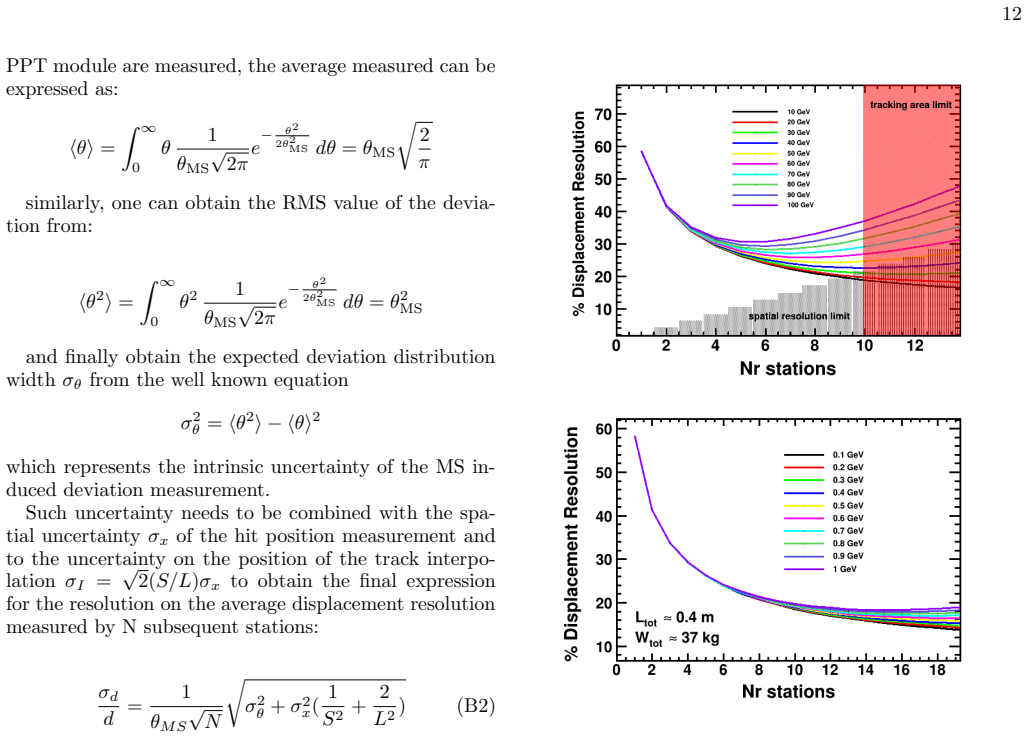
Figure 10 shows the results of this calculation
Nominal use case (E > 10 GeV/nucl) The predicted displacement resolution was calculated as a function of N and particle Ek, for ten different en- ergies in the target energy range of the detector (10 ≤ Ek ≤100 GeV/nucl). Figure 10 shows the results of this calculation. From the Figure it is visible that the curves at all the energies follow the general ∝ ...
-
[2]
Low energy case (E ≤ 1 GeV/nucl) The same calculation can be used to devise a possible design optimized for the sub-GeV energies. In this case Equation B1 predicts much higher displacements, so the need for relatively high values of L P P Tis less stringent. This fact can be exploited to obtain a shorter detector, effectively increasing the overall accept...
-
[3]
Andrew W. Strong and Igor V. Moskalenko. Propagation of cosmic-ray nucleons in the galaxy. The Astrophysical Journal, 509(1):212, dec 1998
work page 1998
-
[4]
have shown that such measurement can be explained in terms of standard mechanisms of D production (red long-dashed line in Figure 1) assuming a different ac- celeration mechanisms for light and heavy primaries. If confirmed, this scenario would have profound implica- tions, since the secondary to primary ratios involving the heavy primaries would not be a...
-
[5]
Con- straining galactic cosmic-ray parameters with z ≤ 2 nu- clei
Coste, B., Derome, L., Maurin, D., and Putze, A. Con- straining galactic cosmic-ray parameters with z ≤ 2 nu- clei. A&A, 539:A88, 2012
work page 2012
-
[6]
Yoann G´ enolini, David Maurin, Igor V. Moskalenko, and Michael Unger. Current status and desired precision of the isotopic production cross sections relevant to astro- physics of cosmic rays: Li, be, b, c, and n. Phys. Rev. C, 98:034611, Sep 2018
work page 2018
-
[7]
The curious case of high- energy deuterons in galactic cosmic rays
Nicola Tomassetti and Jie Feng. The curious case of high- energy deuterons in galactic cosmic rays. The Astrophys- ical Journal Letters, 835(2):L26, jan 2017
work page 2017
-
[8]
Solar and nuclear physics uncertain- ties in cosmic-ray propagation
Nicola Tomassetti. Solar and nuclear physics uncertain- ties in cosmic-ray propagation. Phys. Rev. D, 96:103005, Nov 2017
work page 2017
Show all 56 references
-
[9]
Aguilar, B
M. Aguilar, B. Alpat, G. Ambrosi, H. Anderson, L. Ar- ruda, N. Attig, C. Bagwell, F. Barao, M. Barbanera, L. Barrin, A. Bartoloni, R. Battiston, A. Bayyari, N. Belyaev, B. Bertucci, V. Bindi, K. Bollweg, J. Bolster, M. Borchiellini, B. Borgia, M. J. Boschini, M. Bourquin, C. B...
2024
-
[10]
Adriani, G
O. Adriani, G. C. Barbarino, G. A. Bazilevskaya, R. Bel- lotti, M. Boezio, E. A. Bogomolov, M. Bongi, V. Bon- vicini, S. Bottai, A. Bruno, F. Cafagna, D. Campana, P. Carlson, M. Casolino, G. Castellini, C. De Donato, C. De Santis, N. De Simone, V. Di Felice, V. For- mato, A. M...
2016
-
[11]
Papini, S
P. Papini, S. Piccardi, P. Spillantini, E. Vannuc- cini, M. Ambriola, R. Bellotti, F. Cafagna, F. Ciacio, M. Circella, C. N. De Marzo, S. Bartalucci, M. Ricci, D. Bergstr¨ om, P. Carlson, T. Francke, P. Hansen, E. Mocchiutti, M. Boezio, V. Bonvicini, P. Schiavon, A. Vacchi, N....
2004
-
[12]
High energy deuterons in cosmic rays registered by the sokol satellite experiment
Andrey Turundaevskiy and Dmitry Podorozhnyi. High energy deuterons in cosmic rays registered by the sokol satellite experiment. Advances in Space Research , 15 59(1):496–501, 2017
2017
-
[13]
K. M. V. Apparao. Flux of Cosmic Ray Deuterons with Rigidity Above 16.8 GV. In Proceedings of the 13th In- ternational Conference on Cosmic Rays, volume 1, page 126, Denver, Colorado, 1973. OG Sessions
1973
-
[14]
The ams-02 cosmic-ray deuteron flux is consistent with a secondary origin
Qiang Yuan and Yi-Zhong Fan. The ams-02 cosmic-ray deuteron flux is consistent with a secondary origin. The Astrophysical Journal Letters, 974(1):L14, oct 2024
2024
-
[15]
Donato, N
F. Donato, N. Fornengo, and D. Maurin. Antideuteron fluxes from dark matter annihilation in diffusion models. Phys. Rev. D, 78:043506, Aug 2008
2008
-
[16]
Cooke, Max Pettini, and Charles C
Ryan J. Cooke, Max Pettini, and Charles C. Steidel. One percent determination of the primordial deuterium abundance*. The Astrophysical Journal, 855(2):102, mar 2018
2018
-
[17]
Vladimirov, S.W
A.E. Vladimirov, S.W. Digel, G. J´ ohannesson, P.F. Michelson, I.V. Moskalenko, P.L. Nolan, E. Orlando, T.A. Porter, and A.W. Strong. Galprop webrun: An internet-based service for calculating galactic cosmic ray propagation and associated photon emissions. Computer Physics Com...
2011
-
[18]
Cosmic-ray deuteron excess from a pri- mary component, 2024
Xing-Jian Lv, Xiao-Jun Bi, Kun Fang, Peng-Fei Yin, and Meng-Jie Zhao. Cosmic-ray deuteron excess from a pri- mary component, 2024
2024
-
[19]
DAMPE Collaboration, Q. An, R. Asfandiyarov, P. Az- zarello, P. Bernardini, X. J. Bi, M. S. Cai, J. Chang, D. Y. Chen, H. F. Chen, J. L. Chen, W. Chen, M. Y. Cui, T. S. Cui, H. T. Dai, A. D’Amone, A. De Benedit- tis, I. De Mitri, M. Di Santo, M. Ding, T. K. Dong, Y. F. Dong, Z...
2019
-
[20]
Aguilar, L
M. Aguilar, L. Ali Cavasonza, B. Alpat, G. Ambrosi, L. Arruda, N. Attig, S. Aupetit, P. Azzarello, A. Bach- lechner, F. Barao, A. Barrau, L. Barrin, A. Bartoloni, L. Basara, S. Ba¸ se˘ gmez-du Pree, M. Battarbee, R. Bat- tiston, U. Becker, M. Behlmann, B. Beischer, J. Berdugo,...
2017
-
[21]
A mul- tiple scattering-based technique for isotopic identification in cosmic rays
Francesco Dimiccoli and Francesco Maria Follega. A mul- tiple scattering-based technique for isotopic identification in cosmic rays. Particles, 7(2):477–488, 2024
2024
-
[22]
Momentum measurement by the multiple coulomb scattering method in the opera lead-emulsion target
N Agafonova, A Aleksandrov, O Altinok, A Anokhina, S Aoki, A Ariga, T Ariga, D Autiero, A Badertscher, A Bagulya, A Ben Dhahbi, A Bertolin, M Besnier, C Bozza, T Brugi` ere, R Brugnera, F Brunet, G Brunetti, S Buontempo, A Cazes, L Chaussard, M Chernyavskiy, V Chiarella, A Chu...
2012
-
[23]
Agostinelli et al
S. Agostinelli et al. GEANT4–a simulation toolkit. Nucl. Instrum. Meth. A, 506:250–303, 2003
2003
-
[24]
The alpide pixel sensor chip for the upgrade of the alice inner tracking system
Gianluca Aglieri Rinella. The alpide pixel sensor chip for the upgrade of the alice inner tracking system. Nu- clear Instruments and Methods in Physics Research Sec- tion A: Accelerators, Spectrometers, Detectors and Asso- ciated Equipment, 845:583–587, 2017. Proceedings of th...
2017
-
[25]
A pixel based tracker for the HEPD-02 de- tector
Ester Ricci. A pixel based tracker for the HEPD-02 de- tector. PoS, ICRC2023:164, 2024
2024
-
[26]
Expected performance of the high energy particle detector (hepd-02) tracking system on board of the second china seismo-electromagnetic satel- lite
Umberto Savino. Expected performance of the high energy particle detector (hepd-02) tracking system on board of the second china seismo-electromagnetic satel- lite. Nuclear Instruments and Methods in Physics Re- search Section A: Accelerators, Spectrometers, Detectors and Asso...
2024
-
[27]
Bi4ge3o12 (bgo) - a scintillator re- placement for nai(tl)
Mohammad Farukhi. Bi4ge3o12 (bgo) - a scintillator re- placement for nai(tl). MRS Proceedings, 16, 01 2011
2011
-
[28]
M. Mager. Alpide, the monolithic active pixel sensor for the alice its upgrade. Nuclear Instruments and Methods in Physics Research Section A: Accelerators, Spectrome- ters, Detectors and Associated Equipment, 824:434–438,
-
[29]
Giovacchini
F. Giovacchini. The RICH detector of the AMS-02 ex- periment aboard the International Space Station. Nucl. Instrum. Meth. A, 1055:168434, 2023
2023
-
[30]
Vuchkov and Lidia N
Ivan N. Vuchkov and Lidia N. Boyadjieva. Statisti- cal Methods for Data Analysis, pages 14–95. Springer Netherlands, Dordrecht, 2001
2001
-
[31]
Detectors in Par- ticle Physics: A Modern Introduction
Georg Viehhauser and Tony Weidberg. Detectors in Par- ticle Physics: A Modern Introduction. CRC Press, 1st edition, 2024
2024
-
[32]
Density and refractive index of silica aerogels after low- and high-temperature supercritical drying and thermal treatment
P Wang, A Beck, W Korner, H Scheller, and J Fricke. Density and refractive index of silica aerogels after low- and high-temperature supercritical drying and thermal treatment. Journal of Physics D: Applied Physics , 27(2):414, feb 1994
1994
-
[33]
An indirect search for dark matter using antideuterons: the gaps experiment
C J Hailey. An indirect search for dark matter using antideuterons: the gaps experiment. New Journal of Physics, 11(10):105022, oct 2009
2009
-
[34]
The RICH detector of the AMS-02 experiment: status and physics prospects, pages 901–905
RUI PEREIRA and on behalf of the AMS RICH collab- oration. The RICH detector of the AMS-02 experiment: status and physics prospects, pages 901–905. World Sci- entific, 2008
2008
-
[35]
Position- sensitive silicon photomultiplier arrays with large-area and sub-millimeter resolution
Fabio Acerbi, Stefano Merzi, and Alberto Gola. Position- sensitive silicon photomultiplier arrays with large-area and sub-millimeter resolution. Sensors, 24(14), 2024
2024
-
[36]
Allison, L
Naram Park, P. Allison, L. Beaufore, Y. Chen, Stephane Coutu, M. Gebhard, Noah Green, Diego Hanna, H.B. Jeon, B. Kunkler, M. Lang, R. Mbarek, K. McBride, I. Mognet, D. Muller, S. Nutter, Stephan O’Brien, and M. Yu. Cosmic-ray isotope measurements with helix. page 091, 07 2021
2021
-
[37]
Boosted decision trees and applications
Yann Coadou. Boosted decision trees and applications. EPJ Web of Conferences, 55:02004–, 07 2013
2013
-
[38]
Ambrosi, M
G. Ambrosi, M. Ambrosio, C. Aramo, B. Bertucci, E. Bissaldi, M. Bitossi, A. Boiano, C. Bonavolont` a, M. Capasso, A. Circiello, L. Consiglio, D. Depaoli, F. Di Pierro, L. Di Venere, E. Fiandrini, N. Gigli- etto, F. Giordano, S. Incardona, M. Ionica, F. Licciulli, S. Loporchio,...
2023
-
[39]
A. R. Altamura, A. Di Mauro, E. Nappi, N. Nicassio, M. van Emmerik, and G. Volpe. Aerogel characterization for RICH applications. In 9th International Workshop on Advances in Sensors and Interfaces, 6 2023
2023
-
[40]
Cisbani, S
E. Cisbani, S. Colilli, R. Crateri, F. Cusanno, R. Fratoni, S. Frullani, F. Garibaldi, F. Giuliani, M. Gricia, M. Iodice, R. Iommi, M. Lucentini, A. Mostarda, L. Pierangeli, F. Santavenere, G.M. Urciuoli, R. De Leo, L. Lagamba, E. Nappi, A. Braem, and P. Vernin. Light- weight ...
2003
-
[41]
J. Z. Wang, E. S. Seo, K. Anraku, M. Fujikawa, M. Imori, T. Maeno, N. Matsui, H. Matsunaga, M. Motoki, S. Orito, T. Saeki, T. Sanuki, I. Ueda, K. Yoshimura, Y. Makida, J. Suzuki, K. Tanaka, A. Yamamoto, T. Yoshida, T. Mitsui, H. Matsumoto, M. Nozaki, M. Sasaki, J. Mitchell, A....
2002
-
[42]
TMV A Toolkit for multivariate data anal- ysis in ROOT
Jan Therhaag. TMV A Toolkit for multivariate data anal- ysis in ROOT. PoS, ICHEP2010:510, 2010
2010
-
[43]
S.A. Wotton. The lhcb rich upgrade for the high luminos- ity lhc era. Nuclear Instruments and Methods in Physics Research Section A: Accelerators, Spectrometers, Detec- tors and Associated Equipment, 1058:168824, 2024. 17
2024
-
[44]
Hatlo, F
M. Hatlo, F. James, P. Mato, L. Moneta, M. Winkler, and A. Zsenei. Developments of mathematical software libraries for the LHC experiments. IEEE Trans. Nucl. Sci., 52:2818–2822, 2005
2005
-
[45]
De- sign of an antimatter large acceptance detector in orbit (aladino)
Oscar Adriani, Corrado Altomare, Giovanni Am- brosi, Philipp Azzarello, Felicia Carla Tiziana Bar- bato, Roberto Battiston, Bertrand Baudouy, Benedikt Bergmann, Eugenio Berti, Bruna Bertucci, Mirko Boezio, Valter Bonvicini, Sergio Bottai, Petr Burian, Mario Buscemi, Franck Cad...
2022
-
[46]
Aramaki, S
T. Aramaki, S. Boggs, S. Bufalino, L. Dal, P. von Doet- inchem, F. Donato, N. Fornengo, H. Fuke, M. Grefe, C. Hailey, B. Hamilton, A. Ibarra, J. Mitchell, I. Mognet, R.A. Ong, R. Pereira, K. Perez, A. Putze, A. Raklev, P. Salati, M. Sasaki, G. Tarle, A. Urbano, A. Vittino, S. ...
2016
-
[47]
Brauninger and Marco Cirelli
Carolin B. Brauninger and Marco Cirelli. Anti-deuterons from heavy Dark Matter. Phys. Lett. B, 678:20–31, 2009
2009
-
[48]
Francesca Giovacchini and V. Choutko. Cosmic Rays An- tideuteron Sensitivity for AMS-02 Experiment. In 30th International Cosmic Ray Conference, volume 4, pages 765–768, 2008
2008
-
[49]
Performance of ultra- small silicon photomultiplier array with active area of 0.12mm×0.12mm
Wang Yue, Chen Zongde, Li Chenhui, He Ran, Wang Shenyuan, Li Baicheng, Wang Ruiheng, Liang Kun, Yang Ru, and Han Dejun. Performance of ultra- small silicon photomultiplier array with active area of 0.12mm×0.12mm. Nuclear Instruments and Methods in Physics Research Section A: A...
2015
-
[50]
Review of Par- ticle Physics
Particle Data Group, P A Zyla, R M Barnett, J Beringer, O Dahl, D A Dwyer, D E Groom, C J Lin, K S Lu- govsky, E Pianori, D J Robinson, C G Wohl, W M Yao, K Agashe, G Aielli, B C Allanach, C Am- sler, M Antonelli, E C Aschenauer, D M Asner, H Baer, Sw Banerjee, L Baudis, C W B...
2020
-
[51]
Ambrosi, M
G. Ambrosi, M. Ambrosio, C. Aramo, B. Bertucci, E. Bissaldi, M. Bitossi, A. Boiano, C. Bonavolont` a, M. Capasso, A. Circiello, L. Consiglio, D. Depaoli, F. Di Pierro, L. Di Venere, E. Fiandrini, N. Gigli- etto, F. Giordano, S. Incardona, M. Ionica, F. Licciulli, S. Loporchio,...
2023
-
[52]
Coutu, P.S
S. Coutu, P.S. Allison, M. Baiocchi, J.J. Beatty, L. Beau- fore, D.H. Calder´ on, A.G. Castano, Y. Chen, N. Green, D. Hanna, H.B. Jeon, S.B. Klein, B. Kunkler, M. Lang, R. Mbarek, K. McBride, S.I. Mognet, J. Musser, S. Nut- ter, S. O’Brien, N. Park, K.M. Powledge, K. Sakai, M....
2024
-
[54]
The desy digital silicon photomultiplier: Device characteristics and first test-beam results
Inge Diehl, Finn Feindt, Karsten Hansen, Stephan Lach- nit, Frauke Poblotzki, Daniil Rastorguev, Simon Span- nagel, Tomas Vanat, and Gianpiero Vignola. The desy digital silicon photomultiplier: Device characteristics and first test-beam results. Nuclear Instruments and Methods...
2024
-
[55]
Optimum design of elec- tron bombarded active pixel sensor for low-level light sin- gle photon imaging
Jinzhou Bai, Bo Wang, Yonglin Bai, Weiwei Cao, Yang Yang, Fanpu Lei, and Dan Su. Optimum design of elec- tron bombarded active pixel sensor for low-level light sin- gle photon imaging. In Yadong Jiang, Xiaoliang Ma, Xiong Li, Mingbo Pu, Xue Feng, and Bernard Kippelen, editors,...
2019
-
[56]
Mazziotta, A.R
M.N. Mazziotta, A.R. Altamura, L. Congedo, G. De Robertis, A. Di Mauro, J.O. Guerra-Pulido, F. Licciulli, L. Lorusso, P. Martinengo, E. Nappi, N. Nicassio, G. Pai´ c, G. Panzarini, R. Pillera, and G. Volpe. Development of a novel compact and fast sipm-based rich detector for t...
2025
-
[2016]
Frontier Detectors for Frontier Physics: Proceed- ings of the 13th Pisa Meeting on Advanced Detectors
Reviewed August 10, 2026 · model on record in the stance chip above.
Discussion (0). Continue with ORCID to comment.