pith. sign in

arxiv: 2503.02385 · v2 · submitted 2025-03-04 · 🧮 math.GT

Divides with cusps, shadows, and transvergent diagrams

Pith reviewed 2026-05-23 02:03 UTC · model grok-4.3

classification 🧮 math.GT
keywords symmetric linkstransvergent diagramsdivides with cuspsdivides with gleamsTuraev shadowslink diagramsknot theorygeometric topology
0
0 comments X

The pith

Divides with gleams convert transvergent diagrams of symmetric links into divides with cusps and back while preserving link type.

A machine-rendered reading of the paper's core claim, the machinery that carries it, and where it could break.

The paper defines divides with gleams as a shadow-based generalization of A'Campo's divides. It supplies an explicit algorithm that takes any transvergent diagram of a symmetric link and produces a divide with cusps representing the same link. A second algorithm recovers a transvergent diagram from any given divide with cusps. A reader would care because the two representations are now interchangeable for any symmetric link, letting one choose the diagram best suited to a calculation or proof.

Core claim

By introducing divides with gleams, which augment A'Campo's divides with Turaev shadow data called gleams, the paper constructs two algorithms: one that produces a divide with cusps from a given transvergent diagram of a symmetric link, and one that produces a transvergent diagram from a given divide with cusps, such that both diagrams represent the identical symmetric link in S^3.

What carries the argument

Divides with gleams, which generalize A'Campo's divides by adding gleam data from Turaev's shadows to record the information needed to maintain symmetry across conversions.

If this is right

  • Every symmetric link presented by a transvergent diagram admits a divide-with-cusps representation.
  • Every divide with cusps corresponds to a symmetric link that admits a transvergent diagram.
  • The link type and the rotational symmetry are unchanged by either conversion.
  • Symmetric links therefore possess two fully interchangeable diagrammatic languages connected by explicit, algorithmic translations.

Where Pith is reading between the lines

These are editorial extensions of the paper, not claims the author makes directly.

  • One could now compute invariants of symmetric links in whichever of the two diagrams makes the calculation simpler, then transfer the result back.
  • The same gleam-augmented construction might adapt to other symmetry groups or to links in other three-manifolds.
  • Explicit examples produced by the algorithms could be used to test conjectures that are easier to state in one representation than the other.

Load-bearing premise

That the gleam data added in the intermediate divides with gleams correctly tracks and preserves both the link type and the pi rotational symmetry at every step of the two algorithms.

What would settle it

A concrete transvergent diagram to which the first algorithm is applied, yielding a divide with cusps whose associated link is either not symmetric or isotopic to a different link than the original.

Figures

Figures reproduced from arXiv: 2503.02385 by Ryoga Furutani.

Figure 1
Figure 1. Figure 1: ). It is easily seen that any link with a transvergent diagram is a symmetric link, [PITH_FULL_IMAGE:figures/full_fig_p001_1.png] view at source ↗
Figure 2
Figure 2. Figure 2: The transvergent diagram DL defines a divide PDL. DL PDL [PITH_FULL_IMAGE:figures/full_fig_p002_2.png] view at source ↗
Figure 3
Figure 3. Figure 3: A divide with gleams on a 2-sphere that satisfies the condition of Theorem 0.2. −4 5 2 2 1 1 2 1. Preliminaries Let D := {(x1, x2) ∈ R 2 | x 2 1 + x 2 2 ≤ 1} be the 2-disk. We identify the tangent bundle T D of D with D × C 2 , and identify the 4-ball D4 with the subset of the tangent bundle T D defined as {(x, u) ∈ T D | |x| 2 + |u| 2 ≤ 1}. 1.1. Divides with cusps. Definition. Let J be a compact 1-manifol… view at source ↗
Figure 4
Figure 4. Figure 4: A divide with cusps P. A region R of P, an inner cusp for R and an outer cusp for R. R an inner cusp an outer cusp A divide with cusps P defines a link LP in S 3 as follows. We set FP := {(x, u) ∈ D4 | x ∈ P, u ∈ TxP}, which is an immersed surface in D4 consisting of disk or annulus regions. It has self-intersections only at the double points of P. Then, LP := FP ∩ ∂D4 is a link in S 3 . Definition. Let P … view at source ↗
Figure 5
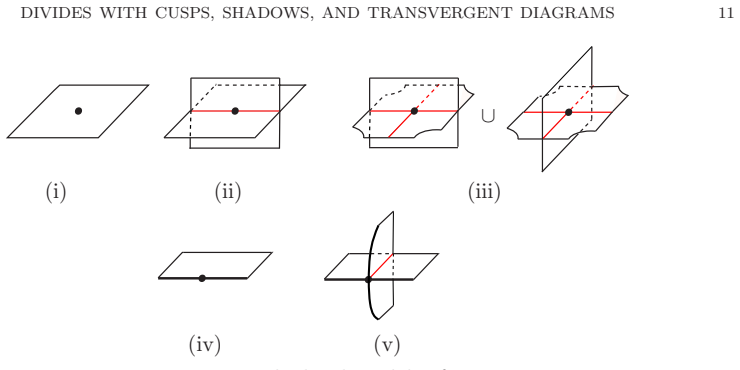
Figure 5. Figure 5: The divide with cusps P and the link LP of P. ≈ P LP 1.2. Shadows. Definition. A compact space X is called a simple polyhedron if a regular neighborhood of each point in X is homeomorphic to one of the five local models shown in [PITH_FULL_IMAGE:figures/full_fig_p006_5.png] view at source ↗
Figure 6
Figure 6. Figure 6: The local models of a simple polyhedron. a vertex of X. The set of points whose regular neighborhoods are homeomorphic to the models (ii) or (iii) is called the singular set of X and is denoted by SX. The set of points whose regular neighborhoods are homeomorphic to the models (iv) or (v) is called the boundary of X and is denoted by ∂X. A connected component of X \ SX is called a region of X. A region of … view at source ↗
Figure 7
Figure 7. Figure 7: The local contribution around a crossing of the diagram DG. − 1 2 − 1 2 1 2 1 2 The following theorem is useful for determining the diffeomorphism type of the 4- manifold obtained from a shadowed polyhedron by Turaev’s reconstruction. Theorem 1.3 (Naoe [16]). Let (X, gl) be a shadowed polyhedron, and X0 be a simple polyhedron with X0 ⊂ X. We define a gleam gl0 of X0 as follows. Let R be an interior region … view at source ↗
Figure 8
Figure 8. Figure 8: The local models of XP . ∪ (i) (ii) (iii) (iv) (v) represented as q(x, reθi) = (x, re2θi), the image q(Nbd(c; XP )) is homeomorphic to one of the five local models shown in [PITH_FULL_IMAGE:figures/full_fig_p011_8.png] view at source ↗
Figure 9
Figure 9. Figure 9: The images of the local models of XP under the double cov￾ering q of NΣg,n/ι branched along Σg,n. q q ∪ Definition. For a divide P on Σg,n, GP ⊂ ∂(NΣg,n/ι) is called the trivalent graph of the divide P, and the shadow YP of (∂(NΣg,n/ι), GP ) is called the shadow of (∂(NΣg,n/ι), GP ) associated with the divide P. Furthermore, the simple polyhedron that is homeomorphic to YP is called the simple polyhedron o… view at source ↗
Figure 10
Figure 10. Figure 10: The neighborhood of Nbd(R; XP ) and its image under the double branched covering q. • P ′ is the divide obtained by removing all cusps from P, • For any internal region R of P, gl(R) = 4−n 2 + m1 − m2 ∈ 1 2 Z. Here, n is the number of times the boundary of the closure of R passes through double points of P, m1 is the number of inner cusps for R, and m2 is the number of outer cusps for R, • L(P′ ,gl) is eq… view at source ↗
Figure 11
Figure 11. Figure 11: The neighborhood Nbd(c; XP ) of the inncer cusp c for R and its image under the double branched covering q. the top of [PITH_FULL_IMAGE:figures/full_fig_p016_11.png] view at source ↗
Figure 12
Figure 12. Figure 12: The divide P1, the divide with cusps P ∗ 1 , and their corre￾sponding divides with gleams [PITH_FULL_IMAGE:figures/full_fig_p017_12.png] view at source ↗
Figure 13
Figure 13. Figure 13: The divide with cusps P2 and its corresponding divide with gleams (P ′ 2 , gl). P2 (P ′ 2 , gl) 3 2 − 1 2 − 3 2 1 2 = 2. Proof of Main Theorem In this section, we provide the proof of Theorem 0.1, which is the main theorem of this paper. First, we introduce some notations and assumptions. We regard the 3-sphere [PITH_FULL_IMAGE:figures/full_fig_p017_13.png] view at source ↗
Figure 14
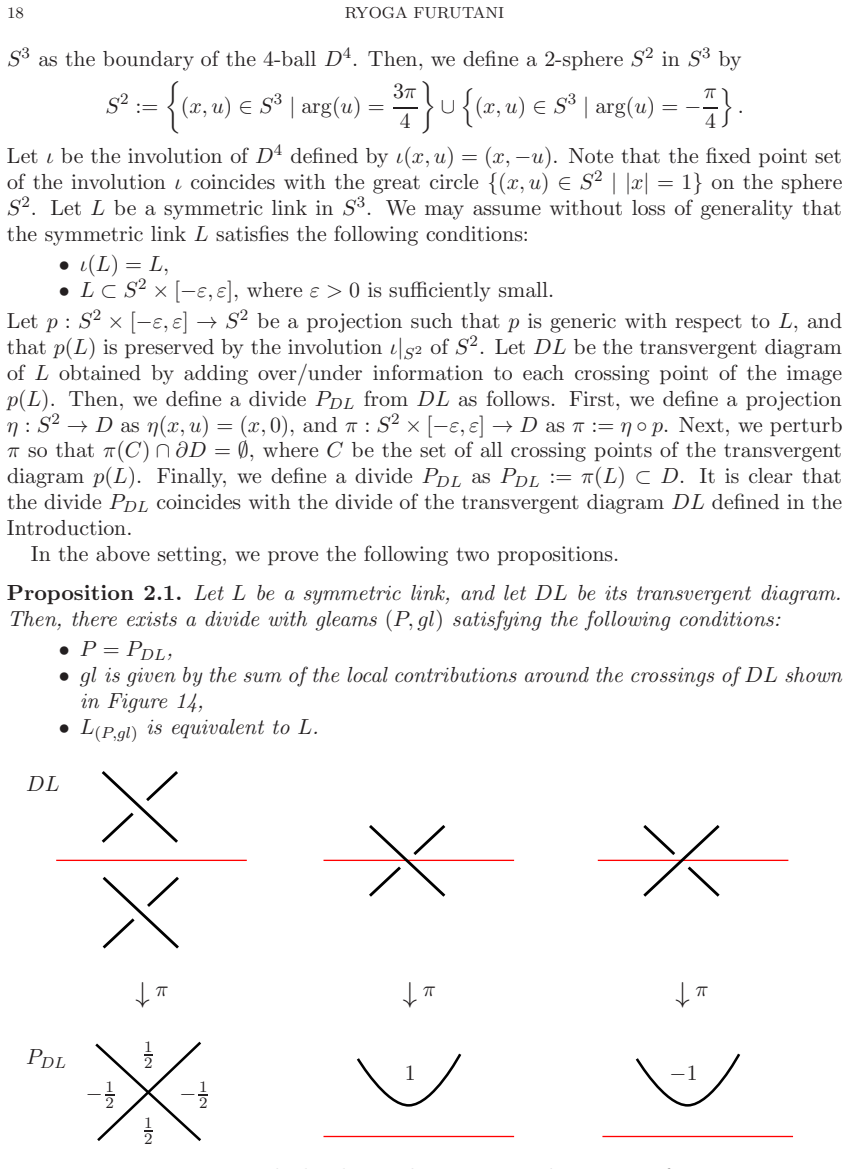
Figure 14. Figure 14: The local contributions around crossings of DL. DL PDL 1 −1 1 2 1 2 − 1 2 − 1 2 ↓ π ↓ π ↓ π [PITH_FULL_IMAGE:figures/full_fig_p018_14.png] view at source ↗
Figure 15
Figure 15. Figure 15: The transvergent diagram DL and the divide with gleams (PDL, gl). Proof of Proposition 2.1. Let P be the divide defined as P := PDL, and gl be the gleam of P given by the sum of the local contributions in [PITH_FULL_IMAGE:figures/full_fig_p019_15.png] view at source ↗
Figure 16
Figure 16. Figure 16: The local pictures of crossings of L. 3π 4 π 4 − π 4 − 3π 4 arg(u) = 3π 2 } and {(x, u) ∈ S 3 | arg(u) = π 2 }. Corresponding to these images, YP is locally depicted on the bottom of [PITH_FULL_IMAGE:figures/full_fig_p020_16.png] view at source ↗
Figure 17
Figure 17. Figure 17: The image of each crossing of L under the double branched covering q|S3 and the local representation of YP corresponding to these images. 3π 2 π 2 −1 2 −1 2 1 2 1 2 1 −1 1. Set P ′ := P and gl′ := glP . 2. Define the dual graph (VP′, EP′) of P ′ , where VP′ is the set of vertices corre￾sponding to the regions of P ′ , and EP′ is the set of edges corresponds to pairs of adjacent regions of P ′ . 3. Define … view at source ↗
Figure 18
Figure 18. Figure 18: The divide with gleams (P, gl) and the divide with cusps P ′ . 2. Take the double P ′ ∪ Pc′ ⊂ D ∪ Db of the divide P ′ ⊂ D, where Pc′ and Db are the copies of the divide P ′ and the 2-disk D, respectively. Then, identify D ∪ Db with the 2-sphere S 2 , and regard P ′ ∪ Pc′ as a tetravalent graph on S 2 . 3. Assign arbitrary over/under information to each tetravaelnt vertex of P ′ ∪ Pc′ , thereby obtaining … view at source ↗
Figure 19
Figure 19. Figure 19: The transvergent diagram DL and the divide with cusps P. The divide with cusps P is obtained from DL via the divide with gleams (PDL, gl). −2 3 − 5 2 Proposition 2.1 Proposition 2.2 DL P (PDL, gl) let elR be the unknot in DL0 that intersects transversely only with R+ and R− at exactly one point each. 6. Obtain a transvergent diagram DLP of LP by performing the (−1 2 nR)-twists along elR to DL0 for all int… view at source ↗
Figure 20
Figure 20. Figure 20: The divide with cusps P and its corresponding divide with gleams (P ′ , gl). 1 2 − 3 2 (PDL0 DL0 , gl0) [PITH_FULL_IMAGE:figures/full_fig_p025_20.png] view at source ↗
Figure 21
Figure 21. Figure 21: The double of the divide P ′ , the transvergent diagram DL0, and the divide with gleams (PDL0 , gl0). nR1 := gl(R1)−gl0(R1) = − 5 2 −(− 3 2 ) = −1, nR2 := gl(R2)−gl0(R2) = 5 2 − 1 2 = 2 (see [PITH_FULL_IMAGE:figures/full_fig_p025_21.png] view at source ↗
Figure 22
Figure 22. Figure 22: The transvergent diagram DLP of LP obtained from the diagram DL0 of L0 by performing (− 1 2 nRi )-twists along eli for i = 1, 2. R whose closure has ∂D as its boundary, at exactly one point each (see the left-bottom on [PITH_FULL_IMAGE:figures/full_fig_p026_22.png] view at source ↗
Figure 23
Figure 23. Figure 23: The schematic diagram of the proof of Theorem 3.1 (for the case n = 1). DL0 DG0 DLP − nR1 2 DGP −nR1 elR1 lR1 ↓ q|S3 ↓ q|S3 . . . . . . . . . . . . · · · n 2 = n 2 -twists (n > 0) [7]). For an oriented divide −→P , we set Y−→P := {(x, u) ∈ NΣg,n | x ∈ −→P , u ∈ T + x −→P }, where T + x −→P is the set of tangent vectors of −→P at x in the same direction as −→P . Note that Y−→P is a simple polyhedron in NΣg… view at source ↗
read the original abstract

A link $L$ in $S^3$ is called a symmetric link if it is preserved by a $\pi$ rotation around a closed geodesic in $S^3$. Any symmetric link can be depicted by a diagram with a symmetry axis lying on the plane of the diagram, called a transvergent diagram. Recently, Sugawara proved that any symmetric link can be represented by a divide with cusps, which is a generalization of A'Campo's divide that allows a finite number of cusps. In this paper, we introduce a generalization of A'Campo's divide in terms of Turaev's shadow, called a divide with gleams. By using divides with gleams, we provide an algorithm to obtain a divide with cusps that represents a symmetric link from its given transvergent diagram. Conversely, we also provide an algorithm to draw a transvergent diagram of the link of a given divide with cusps.

Editorial analysis

A structured set of objections, weighed in public.

Desk editor's note, referee report, simulated authors' rebuttal, and a circularity audit. Tearing a paper down is the easy half of reading it; the pith above is the substance, this is the friction.

Referee Report

1 major / 0 minor

Summary. The paper introduces divides with gleams, a generalization of A'Campo's divides via Turaev shadows, and asserts the existence of two algorithms: one converting a given transvergent diagram of a symmetric link into a divide with cusps (via gleams), and the converse. Both are claimed to preserve the represented link type and the symmetry.

Significance. If the algorithms and their correctness proofs are supplied and verified, the work would furnish explicit, bidirectional translations between transvergent diagrams and divides-with-cusps representations of symmetric links, extending Sugawara's existence result and potentially enabling new computational or classification tools in the study of symmetric links.

major comments (1)
  1. The central claim consists in the explicit construction and correctness of the two conversion algorithms. The supplied text asserts their existence but contains no step-by-step constructions, no verification that link type and symmetry are preserved at each stage, and no proof that the intermediate divides-with-gleams objects are well-defined. This absence renders the main theorem unsupported.

Simulated Author's Rebuttal

1 responses · 0 unresolved

We thank the referee for the detailed report and for identifying the central issue with the presentation of our algorithms. We agree that the main theorem requires explicit constructions and verifications to be fully supported, and we will revise the manuscript accordingly.

read point-by-point responses
  1. Referee: The central claim consists in the explicit construction and correctness of the two conversion algorithms. The supplied text asserts their existence but contains no step-by-step constructions, no verification that link type and symmetry are preserved at each stage, and no proof that the intermediate divides-with-gleams objects are well-defined. This absence renders the main theorem unsupported.

    Authors: We accept this assessment. The current manuscript states the existence of the algorithms but does not supply the required step-by-step constructions, intermediate verifications, or proofs of well-definedness. In the revised version we will add these details: Section 3 will contain the explicit algorithm converting a transvergent diagram to a divide with gleams (with gleam assignments and cusp placements), followed by a proof that the resulting object is well-defined and represents the same symmetric link; Section 4 will contain the converse algorithm together with the corresponding preservation arguments. These additions will make the main theorem fully supported. revision: yes

Circularity Check

0 steps flagged

No significant circularity detected

full rationale

The paper's central contribution consists of explicit constructive algorithms that convert between transvergent diagrams and divides with cusps via the auxiliary notion of divides with gleams. These constructions are presented directly without any fitted parameters, self-definitional equations, or load-bearing self-citations. The cited results from Sugawara (on divides with cusps) and Turaev (on shadows) are independent prior work and are not invoked to justify uniqueness or to close a derivation loop. The equivalence of link types and preservation of symmetry are asserted to follow from the step-by-step definitions of the algorithms themselves, making the derivation self-contained.

Axiom & Free-Parameter Ledger

0 free parameters · 1 axioms · 1 invented entities

The paper introduces one new combinatorial object and relies on standard background from link theory and shadow theory. No numerical parameters are fitted.

axioms (1)
  • domain assumption Standard definitions and properties of symmetric links, transvergent diagrams, A'Campo's divides, and Turaev shadows hold as stated in the referenced literature.
    Invoked throughout the abstract to ground the new generalization and the claimed algorithms.
invented entities (1)
  • divide with gleams no independent evidence
    purpose: To generalize A'Campo's divides via Turaev shadows so that conversion algorithms between transvergent diagrams and divides with cusps become possible.
    New object defined in the paper; no external falsifiable prediction or independent verification is mentioned in the abstract.

pith-pipeline@v0.9.0 · 5687 in / 1403 out tokens · 48526 ms · 2026-05-23T02:03:52.031839+00:00 · methodology

discussion (0)

Sign in with ORCID, Apple, or X to comment. Anyone can read and Pith papers without signing in.

Reference graph

Works this paper leans on

19 extracted references · 19 canonical work pages

  1. [1]

    Hautes ´Etudes Sci

    A’Campo, N., Generic immersions of curves, knots, monod romy and Gordian number, Inst. Hautes ´Etudes Sci. Publ. Math. No. 88 (1998), 151–169

  2. [2]

    Boyle, K., Issa, A., Equivariant 4-genera of strongly in vertible and periodic knots, J. Topol. 15 (2022), no. 3, 1635–1674

  3. [3]

    8 (2017), no

    Carrega, A., Martelli, B., Shadows, ribbon surfaces, an d quantum invariants, Quantum Topol. 8 (2017), no. 2, 249–294

  4. [4]

    V., Diagrams of divide links, Proc

    Chmutov, S. V., Diagrams of divide links, Proc. Amer. Mat h. Soc. 131 (2003), no. 5, 1623–1627. 30 RYOGA FURUTANI

  5. [5]

    P., 3-manifolds efficiently bound 4-manifolds, J

    Costantino, F., Thurston, D. P., 3-manifolds efficiently bound 4-manifolds, J. Topol. 1 (2008), no. 3, 703–745

  6. [6]

    Furutani, R., Koda, Y., Divides and hyperbolic volumes, to appear in Ann. Sc. Norm. Super. Pisa Cl. Sci. (5)

  7. [7]

    H., Ishikawa, M., Links of oriented divides an d fibrations in link exteriors, Osaka J

    Gibson, W. H., Ishikawa, M., Links of oriented divides an d fibrations in link exteriors, Osaka J. Math. 39 (2002), no. 3, 681–703

  8. [8]

    121 (2002), no

    Hirasawa, M., Visualization of A’Campo’s fibered links a nd unknotting operation, Proceedings of the First Joint Japan-Mexico Meeting in Topology (Morelia, 1999), Topology Appl. 121 (2002), no. 1–2, 287–304

  9. [9]

    Hirasawa, M., Hiura, R., and Sakuma, M., Invariant Seife rt surfaces for strongly invertible knots, in Essays in geometry—dedicated to Norbert A’Campo, 325–349, IRMA Lect. Math. Theor. Phys., 34, EMS Press, Berlin

  10. [10]

    1, 215–232

    Ishikawa, M., Tangent circle bundles admit positive op en book decompositions along arbitrary links, Topology 43 (2004), no. 1, 215–232

  11. [11]

    Publ., Hackensack, NJ, 2 020

    Ishikawa, M., Naoe, H., Milnor fibration, A’Campo’s div ide and Turaev’s shadow, Singularities— Kagoshima 2017, 95–116, World Sci. Publ., Hackensack, NJ, 2 020

  12. [12]

    Lamm, C., Symmetric diagrams for all strongly invertib le knots up to 10 crossings, arXiv:math/2210.13198

  13. [13]

    Lamm, C., Strongly positive amphicheiral knots with do ubly symmetric diagrams, arXiv:math/arXiv:2310.05106

  14. [14]

    R., Fixed point free involutions on the 3-sp here, Ann

    Livesay, G. R., Fixed point free involutions on the 3-sp here, Ann. of Math. (2) 72 (1960), 603– 611

  15. [15]

    Martelli, B., Four-manifolds with shadow-complexity zero, Int. Math. Res. Not. IMRN 2011 (2011), no. 6, 1268–1351

  16. [16]

    Naoe, H., Shadows of 4-manifolds with complexity zero a nd polyhedral collapsing, Proc. Amer. Math. Soc. 145 (2017), no. 10, 4561–4572

  17. [17]

    362 (2025), Paper No

    Sugawara, S., Divides with cusps and symmetric links, T opology Appl. 362 (2025), Paper No. 109207

  18. [18]

    313 (2022), Paper No

    Sugawara, S., Yoshinaga, M., Divides with cusps and Kir by diagrams for line arrangements, Topology Appl. 313 (2022), Paper No. 107989, 17 pp

  19. [19]

    G., Quantum invariants of knots and 3-manifolds, De Gruyter Studies in Mathemat- ics, 18, Walter de Gruyter & Co., Berlin, 1994

    Turaev, V. G., Quantum invariants of knots and 3-manifolds, De Gruyter Studies in Mathemat- ics, 18, Walter de Gruyter & Co., Berlin, 1994. Department of Mathematics / International Institute for Su stainability with Knot- ted Chiral Meta Matter (WPI-SKCM 2), Hiroshima University, 1-3-1 Kagamiyama, Higashi- Hiroshima, Hiroshima 739-8526, Japan Email addre...