REVIEW 4 major objections 5 minor 37 references
Nombre Effectif de Partis Politiques en Afrique: Une Nouvelle M\'ethode pour un Calcul Objectif et Institutionnellement Neutre
T0 review · 4 major / 5 minor · reviewed 2026-08-07 · deepseek-v4-flash
Pith's one-line read This paper claims that the effective number of political parties in an African country can be computed from just its population and land area, using two election-free formulas it calls the Noua Hard and Noua Soft indices.
desk verdict The paper's indices are just rescaled population–area products, the soft model is fitted to the hard model's outputs, and neither is validated against any real party-system data; the central claim fails. read the letter →
The pith
A machine-rendered reading of the paper's core claim, the machinery that carries it, and where it could break.
The reading
What carries the argument
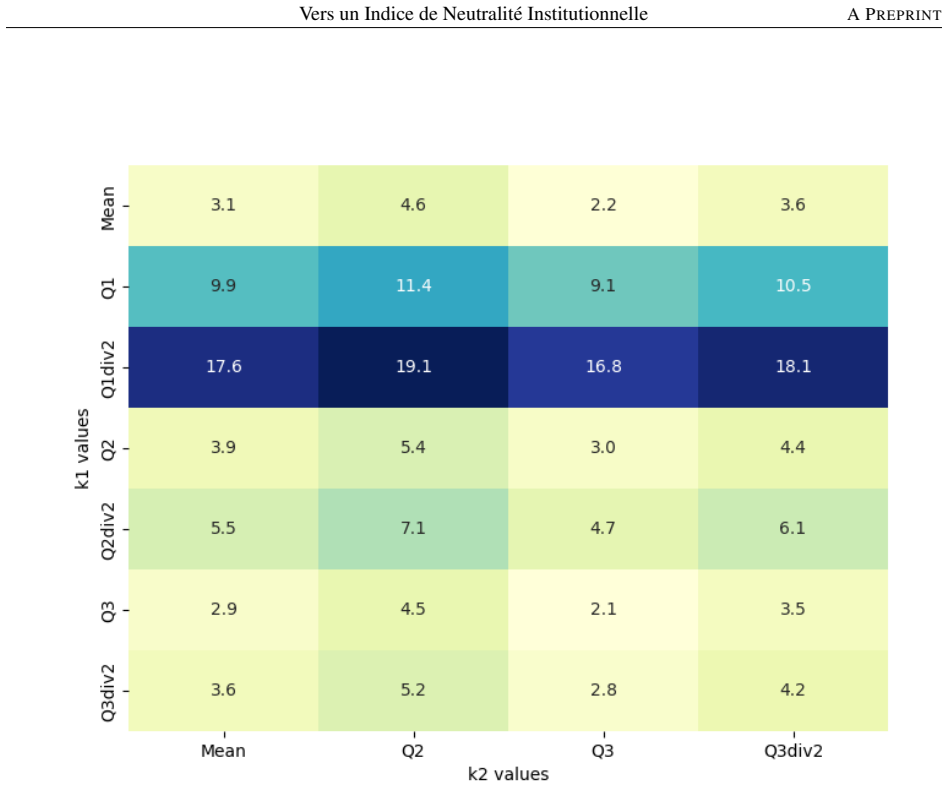
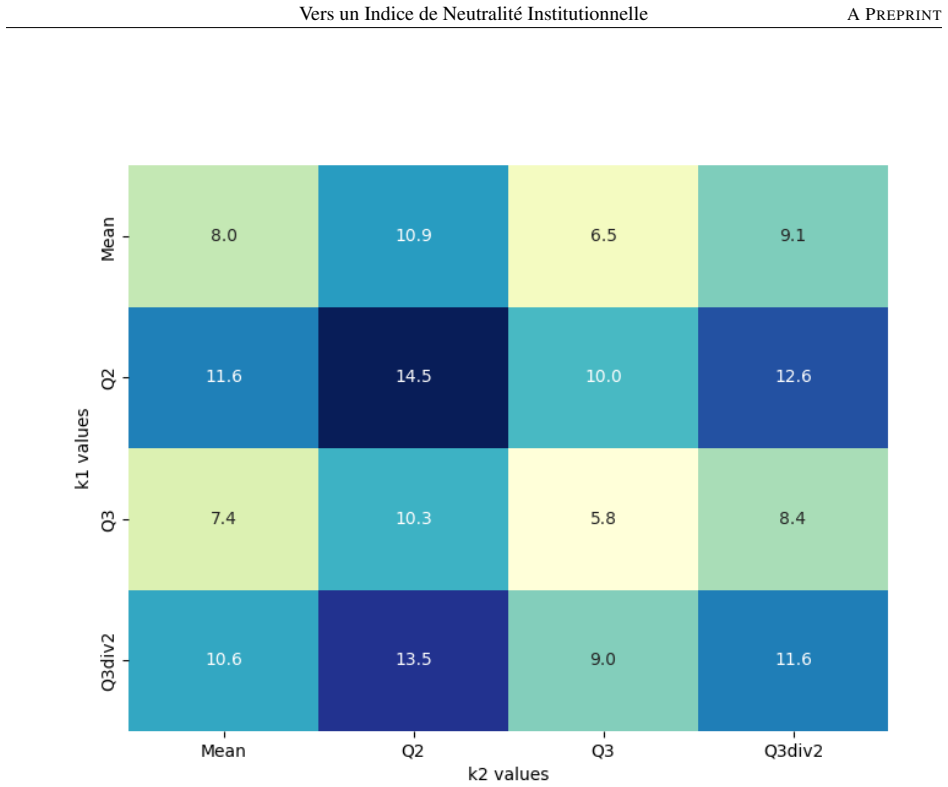
The central objects are the two Noua formulas. The Hard model is $NEP = \max(2, \log(P/k_1)+\log(A/k_2))$, with $k_1 = 1{,}000{,}000$ people per party and $k_2 = 1{,}000$ square kilometers per party for Africa, and the Hard-Flex variant simply changes these constants for other regions. The Soft model is $NEP = \max(2, P/k_1 + A/k_2)$, with constants $k_1^* = 18{,}819{,}265$ and $k_2^* = 110{,}014$ obtained by minimizing squared error against the Hard model's own predictions. The logarithmic form compresses the difference between the smallest and largest countries, while the linear form is more threshold-like and gives its highest values to the largest countries. The $\max(2,\cdot)$ floor carries the assumption that every political system contains at least an opposition party.
What would settle it
Compute the standard effective-number-of-parties measure from official seat or vote shares for the 54 African countries and compare it against the Hard and Soft values in Table 2. A decisive observation would be two countries with nearly equal population and area but very different actual party systems: the models assign them nearly the same NEP, so if their actual effective numbers of parties differ substantially, the central claim is refuted.
Extended reading notes
Core claim
The paper claims that the effective number of parties (ENP) in any African country can be estimated without any election returns, seat shares, or ideological data, using only population and land area. It introduces two formulas, the Noua Hard index and the Noua Soft index, both guaranteeing a minimum of two parties. The Hard index adds the logarithms of population per party and area per party with fixed constants; the Soft index adds the raw ratios with constants fitted by a nonlinear least-squares optimization procedure. On these values, the paper argues that its indices correct anomalies in traditional measures: countries like Ethiopia or Sudan no longer appear as single-party systems, and countries with no elections at all, such as Eritrea, Libya, Somalia, and Eswatini, receive numerical estimates instead of blanks.
Load-bearing premise
The load-bearing premise is that a country's population and land area alone determine how many effective political parties it should have, with no electoral, ethnic, or institutional information required; if that premise is wrong, the indices are just rescalings of country size.
Editorial extensions
If this is right
- The indices produce an estimated effective number of parties for every African country, including those where election-based indices are undefined, such as Eritrea, Libya, Somalia, and Eswatini.
- Using the Hard and Soft values, the paper proposes a three-level classification of African party systems: low fragmentation ($NEP \le 5$), medium ($5 < NEP \le 10$), and high ($NEP > 10$).
- The authors suggest that small states such as Seychelles, São Tomé and Príncipe, Comoros, Mauritius, and Cape Verde should adopt a two-party system, and that no country should aim for an NEP above 20.
- Because $k_1$ and $k_2$ can be adjusted, the same formulas can be applied to non-African countries and to regional groupings within Africa.
- The temporal comparison from 2014 to 2023 shows mostly small increases driven by population growth, with the smallest countries pinned at $NEP = 2$ throughout the decade.
Reading between the lines
- Setting aside the paper's own framing, the natural validation is to compare the indices against genuine election-based ENP values where they exist; until that comparison is made, the numbers are best read as rescalings of population and area.
- The indices remove institutional dependence by dropping all party-system information, so any normative use, such as capping a country's party count at 20, is itself a political choice carried inside a tool labeled apolitical.
- A testable extension would fit the Soft constants against true election-based ENP for the countries where such data are available; strong agreement would support the demographic-geographic hypothesis, while weak agreement would show that the current fit only mirrors the Hard model.
- Because land area is fixed over time, the 2014-2023 temporal version effectively measures the effect of population growth alone, so a sharper extension is to check whether observed changes in party-system fragmentation track the predicted rate.
Editorial analysis
A structured set of objections, weighed in public.
Referee Report
Summary. The paper proposes two new indices, 'Noua Hard' and 'Noua Soft', intended to compute the effective number of political parties (NEP) in African countries using only population size and land area, with a minimum value of two. The Hard index (Eq. 5) is a logarithmic combination of population and area; the Soft index (Eq. 6) is a linear combination. The constants k1 and k2 are fixed for the Hard model and fitted via Levenberg-Marquardt for the Soft model. The indices are applied to 54 African countries, compared with Laakso-Taagepera, Golosov, and the Seat Product Model, and used to classify party systems into low, medium, and high fragmentation levels. The claimed contribution is a simple, contextually relevant NEP measure that works even when election data are scarce.
Significance. The paper addresses a genuine practical problem: measuring party-system fragmentation in data-poor African contexts. The proposed indices are simple and easily computable, and the paper is clearly motivated by a relevant governance concern. However, the central claim—that these indices measure the effective number of political parties—is not supported by any validation against empirical party-system data. The Soft model is fitted to the Hard model's own outputs, and the Hard model is algebraically a monotone transformation of the population-area product. The comparative evaluation in Section 6 is qualitative and lacks an external benchmark. Thus, at present the paper offers a rescaled country-size index rather than a validated measure of political fragmentation. The positive aspects are the clarity of the motivation and the explicit effort to provide a tool for data-scarce environments; the negative is the absence of any independent validity check for the proposed quantity.
major comments (4)
- [Section 3.2.1, Eqs. (7)-(8)] The Soft model's target variable, called 'NEP_observed', is explicitly defined as derived from the Hard model ('NEPobserved représente le nombre effectif de partis observé, dérivé du modèle hard'). The Levenberg-Marquardt minimization therefore fits the Soft model to the Hard model's own outputs, not to election results or any independent measure of party fragmentation. As a result, the 'predictions' reported in Section 4 and summarized in Section 7 are functions of the Hard model's arbitrary constants k1 and k2, and the reported parameter estimates test nothing about real political systems.
- [Section 3.1, Eq. (5)] The Hard index is algebraically max(2, log(P·A) - log(k1·k2)), since log(P/k1) + log(A/k2) = log(P·A/(k1·k2)). For fixed constants k1 and k2, this is a monotone increasing transformation of the product of population and land area. The index therefore contains no party-system information: it is a rescaling of country size with a floor at 2. Without validation against observed party counts or effective-number values, the claim that this quantity is a meaningful 'nombre effectif de partis' (Section 7) is unsupported.
- [Section 3, introduction of methods] The load-bearing premise that population and land area alone determine the effective number of political parties is asserted without theoretical argument, empirical correlation, or citation. The abstract and Section 1 argue that traditional indices fail in Africa because they rely on unstable electoral data, but the paper never shows that demographic and geographic variables actually track party fragmentation. If this premise is false—which the absence of any corroborating evidence leaves open—the indices are rescaled country-size variables with no bearing on political fragmentation.
- [Section 6, Table 4] The comparative evaluation is entirely descriptive. Disagreements with Laakso-Taagepera, Golosov, and the Seat Product Model are attributed to defects of those indices without any external benchmark establishing which values correspond to reality. For example, the text states that the existing indices 'classifient souvent des pays de taille moyenne ... comme des systèmes à parti unique,' but this characterization is not grounded in any authoritative reference on those countries' party systems. Without a gold-standard comparison (e.g., expert assessments, documented party registrations, or seat distributions), the observed discrepancies cannot support the paper's claims of superiority or the conclusion that the Noua indices are 'robust'.
minor comments (5)
- [Section 4.2.4, Figures 3-4] The temporal analysis varies population while holding area constant, so the observed stability of small countries' NEP values is a mechanical consequence of the max(2, ...) floor rather than an empirical finding; this should be stated explicitly.
- [Section 3.2.2] The convergence criteria and the repeated optimization runs are described, but no variability (e.g., standard errors or a distribution) of the estimated k1* and k2* is reported; please provide uncertainty measures to support the claimed robustness.
- [General presentation] There are numerous typographical errors that obscure the meaning, including 'aricains' (Section 3.2.1), 'inexistances' (Section 1), 'Notre modèles ... sont des une mesure' (Section 7), and 'faile' (Section 5.1.2). Also, the spelling of 'Sao Tomé-et-Principe' varies. The authors should carefully proofread the manuscript.
- [Section 4.2.3] The proposed policy recommendation that a country should not present an NEP above 20 is not derived from any criterion within the paper; please clarify the basis for this threshold or remove the recommendation.
- [Section 3.1] The description of units is inconsistent: the text says population is expressed in millions and area in thousands, but Table 1 reports population as full numbers (e.g., RD Congo 109,276,265) and the constants k1=1,000,000 and k2=1000 are then used in Eqs. (5)-(6). Please clarify the exact units and ensure dimensional consistency in the formulas.
Circularity Check
The Soft index is calibrated to the Hard index's own outputs, so its 'predictions' reduce by construction to the Hard model; neither index is validated against any external party-system measure.
-
fitted input called prediction
[Section 3.2.1, Eqs. (7)-(8); Soft model calibration]
"où N EPobserved représente le nombre effectif de partis observé, dérivé du modèle hard. mean(P ) et mean(A) caractérise respectivement la moyenne de la population et de la superficie de tous les pays aricains."
The target variable NEP_observed in the Soft-model fit is not an independent, observed party-system quantity: the paper explicitly says it is 'dérivé du modèle hard' (derived from the Hard model). Equation (8) then minimizes the squared error between the Soft model, max(2, P/k1 + A/k2), and these Hard-model outputs. Thus the fitted Soft constants k1* and k2* merely make the Soft index approximate the Hard index, whose own outputs are deterministic monotone functions of population and area with arbitrary constants (k1=1,000,000, k2=1000). The 'predictions' in Section 4 and Table 2 are therefore functions of the model's own construction, not of electoral, seat, or party data, so the claimed effective-number-of-parties calculation is not independently supported.
full rationale
The paper's central derivation collapses at the calibration step. Section 3 defines two indices from population P and area A only. The Hard index (Eq. 5) is log(P/(1,000,000)) + log(A/1000), i.e., a monotone function of the population-area product, with no party-system information. The Soft index (Eq. 6) is then fit, via Levenberg-Marquardt, to 'NEP_observed', which Section 3.2.1 defines as derived from the Hard model. This makes the Soft model a curve fit to the Hard model rather than to any external measure of party fragmentation. No section presents a correlation, regression, or benchmark against Laakso-Taagepera, Golosov, or any observed party counts as ground truth; Section 6 only compares numbers descriptively and explains disagreements as defects of the other indices. Consequently, the claim in Section 7 that the Noua indices 'calculent efficacement un nombre effectif de partis' is unsupported: the Soft output is forced by construction to track the Hard output, and the Hard output is a rescaled demographic/geographic product renamed as an effective number of parties. This is the core circularity; there are no significant self-citation or uniqueness-theorem issues. Score 7 reflects that the central predictive claim reduces by construction to fitting one proposed index to another, even though the Hard index itself is not circular in the same way.
Assumptions & free parameters
free parameters (4)
- k1 (Hard) =
1,000,000
- k2 (Hard) =
1,000
- k1 (Soft) =
18,819,265
- k2 (Soft) =
110,014
assumptions (3)
- ad hoc to paper Population and land area are sufficient to determine the effective number of political parties in a country.
- domain assumption The effective number of parties is at least 2 in every country.
- ad hoc to paper The Hard model outputs are treated as 'observed' effective numbers of parties for fitting the Soft model.
Cite this review
Pith. "Pith review of Nombre Effectif de Partis Politiques en Afrique: Une Nouvelle M\'ethode pour un Calcul Objectif et Institutionnellement Neutre." pith.science (2026). https://pith.science/paper/Z64ZQXT6
@misc{pith2026250604279,
  author       = {Pith},
  title        = {Pith review of: Nombre Effectif de Partis Politiques en Afrique: Une Nouvelle M\'ethode pour un Calcul Objectif et Institutionnellement Neutre},
  year         = {2026},
  howpublished = {\url{https://pith.science/paper/Z64ZQXT6}},
  note         = {Machine review of arXiv:2506.04279}
}
read the original abstract
Political fragmentation in Africa poses to a significant challenge to effective governance and stability. Traditional measures of party system fragmentation, such as the Effective Number of Parties (ENP) index, often fail to capture the nuanced realities of African political landscapes, particularly the influence of dominant parties, fluid party affiliations, and the impact of ethnic and regional cleavages. To address these limitations, this paper introduces two novel "apolitical" or "institutionally neutral" measures for calculating the effective number of parties, focusing on geographical and demographic dimensions, notably population size and territorial area. By incorporating these local realities and ensuring a minimum threshold of two parties, the proposed models offer a simpler and more contextually relevant framework for understanding political dynamics in Africa, especially in data-scarce environments. This approach provides a valuable tool for analyzing and streamlining political systems, with potential for broader application beyond the African context.
Figures


Figures from the paper (7 more)


Reference graph
Works this paper leans on
-
[1]
Political fragmentation and fiscal outcomes,
R. Ricciuti, “Political fragmentation and fiscal outcomes,” Public choice, vol. 118, no. 3, pp. 365–388, 2004
work page 2004
-
[2]
Political fragmentation and the decline of effective government,
R. H. Pildes, “Political fragmentation and the decline of effective government,” Journal of Democracy, pp. 22–12, 2021
work page 2021
-
[3]
Commission Électorale Nationale Indépendante
CENI-RDC, “Commission Électorale Nationale Indépendante.” Accessed: 2025-02-16
work page 2025
-
[4]
Élections en afrique: enjeux démocratiques et quête de sens,
A. D. Koffi and A. K. Agbetoézian, “Élections en afrique: enjeux démocratiques et quête de sens,”Revue ACAREF - ACADEMIE AFRICAINE DE RECHERCHE ET D’ETUDES FRANCOPHONES , 2021
work page 2021
-
[5]
A. Tine, Le Sénégal, sous Senghor et Diouf, une démocratie buissonnière?: une critique du pluralisme des partis politiques. L’Harmattan Sénégal, 2017
work page 2017
-
[6]
K. Stoner and M. McFaul, Transitions to democracy: a comparative perspective . JHU Press, 2013
work page 2013
-
[7]
Party systems in africa: Problems of categorising and explaining party systems,
G. Erdmann and M. Basedau, “Party systems in africa: Problems of categorising and explaining party systems,” Journal of Contemporary African Studies , vol. 26, no. 3, pp. 241–258, 2008
work page 2008
-
[8]
La connexion entre les partis et les électeurs en afrique : le cas ghanéen,
A. Osei, “La connexion entre les partis et les électeurs en afrique : le cas ghanéen,” Politique africaine, vol. 104, no. 4, pp. 38–60, 2006
work page 2006
Show all 37 references
-
[9]
Bratton and N
M. Bratton and N. Van de Walle,Democratic experiments in Africa: Regime transitions in comparative perspective. Cambridge university press, 1997
1997
-
[10]
C. K. Daddieh and G. M. Bob-Milliar, Ghana: the African exemplar of an institutionalized two-party system? , pp. 107–128. Springer, 2014
2014
-
[11]
Collier, Wars, guns and votes: Democracy in dangerous places
P. Collier, Wars, guns and votes: Democracy in dangerous places . Random House, 2009
2009
-
[12]
Bayart, The State in Africa: the politics of the belly
J.-F. Bayart, The State in Africa: the politics of the belly . Wiley, 2009
2009
-
[13]
Effective number of parties: a measure with application to west europe,
M. Laakso and R. Taagepera, “Effective number of parties: a measure with application to west europe,” Compara- tive political studies, vol. 12, no. 1, pp. 3–27, 1979
1979
-
[14]
Rethinking duverger’s law: predicting the effective number of parties in plurality and pr systems–parties minus issues equals one,
R. Taagepera and B. Grofman, “Rethinking duverger’s law: predicting the effective number of parties in plurality and pr systems–parties minus issues equals one,” European Journal of Political Research, vol. 13, no. 4, pp. 341– 352, 1985
1985
-
[15]
Predicting the number of parties: A quantitative model of duverger’s mechanical effect,
R. Taagepera and M. S. Shugart, “Predicting the number of parties: A quantitative model of duverger’s mechanical effect,” American Political Science Review, vol. 87, no. 2, pp. 455–464, 1993
1993
-
[16]
The effective number of parties at four scales: V otes, seats, legislative power and cabinet power,
A. Blau, “The effective number of parties at four scales: V otes, seats, legislative power and cabinet power,”Party politics, vol. 14, no. 2, pp. 167–187, 2008
2008
-
[17]
The effective number of relevant parties: how voting power improves laakso- taagepera’s index,
J.-F. Caulier and P. Dumont, “The effective number of relevant parties: how voting power improves laakso- taagepera’s index,” Munich Personal RePEc Archive, 2005
2005
-
[18]
How many political parties are there, really? a new measure of the ideologically cognizable number of parties/party groupings,
B. Grofman and R. Kline, “How many political parties are there, really? a new measure of the ideologically cognizable number of parties/party groupings,” Party Politics, vol. 18, no. 4, pp. 523–544, 2012
2012
-
[19]
Effective number of parties in a multi-party democracy under an entropic political equilibrium with floating voters,
S. Bhattacharya and F. Smarandache, “Effective number of parties in a multi-party democracy under an entropic political equilibrium with floating voters,” Case 1: Shock size 50% of Y0 , p. 62, 2006
2006
-
[20]
The effective number of parties: A new approach,
G. V . Golosov, “The effective number of parties: A new approach,”Party politics, vol. 16, no. 2, pp. 171–192, 2010
2010
-
[21]
A general measure of the ‘effective’number of parties in a political system,
V . K. Borooah, “A general measure of the ‘effective’number of parties in a political system,” inConstitutional economics and public institutions , pp. 146–159, Edward Elgar Publishing, 2013
2013
-
[22]
Taagepera, Predicting party sizes: The logic of simple electoral systems
R. Taagepera, Predicting party sizes: The logic of simple electoral systems . OUP Oxford, 2007
2007
-
[23]
Electoral systems, ethnic cleavages and experience with democracy,
C. D. Raymond, M. Huelshoff, and M. R. Rosenblum, “Electoral systems, ethnic cleavages and experience with democracy,”International Political Science Review, vol. 37, no. 4, pp. 550–566, 2016
2016
-
[24]
Electoral systems design and power-sharing regimes,
S. Wolff, “Electoral systems design and power-sharing regimes,” Powersharing: New Challenges for Divided Societies, pp. 59–74, 2005
2005
-
[25]
Social cleavages and electoral support in turkey: Toward convergence?,
Y . Hazama, “Social cleavages and electoral support in turkey: Toward convergence?,”The Developing Economies, vol. 41, no. 3, pp. 362–387, 2003
2003
-
[26]
Counting parties and identifying dominant party systems in africa,
M. Bogaards, “Counting parties and identifying dominant party systems in africa,” European journal of political research, vol. 43, no. 2, pp. 173–197, 2004
2004
-
[27]
Crowded space, fertile ground: party entry and the effective number of parties,
D. M. Kselman, E. N. Powell, and J. A. Tucker, “Crowded space, fertile ground: party entry and the effective number of parties,” Political Science Research and Methods, vol. 4, no. 2, pp. 317–342, 2016. 28 Vers un Indice de Neutralité Institutionnelle A PREPRINT
2016
-
[28]
The number of parties and party system nationalization in an integrated analytical framework,
G. V . Golosov, “The number of parties and party system nationalization in an integrated analytical framework,” comparative sociology, vol. 14, no. 5, pp. 662–681, 2015
2015
-
[29]
Which parties count?-the effective number of parties in the albanian party system,
A. Xhaferaj, “Which parties count?-the effective number of parties in the albanian party system,” Philpapers, 2014
2014
-
[30]
The seat product model of the effective number of parties: A case for applied political science,
Y . Li and M. S. Shugart, “The seat product model of the effective number of parties: A case for applied political science,” Electoral Studies, vol. 41, pp. 23–34, 2016
2016
-
[31]
The levenberg-marquardt algorithm,
A. Ranganathan, “The levenberg-marquardt algorithm,” Tutoral on LM algorithm, vol. 11, no. 1, pp. 101–110, 2004
2004
-
[32]
Google Colaboratory
Google, “Google Colaboratory.” Accessed: February 27, 2025
2025
-
[33]
Scipy optimize: Least squares Algorithm
SciPy, “Scipy optimize: Least squares Algorithm.” Accessed: February 27, 2025
2025
-
[34]
DataBank, World Development Indicators,
W. B. Group, “DataBank, World Development Indicators,” 2025. Accessed: 2025-01-30
2025
-
[35]
Economic Community of West African States
ECOW AS, “Economic Community of West African States.” Accessed: 2025-02-16
2025
-
[36]
Economic Community of Central African States
ECCAS, “Economic Community of Central African States .” Accessed: 2025-02-16
2025
-
[37]
Confederation of Sahel States
AES, “Confederation of Sahel States.” Accessed: 2025-02-16. 29
2025
Reviewed August 7, 2026 · model on record in the stance chip above.
Discussion (0). Sign in to comment.