REVIEW 4 major objections 5 minor 285 references
Seamless and Efficient Interactions within a Mixed-Dimensional Information Space
T0 review · 4 major / 5 minor · reviewed 2026-08-07 · deepseek-v4-flash
Pith's one-line read The author sets out to prove that a mixed-dimensional information space combining 2D and 3D content can be navigated seamlessly and efficiently when three specific kinds of seams are each addressed by a dedicated strategy.
desk verdict An honest dissertation that reprints three solid systems; the synthetic framing is useful but the thesis statement reaches beyond the evidence. read the letter →
The pith
A machine-rendered reading of the paper's core claim, the machinery that carries it, and where it could break.
The reading
What carries the argument
The central object is the mixed-dimensional information space itself, defined as an information space containing entities represented in both 2D and 3D, with three named failure modes: perspective mismatching, spatial misalignment, and dimensional incongruence. The load-bearing machinery is the mapping from each failure mode to a technical strategy: multimodal intelligence, realized as vision-language viewpoint suggestion and condition-guided image generation, for perspective mismatch; context-aware placement, realized as importance maps, occlusion maps, and simulated-annealing optimization, for spatial alignment; and blended 2D/3D visualization with brush-based contouring for dimensional congruence. Each system is constructed so that one of these three mechanisms carries the seam-removal work.
What would settle it
A controlled comparison in a mixed-dimensional task outside the three applications, such as navigating a building with a 2D map overlaid in augmented reality or reviewing architectural models on a tablet, that shows no reduction in context switching or task time when these strategies are applied would undercut the thesis's generalization.
Extended reading notes
Core claim
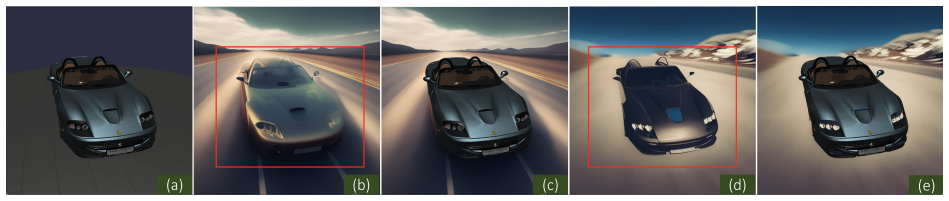
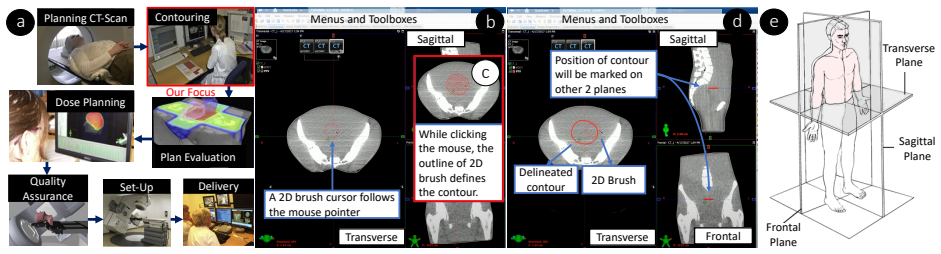
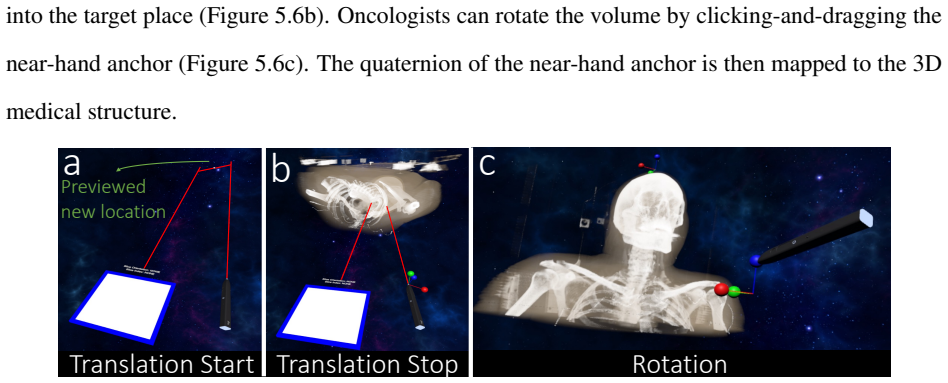
The core claim is that a seamless and efficient interaction experience within a mixed-dimensional information space is attainable by directly attacking the three seams that arise when 2D and 3D entities meet. Perspective mismatching is addressed by MemoVis, which uses a vision-language model to suggest camera viewpoints anchored to the text a user is typing, and three image modifiers built on conditional diffusion models to generate in-context reference images for design feedback. Spatial misalignment is addressed by PaperToPlace, which parses paper instructions into steps, associates those steps with real-world objects, and uses an optimization over importance and occlusion maps to place each virtual step where it is readable without blocking hands or view. Dimensional incongruence is addressed by VRContour, which combines 3D volumetric rendering with 2D slice contouring so that users can see anatomy in depth while still outlining on familiar 2D planes. Together the three systems are offered as evidence that the three strategies can generalize across the mixed-dimensional information space.
Load-bearing premise
The load-bearing premise is that the three chosen applications, 3D design feedback, procedural instruction, and medical contouring, are representative of the whole mixed-dimensional information space, so the three strategies carry over to other 2D/3D contexts without a broader comparative study.
Editorial extensions
If this is right
- If the thesis is right, interaction designers have a transferable playbook: fix perspective mismatch with multimodal intelligence, fix spatial mismatch with context cues, and fix dimensional mismatch with blended 2D/3D representations.
- Non-experts can participate in 3D design review: MemoVis's viewpoint suggestions and image modifiers let feedback providers create in-context reference images without 3D or image-editing skills, and the reported study shows significantly reduced camera-navigation time.
- Existing paper instructions can be upgraded to MR without being rewritten from scratch; PaperToPlace's authoring pipeline segments documents, and its consumption pipeline places steps optimally to reduce context-switching effort.
- Domain-specific workflows such as medical contouring can be moved into VR if the interface preserves the familiar 2D slice-based task inside a 3D volumetric scene.
- The dissertation's evaluation pattern, measuring navigation time, context switching, and image explicitness, provides a template for assessing whether any mixed-dimensional interface is actually seamless.
Reading between the lines
- Editorial inference: the three challenges could be read as a design checklist for any interface that mixes 2D and 3D content, so future systems could be evaluated for perspective, placement, and dimensional seams before implementation.
- Editorial inference: the viewpoint-suggestion method, which matches a text comment against pre-rendered views using a vision-language model, likely transfers to other text-anchored 3D navigation tasks such as finding a view of a model, scene, or volume from a natural-language description.
- Editorial inference: PaperToPlace's placement optimization could be made continuously adaptive, repositioning instruction steps as gaze and hand tracking indicate a new area of focus, an extension the dissertation only partially explores.
- Editorial inference: the dissertation's three applications are a convenience sample; testing the three strategies on a fourth task, such as collaborative data analysis or education, would show whether the claimed generalization holds.
Editorial analysis
A structured set of objections, weighed in public.
Referee Report
Summary. This dissertation proposes the concept of a mixed-dimensional information space, in which users interact with entities represented in both 2D and 3D, and claims that seamless and efficient interaction in such a space can be achieved through three strategies: (1) integrating multimodal intelligence to address perspective mismatching, (2) using environmental and behavioral context cues to address spatial misalignment, and (3) combining 2D and 3D representations to address dimensional incongruence. The body of the dissertation consists of three previously published systems: MemoVis, a GenAI-assisted tool for creating reference images for 3D design feedback; PaperToPlace, a workflow that converts paper instructions into spatially optimized mixed-reality guidance; and VRContour, a virtual-reality system for medical contour delineation. Each system is evaluated with at least one user study, including formative studies, quantitative measurements, system usability scales, and qualitative codebooks. The dissertation concludes with a general discussion of context awareness, cognitive load, and future work.
Significance. If the thesis-level claim is taken at face value, the dissertation offers a transferable design recipe for HCI researchers building mixed-dimensional interfaces: use multimodal intelligence for perspective matching, context cues for spatial placement, and mixed 2D/3D representations for dimensionally incongruent tasks. The main strengths are that all three systems are fully implemented and grounded in real user needs, each is backed by at least one empirical study with mixed quantitative and qualitative evidence, and the reprint status of the three chapters is explicitly disclosed. The use of pre-trained CLIP, ControlNet, SAM, and a fine-tuned language model, rather than models fitted to the evaluation outcomes, reduces circularity risk. The evaluations include both producer-side and consumer-side assessments, which is particularly valuable for MemoVis. However, the connection between the evidence and the broad thesis statement is weaker than the abstract and Section 1.1 suggest: the studies are small, mostly qualitative, and each strategy is evaluated only as part of an integrated system, so the causal attribution of the named strategies is not isolated by the data.
major comments (4)
- [§1.1, Thesis Statement] The claim that seamless and efficient interaction in a mixed-dimensional information space 'can be achieved by' the three named strategies is underdetermined by the evidence. In MemoVis (§3.4), the real-time viewpoint suggestion is bundled with the three GenAI image modifiers and a text editor; the navigation-time comparison in §3.5.1 (F1,24=7.398, p=.018) supports the whole system, not the specific strategy of 'multimodal intelligence.' The same bundling occurs in PaperToPlace (§4.6), where the placement optimizer is combined with document parsing, gesture menus, and hands-free interaction, and in VRContour (§5.4), where volumetric rendering and brush tools are introduced together. Because the thesis statement is the central claim of the dissertation, this mismatch should be resolved either by narrowing the claim to the three demonstrated applications and strategies, or by adding component-level analyses that isolate each strategy's contribution.
- [§3.5.1, Measures and Data Analysis] The reported test statistic F1,24 for navigation time is difficult to reconcile with the within-subjects study design. With 14 participants, or 13 after excluding PF14, the error degrees of freedom should reflect participant-level clustering; F1,24 implies that individual comments or task-level observations were treated as independent units. Non-independent observations as the unit of analysis overstate the statistical significance of the result. Please report a mixed-effects model with participant as a random effect, or aggregate the navigation time per participant before performing the ANOVA. This issue is load-bearing because this quantitative effect is the primary evidence for the 'efficiency' component of Strategy (1).
- [§1.3 and §6.4] The dissertation generalizes from three task domains, namely 3D design feedback, procedural instructions, and medical contouring, to the entire 'mixed-dimensional information space,' but no argument establishes that these three applications span the space's important interaction challenges. The limitations sections in §3.7, §4.9, and §5.7.3 appropriately acknowledge small samples, narrow task scopes, and the need for broader deployment, and §6.4 also outlines limitations; however, these qualifications are not carried back to the thesis statement in §1.1 or to the abstract. The authors should either explicitly restrict the thesis to the three studied application contexts or provide a coverage argument in Chapter 6 that justifies broader applicability. Without this, the central claim exceeds the evidence, even though each individual system is credible.
- [§5.4 and §5.6] The VRContour evaluation conflates 'combining 2D and 3D representations' with the overall VR experience. The system simultaneously introduces volumetric rendering, new brush-based interaction techniques, and a 2D/3D mixed working set (§5.4), so any significant difference reported in §5.6 could plausibly be attributed to immersion, input modality, or task novelty rather than to dimensional congruence specifically. An evaluation that includes a 3D-only condition, a 2D-slice-only condition, or at least a systematic analysis of which specific feature drove the observed benefits would be needed to isolate the third thesis strategy.
minor comments (5)
- [Abstract and §1.1] There is a grammatical error in the thesis statement: 'An seamless' should be 'A seamless.' The same error appears in the abstract.
- [Appendix D] The heading 'Glossory of Terms' is a typo; it should read 'Glossary of Terms.'
- [Chapter 5] In the table of contents and the chapter text, several instances of 'V olumetric' and 'V olumeric' appear with a stray space; these should be corrected to 'Volumetric.'
- [§2.2] The phrase 'Prior research research' is a duplicated word and should read 'Prior research.'
- [Chapters 3–5] Each chapter is explicitly identified as a reprint of a published paper, which is good practice, but the dissertation would benefit from a brief introductory note at the start of each chapter explaining how the chapter relates to the overarching thesis and whether any content was added or modified for the dissertation.
Circularity Check
No significant circularity; the thesis strategies are supported by external baselines and pre-trained models rather than by construction.
full rationale
The dissertation's three systems are each evaluated against external baselines or existing workflows, and the thesis-level claim in Section 1.1 is a design generalization rather than a derivation that reduces to its inputs. MemoVis's viewpoint suggestion relies on a pre-trained CLIP model and its image modifiers on pre-trained ControlNet, SAM, and inpainting models, none of which are fitted to the study outcomes; the navigation-time reduction is measured empirically against a search/sketch baseline. PaperToPlace's consumption pipeline is a computational placement optimization evaluated in within-subjects user studies, and its ML-assisted authoring pipeline is assessed against a rule-based baseline and manual labeling, not against the same data used to fit the model. VRContour is a within-subjects comparison of VR contouring against a standard screen-based workflow, so its outcome measure is not defined in terms of the 2D/3D feature it claims to test. The self-citations present in the manuscript are explicit disclosures that the chapters reprint previously published papers; these citations are not invoked as load-bearing evidence for the dissertation's thesis, and no equation or fitted parameter is renamed as a prediction. The strongest available criticism, that the thesis's causal attribution is underdetermined because each strategy is evaluated only as part of a full system, is a concern about external validity or experimental isolation, not circularity under the definitions used in this analysis.
Assumptions & free parameters
free parameters (3)
- ControlNet conditioning strengths =
0.7 (scribble), 0.3 (depth)
- Viewpoint sampling grid =
5 bins per axis, 30-degree intervals, r in {0.5, 1.0, 1.5}
- Placement optimizer cost weights =
not specified in visible text
assumptions (3)
- domain assumption User-centered design and small-n user studies provide valid evidence for design guidelines
- domain assumption CLIP cosine similarity between text and rendered viewpoints identifies task-relevant camera views
- domain assumption Reducing context switches and occlusions improves task efficiency in MR procedures
invented entities (3)
-
Mixed-dimensional information space
-
Seams
-
Perspective mismatching, spatial misalignment, dimensional incongruence
Cite this review
Pith. "Pith review of Seamless and Efficient Interactions within a Mixed-Dimensional Information Space." pith.science (2026). https://pith.science/paper/VX2XW3F4
@misc{pith2026250604545,
  author       = {Pith},
  title        = {Pith review of: Seamless and Efficient Interactions within a Mixed-Dimensional Information Space},
  year         = {2026},
  howpublished = {\url{https://pith.science/paper/VX2XW3F4}},
  note         = {Machine review of arXiv:2506.04545}
}
read the original abstract
Mediated by today's visual displays, information space allows users to discover, access and interact with a wide range of digital and physical information. The information presented in this space may be digital, physical or a blend of both, and appear across different dimensions - such as texts, images, 3D content and physical objects embedded within real-world environment. Navigating within the information space often involves interacting with mixed-dimensional entities, visually represented in both 2D and 3D. At times, interactions also involve transitioning among entities represented in different dimensions. We introduce the concept of mixed-dimensional information space, encompassing entities represented in both 2D and 3D. Interactions within the mixed-dimensional information space should be seamless and efficient: users should be able to focus on their primary tasks without being distracted by interactions with or transitions between entities. While incorporating 3D representations into the mixed-dimensional information space offers intuitive and immersive ways to interact with complex information, it is important to address potential seams and inefficiencies that arise while interacting with both 2D and 3D entities. This dissertation introduces new interactive techniques and systems to realize seamless and efficient interactions within the mixed-dimensional information space. This dissertation introduces three interactive systems: MemoVis which aims to use emergent generative AI to help users create reference images for 3D design feedback; PaperToPlace which demonstrates how paper-based instruction documents can be transformed and spatialized into a context-aware MR experience; and VRContour which explores how contour delineation workflow can be brought into VR.
Figures


Figures from the paper (61 more)








Reference graph
Works this paper leans on
-
[1]
DeepDream - A Code Example for Visualizing Neural Networks
2015. DeepDream - A Code Example for Visualizing Neural Networks. https://ai.googleblog. com/2015/07/deepdream-code-example-for-visualizing.html Accessed on August 8, 2023
2015
-
[2]
Receipe: Microwave Mac ’n’ Cheese in a Mug
2016. Receipe: Microwave Mac ’n’ Cheese in a Mug. https://www.newideafood.com.au/ microwave-mac-n-cheese-in-a-mug Accessed on December 24, 2022
2016
-
[3]
5 Ways to Interpret a SUS Score
2018. 5 Ways to Interpret a SUS Score. https://measuringu.com/interpret-sus-score Accessed on August 7, 2022
2018
-
[4]
Language Models are Few-shot Learners
2020. Language Models are Few-shot Learners . https://openai.com/research/ language-models-are-few-shot-learners Accessed on January 9, 2023
2020
-
[5]
CLIP: Connecting Text and Images
2021. CLIP: Connecting Text and Images. https://openai.com/research/clip Accessed on December 17, 2023
2021
-
[6]
Eclipse: Fast, Precise Planning for Advanced Cancer Care
2021. Eclipse: Fast, Precise Planning for Advanced Cancer Care. Accessed on August 8, 2022
2021
-
[7]
Hiwings Mechanical Gaming Keyboard
2021. Hiwings Mechanical Gaming Keyboard . https://www.amazon.com/gp/product/ B095SDPH6V/ref=ppx_yo_dt_b_asin_title_o06_s00?ie=UTF8&psc=1 Accessed on August 7, 2022
2021
-
[8]
HTC VIVE Pro
2021. HTC VIVE Pro. https://www.vive.com/us/product/vive-pro Accessed on August 7, 2022
2021
Show all 285 references
-
[9]
Introduing ‘Horizon Workrooms‘: Remote Collaboration Re-imagined
2021. Introduing ‘Horizon Workrooms‘: Remote Collaboration Re-imagined. https://www. oculus.com/blog/workrooms Accessed on January 4, 2025
2021
-
[10]
Logitech VR Ink
2021. Logitech VR Ink. https://www.logitech.com/en-us/promo/vr-ink.html Accessed on August 7, 2022
2021
-
[11]
Logitech Wired Mouse
2021. Logitech Wired Mouse . https://www.amazon.com/ Logitech-Wired-Mouse-M90-Black/dp/B003D8ZT0C Accessed on August 7, 2022
2021
-
[12]
Unity 2021.3.9 Release
2021. Unity 2021.3.9 Release. https://unity.com/releases/editor/whats-new/2021.3.9 Ac- 159 cessed on April 1, 2023
2021
-
[13]
Unity Volumetric Rendering
2021. Unity Volumetric Rendering. https://github.com/mlavik1/UnityV olumeRendering Accessed on August 7, 2022
2021
-
[14]
Adobe Scan Mobile Apps
2022. Adobe Scan Mobile Apps. https://www.adobe.com/acrobat/mobile/scanner-app.html Accessed on August 29, 2022
2022
-
[15]
Basic Microwave Scrambled Eggs
2022. Basic Microwave Scrambled Eggs . https://www.eggs.ca/recipes/ basic-microwave-scrambled-eggs Accessed on December 24, 2022
2022
-
[16]
Body Tracking for Movement SDK for Unity
2022. Body Tracking for Movement SDK for Unity . https://developer.oculus.com/ documentation/unity/move-body-tracking/ Accessed on July 23, 2023
2022
-
[17]
Bring Surroundings into Your App with RoomPlan
2022. Bring Surroundings into Your App with RoomPlan . https://developer.apple.com/ augmented-reality/roomplan/ Accessed on December 24, 2022
2022
-
[18]
Cuisinart Instruction Booklet
2022. Cuisinart Instruction Booklet . https://www.cuisinart.ca/on/demandware.static/-/ Sites-ca-cuisinart-Library/en_CA/dwca81d85d/Instruction%20Booklet/DGB-800C_en.pdf Accessed on December 24, 2022
2022
-
[19]
eContour: Interactive Contouring Guidelines for the Busy Radiation Oncology Professional
2022. eContour: Interactive Contouring Guidelines for the Busy Radiation Oncology Professional. Accessed on August 7, 2022
2022
-
[20]
Elucis - The Future of Medical Modelling
2022. Elucis - The Future of Medical Modelling. https://www.realizemed.com/elucis Accessed on August 7, 2022
2022
-
[21]
Eye Tracking for Movement SDK for Unity
2022. Eye Tracking for Movement SDK for Unity . https://developer.oculus.com/ documentation/unity/move-eye-tracking/ Accessed on December 24, 2022
2022
-
[22]
Full Text Annotation of Google Vision OCR API
2022. Full Text Annotation of Google Vision OCR API. https://cloud.google.com/vision/ docs/fulltext-annotations Accessed on December 24, 2022
2022
-
[23]
HTC VIVE Pro Eye Development Guide
2022. HTC VIVE Pro Eye Development Guide. Accessed on August 8, 2022
2022
-
[24]
Meta Quest 3
2022. Meta Quest 3. https://www.meta.com/gb/quest/quest-3 Accessed on May 7, 2025
2022
-
[25]
Meta Quest Pro
2022. Meta Quest Pro. https://www.meta.com/quest/quest-pro Accessed on December 24, 2022
2022
-
[26]
Microsoft Dynamic 365 Remote Assist
2022. Microsoft Dynamic 365 Remote Assist . https://dynamics.microsoft.com/en-us/ mixed-reality/guides/ Accessed on July 4, 2023
2022
-
[27]
Midjourney
2022. Midjourney. https://www.midjourney.com Accessed on August 8, 2023. 160
2022
-
[28]
OCR Provided by Google Vision API
2022. OCR Provided by Google Vision API . https://cloud.google.com/vision/docs/ocr Accessed on December 24, 2022
2022
-
[29]
Receipe: Chocolate Cake in a Mug
2022. Receipe: Chocolate Cake in a Mug . https://www.foodnetwork.com/recipes/ ree-drummond/chocolate-cake-in-a-mug-3158576 Accessed on December 24, 2022
2022
-
[30]
Receipe: Quick, Microwave-Poached Eggs on Avocado Toast
2022. Receipe: Quick, Microwave-Poached Eggs on Avocado Toast . https://blog. myfitnesspal.com/quick-microwave-poached-eggs-on-avocado-toast Accessed on December 24, 2022
2022
-
[31]
Spatial Anchors Overview
2022. Spatial Anchors Overview . https://developer.oculus.com/documentation/unity/ unity-spatial-anchors-overview/ Accessed on December 24, 2022
2022
-
[32]
Tab - The Simple Bill Splitting Apps
2022. Tab - The Simple Bill Splitting Apps. https://www.tabapp.co Accessed on August 29, 2022
2022
-
[33]
The Benefits of Virtual Reality in Healthcare
2022. The Benefits of Virtual Reality in Healthcare . https://www.healthcare.digital/ single-post/2017/11/02/the-benefits-of-virtual-reality-in-healthcare Accessed on August 6, 2022
2022
-
[34]
Apple Vision Pro
2023. Apple Vision Pro. https://www.apple.com/apple-vision-pro/ Accessed on July 4, 2023
2023
-
[35]
Babylon.js
2023. Babylon.js. https://www.babylonjs.com Accessed on December 17, 2023
2023
-
[36]
2023. Lexica. https://lexica.art Accessed on December 17, 2023
2023
-
[37]
Polycount
2023. Polycount. https://polycount.com Accessed on December 17, 2023
2023
-
[38]
Polycount 3D Arts Showcases and Critiques
2023. Polycount 3D Arts Showcases and Critiques . https://polycount.com/categories/ 3d-art-showcase-critiques Accessed on January 27, 2024
2023
-
[39]
2023. Slack. https://slack.com Accessed on December 16, 2023
2023
-
[40]
Vizcom - The Next Generation of Product Visualization
2023. Vizcom - The Next Generation of Product Visualization . https://www.vizcom.ai Accessed on December 17, 2023
2023
-
[41]
Magic Leap 2
2025. Magic Leap 2. https://https://www.magicleap.com Accessed on May 7, 2025
2025
-
[42]
Microsoft HoloLens
2025. Microsoft HoloLens. https://learn.microsoft.com/en-us/hololens Accessed on May 7, 2025
2025
-
[43]
Web3D Consortium
n.d.. Web3D Consortium. https://www.web3d.org Accessed on August 7, 2022
2022
-
[44]
Williams
Hervé Abdi and Lynne J. Williams. 2010. Tukey’s Honestly Significant Difference (HSD) 161 Test. Encyclopedia of Research Design 3, 1 (2010), 1–5. https://doi.org/10.4135/ 9781412961288.n478
2010
-
[45]
Abrams, Kathryn A
Ross A. Abrams, Kathryn A. Winter, William F. Regine, Howard Safran, John P. Hoffman, Robert Lustig, Andre A. Konski, Al B. Benson, John S. Macdonald, Tyvin A. Rich, and Christopher G. Willett. 2012. Failure to Adhere to Protocol Specified Radiation Therapy Guidelines Was Asso...
2012
-
[46]
Adobe. 2023. Adobe Firefly. https://www.adobe.com/products/firefly.html Accessed on December 17, 2023
2023
-
[47]
Adobe. 2023. Adobe Photoshop. https://www.adobe.com/products/photoshop.html Accessed on December 17, 2023
2023
-
[48]
Adobe. 2023. Generative Fill Feature from Adobe Photoshop. https://www.adobe.com/ products/photoshop/generative-fill.html Accessed on December 17, 2023
2023
-
[49]
Adobe. 2023. How to Use Lasso Tool in Adobe Photoshop . https://www.adobe.com/ products/photoshop/lasso-tool.html Accessed on December 17, 2023
2023
-
[50]
Adobe. 2024. Adobe Substance 3D Collection . https://www.adobe.com/products/ substance3d.html Accessed on December 11, 2024
2024
-
[51]
Adobe. 2024. Tap into the Power of AI Photo Editing. https://www.adobe.com/products/ photoshop/ai.html Accessed on August 4, 2024
2024
-
[52]
Yuvraj Agarwal, Christopher Harrison, Gierad Laput, Sudershan Boovaraghavan, Chen Chen, Abhijit Hota, Bo Robert Xiao, and Yang Zhang. 2019. Virtual Sensor System. https://patents.google.com/patent/US10436615B2 US Patent 10,436,615
2019
-
[53]
Alexandra Branzan Albu, Trevor Beugeling, and Denis Laurendeau. 2008. A Morphology- Based Approach for Interslice Interpolation of Anatomical Slices From Volumetric Images. IEEE Transactions on Biomedical Engineering 55, 8 (2008), 2022–2038. https://doi.org/10. 1109/tbme.2008.921158
2008
-
[54]
Anderson
John R. Anderson. 2013. The Architecture of Cognition. Psychology Press. https://doi.org/ 10.4324/9781315799438
2013 doi
-
[55]
Rahul Arora, Rubaiat Habib Kazi, Tovi Grossman, George Fitzmaurice, and Karan Singh
-
[56]
Rahul Arora, Rubaiat Habib Kazi, Fraser Anderson, Tovi Grossman, Karan Singh, and George Fitzmaurice. 2017. Experimental Evaluation of Sketching on Surfaces in VR. In Proceedings of the 2017 CHI Conference on Human Factors in Computing Systems (Denver, Colorado, USA) (CHI ’17)...
2017
-
[57]
Stable Diffusion Art. 2023. How to Remove Undesirable Objects with AI Inpainting . https://stable-diffusion-art.com/how-to-remove-a-person-with-ai-inpainting/ Accessed on December 17, 2023
2023
-
[58]
Autodesk. 2023. Add Annotation - Autodesk Viewer Guide. https://help.autodesk.com/view/ adskviewer/enu/?guid=ADSKVIEWER_Help_AddAnnotations_html Accessed on August 4, 2024
2023
-
[59]
Ronald Azuma, Yohan Baillot, Reinhold Behringer, Steven Feiner, Simon Julier, and Blair MacIntyre. 2001. Recent Advances in Augmented Reality. IEEE Computer Graphics and Applications 21, 6 (2001), 34–47. https://doi.org/10.1109/38.963459
2001 doi
- [60]
-
[61]
Sai Balasubramanian. 2021. The Next Frontier For Healthcare: Augmented Reality, Virtual Reality, And The Metaverse. https://www.forbes.com/sites/saibala/2021/11/29/ the-next-frontier-for-healthcare-augmented-reality-virtual-reality-and-the-metaverse/?sh= 5352a3b52894 Accessed ...
2021
-
[62]
Dorneich, Matthew C
Prashant Barnawal, Michael C. Dorneich, Matthew C. Frank, and Frank Peters. 2017. Evalu- ation of Design Feedback Modality in Design for Manufacturability. Journal of Mechanical Design 139, 9 (07 2017), 094503. https://doi.org/10.1115/1.4037109
2017 doi
-
[63]
Dan Bennett, Oussama Metatla, Anne Roudaut, and Elisa D. Mekler. 2023. How does HCI Understand Human Agency and Autonomy?. In Proceedings of the 2023 CHI Conference on Human Factors in Computing Systems (Hamburg, Germany) (CHI ’23). Association for Computing Machinery, New Yor...
2023
-
[64]
David Benyon. 2001. Navigating Information Spaces. https://www.ercim.eu/publication/ Ercim_News/enw46/benyon.html Accessed on May 17, 2025
2001
-
[65]
David Benyon. 2001. The New HCI? Navigation of Information Space. Know.-Based Syst. 14, 8 (Dec 2001), 425 – 430. https://doi.org/10.1016/S0950-7051(01)00135-6 163
2001 doi
- [66]
-
[67]
Michał Bie´n, Michał Gilski, Martyna Maciejewska, Wojciech Taisner, Dawid Wisniewski, and Agnieszka Lawrynowicz. 2020. RecipeNLG: A Cooking Recipes Dataset for Semi- Structured Text Generation. In Proceedings of the 13th International Conference on Natural Language Generation....
2020
-
[68]
Bingham and Patricia Witkowsky
Andrea J. Bingham and Patricia Witkowsky. 2021. Deductive and Inductive Approaches to Qualitative Data Analysis. Analyzing and Interpreting Qualitative Data: After the Interview (2021), 133–146
2021
-
[69]
V olker Blanz, Michael J Tarr, and Heinrich H Bülthoff. 1999. What Object Attributes Determine Canonical Views? Perception 28, 5 (1999), 575–599. https://doi.org/10.1068/ p2897 arXiv:https://doi.org/10.1068/p2897 PMID: 10664755
1999 doi
-
[70]
Annette Boejen and Cai Grau. 2011. Virtual Reality in Radiation Therapy Training. Surgical Oncology 20, 3 (2011), 185–188. https://doi.org/10.1016/j.suronc.2010.07.004 Special Issue: Education for Cancer Surgeons
2011 doi
-
[71]
Bogdewic
Stephen P. Bogdewic. 1992. Participant Observation. Doing Qualitative Research (1992), 45–69
1992
-
[72]
Sudershan Boovaraghavan, Chen Chen, Anurag Maravi, Mike Czapik, Yang Zhang, Chris Harrison, and Yuvraj Agarwal. 2023. Mites: Design and Deployment of a General-Purpose Sensing Infrastructure for Buildings. Proc. ACM Interact. Mob. Wearable Ubiquitous Technol. 7, 1, Article 2 (...
2023 doi
-
[73]
Virginia Braun and Victoria Clarke. 2012. Thematic Analysis: A Practical Guide. American Psychological Association. https://doi.org/10.1037/13620-004
2012 doi
-
[74]
Encyclopaedia Britannica. 1987. Sensory Reception: Human Vision: Structure and Function of the Human Eye. Encyclopedia Brittanica 27 (1987), 179
1987
-
[75]
John Brooke. 1996. SUS - A Quick and Dirty Usability Scale. Usability Evaluation in Industry 189, 194 (1996), 4–7
1996
-
[76]
Raluca Budiu. 2013. Interaction Cost . https://www.nngroup.com/articles/ interaction-cost-definition Accessed on Janu 16, 2023
2013
-
[77]
Nicolas Burtnyk, Azam Khan, George Fitzmaurice, and Gordon Kurtenbach. 2006. ShowMo- tion: Camera Motion based 3D Design Review. In Proceedings of the 2006 Symposium on In- teractive 3D Graphics and Games(Redwood City, CA, USA)(I3D ’06). Association for Com- 164 puting Machine...
2006
-
[78]
William A. S. Buxton. 1986. There’s More to Interaction Than Meets the Eye: Some Issues in Manual Input. User Centered System Design: New Perspectives on Human-Computer Interaction 319 (1986), 337. https://www.dgp.toronto.edu/otp/papers/bill.buxton/eye.html Accessed on May 14, 2025
1986
-
[79]
William A. S. Buxton. 1992. Telepresence: integrating shared task and person spaces. In Proceedings of the Conference on Graphics Interface (Vancouver, British Columbia, Canada). Morgan Kaufmann Publishers Inc., San Francisco, CA, USA, 123–129. https: //doi.org/10.5555/155294.155309
1992
-
[80]
Alice Cai, Steven R Rick, Jennifer L Heyman, Yanxia Zhang, Alexandre Filipowicz, Matthew Hong, Matt Klenk, and Thomas Malone. 2023. DesignAID: Using Generative AI and Semantic Diversity for Design Inspiration. InProceedings of The ACM Collective Intelligence Conference (Delft,...
2023
-
[81]
Alberto Cannavò, Davide Calandra, Aidan Kehoe, and Fabrizio Lamberti. 2021. Eval- uating Consumer Interaction Interfaces for 3D Sketching in Virtual Reality. In Interna- tional Conference on ArtsIT, Interactivity and Game Creation. Springer, 291–306. https: //doi.org/10.1007/9...
2021 doi
-
[82]
Computer Careers. 2023. Is 3D Modeling Hard? And Other Things You Need To Know . https://www.computercareers.org/is-3d-modeling-hard Accessed on January 26, 2024
2023
-
[83]
Julie Carmigniani, Borko Furht, Marco Anisetti, Paolo Ceravolo, Ernesto Damiani, and Misa Ivkovic. 2011. Augmented reality technologies, systems and applications. Multimedia Tools Appl. 51, 1 (Jan 2011), 341–377. https://doi.org/10.1007/s11042-010-0660-6
2011 doi
-
[84]
Johnson, Alice Lee, Ella T
Kemeberley Charles, Chen Chen, Janet G. Johnson, Alice Lee, Ella T. Lifset, Michael Hogarth, Nadir Weibel, Emilia Farcas, and Alison A. Moore. 2021. How might an intelligent voice assistant address older adults’ health-related needs?. In Journal of the American Geriatrics Soci...
2021
-
[85]
Johnson, Charles Kemeberley, Alice Lee, Ella T
Chen Chen, Janet G. Johnson, Charles Kemeberley, Alice Lee, Ella T. Lifset, Michael Hogarth, Alison A. Moore, Emilia Farcas, and Nadir Weibel. 2021. Understanding Barriers and Design Opportunities to Improve Healthcare and QOL for Older Adults through V oice Assistants. In The...
2021
-
[86]
Lifset, Yichen Han, Arkajyoti Roy, Michael Hogarth, Alison A
Chen Chen, Ella T. Lifset, Yichen Han, Arkajyoti Roy, Michael Hogarth, Alison A. Moore, Emilia Farcas, and Nadir Weibel. 2023. How do Older Adults Set Up V oice Assistants? 165 Lessons Learned from a Deployment Experience for Older Adults to Set Up Standalone V oice Assistants...
2023
-
[87]
Chen Chen, Ella T Lifset, Yichen Han, Arkajyoti Roy, Michael Hogarth, Alison A Moore, Emilia Farcas, and Nadir Weibel. 2023. Screen or No Screen? Lessons Learnt from a Real-World Deployment Study of Using V oice Assistants With and Without Touchscreen for Older Adults. In Proc...
2023
-
[88]
Chen Chen, Khalil Mrini, Kemeberly Charles, Ella Lifset, Michael Hogarth, Alison Moore, Nadir Weibel, and Emilia Farcas. 2021. Toward a Unified Metadata Schema for Eco- logical Momentary Assessment with V oice-First Virtual Assistants. InProceedings of the 3rd ACM Conference o...
2021
-
[89]
Kim, and Nadir Weibel
Chen Chen, Cuong Nguyen, Thibault Groueix, Vladimir G. Kim, and Nadir Weibel. 2024. MemoVis: A GenAI-Powered Tool for Creating Companion Reference Images for 3D Design Feedback. ACM Transactions on Computer-Human Interaction 31, 5, Article 67 (Nov 2024), 41 pages. https://doi....
2024 doi
-
[90]
Chen Chen, Cuong Nguyen, Jane Hoffswell, Jennifer Healey, Trung Bui, and Nadir Weibel
-
[91]
Chen Chen, Ke Sun, and Xinyu Zhang. 2020. CapTag: Toward Printable Ubiquitous Internet of Things: Poster Abstract. In Proceedings of the 18th Conference on Embedded Networked Sensor Systems (Virtual Event, Japan) (SenSys ’20). Association for Computing Machinery, New York, NY ...
2020
-
[92]
Chen Chen, Ke Sun, and Xinyu Zhang. 2021. ExGSense: Toward Facial Gesture Sensing with a Sparse Near-Eye Sensor Array. In Proceedings of the 20th International Conference on Information Processing in Sensor Networks (Co-Located with CPS-IoT Week 2021) (Nashville, TN, USA) (IPS...
2021
-
[93]
Sherer, James D
Chen Chen, Matin Yarmand, Varun Singh, Michael V . Sherer, James D. Murphy, Yang Zhang, and Nadir Weibel. 2022. Exploring Needs and Design Opportunities for Virtual 166 Reality-Based Contour Delineations of Medical Structures. In Companion of the 2022 ACM SIGCHI Symposium on E...
2022
-
[95]
Chen Chen, Matin Yarmand, Zhuoqun Xu, Varun Singh, Yang Zhang, and Nadir Weibel
-
[96]
Hong, Jennifer Jacobs, Philippe Laban, Dingzeyu Li, Nanyun Peng, Karl D
Xiang ‘Anthony’ Chen, Jeff Burke, Ruofei Du, Matthew K. Hong, Jennifer Jacobs, Philippe Laban, Dingzeyu Li, Nanyun Peng, Karl D. D. Willis, Chien-Sheng Wu, and Bolei Zhou
-
[98]
Subramanian Chidambaram, Hank Huang, Fengming He, Xun Qian, Ana M Villanueva, Thomas S Redick, Wolfgang Stuerzlinger, and Karthik Ramani. 2021. ProcessAR: An augmented reality-based tool to create in-situ procedural 2d/3d ar instructions. In Designing Interactive Systems Confe...
2021
-
[99]
DaEun Choi, Sumin Hong, Jeongeon Park, John Joon Young Chung, and Juho Kim. 2024. CreativeConnect: Supporting Reference Recombination for Graphic Design Ideation with Generative AI. In Proceedings of the CHI Conference on Human Factors in Computing Systems (Honolulu, HI, USA) ...
2024
- [100]
-
[101]
Mayo Clinic. 2023. Adult Attention-Deficit/Hyperactivity Disorder (ADHD). https://www. mayoclinic.org/diseases-conditions/adult-adhd 167
2023
-
[102]
H Cohen. 1988. Statistical Power Analysis for Behavioral Sciences. Hillsdale, NJ: Lawrence Erlbaum Associates (1988)
1988
-
[103]
Sandin, Thomas A
Carolina Cruz-Neira, Daniel J. Sandin, Thomas A. DeFanti, Robert V . Kenyon, and John C. Hart. 1992. The CA VE: Audio Visual Experience Automatic Virtual Environment.Commun. ACM 35, 6 (June 1992), 64–72. https://doi.org/10.1145/129888.129892
1992
-
[104]
Sumit Chopra, Raia Hadsell, and Yann LeCun. 2005. Learning a Similarity Metric Discriminatively, with Application to Face Verification. In 2005 IEEE Computer Soci- ety Conference on Computer Vision and Pattern Recognition , V ol. 1. 539–546 vol. 1. https://doi.org/10.1109/cvpr...
2005 doi
-
[105]
Frederik Michel Dekking, Cornelis Kraaikamp, Hendrik Paul Lopuhaä, and Ludolf Erwin Meester. 2005. A Modern Introduction to Probability and Statistics: Understanding Why and How. Springer Science & Business Media. https://doi.org/10.1007/1-84628-168-7
2005 doi
- [106]
-
[107]
Francesco Di Cerbo, Gabriella Dodero, and Laura Papaleo. 2010. Integrating a Web3D interface into an e-learning platform. In Proceedings of the 15th International Conference on Web 3D Technology(Los Angeles, California) (Web3D ’10). Association for Computing Machinery, New Yor...
2010
-
[108]
Darken and Richard Durost
Rudolph P. Darken and Richard Durost. 2005. Mixed-Dimension Interaction in Virtual Environments. In Proceedings of the ACM Symposium on Virtual Reality Software and Technology (Monterey, CA, USA) (VRST ’05). Association for Computing Machinery, New York, NY , USA, 38–45. https...
2005
-
[109]
Dowsett, James M
Robert J. Dowsett, James M. Galvin, Elizabeth Cheng, Robert Smith, Robert Epperson, Rose Harris, Gwen Henze, Michael Needham, Rochelle Payne, Michael A. Peterson, Andrew L. Skinner, and Anthony Reynolds. 1992. Contouring Structures for 3-Dimensional Treatment Planning. Interna...
1992 doi
-
[110]
Tobias Drey, Jan Gugenheimer, Julian Karlbauer, Maximilian Milo, and Enrico Rukzio. 2020. VRSketchIn: Exploring the Design Space of Pen and Tablet Interaction for 3D Sketching in Virtual Reality. In Proceedings of the 2020 CHI Conference on Human Factors in Computing Systems (...
2020
-
[111]
DRinVET. 2023. What is Digital Reality. https://drinvet-project.eu/basics Accessed on December 28, 2024
2023
-
[112]
Adam A Dmytriw, Philip S Mok, Natalia Gorelik, Jordan Kavanaugh, and Peter Brown. 2015. Radiology in the Undergraduate Medical Curriculum: Too Little, Too Late? Medical Science Educator 25, 3 (2015), 223–227. https://doi.org/10.1007/s40670-015-0130-x
2015 doi
-
[113]
Eckhart Dühmke, Jeremy Franklin, Michael Pfreundschuh, Susanne Sehlen, Norman Willich, Ursula Rühl, Rolf-Peter Müller, Peter Lukas, Anton Atzinger, Ursula Paulus, Bernd Lathan, Ulrich Rüffer, Markus Sieber, Jürgen Wolf, Andreas Engert, Axel Georgii, Susanne Staar, Richard Herr...
2001
-
[114]
Norris, Leah A
Paige Eansor, Madeleine E. Norris, Leah A. D’Souza, Glenn S. Bauman, Zahra Kassam, Eric Leung, Anthony C. Nichols, Manas Sharma, Keng Y . Tay, Vikram Velker, Andrew Warner, Katherine E. Willmore, David A. Palma, and Nicole Campbell. 2021. Development, Implementation, and Initi...
2021 doi
-
[115]
Easterday, Vincent Aleven, and Richard Scheines
Matthew W. Easterday, Vincent Aleven, and Richard Scheines. 2007. ‘Tis Better to Construct than to Receive? The Effects of Diagram Tools on Causal Reasoning. In Proceedings of the 2007 Conference on Artificial Intelligence in Education: Building Technology Rich Learning Contex...
2007
-
[116]
Obumneme Stanley Dukor, S. Mahdi H. Miangoleh, Mahesh Kumar Krishna Reddy, Long 168 Mai, and Ya˘gız Aksoy. 2022. Interactive Editing of Monocular Depth. In ACM SIGGRAPH 2022 Posters (Vancouver, British Columbia, Canada) (SIGGRAPH ’22). Association for Computing Machinery, New ...
2022
-
[117]
Garden, Clifford K
Avraham Eisbruch, Jonathan Harris, Adam S. Garden, Clifford K. S. Chao, William Straube, Paul M. Harari, Giuseppe Sanguineti, Christopher U. Jones, Walter R. Bosch, and K. Kian Ang. 2010. Multi-Institutional Trial of Accelerated Hypofractionated Intensity-Modulated Radiation T...
2010 doi
-
[120]
Elsa Eiriksdottir and Richard Catrambone. 2011. Procedural Instructions, Principles, and Examples: How to Structure Instructions for Procedural Tasks to Enhance Performance, Learning, and Transfer. Human Factors 53, 6 (2011), 749–770. https://doi.org/10.1177/ 0018720811419154
2011
-
[121]
Satu Elo and Helvi Kyngäs. 2008. The Qualitative Content Analysis Process. Journal of advanced nursing 62, 1 (2008), 107–115. https://doi.org/10.1111/j.1365-2648.2007.04569.x
2008
-
[122]
Noyan Evirgen and Xiang ‘Anthony’ Chen. 2022. GANzilla: User-Driven Direction Dis- covery in Generative Adversarial Networks. In Proceedings of the 35th Annual ACM Sym- posium on User Interface Software and Technology (Bend, OR, USA) (UIST ’22). As- sociation for Computing Mac...
2022
-
[123]
Noyan Evirgen and Xiang ‘Anthony’ Chen. 2023. GANravel: User-Driven Direction Dis- entanglement in Generative Adversarial Networks. In Proceedings of the 2023 CHI Con- ference on Human Factors in Computing Systems (Hamburg, Germany) (CHI ’23). As- sociation for Computing Machi...
2023
-
[124]
Niklas Elmqvist, Andrew Vande Moere, Hans-Christian Jetter, Daniel Cernea, Harald Reiterer, and TJ Jankun-Kelly. 2011. Fluid Interaction for Information Visualization. Information Visualization 10, 4 (2011), 327–340. https://doi.org/10.1177/1473871611413180
2011 doi
-
[125]
Jacob Feldman and Manish Singh. 2005. Information along Contours and Object Boundaries. Psychological review 112, 1 (2005), 243. https://doi.org/10.1037/0033-295X.112.1.243
2005 doi
-
[126]
Yingchaojie Feng, Xingbo Wang, Kam Kwai Wong, Sijia Wang, Yuhong Lu, Minfeng Zhu, Baicheng Wang, and Wei Chen. 2024. PromptMagician: Interactive Prompt Engineering for Text-to-Image Creation. IEEE Transactions on Visualization and Computer Graphics30, 1 (2024), 295–305. https:...
2024
-
[127]
Gerhard Fischer. 2012. Context-Aware Systems: The ‘right’ Information, at the ‘Right’ Time, in the ‘Right’ Place, in the ‘Right’ Way, to the ‘Right’ Person. In Proceedings of the International Working Conference on Advanced Visual Interfaces(Capri Island, Italy) (AVI ’12). Ass...
2012
-
[128]
Looking Glass Factory. 2025. Looking Glass Factory: Deliver the Best 3D Experience . https://lookingglassfactory.com Accessed on November 28, 2023
2025
-
[129]
Foley, Victor L
James D. Foley, Victor L. Wallace, and Peggy Chan. 1984. The human factors of computer graphics interaction techniques. IEEE Computer Graphics and Applications 4, 11 (1984), 13–48. https://doi.org/10.1109/MCG.1984.6429355
1984
-
[130]
The Blender Foundation. 2024. Blender. https://www.blender.org Accessed on December 11, 2024
2024
-
[131]
Ran Gal, Lior Shapira, Eyal Ofek, and Pushmeet Kohli. 2014. FLARE: Fast Layout for Augmented Reality Applications. In 2014 IEEE International Symposium on Mixed and Augmented Reality (ISMAR). 207–212. https://doi.org/10.1109/ismar.2014.6948429
2014
-
[132]
Fitzmaurice, Ravin Balakrishnan, Gordon Kurtenbach, and Bill Buxton
George W. Fitzmaurice, Ravin Balakrishnan, Gordon Kurtenbach, and Bill Buxton. 1999. An Exploration into Supporting Artwork Orientation in the User Interface. In Proceedings of the SIGCHI Conference on Human Factors in Computing Systems (Pittsburgh, Pennsylvania, 170 USA) (CHI...
1999
-
[134]
Johnson, Tommy Sharkey, and Nadir Weibel
Danilo Gasques, Janet G. Johnson, Tommy Sharkey, and Nadir Weibel. 2019. PintAR: Sketching Spatial Experiences in Augmented Reality. In Companion Publication of the 2019 on Designing Interactive Systems Conference 2019 Companion (San Diego, CA, USA) (DIS ’19 Companion). Associ...
2019
-
[135]
Sarah Gibbons. 2016. Design Critiques: Encourage a Positive Culture to Improve Products. https://www.nngroup.com/articles/design-critiques Accessed on August 2, 2023
2016
-
[136]
Franck Ganier. 2004. Factors Affecting the Processing of Procedural Instructions: Impli- cations for Document Design. IEEE Transactions on Professional Communication 47, 1 (2004), 15–26. https://doi.org/10.1109/tpc.2004.824289
2004
-
[137]
Goodfellow, Jean Pouget-Abadie, Mehdi Mirza, Bing Xu, David Warde-Farley, Sherjil Ozair, Aaron Courville, and Yoshua Bengio
Ian J. Goodfellow, Jean Pouget-Abadie, Mehdi Mirza, Bing Xu, David Warde-Farley, Sherjil Ozair, Aaron Courville, and Yoshua Bengio. 2014. Generative Adversarial Networks. arXiv preprint arXiv: 1406.2661 (2014). https://doi.org/10.48550/arXiv.1406.2661
-
[138]
M. I. S. Guntur, W. Setyaningrum, H. Retnawati, and Marsigit. 2020. Can Augmented Reality Improve Problem-Solving and Spatial Skill?. In Journal of Physics: Conference Series , V ol. 1581. IOP Publishing, 012063. https://doi.org/10.1088/1742-6596/1581/1/012063 171
2020 doi
-
[139]
Moore, Nadir Weibel, and Emilia Farcas
Yichen Han, Christopher Bo Han, Chen Chen, Peng Wei Lee, Michael Hogarth, Alison A. Moore, Nadir Weibel, and Emilia Farcas. 2022. Towards Visualization of Time-Series Ecological Momentary Assessment (EMA) Data on Standalone V oice–First Virtual Assistants. In Proceedings of th...
2022
-
[140]
Ellen R. Girden. 1992. ANOVA: Repeated Measures. Number 84. Sage University Paper Series
1992
-
[142]
Aurora Harley. 2014. Animation for Attention and Comprehension. https://www.nngroup. com/articles/animation-usability
2014
-
[143]
Hart and Lowell E
Sandra G. Hart and Lowell E. Staveland. 1988. Development of NASA-TLX (Task Load Index): Results of Empirical and Theoretical Research. In Human Mental Workload, Peter A. Hancock and Najmedin Meshkati (Eds.). Advances in Psychology, V ol. 52. North-Holland, 139–183. https://do...
1988 doi
-
[145]
Simon Hentschel, Konstantin Kobs, and Andreas Hotho. 2022. CLIP Knows Image Aesthetics. Frontiers in Artificial Intelligence 5 (2022), 976235. https://doi.org/10.3389/frai.2022. 976235
2022 doi
-
[147]
Josh Holinaty, Alec Jacobson, and Fanny Chevalier. 2021. Supporting Reference Imagery for Digital Drawing. In Proceedings of the IEEE/CVF International Conference on Computer Vision. 2434–2442. https://doi.org/10.1109/iccvw54120.2021.00276
2021
-
[148]
Lindun He, Alejandro Guayaquil-Sosa, and Tim McGraw. 2017. Medical image atlas interaction in virtual reality. In Immersive Analytics Workshop
2017
- [149]
-
[150]
Hubbold, David J
Roger J. Hubbold, David J. Hancock, and Christopher J. Moore. 1997. Autostereoscopic Display for Radiotherapy Planning. In Stereoscopic Displays and Virtual Reality Systems IV, V ol. 3012. International Society for Optics and Photonics, 16–27. https://doi.org/10.1117/12. 274463
1997 doi
-
[151]
Anthony Hyman. 1982. Charles Babbage: Pioneer of the Modern Computer . Princeton University Press, USA
1982
-
[152]
Natalie F Holt. 2001. Medical Students Need More Radiology Education.Academic Medicine 76, 1 (2001), 1
2001
-
[153]
Hiroshi Ishii. 1990. TeamWorkStation: towards a seamless shared workspace. InProceedings of the 1990 ACM Conference on Computer-Supported Cooperative Work (Los Angeles, California, USA) (CSCW ’90). Association for Computing Machinery, New York, NY , USA, 13–26. https://doi.org...
1990
-
[154]
Hiroshi Ishii and Naomi Miyake. 1991. Toward an Open Shared Workspace: Computer and Video Fusion Approach of TeamWorkStation. Commun. ACM 34, 12 (dec 1991), 37–50. https://doi.org/10.1145/125319.125321
1991
-
[155]
William Jin, Brandon Birckhead, Bradford Perez, and Sarah Hoffe. 2017. Augmented and Virtual Reality: Exploring a Future Role in Radiation Oncology Education and Training. Applied Radiation Oncology 6 (2017), 13–20
2017
-
[156]
Apple Inc. 2024. Use Memoji on your iPhone or iPad Pro. https://support.apple.com/en-us/ 111115 Accessed on Janu 16, 2023
2024
-
[157]
Janet G Johnson, Danilo Gasques, Tommy Sharkey, Evan Schmitz, and Nadir Weibel. 2021. Do You Really Need to Know Where “That” Is? Enhancing Support for Referencing in Collaborative Mixed Reality Environments. In Proceedings of the 2021 CHI Conference on Human Factors in Comput...
2021
-
[158]
Johnson, Danilo Gasques Rodrigues, Madhuri Gubbala, and Nadir Weibel
Janet G. Johnson, Danilo Gasques Rodrigues, Madhuri Gubbala, and Nadir Weibel. 2018. HoloCPR: Designing and Evaluating a Mixed Reality Interface for Time-Critical Emergencies. In Proceedings of the 12th EAI International Conference on Pervasive Computing Technolo- gies for Hea...
2018
-
[159]
Kang, Gabriel Amoako, Neil Sengupta, and Steven P
Hyeonsu B. Kang, Gabriel Amoako, Neil Sengupta, and Steven P. Dow. 2018. Paragon: An Online Gallery for Enhancing Design Feedback with Visual Examples. In Proceedings of the 2018 CHI Conference on Human Factors in Computing Systems(Montréal, Québec, 173 Canada) (CHI ’18). Asso...
2018
-
[160]
Robert Johansen. 1988. GroupWare: Computer Support for Business Teams. The Free Press, USA. https://doi.org/10.5555/542298
1988 doi
-
[161]
Tero Karras, Samuli Laine, and Timo Aila. 2019. A Style-based Generator Architecture for Generative Adversarial Networks. In Proceedings of the IEEE/CVF conference on computer vision and pattern recognition. 4401–4410
2019
-
[162]
Tero Karras, Samuli Laine, Miika Aittala, Janne Hellsten, Jaakko Lehtinen, and Timo Aila. 2020. Analyzing and improving the image quality of stylegan. In Proceedings of the IEEE/CVF conference on computer vision and pattern recognition. 8110–8119
2020
-
[163]
Chang Min Kim, Hyeon-Beom Yi, Ji-Won Nam, and Geehyuk Lee. 2017. Applying Real- Time Text on Instant Messaging for a Rapid and Enriched Conversation Experience. In Proceedings of the 2017 Conference on Designing Interactive Systems (Edinburgh, United Kingdom) (DIS ’17). Associ...
2017
-
[164]
Rachel Kaplan, Stephen Kaplan, and Robert L. Ryan. 1999. With People in Mind: Design and Management of Everyday Nature
1999
-
[165]
Scott Kirkpatrick, C Daniel Gelatt Jr, and Mario P. Vecchi. 1983. Optimization by Simulated Annealing. Science 220, 4598 (1983), 671–680. https://doi.org/10.1126/science.220.4598. 671
1983 doi
-
[166]
Hyung-Kwon Ko, Gwanmo Park, Hyeon Jeon, Jaemin Jo, Juho Kim, and Jinwook Seo
-
[167]
Tanner Kohler. 2022. Three Methods to Increase User Autonomy in UX Design . https: //www.nngroup.com/articles/increase-user-autonomy Accessed on Janu 16, 2023
2022
-
[168]
Berg, Wan-Yen Lo, Piotr Dollár, and Ross Girshick
Alexander Kirillov, Eric Mintun, Nikhila Ravi, Hanzi Mao, Chloe Rolland, Laura Gustafson, Tete Xiao, Spencer Whitehead, Alexander C. Berg, Wan-Yen Lo, Piotr Dollár, and Ross Girshick. 2023. Segment Anything. arXiv preprint arXiv: 2304.02643 (2023). https: //doi.org/10.48550/ar...
-
[169]
Yuki Koyama, Issei Sato, Daisuke Sakamoto, and Takeo Igarashi. 2017. Sequential Line Search for Efficient Visual Design Optimization by Crowds. ACM Trans. Graph. 36, 4, Article 48 (jul 2017), 11 pages. https://doi.org/10.1145/3072959.3073598 174
2017
-
[170]
Gerber, Brian P
Markus Krause, Tom Garncarz, JiaoJiao Song, Elizabeth M. Gerber, Brian P. Bailey, and Steven P. Dow. 2017. Critique Style Guide: Improving Crowdsourced Design Feedback with a Natural Language Model. In Proceedings of the 2017 CHI Conference on Human Factors in Computing System...
2017
-
[172]
Yining Lang, Wei Liang, and Lap-Fai Yu. 2019. Virtual Agent Positioning Driven by Scene Semantics in Mixed Reality. In 2019 IEEE Conference on Virtual Reality and 3D User Interfaces (VR). 767–775. https://doi.org/10.1109/VR.2019.8798018
2019
-
[173]
Yuki Koyama, Issei Sato, and Masataka Goto. 2020. Sequential Gallery for Interactive Visual Design Optimization. ACM Trans. Graph. 39, 4, Article 88 (aug 2020), 12 pages. https://doi.org/10.1145/3386569.3392444
2020
-
[174]
Seung Won Lee, Tae Hee Jo, Semin Jin, Jiin Choi, Kyungwon Yun, Sergio Bromberg, Seonghoon Ban, and Kyung Hoon Hyun. 2024. The Impact of Sketch-guided vs. Prompt- guided 3D Generative AIs on the Design Exploration Process. In Proceedings of the CHI Conference on Human Factors i...
2024
-
[175]
Germán Leiva, Jens Emil Grønbæk, Clemens Nylandsted Klokmose, Cuong Nguyen, Ruba- iat Habib Kazi, and Paul Asente. 2021. Rapido: Prototyping Interactive AR Experiences through Programming by Demonstration. In The 34th Annual ACM Symposium on User Inter- face Software and Techn...
2021
-
[176]
Heidi Lam. 2008. A Framework of Interaction Costs in Information Visualization. IEEE Transactions on Visualization and Computer Graphics 14, 6 (2008), 1149–1156. https: //doi.org/10.1109/tvcg.2008.109
2008 doi
- [177]
-
[179]
Wei Liang, Xinzhe Yu, Rawan Alghofaili, Yining Lang, and Lap-Fai Yu. 2021. Scene- Aware Behavior Synthesis for Virtual Pets in Mixed Reality. In Proceedings of the 2021 CHI Conference on Human Factors in Computing Systems (Yokohama, Japan) (CHI ’21). Association for Computing ...
2021
-
[180]
1998.Introduction to Volume Rendering
Barthold Lichtenbelt, Randy Crane, and Shaz Naqvi. 1998.Introduction to Volume Rendering. Prentice-Hall, Inc., USA
1998
-
[181]
Germán Leiva, Cuong Nguyen, Rubaiat Habib Kazi, and Paul Asente. 2020. Pronto: Rapid Augmented Reality Video Prototyping Using Sketches and Enaction. Association for Comput- ing Machinery, New York, NY , USA, 1–13. https://doi.org/10.1145/3313831.3376160
2020
- [183]
-
[184]
Linsey, Emily F
Julie S. Linsey, Emily F. Clauss, Tolga Kurtoglu, Jeremy T. Murphy, Kristin L. Wood, and Arthur B. Markman. 2011. An Experimental Study of Group Idea Generation Tech- niques: Understanding the Roles of Idea Representation and Viewing Methods. Journal of Mechanical Design (2011...
2011 doi
-
[185]
Jingjing Liu, Wei Liane, Bing Ning, and Ting Mao. 2021. Work Surface Arrangement Optimization Driven by Human Activity. In2021 IEEE Virtual Reality and 3D User Interfaces (VR). 270–278. https://doi.org/10.1109/VR50410.2021.00049
2021
-
[186]
Lifset, Kemeberley Charles, Emilia Farcas, Nadir Weibel, Michael Hogarth, Chen Chen, J Johnson, and A Moore
Ella T. Lifset, Kemeberley Charles, Emilia Farcas, Nadir Weibel, Michael Hogarth, Chen Chen, J Johnson, and A Moore. 2020. Can an Intelligent Virtual Assistant (IV A) Meet Older Adult Health-Related Needs in the Context of a Geriatric 5Ms Framework?. In Journal of the American...
2020
-
[187]
Vivian Liu, Jo Vermeulen, George Fitzmaurice, and Justin Matejka. 2023. 3DALL-E: Integrating Text-to-Image AI in 3D Design Workflows. In Proceedings of the 2023 ACM Designing Interactive Systems Conference (Pittsburgh, PA, USA)(DIS ’23). Association for 176 Computing Machinery...
2023 doi
- [188]
-
[189]
Meng Ma, Pascal Fallavollita, Ina Seelbach, Anna Maria V on Der Heide, Ekkehard Euler, Jens Waschke, and Nassir Navab. 2016. Personalized Augmented Reality for Anatomy Education. Clinical Anatomy 29, 4 (2016), 446–453. https://doi.org/10.1002/ca.22675
2016 doi
-
[190]
Barrera Machuca, Paul Asente, Wolfgang Stuerzlinger, Jingwan Lu, and Byung- moon Kim
Mayra D. Barrera Machuca, Paul Asente, Wolfgang Stuerzlinger, Jingwan Lu, and Byung- moon Kim. 2018. Multiplanes: Assisted Freehand VR Sketching. In Proceedings of the Symposium on Spatial User Interaction (Berlin, Germany) (SUI ’18). Association for Com- puting Machinery, New...
2018
-
[191]
Vivian Liu and Lydia B. Chilton. 2022. Design Guidelines for Prompt Engineering Text-to- Image Generative Models. In Proceedings of the 2022 CHI Conference on Human Factors in Computing Systems (New Orleans, LA, USA) (CHI ’22). Association for Computing Machinery, New York, NY...
2022 doi
-
[192]
Fabio Marton, Marcos Balsa Rodriguez, Fabio Bettio, Marco Agus, Alberto Jaspe Villanueva, and Enrico Gobbetti. 2014. IsoCam: Interactive Visual Exploration of Massive Cultural Heritage Models on Large Projection Setups. Journal on Computing and Cultural Heritage 7, 2, Article ...
2014 doi
-
[193]
Roman Loyala. 2023. Apple Vision Pro will replace the Mac long before the iPhone. https: //www.macworld.com/article/1950032/apple-vision-pro-iphone-macbook-screen.html Ac- cessed on November 28, 2023
2023
-
[194]
Paul Milgram and Fumio Kishino. 1994. A Taxonomy of Mixed Reality Visual Displays. IEICE Transactions on Information and Systems 77, 12 (1994), 1321–1329
1994
-
[195]
Paul Milgram, Haruo Takemura, Akira Utsumi, and Fumio Kishino. 1995. Augmented reality: A class of displays on the reality-virtuality continuum. In Telemanipulator and telepresence technologies, V ol. 2351. Spie, 282–292
1995
-
[196]
Mady and Samir Abou El-Seoud
Amr S. Mady and Samir Abou El-Seoud. 2020. An Overview of V olume Rendering Tech- niques for Medical Imaging. (05 2020). https://www.learntechlib.org/p/217899
2020
-
[197]
Meredith Ringel Morris, Jascha Sohl-dickstein, Noah Fiedel, Tris Warkentin, Allan Dafoe, Aleksandra Faust, Clement Farabet, and Shane Legg. 2023. Levels of AGI: Operationalizing Progress on the Path to AGI. arXiv preprint arXiv: 2311.02462 (2023). https://doi.org/10. 48550/arX...
2023 doi
- [198]
-
[199]
Mould, David H
Matthew S. Mould, David H. Foster, Kinjiro Amano, and John P. Oakley. 2012. A simple nonparametric method for classifying eye fixations. Vision Research 57 (2012), 18–25. https://doi.org/10.1016/j.visres.2011.12.006
2012 doi
-
[200]
Michael D Murray. 2023. Generative and AI Authored Artworks and Copyright Law. Hastings Communications and Entertainment Law Journal 45 (2023), 27
2023
-
[201]
Bernheim Brush, and Brian R
Meredith Ringel Morris, A.J. Bernheim Brush, and Brian R. Meyers. 2007. Reading Revisited: Evaluating the Usability of Digital Display Surfaces for Active Reading Tasks. In Second Annual IEEE International Workshop on Horizontal Interactive Human-Computer Systems (TABLETOP’07)...
2007 doi
-
[202]
Ney, Elliot K
Derek R. Ney, Elliot K. Fishman, Donna Magid, and Robert A. Drebin. 1990. Volumetric Rendering of Computed Tomography Data: Principles and Techniques. IEEE Computer Graphics and Applications 10, 2 (1990), 24–32. https://doi.org/10.1109/38.50670
1990 doi
-
[203]
Motsinger
Sara K. Motsinger. 2020. Complete Anatomy. Journal of the Medical Library Association 108, 1 (2020), 155–157. https://doi.org/10.5195/jmla.2019.853
2020 doi
-
[204]
Cuong Nguyen, Stephen DiVerdi, Aaron Hertzmann, and Feng Liu. 2017. CollaVR: Col- laborative In-headset Review for VR Video. In Proceedings of the 30th annual ACM symposium on user interface software and technology (Québec City, Québec, Canada) (UIST ’17). Association for Comp...
2017
-
[205]
Nicholson, Colin Chalk, W
Daren T. Nicholson, Colin Chalk, W. Robert J. Funnell, and Sam J. Daniel. 2006. Can Virtual Reality Improve Anatomy Education? A Randomised Controlled Study of A Computer- Generated Three-Dimensional Anatomical Ear Model. Medical Education 40, 11 (2006), 1081–1087. https://doi...
2006
-
[206]
Carman Neustaedter and Phoebe Sengers. 2012. Autobiographical Design in HCI Research: Designing and Learning through Use-It-Yourself. InProceedings of the Designing Interactive Systems Conference (Newcastle Upon Tyne, United Kingdom) (DIS ’12). Association for Computing Machin...
2012 doi
-
[207]
Ledsam, and Olaf Ronneberger
Stanislav Nikolov, Sam Blackwell, Alexei Zverovitch, Ruheena Mendes, Michelle Livne, Jeffrey De Fauw, Yojan Patel, Clemens Meyer, Harry Askham, Bernardino Romera-Paredes, Christopher Kelly, Alan Karthikesalingam, Carlton Chu, Dawn Carnell, Cheng Boon, Derek D’Souza, Syed Ali M...
2021 arXiv
-
[208]
Cuong Nguyen, Trung Huu Bui, Jennifer Healey, Jane Elizabeth Hoffswell, and Chen Chen
-
[209]
Norman and Stephen W
Donald A. Norman and Stephen W. Draper. 1986. User Centered System Design; New Perspectives on Human-Computer Interaction. L. Erlbaum Associates Inc., USA
1986
-
[210]
Jean-Marie Normand, Myriam Servières, and Guillaume Moreau. 2012. A new typology of augmented reality applications. In Proceedings of the 3rd Augmented Human International Conference (Megève, France) (AH ’12). Association for Computing Machinery, New York, NY , USA, Article 18...
2012
-
[211]
Marcus Nyström and Kenneth Holmqvist. 2010. An Adaptive Algorithm for Fixation, Saccade, and Glissade Detection in Eyetracking Data. Behavior research methods 42, 1 (2010), 188–204. https://doi.org/10.3758/brm.42.1.188
2010 doi
-
[212]
Nijstad and Wolfgang Stroebe
Bernard A. Nijstad and Wolfgang Stroebe. 2006. How the Group Affects the Mind: A Cognitive Model of Idea Generation in Groups. Personality and social psychology review10, 3 (2006), 186–213. https://doi.org/10.1207/s15327957pspr1003_1
2006 doi
-
[213]
OpenAI. 2023. Blender Copilot (Blender GPT) . https://blendermarket.com/products/ blender-copilot-blendergpt Accessed on December 18, 2023
2023
-
[214]
Donald A. Norman. 2013. The Design of Everyday Things. Basic books
2013
-
[215]
Jahna Otterbacher, Alessandro Checco, Gianluca Demartini, and Paul Clough. 2018. Investi- gating User Perception of Gender Bias in Image Search: The Role of Sexism. In The 41st International ACM SIGIR Conference on Research & Development in Information Retrieval (Ann Arbor, MI...
2018
-
[216]
Villanger
Daniel Patel, Ludvig Paul Muren, Anfinn Mehus, Yngve Kvinnsland, Dag Magne Ulvang, and Käre P. Villanger. 2007. A Virtual Reality Solution for Evaluation of Radiotherapy Plans. Radiotherapy and Oncology 82, 2 (2007), 218–221. https://doi.org/10.1016/j.radonc.2006. 11.024
2007 doi
-
[217]
Goldman, Björn Hartmann, and Maneesh Agrawala
Amy Pavel, Dan B. Goldman, Björn Hartmann, and Maneesh Agrawala. 2016. VidCrit: Video-Based Asynchronous Video Review. In Proceedings of the 29th annual symposium on user interface software and technology(Tokyo, Japan)(UIST ’16). Association for Computing Machinery, New York, ...
2016
-
[219]
Duc-Minh Pham and Wolfgang Stuerzlinger. 2019. Is the Pen Mightier than the Controller? A Comparison of Input Devices for Selection in Virtual and Augmented Reality. In25th ACM Symposium on Virtual Reality Software and Technology(Parramatta, NSW, Australia) (VRST ’19). Associa...
2019
-
[220]
OpenAI. 2023. DALL·E 3. https://openai.com/dall-e-3 Accessed on December 17, 2023
2023
-
[221]
Peter Pirolli, Patricia Schank, Marti Hearst, and Christine Diehl. 1996. Scatter/Gather Browsing Communicates the Topic Structure of a Very Large Text Collection. InProceedings of the SIGCHI Conference on Human Factors in Computing Systems (Vancouver, British Columbia, Canada)...
1996
-
[222]
Dimitri Plemenos and Madjid Benayada. 1996. Intelligent display in scene modelling. New techniques to automatically compute good views.. In GraphiCon’96. Saint Petersburg, Russia
1996
-
[223]
Thomas Porter and Tom Duff. 1984. Compositing Digital Images. In Proceedings of the 11th annual conference on Computer graphics and interactive techniques. 253–259. https: //doi.org/10.1145/964965.808606
1984
-
[224]
Pettigrew
John D. Pettigrew. 1986. The Evolution of Binocular Vision. Visual neuroscience (1986), 179 208–222
1986
-
[225]
Han, Tong Sun, Jennifer Healey, James Tompkin, and Jeff Huang
Jing Qian, Qi Sun, Curtis Wigington, Han L. Han, Tong Sun, Jennifer Healey, James Tompkin, and Jeff Huang. 2022. Dually Noted: Layout-Aware Annotations with Smartphone Augmented Reality. In CHI Conference on Human Factors in Computing Systems (New Orleans, LA, USA) (CHI ’22). ...
2022
-
[226]
Roger Phillips, James W Ward, L Page, C Grau, A Bojen, J Hall, K Nielsen, V Nordentoft, and Andy W Beavis. 2008. Virtual Reality Training for Radiotherapy Becomes a Reality. Studies in Health Technology and Informatics 132 (2008), 366
2008
- [227]
- [228]
-
[229]
Anjana Ramkumar, Edit Varga, Wiro J Niessen, and A Freundethal. 2013. Exploring Input Devices for Contouring in External Radiotherapy. Innovative Imaging to Improve Radiotherapy Treatments 1 (2013), 29–34
2013
-
[230]
Mauricio Xavier Prado Ortega, Jorge Cristopher Delgado Ramírez, Jorge Washington Valarezo Castro, Jorge Luis Armijos Carrión, Asisclo Alfonso Ávila Carvajal, and Anye- line Natalia González Segarra. 2020. Application of the technical-pedagogical resource 3D holographic LED-fan...
2020
-
[231]
https://doi.org/10.1186/s40561-020-00136-5
-
[232]
Robert and George Casella
Christian P. Robert and George Casella. 1999. The Metropolis-Hastings algorithm. In Monte Carlo statistical methods. Springer, 231–283
1999
-
[233]
Xun Qian, Fengming He, Xiyun Hu, Tianyi Wang, Ananya Ipsita, and Karthik Ramani. 2022. ScalAR: Authoring Semantically Adaptive Augmented Reality Experiences in Virtual Reality. In Proceedings of the 2022 CHI Conference on Human Factors in Computing Systems (New Orleans, LA, US...
2022
-
[234]
Pamela Samuelson. 2023. Generative AI Meets Copyright. Science 381, 6654 (2023), 158–161. https://doi.org/10.1126/science.adi0656
2023 doi
-
[235]
Jeff Sauro. 2011. A Practical Guide to the System Usability Scale: Background, Benchmarks & Best Practices. Measuring Usability LLC
2011
-
[236]
Jeff Sauro and James R. Lewis. 2016. Quantifying the User Experience: Practical Statistics for User Research. Morgan Kaufmann
2016
-
[237]
Jun Rekimoto. 1997. Navicam: A magnifying glass approach to augmented reality. Presence: Teleoper. Virtual Environ.6, 4 (aug 1997), 399–412. https://doi.org/10.1162/pres.1997.6.4. 399
1997 doi
-
[238]
Robb, Stefano Padilla, Britta Kalkreuter, and Mike J
David A. Robb, Stefano Padilla, Britta Kalkreuter, and Mike J. Chantler. 2015. Crowdsourced Feedback with Imagery Rather Than Text: Would Designers Use It?. In Proceedings of the 33rd Annual ACM Conference on Human Factors in Computing Systems(Seoul, Republic of Korea) (CHI ’1...
2015
-
[239]
Andrew Sears and Julie A Jacko. 2009. Human-Computer Interaction Fundamentals. CRC press
2009
-
[240]
Robin Rombach, Andreas Blattmann, Dominik Lorenzm, Patrick Esser, and Björn Ommer
- [241]
-
[242]
Samuel Sanford Shapiro and Martin Wilk. 1965. An Analysis of Variance Test for Normality (Complete Samples). Biometrika 52 (1965), 591–611. https://doi.org/10.1093/biomet/52. 3-4.591
1965 doi
-
[243]
Sherer, Diana Lin, Kartikeya Puri, Neil Panjwani, Zhigang Zhang, James D
Michael V . Sherer, Diana Lin, Kartikeya Puri, Neil Panjwani, Zhigang Zhang, James D. Murphy, and Erin F. Gillespie. 2019. Development and Usage of eContour, a Novel, Three- Dimensional, Image-Based Web Site to Facilitate Access to Contouring Guidelines at the Point of Care. J...
2019
-
[244]
Richard Skarbez, Missie Smith, and Mary C Whitton. 2021. Revisiting Milgram and Kishino’s reality-virtuality continuum. Frontiers in Virtual Reality2 (2021), 647997
2021
-
[245]
Ryan Schmidt, Azam Khan, Gord Kurtenbach, and Karan Singh. 2009. On Expert Perfor- mance in 3D Curve-Drawing Tasks. In Proceedings of the 6th Eurographics Symposium on Sketch-Based Interfaces and Modeling (New Orleans, Louisiana) (SBIM ’09). Association for Computing Machinery...
2009 doi
-
[246]
Schriver
Karen A. Schriver. 1997. Dynamics in Document Design: Creating Text for Readers. John Wiley & Sons, Inc
1997
-
[247]
Open Source. 2021. 3D Slicer. https://www.slicer.org Accessed on November 6, 2021
2021
-
[248]
Adrian Secord, Jingwan Lu, Adam Finkelstein, Manish Singh, and Andrew Nealen. 2011. Perceptual Models of Viewpoint Preference. ACM Transactions on Graphics 30, 5, Article 109 (oct 2011), 12 pages. https://doi.org/10.1145/2019627.2019628
2011
- [249]
-
[250]
T. S. Su, W. H. Sung, C. F. Jiang, S. P. Sun, and C. J. Wu. 2005. The Development of a VR- Based Treatment Planning System for Oncology. In 2005 IEEE Engineering in Medicine and Biology 27th Annual Conference. 6104–6107. https://doi.org/10.1109/iembs.2005.1615886
2005
-
[251]
Alexa, Stop Spying on Me!
Ke Sun, Chen Chen, and Xinyu Zhang. 2020. “Alexa, Stop Spying on Me!”: Speech Privacy Protection against V oice Assistants. InProceedings of the 18th Conference on Embedded Networked Sensor Systems. Association for Computing Machinery, New York, NY , USA, 298–311. https://doi....
2020
- [253]
-
[254]
Hyunyoung Song, Tovi Grossman, George Fitzmaurice, François Guimbretiere, Azam Khan, Ramtin Attar, and Gordon Kurtenbach. 2009. PenLight: Combining a Mobile Projector and a Digital Pen for Dynamic Visual Overlay. InProceedings of the SIGCHI Conference on Human Factors in Compu...
2009
-
[255]
Balasaravanan Thoravi Kumaravel, Fraser Anderson, George Fitzmaurice, Björn Hartmann, and Tovi Grossman. 2019. Loki: Facilitating Remote Instruction of Physical Tasks Using Bi- Directional Mixed-Reality Telepresence. InProceedings of the 32nd Annual ACM Symposium on User Inter...
2019 doi
-
[256]
Coca, and Edward J
Jessica de Souza, Chen Chen, Tanya Punater, Ariana Talai, Bárbara Tideman Sartorio Camargo, Ana Carolina Lavio Rocha, Kelly P. Coca, and Edward J. Wang. 2025. Under- standing the Challenges and Design Opportunities of Using V oice Assistants to Support Postpartum Mothers in Br...
2025
-
[257]
Spradley
James P. Spradley. 2016. Participant Observation. Waveland Press
2016
-
[258]
Balasaravanan Thoravi Kumaravel, Cuong Nguyen, Stephen DiVerdi, and Björn Hartmann
-
[259]
Autodesk TinkerCAD. 2020. Annotate Tinkercad Designs with 3D Notes . https://www. tinkercad.com/blog/annotate-tinkercad-designs-with-3d-notes Accessed on August 7, 2023
2020
-
[260]
Thales Vieira, Alex Bordignon, Adelailson Peixoto, Geovan Tavares, Hélio Lopes, Luiz Velho, and Thomas Lewiner. 2009. Learning Good Views through Intelligent Galleries. In Computer Graphics Forum, V ol. 28. Wiley Online Library, 717–726. https://doi.org/10.1111/ j.1467-8659.20...
2009
- [261]
-
[262]
Promatics Technologies. 2017. An Overview of Asynchronous Design Feedback and Its Benefits. https://medium.com/@promatics/22a6b97b33f0 Accessed on December 16, 2023
2017
-
[263]
DICOM VR. n.d.. DICOM VR: A New Way of Viewing Volumetric Medical Imaging and Plan- ning Targeted Radiation Treatment in Virtual Reality. http://www.dicomvr.com Accessed on August 8, 2022
2022
-
[264]
Balasaravanan Thoravi Kumaravel and Björn Hartmann. 2022. Interactive Mixed- Dimensional Media for Cross-Dimensional Collaboration in Mixed Reality Environments. Frontiers in Virtual Reality3 (2022), 766336. https://doi.org/10.3389/frvir.2022.766336
2022
- [266]
-
[267]
Tianyi Wang, Xun Qian, Fengming He, Xiyun Hu, Ke Huo, Yuanzhi Cao, and Karthik Ramani. 2020. CAPturAR: An Augmented Reality Tool for Authoring Human-Involved Context-Aware Applications. Association for Computing Machinery, New York, NY , USA, 184 328–341. https://doi.org/10.11...
2020
-
[268]
Zhijie Wang, Yuheng Huang, Da Song, Lei Ma, and Tianyi Zhang. 2024. PromptCharm: Text-to-Image Generation through Multi-modal Prompting and Refinement. In Proceedings of the CHI Conference on Human Factors in Computing Systems (Honolulu, HI, USA) (CHI ’24). Association for Com...
2024
-
[269]
Jeremy Warner, Amy Pavel, Tonya Nguyen, Maneesh Agrawala, and Bjöern Hartmann. 2023. SlideSpecs: Automatic and Interactive Presentation Feedback Collation. In Proceedings of the 28th International Conference on Intelligent User Interfaces (Sydney, NSW, Australia) (IUI ’23). As...
2023
-
[270]
Ann C Weller. 1986. How to Write a Usable User Manual . V ol. 74. Medical Library Association. 274 pages
1986
-
[271]
Viswanathan, Beth Erickson, David K
Akila N. Viswanathan, Beth Erickson, David K. Gaffney, Sushil Beriwal, Sudershan K. Bhatia, Omer Lee Burnett, David P. D’Souza, Nikhilesh Patil, Michael G. Haddock, Anuja Jhingran, Ellen L. Jones, Charles A. Kunos, Larissa J. Lee, Lilie L. Lin, Nina A. Mayr, Ivy Petersen, Prim...
2014
- [272]
-
[273]
Wobbrock, Leah Findlater, Darren Gergle, and James J
Jacob O. Wobbrock, Leah Findlater, Darren Gergle, and James J. Higgins. 2011. The Aligned Rank Transform for Nonparametric Factorial Analyses Using Only ANOV A Procedures. In Proceedings of the SIGCHI Conference on Human Factors in Computing Systems(Vancouver, BC, Canada) (CHI...
2011
-
[274]
Qian Wan and Zhicong Lu. 2023. GANCollage: A GAN-Driven Digital Mood Board to Facilitate Ideation in Creativity Support. In Proceedings of the 2023 ACM Designing Interactive Systems Conference (Pittsburgh, PA, USA) (DIS ’23). Association for Computing Machinery, New York, NY ,...
2023
-
[275]
Da Wang and Ji Han. 2023. Exploring the Impact of Generative Stimuli on the Creativity of Designers in Combinational Design. Proceedings of the Design Society 3 (2023), 1805–1814. https://doi.org/10.1017/pds.2023.181
2023 doi
-
[276]
Chenfei Wu, Shengming Yin, Weizhen Qi, Xiaodong Wang, Zecheng Tang, and Nan Duan
-
[277]
Evan J Wuthrick, Qiang Zhang, Mitchell Machtay, David I Rosenthal, Phuc Felix Nguyen- Tan, André Fortin, Craig L Silverman, Adam Raben, Harold E Kim, Eric M Horwitz, Nancy E Read, Jonathan Harris, Qian Wu, Quynh-Thu Le, and Maura L Gillison. 2015. Institutional Clinical Trial ...
2015 doi
-
[278]
Saining Xie and Zhuowen Tu. 2015. Holistically-Nested Edge Detection. In Proceedings of IEEE International Conference on Computer Vision. https://doi.org/10.1109/iccv.2015.164
2015 doi
- [279]
-
[280]
I’d be watching him contour till 10 o’clock at night
Matin Yarmand, Chen Chen, Kexin Cheng, James Murphy, and Nadir Weibel. 2024. “I’d be watching him contour till 10 o’clock at night”: Understanding Tensions between Teaching Methods and Learning Needs in Healthcare Apprenticeship. In Proceedings of the 2024 CHI Conference on Hu...
2024
-
[281]
Maria Werner-Wasik, Arden D Nelson, Walter Choi, Yoshio Arai, Peter F Faulhaber, Patrick Kang, Fabio D Almeida, Ying Xiao, Nitin Ohri, Kristin D Brockway, Jonathan W Piper, and Aaron S Nelson. 2012. What is the Best Way to Contour Lung Tumors on PET Scans? Multiobserver valida...
2012 doi
-
[282]
Christopher L Williams and Konstantin A Kovtun. 2018. The Future of Virtual Reality in Radiation Oncology. International Journal of Radiation Oncology - Biology - Physics (IJROBP) 102, 4 (2018), 1162–1164. https://doi.org/10.1016/j.ijrobp.2018.07.2011
2018 doi
-
[283]
Matin Yarmand, Michael Sherer, Chen Chen, Larry Hernandez, Nadir Weibel, and James D Murphy. 2022. Evaluating Accuracy, Completion Time, and Usability of Everyday Touch Devices for Contouring. International Journal of Radiation Oncology, Biology, Physics (2022)
2022
-
[284]
Josef Wolfartsberger. 2019. Analyzing the Potential of Virtual Reality for Engineering Design Review. Automation in Construction 104 (2019), 27–37. https://doi.org/10.1016/j. autcon.2019.03.018
2019 doi
-
[285]
The Wall Street Journal (WSJ). 2024. I Spent 24 Hours Wearing Apple’s Vision Pro Headset. https://www.youtube.com/watch?v=8xI10SFgzQ8 Accessed on January 4, 2024
2024
- [286]
- [287]
- [288]
-
[289]
Menghe Zhang and Jürgen P. Schulze. 2021. Server-Aided 3D DICOM Viewer for Mo- bile Platforms. Electronic Imaging 2021, 13 (2021), 179–1. https://doi.org/10.2352/issn. 2470-1173.2021.13.ervr-179
2021
-
[292]
Murphy, and Nadir Weibel
Matin Yarmand, Chen Chen, Danilo Gasques, James D. Murphy, and Nadir Weibel. 2021. Facilitating Remote Design Thinking Workshops in Healthcare: The Case of Contouring in Radiation Oncology . Association for Computing Machinery, New York, NY , USA. https://doi.org/10.1145/34117...
2021
-
[293]
Sherer, Yash N
Matin Yarmand, Chen Chen, Michael V . Sherer, Yash N. Shah, Peter Liu, Borui Wang, Larry Hernandez, James D. Murphy, and Nadir Weibel. 2024. Enhancing Accuracy, Time Spent, and Ubiquity in Critical Healthcare Delineation via Cross-Device Contouring. In Proceedings of the 2024 ...
2024
-
[295]
Hongfei Yu, Wei Liang, Shihao Song, Bing Ning, and Yixin Zhu. 2021. Interactive Context- Aware Furniture Recommendation using Mixed Reality. In2021 IEEE Conference on Virtual Reality and 3D User Interfaces Abstracts and Workshops (VRW). 450–451. https://doi.org/ 10.1109/vrw526...
2021
-
[296]
Huiwen Zhai, Xin Yang, Jiaolong Xue, Christopher Lavender, Tiantian Ye, Ji-Bin Li, Lanyang Xu, Li Lin, Weiwei Cao, Ying Sun, et al . 2021. Radiation Oncologists’ Perceptions of Adopting an Artificial Intelligence-Assisted Contouring Technology: Model Development 186 and Questi...
2021 doi
- [298]
-
[2018]
In Proceedings of the 2018 CHI Conference on Human Factors in Computing Systems (Montreal QC, Canada) (CHI ’18)
SymbiosisSketch: Combining 2D & 3D Sketching for Designing Detailed 3D Objects in Situ. In Proceedings of the 2018 CHI Conference on Human Factors in Computing Systems (Montreal QC, Canada) (CHI ’18). Association for Computing Machinery, New York, NY , 162 USA, 1–15. https://d...
2018
-
[2019]
In Proceedings of the 2019 CHI Conference on Human Factors in Computing Systems (Glasgow, Scotland Uk) (CHI ’19)
TutoriVR: A Video-Based Tutorial System for Design Applications in Virtual Reality. In Proceedings of the 2019 CHI Conference on Human Factors in Computing Systems (Glasgow, Scotland Uk) (CHI ’19). Association for Computing Machinery, New York, NY , USA, 1–12. https://doi.org/...
2019
-
[2022]
In 2022 IEEE International Symposium on Mixed and Augmented Reality (ISMAR)
Investigating Input Modality and Task Geometry on Precision-first 3D Drawing in Virtual Reality. In 2022 IEEE International Symposium on Mixed and Augmented Reality (ISMAR). 384–393. https://doi.org/10.1109/ISMAR55827.2022.00054
2022
-
[2023]
InProceedings of the 36th Annual ACM Symposium on User Interface Software and Technology(San Francisco, CA, USA) (UIST ’23)
PaperToPlace: Transforming Instruction Documents into Spatialized and Context- Aware Mixed Reality Experiences. InProceedings of the 36th Annual ACM Symposium on User Interface Software and Technology(San Francisco, CA, USA) (UIST ’23). Association for Computing Machinery, New...
-
[2024]
https://patents.google.com/patent/US20240320886A1 US Patent 18125889
Rendering and Authoring Instructional Data in Augmented Reality with Context Awareness. https://patents.google.com/patent/US20240320886A1 US Patent 18125889
Reviewed August 7, 2026 · model on record in the stance chip above.
Discussion (0). Sign in to comment.