Interstellar dust production, destruction and effects of dust depletion in galaxies
Pith reviewed 2026-05-19 08:56 UTC · model grok-4.3
The pith
Interstellar dust growth plays a critical role in regulating the dust budget of galaxies.
A machine-rendered reading of the paper's core claim, the machinery that carries it, and where it could break.
Core claim
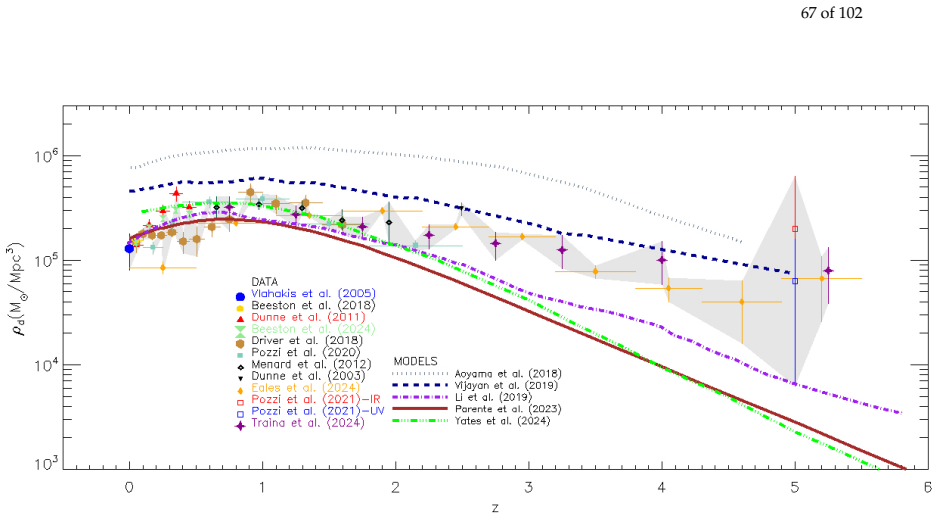
The author argues that interstellar dust growth via accretion is a key mechanism regulating the dust mass in galaxies. Through an up-to-date compilation of comoving dust mass density from the literature, the review shows that growth must be significant to match observations, while listing evidence for and against this process. Effects on abundances in damped Lyman alpha systems and gamma-ray burst afterglows are discussed, emphasizing the need for better high-redshift data and a new far-infrared space telescope.
What carries the argument
The balance between dust production in stars, destruction in shocks, and growth by accretion of gas-phase metals in the interstellar medium, as modeled in galactic chemical evolution frameworks.
If this is right
- Galactic chemical evolution models require inclusion of interstellar dust growth to accurately predict dust masses across cosmic time.
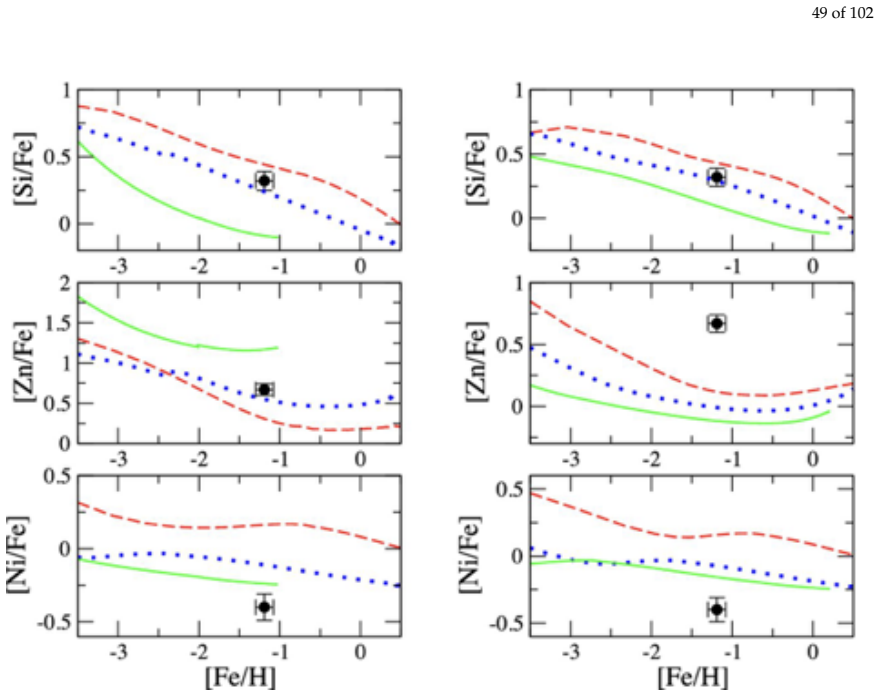
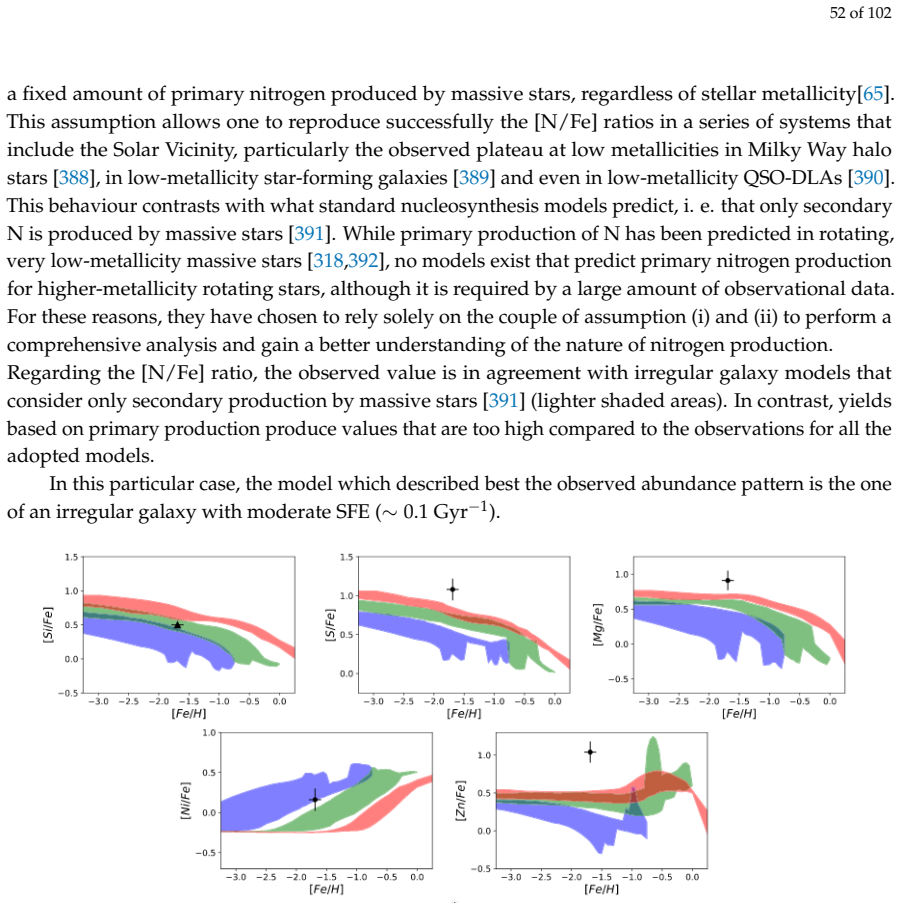
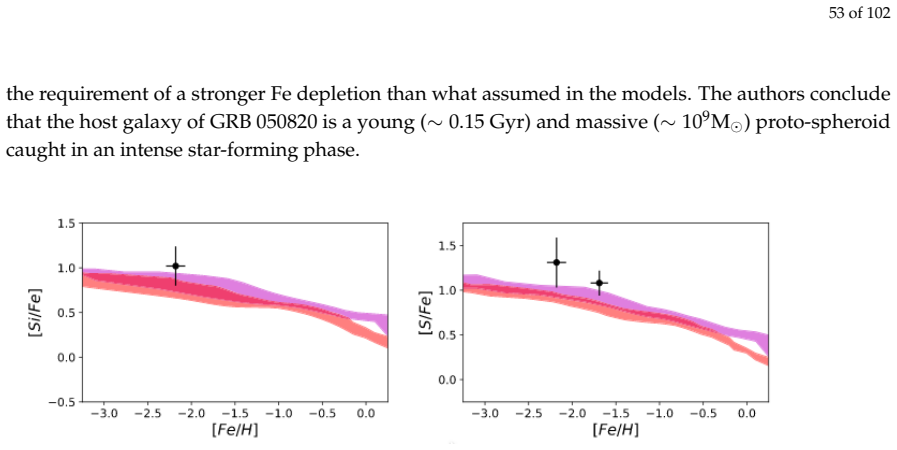
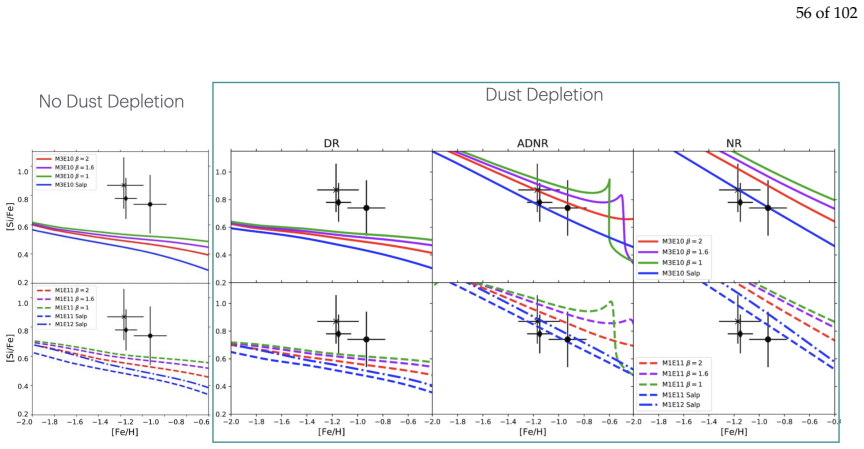
- Dust depletion alters measured abundances in high-redshift absorption systems like damped Lyman alpha absorbers.
- The global dust budget is sensitive to the efficiency of dust growth in the interstellar medium.
- Future observations of low-metallicity galaxies will test the role of dust processes in early universe conditions.
Where Pith is reading between the lines
- Improved constraints on high-redshift dust masses could distinguish between different dust evolution scenarios.
- Connections to star formation efficiency might emerge if dust growth correlates with metal availability.
- Development of new far-infrared telescopes would enable direct measurements of dust properties in distant galaxies.
Load-bearing premise
The literature data compiled for the comoving dust mass density evolution are representative and not significantly affected by selection biases.
What would settle it
A precise measurement of the comoving dust mass density at redshift greater than 5 that falls well below the values predicted by models including substantial interstellar dust growth.
Figures



read the original abstract
Despite its small mass fraction typically observed in the interstellar medium, dust plays a significant role as a key component of galaxies, affecting a wide range of properties. This review focuses specifically on how dust grains influence interstellar chemical abundances and on the processes that regulate the evolution of the galactic dust budget. I describe the main physical processes regulating dust evolution, including production by stars and other sources, destruction in supernova shocks and interstellar growth and how they are included in galactic chemical evolution models and simulations. I discuss the main effects of interstellar dust on the abundances measured in various high-redshift systems that include Damped Lyman alpha absorbers detected along the lines of sight of distant quasars and in the absorption spectra of Gamma Ray Burst afterglows. I discuss the measure of the dust mass in galaxies and review its global budget, evaluated through the study of the evolution of the comoving dust mass density, for which I present an up-to-date compilation of data chosen from the literature. Interstellar dust growth plays a critical role in regulating the dust budget, for which I present a list of evidence both in favour of it and against. The dust budget at high redshift is one aspect that requires attention to drive significant progress in the future, along with the investigation of the properties of dust in local, low-metallicity systems. Our poor theoretical knowledge of basic aspects related to dust evolution evidences the need for a new high-sensitivity space telescope operating in the far-infrared regime, still awaited by the community since the demise of Herschel.
Editorial analysis
A structured set of objections, weighed in public.
Referee Report
Summary. This review synthesizes the main physical processes governing interstellar dust evolution in galaxies: production by stars and other sources, destruction in supernova shocks, and growth in the ISM. It describes their implementation in galactic chemical evolution models and simulations, discusses dust depletion effects on abundances observed in high-redshift DLAs and GRB afterglows, and presents an up-to-date literature compilation of comoving dust mass density evolution to assess the global dust budget. The central claim is that interstellar dust growth plays a critical role in regulating the dust budget, supported by a balanced list of evidence for and against; the paper identifies the high-redshift dust budget and low-metallicity systems as key areas for future progress and calls for a new far-IR space telescope.
Significance. If the literature compilation of comoving dust mass density is representative across galaxy types and redshifts, the review provides a valuable synthesis that quantifies the shortfall in stellar dust production relative to observed budgets and thereby strengthens the case for interstellar growth as a dominant process. The balanced presentation of evidence for and against growth, together with explicit identification of observational gaps at high redshift, offers a useful roadmap for the field. The call for a new far-IR telescope is well-motivated by current limitations in sensitivity.
major comments (1)
- The section presenting the up-to-date compilation of comoving dust mass density evolution does not discuss potential selection biases in the chosen literature data (e.g., preferential sampling of high-mass or high-SFR systems). If such biases exist, they could alter the inferred global shortfall between stellar production and observed dust masses, thereby weakening the quantitative support for the claim that interstellar growth is critical. A sensitivity test or explicit statement on representativeness across redshift and galaxy type is needed to make this load-bearing argument robust.
minor comments (2)
- Notation for dust mass density and depletion factors should be defined consistently in the first use and cross-referenced to the compilation figure or table.
- A few sentences in the discussion of high-redshift systems could benefit from explicit comparison of depletion patterns between DLAs and GRB afterglows to clarify similarities and differences.
Simulated Author's Rebuttal
We thank the referee for their constructive and balanced assessment of our review. We appreciate the identification of a point that can strengthen the robustness of the comoving dust mass density compilation and its implications for the dust budget. We address the major comment below.
read point-by-point responses
-
Referee: The section presenting the up-to-date compilation of comoving dust mass density evolution does not discuss potential selection biases in the chosen literature data (e.g., preferential sampling of high-mass or high-SFR systems). If such biases exist, they could alter the inferred global shortfall between stellar production and observed dust masses, thereby weakening the quantitative support for the claim that interstellar growth is critical. A sensitivity test or explicit statement on representativeness across redshift and galaxy type is needed to make this load-bearing argument robust.
Authors: We agree that an explicit discussion of potential selection biases would improve the presentation. The compilation draws from a range of published studies that sample both local and high-redshift systems, including field galaxies and targeted observations, but we did not previously address how observational selection (e.g., preference for luminous or high-SFR targets at high redshift) might influence the inferred shortfall. In the revised manuscript we will add a dedicated paragraph to this section that qualitatively assesses these effects, notes the limitations in current data coverage across galaxy types and redshifts, and states that while a full quantitative sensitivity test lies beyond the scope of a review, the overall shortfall remains consistent across independent compilations. This addition will clarify the representativeness of the data without changing the central conclusions regarding the role of interstellar growth. revision: yes
Circularity Check
No significant circularity in this literature review
full rationale
This is a review paper that compiles and summarizes existing literature on dust production, destruction, growth, and depletion effects without introducing new derivations, fitted parameters, or model equations. The central claims about the role of interstellar dust growth rest on an up-to-date compilation of comoving dust mass density data chosen from the literature and a balanced list of evidence for and against growth, all supported by external references rather than self-referential steps. No load-bearing argument reduces by construction to the paper's own inputs, self-citations, or ansatzes. The paper is self-contained against external benchmarks as a synthesis of prior work.
Axiom & Free-Parameter Ledger
axioms (1)
- domain assumption Standard physical processes of dust production in stars, destruction in supernova shocks, and accretion growth in the ISM are the dominant regulators of the galactic dust budget.
Forward citations
Cited by 1 Pith paper
-
DustPedia and Local Volume Legacy samples as benchmarks for dust evolution in galaxies
Combined local galaxy samples reveal non-monotonic dust-to-stellar mass trends with mass and star-formation rate, explained mainly by initial gas budgets and galaxy ages in chemical evolution models.
Reference graph
Works this paper leans on
-
[1]
The properties of cold clouds in cooling flows
Daines, S.J.; Fabian, A.C.; Thomas, P .A. The properties of cold clouds in cooling flows. MNRAS 1994, 268, 1060–1072. doi:10.1093/mnras/268.4.1060
-
[2]
HST Imaging of Star-forming Clumps in Six GASP Ram-pressure-stripped Galaxies
Giunchi, E.; Gullieuszik, M.; Poggianti, B.M.; Moretti, A.; Werle, A.; Scarlata, C.; Zanella, A.; Vulcani, B.; Calzetti, D. HST Imaging of Star-forming Clumps in Six GASP Ram-pressure-stripped Galaxies. ApJ 2023, 949, 72, [arXiv:astro-ph.GA/2302.10615]. doi:10.3847/1538-4357/acc5ee
-
[3]
Some Considerations on Thermal Conduction and Magnetic Fields in Prominences
Rosseland, S.; Jensen, E.; Tandberg-Hanssen, E. Some Considerations on Thermal Conduction and Magnetic Fields in Prominences. Electromagnetic Phenomena in Cosmical Physics; Lehnert, B., Ed., 1958, Vol. 6, IAU Symposium, p. 150. 87 of 102
work page 1958
-
[4]
Mihos, J.C.; Harding, P .; Feldmeier, J.J.; Rudick, C.; Janowiecki, S.; Morrison, H.; Slater, C.; Watkins, A. The Burrell Schmidt Deep Virgo Survey: Tidal Debris, Galaxy Halos, and Diffuse Intracluster Light in the Virgo Cluster. ApJ 2017, 834, 16. doi:10.3847/1538-4357/834/1/16
-
[5]
Evolution of Dust-to-Metal Ratio in Galaxies
Inoue, A.K. Evolution of Dust-to-Metal Ratio in Galaxies. P ASJ 2003, 55, 901–909. doi:10.1093/pasj/55.5.901
-
[6]
The evolution of grain mantles and silicate dust growth at high redshift
Ceccarelli, C.; Viti, S.; Balucani, N.; Taquet, V . The evolution of grain mantles and silicate dust growth at high redshift. MNRAS 2018, 476, 1371–1383. doi:10.1093/mnras/sty313
-
[7]
Destruction mechanisms for interstellar dust
Draine, B.T.; Salpeter, E.E. Destruction mechanisms for interstellar dust. ApJ 1979, 231, 438–455. doi:10.1086/157206
-
[8]
Valiante, R.; Schneider, R.; Salvadori, S.; Bianchi, S. The origin of the dust in high-redshift quasars: the case of SDSS J1148+5251. MNRAS 2011, 416, 1916–1935. doi:10.1111/j.1365-2966.2011.19168.x
-
[9]
The Herschel exploitation of local galaxy Andromeda (HELGA) - V
Mattsson, L.; Gomez, H.L.; Andersen, A.C.; Smith, M.W.L.; De Looze, I.; Baes, M.; Viaene, S.; Gentile, G.; Fritz, J.; Spinoglio, L. The Herschel exploitation of local galaxy Andromeda (HELGA) - V . Strengthening the case for substantial interstellar grain growth. MNRAS 2014, 444, 797–807. doi:10.1093/mnras/stu1228
-
[10]
Damped Lyman-Alpha Absorption Systems
Wolfe, A.M.; Turnshek, D.A.; Smith, H.E.; Cohen, R.D. Damped Lyman-Alpha Absorption Systems. The Astrophysical Journal Supplement Series 1986, 61, 249–304
work page 1986
-
[11]
Pettini, M.; Smith, L.J.; King, D.L.; Hunstead, R.W. The Metallicity of High Redshift Galaxies: The Abundance of Zinc in 34 Damped Lyman Alpha Systems from z = 0.7 to 3.4. The Astrophysical Journal 1994, 426, 79–96
work page 1994
-
[12]
Wolfe, A.M.; Gawiser, E.; Prochaska, J.X. Damped Lyman- α Systems. Annual Review of Astronomy and Astrophysics 2005, 43, 861–918. doi:10.1146/annurev.astro.42.053102.133950
-
[13]
DLA and sub-DLA metallicity evolution: A case study of absorbers towards Q0338-0005
Bashir, W.; Zafar, T.; Khan, F.M.; Chishtie, F. DLA and sub-DLA metallicity evolution: A case study of absorbers towards Q0338-0005. New Astronomy 2019, 66, 9–13
work page 2019
-
[14]
Bechtold, J. Quasar Absorption Lines. arXiv e-prints 2001, pp. astro–ph/0112521. doi:10.48550/arXiv.astro- ph/0112521
-
[15]
The Chemical Evolution of Damped Lyman Alpha Galaxies
Pettini, M.; King, D.L.; Smith, L.J.; Hunstead, R.W. The Chemical Evolution of Damped Lyman Alpha Galaxies. QSO Absorption Lines; Meylan, G., Ed. Springer-Verlag, 1995, pp. 71–80
work page 1995
-
[16]
Pettini, M.; Smith, L.J.; King, D.L.; Hunstead, R.W. The Metallicity of High Redshift Galaxies: The Abundance of Zinc in 34 Damped Lyman Alpha Systems from z = 0.7 to 3.4. The Astrophysical Journal 1997, 486, 665–680
work page 1997
-
[17]
The Chemical Enrichment History of Damped Lyman-alpha Galaxies
Lu, L.; Sargent, W.L.W.; Barlow, T.A. The Chemical Enrichment History of Damped Lyman-alpha Galaxies. The Astrophysical Journal Supplement Series 1996, 107, 475–514
work page 1996
-
[18]
Abundance Patterns of Heavy Elements in Damped Lyman-Alpha Galaxies
Lu, L.; Sargent, W.L.W.; Barlow, T.A. Abundance Patterns of Heavy Elements in Damped Lyman-Alpha Galaxies. The Astronomical Journal 1998, 115, 55–70
work page 1998
-
[19]
On the Evolution of Damped Lyman Alpha Systems to Galactic Disks
Prochaska, J.X.; Wolfe, A.M. On the Evolution of Damped Lyman Alpha Systems to Galactic Disks. The Astrophysical Journal 1999, 523, 566–586
work page 1999
-
[20]
Nitrogen Abundances in Damped Lyman Alpha Systems
Centurión, M.; Molaro, P .; Vladilo, S.; Petitjean, P .J.P .; Ledoux, C.; Srianand, R. Nitrogen Abundances in Damped Lyman Alpha Systems. The Astrophysical Journal 2000, 536, 540–550
work page 2000
-
[21]
The UCSD HIRES/Keck I Damped Lyα Abundance Database
Prochaska, J.X.; Wolfe, A.M.; Gawiser, E.; Cooke, S.M. The UCSD HIRES/Keck I Damped Lyα Abundance Database. The Astrophysical Journal Supplement Series 2002, 140, 519–622
work page 2002
-
[23]
Ionized Gas in Damped Lyman-Alpha Systems and Its Effects on Elemental Abundance Studies
Howk, J.C.; Sembach, K.R. Ionized Gas in Damped Lyman-Alpha Systems and Its Effects on Elemental Abundance Studies. The Astrophysical Journal Letters 1999, 523, L141–L144
work page 1999
-
[24]
On Ionization Effects and Abundance Ratios in Damped Lyman- Alpha Systems
Izotov, Y.I.; Schaerer, D.; Charbonnel, C. On Ionization Effects and Abundance Ratios in Damped Lyman- Alpha Systems. The Astrophysical Journal 2001, 549, 878–889
work page 2001
-
[25]
Ionization Properties and Elemental Abundances in Damped Lyα Systems
Vladilo, G.; Centurión, M.; Bonifacio, P .; Howk, J.C. Ionization Properties and Elemental Abundances in Damped Lyα Systems. The Astrophysical Journal 2001, 557, 1007–1017
work page 2001
-
[26]
On the Kinematics of the Damped Lyman Alpha Protogalaxies
Prochaska, J.X.; Wolfe, A.M. On the Kinematics of the Damped Lyman Alpha Protogalaxies. The Astrophysical Journal 1997, 487, 73–90
work page 1997
-
[27]
Hubble Space Telescope Imaging of Damped Lyα Absorbing Galaxies
Le Brun, V .; Bergeron, J.; Boissé, P .; Deharveng, J.M. Hubble Space Telescope Imaging of Damped Lyα Absorbing Galaxies. Astronomy and Astrophysics 1997, 321, 733–742
work page 1997
-
[28]
The elemental abundance pattern in a galaxy at z=2.626
Prochaska, J.X.; Howk, J.C.; Wolfe, A.M. The elemental abundance pattern in a galaxy at z = 2.626. Nature 2003, 423, 57–59, [arXiv:astro-ph/astro-ph/0305004]. doi:10.1038/nature01524. 88 of 102
work page internal anchor Pith review Pith/arXiv arXiv doi:10.1038/nature01524 2003
-
[29]
Chemical Evolution of Galaxies and Intracluster Medium
Matteucci, F. Chemical Evolution of Galaxies and Intracluster Medium. arXiv e-prints 2002, pp. astro– ph/0203340, [arXiv:astro-ph/astro-ph/0203340]. doi:10.48550/arXiv.astro-ph/0203340
work page internal anchor Pith review doi:10.48550/arxiv.astro-ph/0203340 2002
-
[30]
Chemical evolution and nature of damped Lyman α systems
Calura, F.; Matteucci, F.; Vladilo, G. Chemical evolution and nature of damped Lyman α systems. Monthly Notices of the Royal Astronomical Society 2003, 340, 59–72
work page 2003
-
[31]
A new comprehensive set of elemental abundances in damped Lyman-α systems - I
Dessauges-Zavadsky, M.; Calura, F.; Prochaska, J.X.; D’Odorico, S.; Matteucci, F. A new comprehensive set of elemental abundances in damped Lyman-α systems - I. Data analysis and chemical variation studies. Astronomy & Astrophysics 2004, 416, 79–96
work page 2004
-
[32]
Chemical evolution of damped Ly α systems
Matteucci, F.; Molaro, P .; Vladilo, G. Chemical evolution of damped Ly α systems. Astronomy and Astrophysics 1997, 321, 45–52
work page 1997
-
[33]
On the origin of Damped Lyman-alpha systems: a case for LSB galaxies?
Jimenez, R.; Bowen, D.V .; Matteucci, F. On the Origin of Damped Lyα Systems: A Case for Low Surface Brightness Galaxies? ApJ 1999, 514, L83–L86, [arXiv:astro-ph/astro-ph/9812040]. doi:10.1086/311944
work page internal anchor Pith review Pith/arXiv arXiv doi:10.1086/311944 1999
-
[34]
Damped Lyman Alpha Systems and Galaxy Formation
Mo, H.J.; Miralda-Escudé, J. Damped Lyman Alpha Systems and Galaxy Formation. The Astrophysical Journal 1994, 430, L25–L28
work page 1994
-
[35]
Prantzos, N.; Boissier, S. Metallicity in damped Lyman-alpha systems: evolution or bias? Monthly Notices of the Royal Astronomical Society 2000, 315, 82–92
work page 2000
-
[36]
Is there primordial gas in IZw 18 ? A&A 1994, 282, 709–716
Kunth, D.; Lequeux, J.; Sargent, W.L.W.; Viallefond, F. Is there primordial gas in IZw 18 ? A&A 1994, 282, 709–716
work page 1994
-
[37]
Obscuration of Quasars by Dust in Damped Lyman-Alpha Systems
Fall, S.M.; Pei, Y.C. Obscuration of Quasars by Dust in Damped Lyman-Alpha Systems. ApJ 1993, 402, 479. doi:10.1086/172151
-
[38]
Ellison, S.L.; Hall, P .B.; Lira, P . The Optical–Infrared Colors of CORALS QSOs: Searching for Dust Reddening Associated with High-Redshift Damped Lyman Alpha Systems. The Astronomical Journal 2005, 130, 1345–1357
work page 2005
-
[39]
Geier, S.; Heintz, K.E.; Fynbo, J.P .U.; Ledoux, C.; Christensen, L.; Jakobsson, P .; Krogager, J.K.; Milvang- Jensen, B.; Møller, P .; Noterdaeme, P . Gaia-assisted selection of a quasar reddened by dust in an extremely- strong damped Lyman-alpha absorber at z = 2.226. Astronomy & Astrophysics 2019, 625, L9
work page 2019
-
[40]
Chemical abundances of damped Lyα systems: A new method for estimating dust depletion effects
Vladilo, G. Chemical abundances of damped Lyα systems: A new method for estimating dust depletion effects. Astronomy & Astrophysics 2002, 391, 407–415
work page 2002
-
[41]
Chemical evolution and depletion pattern in Damped Lyman-alpha systems
Hou, J.L.; Boissier, S.; Prantzos, N. Chemical evolution and depletion pattern in Damped Lyman-alpha systems. Astronomy & Astrophysics 2001, 370, 23–35
work page 2001
-
[42]
Nitrogen abundances in damped Lyman alpha systems
Centurión, M.; Bonifacio, P .; Molaro, P .; Vladilo, G. Nitrogen abundances in damped Lyman alpha systems. The Astrophysical Journal 1998, 509, 620–628
work page 1998
-
[43]
Zinc as a tracer of metallicity evolution of damped Lyman alpha systems
Molaro, P .; Bonifacio, P .; Centurión, M.; D’Odorico, S.; Vladilo, G. Zinc as a tracer of metallicity evolution of damped Lyman alpha systems. The Astrophysical Journal 2000, 541, 54–59
work page 2000
-
[44]
Molecular hydrogen in the damped Lyman alpha system toward Q0347-3819
Levshakov, S.A.; Dessauges-Zavadsky, M.; D’Odorico, S.; Molaro, P . Molecular hydrogen in the damped Lyman alpha system toward Q0347-3819. The Astrophysical Journal 2002, 565, 696–719
work page 2002
-
[45]
Element Abundances at High Redshifts
Pettini, M. Element Abundances at High Redshifts. arXiv e-prints 1999, pp. astro–ph/9902173
-
[46]
Zinc as a tracer of metallicity evolution of Damped Lyman alpha systems
Vladilo, G.; Bonifacio, P .; Centurión, M.; Molaro, P . Zinc as a Tracer of Metallicity Evolution of Damped Lyα Systems. ApJ 2000, 543, 24–27, [arXiv:astro-ph/astro-ph/0005555]. doi:10.1086/317110
work page internal anchor Pith review Pith/arXiv arXiv doi:10.1086/317110 2000
-
[47]
The metallicity of high-redshift damped Lyman alpha systems
Pettini, M.; Ellison, S.L.; Steidel, C.C.; Bowen, D.V . The metallicity of high-redshift damped Lyman alpha systems. The Astrophysical Journal 2000, 532, 65–76
work page 2000
-
[48]
Abundance Patterns of Heavy Elements in Damped Lyman-Alpha Galaxies
Kulkarni, V .P .; Fall, S.M.; Truran, J.W. Abundance Patterns of Heavy Elements in Damped Lyman-Alpha Galaxies. The Astrophysical Journal Letters 1997, 484, L7–L10
work page 1997
-
[49]
Dust and Elemental Abundances in Damped Lyα Absorbers
Vladilo, G. Dust and Elemental Abundances in Damped Lyα Absorbers. The Astrophysical Journal 1998, 493, 583–595
work page 1998
-
[50]
A scaling law for interstellar depletions
Vladilo, G. A scaling law for interstellar depletions. The Astrophysical Journal 2002, 569, 295–304
work page 2002
-
[51]
The UCSD HIRES/KeckI Damped Ly α Abundance Database: I
Prochaska, J.X.; Wolfe, A.M.; Tytler, D.; Burles, S.; Cooke, J.; Gawiser, E.; Kirkman, D.; O’Meara, J.M.; Storrie-Lombardi, L. The UCSD HIRES/KeckI Damped Ly α Abundance Database: I. The Data. The Astrophysical Journal Supplement Series 2001, 137, 21–62
work page 2001
-
[52]
Abundance Ratios and Galactic Chemical Evolution
McWilliam, A. Abundance Ratios and Galactic Chemical Evolution. Annual Review of Astronomy and Astrophysics 1997, 35, 503–556
work page 1997
-
[53]
2001, The Chemical Evolution of the Galaxy, Vol
Matteucci, F. The chemical evolution of the Galaxy; Vol. 253, 2001. doi:10.1007/978-94-010-0967-6
-
[54]
Unusual metal abundances in a pair of damped Lyman alpha systems at z ~2
Ellison, S.L.; Lopez, S. Unusual metal abundances in a pair of damped Lyman alpha systems at z ~2. A&A
-
[55]
Nature and evolution of Damped Lyman alpha systems
Vladilo, G. Nature and evolution of Damped Lyman alpha systems. The Evolution of Galaxies on Cosmological Timescales; Beckman, J.E.; Mahoney, T.J., Eds. Astronomical Society of the Pacific, 1999, Vol. 187, ASP Conference Series, pp. 323–338. 89 of 102
work page 1999
-
[56]
Sulphur and zinc abundances in Galactic halo stars revisited
Nissen, P .E.; Akerman, C.; Asplund, M.; Fabbian, D.; Kerber, F.; Kaufl, H.U.; Pettini, M. Sulphur and zinc abundances in Galactic halo stars revisited. A&A 2007, 469, 319–330, [arXiv:astro-ph/astro-ph/0702689]. doi:10.1051/0004-6361:20077344
work page internal anchor Pith review Pith/arXiv arXiv doi:10.1051/0004-6361:20077344 2007
-
[58]
Do Damped and Sub-damped Lyman-alpha Absorbers Arise in Galaxies of Different Masses?
Kulkarni, V .P .; Khare, P .; Som, D.; Meiring, J.; York, D.G.; Péroux, C.; Lauroesch, J.T. Do damped and sub-damped Lyman-alpha absorbers arise in galaxies of different masses?New Astronomy 2010, 15, 735–743, [arXiv:astro-ph.GA/1006.0298]. doi:10.1016/j.newast.2010.05.006
work page internal anchor Pith review Pith/arXiv arXiv doi:10.1016/j.newast.2010.05.006 2010
-
[59]
The ESO UVES advanced data products quasar sample - VI
Quiret, S.; Péroux, C.; Zafar, T.; Kulkarni, V .P .; Jenkins, E.B.; Milliard, B.; Rahmani, H.; Popping, A.; Rao, S.M.; Turnshek, D.A.; Monier, E.M. The ESO UVES advanced data products quasar sample - VI. Sub- damped Lyman α metallicity measurements and the circumgalactic medium. MNRAS 2016, 458, 4074–4121. doi:10.1093/mnras/stw524
-
[60]
Enrichment of Zinc in Galactic Chemodynamical Evolution Models
Hirai, Y.; Saitoh, T.R.; Ishimaru, Y.; Wanajo, S. Enrichment of Zinc in Galactic Chemodynamical Evolution Models. ApJ 2018, 855, 63. doi:10.3847/1538-4357/aaaabc
-
[61]
Vangioni, E.; Olive, K.A.; Prestegard, T.; Silk, J.; Petitjean, P .; Mandic, V . The impact of star formation and gamma-ray burst rates at high redshift on cosmic chemical evolution and reionization. MNRAS 2015, 447, 2575–2587, [arXiv:astro-ph.GA/1409.2462]. doi:10.1093/mnras/stu2600
work page internal anchor Pith review Pith/arXiv arXiv doi:10.1093/mnras/stu2600 2015
-
[62]
Properties of Low-Redshift Damped Lyman Alpha Galaxies
Nestor, D.B.; Rao, S.M.; Turnshek, D.A.; Monier, E.; Lane, W.M.; Bergeron, J. Properties of Low-Redshift Damped Lyman Alpha Galaxies. Extragalactic Gas at Low Redshift; Mulchaey, J.S.; Stocke, J.T., Eds., 2002, Vol. 254, Astronomical Society of the Pacific Conference Series, p. 34, [arXiv:astro-ph/astro-ph/0108146]. doi:10.48550/arXiv.astro-ph/0108146
work page internal anchor Pith review Pith/arXiv arXiv doi:10.48550/arxiv.astro-ph/0108146 2002
-
[63]
A new comprehensive set of elemental abundances in DLAs III. Star formation histories
Dessauges-Zavadsky, M.; Calura, F.; Prochaska, J.X.; D’Odorico, S.; Matteucci, F. A new comprehensive set of elemental abundances in DLAs. III. Star formation histories. A&A 2007, 470, 431–448, [arXiv:astro- ph/0705.1650]. doi:10.1051/0004-6361:20077050
work page internal anchor Pith review Pith/arXiv arXiv doi:10.1051/0004-6361:20077050 2007
-
[64]
Grevesse, N.; Sauval, A.J. Standard Solar Composition. Space Science Reviews 1998, 85, 161–174. doi:10.1023/A:1005161325181
-
[65]
Molaro, P .; Levshakov, S.A.; D’Odorico, S.; Bonifacio, P .; Centurión, M. UVES Observations of QSO 0000-2620: Argon and Phosphorus Abundances in the Dust-free Damped Lyα System at zabs=3.3901. ApJ 2001, 549, 90–99, [arXiv:astro-ph/astro-ph/0010434]. doi:10.1086/319072
work page internal anchor Pith review Pith/arXiv arXiv doi:10.1086/319072 2001
-
[66]
First stars V - Abundance patterns from C to Zn and supernova yields in the early Galaxy
Cayrel, R.; Depagne, E.; Spite, M.; Hill, V .; Spite, F.; François, P .; Plez, B.; Beers, T.; Primas, F.; Andersen, J.; Barbuy, B.; Bonifacio, P .; Molaro, P .; Nordström, B. First stars V - Abundance patterns from C to Zn and supernova yields in the early Galaxy. A&A 2004, 416, 1117–1138, [arXiv:astro-ph/astro-ph/0311082]. doi:10.1051/0004-6361:20034074
work page internal anchor Pith review Pith/arXiv arXiv doi:10.1051/0004-6361:20034074 2004
-
[67]
Constraints on Early Nucleosynthesis from the Abundance Pattern of a Damped Lyα System at z = 2.626
Fenner, Y.; Prochaska, J.X.; Gibson, B.K. Constraints on Early Nucleosynthesis from the Abundance Pattern of a Damped Lyα System at z = 2.626. The Astrophysical Journal 2004, 606, 116–125
work page 2004
-
[68]
The Galactic evolution of phosphorus
Caffau, E.; Bonifacio, P .; Faraggiana, R.; Steffen, M. The Galactic evolution of phosphorus. A&A 2011, 532, A98
work page 2011
-
[69]
Talbot, R.J.; Arnett, W.D. Some Recent Results from Galactic and Stellar Evolution Theory.The Astrophysical Journal 1974, 190, 605–608
work page 1974
-
[70]
The origin of primary nitrogen in galaxies
Meynet, G.; Maeder, A. The origin of primary nitrogen in galaxies. Astronomy & Astrophysics 2002, 381, L25–L28
work page 2002
-
[71]
Izotov, Y.I.; Thuan, T.X. Systematic Effects and a New Determination of the Primordial Abundance of4He and dY/dZ from Observations of Blue Compact Galaxies. The Astrophysical Journal 2004, 602, 200–230
work page 2004
-
[72]
Oxygen and nitrogen abundances in Virgo and field spirals
Pilyugin, L.S.; Mollá, M.; Ferrini, F.; Vílchez, J.M. Oxygen and nitrogen abundances in Virgo and field spirals. A&A 2002, 383, 14–29
work page 2002
-
[73]
Heavy-Element Abundances in Blue Compact Galaxies
Izotov, Y.I.; Thuan, T.X. Heavy-Element Abundances in Blue Compact Galaxies. ApJ 1999, 511, 639–659
work page 1999
-
[74]
Chemical Evolution of Dwarf Spheroidal and Blue Compact Galaxies
Lanfranchi, G.A.; Matteucci, F. Chemical evolution of dwarf spheroidal and blue compact galaxies.MNRAS 2003, 345, 71–85, [arXiv:astro-ph/astro-ph/0306463]. doi:10.1046/j.1365-8711.2003.06919.x
work page internal anchor Pith review Pith/arXiv arXiv doi:10.1046/j.1365-8711.2003.06919.x 2003
-
[75]
The star formation history of damped Lyman alpha absorbers
Hopkins, A.M.; Rao, S.M.; Turnshek, D.A. The Star Formation History of Damped Lyα Absorbers. ApJ 2005, 630, 108–114, [arXiv:astro-ph/astro-ph/0505418]. doi:10.1086/432046
work page internal anchor Pith review Pith/arXiv arXiv doi:10.1086/432046 2005
-
[76]
Photoprocessing of H2S on dust grains
Cazaux, S.; Carrascosa, H.; Muñoz Caro, G.M.; Caselli, P .; Fuente, A.; Navarro-Almaida, D.; Riviére- Marichalar, P . Photoprocessing of H2S on dust grains. Building S chains in translucent clouds and comets. A&A 2022, 657, A100. doi:10.1051/0004-6361/202141861. 90 of 102
-
[77]
The VLT-UVES survey for molecular hydrogen in high-redshift damped Lyman-alpha systems
Ledoux, C.; Petitjean, P .; Srianand, R. The Very Large Telescope Ultraviolet and Visible Echelle Spectrograph survey for molecular hydrogen in high-redshift damped Lyman α systems. MNRAS 2003, 346, 209–228, [arXiv:astro-ph/astro-ph/0302582]. doi:10.1046/j.1365-2966.2003.07082.x
work page internal anchor Pith review Pith/arXiv arXiv doi:10.1046/j.1365-2966.2003.07082.x 2003
-
[78]
Silicon depletion in damped Ly α systems
Vladilo, G.; Abate, C.; Yin, J.; Cescutti, G.; Matteucci, F. Silicon depletion in damped Ly α systems. The S/Zn method. A&A 2011, 530, A33. doi:10.1051/0004-6361/201016330
-
[80]
Absorption and scattering by interstellar dust in the silicon K-edge of GX 5-1
Zeegers, S.T.; Costantini, E.; de Vries, C.P .; Tielens, A.G.G.M.; Chihara, H.; de Groot, F.; Mutschke, H.; Waters, L.B.F.M.; Zeidler, S. Absorption and scattering by interstellar dust in the silicon K-edge of GX 5-1. A&A 2017, 599, A117, [arXiv:astro-ph.GA/1612.07988]. doi:10.1051/0004-6361/201628507
work page internal anchor Pith review Pith/arXiv arXiv doi:10.1051/0004-6361/201628507 2017
-
[81]
Probing the Dust Responsible for Small Magellanic Cloud Extinction
Sofia, U.J.; Gordon, K.D.; Clayton, G.C.; Misselt, K.; Wolff, M.J.; Cox, N.L.J.; Ehrenfreund, P . Probing the Dust Responsible for Small Magellanic Cloud Extinction. ApJ 2006, 636, 753–764. doi:10.1086/498240
-
[83]
Galactic Center Extinction: Evidence for Metallic Needles in the General Interstellar Medium
Dwek, E. Galactic Center Extinction: Evidence of Metallic Needles in the General Interstellar Medium. ApJ 2004, 611, L109–L112, [arXiv:astro-ph/astro-ph/0407005]. doi:10.1086/423893
work page internal anchor Pith review Pith/arXiv arXiv doi:10.1086/423893 2004
-
[84]
Evidence for iron whiskers in SN1987A: (Letter to the Editor)
Wickramasinghe, N.C.; Wickramasinghe, A.N. Evidence for iron whiskers in SN1987A: (Letter to the Editor). Ap&SS 1993, 200, 145–150. doi:10.1007/BF00658117
discussion (0)
Sign in with ORCID, Apple, or X to comment. Anyone can read and Pith papers without signing in.