REVIEW 4 major objections 5 minor 68 references
Time Series Transformer-Based Modeling of Pavement Skid and Texture Deterioration
T0 review · 4 major / 5 minor · reviewed 2026-08-06 · deepseek-v4-flash
Pith's one-line read This paper claims that treating post-milling pavement deterioration as a sequence prediction problem lets a time series transformer forecast skid resistance more accurately than eight regression baselines, reaching R2 = 0.981.
desk verdict Routine transformer benchmark on a small TxDOT dataset; the R2=0.981 claim is unverifiable because the train/test split is not described in a way that prevents temporal leakage. read the letter →
The pith
A machine-rendered reading of the paper's core claim, the machinery that carries it, and where it could break.
The reading
What carries the argument
The load-bearing object is a time series transformer: an encoder-only Transformer adapted for forecasting by replacing word embeddings with pavement feature vectors, adding sinusoidal positional encodings, and running multi-head self-attention over the input window so each inspection time step can attend to every other. Its sequence pooling step takes the final time step's embedding through a two-layer MLP to output a scalar forecast. What the machinery does is convert eight observed attributes (milling depth, drum type, speed, surface type, climatic zone, macrotexture, skid number, and month) into order-aware representations that let the model learn non-linear, multi-variable temporal interactions instead of treating each measurement as independent. The same architecture is applied to both targets, which lets the comparison isolate how much temporal structure each pavement property actually contains.
What would settle it
Re-run the eight-model comparison with a split that groups all windows by pavement section or cuts chronologically at 80% of the monitoring timeline, then check whether the transformer's skid-number R2 = 0.981 stays above XGBoost's 0.979; also compare against a persistence forecast that simply repeats the most recent observed skid number. If the transformer's edge shrinks to noise or persistence matches it, the claimed advantage of sequence modeling is not established.
Extended reading notes
Core claim
On the paper's own terms, the central discovery is that treating the post-treatment evolution of skid number as a time series—rather than as independent point measurements—improves forecast accuracy, and that a transformer with self-attention captures the temporal dependencies better than any of the eight baselines for skid number. The model takes a sliding window of length four (baseline, immediately after milling, 3 months, 6 months) and predicts the value at the next inspection (12 or 18 months). It reaches R2 = 0.981 with RMSE 1.42 for skid number; random forest remains the best macrotexture predictor at R2 = 0.838, with the transformer close behind at 0.831. The paper also claims the deterioration is nonlinear—sharp early improvement from milling, then surface-type-dependent decline—and that HMA surfaces hold friction longer than seal coats.
Load-bearing premise
The evaluation rests on the assumption that the 80/20 train-test split keeps each pavement section's sliding windows in one side of the split; if windows from the same section appear in both training and test sets, temporal leakage can inflate the transformer's R2 and make the comparison unfair.
Editorial extensions
If this is right
- If the transformer result holds, agencies can forecast skid number 6 to 12 months ahead after micro-milling with errors around 1.42 skid-number units, letting them target resurfacings before friction drops below thresholds.
- The R2 gap between the transformer and linear regressions (0.981 versus about 0.78) implies that ignoring temporal structure misses most of the signal in skid deterioration.
- For macrotexture, random forest's near-tie with the transformer (0.838 versus 0.831) suggests texture loss is driven more by static features than by recent history, so simpler tree models can be used where computational cost matters.
- The observed surface-type split—seal coat returning near pre-treatment skid by 12 months while HMA stays near 30—means maintenance intervals should differ by surface type.
- The framework can be extended to other preventive treatments such as micro-surfacing or fog seals and to longer monitoring horizons, as the paper recommends.
Reading between the lines
- A grouped temporal split test is the direct extension: if applied, the transformer's margin over XGBoost may shrink, because the current split description does not rule out same-section leakage.
- The near-tie between transformer and tree ensembles on macrotexture hints that the marginal value of attention grows with the target's autocorrelation; a testable corollary is that longer input windows would widen the transformer's lead on skid number but not on mean profile depth.
- The reported 930 observations derived from 324 samples imply windows overlap heavily, so the R2 values should be read as interpolation within known sections rather than generalization to brand-new pavement sections.
- Adding traffic volume and heavy-vehicle share—variables the paper lists as missing—would likely sharpen the district-level differences seen in the exploratory plots.
Editorial analysis
A structured set of objections, weighed in public.
Referee Report
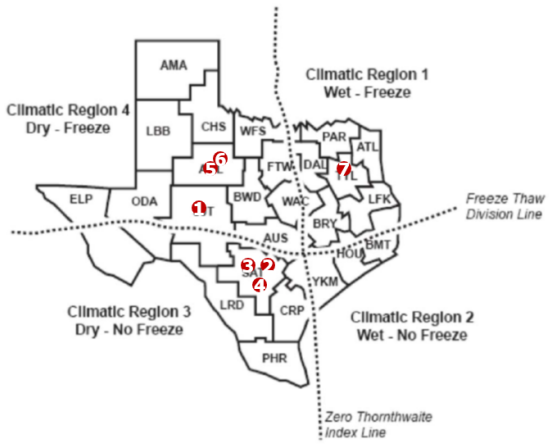
Summary. The paper proposes a time series transformer for predicting post-micro-milling deterioration of pavement skid number and macrotexture, using field data from 31 Texas pavement sections across four climatic zones. The data, described as 324 samples (or 930 observations in the abstract), are reformatted into a sliding-window sequence-to-one regression task with window length L=4. The transformer is compared with eight baseline regressors (linear, tree-based, and MLP). The authors report that the transformer achieves the highest skid-number R² of 0.981, slightly ahead of XGBoost (0.979), and ranks second for macrotexture with R²=0.831 behind Random Forest (0.838). The conclusions claim that modeling surface deterioration as a sequence prediction task improves predictive accuracy and supports proactive maintenance planning. The core methodological contribution is the sequence formulation, but the evaluation protocol is not described in enough detail to support the central accuracy claim.
Significance. If the reported results are valid, the paper would provide a useful empirical benchmark showing that sequence-aware deep models can compete with, and sometimes beat, strong tree ensembles for pavement performance forecasting. The study addresses a real infrastructure-management problem, and the comparison against eight baselines on a common dataset is a positive feature. The paper also gives a reasonable amount of architectural detail. However, the central claim of transformer superiority is not currently supported because the train/test split is not specified at the section or chronological level, and the input specification for the baseline models is unclear. These are load-bearing issues rather than presentation defects. The manuscript is within scope for an applied statistics or transportation engineering journal, but it needs a substantial revision of the experimental validation before the results can be trusted.
major comments (4)
- [Section 4.3 (and Section 3.1)] The evaluation protocol does not state whether the 80/20 train-test split respects the temporal and sectional structure of the data. With a sliding window of length L=4 constructed from repeated measurements on the same 31 pavement sections, a row-level random split would place overlapping windows from the same section in both training and test sets. Since each test window contains four previous observations of that same physical section, the model could memorize section-specific trajectories, and the reported R² values (e.g., 0.981 for skid number) would reflect information leakage rather than forecasting skill. Please specify whether the split is grouped by pavement section, chronological, or random; if it is not grouped, rerun the experiments using a grouped split (all windows from a section in one fold) or a chronological cutoff and report the resulting R², RMSE, and MAE for all models. This is essential because the entire transformer-versus-baseline comparison rests on the independence of training and test windows.
- [Section 4.3] The input specification for the eight baseline models is not described. It is unclear whether the baselines receive the same sliding-window history as the transformer or only the feature vector at the current time point. If the transformer is given four previous time steps while the baselines are given only current features, the comparison is not apples-to-apples and the claimed benefit of sequence modeling is not established. Conversely, if the baselines are also given the four-step window, the paper should say so explicitly. Please describe the exact feature vector used by each baseline and, if the baselines do not already see the window, compare against flattened-window versions of the same models to make the comparison fair.
- [Abstract, Section 4.2, Section 6.1] There is a material inconsistency in the reported dataset size: the abstract and Section 6.1 refer to 930 observations, while Section 4.2 states that the final dataset comprises 324 samples, each representing a lane segment at a particular time point. The sliding-window construction that bridges these numbers is not fully specified, and the number of windows per section is not given. This makes the results difficult to reproduce and leaves the reader unsure whether the effective sample size for the transformer is 930 or something else. Please reconcile the counts and describe the exact preprocessing steps, including how missing months and the baseline (pre-treatment) measurement are handled.
- [Table 2 and Section 4.3] The reported advantage of the transformer over XGBoost for skid number is small (R² = 0.981 versus 0.979, RMSE 1.42 versus 1.46). No confidence intervals, repeated cross-validation, or statistical significance tests are provided, so the claim that the transformer 'achieves the highest accuracy' is not shown to be robust to sampling variability. Please report the variability of the metrics across multiple random seeds or a paired statistical comparison, and temper the wording of the superiority claim accordingly.
minor comments (5)
- [Figure 1 caption] The caption reads 'Test Sits'; this should be 'Test Sites'.
- [Section 6.1] The conclusion states R² = 0.980 for skid number, while the abstract and Table 2 report 0.981. Please make the numbers consistent.
- [Section 3.2.3] The subsection is titled 'Sequence Pooling', but the text says the final time-step embedding is extracted and passed to the regression head; no pooling operation is described. Please align the title with the actual operation.
- [Table 1] The Month variable has a minimum of 3, yet the data collection description mentions a baseline before treatment and a measurement at 0 months; please clarify how these time points are coded and whether the baseline or 0-month measurement participates in the sliding windows.
- [General] There is no data or code availability statement. Given that the central claim depends on the train-test split and input construction, providing the code or a detailed data-preprocessing script would substantially improve reproducibility.
Circularity Check
No significant circularity: the transformer-vs-baseline comparison is an empirical benchmark with no self-referential derivation or fitted-input-as-prediction step.
full rationale
The paper's central claim is an empirical performance comparison: a time series transformer is trained on an 80/20 train-test split and compared with eight regression baselines using R2, RMSE, and MAE. The transformer architecture (Section 3) is a standard implementation of Vaswani et al.'s transformer with a learned embedding, sinusoidal/learnable positional encoding, multi-head self-attention, residual connections, layer normalization, and a regression head. No equation in the paper defines a target in terms of the model's output, and no fitted parameter is renamed as a prediction. The model is trained to minimize MSE on training pairs and then evaluated on held-out pairs; this is a standard empirical validation loop, not a circular derivation. The self-citations by the first author appear in the literature review and discussion as supporting references for general claims about pavement modeling and sequence-aware methods; none of these citations is load-bearing for the transformer's reported accuracy. The reported results are self-contained: Tables 2 and 3 provide the actual benchmark numbers, and the claim that the transformer achieves R2 = 0.981 for skid number is an empirical statement about the test set. The abstract, results, and discussion are internally consistent about the main findings, aside from a minor rounding discrepancy (0.981 vs. 0.980 in Section 6.1), which does not affect circularity. A legitimate methodological concern is that Section 4.3 does not specify whether the 80/20 split was grouped by pavement section or chronological cutoff, so overlapping sliding windows from the same section could leak information across the split. That is a data-leakage / validity risk, not a circularity risk: even if leakage inflated the R2 values, the inflation would come from information reuse in the data split, not from the model's derivation being equivalent to its inputs by construction. Accordingly, no circular step is identified and the score is 0.
Assumptions & free parameters
free parameters (7)
- window length L =
4
- transformer hidden dimension =
64
- number of attention heads =
4
- number of encoder layers =
2
- feed-forward hidden size =
32
- Adam learning rate =
1e-3
- batch size =
16
assumptions (4)
- standard math Transformer equations from Vaswani et al. (Ref [61]) are correct and appropriate for this sequence-to-one regression task.
- domain assumption The recorded features (skid number, MPD, milling depth, speed, drum type, surface type, climatic zone, month) are sufficient to describe deterioration; omitted factors such as traffic volume, heavy-vehicle share, seasonality, and construction timing are not required.
- ad hoc to paper The 80/20 train-test split preserves independence between training and test windows.
- domain assumption The two encoded climate categories adequately represent the claimed four climatic zones.
Cite this review
Pith. "Pith review of Time Series Transformer-Based Modeling of Pavement Skid and Texture Deterioration." pith.science (2026). https://pith.science/paper/54LWRKIB
@misc{pith2026250701842,
  author       = {Pith},
  title        = {Pith review of: Time Series Transformer-Based Modeling of Pavement Skid and Texture Deterioration},
  year         = {2026},
  howpublished = {\url{https://pith.science/paper/54LWRKIB}},
  note         = {Machine review of arXiv:2507.01842}
}
read the original abstract
This study investigates the deterioration of skid resistance and surface macrotexture following preventive maintenance using micro-milling techniques. Field data were collected from 31 asphalt pavement sections located across four climatic zones in Texas. The data encompasses a variety of surface types, milling depths, operational speeds, and drum configurations. A standardized data collection protocol was followed, with measurements taken before milling, immediately after treatment, and at 3, 6, 12, and 18 months post-treatment. Skid number and Mean Profile Depth (MPD) were used to evaluate surface friction and texture characteristics. The dataset was reformatted into a time-series structure with 930 observations, including contextual variables such as climatic zone, treatment parameters, and baseline surface condition. A comparative modeling framework was applied to predict the deterioration trends of both skid resistance and macrotexture over time. Eight regression models, including linear, tree-based, and ensemble methods, were evaluated alongside a time series transformer model. Results show that the transformer model achieved the highest prediction accuracy for skid resistance (R2 = 0.981), while Random Forest performing best for macrotexture prediction (R2 = 0.838). The findings indicate that the degradation of surface characteristics after preventive maintenance is nonlinear and influenced by a combination of environmental and operational factors. This study demonstrates the effectiveness of data-driven modeling in supporting transportation agencies with pavement performance forecasting and maintenance planning.
Figures

Figures from the paper (4 more)


Reference graph
Works this paper leans on
-
[1]
Yulin He, Chaohe Wang, Xuan Yang, Zepeng Fan, Guoyang Lu, Pengfei Liu, and Dawei Wang. Skid resistance performance analysis and driving safety evaluation in the full life cycle of asphalt pavement.Journal of Transportation Engineering, Part B: Pavements, 150(4):04024047, 2024
work page 2024
-
[2]
Francesco Canestrari, Eugenio Mariani, and Lorenzo Paolo Ingrassia. Use of wehner-schulze machine to evaluate pavement skid resistance: A review.Journal of Traffic and Transportation Engineering (English Edition), 2024
work page 2024
-
[3]
Atul Subedi, Sailesh Acharya, Patrick Singleton, and Michelle Mekker. Safety performance functions and crash modification factors for skid resistance on interstate and non-interstate highways.Transportation Research Record, page 03611981251337473, 2025
work page 2025
-
[4]
Tire pavement noise and safety performance, pcc surface texture technical working group
Bradley O Hibbs, Roger M Larson, et al. Tire pavement noise and safety performance, pcc surface texture technical working group. Technical report, United States. Federal Highway Administration. Office of Engineering, 1996
work page 1996
-
[5]
Abhinav Kumar and Ankit Gupta. Review of factors controlling skid resistance at tire-pavement interface.Advances in Civil Engineering, 2021(1):2733054, 2021
work page 2021
-
[6]
Guangwei Yang, Kuan-Ting Chen, Kelvin Wang, Joshua Li, and Yiwen Zou. Field study of asphalt pavement texture and skid resistance under traffic polishing using 0.01 mm 3d images. Lubricants, 12(7):256, 2024
work page 2024
-
[7]
Understanding and improving 23 of 29 pavement milling operations
Eshan V Dave, Jo E Sias, Kaleigh Miech, Rajib B Mallick, et al. Understanding and improving 23 of 29 pavement milling operations. Technical report, Minnesota. Department of Transportation, 2025
work page 2025
-
[8]
Wenbo Li, Mulian Zheng, Zhan Ning, Wenwu Zhang, and Xiaoyan Ding. The design and performance evaluation of low-noise rubber-fibre micro-surfacing pavement.International Journal of Pavement Engineering, 25(1):2414056, 2024
work page 2024
Show all 68 references
-
[9]
Investigating the impact of pavement surface features on skid resistance: A review on machine learning approach.Materials Research Proceedings, 48
Mohammad Ali Khasawneh, Ahmad Ali KHASA WNEH, and Tamer ALNAZER. Investigating the impact of pavement surface features on skid resistance: A review on machine learning approach.Materials Research Proceedings, 48
-
[10]
A review of non-contact approach for pavement skid resistance evaluation based on texture.Tribology International, page 109737, 2024
Song Li, Jinyuan Hu, Yiqiu Tan, Shenqing Xiao, Meizhao Han, Shuai Li, Jilu Li, and Wei Wang. A review of non-contact approach for pavement skid resistance evaluation based on texture.Tribology International, page 109737, 2024
2024
-
[11]
Physical model for the prediction of pavement polishing.Wear, 267(1-4):81–85, 2009
M-T Do, Malal Kane, Z Tang, and Fran¸ cois de Larrard. Physical model for the prediction of pavement polishing.Wear, 267(1-4):81–85, 2009
2009
-
[12]
Locked-wheel and sideway-force cfme friction testing equipment comparison and evaluation report
Edgar de Le´ on Izeppi, Gerardo Flintsch, Samer Katicha, Ross McCarthy, Kevin McGhee, et al. Locked-wheel and sideway-force cfme friction testing equipment comparison and evaluation report. Technical report, United States. Federal Highway Administration, 2019
2019
-
[13]
Pavement macrotexture determination using multi-view smartphone images.Photogrammetric Engineering & Remote Sensing, 86(10):643–651, 2020
Xiangxi Tian, Yong Xu, Fulu Wei, Oguz Gungor, Zhixin Li, Ce Wang, Shuo Li, and Jie Shan. Pavement macrotexture determination using multi-view smartphone images.Photogrammetric Engineering & Remote Sensing, 86(10):643–651, 2020
2020
-
[14]
Pavement skid resistance properties for safe aircraft operations.Journal of Road Engineering, 4(4):361–385, 2024
TF Fwa. Pavement skid resistance properties for safe aircraft operations.Journal of Road Engineering, 4(4):361–385, 2024
2024
-
[15]
An assessment of the skid resistance effect on traffic safety under wet-pavement conditions.Accident Analysis & Prevention, 41(4):881–886, 2009
Jos´ e M Pardillo Mayora and Rafael Jurado Pi˜ na. An assessment of the skid resistance effect on traffic safety under wet-pavement conditions.Accident Analysis & Prevention, 41(4):881–886, 2009
2009
-
[16]
Quantitative relationship between crash risks and pavement skid resistance
Kan Long, Hui Wu, Zhanmin Zhang, Mike Murphy, et al. Quantitative relationship between crash risks and pavement skid resistance. Technical report, Texas. Dept. of Transportation. Research and Technology Implementation Office, 2014. 24 of 29
2014
-
[17]
Evaluation of the long-term performance and benefit of using an enhanced micro-milling resurfacing method [gdot 13-20]
James Yichang Tsai, Zhaohua Wang, April Gadsby, et al. Evaluation of the long-term performance and benefit of using an enhanced micro-milling resurfacing method [gdot 13-20]. Technical report, Georgia. Department of Transportation. Office of Performance-Based . . . , 2019
2019
-
[18]
Milled pavement texturing to optimize skid improvements.Construction and Building Materials, 101:602–610, 2015
Lu Gao, Andr´ e de Fortier Smit, Jorge A Prozzi, Prasad Buddhavarapu, Mike Murphy, and Lingguang Song. Milled pavement texturing to optimize skid improvements.Construction and Building Materials, 101:602–610, 2015
2015
-
[19]
Milling and planing of flexible pavement
Robert J Nittinger. Milling and planing of flexible pavement. Technical report, 1977
1977
-
[20]
Performance- related specifications for pavement milling
Seonghwan Cho, Oscar Andr´ es Moncada, Vito Francioso, John E Haddock, et al. Performance- related specifications for pavement milling. Technical report, Purdue University. Joint Trans- portation Research Program, 2024
2024
-
[21]
Quality control of micro-milling treatment on tunnel concrete pavement using 3d range data.International Journal of Pavement Engineering, 23(5):1612–1621, 2022
Bing Hui, Haimei Liang, Shuqi Li, Mu Guo, and Xiaofang Liu. Quality control of micro-milling treatment on tunnel concrete pavement using 3d range data.International Journal of Pavement Engineering, 23(5):1612–1621, 2022
2022
-
[22]
Effects of milling and other repairs on smoothness of overlays on asphalt pavements.Transportation Research Record, 2408(1):86–94, 2014
Shawn S Hung, Arash Rezaei, and John T Harvey. Effects of milling and other repairs on smoothness of overlays on asphalt pavements.Transportation Research Record, 2408(1):86–94, 2014
2014
-
[23]
Ultra-thin bonding wearing course case study
Shila Khanal, Amanda Gilliland, Kiran Mohanraj, et al. Ultra-thin bonding wearing course case study. Technical report, United States. Federal Highway Administration. Office of Precon- struction . . . , 2023
2023
-
[24]
Study on the skid resistance deterioration behavior of the sma pavement
Jincheng Wei, Zhengchao Zhang, Yulin He, Qianwen Tan, Xiangpeng Yang, Dawei Wang, and Markus Oeser. Study on the skid resistance deterioration behavior of the sma pavement. Sustainability, 14(5):2864, 2022
2022
-
[25]
Effect of aggregate and pavement types on skid resistance evolution.Proc., 7th Eurasphalt and Eurobitume Cong
Emine Nazan ¨Unal, Muhammet Komut, and S ¸enol Altıok. Effect of aggregate and pavement types on skid resistance evolution.Proc., 7th Eurasphalt and Eurobitume Cong. Madrid, Spain: Kenes Group, 2021
2021
-
[26]
A new predictive skid resistance model (psrm) for pavement evolution due to texture polishing by traffic.Construction and Building Materials, 342:128052, 2022
Malal Kane, Michael Lim, Minh Tan Do, and Vikki Edmondson. A new predictive skid resistance model (psrm) for pavement evolution due to texture polishing by traffic.Construction and Building Materials, 342:128052, 2022. 25 of 29
2022
-
[27]
Directional characteristics of traffic polishing effect on pavement skid resistance.International Journal of Pavement Engineering, 23(9):2937–2953, 2022
L Chu, B Zhou, and TF Fwa. Directional characteristics of traffic polishing effect on pavement skid resistance.International Journal of Pavement Engineering, 23(9):2937–2953, 2022
2022
-
[28]
Rubber friction on wet and dry road surfaces: The sealing effect.Physical Review B—Condensed Matter and Materials Physics, 71 (3):035428, 2005
Bo NJ Persson, U Tartaglino, O Albohr, and Erio Tosatti. Rubber friction on wet and dry road surfaces: The sealing effect.Physical Review B—Condensed Matter and Materials Physics, 71 (3):035428, 2005
2005
-
[29]
Temperature influence on skid resistance measurement
E Baran. Temperature influence on skid resistance measurement. InInternational Surface Friction Conference, 3rd, 2011, 2011
2011
-
[30]
Long-term skid resistance evolution and influence mechanism of asphalt pavement based on self-developed wear equipment.Construction and Building Materials, 453:139085, 2024
Wenju Peng, Ping Li, Jianping Gao, Zhaohui Liu, Xudong Wang, Shuai Wang, and Wenjie Wu. Long-term skid resistance evolution and influence mechanism of asphalt pavement based on self-developed wear equipment.Construction and Building Materials, 453:139085, 2024
2024
-
[31]
Evaluating the anti-skid performance of asphalt pavements with basalt and limestone composite aggregates: Testing and prediction.Buildings, 14(8), 2024
Yunwei Meng, Zhuochu Chen, Zixiao Wang, Hang Lu, Guangyan Qing, Zhongshuai Liu, and Yanhai Wang. Evaluating the anti-skid performance of asphalt pavements with basalt and limestone composite aggregates: Testing and prediction.Buildings, 14(8), 2024. ISSN 2075-5309. doi: 10.339...
2024 doi
-
[32]
The impact of coarse aggregate mineral compositions on skid resistance performance of asphalt pavement: A comprehensive study
Chen Zhang, Lihao Zeng, Huimin Wang, and Xin Qu. The impact of coarse aggregate mineral compositions on skid resistance performance of asphalt pavement: A comprehensive study. PloS one, 19(12):e0308721, 2024
2024
-
[33]
Impact of aggregate characteristics on frictional performance of asphalt-based high friction surface treatments.CivilEng, 6(1):4, 2025
Alireza Roshan and Magdy Abdelrahman. Impact of aggregate characteristics on frictional performance of asphalt-based high friction surface treatments.CivilEng, 6(1):4, 2025
2025
-
[34]
Effect of coarse aggregate characteristics on skid resistance deterioration of the ultrathin wearing course.Journal of Materials in Civil Engineering, 33(4):04021051, 2021
Hongfu Liu, Zi-ang Wang, Chenxi Yang, Siyu Chen, Huanan Yu, Tuo Huang, Xuelian Li, and Zhanping You. Effect of coarse aggregate characteristics on skid resistance deterioration of the ultrathin wearing course.Journal of Materials in Civil Engineering, 33(4):04021051, 2021
2021
-
[35]
Evaluation the effect of asphalt film thickness on stripping resistance.International Journal of Applied Engineering Research, 14(2):560–570, 2019
Nabil AlKofahi and Taisir Khedaywi. Evaluation the effect of asphalt film thickness on stripping resistance.International Journal of Applied Engineering Research, 14(2):560–570, 2019
2019
-
[36]
Pavement surface macrotexture analysis
Ivana Pranji´ c, Aleksandra Deluka-Tibljaˇ s, Marijana Cuculi´ c, and Robert Skender. Pavement surface macrotexture analysis. InProceedings of the 5th International Conference on Road and Rail Infrastructure CETRA, pages 359–367, 2018. 26 of 29
2018
-
[37]
Skid resistance performance against temperature change of hot-mix recycled asphalt pavement with added crumb rubber
Audy Dwi Putra, Sigit Pranowo Hadiwardoyo, and Raden Jachrizal Sumabrata. Skid resistance performance against temperature change of hot-mix recycled asphalt pavement with added crumb rubber. InAIP conference proceedings, volume 2114. AIP Publishing, 2019
2019
-
[38]
Analytical evaluation of impact of groove deterioration on runway frictional performance.Transportation Research Procedia, 48:3814–3823, 2020
HR Pasindu. Analytical evaluation of impact of groove deterioration on runway frictional performance.Transportation Research Procedia, 48:3814–3823, 2020
2020
-
[39]
Wet-pavement friction of pavement-marking materials.Trans- portation research record, 777:58–62, 1980
DA Anderson and JJ Henry. Wet-pavement friction of pavement-marking materials.Trans- portation research record, 777:58–62, 1980
1980
-
[40]
A review of long-term skid resistance of asphalt pavement.Applied Sciences, 15(4):1895, 2025
Yuanfeng Chen, Zhitang Li, Yuankuo Wang, Guoxi Liang, and Xiaolong Yang. A review of long-term skid resistance of asphalt pavement.Applied Sciences, 15(4):1895, 2025
2025
-
[41]
A state-of-the-art review of measurement and modelling of skid resistance: The perspective of developing nation.Case Studies in Construction Materials, 18:e02126, 2023
Abhinav Kumar, Tianchi Tang, Ankit Gupta, and Kumar Anupam. A state-of-the-art review of measurement and modelling of skid resistance: The perspective of developing nation.Case Studies in Construction Materials, 18:e02126, 2023
2023
-
[42]
Bayesian analysis of heterogeneity in modeling of pavement fatigue cracking.Journal of Computing in Civil Engineering, 26(1): 37–43, 2012
Lu Gao, Jos´ e Pablo Aguiar-Moya, and Zhanmin Zhang. Bayesian analysis of heterogeneity in modeling of pavement fatigue cracking.Journal of Computing in Civil Engineering, 26(1): 37–43, 2012
2012
-
[43]
Development of a pavement rutting model from experimental data.Journal of transportation engineering, 126(4):291–299, 2000
Adrian Ricardo Archilla and Samer Madanat. Development of a pavement rutting model from experimental data.Journal of transportation engineering, 126(4):291–299, 2000
2000
-
[44]
Performance modeling of infrastructure condition data with maintenance intervention.Transportation research record, 2225(1):109–116, 2011
Lu Gao, Jos´ e Pablo Aguiar-Moya, and Zhanmin Zhang. Performance modeling of infrastructure condition data with maintenance intervention.Transportation research record, 2225(1):109–116, 2011
2011
-
[45]
A nested modelling approach to infrastructure performance characterisation.International Journal of Pavement Engineering, 19(2):174–180, 2018
Zhanmin Zhang and Lu Gao. A nested modelling approach to infrastructure performance characterisation.International Journal of Pavement Engineering, 19(2):174–180, 2018
2018
-
[46]
Bayesian detection of unrecorded maintenance and rehabilitation treatments in pavement management
Lu Gao, Shi Qiu, and Tejus Renuka Prasad. Bayesian detection of unrecorded maintenance and rehabilitation treatments in pavement management. Technical report, 2017
2017
-
[47]
Evaluate pavement skid resistance performance based on bayesian-lightgbm using 3d surface macrotexture data.Materials, 15 (15):5275, 2022
Yuanjiao Hu, Zhaoyun Sun, Yuxi Han, Wei Li, and Lili Pei. Evaluate pavement skid resistance performance based on bayesian-lightgbm using 3d surface macrotexture data.Materials, 15 (15):5275, 2022. 27 of 29
2022
-
[48]
Determination and prediction of pavement skid resistance–connecting research and practice.Journal of Road Engineering, 1:43–62, 2021
TF Fwa. Determination and prediction of pavement skid resistance–connecting research and practice.Journal of Road Engineering, 1:43–62, 2021
2021
-
[49]
Promoting the pavement skid resistance estimation by extracting tire-contacted texture based on 3d surface data
Yuchuan Du, Bohao Qin, Zihang Weng, Difei Wu, and Chenglong Liu. Promoting the pavement skid resistance estimation by extracting tire-contacted texture based on 3d surface data. Construction and Building Materials, 307:124729, 2021
2021
-
[50]
Establishment and analysis of the relationship model between macro-texture and skid resistance performance of asphalt pavement.Coatings, 12(10):1464, 2022
Jie Ji, Wanyan Ren, Tianhao Jiang, Yuanshuai Dong, Yun Hou, and Haimeng Li. Establishment and analysis of the relationship model between macro-texture and skid resistance performance of asphalt pavement.Coatings, 12(10):1464, 2022
2022
-
[51]
Application of machine learning models to the analysis of skid resistance data.Lubricants, 11(8):328, 2023
Aboubakar Kon´ e, Ahmed Es-Sabar, and Minh-Tan Do. Application of machine learning models to the analysis of skid resistance data.Lubricants, 11(8):328, 2023
2023
-
[52]
Evaluating pavement deterioration rates due to flooding events using explainable ai.Buildings, 15(9):1452, 2025
Lidan Peng, Lu Gao, Feng Hong, and Jingran Sun. Evaluating pavement deterioration rates due to flooding events using explainable ai.Buildings, 15(9):1452, 2025
2025
-
[53]
Considering the spatial structure of the road network in pavement deterioration modeling.Transportation Research Record, 2678(5):153–161, 2024
Lu Gao, Ke Yu, and Pan Lu. Considering the spatial structure of the road network in pavement deterioration modeling.Transportation Research Record, 2678(5):153–161, 2024
2024
-
[54]
Pavement missing condition data imputation through collective learning- based graph neural networks
Ke Yu and Lu Gao. Pavement missing condition data imputation through collective learning- based graph neural networks. InInternational Conference on Transportation and Development 2023, pages 416–423, 2023
2023
-
[55]
Detection of pavement maintenance treatments using deep-learning network.Transportation Research Record, 2675(9):1434–1443, 2021
Lu Gao, Yao Yu, Yi Hao Ren, and Pan Lu. Detection of pavement maintenance treatments using deep-learning network.Transportation Research Record, 2675(9):1434–1443, 2021
2021
-
[56]
Use of machine learning to predict long-term skid resistant of concrete pavement
Farshad Rajabipour, Jinyoung Yoon, et al. Use of machine learning to predict long-term skid resistant of concrete pavement. Technical report, Center for Integrated Asset Management for Multimodal Transportation . . . , 2021
2021
-
[57]
An interpretable method for asphalt pavement skid resistance performance evaluation under sand-accumulated conditions based on multi-scale fractals.Sensors, 25(10):2986, 2025
Yuhan Weng, Zhaoyun Sun, Huiying Liu, and Yingbin Gu. An interpretable method for asphalt pavement skid resistance performance evaluation under sand-accumulated conditions based on multi-scale fractals.Sensors, 25(10):2986, 2025
2025
-
[58]
Yang Liu, Zhendong Qian, Haibo Hu, Xijun Shi, and Leilei Chen. Developing a skid resistance prediction model for newly built pavement: Application to a case study of steel bridge deck pavement.Road Materials and Pavement Design, 23(10):2334–2352, 2022. 28 of 29
2022
-
[59]
Lu Gao, Zhe Han, and Yunshen Chen. Deep learning–based pavement performance modeling using multiple distress indicators and road work history.Journal of Transportation Engineering, Part B: Pavements, 149(1):04022061, 2023
2023
-
[60]
Integrated fft and xgboost framework to predict pavement skid resistance using automatic 3d texture measurement.Measurement, 188:110638, 2022
You Zhan, Cheng Liu, Qiangsheng Deng, Qi Feng, Yanjun Qiu, Allen Zhang, and Xianlin He. Integrated fft and xgboost framework to predict pavement skid resistance using automatic 3d texture measurement.Measurement, 188:110638, 2022
2022
-
[61]
Attention is all you need.Advances in neural information processing systems, 30, 2017
Ashish Vaswani, Noam Shazeer, Niki Parmar, Jakob Uszkoreit, Llion Jones, Aidan N Gomez, Lukasz Kaiser, and Illia Polosukhin. Attention is all you need.Advances in neural information processing systems, 30, 2017
2017
-
[62]
Transformers in time series: A survey.arXiv preprint arXiv:2202.07125, 2022
Qingsong Wen, Tian Zhou, Chaoli Zhang, Weiqi Chen, Ziqing Ma, Junchi Yan, and Liang Sun. Transformers in time series: A survey.arXiv preprint arXiv:2202.07125, 2022
2022 arXiv
-
[63]
A transformer-based framework for multivariate time series representation learning
George Zerveas, Srideepika Jayaraman, Dhaval Patel, Anuradha Bhamidipaty, and Carsten Eickhoff. A transformer-based framework for multivariate time series representation learning. InProceedings of the 27th ACM SIGKDD conference on knowledge discovery & data mining, pages 2114–...
2021
-
[64]
Enhancing the locality and breaking the memory bottleneck of transformer on time series forecasting.Advances in neural information processing systems, 32, 2019
Shiyang Li, Xiaoyong Jin, Yao Xuan, Xiyou Zhou, Wenhu Chen, Yu-Xiang Wang, and Xifeng Yan. Enhancing the locality and breaking the memory bottleneck of transformer on time series forecasting.Advances in neural information processing systems, 32, 2019
2019
-
[65]
A time series transformer based method for the rotating machinery fault diagnosis.Neurocomputing, 494:379–395, 2022
Yuhong Jin, Lei Hou, and Yushu Chen. A time series transformer based method for the rotating machinery fault diagnosis.Neurocomputing, 494:379–395, 2022
2022
-
[66]
Deep residual learning for image recognition
Kaiming He, Xiangyu Zhang, Shaoqing Ren, and Jian Sun. Deep residual learning for image recognition. InProceedings of the IEEE conference on computer vision and pattern recognition, pages 770–778, 2016
2016
-
[67]
Layer normalization.arXiv preprint arXiv:1607.06450, 2016
Jimmy Lei Ba, Jamie Ryan Kiros, and Geoffrey E Hinton. Layer normalization.arXiv preprint arXiv:1607.06450, 2016
2016 arXiv
-
[68]
MIT press Cambridge, 2016
Ian Goodfellow, Yoshua Bengio, Aaron Courville, and Yoshua Bengio.Deep learning, volume 1. MIT press Cambridge, 2016. 29 of 29
2016
Reviewed August 6, 2026 · model on record in the stance chip above.
Discussion (0). Sign in to comment.