pith. sign in

arxiv: 2510.04216 · v2 · submitted 2025-10-05 · 🧮 math.CO · math.MG

Edge-to-edge Tilings of the Sphere by Angle Congruent Pentagons

Pith reviewed 2026-05-18 10:14 UTC · model grok-4.3

classification 🧮 math.CO math.MG
keywords spherical tilingscongruent pentagonsedge-to-edge tilingsangle congruencepentagonal tilingssphere coveringstiling reductions
0
0 comments X

The pith

Tilings of the sphere by congruent pentagons can be determined by angle information alone.

A machine-rendered reading of the paper's core claim, the machinery that carries it, and where it could break.

The paper shows that edge-to-edge tilings of the sphere by congruent pentagons have their full structure fixed by the angles of the pentagons. This separates the angle conditions from the usual requirement that both angles and edge lengths match for congruence. A reader cares because the spherical geometry imposes tight constraints that make side lengths redundant for determining how the tiles fit together. The work further tracks how these tilings change when distinctions among the angles are deliberately ignored.

Core claim

Congruent pentagons that tile the sphere edge-to-edge have their arrangements fixed by angle congruence; the vertex angles alone suffice to determine the tiling, even though full congruence also requires matching edge lengths.

What carries the argument

Angle congruence of the pentagons, which isolates the vertex angle sums and their distribution to fix the combinatorial and geometric structure of the spherical tiling.

If this is right

  • Enumeration of all such tilings reduces to listing admissible angle assignments that satisfy the spherical excess condition at every vertex.
  • Reductions that collapse distinct angles into fewer types produce coarser families of tilings whose properties are directly inherited from the original angle data.
  • The total angle sum around each vertex remains the controlling local constraint even after side lengths are disregarded.
  • All admissible tilings belong to discrete families indexed by the multiset of interior angles of the pentagon.

Where Pith is reading between the lines

These are editorial extensions of the paper, not claims the author makes directly.

  • The same angle-only reduction may apply to edge-to-edge tilings by congruent hexagons or heptagons on the sphere.
  • Computational enumeration of spherical tilings could be accelerated by searching first over angle configurations before assigning lengths.
  • The result suggests a combinatorial classification of pentagonal polyhedra where angle data alone fixes the dual graph.

Load-bearing premise

The tilings under study are strictly edge-to-edge and cover the sphere without gaps or overlaps, allowing angle congruence to serve as the sole determining factor.

What would settle it

An explicit pair of distinct edge-to-edge pentagonal tilings of the sphere that share identical angle sets at corresponding vertices but differ in their edge connectivity or vertex figures.

Figures

Figures reproduced from arXiv: 2510.04216 by Hoi Ping Luk, Min Yan, Robert Barish.

Figure 1
Figure 1. Figure 1: Angle arrangements for αβγδϵ, and AADs for |δ|δ|. We use the notations for adjacent angle deduction (or AAD) introduced in [11]. Consider two consecutive δ angles, denoted |δ|δ|, at the vertex δ 3 . If the pentagon is the one in Figure 1a, then Figure 1c shows all the ways the angles in the two tiles containing the two δ angles can be arranged. In Figure 1c, the AAD notations | β δ ϵ | β δ ϵ |, | ϵ δ β | β… view at source ↗
Figure 2
Figure 2. Figure 2: N(δ 3 ), and tilings for AVC(5A24) and AVC(5A60). Platonic solids are indicated by the thick gray lines, and each triangular face is further divided according to Figure 2a. Next we turn to AVC(5A36). The AVC implies the AAD of δϵ3 is | α δ β | α ϵ γ | α ϵ γ | α ϵ γ |. This determines (the angle arrangements of the tiles) 1 , 2 , 3 , 4 in [PITH_FULL_IMAGE:figures/full_fig_p006_2.png] view at source ↗
Figure 3
Figure 3. Figure 3: No tiling for AVC(5A36). Then the AAD | α δ β | α δ β | α δ β | of δ2δ5 · · · = δ3δ6 · · · = δ 3 and 2 , 3 deter￾mine two N(δ 3 ), including 8 , 9 . Then α5β8 · · · = ϵ6ϵ8 · · · = γ8 · · · = γ9 · · · = αβγ, and α, γ non-adjacent determine 10 , 11 , and α12. Then ϵ6ϵ8ϵ11 · · · = δϵ3 and α12 determine 12 . Then the AAD | α δ β | α ϵ γ | α ϵ γ | α ϵ γ | of δ10ϵ12 · · · = δϵ3 and 10 , 12 determine 13 . Then α1… view at source ↗
Figure 4
Figure 4. Figure 4: Pentagonal subdivision P P6 of the cube. Although it makes no difference whether we use P P8 or P P6 in Theorem 1, in the future theorems, the tilings may sometimes be better described in terms of the triangular faces of P8, and sometimes in terms of the square faces of P6. We will use the more relevant one among P P8 and P P6 (and the same among P P20 and P P12) in the statements of theorems. In the secon… view at source ↗
Figure 5
Figure 5. Figure 5: Time zone, and half earth map tiling. If δ f 4 is a vertex, then we may apply the argument in Figure 5a to all f 4 consecutive |δ|δ| in δ f 4 . We obtain the earth map tiling by repeating the time zone consisting of 1 , 3 , 4 , 5 . Together with the two unlabeled tiles, Figure 5a shows two consecutive time zones. Next, assuming δ f 4 is not a vertex gives y2 = 0, and we update the AVC AVC(EMT) = {(8q + 4)α… view at source ↗
Figure 6
Figure 6. Figure 6: Earth map tiling, and rotation modification. [PITH_FULL_IMAGE:figures/full_fig_p009_6.png] view at source ↗
Figure 7
Figure 7. Figure 7: Tiling for AVC(2D24). The process of obtaining β6β7 · · · = β 4/β5 from β4β5 · · · = β 4/β5 can be repeated for all |β|β|β| in the initial β1β2β3 · · · = β 4/β5 , and we determine two layers of tiles. Moreover, we obtain four β 4 or five β 5 around the bound￾ary of the second layer. Then the argument that started with the initial β 4/β5 can be repeated at the new β 4/β5 along the boundary, until obtaining … view at source ↗
Figure 8
Figure 8. Figure 8: Reductions to four distinct angles. The first row assumes two of α, β, γ are equal. We have the corresponding changes of labels: 4A1 β = γ: α, β, γ, δ, ϵ → β, α, α, γ, δ. 4A2 α = γ: α, β, γ, δ, ϵ → α, β, α, γ, δ. 4A3 α = β: α, β, γ, δ, ϵ → α, α, β, γ, δ. The change of labels in the second reduction 4A2 is obtained as follows α, β, γ, δ, ϵ → α, β, α, δ, ϵ → α, β, α, γ, δ. The first → simply implements α = γ… view at source ↗
Figure 9
Figure 9. Figure 9: Angle arrangements for α 2βγδ. Three distinct angles We get three distinct angles by assuming three angles are equal, or as￾suming two pairs of angles are equal. If α, β, γ are equal, then we get 3A α = β = γ: α, β, γ, δ, ϵ → α, α, α, β, γ. It reduces AVC(5A24/60) to AVC(3A24) = {24α 3βγ : 24α 3 , 8β 3 , 6γ 4 }; AVC(3A60) = {60α 3βγ : 60α 3 , 20β 3 , 12γ 5 }. If two of α, β, γ equal δ, then we get 3B1 β = … view at source ↗
Figure 10
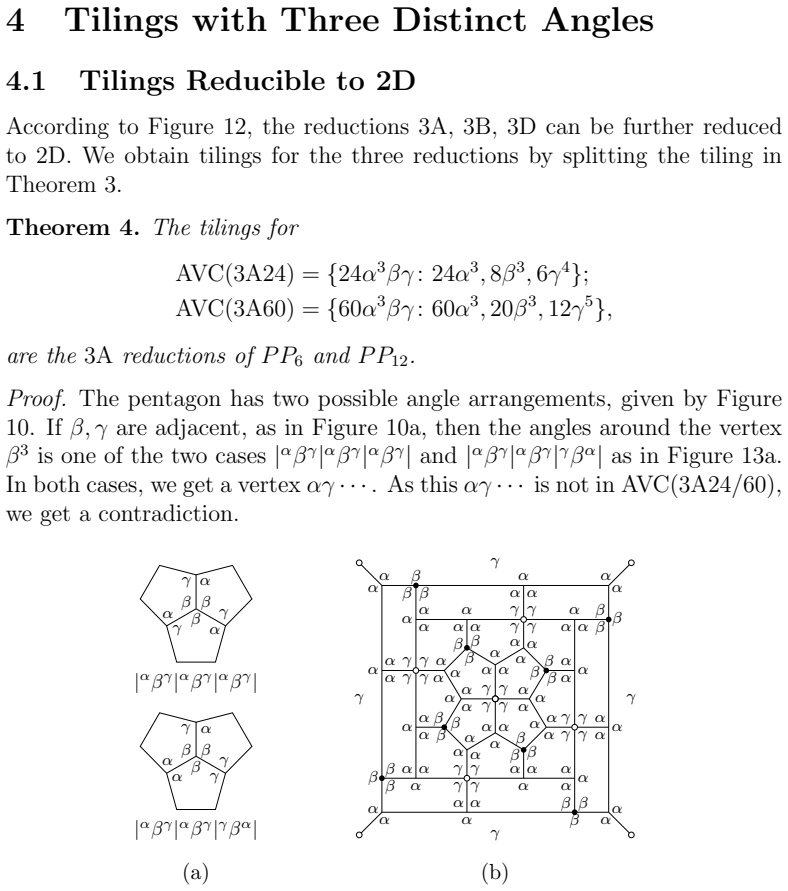
Figure 10. Figure 10: Angle arrangements for α 3βγ. They reduce AVC(5A24/60) to AVC(3C24) = {24α 3βγ : 24α 2β, 8γ 3 , 6α 4 }; AVC(3C60) = {60α 3βγ : 60α 2β, 20γ 3 , 12α 5 }. There are two possible angle arrangements for the pentagon α 3βγ, as shown in [PITH_FULL_IMAGE:figures/full_fig_p015_10.png] view at source ↗
Figure 11
Figure 11. Figure 11: Angle arrangements for α 2β 2γ. 5A 4A 4E 4D 3A 3E 3D 3C 3B 2D [PITH_FULL_IMAGE:figures/full_fig_p016_11.png] view at source ↗
Figure 12
Figure 12. Figure 12: Reduction relations for the reductions of AVC(5A24/60). [PITH_FULL_IMAGE:figures/full_fig_p016_12.png] view at source ↗
Figure 13
Figure 13. Figure 13: Tiling for AVC(3A24). Therefore, β, γ are non-adjacent in the pentagon, which means γ is ad￾jacent to two α, as in Figure 10b. As explained at the end of Section 3, the splitting from AVC(2D24/60) to AVC(3A24/60) means that, in the 2D tilings in Theorem 3, we change β to γ, and change one of the four α angles to β. Moreover, we need to keep β, γ non-adjacent in all the tiles. 17 [PITH_FULL_IMAGE:figures/… view at source ↗
Figure 14
Figure 14. Figure 14: Tiling for AVC(3B24), β, γ adjacent. If β, γ are non-adjacent, as in Figure 10b, then γ is adjacent to two α. Therefore, N(γ 4 ) is given by the center four tiles in Figure 15a, with one α and one β at the ends of each thick gray line. It remains to assign β to the ends of the thick gray lines. Since the only vertex involving β is α 2β, the only constraint is that there are at most one β at each vertex. T… view at source ↗
Figure 15
Figure 15. Figure 15: Tiling for AVC(3B24), β, γ non-adjacent. Proof. The splitting from AVC(2D24/60) to AVC(3D24/60) means changing β to γ, and changing four α angles to two α angles and two β angles, doing so according to the arrangements of angles in [PITH_FULL_IMAGE:figures/full_fig_p020_15.png] view at source ↗
Figure 16
Figure 16. Figure 16: Splitting of Figure 7 according to Figure 11c. [PITH_FULL_IMAGE:figures/full_fig_p021_16.png] view at source ↗
Figure 17
Figure 17. Figure 17: Relation between neighboring N(γ 4 ). If Figure 17b is part of the tiling, then we cannot have Figure 17a or 17c in the tiling. Therefore, the tiling consists of six N◦(γ 4 ). The schematics of the tiling is given by Figure 18a, and the tiling is the 3D3 reduction of P P6. What remains is the tiling with a mixture of N◦(γ 4 ) and N (γ 4 ), glued together according to Figures 17a and 17c. The tiling is giv… view at source ↗
Figure 18
Figure 18. Figure 18: Non-pentagonal subdivision tiling for AVC(3D24), Figure 11c. [PITH_FULL_IMAGE:figures/full_fig_p022_18.png] view at source ↗
Figure 19
Figure 19. Figure 19: Non-pentagonal subdivision tiling for AVC(3D24), Figure 11d. [PITH_FULL_IMAGE:figures/full_fig_p022_19.png] view at source ↗
Figure 20
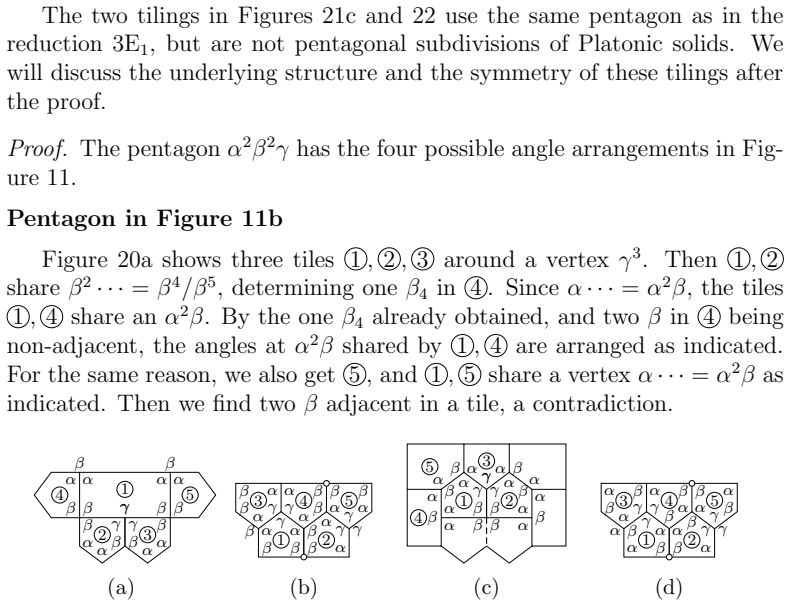
Figure 20. Figure 20: Tilings for AVC(3E24/60), Figures 11a, 11b, 11c. [PITH_FULL_IMAGE:figures/full_fig_p023_20.png] view at source ↗
Figure 21
Figure 21. Figure 21: Then we determine 1 , 2 , and one β in 3 , in Figures 21 and 22. Then α ′ 1 · · · = α ′ 2 · · · = α 2β imply that the two angles adjacent to the one β in 3 are not γ. Hence we may assume that the angles of 3 are arranged as shown. Then α ′ 2β3 · · · = α 2β and γ3 · · · = γ 3 determine 4 . Moreover, α ′ 4β ′ 2 · · · = α 2β gives one α in 5 . If β2 · · · = α 2β, then we get the second α in 5 and one α in 6 … view at source ↗
Figure 21
Figure 21. Figure 21: Non-pentagonal subdivision tiling for AVC(3E24). [PITH_FULL_IMAGE:figures/full_fig_p025_21.png] view at source ↗
Figure 22
Figure 22. Figure 22: Non-pentagonal subdivision for AVC(3E60). [PITH_FULL_IMAGE:figures/full_fig_p026_22.png] view at source ↗
Figure 23
Figure 23. Figure 23: Tiling for AVC(3E60), in case of no α γ | γα. Since β 4/β5 is a combination of | αβ β |, and | αβ β | ββ α | is not allowed, we get β 4 = | αβ β | αβ β | αβ β | αβ β | and β 5 = | αβ β | αβ β | αβ β | αβ β | αβ β |. The AAD | αβ β | αβ β | determines 1 , 2 in Figure 23b. Then γ1 · · · = γ2 · · · = γ 3 = | αγ β | αγ β | αγ β | determine 3 , 4 , 5 . Repeating the argument at all | αβ β | αβ β | at the initi… view at source ↗
Figure 24
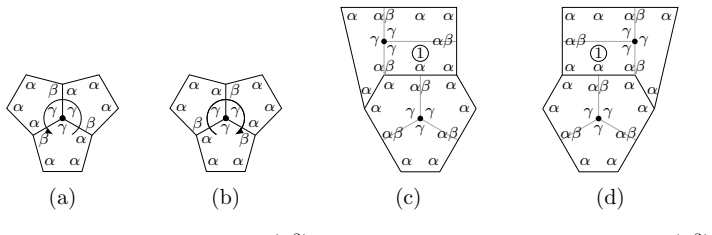
Figure 24. Figure 24: Orientations of N(γ 3 ), and glueing of two neighboring N(γ 3 ). We start with N(γ 3 ) as shown in the lower parts of Figures 24c, 24d. Then αβ · · · = α 2β gives one α1. Since γ · · · = γ 3 , we know γ1 is not at the boundary of N(γ 3 ). Then we get two possible locations of γ1, and further determine the new N(γ 3 ) around γ1 · · · = γ 3 . The new N(γ 3 ) is glued to the original N(γ 3 ) along either the… view at source ↗
Figure 25
Figure 25. Figure 25: Tiling for AVC(3C24/60), β, γ adjacent. The two glueing options happen at each of the three αβ instances along the boundary of N(γ 3 ). For the three neighboring N(γ 3 ) instances to be glued in compatible way, they must all follow the thick lines as shown in Fig￾ure 25b, or all follow the dashed lines. The former gives Figure 25c, where we note that the central N(γ 3 ) is glued to the neighboring N(γ 3 )… view at source ↗
Figure 26
Figure 26. Figure 26: Tilings for AVC(3C24), β, γ non-adjacent. 31 [PITH_FULL_IMAGE:figures/full_fig_p031_26.png] view at source ↗
Figure 27
Figure 27. Figure 27: Two splittings from N(γ 4 ) to N(δ 4 ). In Theorem 6, the tilings for the pentagon in Figure 11a are the 3D2 reductions of P P6 and P P12. Applying the splittings in [PITH_FULL_IMAGE:figures/full_fig_p033_27.png] view at source ↗
Figure 28
Figure 28. Figure 28: Non-pentagonal subdivision tiling for AVC(4E24). [PITH_FULL_IMAGE:figures/full_fig_p034_28.png] view at source ↗
Figure 29
Figure 29. Figure 29: Angle arrangements for AVC(3A36), and quadrilateral disk tilings. [PITH_FULL_IMAGE:figures/full_fig_p035_29.png] view at source ↗
Figure 30
Figure 30. Figure 30: First tiling for AVC(3A36) and AVC(4A36). [PITH_FULL_IMAGE:figures/full_fig_p036_30.png] view at source ↗
Figure 31
Figure 31. Figure 31: Second and third tilings for AVC(3A36) and AVC(4A36). [PITH_FULL_IMAGE:figures/full_fig_p037_31.png] view at source ↗
Figure 32
Figure 32. Figure 32: Angle arrangements for AVC(4A36), with non-adjacent [PITH_FULL_IMAGE:figures/full_fig_p037_32.png] view at source ↗
Figure 33
Figure 33. Figure 33: One tiling for AVC(2D36). One way to construct a subset of tilings for AVC(2D36) is by gluing six copies of the patches in [PITH_FULL_IMAGE:figures/full_fig_p038_33.png] view at source ↗
Figure 34
Figure 34. Figure 34: Four patches for AVC(2D36). [2] Y. Akama, M. Yan. On deformed dodecahedron tilings. Austral. J. Com￾bin., 85(1):1–14, 2023. [3] H. M. Cheung, H. P. Luk, M. Yan, Tilings of the sphere by congruent quadrilaterals or triangles, preprint, arXiv:2204.02736, 2022. [4] H. M. Cheung, H. P. Luk, M. Yan. Tilings of the sphere by congruent pentagons IV: edge combination a 4 b. preprint, arXiv:2307.11453, 2023. [5] H… view at source ↗
read the original abstract

Congruent polygons are congruent in angles as well as in edge lengths. We concentrate on the angle aspect, and investigate how tilings of the sphere by congruent pentagons can be determined by the angle information only. We also investigate how the features of tilings are changed under reductions, i.e., by ignoring the difference among the angles.

Editorial analysis

A structured set of objections, weighed in public.

Desk editor's note, referee report, simulated authors' rebuttal, and a circularity audit. Tearing a paper down is the easy half of reading it; the pith above is the substance, this is the friction.

Referee Report

2 major / 2 minor

Summary. The manuscript investigates edge-to-edge tilings of the sphere by pentagons that are congruent with respect to their angles (but not necessarily side lengths). It claims that such tilings, including their combinatorial type and existence, can be determined from the five angles alone, and studies how the tilings change when distinctions among those angles are ignored under successive reductions.

Significance. If the central reduction to angle data is shown to be sufficient for global closure and consistency, the result would simplify classification of spherical pentagonal tilings and reduce the number of free parameters needed for enumeration. The work is exploratory and focuses on combinatorial features rather than metric constructions; explicit verification of side-length consistency under the spherical metric would strengthen its contribution to the literature on spherical tilings.

major comments (2)
  1. [Introduction / abstract] The central claim that angle information alone determines the tiling (including global closure) is load-bearing but not yet verified against the one-parameter family of side-length assignments permitted by spherical excess. Local vertex conditions (angles summing to 2π) are necessary but may be insufficient without an explicit check that a consistent edge-length assignment exists around every edge and closes on the sphere; this is not addressed in the reduction steps described in the abstract and introduction.
  2. [Main results section] No explicit constructions, enumerations, or proofs are supplied to support the claim that the combinatorial type follows from the angles. The manuscript would need to exhibit at least one family of angle tuples for which the tiling exists and is unique up to congruence, together with the corresponding side-length solution that satisfies the spherical trigonometry at every vertex.
minor comments (2)
  1. [Notation] Notation for the five angles of the pentagon and for the reduction operation should be introduced with a clear table or diagram early in the paper.
  2. [Abstract] The abstract states the investigative goals but supplies no sample results or statements of theorems; adding a brief statement of the main theorem or enumeration count would improve readability.

Simulated Author's Rebuttal

2 responses · 0 unresolved

We thank the referee for the careful reading and constructive comments on our manuscript. We address the major comments point by point below, clarifying our combinatorial focus while agreeing to strengthen the metric aspects in revision.

read point-by-point responses
  1. Referee: [Introduction / abstract] The central claim that angle information alone determines the tiling (including global closure) is load-bearing but not yet verified against the one-parameter family of side-length assignments permitted by spherical excess. Local vertex conditions (angles summing to 2π) are necessary but may be insufficient without an explicit check that a consistent edge-length assignment exists around every edge and closes on the sphere; this is not addressed in the reduction steps described in the abstract and introduction.

    Authors: We agree that the manuscript would benefit from an explicit discussion of how the one-parameter freedom in side lengths (arising from the fixed spherical excess) can be used to achieve global closure once the combinatorial type is fixed by the angles. Our reductions operate at the combinatorial level, where vertex angle sums determine the link structure and edge identifications; the side lengths are then solved as a system consistent with the spherical trigonometry at each vertex. In the revised manuscript we will add a brief subsection after the reduction steps that outlines this adjustment process and notes that the freedom permits solutions for the families under consideration. revision: partial

  2. Referee: [Main results section] No explicit constructions, enumerations, or proofs are supplied to support the claim that the combinatorial type follows from the angles. The manuscript would need to exhibit at least one family of angle tuples for which the tiling exists and is unique up to congruence, together with the corresponding side-length solution that satisfies the spherical trigonometry at every vertex.

    Authors: We accept that a concrete illustration would make the central claim more transparent. In the revised version we will insert a new example subsection that selects a specific five-tuple of angles (including a reduced case with some angles identified), derives the resulting combinatorial type from the angle data, and then solves the corresponding spherical triangle equations for the edge lengths to confirm consistency around each vertex and closure on the sphere. This will also address uniqueness up to congruence for that family. revision: yes

Circularity Check

0 steps flagged

No circularity; angle-based investigation is exploratory and self-contained

full rationale

The paper frames its work as an investigation into how spherical pentagon tilings are determined by angle information alone, without any derivation chain that reduces predictions or uniqueness claims to fitted inputs, self-definitions, or load-bearing self-citations. No equations or steps are presented that equate outputs to inputs by construction, and the approach relies on geometric exploration rather than tautological renaming or ansatz smuggling. The central premise remains independent of the paper's own fitted values or prior author results in a circular manner.

Axiom & Free-Parameter Ledger

0 free parameters · 0 axioms · 0 invented entities

Only the abstract is available, so no explicit free parameters, axioms, or invented entities can be extracted; the work implicitly relies on standard assumptions of spherical geometry and edge-to-edge coverings.

pith-pipeline@v0.9.0 · 5574 in / 939 out tokens · 39261 ms · 2026-05-18T10:14:06.694778+00:00 · methodology

discussion (0)

Sign in with ORCID, Apple, or X to comment. Anyone can read and Pith papers without signing in.

Reference graph

Works this paper leans on

14 extracted references · 14 canonical work pages · 1 internal anchor

  1. [1]

    Akama, E

    Y. Akama, E. X. Wang, M. Yan. Tilings of the sphere by congruent pentagons III: edge combinationa 5.Adv. in Math., 394:107881, 2022. 38 ϵ α ααα ϵ α ααα ϵ α ααα ϵ α ααα ϵα α α α ϵα α α α ϵα α α α ϵα α α α ϵ α ααα 1 2 34 ϵ α ααα 1 2 34 ϵ α ααα 1 2 34 ϵ α ααα 1 2 34αϵ α α α ϵα α α α ϵα α α α 5 6 αα ϵ α α αα ϵ α α αα ϵ α α ϵ αα αα 5 α α α ϵ α6 ϵ αα αα 5 α α α...

  2. [2]

    Akama, M

    Y. Akama, M. Yan. On deformed dodecahedron tilings.Austral. J. Com- bin., 85(1):1–14, 2023

  3. [3]

    H. M. Cheung, H. P. Luk, M. Yan, Tilings of the sphere by congruent quadrilaterals or triangles,preprint, arXiv:2204.02736, 2022

  4. [4]

    H. M. Cheung, H. P. Luk, M. Yan. Tilings of the sphere by congruent pentagons IV: edge combinationa 4b.preprint, arXiv:2307.11453, 2023

  5. [5]

    H. H. Gao, N. Shi, M. Yan. Spherical tiling by 12 congruent pentagons. J. Combin. Theory Ser. A, 120(4):744–776, 2013

  6. [6]

    Hasheminezhad, B

    M. Hasheminezhad, B. D. McKay, T. Reeves Recursive generation of simple planar 5-regular graphs and pentangulationsJ. Graph Algorithms Appl., 15(3):417–436, 2011

  7. [7]

    H. P. Luk, M. Yan. Angle combinations in tilings of the sphere by angle congruent pentagons.Graphs and Combinatorics, 41(33), 2025

  8. [8]

    M. Rao. Exhaustive search of convex pentagons which tile the plane. preprint, arXiv:1708.00274, 2017

  9. [9]

    D. M. Y. Sommerville. Division of space by congruent triangles and tetrahedra.Proc. Royal Soc. Edinburgh, 43:85–116, 1924

  10. [10]

    Y. Ueno, Y. Agaoka. Classification of tilings of the 2-dimensional sphere by congruent triangles.Hiroshima Math. J., 32(3):463–540, 2002. 39

  11. [11]

    E. X. Wang, M. Yan. Tilings of the sphere by congruent pentagons I: edge combinationsa 2b2canda 3bc.Adv. in Math., 394:107866, 2022

  12. [12]

    E. X. Wang, M. Yan. Tilings of the sphere by congruent pentagons II: edge combinationa 3b2.Adv. in Math., 394:107867, 2022

  13. [13]

    M. Yan. Combinatorial tilings of the sphere by pentagons.Elec. J. of Combi., 20:#P1.54, 2013

  14. [14]

    M. Yan. Pentagonal subdivision.Elec. J. of Combi., 26:#P4.19, 2019. 40