On amplified graph C*-algebras as cores of Cuntz-Krieger algebras
Pith reviewed 2026-05-18 06:53 UTC · model grok-4.3
The pith
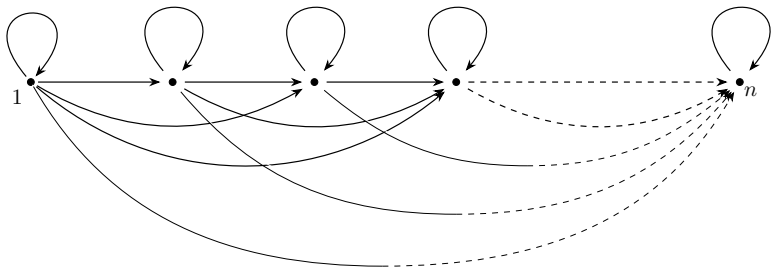
From any finite directed acyclic graph, adding loops at vertices or replacing each arrow with infinitely many arrows produces C*-algebras where one is the AF core of the other.
A machine-rendered reading of the paper's core claim, the machinery that carries it, and where it could break.
Core claim
Given a finite directed acyclic graph R, construct E_R by adding a loop at every vertex and F_R by replacing every arrow with countably infinitely many arrows. The resulting graph C*-algebras then satisfy C*(F_R) isomorphic to the AF core of C*(E_R). The isomorphism is verified for the stated constructions, and the relation is illustrated with examples drawn from quantum flag manifolds, quantum teardrops, and the quantum Grassmannian Gr_q(2,4).
What carries the argument
The pair of graph constructions E_R (loops added to vertices of R) and F_R (each arrow of R replaced by countably many arrows), which produce C*(F_R) isomorphic to the AF core of C*(E_R).
If this is right
- C*-algebras of quantum flag manifolds arise as AF cores of the looped-graph algebras.
- C*-algebras of quantum teardrops fit the same AF-core description.
- The AF-core presentation of the quantum Grassmannian Gr_q(2,4) directly supports computation of its CW-structure.
Where Pith is reading between the lines
- The isomorphism may supply a route to K-theory calculations for the same family of algebras by working in the AF core.
- The pattern of amplification versus loop addition could be tested on other finite graphs that satisfy only partial acyclicity conditions.
Load-bearing premise
The starting graph R must be finite and directed acyclic for the two constructions to yield C*-algebras whose AF-core relation holds.
What would settle it
Take the smallest acyclic graph consisting of two vertices and one arrow; compute the AF core of C*(E_R) explicitly and compare it with the known C*(F_R) to see whether they match.
Figures


read the original abstract
Given a finite directed acyclic graph $R$, we construct from it two graphs $E_R$ and $F_R$, one by adding a loop at every vertex of $R$ and one by replacing every arrow of $R$ by countably infinitely many arrows. We show that the graph C*-algebra $C^*(F_R)$ is isomorphic to the AF core of $C^*(E_R)$. Examples include C*-algebras of a quantum flag manifolds and quantum teardrops. We discuss in detail the quantum Grassmannian $Gr_q(2,4)$ and use our description as AF core to study its CW-structure.
Editorial analysis
A structured set of objections, weighed in public.
Referee Report
Summary. The paper constructs, for any finite directed acyclic graph R, a row-finite graph E_R by adding a loop at each vertex of R and a (non-row-finite) graph F_R by replacing each edge of R with countably infinitely many parallel edges. The central claim is that C^*(F_R) is isomorphic to the AF core of the Cuntz-Krieger algebra C^*(E_R). The authors apply the result to examples including quantum flag manifolds and quantum teardrops, and give a detailed study of the quantum Grassmannian Gr_q(2,4) in which the AF-core description is used to analyze its CW-structure.
Significance. If the isomorphism holds, the construction supplies an explicit realization of certain non-row-finite graph C*-algebras as AF cores of row-finite ones, which may simplify K-theoretic computations or structural analysis in noncommutative geometry. The explicit graph constructions from an arbitrary finite DAG R and the concrete application to Gr_q(2,4) are strengths that make the result potentially useful beyond the abstract setting.
major comments (2)
- [§3] §3, proof of the main isomorphism (Theorem 3.2 or equivalent): the argument invokes the universal property of C^*(F_R) to produce a *-homomorphism into the AF core of C^*(E_R). For vertices of infinite out-degree in F_R the images of the countably many parallel partial isometries must satisfy that the sum of their range projections converges strongly to the vertex projection in the multiplier algebra of the core. The manuscript verifies the Cuntz-Krieger relations only on finite subfamilies; an explicit verification or citation establishing the required strong limit (using row-finiteness of E_R and the gauge-action fixed-point property) is needed to confirm that the map is well-defined on the whole algebra.
- [§5] §5, application to Gr_q(2,4): the CW-structure statements rest on the isomorphism of the main theorem. Any adjustment required to establish the strong-convergence condition in §3 would propagate to the claims about the cell decomposition and its relation to the AF core.
minor comments (2)
- [§2] The notation for the gauge action and its fixed-point algebra (AF core) in §2 could be made more explicit by including the precise formula for the conditional expectation onto the core.
- [§3] A short remark on how acyclicity of R is used to ensure that the added loops in E_R do not interfere with the grading or the core would improve readability.
Simulated Author's Rebuttal
We thank the referee for the careful reading of the manuscript and the constructive comments. The positive assessment of the potential utility of the construction is appreciated. We address the major comments below and will revise the manuscript accordingly.
read point-by-point responses
-
Referee: [§3] §3, proof of the main isomorphism (Theorem 3.2 or equivalent): the argument invokes the universal property of C^*(F_R) to produce a *-homomorphism into the AF core of C^*(E_R). For vertices of infinite out-degree in F_R the images of the countably many parallel partial isometries must satisfy that the sum of their range projections converges strongly to the vertex projection in the multiplier algebra of the core. The manuscript verifies the Cuntz-Krieger relations only on finite subfamilies; an explicit verification or citation establishing the required strong limit (using row-finiteness of E_R and the gauge-action fixed-point property) is needed to confirm that the map is well-defined on the whole algebra.
Authors: We agree that an explicit verification of the strong convergence is needed for full rigor. In the revised version we will add a short argument in §3 showing that, because the AF core is the fixed-point algebra for the gauge action on the row-finite graph C*-algebra C^*(E_R), the countable sum of range projections of the images of the parallel partial isometries converges strongly to the vertex projection in the multiplier algebra. This uses only the row-finiteness of E_R and the standard properties of the gauge action, thereby confirming that the universal property applies to the whole of C^*(F_R). revision: yes
-
Referee: [§5] §5, application to Gr_q(2,4): the CW-structure statements rest on the isomorphism of the main theorem. Any adjustment required to establish the strong-convergence condition in §3 would propagate to the claims about the cell decomposition and its relation to the AF core.
Authors: The referee correctly notes the dependence. Once the additional verification is inserted in §3, the isomorphism remains valid and the analysis of the CW-structure of Gr_q(2,4) in §5 continues to hold without modification. We will add a brief remark in §5 confirming that the cell decomposition is derived directly from the strengthened isomorphism. revision: yes
Circularity Check
Direct constructions and isomorphism proof are self-contained
full rationale
The paper defines graphs E_R and F_R explicitly from any finite directed acyclic graph R, then proves C^*(F_R) ≅ AF-core(C^*(E_R)) using the universal property of graph C*-algebras, the gauge action, and Cuntz-Krieger relations. No step reduces the claimed isomorphism to a fitted parameter, self-referential definition, or load-bearing self-citation; the acyclicity and finiteness of R are used only to guarantee the core is AF and the relations hold, which is independent external structure. The result is a standard theorem establishing an isomorphism between two explicitly constructed objects.
Axiom & Free-Parameter Ledger
axioms (1)
- standard math Standard definitions and properties of graph C*-algebras and their AF cores from directed graphs
Lean theorems connected to this paper
-
IndisputableMonolith/Cost/FunctionalEquation.leanwashburn_uniqueness_aczel unclear?
unclearRelation between the paper passage and the cited Recognition theorem.
Theorem 3.2: if R is a finite directed acyclic graph … then C*(F_R) ≅ C*(E_R)^{U(1)} … proved by computing the dimension group
-
IndisputableMonolith/Foundation/AbsoluteFloorClosure.leanabsolute_floor_iff_bare_distinguishability unclear?
unclearRelation between the paper passage and the cited Recognition theorem.
K_0(A) is a free Z-module with basis {[P_v] | v ∈ V} … K_0(A)^+ = {x | k_v > 0 ∀ v ∈ Supp(x)_min}
What do these tags mean?
- matches
- The paper's claim is directly supported by a theorem in the formal canon.
- supports
- The theorem supports part of the paper's argument, but the paper may add assumptions or extra steps.
- extends
- The paper goes beyond the formal theorem; the theorem is a base layer rather than the whole result.
- uses
- The paper appears to rely on the theorem as machinery.
- contradicts
- The paper's claim conflicts with a theorem or certificate in the canon.
- unclear
- Pith found a possible connection, but the passage is too broad, indirect, or ambiguous to say the theorem truly supports the claim.
Reference graph
Works this paper leans on
-
[1]
S.Arklint, S.EilersandE.Ruiz,Geometric classification of isomorphism of unital graphC∗-algebras, New York J. Math. 28 (2022), 927–957. www.emis.de/journals/NYJM/nyjm/j/2022/28-38.html
work page 2022
-
[2]
F. Arici, F. D’Andrea, P.M. Hajac and M. Tobolski,An equivariant pullback structure of trimmable graph C*-algebras, J. Noncommut. Geom. 16(2022), 761–785. https://doi.org/10.4171/JNCG/421
-
[3]
M. Atiyah and J. Todd,On complex stiefel manifolds, Math. Proc. Cambridge Phil. Soc. 56 (1960), 342–353. https://doi.org/10.1017/S0305004100034642
- [4]
-
[5]
T. Bates, J.H. Hong, I. Raeburn and W. Szymański,The ideal structure of the C*-algebras of infinite graphs, Illinois J. Math. 46 (2002) 1159–1176. https://doi.org/10.1215/ijm/1258138472
- [6]
-
[7]
P.F. Baum, K. De Commer, and P.M. Hajac,Free actions of compact quantum groups on unital C*-algebras, Doc. Math. 22 (2017), 825–849
work page 2017
-
[8]
T. Brzeziński and W. Szymański,The C*-algebras of quantum lens and weighted projective spaces, J. Noncommut. Geom. 12 (2018) 195–215. https://doi.org/10.4171/JNCG/274
-
[9]
L.O. Clark, R. Hazrat and S.W. Rigby,Strongly graded groupoids and strongly graded Steinberg algebras, J. Algebra 530 (2019) 34–68. https://doi.org/10.1016/j.jalgebra.2019.03.030
-
[10]
D’Andrea,Quantum spheres as graph C*-algebras: a review, Expositiones Mathematicae 42 (2024), 125632
F. D’Andrea,Quantum spheres as graph C*-algebras: a review, Expositiones Mathematicae 42 (2024), 125632. https://doi.org/10.1016/j.exmath.2024.125632
-
[11]
On the K-theory of the AF core of a graph C*-algebra
F. D’Andrea,On the K-theory of the AF core of a graph C*-algebra, preprint arXiv:2410.06242
work page internal anchor Pith review Pith/arXiv arXiv
-
[12]
F. D’Andrea, P.M. Hajac, T. Maszczyk, A. Sheu and B. Zielinski,The K-theory type of quantum CW-complexes, preprint arXiv:2002.09015
-
[13]
The C*-algebras of arbitrary graphs
D. Drinen and M. Tomforde,Computing K-theory and Ext for graph C*-algebras, Illinois J. Math. 46 (2002), 81–91. preprint arXiv:math/0009228
work page internal anchor Pith review Pith/arXiv arXiv 2002
-
[14]
D. Drinen and M. Tomforde,The C*-algebras of arbitrary graphs, Rocky Mountain J. Math. 35 (2005) 105–135. https://doi.org/10.1216/rmjm/1181069770
-
[15]
S. Eilers, E. Ruiz, A.P.W. Sørensen,Amplified graph C*-algebras, Münster J. of Math. 5 (2012), 121–150. https://doi.org/10.48550/arXiv.1110.2758 29
work page internal anchor Pith review Pith/arXiv arXiv doi:10.48550/arxiv.1110.2758 2012
-
[16]
G.A. Elliott,On the classification of inductive limits of sequences of semisimple finite-dimensional algebras, J. Algebra 38 (1976), 29–44. https://doi.org/10.1016/0021-8693(76)90242-8
-
[17]
D.A. Ellwood,A new characterisation of principal actions, Journal of Functional Analysis 173 (2000), 49–60
work page 2000
- [18]
-
[19]
N.J. Fowler, M. Laca and I. Raeburn,The C*-algebras of infinite graphs, Proc. Amer. Math. Soc. 128 (2000) 2319–2327. https://doi.org/10.1090/S0002-9939-99-05378-2
-
[20]
Hazrat,The graded structure of Leavitt path algebras, Israel J
R. Hazrat,The graded structure of Leavitt path algebras, Israel J. Math. 195 (2013) 833–895. https: //doi.org/10.1007/s11856-012-0138-5
-
[21]
P.M. Hajac, R. Nest, D. Pask, A. Sims and B. Zieliński,The K-theory of twisted multipullback quantum odd spheres and complex projective spaces, J. Noncommut. Geom. 12 (2018), 823–863. https://doi.org/10.4171/JNCG/292
-
[22]
P.M. Hajac, S. Reznikoff and M. Tobolski,Pullbacks of graph C*-algebras from admissible pushouts of graphs, Banach Center Publ. 120 (2020) 169–178. https://doi.org/10.4064/bc120-13
-
[23]
J.H. Hong and W. Szymański,Quantum spheres and projective spaces as graph algebras, Commun. Math. Phys. 232 (2002), 157–188. https://doi.org/10.1007/s00220-002-0732-1
-
[25]
J.H. Hong and W. Szymański,Noncommutative balls and mirror quantum spheres, J. London Math. Soc. 77 (2008), 607–626. https://doi.org/10.2140/pjm.2003.211.249
-
[26]
A. Kumjian, D. Pask and I. Raeburn,Cuntz-Krieger algebras of directed graphs, Pacific J. Math. 184 (1998), 161–174. https://doi.org/10.2140/pjm.1998.184.161
-
[27]
P. Lundström and J. Öinert,Strongly graded Leavitt path algebras, J. Algebra App. 21 (2022) 2250141. https://doi.org/10.1142/S0219498822501419
-
[28]
Montgomery,Hopf algebras and their actions on rings, RCSM no
S. Montgomery,Hopf algebras and their actions on rings, RCSM no. 82, Amer. Math. Soc., Provi- dence, RI, 1993
work page 1993
-
[29]
S. Neshveyev and L. Tuset,Quantized algebras of functions on homogeneous spaces with Poisson stabilizers, Commun. Math. Phys. 312 (2012), 223–250. https://doi.org/10.1007/s00220-012-1455-6
-
[30]
Pedersen,Pullback and Pushout Constructions in C*-Algebra Theory, J
G.K. Pedersen,Pullback and Pushout Constructions in C*-Algebra Theory, J. Funct. Anal. 167 (1999), 243–344. https://doi.org/10.1006/jfan.1999.3456
-
[31]
Raeburn,Graph algebras, CBMS Regional Conference Series in Mathematics 103, AMS 2005
I. Raeburn,Graph algebras, CBMS Regional Conference Series in Mathematics 103, AMS 2005. https://isbnsearch.org/isbn/9780821836606
-
[32]
J. Rudnik,The K-theory of the triple-Toeplitz deformation of the complex projective plane, Banach Center Pub. 98 (2012) 303–310. https://doi.org/10.4064/bc98-0-13
-
[33]
Schneider,Principal homogeneous spaces for arbitrary Hopf algebras, Israel J
H.-J. Schneider,Principal homogeneous spaces for arbitrary Hopf algebras, Israel J. Math. 72 (1990), 167–195. https://doi.org/10.1007/BF02764619
-
[34]
K. Strung,Realizing quantum flag manifolds as graph C*-algebras, Oberwolfach Report 36 (2022), 2066–2069. https://doi.org/10.4171/OWR/2022/36
-
[35]
M. Sweedler,Hopf Algebras, Math. lecture note series, W.A. Benjamin, 1969
work page 1969
-
[36]
L.L. Vaksman and Y.S. Soibelman,The algebra of functions on quantumSU(n+ 1)group and odd- dimensional quantum spheres, Leningrad Math. J. 2 (1991) 1023–1042; translation from Algebra i Analiz 2 (1990) 101–120. http://mi.mathnet.ru/aa208 (F. D’Andrea)Dipartimento di Matematica e Applicazioni “R. Caccioppoli”, Università di Napoli Federico II, Napoli, Italy...
work page 1991
discussion (0)
Sign in with ORCID, Apple, or X to comment. Anyone can read and Pith papers without signing in.