Convergence rate estimates for semigroups and heat kernels associated with resistance forms
Pith reviewed 2026-05-25 03:57 UTC · model grok-4.3
The pith
Explicit convergence rates are established for semigroups and heat kernels on resistance forms under measure regularity and lower resistance estimates.
A machine-rendered reading of the paper's core claim, the machinery that carries it, and where it could break.
Core claim
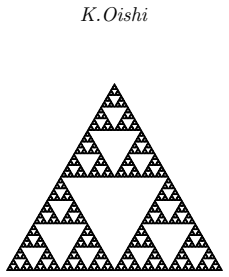
Under the assumptions of measure regularity and lower resistance estimates, explicit convergence rates hold for the semigroups and heat kernels whenever the underlying measured resistance metric spaces converge in the Gromov-Hausdorff-vague topology. A new metric is introduced that induces this topology and is convenient for evaluating the rates. The resulting bounds deliver the first convergence-rate estimate for random-walk approximation of Brownian motion on the Sierpinski gasket and extend the known parameter regime for homogenization in the one-dimensional Bouchaud trap model while improving prior rates by at least a quadratic factor.
What carries the argument
Quantitative bounds obtained from measure regularity together with lower resistance estimates, supported by a newly defined metric that induces the Gromov-Hausdorff-vague topology.
If this is right
- First explicit rate estimate for random-walk approximation of Brownian motion on the Sierpinski gasket.
- Homogenization proved for the one-dimensional Bouchaud trap model in every parameter regime where it occurs.
- Existing convergence-rate estimates for the Bouchaud trap model improved by at least a quadratic factor.
- A new metric simplifies direct calculation of distances in the Gromov-Hausdorff-vague topology.
Where Pith is reading between the lines
- The rates supply concrete error controls that could be used to certify numerical discretizations of diffusions on fractals.
- The same quantitative approach may transfer to other classes of Dirichlet forms once analogous regularity conditions are verified.
- Improved rates in the trap model suggest that similar sharpening is possible for homogenization problems in higher-dimensional or non-one-dimensional settings.
- The new metric could serve as a computational tool for checking convergence of other stochastic processes whose state spaces are resistance spaces.
Load-bearing premise
The measured resistance metric spaces satisfy measure regularity and lower resistance estimates.
What would settle it
A concrete sequence of spaces obeying measure regularity and lower resistance estimates whose semigroup or heat-kernel convergence is slower than the explicit rate given by the main theorem.
Figures


read the original abstract
In this paper, we derive quantitative convergence rates for stochastic processes associated with resistance forms. While the qualitative convergence of heat kernels and semigroups under the Gromov-Hausdorff-vague convergence of underlying measured resistance metric spaces has been investigated previously, their quantitative convergence rates have remained unexplored. We establish explicit convergence rates for the associated semigroups and heat kernels under the assumptions of measure regularity and lower resistance estimates. Furthermore, we introduce a new metric that induces the Gromov-Hausdorff-vague topology, and is convenient for evaluation. As applications of our main results, we present two illustrative examples. First, we derive first estimate on the convergence rate for the random walk approximation of Brownian motion on the Sierpinski gasket. Second, we apply our results to the one-dimensional Bouchaud trap model, successfully extending the previously known parameter regime to all cases where homogenization occurs and improving the convergence rate estimates in the existing regime by at least a quadratic factor.
Editorial analysis
A structured set of objections, weighed in public.
Referee Report
Summary. The paper derives explicit quantitative convergence rates for semigroups and heat kernels associated with resistance forms on measured resistance metric spaces, under the assumptions of measure regularity and lower resistance estimates. It introduces a new metric inducing the Gromov-Hausdorff-vague topology and applies the results to obtain a first convergence-rate estimate for the random-walk approximation of Brownian motion on the Sierpinski gasket, as well as an extension of the parameter regime (to all cases where homogenization occurs) together with a quadratic-factor improvement in the existing regime for the one-dimensional Bouchaud trap model.
Significance. If the derivations hold, the work supplies the first quantitative rates in a setting where only qualitative convergence under GHV convergence was previously available. The applications are concrete and improve upon existing results in the Bouchaud model while providing the initial rate for the gasket example. The new metric is presented as convenient for evaluation and may facilitate further quantitative work on resistance forms.
minor comments (2)
- [Abstract / Introduction] The abstract states that the results hold under measure regularity and lower resistance estimates, but the precise statements of these assumptions (and any uniformity requirements across the sequence of spaces) should be recalled explicitly in the introduction or §2 to make the hypotheses self-contained for readers.
- [Application section on Bouchaud model] The claim of a 'quadratic factor' improvement in the Bouchaud trap model should be accompanied by a direct comparison (in a table or remark) with the best previously published rate, citing the specific theorem or proposition being improved.
Simulated Author's Rebuttal
We thank the referee for their summary of the manuscript and for acknowledging its potential significance in providing the first quantitative convergence rates under Gromov-Hausdorff-vague convergence for resistance forms, along with the concrete applications to the Sierpinski gasket and Bouchaud trap model. The recommendation is listed as uncertain, but the report contains no specific major comments or points of concern. We would be happy to address any particular questions or requests for clarification if provided.
Circularity Check
No significant circularity; derivation self-contained under stated assumptions
full rationale
The paper derives explicit quantitative convergence rates for semigroups and heat kernels on resistance forms, conditional on the external assumptions of measure regularity and lower resistance estimates. These assumptions are invoked as inputs to obtain the bounds rather than being redefined in terms of the rates themselves. The new metric inducing the GHV topology is introduced as a tool for evaluation, not as a self-referential construct. The two applications (Sierpinski gasket random walk and Bouchaud trap model) are presented as illustrative uses of the main results, with no indication that the claimed rates reduce to fitted parameters or prior self-citations by construction. The derivation chain remains independent of its outputs.
Axiom & Free-Parameter Ledger
Reference graph
Works this paper leans on
-
[1]
R. Abraham, J.-F. Delmas, and P. Hoscheit. A note on the Gromov-Hausdorff-Prokhorov distance between (locally) compact metric measure spaces.Electron. J. Probab., 18:Paper No. 14, 21, 2013
work page 2013
-
[2]
D. Aldous. The continuum random tree. III.Ann. Probab., 21(1):248–289, 1993
work page 1993
- [3]
-
[4]
The scaling limit of random walk and the intrinsic metric on planar critical percolation
I. Ðanković, M. Markering, J. Miller, and Y. Yuan. The scaling limit of random walk and the intrinsic metric on planar critical percolation, 2026. Preprint available at arXiv:2604.14122v1
work page internal anchor Pith review Pith/arXiv arXiv 2026
-
[5]
S. Athreya, W. Löhr, and A. Winter. The gap between Gromov-vague and Gromov-Hausdorff-vague topology.Stochastic Process. Appl., 126(9):2527–2553, 2016
work page 2016
-
[6]
S. Athreya, W. Löhr, and A. Winter. Invariance principle for variable speed random walks on trees. Ann. Probab., 45(2):625–667, 2017
work page 2017
-
[7]
M. T. Barlow. Diffusions on fractals. InLectures on probability theory and statistics (Saint-Flour, 1995), volume 1690 ofLecture Notes in Math., pages 1–121. Springer, Berlin, 1998
work page 1995
-
[8]
M. T. Barlow.Random walks and heat kernels on graphs, volume 438 ofLondon Mathematical Society Lecture Note Series. Cambridge University Press, Cambridge, 2017
work page 2017
-
[9]
M. T. Barlow and R. F. Bass. The construction of Brownian motion on the Sierpiński carpet.Ann. Inst. Henri Poincaré Probab. Stat., 25(3):225–257, 1989
work page 1989
-
[10]
M. T. Barlow and E. A. Perkins. Brownian motion on the Sierpiński gasket.Probab. Theory Related Fields, 79(4):543–623, 1988
work page 1988
-
[11]
G. Ben Arous and J. Černý. Dynamics of trap models. InMathematical statistical physics, pages 331–394. Elsevier B. V., Amsterdam, 2006
work page 2006
-
[12]
A. C. Berry. The accuracy of the Gaussian approximation to the sum of independent variates.Trans. Amer. Math. Soc., 49:122–136, 1941
work page 1941
-
[13]
J. P. Bouchaud. Weak ergodicity breaking and aging in disordered systems.J. Phys. I, 2(9):1705– 1713, 1992
work page 1992
-
[14]
S. Boucheron, G. Lugosi, and P. Massart.Concentration inequalities: A nonasymptotic theory of independence. Oxford University Press, Oxford, 2013. With a foreword by Michel Ledoux
work page 2013
- [15]
- [16]
-
[17]
Z.-Q. Chen and M. Fukushima.Symmetric Markov processes, time change, and boundary theory, vol- ume 35 ofLondon Mathematical Society Monographs Series. Princeton University Press, Princeton, NJ„ 2012. 90 Convergence rate estimates for semigroups and heat kernels associated with resistance forms
work page 2012
-
[18]
D. Croydon. Convergence of simple random walks on random discrete trees to Brownian motion on the continuum random tree.Ann. Inst. Henri Poincaré Probab. Stat., 44(6):987–1019, 2008
work page 2008
-
[19]
D. Croydon, B. Hambly, and T. Kumagai. Time-changes of stochastic processes associated with resistance forms.Electron. J. Probab., 22:Paper No. 82, 41, 2017
work page 2017
-
[20]
D. A. Croydon. Heat kernel fluctuations for a resistance form with non-uniform volume growth. Proc. Lond. Math. Soc. (3), 94(3):672–694, 2007
work page 2007
-
[21]
D. A. Croydon. Scaling limits of stochastic processes associated with resistance forms.Ann. Inst. Henri Poincaré Probab. Stat., 54(4):1939–1968, 2018
work page 1939
-
[22]
D. A. Croydon, N. Feldheim, and O. Feldheim. Zeroes of fractional Gaussian fields on fractals. In preparation
-
[23]
R. M. Dudley.Real analysis and probability, volume 74 ofCambridge Studies in Advanced Mathe- matics. Cambridge University Press, Cambridge, 2002. Revised reprint of the 1989 original
work page 2002
- [24]
- [25]
-
[26]
C.-G. Esseen. On the Liapounoff limit of error in the theory of probability.Ark. Mat. Astr. Fys., 28A(9):19, 1942
work page 1942
-
[27]
S. N. Ethier and T. G. Kurtz.Markov processes: Characterization and convergence. Wiley Series in Probability and Mathematical Statistics: Probability and Mathematical Statistics. John Wiley & Sons, Inc., New York, 1986
work page 1986
-
[28]
S. N. Evans, J. Pitman, and A. Winter. Rayleigh processes, real trees, and root growth with re- grafting.Probab. Theory Related Fields, 134(1):81–126, 2006
work page 2006
-
[29]
P. J. Fitzsimmons, B. M. Hambly, and T. Kumagai. Transition density estimates for Brownian motion on affine nested fractals.Comm. Math. Phys., 165(3):595–620, 1994
work page 1994
-
[30]
L. R. G. Fontes, M. Isopi, and C. M. Newman. Chaotic time dependence in a disordered spin system. Probab. Theory Related Fields, 115(3):417–443, 1999
work page 1999
-
[31]
M. Fukushima, Y. ¯Oshima, and M. Takeda.Dirichlet forms and symmetric Markov processes, volume 19 ofDe Gruyter Studies in Mathematics. Walter de Gruyter & Co., Berlin, 1994
work page 1994
- [32]
-
[33]
Gut.Probability: a graduate course, volume 200
A. Gut.Probability: a graduate course, volume 200. Springer, 2006
work page 2006
-
[34]
J. E. Hutchinson. Fractals and self-similarity.Indiana Univ. Math. J., 30(5):713–747, 1981
work page 1981
-
[35]
A. S. Kechris.Classical descriptive set theory, volume 156 ofGraduate Texts in Mathematics. Springer-Verlag, New York, 1995
work page 1995
-
[36]
A. Khezeli. A unified framework for generalizing the Gromov-Hausdorff metric.Probab. Surv., 20:837–896, 2023
work page 2023
-
[37]
J. Kigami. Harmonic calculus on limits of networks and its application to dendrites.J. Funct. Anal., 128(1):48–86, 1995
work page 1995
-
[38]
Kigami.Analysis on fractals, volume 143 ofCambridge Tracts in Mathematics
J. Kigami.Analysis on fractals, volume 143 ofCambridge Tracts in Mathematics. Cambridge University Press, Cambridge, 2001. 91 K.Oishi
work page 2001
-
[39]
J. Kigami. Harmonic analysis for resistance forms.J. Funct. Anal., 204(2):399–444, 2003
work page 2003
-
[40]
J. Kigami. Resistance forms, quasisymmetric maps and heat kernel estimates.Mem. Amer. Math. Soc., 216(1015):vi+132, 2012
work page 2012
-
[41]
V. N. Kolokoltsov. The rates of convergence for functional limit theorems with stable subordinators and for CTRW approximations to fractional evolutions.Fractal Fract., 7(4):335, 2023
work page 2023
- [42]
- [43]
-
[44]
T. Kumagai. Heat kernel estimates and parabolic Harnack inequalities on graphs and resistance forms.Publ. Res. Inst. Math. Sci., 40(3):793–818, 2004
work page 2004
-
[45]
S. Kusuoka. A diffusion process on a fractal. InProbabilistic methods in mathematical physics (Katata/Kyoto, 1985), pages 251–274. Academic Press, Boston, MA, 1987
work page 1985
-
[46]
R. Latała. Estimation of moments of sums of independent real random variables.Ann. Probab., 25(3):1502–1513, 1997
work page 1997
-
[47]
J.-F. Le Gall. Random real trees.Ann. Fac. Sci. Toulouse Math. (6), 15(1):35–62, 2006
work page 2006
-
[48]
D. A. Levin, Y. Peres, and E. L. Wilmer.Markov chains and mixing times. American Mathematical Society, Providence, RI, 2009. With a chapter by James G. Propp and David B. Wilson
work page 2009
-
[49]
M. B. Marcus and J. Rosen.Markov processes, Gaussian processes, and local times, volume 100 of Cambridge Studies in Advanced Mathematics. Cambridge University Press, Cambridge, 2006
work page 2006
-
[50]
E. J. McShane. Extension of range of functions.Bull. Amer. Math. Soc., 40(12):837–842, 1934
work page 1934
- [51]
-
[52]
J. Miller. Existence and uniqueness of the canonical Brownian motion in non-simple conformal loop ensemble gaskets, 2025. Preprint available at arXiv:2512.04807v1
work page internal anchor Pith review Pith/arXiv arXiv 2025
-
[53]
M. Murugan. Heat kernel for reflected diffusion and extension property on uniform domains.Probab. Theory Related Fields, 190(1-2):543–599, 2024
work page 2024
-
[54]
R. Noda. Metrization of Gromov-Hausdorff-type topologies on boundedly-compact metric spaces,
- [55]
-
[56]
R. Noda. Scaling limits of discrete-time Markov chains and their local times on electrical networks,
- [57]
-
[58]
R. Noda. Convergence of local times of stochastic processes associated with resistance forms.Ann. Inst. Henri Poincaré Probab. Stat., To appear
-
[59]
O. Post and J. Simmer. Approximation of fractals by discrete graphs: norm resolvent and spectral convergence.Integral Equations Operator Theory, 90(6):68, 2018
work page 2018
-
[60]
A. W. van der Vaart and J. A. Wellner.Weak convergence and empirical processes: With applications to statistics. Springer Series in Statistics. Springer-Verlag, New York, 1996
work page 1996
-
[61]
R. Vershynin.High-dimensional probability: An introduction with applications in data science, vol- ume 47 ofCambridge Series in Statistical and Probabilistic Mathematics. Cambridge University Press, Cambridge, 2018. With a foreword by Sara van de Geer
work page 2018
-
[62]
F. G. Viens and A. B. Vizcarra. Supremum concentration inequality and modulus of continuity for sub-nth chaos processes.J. Funct. Anal., 248(1):1–26, 2007. 92
work page 2007
discussion (0)
Sign in with ORCID, Apple, or X to comment. Anyone can read and Pith papers without signing in.