String nets for twisted pivotal categories
Pith reviewed 2026-06-29 09:18 UTC · model grok-4.3
The pith
Twisted string net modules assemble into an oriented categorified 2-TQFT independent of the Morse function on the surface.
A machine-rendered reading of the paper's core claim, the machinery that carries it, and where it could break.
Core claim
Despite the apparent dependence on the Morse function or foliation, the twisted string net modules of surfaces assemble into an oriented categorified 2-TQFT. The module assigned to the 2-sphere is related to the distinguished invertible object of a finite tensor category, and there exist non-unimodular finite tensor categories for which this module does not vanish; such non-vanishing is expected to be the principal obstruction to extending the 2-TQFT to a non-compact 3-TQFT.
What carries the argument
Twisted string net modules built from a graphical calculus that depends on a Morse foliation for categories equipped with twisted pivotal structures.
If this is right
- The assignment of modules to surfaces with Morse data yields a functor that descends to an oriented categorified 2-TQFT.
- The value on the 2-sphere can be nonzero when the underlying finite tensor category is non-unimodular.
- Vanishing of the 2-sphere module is the expected main obstruction to a non-compact 3-TQFT extension.
- Examples of non-unimodular categories furnish concrete instances where the 2-sphere module survives.
Where Pith is reading between the lines
- The same graphical calculus might be applied to other classes of surfaces or to higher-genus examples to produce new explicit 2-TQFTs.
- The relation between the 2-sphere module and the distinguished invertible object could be used to classify when a given finite tensor category admits a non-vanishing assignment.
- If the obstruction vanishes, the construction supplies candidate data for an attempted lift to a 3-TQFT that could be tested on specific non-unimodular categories.
Load-bearing premise
The monoidal categories must admit twisted pivotal structures, and the surfaces must admit Morse functions or foliations that make the graphical calculus well-defined.
What would settle it
Two non-isomorphic twisted string net modules obtained from the same surface and the same category but different Morse functions would falsify the independence claim.
Figures
read the original abstract
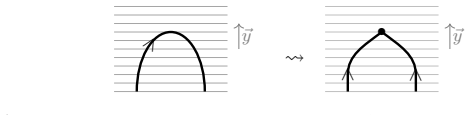
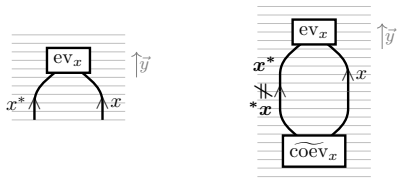
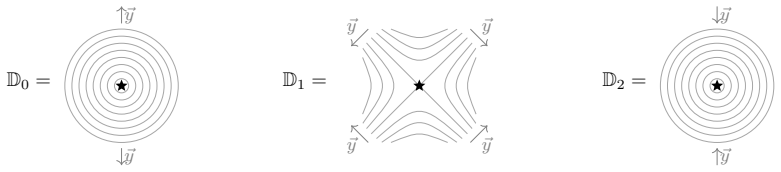
We develop a graphical calculus for monoidal categories equipped with twisted pivotal structures, which are a generalization of pivotal structures originating from the study of orientation structures in the context of the Cobordism Hypothesis. This graphical calculus depends on a possibly singular foliation, and we use it to construct twisted string net modules for surfaces equipped with a Morse function or a Morse foliation. We prove that, despite the apparent dependence on this Morse function, the twisted string net modules assemble in an oriented categorified 2-TQFT. We study when the twisted string net module of the 2-sphere vanishes, relate it to the distinguished invertible object for finite tensor categories and exhibit examples of non-unimodular finite tensor categories with non-vanishing twisted string net module on the 2-sphere. This vanishing is expected to be the main obstruction for extending our categorified 2-TQFT to a non-compact 3-TQFT.
Editorial analysis
A structured set of objections, weighed in public.
Referee Report
Summary. The manuscript develops a graphical calculus for monoidal categories equipped with twisted pivotal structures (generalizing standard pivotal structures via orientation data from the Cobordism Hypothesis). The calculus depends on a (possibly singular) foliation and is used to define twisted string-net modules on surfaces equipped with Morse functions or Morse foliations. The central result is a proof that these modules are nevertheless independent of the choice of Morse function/foliation and assemble into an oriented categorified 2-TQFT. The paper further studies the vanishing of the twisted string-net module on the 2-sphere (relating it to the distinguished invertible object of a finite tensor category), exhibits examples of non-unimodular finite tensor categories with non-vanishing modules on S^2, and notes that this vanishing is expected to obstruct extension to a non-compact 3-TQFT.
Significance. If the invariance and assembly proofs hold, the work supplies a concrete graphical-calculus construction of categorified 2-TQFTs for the broader class of twisted pivotal monoidal categories. The independence from the auxiliary Morse data is a non-trivial technical achievement. The S^2-vanishing criterion and the explicit non-unimodular examples furnish testable obstructions and illustrate the scope of the construction beyond the unimodular case. These results sit at the interface of tensor-category theory and low-dimensional TQFT and are likely to be of interest to researchers working on the Cobordism Hypothesis and string-net models.
minor comments (2)
- [Abstract] The abstract states that proofs of invariance and 2-TQFT assembly exist; the main text should include explicit cross-references (e.g., to the relevant theorem or proposition numbers) immediately after each claim so that readers can locate the derivations without searching.
- [§2 (Preliminaries)] Notation for the twisted pivotal structure and the foliation-dependent graphical calculus should be introduced with a short table or diagram in the preliminaries section to improve readability for readers unfamiliar with the Cobordism-Hypothesis literature.
Simulated Author's Rebuttal
We thank the referee for their positive summary, assessment of significance, and recommendation of minor revision. No major comments were provided in the report.
Circularity Check
No significant circularity
full rationale
The paper constructs a graphical calculus for twisted pivotal monoidal categories (originating externally from the Cobordism Hypothesis) and defines twisted string-net modules via Morse functions or foliations on surfaces. It then proves invariance under choice of Morse data to obtain an oriented categorified 2-TQFT. No equations, definitions, or self-citations in the provided text reduce any load-bearing claim to a fit, renaming, or self-referential input; the invariance argument and TQFT axioms are presented as external mathematical content resting on standard category-theoretic background rather than the paper's own outputs.
Axiom & Free-Parameter Ledger
axioms (2)
- domain assumption Monoidal categories admit twisted pivotal structures generalizing those arising from the Cobordism Hypothesis.
- domain assumption Surfaces admit Morse functions or Morse foliations compatible with the graphical calculus.
Reference graph
Works this paper leans on
-
[1]
[GKP22] Nathan Geer, Jonathan Kujawa, and Bertrand Patureau-Mirand
arxiv:1612.04561. [GKP22] Nathan Geer, Jonathan Kujawa, and Bertrand Patureau-Mirand. M-traces in (non- unimodular) pivotal categories.Algebr. Represent. Theory, 25(3):759–776, 2022. arXiv:1809.00499. [GPT09] Nathan Geer, Bertrand Patureau-Mirand, and Vladimir Turaev. Modified quantum dimensions and re-normalized link invariants.Compos. Math., 145(1):196–...
- [2]
-
[3]
arXiv:2201.05361. [JS91] Andr´ e Joyal and Ross Street. The geometry of tensor calculus. I.Adv. Math., 88(1):55–112, 1991. [JS17] Theo Johnson-Freyd and Claudia Scheimbauer. (Op)lax natural transformations, twisted quantum field theories, and “even higher” Morita categories.Adv. Math., 307:147–223, 2017. arXiv:1502.06526. [Kir11] A. Kirillov. String-net m...
-
[4]
arXiv:hep-th/9405167. [Mil65] John Milnor.Lectures on theh-cobordism theorem. Princeton University Press, Princeton, NJ, 1965. Notes by L. Siebenmann and J. Sondow. [MSWY26] Lukas M¨ uller, Christoph Schweigert, Lukas Woike, and Yang Yang. The Lyubashenko modular functor for Drinfeld centers via non-semisimple string-nets.Adv. Math., 488:Paper No. 110770,...
work page internal anchor Pith review Pith/arXiv arXiv 1965
discussion (0)
Sign in with ORCID, Apple, or X to comment. Anyone can read and Pith papers without signing in.