Sharp A_α-Spectral Conditions for Odd [1,b]-Factors When α>1/2
Pith reviewed 2026-06-28 18:27 UTC · model grok-4.3
The pith
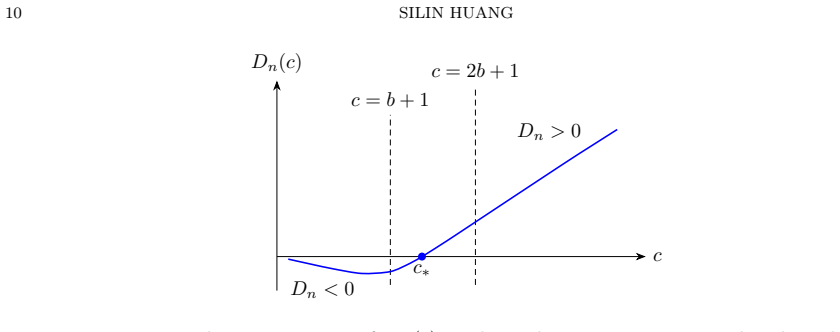
For α > 1/2 the A_α-spectral radius of graphs without an odd [1,b]-factor is maximized by either G1 or Gk, with the maximum switching at a single crossing value α*.
A machine-rendered reading of the paper's core claim, the machinery that carries it, and where it could break.
Core claim
For every α ∈ (1/2,1) the equality max_{1≤s≤k} ρ_α(G_s) = max{ρ_α(G_1), ρ_α(G_k)} holds; moreover, for each fixed odd b ≥ 3 and all even n ≥ N_b there exists a unique α* = α*(n,b) ∈ (1/2,1) at which ρ_α(G_1) = ρ_α(G_k), with the consequence that G_1 alone maximizes the radius when 1/2 < α < α*, both graphs maximize it at α = α*, and G_k alone maximizes it when α* < α < 1.
What carries the argument
The one-parameter family of obstruction graphs G_s = K_s ∇ (K_{n−(b+1)s−1} ∪ (bs+1)K_1) for s = 1 to k = ⌊(n−2)/(b+1)⌋, together with the A_α-matrix whose spectral radius is compared across the family.
Load-bearing premise
That the global maximum among all obstruction graphs occurs only at the endpoints s=1 and s=k, and that the two endpoint radii cross exactly once for all sufficiently large even n.
What would settle it
For a concrete odd b ≥ 3 and even n ≥ N_b, compute the functions ρ_α(G_1) and ρ_α(G_k) and check whether they intersect at more than one point in (1/2,1) or whether some intermediate G_s exceeds both endpoints for some α.
Figures
read the original abstract
We solve, for all sufficiently large even orders, the problem proposed by Chen et al. on sharp $A_\alpha$-spectral conditions for the existence of odd $[1,b]$-factors when $\alpha>1/2$. Chen et al. showed that every connected graph of even order $n$ with no odd $[1,b]$-factor has $A_\alpha$-spectral radius at most $\max_{1\le s\le k}\rho_\alpha(G_s)$, where $G_s=K_s\nabla\left(K_{n-(b+1)s-1}\cup(bs+1)K_1\right)$ and $k=\lfloor(n-2)/(b+1)\rfloor$. Thus the problem reduces to finding the graph with the largest $A_\alpha$-spectral radius among these obstruction graphs. We prove that, for every $\alpha\in(1/2,1)$, $\max_{1\le s\le k}\rho_\alpha(G_s)=\max\{\rho_\alpha(G_1),\rho_\alpha(G_k)\}$. Moreover, for each fixed odd $b\ge 3$ and every even $n\ge N_b=(b+1)\max\{2b+3,14\}+2$, there exists a unique $\alpha=\alpha_\ast(n,b)\in(1/2,1)$ at which $\rho_\alpha(G_1)=\rho_\alpha(G_k)$. Consequently, $G_1$ is the unique extremal graph for $1/2<\alpha<\alpha_\ast(n,b)$, both $G_1$ and $G_k$ are extremal at $\alpha=\alpha_\ast(n,b)$, and $G_k$ is the unique extremal graph for $\alpha_\ast(n,b)<\alpha<1$. This gives the exact $A_\alpha$-spectral threshold, together with the sharp exceptional graphs, for odd $[1,b]$-factors when $\alpha>1/2$ and $n\ge N_b$.
Editorial analysis
A structured set of objections, weighed in public.
Referee Report
Summary. The paper solves the extremal problem posed by Chen et al. for A_α-spectral conditions guaranteeing an odd [1,b]-factor when α>1/2. It proves that among the obstruction graphs G_s = K_s ∇ (K_{n-(b+1)s-1} ∪ (bs+1)K_1) for s=1 to k=⌊(n-2)/(b+1)⌋, the maximum A_α-spectral radius is attained only at the endpoints s=1 or s=k for every α∈(1/2,1). For each fixed odd b≥3 and even n≥N_b=(b+1)max{2b+3,14}+2, there is a unique crossing value α_*(n,b)∈(1/2,1) at which ρ_α(G_1)=ρ_α(G_k), so that G_1 is uniquely extremal below α_*, both are extremal at α_*, and G_k is uniquely extremal above α_*. This yields the exact spectral threshold together with the sharp exceptional graphs.
Significance. The result completes the A_α-spectral characterization of odd [1,b]-factors for α>1/2 and all sufficiently large even orders, supplying the precise threshold function and the two families of extremal graphs. The argument rests on explicit characteristic equations for the radii ρ_α(G_s), sign analysis near the endpoints α=1/2+ and α=1−, and a monotonicity argument establishing exactly one sign change; these steps are internal to the manuscript and do not rely on fitted parameters.
minor comments (3)
- §1, line after (1.3): the notation N_b is introduced without an immediate parenthetical reminder of its explicit form; repeating the formula (b+1)max{2b+3,14}+2 would improve readability for readers who consult only the introduction.
- §3, after Lemma 3.2: the auxiliary function whose monotonicity implies uniqueness of α_* is defined only implicitly via the difference of the two characteristic polynomials; an explicit one-line formula for this function would make the crossing argument easier to follow.
- Table 1 (if present) or the numerical checks in §5: the reported values of α_*(n,b) for small b should include the corresponding n-range to confirm they satisfy n≥N_b.
Simulated Author's Rebuttal
We thank the referee for the thorough and positive report, which accurately captures the main contributions of the paper. We are pleased that the referee recommends acceptance.
Circularity Check
Derivation self-contained with no circular steps
full rationale
The paper takes the family of obstruction graphs {G_s} and the bound max ρ_α(G_s) as given from the external Chen et al. result (different authors), then derives the endpoint-maximum property and the unique crossing α_* by explicit characteristic equations for ρ_α(G_s), sign analysis of the difference near α=1/2+ and α=1−, and monotonicity of an auxiliary function. These steps are independent of the input data and do not reduce any claimed prediction or uniqueness statement back to a fitted quantity or self-citation chain defined by the same paper. No self-definitional, fitted-input, or ansatz-smuggling patterns appear.
Axiom & Free-Parameter Ledger
axioms (2)
- standard math The A_α-matrix is a convex combination of the adjacency and degree matrices; its spectral radius is a continuous, strictly increasing function of α on (0,1) for connected graphs.
- domain assumption The family of obstruction graphs G_s constructed by Chen et al. exhausts all minimal connected graphs without an odd [1,b]-factor.
Reference graph
Works this paper leans on
-
[1]
Vladimir Nikiforov,Merging the A- and Q-spectral theories, Applicable Analysis and Discrete Mathematics 11 (2017), no. 1, 81–107. DOI: 10.2298/AADM1701081N
-
[2]
Atsushi Amahashi, On factors with all degrees odd, Graphs and Combinatorics1 (1985), 111–114. DOI: 10.1007/BF02582935
-
[3]
DOI: 10.1016/j.laa.2020.06.004
Suil O,Spectral radius and matchings in graphs, Linear Algebra and its Applications614 (2021), 316–324. DOI: 10.1016/j.laa.2020.06.004
-
[4]
Dandan Fan, Huiqiu Lin, and Hongliang Lu,Spectral radius and [a,b]-factors in graphs, Discrete Mathematics 345 (2022), no. 7, 112892. DOI: 10.1016/j.disc.2022.112892
-
[5]
DOI: 10.1016/j.laa.2022.12.018
Sizhong Zhou and Hongxia Liu,Two sufficient conditions for odd [1,b]-factors in graphs, Linear Algebra and its Applications 661 (2023), 149–162. DOI: 10.1016/j.laa.2022.12.018
-
[6]
Jia Wei and Shenggui Zhang,Proof of a conjecture on the spectral radius condition for [a,b]-factors, Discrete Mathematics 346 (2023), no. 3, 113269. DOI: 10.1016/j.disc.2022.113269
-
[7]
Sungeun Kim, Suil O, Jihwan Park, and Hyo Ree,An odd [1, b]-factor in regular graphs from eigenvalues, Discrete Mathematics 343 (2020), no. 8, 111906. DOI: 10.1016/j.disc.2020.111906
-
[8]
Suil O,Eigenvalues and [a, b]-factors in regular graphs, Journal of Graph Theory100 (2022), no. 3, 458–469. DOI: 10.1002/jgt.22789
-
[9]
DOI: 10.1016/j.laa.2021.08.028
Yanhua Zhao, Xueyi Huang, and Zhiwen Wang,The Aα-spectral radius and perfect matchings of graphs, Linear Algebra and its Applications631 (2021), 143–155. DOI: 10.1016/j.laa.2021.08.028
-
[10]
Yonglei Chen, Fei Wen, and Jing Ha,The Aα-spectral radius and [a,b]-factors in graphs, Taiwanese Journal of Mathematics 28 (2024), no. 4, 637–656. DOI: 10.11650/tjm/240301
-
[11]
Sizhong Zhou, Yuli Zhang, and Zhiren Sun,The Aα-spectral radius for path-factors in graphs, Discrete Mathematics 347 (2024), no. 5, 113940. DOI: 10.1016/j.disc.2024.113940
-
[12]
Jiaxin Zheng, Junjie Wang, and Xueyi Huang,Spectral conditions for graphs having all (fractional) [a,b]-factors, Discrete Mathematics 347 (2024), no. 7, 113975. DOI: 10.1016/j.disc.2024.113975
-
[13]
Jing Ha and Fei Wen,The Aα-spectral radius andk-extendability in graphs, Wuhan University Journal of Natural Sciences 30 (2025), no. 2, 118–124. DOI: 10.1051/wujns/2025302118. 16 SILIN HUANG
-
[14]
Xiaoyun Lv, Jianxi Li, and Shou-Jun Xu,The Aα-spectral radius for{P2, C3, P5, T (3)}-factors in graphs, Computational and Applied Mathematics44 (2025), no. 263. DOI: 10.1007/s40314-025-03214-x
-
[15]
DOI: 10.1016/j.laa.2024.10.023
Ao Fan, Ruifang Liu, and Guoyan Ao,Spectral radius, odd [1,b]-factor and spanningk-tree of 1-binding graphs, Linear Algebra and its Applications705 (2025), 1–16. DOI: 10.1016/j.laa.2024.10.023
-
[16]
DOI: 10.1016/j.laa.2019.04.013
Lihua You, Man Yang, Wasin So, and Weige Xi,On the spectrum of an equitable quotient matrix and its application, Linear Algebra and its Applications577 (2019), 21–40. DOI: 10.1016/j.laa.2019.04.013
discussion (0)
Sign in with ORCID, Apple, or X to comment. Anyone can read and Pith papers without signing in.