Exact L^p growth rates of Laplace eigenfunctions on the unit disk
Pith reviewed 2026-06-28 11:42 UTC · model grok-4.3
The pith
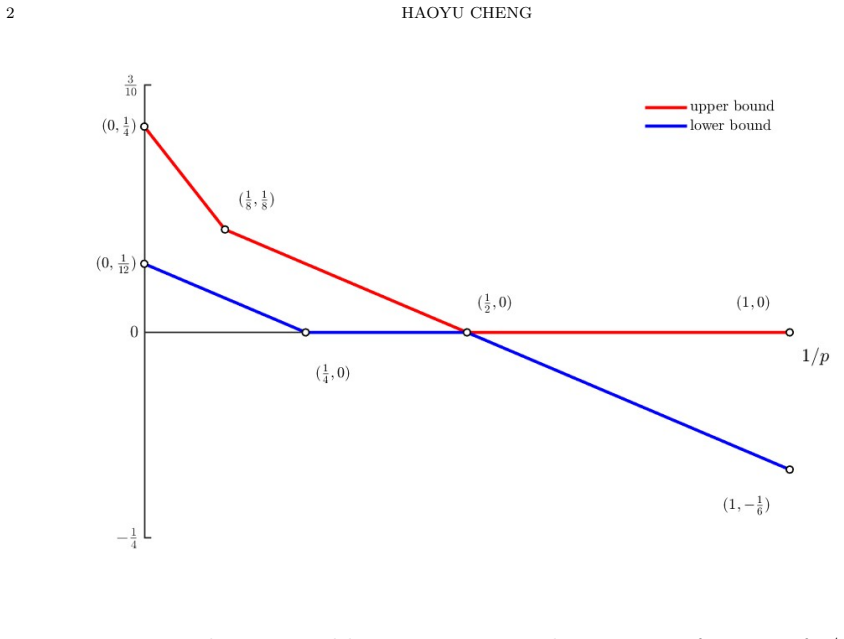
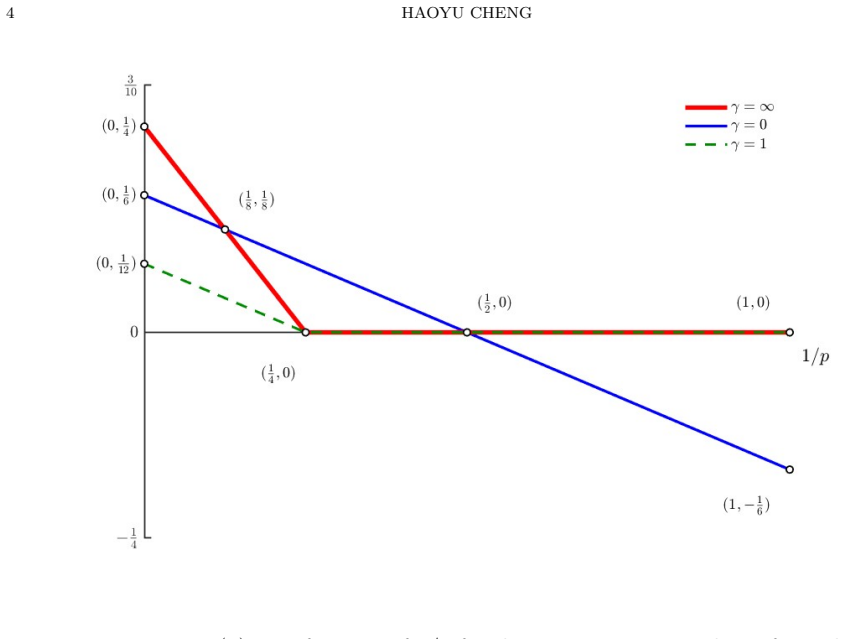
The logarithmic growth exponents of Lp norms for L2-normalized Laplace eigenfunctions on the unit disk are determined exactly for all 1 ≤ p ≤ ∞ under both Dirichlet and Neumann conditions.
A machine-rendered reading of the paper's core claim, the machinery that carries it, and where it could break.
Core claim
We determine the logarithmic growth exponents of the Lp norms, 1≤p≤∞, of L2-normalized Laplace eigenfunctions on the unit disk, for both Dirichlet and Neumann boundary conditions. We also prove sharp uniform Lp upper and lower bounds for every L2-normalized Dirichlet eigenfunction and every non-constant Neumann eigenfunction. The proof uses stationary phase estimates and integral estimates for Bessel functions.
What carries the argument
Explicit representations of the eigenfunctions in terms of Bessel functions, together with stationary phase estimates applied to their integrals.
If this is right
- The same growth exponents apply under both Dirichlet and Neumann boundary conditions.
- Sharp uniform upper and lower Lp bounds hold simultaneously for every Dirichlet eigenfunction.
- The uniform bounds also hold for every non-constant Neumann eigenfunction.
- The exponents are obtained for the entire interval 1 ≤ p ≤ ∞.
Where Pith is reading between the lines
- The explicit Bessel control on the disk supplies a benchmark that could be compared with upper-bound results known on domains lacking closed-form eigenfunctions.
- The stationary-phase method used here might extend to other radial problems whose solutions satisfy similar integral representations.
- Numerical checks of the predicted exponents on moderate eigenvalues would give an immediate consistency test before asymptotic regimes are reached.
Load-bearing premise
The eigenfunctions admit explicit expressions in terms of Bessel functions whose asymptotic and integral properties can be controlled by stationary phase methods to yield the precise exponents.
What would settle it
A direct numerical evaluation, for a sequence of high eigenvalues, of the L^∞ norm of an L2-normalized eigenfunction whose growth rate differs from the predicted logarithmic exponent.
Figures
read the original abstract
We determine the logarithmic growth exponents of the $L^p$ norms, $1\le p\le\infty$, of $L^2$-normalized Laplace eigenfunctions on the unit disk, for both Dirichlet and Neumann boundary conditions. We also prove sharp uniform $L^p$ upper and lower bounds for every $L^2$-normalized Dirichlet eigenfunction and every non-constant Neumann eigenfunction $u_{\lambda}$ on the disk. The proof uses stationary phase estimates and integral estimates for Bessel functions.
Editorial analysis
A structured set of objections, weighed in public.
Referee Report
Summary. The paper determines the logarithmic growth exponents of the L^p norms (1 ≤ p ≤ ∞) of L²-normalized Laplace eigenfunctions on the unit disk, for both Dirichlet and Neumann boundary conditions. It also proves sharp uniform L^p upper and lower bounds for every L²-normalized Dirichlet eigenfunction and every non-constant Neumann eigenfunction. The proofs rely on explicit Bessel-function expressions for the eigenfunctions, reduction of the L^p norms to one-dimensional radial integrals, and application of stationary-phase and Airy-type estimates in the oscillatory, transition, and evanescent regimes.
Significance. If the results hold, the work supplies exact growth exponents and matching sharp bounds on a canonical domain, using only classical properties of Bessel functions. This strengthens the literature on eigenfunction L^p norms by providing parameter-free, explicit rates that are uniform across the spectrum and both boundary conditions.
minor comments (1)
- The abstract states that the proof uses 'stationary phase estimates and integral estimates for Bessel functions,' but the manuscript should include a brief outline of the three radial regimes (oscillatory, transition, evanescent) already in the introduction for reader orientation.
Simulated Author's Rebuttal
We thank the referee for their thorough reading, positive assessment of the significance, and recommendation to accept the manuscript.
Circularity Check
No significant circularity; derivation is self-contained analytic estimate
full rationale
The paper derives L^p growth exponents directly from the explicit Bessel-function formulas for disk eigenfunctions (Dirichlet/Neumann), splitting the radial integrals into oscillatory/transition/evanescent regimes and applying classical stationary-phase and Airy estimates. No parameters are fitted to data, no self-citations are load-bearing for the central claim, and no step reduces the target exponents to a definition or prior result by the same authors. The argument uses only standard properties of Bessel functions and integral estimates external to the paper.
Axiom & Free-Parameter Ledger
axioms (1)
- standard math Standard asymptotic and integral properties of Bessel functions hold and can be applied via stationary phase to control L^p norms of disk eigenfunctions.
Reference graph
Works this paper leans on
-
[1]
The spectral function of an elliptic operator , JOURNAL =
H. The spectral function of an elliptic operator , JOURNAL =. 1968 , PAGES =. doi:10.1007/BF02391913 , URL =
-
[2]
Landau, L. J. , TITLE =. J. London Math. Soc. (2) , FJOURNAL =. 2000 , NUMBER =. doi:10.1112/S0024610799008352 , URL =
-
[3]
Lavoie, G. and Poliquin, G. , TITLE =. Ann. Math. Qu\'e. , FJOURNAL =. 2024 , NUMBER =. doi:10.1007/s40316-023-00219-y , URL =
-
[4]
Olver, F. W. J. , TITLE =. 1974 , PAGES =
1974
-
[5]
Watson, G. N. , TITLE =. 1995 , PAGES =
1995
-
[6]
NIST Digital Library of Mathematical Functions
-
[7]
1960 , publisher=
Bessel Functions: Part 3: Zeros and Associated Values , author=. 1960 , publisher=
1960
-
[8]
Qu, C. K. and Wong, R. , TITLE =. Trans. Amer. Math. Soc. , FJOURNAL =. 1999 , NUMBER =. doi:10.1090/S0002-9947-99-02165-0 , URL =
-
[9]
VanderKam, J. M. , TITLE =. Internat. Math. Res. Notices , FJOURNAL =. 1997 , NUMBER =. doi:10.1155/S1073792897000238 , URL =
-
[10]
2025 , eprint=
Spherical harmonics and point configurations on the sphere , author=. 2025 , eprint=
2025
-
[11]
Demeter, C. and Germain, P. , TITLE =. Proc. Edinb. Math. Soc. (2) , FJOURNAL =. 2024 , NUMBER =. doi:10.1017/S0013091524000099 , URL =
-
[12]
Ashu, A. M. , title =. 2013 , url =
2013
-
[13]
On the wave equation on a compact
B. On the wave equation on a compact. Mathematische Zeitschrift , volume=. 1977 , publisher=
1977
-
[14]
and Lebeau, G
Burq, N. and Lebeau, G. , journal=. Injections de
-
[15]
, journal=
Bourgain, J. , journal=. Eigenfunction bounds for the. 1993 , publisher=
1993
-
[16]
Forum of Mathematics, Sigma , volume=
Bounds for spectral projectors on tori , author=. Forum of Mathematics, Sigma , volume=. 2022 , publisher=
2022
-
[17]
and Levitin, M
Filonov, N. and Levitin, M. and Polterovich, I. and Sher, D. , journal=. P. 2023 , publisher=
2023
-
[18]
2024 , eprint=
Generic simplicity of ellipses , author=. 2024 , eprint=
2024
-
[19]
and Colin de Verdi
Chabert, A. and Colin de Verdi. On the. 2026 , eprint=
2026
-
[20]
Sogge, C. D. , TITLE =. J. Funct. Anal. , FJOURNAL =. 1988 , NUMBER =. doi:10.1016/0022-1236(88)90081-X , URL =
-
[21]
Smith, H. F. and Sogge, C. D. , TITLE =. Acta Math. , FJOURNAL =. 2007 , NUMBER =. doi:10.1007/s11511-007-0014-z , URL =
-
[22]
Humphries, P. and Khan, R. , TITLE =. Proc. Lond. Math. Soc. (3) , FJOURNAL =. 2025 , NUMBER =. doi:10.1112/plms.70061 , URL =
- [23]
-
[24]
, title =
Sarnak, P. , title =. 2004 , page =
2004
-
[25]
, title =
Grieser, D. , title =
-
[26]
Blair, M. D. and Ford, G. A. and Marzuola, J. L. , title =. Rev. Mat. Iberoamericana , volume =. 2018 , doi =
2018
discussion (0)
Sign in with ORCID, Apple, or X to comment. Anyone can read and Pith papers without signing in.