Convergence of parallel overlapping domain decomposition methods with impedance boundary conditions for time-harmonic Maxwell equations in heterogeneous media
Pith reviewed 2026-06-28 05:32 UTC · model grok-4.3
The pith
Parallel overlapping domain decomposition for time-harmonic Maxwell equations converges when norms of impedance-to-impedance maps between subdomains are controlled.
A machine-rendered reading of the paper's core claim, the machinery that carries it, and where it could break.
Core claim
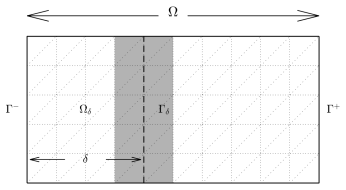
The parallel iterative method is well-posed in an appropriate function space, and the error propagation operator is characterized through impedance-to-impedance maps that describe interactions between neighboring subdomains. For strip domain decompositions, explicit convergence estimates are derived in terms of the norms of the impedance-to-impedance maps. The finite-element counterpart based on Nédélec-element discretisations inherits the convergence behavior of the continuous method under the assumption that the discrete impedance-to-impedance maps approximate their continuous counterparts as the mesh is refined.
What carries the argument
impedance-to-impedance maps that describe interactions between neighboring subdomains and characterize the error propagation operator
If this is right
- The parallel method converges for strip domain decompositions whenever the norms of the impedance-to-impedance maps are sufficiently small.
- The discrete finite-element method with Nédélec elements inherits the same convergence estimates when the discrete maps approximate the continuous maps under mesh refinement.
- Numerical experiments confirm the predicted convergence behavior for strip decompositions.
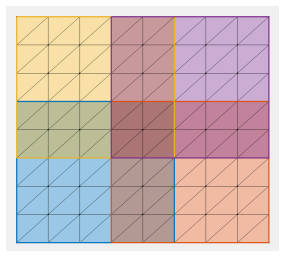
- The same numerical framework applies to checkerboard decompositions even though the explicit estimates are not proved for that case.
Where Pith is reading between the lines
- The impedance-to-impedance map characterization could be used to analyze convergence rates for other domain decomposition geometries or different wave equations.
- Tuning the impedance parameters to reduce the norms of the maps might accelerate convergence in practice.
- The robustness shown for heterogeneous media suggests the approach remains effective when material coefficients vary sharply across subdomains.
Load-bearing premise
The discrete impedance-to-impedance maps approximate their continuous counterparts as the mesh is refined.
What would settle it
A numerical computation in which the mesh is refined but the observed convergence rate of the discrete iterative method fails to match or approaches the rate predicted by the continuous impedance-to-impedance map analysis.
Figures
read the original abstract
This paper analyzes the convergence of parallel overlapping domain-decomposition methods with impedance boundary conditions for the time-harmonic Maxwell equations in heterogeneous media. We prove that the parallel iterative method is well-posed in an appropriate function space, and characterize the error propagation operator through impedance-to-impedance maps that describe interactions between neighboring subdomains. For strip domain decompositions, we derive explicit convergence estimates in terms of the norms of the impedance-to-impedance maps. At the discrete level, we develop the finite-element counterpart of these results based on N\'{e}d\'{e}lec-element discretisations. Under the assumption that the discrete impedance-to-impedance maps approximate their continuous counterparts as the mesh is refined, we show that the discrete method inherits the convergence behavior of the continuous method. We illustrate this theory with numerical experiments for strip domain decompositions, and also present numerical experiments for checkerboard domain decompositions that go beyond our theory.
Editorial analysis
A structured set of objections, weighed in public.
Referee Report
Summary. The paper analyzes convergence of parallel overlapping domain decomposition methods with impedance boundary conditions for time-harmonic Maxwell equations in heterogeneous media. It proves well-posedness of the iterative method in an appropriate function space, characterizes the error propagation operator via impedance-to-impedance maps between neighboring subdomains, and derives explicit convergence estimates for strip decompositions in terms of the norms of these maps. At the discrete level, Nédélec finite-element discretizations are shown to inherit the continuous convergence behavior under the assumption that discrete impedance-to-impedance maps approximate their continuous counterparts as the mesh is refined. Numerical experiments illustrate the theory for strip decompositions and extend to checkerboard decompositions beyond the theory.
Significance. If the results hold, the continuous analysis supplies a useful characterization of error propagation through impedance-to-impedance maps together with explicit, strip-specific convergence estimates; this is a clear strength for the theoretical understanding of domain-decomposition solvers for Maxwell equations in heterogeneous media. The discrete extension, however, remains conditional on an unverified approximation property.
major comments (1)
- [Abstract and discrete analysis] Abstract and discrete finite-element section: the statement that the discrete method inherits the continuous convergence behavior rests on the assumption that discrete impedance-to-impedance maps approximate their continuous counterparts upon mesh refinement. No proof, error bound, or sufficient condition for this approximation is supplied, despite the presence of heterogeneous coefficients and the non-local character of the maps. This assumption is load-bearing for all discrete claims.
minor comments (1)
- [Numerical experiments] The numerical experiments for checkerboard decompositions are presented without accompanying theory; a short remark on observed convergence rates or possible extensions would improve clarity.
Simulated Author's Rebuttal
We thank the referee for the careful reading of the manuscript and for highlighting both the strengths of the continuous analysis and the conditional nature of the discrete results. We address the single major comment below.
read point-by-point responses
-
Referee: [Abstract and discrete analysis] Abstract and discrete finite-element section: the statement that the discrete method inherits the continuous convergence behavior rests on the assumption that discrete impedance-to-impedance maps approximate their continuous counterparts upon mesh refinement. No proof, error bound, or sufficient condition for this approximation is supplied, despite the presence of heterogeneous coefficients and the non-local character of the maps. This assumption is load-bearing for all discrete claims.
Authors: We agree that the discrete inheritance result is conditional on the stated approximation property of the discrete impedance-to-impedance maps. The manuscript presents this explicitly as an assumption rather than a proven fact, precisely because establishing rigorous error bounds or sufficient conditions for these non-local maps in the presence of heterogeneous coefficients lies outside the scope of the present work. The continuous theory and the explicit strip-decomposition estimates are unconditional; the discrete section then shows that, whenever the approximation property holds, the discrete method inherits the same convergence behavior. Numerical experiments in the paper are consistent with this inheritance for the meshes considered. We therefore view the conditional discrete result as a useful bridge between the continuous analysis and practical computation, while acknowledging that a full proof of the approximation property would constitute a separate, technically demanding contribution. revision: no
Circularity Check
No circularity: continuous analysis self-contained; discrete part conditional on explicit external assumption
full rationale
The paper proves well-posedness of the parallel iterative method and characterizes the error propagation operator via impedance-to-impedance maps for the continuous problem, then derives explicit estimates for strip decompositions directly from norms of those maps. The discrete Nédélec FE version is stated to inherit the same behavior only under the separate assumption that discrete maps approximate continuous ones under mesh refinement; this assumption is not derived from the result itself, fitted from data, or justified by self-citation chains. No self-definitional reductions, fitted inputs renamed as predictions, or load-bearing self-citations appear in the derivation chain.
Axiom & Free-Parameter Ledger
axioms (1)
- domain assumption The time-harmonic Maxwell equations are well-posed in appropriate function spaces for heterogeneous media
Reference graph
Works this paper leans on
-
[1]
I. M. Babuska and S. A. Sauter. Is the pollution effect of the FEM avoidable for the Helmholtz equation considering high wave numbers?SIAM Review, 42(3):451–484, 2000
2000
-
[2]
J. M. Ball, Y. Capdeboscq, and B. Tsering-Xiao. On uniqueness for time harmonic anisotropic Maxwell’s equations with piecewise regular coefficients.Mathematical Models and Methods in Applied Sciences, 22(11):1250036, 11, 2012
2012
-
[3]
Beckermann, S
B. Beckermann, S. A. Goreinov, and E. E. Tyrtyshnikov. Some remarks on the Elman estimate for GMRES. SIAM Journal on Matrix Analysis and Applications, 27(3):772–778, 2006
2006
-
[4]
Bonazzoli, P
M. Bonazzoli, P. Ciarlet, A. Modave, and A. Rappaport. Analysis of a two-level domain decomposition preconditioner for the time-harmonic Maxwell equations in anisotropic media.hal-05572507, 2026
2026
-
[5]
Bonazzoli, V
M. Bonazzoli, V. Dolean, I. G. Graham, E. A. Spence, and P.-H. Tournier. Domain decomposition pre- conditioning for the high-frequency time-harmonic Maxwell equations with absorption.Mathematics of Computation, 88(320):2559–2604, 2019
2019
-
[6]
Bootland, V
N. Bootland, V. Dolean, P. Jolivet, and P.-H. Tournier. A comparison of coarse spaces for Helmholtz problems in the high frequency regime.Computers&Mathematics with Applications, 98:239–253, 2021
2021
-
[7]
S. N. Chandler-Wilde and E. A. Spence. Coercive second-kind boundary integral equations for the Laplace Dirichlet problem on Lipschitz domains.Numerische Mathematik, 156(4):1325–1384, 2024
2024
-
[8]
T. Chaumont-Frelet, J. Galkowski, and E. A. Spence. Sharp error bounds for edge-element discretisations of the high-frequency Maxwell equations.Math. Comp., DOI 10.1090/mcom/4198, 2026
-
[9]
Chaumont-Frelet, A
T. Chaumont-Frelet, A. Moiola, and E. A. Spence. Explicit bounds for the high-frequency time-harmonic Maxwell equations in heterogeneous media.Journal de Math´ ematiques Pures et Appliqu´ ees, 179:183–218, 2023
2023
-
[10]
Costabel
M. Costabel. A remark on the regularity of solutions of Maxwell’s equations on Lipschitz domains.Mathe- matical Methods in the Applied Sciences, 12(4):365–368, 1990
1990
-
[11]
Costabel and M
M. Costabel and M. Dauge. Singularities of electromagnetic fields in polyhedral domains.Archive for Rational Mechanics and Analysis, 151(3):221–276, 2000
2000
-
[12]
Costabel, M
M. Costabel, M. Dauge, and S. Nicaise. Singularities of Maxwell interface problems.ESAIM: Mathematical Modelling and Numerical Analysis, 33(3):627–649, 1999
1999
-
[13]
Costabel, M
M. Costabel, M. Dauge, and S. Nicaise. Corner Singularities and Analytic Regularity for Linear Elliptic Systems. Part I: Smooth domains. 2010.https://hal.archives-ouvertes.fr/file/index/docid/453934/ filename/CoDaNi_Analytic_Part_I.pdf
2010
-
[14]
S. C. Eisenstat, H. C. Elman, and M. H. Schultz. Variational iterative methods for nonsymmetric systems of linear equations.SIAM Journal on Numerical Analysis, pages 345–357, 1983
1983
-
[15]
H. C. Elman.Iterative Methods for Sparse Nonsymmetric Systems of Linear Equations. PhD thesis, Yale University, 1982
1982
-
[16]
L. C. Evans and R. F. Gariepy.Measure theory and fine properties of functions. Chapman and Hall/CRC, 1992
1992
-
[17]
Feng and H
X. Feng and H. Wu. An absolutely stable discontinuous Galerkin method for the indefinite time-harmonic Maxwell equations with large wave number.SIAM Journal on Numerical Analysis, 52(5):2356–2380, 2014
2014
-
[18]
J. Galkowski, S. Gong, I. G. Graham, David Lafontaine, and E. A. Spence. Convergence of overlapping do- main decomposition methods with PML transmission conditions applied to nontrapping Helmholtz problems. arXiv preprint arXiv:2404.02156, 2024
-
[19]
Girault and P.-A
V. Girault and P.-A. Raviart.Finite element methods for Navier-Stokes equations: theory and algorithms. Springer–Verlag, 1986
1986
-
[20]
S. Gong, M. J. Gander, I. G. Graham, David Lafontaine, and E. A. Spence. Convergence of parallel overlap- ping domain decomposition methods for the Helmholtz equation.Numerische Mathematik, 152(2):259–306, 2022
2022
-
[21]
S. Gong, I. G. Graham, and E. A. Spence. Convergence of restricted additive Schwarz with impedance transmission conditions for discretised Helmholtz problems.Mathematics of Computation, 92(339):175–215, 2023
2023
-
[22]
Gopalakrishnan and J
J. Gopalakrishnan and J. Pasciak. Overlapping Schwarz preconditioners for indefinite time harmonic Maxwell equations.Mathematics of computation, 72(241):1–15, 2003
2003
-
[23]
Grisvard.Elliptic problems in nonsmooth domains
P. Grisvard.Elliptic problems in nonsmooth domains. Pitman, Boston, 1985
1985
-
[24]
Hiptmair
R. Hiptmair. Finite elements in computational electromagnetism.Acta Numerica, 11:237–339, 2002. 37
2002
-
[25]
Hiptmair and J
R. Hiptmair and J. Xu. Nodal auxiliary space preconditioning in H (curl) and H (div) spaces.SIAM Journal on Numerical Analysis, 45(6):2483–2509, 2007
2007
-
[26]
Jerison and C
D. Jerison and C. E. Kenig. The inhomogeneous Dirichlet problem in Lipschitz domains.Journal of Func- tional Analysis, 130(1):161–219, 1995
1995
-
[27]
Lafontaine and E
D. Lafontaine and E. A. Spence. Sharp bounds on Helmholtz impedance-to-impedance maps and application to overlapping domain decomposition.Pure and Applied Analysis, 5(4):927–972, 2023
2023
-
[28]
Li and Q
Z. Li and Q. Hu. A hybrid two-level weighted Schwarz method for time-harmonic Maxwell equations.Journal of Computational and Applied Mathematics, 475(117015), 2025
2025
-
[29]
H. Liu, L. Rondi, and J. Xiao. Mosco convergence forH(curl) spaces, higher integrability for Maxwell’s equations, and stability in direct and inverse EM scattering problems.Journal of the European Mathematical Society, 21(10):2945–2993, 2019
2019
-
[30]
P. Lu, H. Wu, and X. Xu. Continuous interior penalty finite element methods for the time-harmonic Maxwell equation with high wave number.Advances in Computational Mathematics, 45(5):3265–3291, 2019
2019
- [31]
-
[32]
Lu and H
S. Lu and H. Wu. Preasymptotic error estimates of linear EEM and CIP-EEM for the time-harmonic Maxwell equations with large wave number.SIAM Journal on Numerical Analysis, 64(2):326–349, 2026
2026
-
[33]
W. C. H. McLean.Strongly elliptic systems and boundary integral equations. Cambridge University Press, 2000
2000
-
[34]
J. M. Melenk and S. A. Sauter. Wavenumber-explicithp-FEM analysis for Maxwell’s equations with impedance boundary conditions.Foundations of Computational Mathematics, 24(6):1871–1939, 2024
1939
- [35]
-
[36]
L. Miller. Refraction of high-frequency waves density by sharp interfaces and semiclassical measures at the boundary.Journal de math´ ematiques pures et appliqu´ ees, 79(3):227–269, 2000
2000
-
[37]
Moiola.Trefftz-discontinuous Galerkin methods for time-harmonic wave problems
A. Moiola.Trefftz-discontinuous Galerkin methods for time-harmonic wave problems. PhD thesis, ETH Zurich, 2011
2011
-
[38]
Monk.Finite element methods for Maxwell’s equations
P. Monk.Finite element methods for Maxwell’s equations. Oxford University Press, 2003
2003
-
[39]
Neˇ cas.Les m´ ethodes directes en th´ eorie des ´ equations elliptiques
J. Neˇ cas.Les m´ ethodes directes en th´ eorie des ´ equations elliptiques. Masson, 1967
1967
-
[40]
Nicaise and J
S. Nicaise and J. Tomezyk. The time-harmonic Maxwell equations with impedance boundary conditions in polyhedral domains. InMaxwell’s Equations: Analysis and Numerics, volume 24 ofRadon Series on Computational and Applied Mathematics, pages 285–340. 2019
2019
-
[41]
Nicaise and J
S. Nicaise and J. Tomezyk. Convergence analysis of a hp-finite element approximation of the time-harmonic Maxwell equations with impedance boundary conditions in domains with an analytic boundary.Numerical Methods for Partial Differential Equations, 36(6):1868–1903, 2020
1903
-
[42]
E. A. Spence. Preconditioning FEM discretisations of the high-frequency Helmholtz and Maxwell equations by either perturbing the coefficients or adding absorption.Computers&Mathematics with Applications, 210:186–199, 2026
2026
-
[43]
Zworski.Semiclassical analysis, volume 138
M. Zworski.Semiclassical analysis, volume 138. American Mathematical Soc., 2012. 38
2012
discussion (0)
Sign in with ORCID, Apple, or X to comment. Anyone can read and Pith papers without signing in.