Stochastic Sensitivity Analysis for Matched Observational Studies
Pith reviewed 2026-06-28 04:50 UTC · model grok-4.3
The pith
Treating hidden confounders as random with unknown conditional laws raises reported robustness to bias in matched observational studies.
A machine-rendered reading of the paper's core claim, the machinery that carries it, and where it could break.
Core claim
By replacing worst-case realizations of the unobserved confounder with the worst-case conditional law over an interpretable nonparametric class or a Bernoulli class, the analysis allows stochastic misalignment between hidden bias and potential outcomes while still targeting the adversarial bound; design sensitivity calculations and real-data examples show that even modest stochasticity increases the reported robustness relative to the conventional conditional-on-everything approach.
What carries the argument
The worst-case conditional law for hidden confounders over a class of distributions, controlled by a scalar sensitivity parameter that governs the permitted degree of stochasticity.
If this is right
- Matched studies can report higher levels of robustness to unmeasured confounding than under the conventional worst-case assignment analysis.
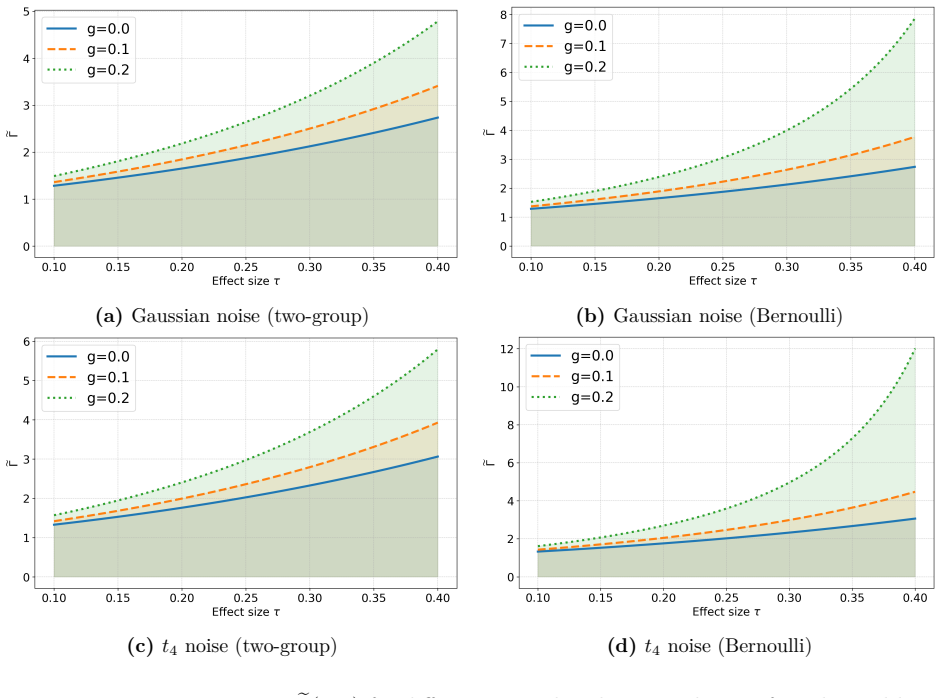
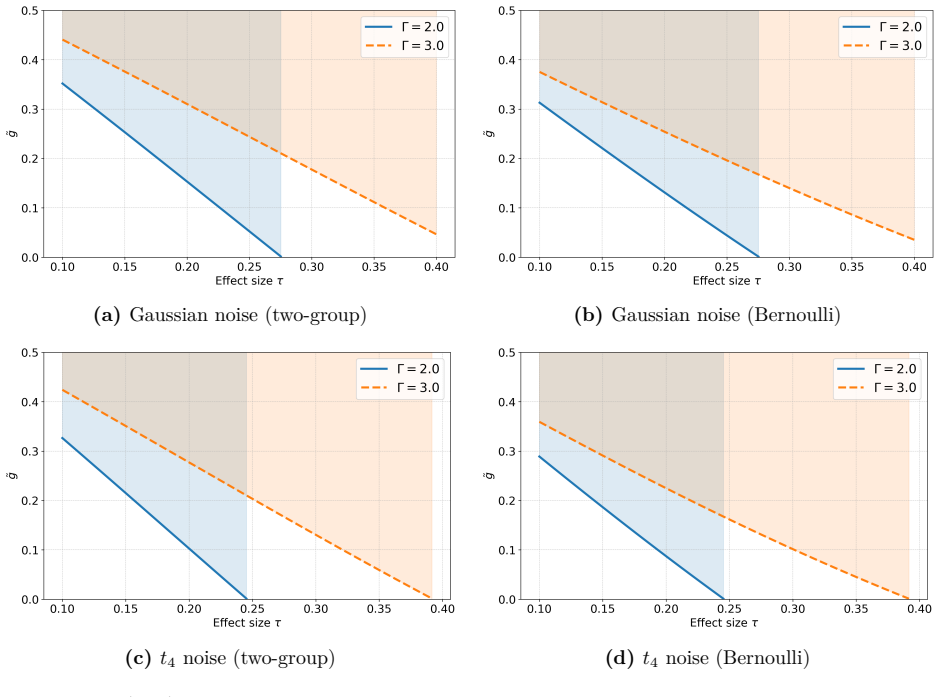
- Design sensitivity values computed under the stochastic formulation exceed those from the deterministic formulation.
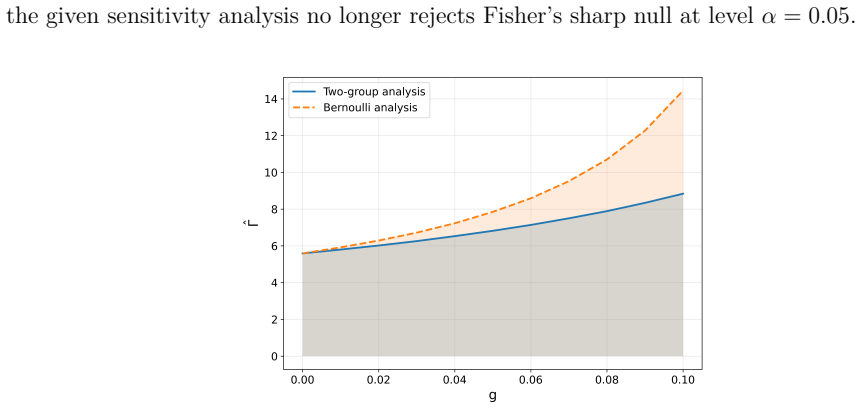
- Real-data re-analyses will show increased robustness when even a small degree of stochasticity is permitted.
- The method applies equally to the interpretable nonparametric class and the Bernoulli class of conditional laws.
Where Pith is reading between the lines
- Existing matched studies could be re-analyzed under the stochastic formulation to obtain revised robustness statements.
- The same replacement of worst-case realizations by worst-case laws could be examined in unmatched or regression-adjusted observational designs.
- Auxiliary data on plausible hidden confounder distributions could be used to calibrate or validate the scalar sensitivity parameter.
Load-bearing premise
The worst-case law over the considered class of conditional distributions for hidden confounders supplies a valid adversarial measure of sensitivity.
What would settle it
A simulation in which the true hidden confounder is drawn from a deterministic distribution with perfect correlation to the outcomes, checking whether the stochastic bounds require a larger sensitivity parameter to explain away the effect than the conventional bounds.
Figures
read the original abstract
Sensitivity analysis asks how strong unmeasured confounding needs to be to explain away an observational study's conclusion. The conventional approach in matched studies conducts inference conditional upon the potential outcomes as well as both observed and unobserved confounders, and then finds the worst-case distribution for the conditional treatment assignments across all possible realizations of the unobserved confounder. The resulting worst-case allocation imagines strong, near perfect, correlations between the potential outcomes and hidden bias. We propose a stochastic sensitivity analysis that instead targets inference conditional upon potential outcomes and observed confounders while treating the hidden confounders as random with unknown conditional laws. Rather than finding the worst-case realizations for the hidden confounders, we instead determine the worst-case conditional law over a broad class of distributions. This preserves the adversarial spirit of sensitivity analysis while allowing for imperfect alignment between hidden bias and potential outcomes to a degree controlled by a scalar sensitivity parameter. We consider restrictions to both an interpretable class with no parametric assumptions and a Bernoulli class of conditional laws. Design sensitivity calculations and real-data demonstrations illustrate that allowing for even a small degree of stochasticity can materially increase reported robustness to hidden bias relative to the conventional approach.
Editorial analysis
A structured set of objections, weighed in public.
Referee Report
Summary. The paper proposes stochastic sensitivity analysis for matched observational studies. Conventional sensitivity analysis conditions on fixed realizations of unobserved confounders and finds the worst-case treatment assignment distribution. The new approach instead conditions on potential outcomes and observed confounders, treats hidden confounders as random with unknown conditional laws, and optimizes over the worst-case law in an interpretable class or a Bernoulli class, controlled by a scalar stochasticity parameter. Design sensitivity calculations and real-data examples are presented to show that even small stochasticity materially increases reported robustness to hidden bias relative to the conventional approach.
Significance. If the central claim holds and the method preserves a comparable adversarial guarantee, the approach could yield less conservative sensitivity bounds that better reflect imperfect correlations between hidden bias and outcomes, which are often unrealistic in practice. The emphasis on design sensitivity calculations is a strength, as it allows assessment independent of specific datasets when the derivations are rigorous and reproducible.
major comments (2)
- [Abstract and definition of stochastic sensitivity analysis] Abstract and the section defining the stochastic sensitivity parameter: the claim that the method 'preserves the adversarial spirit' while allowing imperfect alignment requires explicit justification. Optimizing over conditional laws (which average over realizations) cannot attain the single most extreme fixed realization used in the conventional approach; the manuscript must show via theorem or explicit comparison (e.g., as the stochasticity parameter approaches its boundary) whether the resulting bound is equivalent, weaker, or changes the target of the sensitivity analysis.
- [Design sensitivity calculations] The design sensitivity calculations (referenced in the abstract): these must include side-by-side comparison with the conventional design sensitivity for the same settings to substantiate the 'material increase' claim. Without this, it is unclear whether the reported gains arise from the stochastic relaxation or from a different sensitivity target.
minor comments (2)
- Clarify the exact parameterization of the scalar sensitivity parameter and its interpretation in both the interpretable and Bernoulli classes to avoid ambiguity in application.
- Ensure all real-data demonstrations report both the stochastic and conventional sensitivity bounds for direct comparison.
Simulated Author's Rebuttal
We thank the referee for their careful reading and constructive comments. We address each major comment below and describe the revisions planned for the manuscript.
read point-by-point responses
-
Referee: [Abstract and definition of stochastic sensitivity analysis] Abstract and the section defining the stochastic sensitivity parameter: the claim that the method 'preserves the adversarial spirit' while allowing imperfect alignment requires explicit justification. Optimizing over conditional laws (which average over realizations) cannot attain the single most extreme fixed realization used in the conventional approach; the manuscript must show via theorem or explicit comparison (e.g., as the stochasticity parameter approaches its boundary) whether the resulting bound is equivalent, weaker, or changes the target of the sensitivity analysis.
Authors: We agree that the relationship between the stochastic and conventional approaches requires explicit clarification. The revised manuscript will add a theorem showing that as the stochasticity parameter approaches its boundary value (corresponding to deterministic conditional laws with no stochasticity), the resulting sensitivity bounds converge to the conventional worst-case bounds. This establishes that the adversarial guarantee is recovered in the limit. For positive values of the parameter, the optimization is performed over conditional laws rather than fixed realizations; this is an intentional change in the sensitivity target that permits imperfect alignment between hidden bias and potential outcomes while still identifying the worst-case law within the allowed class. We will update the abstract and definition section to state this distinction clearly. revision: yes
-
Referee: [Design sensitivity calculations] The design sensitivity calculations (referenced in the abstract): these must include side-by-side comparison with the conventional design sensitivity for the same settings to substantiate the 'material increase' claim. Without this, it is unclear whether the reported gains arise from the stochastic relaxation or from a different sensitivity target.
Authors: We agree that side-by-side comparisons are needed to substantiate the claims. The revised manuscript will add explicit comparisons of the stochastic design sensitivity against the conventional design sensitivity for the same settings and parameter values. These will be presented in tables within the design sensitivity section to allow direct assessment of the effect of the stochasticity parameter. revision: yes
Circularity Check
No circularity; derivation introduces new stochastic target by definition
full rationale
The paper defines a new sensitivity analysis targeting worst-case conditional laws of hidden confounders (controlled by a scalar stochasticity parameter) rather than worst-case fixed realizations. This is an explicit modeling choice presented in the abstract, not a reduction of any claimed prediction or result to its own inputs by construction. No fitted parameters are renamed as predictions, no uniqueness theorems are imported via self-citation, and no ansatz is smuggled in. Design sensitivity calculations are presented as illustrations of the new framework, not as self-referential outputs. The central claim therefore remains independent of the inputs it analyzes.
Axiom & Free-Parameter Ledger
free parameters (1)
- sensitivity parameter
axioms (1)
- domain assumption Hidden confounders can be modeled as random with unknown conditional laws
Reference graph
Works this paper leans on
-
[1]
Extreme Points of Moment Sets , urldate =
Gerhard Winkler , journal =. Extreme Points of Moment Sets , urldate =
-
[2]
Rosenbaum, P. R. and Rubin, D. B. , journal =
-
[3]
Journal of Research on Educational Effectiveness , volume=
Assessing sensitivity to unmeasured confounding using a simulated potential confounder , author=. Journal of Research on Educational Effectiveness , volume=. 2016 , publisher=
2016
-
[4]
Journal of the Royal Statistical Society Series C , volume=
A calibrated sensitivity analysis for matched observational studies with application to the effect of second-hand smoke exposure on blood lead levels in children , author=. Journal of the Royal Statistical Society Series C , volume=. 2020 , publisher=
2020
-
[5]
Archives of General Psychiatry , year =
Common Genetic Vulnerability for Nicotine and Alcohol Dependence in Men , author =. Archives of General Psychiatry , year =
-
[6]
CNS Spectrums , year =
Genetic Epidemiology of Smoking Behavior and Nicotine Dependence , author =. CNS Spectrums , year =
-
[7]
Current Addiction Reports , year =
Genetics and smoking , author =. Current Addiction Reports , year =
-
[8]
and Geller, Frank and Sulem, Patrick and Rafnar, Thorunn and Wiste, Anna and Magnusson, Kristinn P
Thorgeirsson, Thorgeir E. and Geller, Frank and Sulem, Patrick and Rafnar, Thorunn and Wiste, Anna and Magnusson, Kristinn P. and others , title =. Nature , year =
-
[9]
and McKay, James D
Hung, Rayjean J. and McKay, James D. and Gaborieau, Valerie and Boffetta, Paolo and Hashibe, Mia and others , title =. Nature , year =
-
[10]
and Wu, Xifeng and Broderick, Peter and Gorlov, Ivan P
Amos, Christopher I. and Wu, Xifeng and Broderick, Peter and Gorlov, Ivan P. and Gu, Jian and Eisen, Timothy and others , title =. Nature Genetics , year =
-
[11]
Proceedings of the Sixteenth International Conference on Artificial Intelligence and Statistics , pages =
Bayesian learning of joint distributions of objects , author =. Proceedings of the Sixteenth International Conference on Artificial Intelligence and Statistics , pages =. 2013 , editor =
2013
-
[12]
and Bader, Brett W
Kolda, Tamara G. and Bader, Brett W. , title =. SIAM Review , volume =
-
[13]
A wiley-interscience publication , year=
Finite mixture models , author=. A wiley-interscience publication , year=
-
[14]
Bhattacharya, Abhishek and Dunson, David B. , title =. Journal of Multivariate Analysis , year =. doi:10.1016/j.jmva.2012.02.020 , pmid =
-
[15]
Dunson, David B. and Xing, Chuanhua , title =. Journal of the American Statistical Association , year =. doi:10.1198/jasa.2009.tm08439 , pmid =
-
[16]
and Baker, Timothy B
Weiss, Robert B. and Baker, Timothy B. and Cannon, Dale S. and von Niederhausern, Andrew and Dunn, Diane M. and Matsunami, Nori and others , title =. PLoS Genetics , year =
-
[17]
and Wang, Jen C
Saccone, Nancy L. and Wang, Jen C. and Breslau, Naomi and Johnson, Eric O. and Hatsukami, Dorothy and Saccone, Scott F. and others , title =. Cancer Research , year =
-
[18]
JNCI: Journal of the National Cancer Institute , year =
Nicotinic Acetylcholine Receptor Region on Chromosome 15q25 and Lung Cancer Risk Among African Americans: A Case--Control Study , author =. JNCI: Journal of the National Cancer Institute , year =
-
[19]
Human Molecular Genetics , year =
Risk for nicotine dependence and lung cancer is conferred by mRNA expression and amino acid change in CHRNA5 , author =. Human Molecular Genetics , year =
-
[20]
and Timpson, Nicholas J
Lassi, Glenda and Taylor, Amy E. and Timpson, Nicholas J. and Kenny, Paul J. and Mather, Robert J. and Eisen, Tim and others , title =. Trends in Neurosciences , year =
-
[21]
and Gmel, Gerrit and Hasan, Omer S
Roerecke, Michael and Kaczorowski, Janusz and Tobe, Sheldon W. and Gmel, Gerrit and Hasan, Omer S. M. and Rehm, J. The effect of a reduction in alcohol consumption on blood pressure: a systematic review and meta-analysis , journal =. 2017 , doi =
2017
-
[22]
2022 , note =
Binge Drinking , howpublished =. 2022 , note =
2022
-
[23]
and Chen, Te-Ching and Davy, Orlando and Ogden, Cynthia L
Akinbami, Lara J. and Chen, Te-Ching and Davy, Orlando and Ogden, Cynthia L. and Fink, Steven and Clark, Jason and others , title =. 2022 , month = may, pages =
2022
-
[24]
Sensitivity analysis for stratified comparisons in an observational study of the effect of smoking on homocysteine levels , volume =
Rosenbaum, Paul R , date-added =. Sensitivity analysis for stratified comparisons in an observational study of the effect of smoking on homocysteine levels , volume =. The Annals of Applied Statistics , number =
-
[25]
Dual and simultaneous sensitivity analysis for matched pairs , volume =
Gastwirth, Joseph L and Krieger, Abba M and Rosenbaum, Paul R , date-added =. Dual and simultaneous sensitivity analysis for matched pairs , volume =. Biometrika , number =
-
[26]
Optimal refinement of strata to balance covariates , volume =
Brumberg, Katherine and Small, Dylan S and Rosenbaum, Paul R , date-added =. Optimal refinement of strata to balance covariates , volume =. Biometrics , number =
-
[27]
Large, sparse optimal matching with refined covariate balance in an observational study of the health outcomes produced by new surgeons , volume =
Pimentel, Samuel D and Kelz, Rachel R and Silber, Jeffrey H and Rosenbaum, Paul R , date-added =. Large, sparse optimal matching with refined covariate balance in an observational study of the health outcomes produced by new surgeons , volume =. Journal of the American Statistical Association , number =
-
[28]
Simultaneous sensitivity analysis for observational studies using full matching or matching with multiple controls , volume =
Small, Dylan and Gastwirth, Joseph L and Krieger, Abba M and Rosenbaum, Paul R , date-added =. Simultaneous sensitivity analysis for observational studies using full matching or matching with multiple controls , volume =. Statistics and its Interface , number =
-
[29]
arXiv preprint arXiv:2404.17734 , title =
Chen, Zhe and Cho, Min Haeng and Zhang, Bo , date-added =. arXiv preprint arXiv:2404.17734 , title =
-
[30]
Sensitivity analysis for matched observational studies with continuous exposures and binary outcomes , volume =
Zhang, Jeffrey and Small, Dylan S and Heng, Siyu , date-added =. Sensitivity analysis for matched observational studies with continuous exposures and binary outcomes , volume =. Biometrika , number =
-
[31]
Journal of the American Statistical Association , volume =
Dongxiao Wu and Xinran Li , title =. Journal of the American Statistical Association , volume =. 2025 , publisher =
2025
-
[32]
The integral of a symmetric unimodal function over a symmetric convex set and some probability inequalities , volume =
Anderson, Theodore W , date-added =. The integral of a symmetric unimodal function over a symmetric convex set and some probability inequalities , volume =. Proceedings of the American Mathematical Society , number =
-
[33]
Majorization in multivariate distributions , volume =
Marshall, Albert W and Olkin, Ingram , date-added =. Majorization in multivariate distributions , volume =. The Annals of Statistics , number =
-
[34]
Inequalities: Theory of Majorization and Its Applications , year =
Marshall, AW and Olkin, I and Arnold, BC , date-added =. Inequalities: Theory of Majorization and Its Applications , year =
-
[35]
The multivariate normal distribution , year =
Tong, Yung Liang , date-added =. The multivariate normal distribution , year =
-
[36]
Multivariate unimodality , year =
Dharmadhikari, SW and Jogdeo, Kumar , date-added =. Multivariate unimodality , year =. The Annals of Statistics , pages =
-
[37]
Bahadur efficiency of observational block designs , volume =
Rosenbaum, Paul R , date-added =. Bahadur efficiency of observational block designs , volume =. Journal of the American Statistical Association , number =
-
[38]
Individual matching with multiple controls in the case of all-or-none responses , year =
Miettinen, Olli S , date-added =. Individual matching with multiple controls in the case of all-or-none responses , year =. Biometrics , pages =
-
[39]
A second evidence factor for a second control group , volume =
Rosenbaum, Paul R , date-added =. A second evidence factor for a second control group , volume =. Biometrics , number =
-
[40]
Sensitivity analyses informed by tests for bias in observational studies , volume =
Rosenbaum, Paul R , date-added =. Sensitivity analyses informed by tests for bias in observational studies , volume =. Biometrics , number =
-
[41]
Association of random variables, with applications , volume =
Esary, James D and Proschan, Frank and Walkup, David W , date-added =. Association of random variables, with applications , volume =. The Annals of Mathematical Statistics , number =
-
[42]
Sensitivity analysis for matched observational studies with many ordered treatments , volume =
Rosenbaum, Paul R , journal =. Sensitivity analysis for matched observational studies with many ordered treatments , volume =
-
[43]
Unimodality, convexity, and applications , year =
Dharmadhikari, Sudhakar and Joag-Dev, Kumar , date-added =. Unimodality, convexity, and applications , year =
-
[44]
Improved design sensitivity for matched observational studies through conditional inverse probability weighting , year =
Fogarty, Colin B , date-added =. Improved design sensitivity for matched observational studies through conditional inverse probability weighting , year =
-
[45]
Recentered bootstrapping for inference on average treatment effects in randomized experiments , year =
Cohen, Peter L and Fogarty, Colin B , date-added =. Recentered bootstrapping for inference on average treatment effects in randomized experiments , year =
-
[46]
On the role of the shift estimator when testing for effect heterogeneity , year =
Fogarty, Colin B , date-added =. On the role of the shift estimator when testing for effect heterogeneity , year =
-
[47]
Controlling the false discovery proportion in observational studies with hidden bias
Lin, Mengqi and Fogarty, Colin B , date-added =. Controlling the false discovery proportion in observational studies with hidden bias. , year =
-
[48]
Revisiting regression adjustment in experiments with heterogeneous treatment effects , volume =
Negi, Akanksha and Wooldridge, Jeffrey M , date-added =. Revisiting regression adjustment in experiments with heterogeneous treatment effects , volume =. Econometric Reviews , number =
-
[49]
The generalized
Guo, Kevin and Basse, Guillaume , date-added =. The generalized. Journal of the American Statistical Association , number =
-
[50]
arXiv preprint arXiv:2102.04423 , title =
Fogarty, Colin B , date-added =. arXiv preprint arXiv:2102.04423 , title =
-
[51]
Rerandomization to improve covariate balance in experiments , volume =
Morgan, Kari Lock and Rubin, Donald B , date-added =. Rerandomization to improve covariate balance in experiments , volume =. The Annals of Statistics , number =
-
[52]
No-harm calibration for generalized Oaxaca--Blinder estimators , volume =
Cohen, Peter L and Fogarty, Colin B , date-added =. No-harm calibration for generalized Oaxaca--Blinder estimators , volume =. Biometrika , number =
-
[53]
Gaussian prepivoting for finite population causal inference , volume =
Cohen, Peter L and Fogarty, Colin B , date-added =. Gaussian prepivoting for finite population causal inference , volume =. Journal of the Royal Statistical Society Series B , number =
-
[54]
Testing weak nulls in matched observational studies , volume =
Fogarty, Colin B , date-added =. Testing weak nulls in matched observational studies , volume =. Biometrics , number =
-
[55]
The consequences of adjustment for a concomitant variable that has been affected by the treatment , volume =
Rosenbaum, Paul R , date-added =. The consequences of adjustment for a concomitant variable that has been affected by the treatment , volume =. Journal of the Royal Statistical Society Series A: Statistics in Society , number =
-
[56]
Concerning the consistency assumption in causal inference , volume =
VanderWeele, Tyler J , date-added =. Concerning the consistency assumption in causal inference , volume =. Epidemiology , number =
-
[57]
Causal inference: A Missing Data Perspective , volume =
Ding, Peng and Li, Fan , date-added =. Causal inference: A Missing Data Perspective , volume =. Statistical Science , number =
-
[58]
Causality , year =
Pearl, Judea , date-added =. Causality , year =
-
[59]
A distributional approach for causal inference using propensity scores , volume =
Tan, Zhiqiang , date-added =. A distributional approach for causal inference using propensity scores , volume =. Journal of the American Statistical Association , number =
-
[60]
Closed procedures are better and often admit a shortcut , volume =
Grechanovsky, Eugene and Hochberg, Yosef , date-added =. Closed procedures are better and often admit a shortcut , volume =. Journal of Statistical Planning and Inference , number =
-
[61]
Shortcuts for locally consonant closed test procedures , volume =
Brannath, Werner and Bretz, Frank , date-added =. Shortcuts for locally consonant closed test procedures , volume =. Journal of the American Statistical Association , number =
-
[62]
Biased encouragements and heterogeneous effects in an instrumental variable study of emergency general surgical outcomes , volume =
Fogarty, Colin B and Lee, Kwonsang and Kelz, Rachel R and Keele, Luke J , date-added =. Biased encouragements and heterogeneous effects in an instrumental variable study of emergency general surgical outcomes , volume =. Journal of the American Statistical Association , number =
-
[63]
Increasing power for observational studies of aberrant response: An adaptive approach , volume =
Heng, Siyu and Kang, Hyunseung and Small, Dylan S and Fogarty, Colin B , date-added =. Increasing power for observational studies of aberrant response: An adaptive approach , volume =. Journal of the Royal Statistical Society Series B , number =
-
[64]
Sensitivity analysis for matching with multiple controls , volume =
Rosenbaum, Paul R , date-added =. Sensitivity analysis for matching with multiple controls , volume =. Biometrika , number =
-
[65]
The conditional permutation test for independence while controlling for confounders , volume =
Berrett, Thomas B and Wang, Yi and Barber, Rina Foygel and Samworth, Richard J , date-added =. The conditional permutation test for independence while controlling for confounders , volume =. Journal of the Royal Statistical Society Series B , number =
-
[66]
On the statistical role of inexact matching in observational studies , volume =
Guo, Kevin and Rothenh. On the statistical role of inexact matching in observational studies , volume =. Biometrika , publisher =
-
[67]
arXiv preprint arXiv:2207.05019 , title =
Pimentel, Samuel D , date-added =. arXiv preprint arXiv:2207.05019 , title =
-
[68]
Experimental and quasi-experimental designs for generalized causal inference , volume =
Cook, Thomas D and Campbell, Donald Thomas and Shadish, William , date-added =. Experimental and quasi-experimental designs for generalized causal inference , volume =
-
[69]
Sharp sensitivity analysis for inverse propensity weighting via quantile balancing , year =
Dorn, Jacob and Guo, Kevin , date-added =. Sharp sensitivity analysis for inverse propensity weighting via quantile balancing , year =. Journal of the American Statistical Association , pages =
-
[70]
Biometrika , title =
Cohen, Peter L and Fogarty, Colin B , date-added =. Biometrika , title =
-
[71]
Nonparametrics:
Lehmann, Erich Leo , date-added =. Nonparametrics:
-
[72]
Causal Inference: What if
Hernan, MA and Robins, J , date-added =. Causal Inference: What if. , year =
-
[73]
Flexible Sensitivity Analysis for Observational Studies Without Observable Implications , volume =
Franks, Alexander M and D'Amour, Alexander and Feller, Avi , date-added =. Flexible Sensitivity Analysis for Observational Studies Without Observable Implications , volume =. Journal of the American Statistical Association , number =
-
[74]
Sensitivity analysis for selection bias and unmeasured confounding in missing data and causal inference models , year =
Robins, James M and Rotnitzky, Andrea and Scharfstein, Daniel O , booktitle =. Sensitivity analysis for selection bias and unmeasured confounding in missing data and causal inference models , year =
-
[75]
Randomization tests for weak null hypotheses in randomized experiments , volume =
Wu, Jason and Ding, Peng , date-added =. Randomization tests for weak null hypotheses in randomized experiments , volume =. Journal of the American Statistical Association , number =
-
[76]
Almost sure convergence theorems of weighted sums of random variables , volume =
Dae Choi, Bong and Hak Sung, Soo , date-added =. Almost sure convergence theorems of weighted sums of random variables , volume =. Stochastic Analysis and Applications , number =
-
[77]
Empirical efficiency maximization: Improved locally efficient covariate adjustment in randomized experiments and survival analysis , volume =
Rubin, Daniel B and van der Laan, Mark J , date-added =. Empirical efficiency maximization: Improved locally efficient covariate adjustment in randomized experiments and survival analysis , volume =. The International Journal of Biostatistics , number =
-
[78]
Bounded, efficient and doubly robust estimation with inverse weighting , volume =
Tan, Zhiqiang , date-added =. Bounded, efficient and doubly robust estimation with inverse weighting , volume =. Biometrika , number =
-
[79]
Leveraging prognostic baseline variables to gain precision in randomized trials , volume =
Colantuoni, Elizabeth and Rosenblum, Michael , date-added =. Leveraging prognostic baseline variables to gain precision in randomized trials , volume =. Statistics in medicine , number =
-
[80]
Inverse probability weighting for covariate adjustment in randomized studies , volume =
Shen, Changyu and Li, Xiaochun and Li, Lingling , date-added =. Inverse probability weighting for covariate adjustment in randomized studies , volume =. Statistics in medicine , number =
discussion (0)
Sign in with ORCID, Apple, or X to comment. Anyone can read and Pith papers without signing in.