REVIEW 2 minor 44 references
PCMI lecture notes: Motivic explorations in enumerative geometry
T0 review · 0 major / 2 minor · reviewed 2026-06-27 · grok-4.3
Pith's one-line read Motivic homotopy theory extends classical enumerative counts like Bezout's theorem to arbitrary fields via the A1-degree.
desk verdict These are clear PCMI lecture notes that organize existing motivic and tropical tools for enumerative geometry over general fields, but contain no new theorems or computations. read the letter →
The pith
A machine-rendered reading of the paper's core claim, the machinery that carries it, and where it could break.
The reading
What carries the argument
The A1-degree from motivic homotopy theory, which replaces the topological degree and encodes field-dependent information in the counts.
What would settle it
An explicit computation of the A1-degree for the lines on a cubic surface that fails to recover the known classical count when the base field is the complex numbers.
Extended reading notes
Core claim
The A1-degree defined in motivic homotopy theory correctly generalizes the classical topological degree, so that enumerative problems solved over the complex numbers can be solved over an arbitrary field while the answers retain additional information reflecting the arithmetic of that field.
Load-bearing premise
The A1-degree generalizes the classical topological degree so that the same enumerative counts remain valid when the base field changes.
Editorial extensions
If this is right
- Bezout's theorem holds for plane curves over any field when degrees are measured by the A1-degree.
- The number of lines on a smooth cubic surface admits a motivic count that specializes to the classical number over the complexes.
- Tropical plane curves supply combinatorial proofs of these statements that work over arbitrary fields.
- Correspondence theorems allow tropical methods to translate back to algebraic counts in the motivic setting.
Reading between the lines
- The same machinery could be applied to other classical enumerative problems to produce field-dependent invariants.
- Tropical correspondence theorems may simplify proofs for higher-dimensional varieties once the A1-degree is defined there.
- Computations over finite fields might connect these motivic counts to existing arithmetic statistics such as point counts.
Editorial analysis
A structured set of objections, weighed in public.
Referee Report
Summary. These PCMI 2024 lecture notes exposit the use of the A1-degree in motivic homotopy theory (following Morel-Voevodsky) to extend classical enumerative problems—Bézout's theorem and the count of lines on a smooth cubic surface—from C/R to arbitrary base fields, yielding additional arithmetic and geometric data. The notes also introduce tropical plane curves to prove Bézout over any field and discuss tropical correspondence theorems. No new theorems or computations are claimed; the text is a toolbox-style exposition relying on prior foundational results.
Significance. If the explanations hold, the notes supply a clear pedagogical bridge between motivic homotopy, enumerative geometry, and tropical methods, making the A1-degree approach accessible for problems over general fields. The value is primarily expository and pedagogical rather than in novel results; it correctly identifies that the central assertion rests on established A1-homotopy foundations rather than an internal derivation.
minor comments (2)
- [Abstract] The abstract and introduction could more explicitly flag that the notes are purely expository and contain no original theorems, to set reader expectations.
- Notation for the A1-degree and its relation to classical degree is introduced gradually; a single consolidated comparison table (over C, R, and general k) would improve readability for the target graduate audience.
Simulated Author's Rebuttal
We thank the referee for their positive assessment of the lecture notes and for the recommendation to accept. The summary accurately captures the expository goals and scope of the manuscript.
Circularity Check
Expository lecture notes; no derivation chain present
full rationale
The manuscript consists of PCMI lecture notes that survey and explain the application of the pre-existing A1-degree (from Morel-Voevodsky motivic homotopy theory) and tropical correspondence theorems to classical enumerative problems. No novel theorem, computation, or derivation is claimed or performed inside the notes; every step is an exposition of prior results. Consequently there are no load-bearing equations, self-definitions, fitted predictions, or self-citation chains internal to the text that could reduce to circularity. The reader's assessment of score 0 is confirmed by direct inspection of the abstract and structure.
Assumptions & free parameters
Cite this review
Pith. "Pith review of PCMI lecture notes: Motivic explorations in enumerative geometry." pith.science (2026). https://pith.science/paper/YZRPSO5E
@misc{pith2026260610830,
  author       = {Pith},
  title        = {Pith review of: PCMI lecture notes: Motivic explorations in enumerative geometry},
  year         = {2026},
  howpublished = {\url{https://pith.science/paper/YZRPSO5E}},
  note         = {Machine review of arXiv:2606.10830}
}
read the original abstract
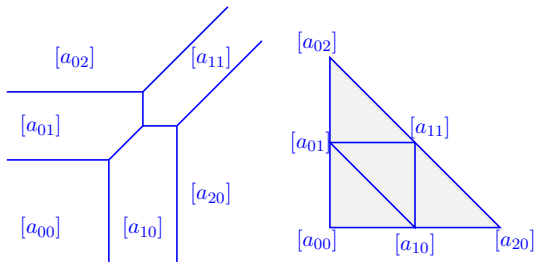
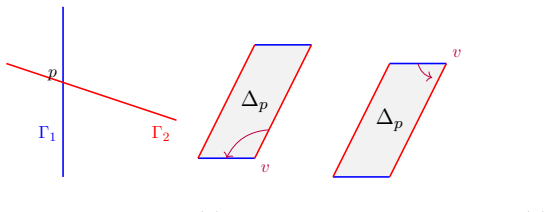
These are lecture notes for the PCMI 2024 Graduate Summer School for the mini-workshop on motivic explorations in enumerative geometry. Motivic homotopy theory allows to do enumerative geometry over an arbitrary field, which leads to additional arithmetic and geometric information. The goal of the mini-workshop is to explain why and how this works. We will also provide a toolbox for solving enumerative geometry problems in this setting, including the use of tropical geometry. We start with two classical examples in enumerative geometry, namely Bezout's theorem and the count of lines on a smooth cubic surface. We then explain how to solve these problems, first over the complex and real numbers, and then over an arbitrary field, using the A1-degree from motivic homotopy theory. Then we introduce tropical geometry, more precisely we focus on tropical plane curves and show how they can be used to prove Bezout's theorem for curves over an arbitrary field. Finally, we discuss tropical correspondence theorems.
Figures


Figures from the paper (9 more)




Reference graph
Works this paper leans on
-
[1]
Nikita Borisov, Thomas Brazelton, Frenly Espino, Thomas Hagedorn, Zhaobo Han, Jordy Lopez Garcia, Joel Louwsma, Wern Juin Gabriel Ong, and Andrew R. Tawfeek. ^1 -Brouwer degrees in Macaulay2 . Journal of Software for Algebra and Geometry , 14(1):175–187, October 2024
2024
-
[2]
The trace of the local \( A ^1\) -degree
Thomas Brazelton, Robert Burklund, Stephen McKean, Michael Montoro, and Morgan Opie. The trace of the local \( A ^1\) -degree. Homology Homotopy Appl. , 23(1):243--255, 2020
2020
-
[3]
B \'e zoutians and the \( A ^1\) -degree
Thomas Brazelton, Stephen McKean, and Sabrina Pauli. B \'e zoutians and the \( A ^1\) -degree. Algebra Number Theory , 17(11):1985--2012, 2023
1985
-
[4]
Benedetti and R
R. Benedetti and R. Silhol. Spin and \( Pin ^-\) structures, immersed and embedded surfaces and a result of Segre on real cubic surfaces. Topology , 34(3):651--678, 1995
1995
-
[5]
A bit of tropical geometry
Erwan Brugall \'e and Kristin Shaw. A bit of tropical geometry. Am. Math. Mon. , 121(7):563--589, 2014
2014
-
[6]
Euler classes: six-functors formalism, dualities, integrality and linear subspaces of complete intersections
Tom Bachmann and Kirsten Wickelgren. Euler classes: six-functors formalism, dualities, integrality and linear subspaces of complete intersections. J. Inst. Math. Jussieu , 22(2):681--746, 2023
2023
-
[7]
On the triple tangent planes of surfaces of the third order
Arthur Cayley. On the triple tangent planes of surfaces of the third order. Cambridge and Dublin Mathematical Journal , 4:118--138, 1849
-
[8]
3264 and all that
David Eisenbud and Joe Harris. 3264 and all that. A second course in algebraic geometry . Cambridge: Cambridge University Press, 2016
2016
Show all 44 references
-
[9]
Non-archimedean amoebas and tropical varieties
Manfred Einsiedler, Mikhail Kapranov, and Douglas Lind. Non-archimedean amoebas and tropical varieties. J. Reine Angew. Math. , 601:139--157, 2006
2006
-
[10]
David Eisenbud and Harold I. Levine. An algebraic formula for the degree of a \(C^ \) map germ. Sur une inegalite a la Minkowski pour les multiplicites. Ann. Math. (2) , 106:19--44, 1977
1977
-
[11]
Quadratic Segre indices
Felipe Espreafico, Stephen McKean, and Sabrina Pauli. Quadratic Segre indices. Preprint, arXiv :2506.01547 [math. AG ] (2026), 2026
2026
-
[12]
Abundance of real lines on real projective hypersurfaces
Sergey Finashin and Viatcheslav Kharlamov. Abundance of real lines on real projective hypersurfaces. Int. Math. Res. Not. , 2013(16):3639--3646, 2013
2013
-
[13]
The Caporaso - Harris formula and plane relative Gromov - Witten invariants in tropical geometry
Andreas Gathmann and Hannah Markwig. The Caporaso - Harris formula and plane relative Gromov - Witten invariants in tropical geometry. Math. Ann. , 338(4):845--868, 2007
2007
-
[14]
Algebraic topology
Allen Hatcher. Algebraic topology . Cambridge: Cambridge University Press, 2002
2002
-
[15]
Arithmetic counts of tropical plane curves and their properties
Andr \'e s Jaramillo Puentes, Hannah Markwig, Sabrina Pauli, and Felix R \"o hrle. Arithmetic counts of tropical plane curves and their properties. Adv. Geom. , 24(4):553--576, 2024
2024
-
[16]
Quadratically Enriched Plane Curve Counting via Tropical Geometry
Andr \'e s Jaramillo Puentes, Hannah Markwig, Sabrina Pauli, and Felix R \"o hrle. Quadratically Enriched Plane Curve Counting via Tropical Geometry . Preprint, arXiv :2502.02569 [math. AG ] (2025), 2025
2025
-
[17]
Tropical Methods for Counting Plane Curves -- Complex , Real and Quadratically Enriched
Andr \'e s Jaramillo Puentes, Hannah Markwig, Sabrina Pauli, and Felix R \"o hrle. Tropical Methods for Counting Plane Curves -- Complex , Real and Quadratically Enriched . Preprint, arXiv :2601.14216 [math. AG ] (2026), 2026
2026
-
[18]
A quadratically enriched correspondence theorem
Andr \'e s Jaramillo Puentes and Sabrina Pauli. A quadratically enriched correspondence theorem. Journal of the European Mathematical Society , 2025. published online first
2025
-
[19]
Quadratically enriched tropical intersections
Andr \'e s Jaramillo Puentes and Sabrina Pauli. Quadratically enriched tropical intersections. J. Reine Angew. Math. , 821:151--193, 2025
2025
-
[20]
G. N. Khimshiashvili. On the local degree of a smooth mapping. Soobshch. Akad. Nauk Gruz. SSR , 85:309--312, 1977
1977
-
[21]
Solomon, and Kirsten Wickelgren
Jesse Leo Kass, Marc Levine, Jake P. Solomon, and Kirsten Wickelgren. A quadratically enriched count of rational curves. Preprint, arXiv :2307.01936 [math. AG ] (2023), 2023
2023
-
[22]
Solomon, and Kirsten Wickelgren
Jesse Leo Kass, Marc Levine, Jake P. Solomon, and Kirsten Wickelgren. A relative orientation for the moduli space of stable maps to a del Pezzo surface. Preprint, arXiv :2307.01941 [math. AG ] (2026), 2026
2026
-
[23]
The class of Eisenbud - Khimshiashvili - Levine is the local \( A ^1\) - Brouwer degree
Jesse Leo Kass and Kirsten Wickelgren. The class of Eisenbud - Khimshiashvili - Levine is the local \( A ^1\) - Brouwer degree. Duke Math. J. , 168(3):429--469, 2019
2019
-
[24]
An arithmetic count of the lines on a smooth cubic surface
Jesse Leo Kass and Kirsten Wickelgren. An arithmetic count of the lines on a smooth cubic surface. Compos. Math. , 157(4):677--709, 2021
2021
-
[25]
T. Y. Lam. Introduction to quadratic forms over fields , volume 67 of Grad. Stud. Math. Providence, RI: American Mathematical Society (AMS), 2005
2005
-
[26]
Toward an algebraic theory of Welschinger invariants
Marc Levine. Toward an algebraic theory of Welschinger invariants. Preprint, arXiv :1808.02238 [math. AG ] (2018), 2018
2018 arXiv
-
[27]
Aspects of enumerative geometry with quadratic forms
Marc Levine. Aspects of enumerative geometry with quadratic forms. Doc. Math. , 25:2179--2239, 2020
2020
-
[28]
An arithmetic enrichment of B \'e zout 's theorem
Stephen McKean. An arithmetic enrichment of B \'e zout 's theorem. Math. Ann. , 379(1-2):633--660, 2021
2021
-
[29]
Circles of apollonius two ways, 2022
Stephen McKean. Circles of apollonius two ways, 2022
2022
-
[30]
Enumerative tropical algebraic geometry in \( R ^2\)
Grigory Mikhalkin. Enumerative tropical algebraic geometry in \( R ^2\) . J. Am. Math. Soc. , 18(2):313--377, 2005
2005
-
[31]
John W. Milnor. Topology from the differentiable viewpoint . University Press of Virginia, Charlottesville, VA, 1965. Based on notes by David W. Weaver
1965
-
[32]
Tropical geometry
Grigory Mikhalkin and Johannes Rau. Tropical geometry. https://www.math.uni-tuebingen.de/user/jora/downloads/main.pdf, 2018. Lecture notes
2018
-
[33]
Milnor and James D
John W. Milnor and James D. Stasheff. Characteristic classes , volume 32 of Texts Read. Math. New Delhi: Hindustan Book Agency, 2005
2005
-
[34]
Introduction to tropical geometry , volume 161 of Grad
Diane Maclagan and Bernd Sturmfels. Introduction to tropical geometry , volume 161 of Grad. Stud. Math. Providence, RI: American Mathematical Society (AMS), 2015
2015
-
[35]
Intrinsic signs and lower bounds in real algebraic geometry
Christian Okonek and Andrei Teleman. Intrinsic signs and lower bounds in real algebraic geometry. J. Reine Angew. Math. , 688:219--241, 2014
2014
-
[36]
Quadratic types and the dynamic Euler number of lines on a quintic threefold
Sabrina Pauli. Quadratic types and the dynamic Euler number of lines on a quintic threefold. Adv. Math. , 405:37, 2022. Id/No 108508
2022
-
[37]
Computing \( A ^1\) - Euler numbers with Macaulay2
Sabrina Pauli. Computing \( A ^1\) - Euler numbers with Macaulay2 . Res. Math. Sci. , 10(3):14, 2023. Id/No 26
2023
-
[38]
On the distribution of surfaces of the third order into species, in reference to the absence or presence of singular points, and the reality of their lines
Ludwig Schläfli. On the distribution of surfaces of the third order into species, in reference to the absence or presence of singular points, and the reality of their lines. Philosophical Transactions of the Royal Society of London , 153:193--241, 1863
-
[39]
The Non-Singular Cubic Surfaces
Beniamino Segre. The Non-Singular Cubic Surfaces . Oxford University Press, 1942
1942
-
[40]
A tropical calculation of the Welschinger invariants of real toric Del Pezzo surfaces
Eugenii Shustin. A tropical calculation of the Welschinger invariants of real toric Del Pezzo surfaces. J. Algebr. Geom. , 15(2):285--322, 2006
2006
-
[41]
u nter Scheja and Uwe Storch. \
G \"u nter Scheja and Uwe Storch. \"U ber Spurfunktionen bei vollst \"a ndigen Durchschnitten . J. Reine Angew. Math. , 278/279:174--190, 1975
1975
-
[42]
Charles A. Weibel. The \(K\) -book. An introduction to algebraic \(K\) -theory , volume 145 of Grad. Stud. Math. Providence, RI: American Mathematical Society (AMS), 2013
2013
-
[43]
Invariants of real symplectic 4-manifolds and lower bounds in real enumerative geometry
Jean-Yves Welschinger. Invariants of real symplectic 4-manifolds and lower bounds in real enumerative geometry. Invent. Math. , 162(1):195--234, 2005
2005
-
[44]
Unstable motivic homotopy theory
Kirsten Wickelgren and Ben Williams. Unstable motivic homotopy theory. In Handbook of homotopy theory , pages 931--972. Boca Raton, FL: CRC Press, 2020
2020
Reviewed June 27, 2026 · model on record in the stance chip above.
Discussion (0). Continue with ORCID to comment.