Extreme Ultraviolet Microflashes at Plume Bases: A Candidate for Powering the Corona and Solar Wind?
Pith reviewed 2026-06-27 01:53 UTC · model grok-4.3
The pith
Network microflashes at solar plume bases arise from unipolar reconnection bursts that may power the corona and solar wind.
A machine-rendered reading of the paper's core claim, the machinery that carries it, and where it could break.
Core claim
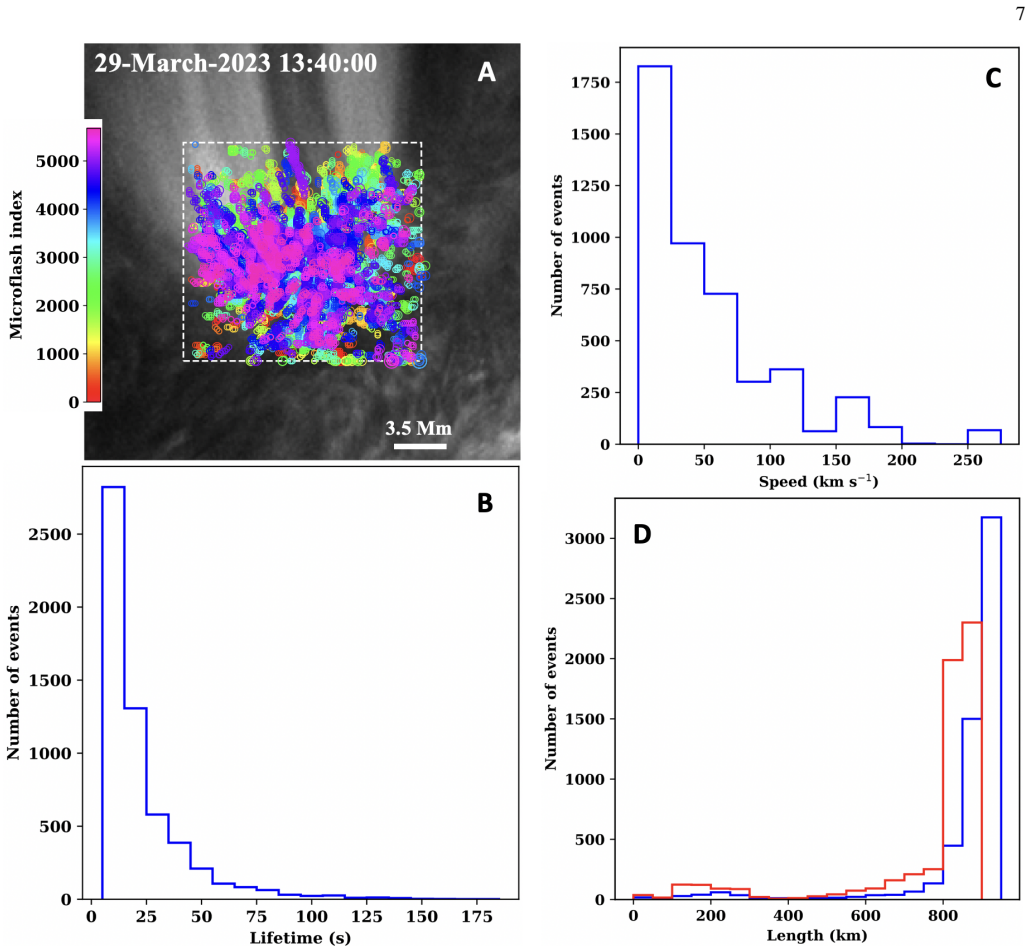
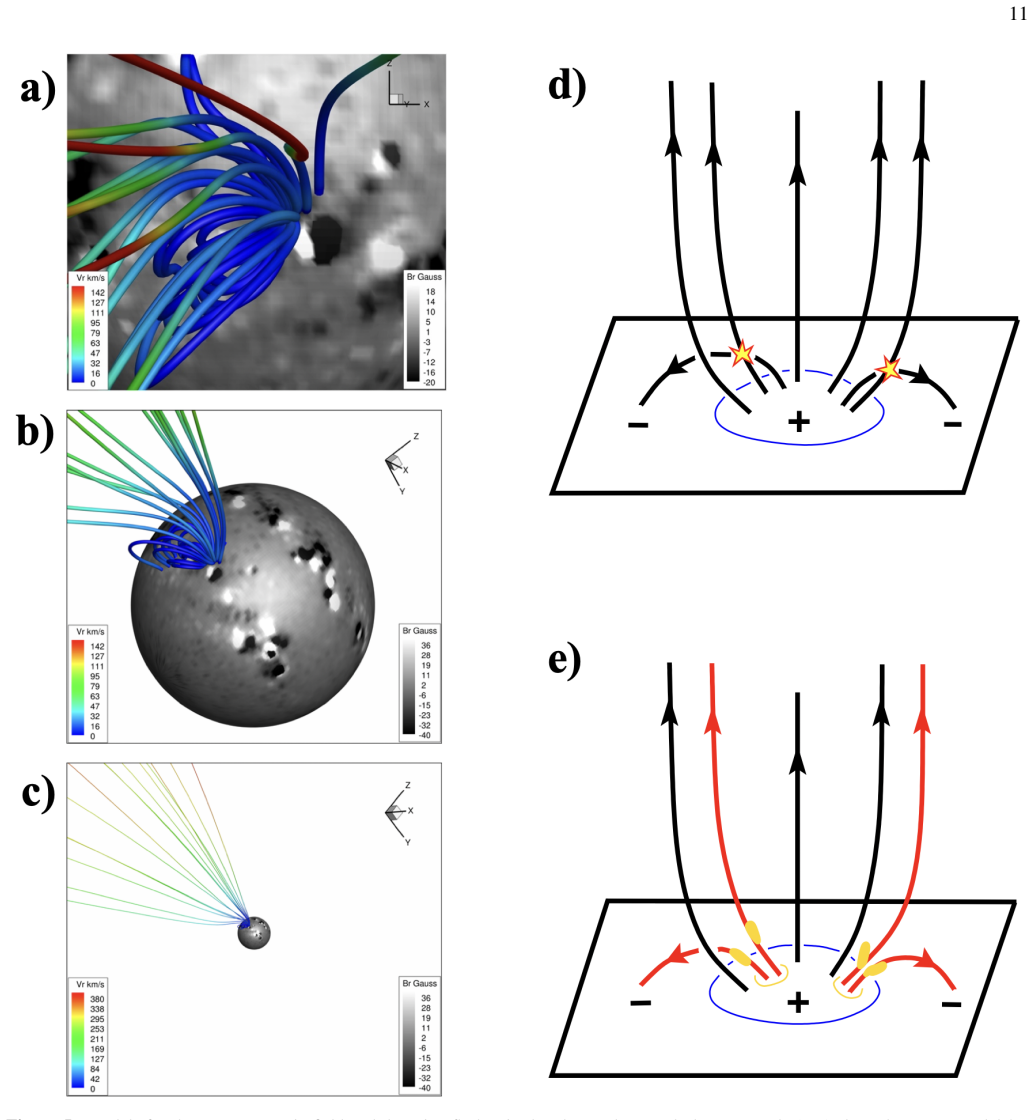
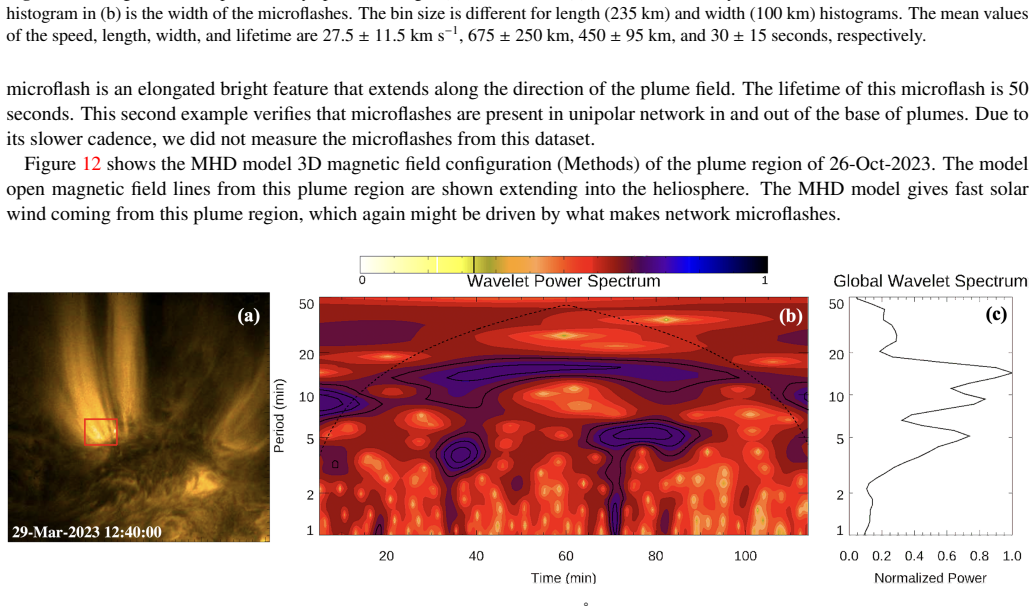
The central claim is that network microflashes result from fine-scale bursts of reconnection of crossed legs of unipolar magnetic field, that the bursts are often triggered by 5-minute p-mode oscillations, and that the bursts are candidates for powering the open-field corona and solar wind. Approximately 20 microflashes are ongoing within a plume base, with a new microflash starting every second, each with energy in the nanoflare range of 10^24 erg. A 3D data-driven global MHD model shows open magnetic field with fast solar wind for the plumes, supporting the view that unipolar microflashes sustain the heliosphere via unipolar-network-field reconnection bursts.
What carries the argument
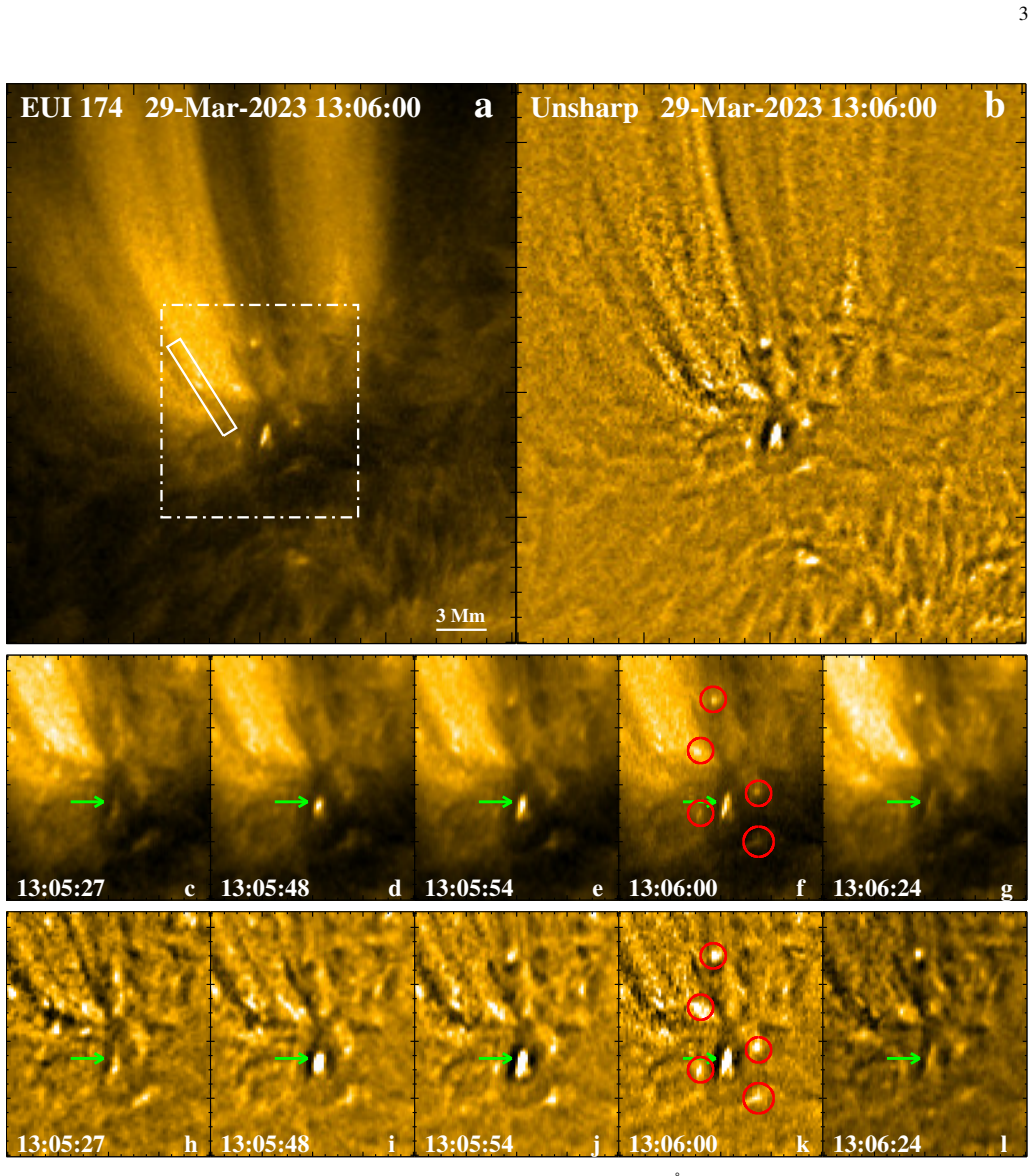
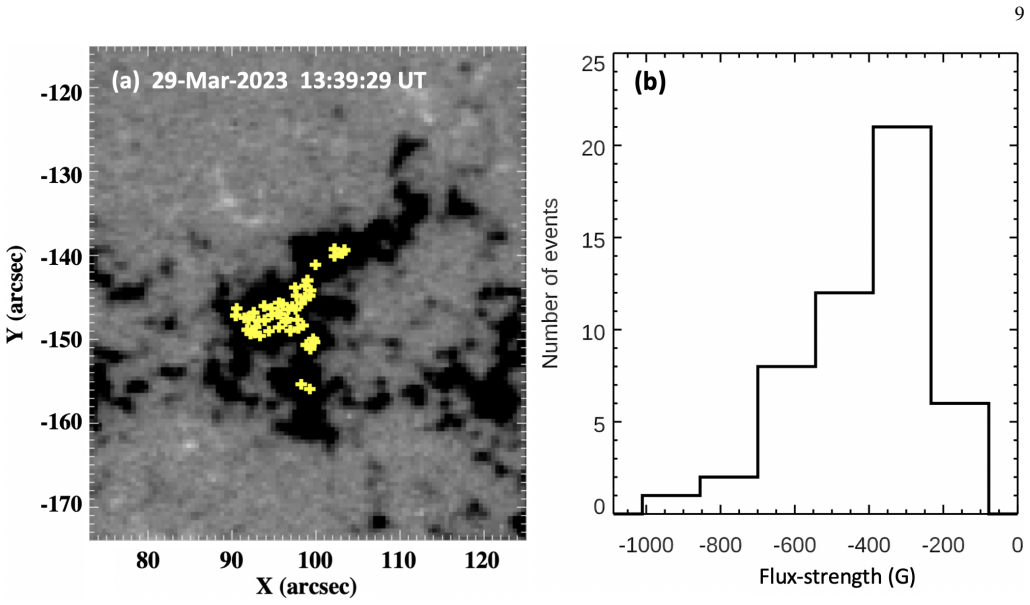
Network microflashes observed in 174A EUV images at plume bases in unipolar flux, interpreted as fine-scale reconnection bursts between crossed legs of unipolar magnetic field lines.
If this is right
- The aggregate energy release from microflashes at plume bases can maintain the temperatures of the open corona.
- Reconnection bursts in unipolar fields provide a mechanism for accelerating the fast solar wind.
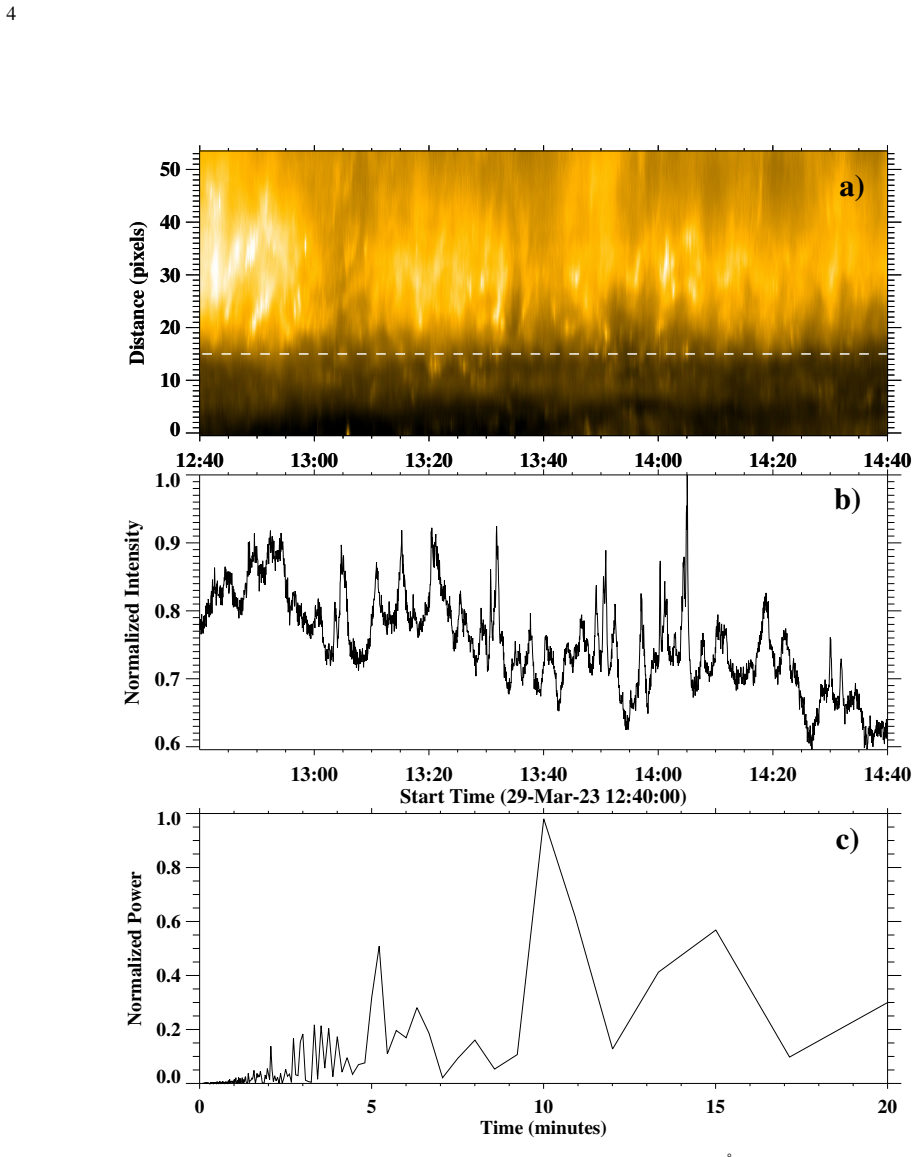
- Five-minute p-mode oscillations frequently trigger the reconnection events that release the energy.
- Unipolar network reconnection sustains the heliosphere from the base of plumes.
Where Pith is reading between the lines
- Similar microflashes could appear in other unipolar magnetic regions on the Sun beyond plumes.
- High-cadence EUV observations could map the exact geometry of the crossed field legs during each burst.
- The one-per-second rate implies a continuous, distributed energy input that models of solar wind acceleration must incorporate.
- If confirmed, this mechanism would link photospheric oscillations directly to coronal heating in open-field regions.
Load-bearing premise
The observed microflash energies are sufficient in aggregate and transfer efficiently via reconnection to sustain coronal temperatures and solar wind speeds rather than dissipating locally or falling short overall.
What would settle it
A measurement showing that the total energy released by all microflashes across a plume base is less than the energy required to maintain observed coronal temperatures and solar wind speeds.
Figures
read the original abstract
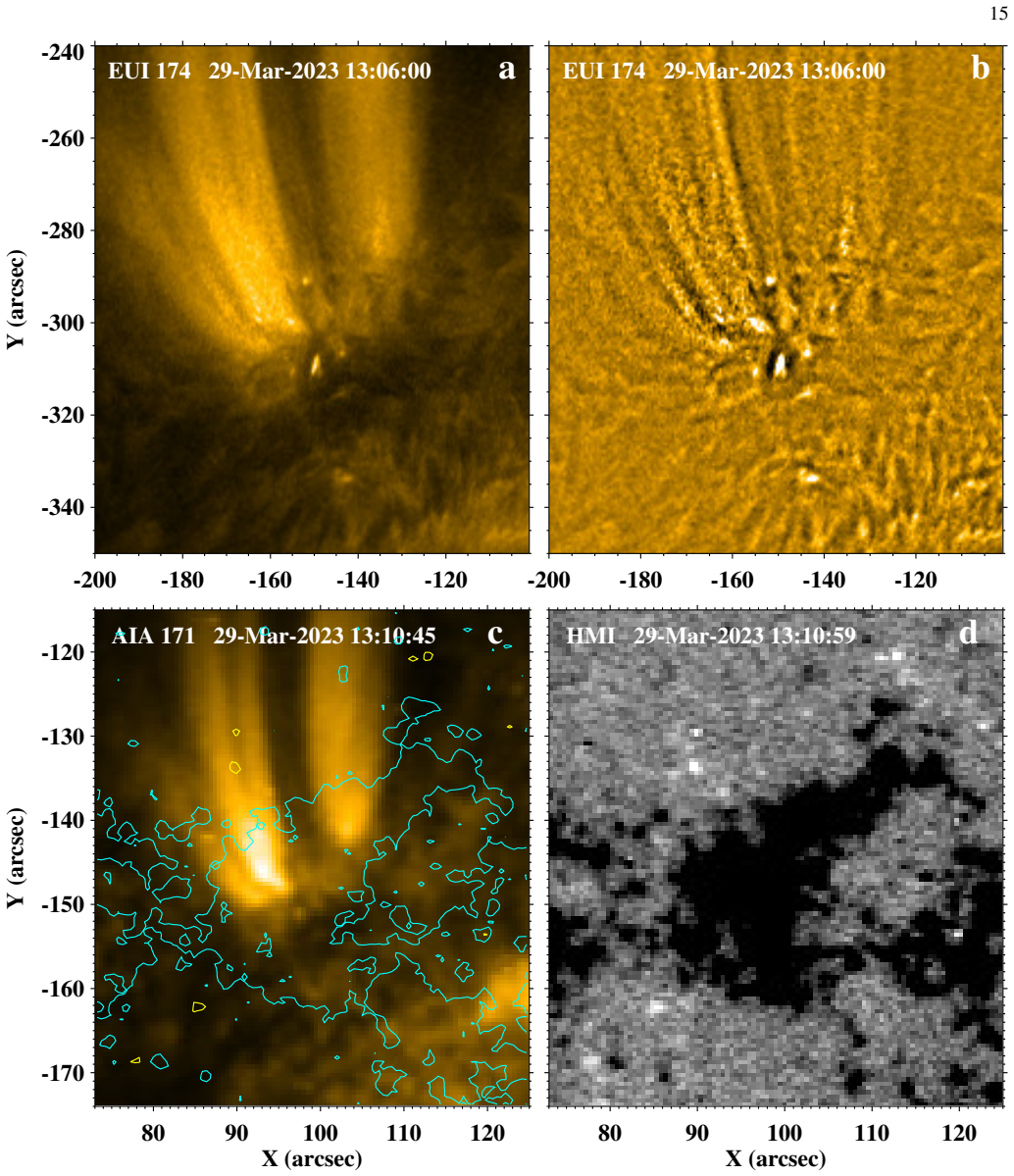
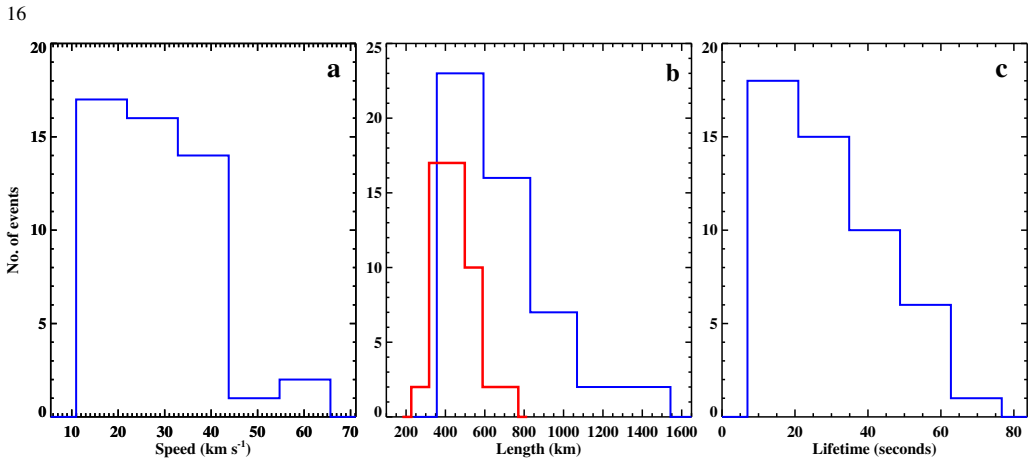
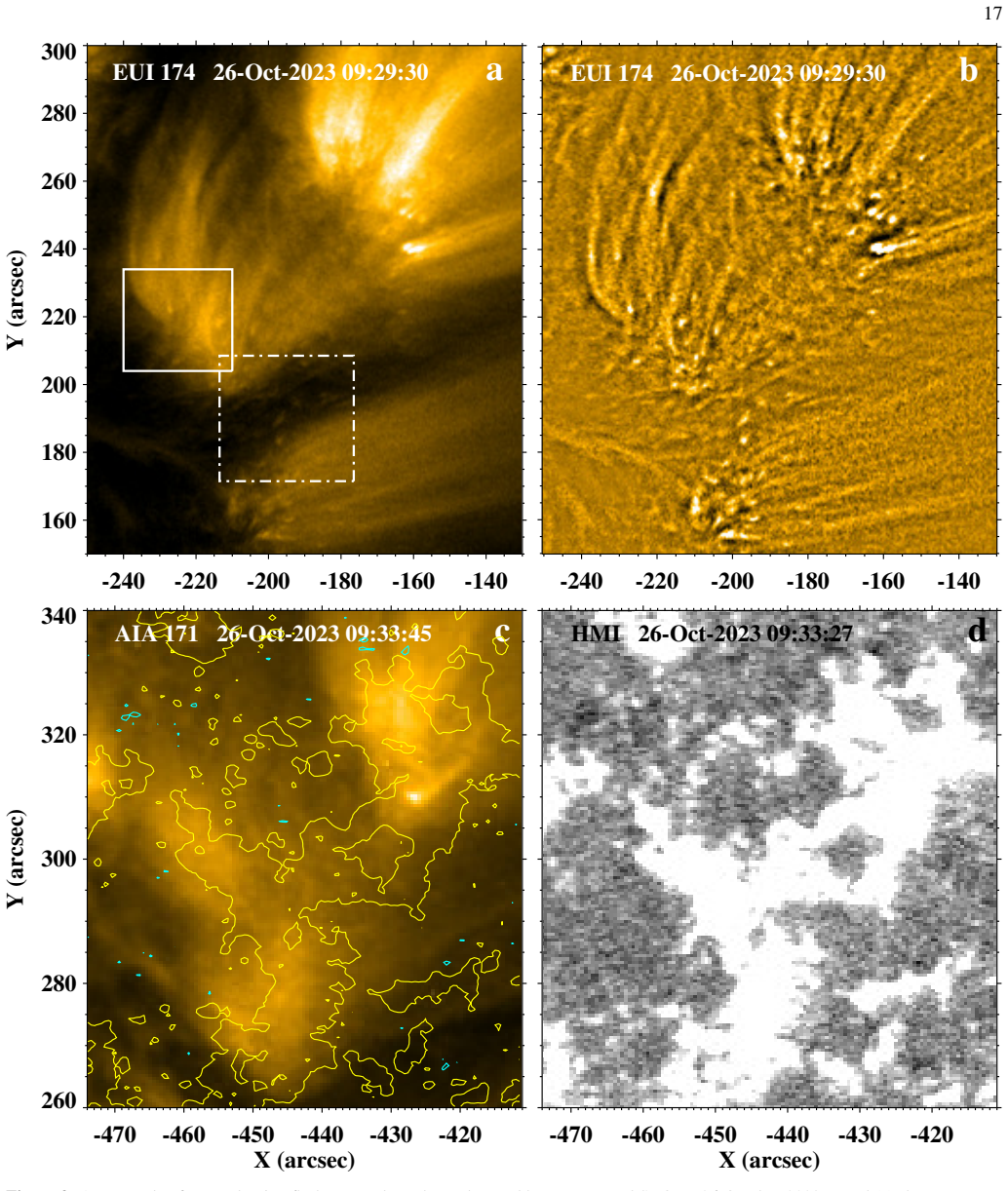
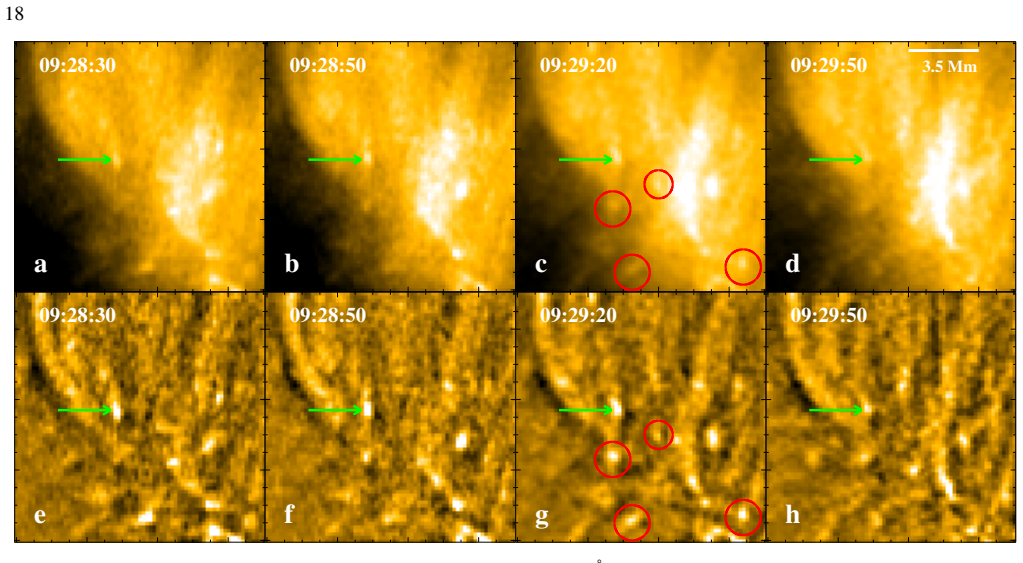
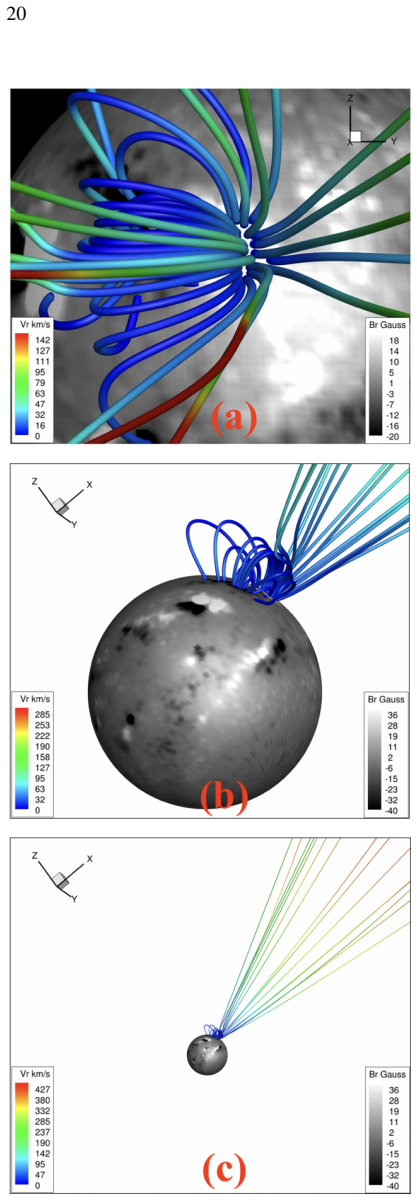
Solar plumes - outflows of bright coronal plasma - are a major component of the open-magnetic-field corona and solar wind, but their driving mechanism remains uncertain. Here we report on network microflashes, fine-scale bright bursts captured by Solar Orbiters Extreme Ultraviolet Imager in 174A images encompassing magnetic network at the base of plumes. Because they sit in evidently unipolar magnetic flux, they are evidently a new, previously unidentified, kind of network event. Approximately 20 microflashes are ongoing within a plume base, with a new microflash starting every second. The energy for an average microflash is 1024 erg, in the range of nanoflares. A 3D data-driven global MHD model yields open magnetic field with fast solar wind for the investigated plumes. From our findings, we suggest that network microflashes result from fine-scale bursts of reconnection of crossed legs of unipolar magnetic field, that the bursts are often triggered by 5-minute p-mode oscillations, and that the bursts are candidates for powering the open-field corona and solar wind. That is, unipolar microflashes such as ours are plausibly from unipolar-network-field reconnection bursts that sustain the heliosphere.
Editorial analysis
A structured set of objections, weighed in public.
Referee Report
Summary. The manuscript reports the observational detection of 'network microflashes' — fine-scale EUV brightening events at the bases of solar plumes using Solar Orbiter EUI 174Å data. These events occur in unipolar magnetic regions, with ~20 ongoing per plume base at a rate of one new event per second, each releasing ~10^24 erg. A 3D data-driven MHD model is used to confirm open magnetic field lines and fast solar wind for the plumes. The authors interpret the microflashes as resulting from fine-scale reconnection of crossed legs of unipolar fields, often triggered by 5-minute p-mode oscillations, and propose them as candidates for powering the open-field corona and solar wind.
Significance. If the energy sufficiency and transfer efficiency can be established, the identification of these unipolar reconnection events would offer a new, observationally grounded candidate mechanism for the long-standing coronal heating and solar wind acceleration problems, potentially linking photospheric dynamics to heliospheric outflows.
major comments (2)
- [Abstract] Abstract: The central interpretive claim that network microflashes are 'candidates for powering the open-field corona and solar wind' is not supported by any explicit area-integrated power calculation comparing the reported aggregate input (~10^24 erg per event at ~1 s^{-1} rate) against observed coronal heating requirements (~10^5–10^6 erg cm^{-2} s^{-1}), nor by evidence that reconnection energy is deposited at coronal heights rather than dissipated locally.
- [Abstract] Abstract and MHD model description: The 3D data-driven global MHD model is reported to yield open magnetic field with fast solar wind, but the text provides no indication that microflash energy contributions or reconnection dynamics are incorporated into or validated by the model, leaving the powering link as an untested assertion.
minor comments (1)
- [Abstract] The final sentence of the abstract ('That is, unipolar microflashes such as ours are plausibly from unipolar-network-field reconnection bursts that sustain the heliosphere.') repeats the suggestion without adding new information; consider condensing for clarity.
Simulated Author's Rebuttal
We thank the referee for the careful and constructive review. The comments highlight important points about the strength of our interpretive claims. We respond to each major comment below and indicate revisions where appropriate.
read point-by-point responses
-
Referee: [Abstract] Abstract: The central interpretive claim that network microflashes are 'candidates for powering the open-field corona and solar wind' is not supported by any explicit area-integrated power calculation comparing the reported aggregate input (~10^24 erg per event at ~1 s^{-1} rate) against observed coronal heating requirements (~10^5–10^6 erg cm^{-2} s^{-1}), nor by evidence that reconnection energy is deposited at coronal heights rather than dissipated locally.
Authors: We agree that an explicit area-integrated power budget was not provided in the manuscript. The reported event energy (~10^24 erg) and occurrence rate (~1 s^{-1} with ~20 simultaneous events per plume base) allow an order-of-magnitude estimate once a typical plume-base area is adopted from the literature; we will add this calculation in the revised manuscript to compare directly with the canonical coronal heating flux. On energy deposition height, the 174 Å channel response requires plasma at ~1 MK, indicating that at least a fraction of the released energy reaches coronal temperatures rather than being fully dissipated in the lower atmosphere. A full radiative-MHD treatment of energy transport lies beyond the present observational study but is noted as future work. revision: yes
-
Referee: [Abstract] Abstract and MHD model description: The 3D data-driven global MHD model is reported to yield open magnetic field with fast solar wind, but the text provides no indication that microflash energy contributions or reconnection dynamics are incorporated into or validated by the model, leaving the powering link as an untested assertion.
Authors: The 3D data-driven MHD simulation is used only to establish that the large-scale magnetic topology of the observed plumes is open and consistent with fast-wind solutions; it is driven by photospheric magnetograms and does not resolve or inject the sub-arcsecond reconnection events. The microflashes are therefore presented as an observational candidate mechanism whose energy contribution is not yet folded into the global model. We will clarify this distinction in the revised text so that the model result is understood as providing necessary context (open fields) rather than a direct validation of the microflash powering hypothesis. revision: no
Circularity Check
No significant circularity in derivation chain
full rationale
The paper reports new EUV observations of microflashes at plume bases, estimates their energies from the data, and invokes an independent 3D data-driven MHD model to confirm open fields and fast wind. The central suggestion that the events are candidates for powering the corona and solar wind is an interpretive inference drawn from these external inputs rather than any equation or self-citation that reduces the claim to a fitted parameter or prior result defined by the target conclusion. No load-bearing step matches the enumerated circularity patterns.
Axiom & Free-Parameter Ledger
Reference graph
Works this paper leans on
-
[1]
Ahmad, I. A., & Withbroe, G. L. 1977, SoPh, 53, 397, doi: 10.1007/BF00160283
-
[2]
Winebarger, A. 2018, ApJ, 861, 111, doi: 10.3847/1538-4357/aac82c 17 -240 -220 -200 -180 -160 -140 160 180 200 220 240 260 280 300Y (arcsec) EUI 174 26-Oct-2023 09:29:30 a -240 -220 -200 -180 -160 -140 EUI 174 26-Oct-2023 09:29:30 b -470 -460 -450 -440 -430 -420 X (arcsec) 260 280 300 320 340Y (arcsec) AIA 171 26-Oct-2023 09:33:45 c -470 -460 -450 -440 -4...
-
[3]
Banerjee, D., Gupta, G. R., & Teriaca, L. 2011, SSRv, 158, 267, doi: 10.1007/s11214-010-9698-z
-
[4]
2025, arXiv e-prints, arXiv:2509.07796, doi: 10.48550/arXiv.2509.07796
Baweja, U., Pant, V ., Krishna Prasad, S., et al. 2025, arXiv e-prints, arXiv:2509.07796, doi: 10.48550/arXiv.2509.07796
-
[5]
1977, A&A, 55, 239
Bel, N., & Leroy, B. 1977, A&A, 55, 239
1977
-
[6]
Berghmans, D., Auch`ere, F., Long, D. M., et al. 2021, A&A, 656, L4, doi: 10.1051/0004-6361/202140380
-
[7]
2021, A&A, 656, L7, doi: 10.1051/0004-6361/202140638
Chen, Y ., Przybylski, D., Peter, H., et al. 2021, A&A, 656, L7, doi: 10.1051/0004-6361/202140638
-
[8]
Chitta, L. P., Peter, H., Solanki, S. K., et al. 2017, ApJS, 229, 4, doi: 10.3847/1538-4365/229/1/4
-
[9]
Chitta, L. P., Zhukov, A. N., Berghmans, D., et al. 2023, Science, 381, 867, doi: 10.1126/science.ade5801
-
[10]
Cirtain, J. W., Golub, L., Winebarger, A. R., et al. 2013, Nature, 493, 501, doi: 10.1038/nature11772
-
[11]
2021, Science, 372, 557, doi: 10.1126/science.372.6542.557 D’Amicis, R., & Bruno, R
Clery, D. 2021, Science, 372, 557, doi: 10.1126/science.372.6542.557 D’Amicis, R., & Bruno, R. 2015, ApJ, 805, 84, doi: 10.1088/0004-637X/805/1/84 de Moortel, I. 2009, SSRv, 149, 65, doi: 10.1007/s11214-009-9526-5 De Pontieu, B., Erd´elyi, R., & De Moortel, I. 2005, ApJL, 624, L61, doi: 10.1086/430345 De Pontieu, B., Erd´elyi, R., & James, S. P. 2004, Nat...
-
[12]
Doyle, J. G., Popescu, M. D., & Taroyan, Y . 2006, A&A, 446, 327, doi: 10.1051/0004-6361:20053826
-
[13]
2025, ApJ, 979, 195, doi: 10.3847/1538-4357/ada556
Duan, Y ., Chen, H., Hou, Z., Sun, Z., & Shen, Y . 2025, ApJ, 979, 195, doi: 10.3847/1538-4357/ada556
-
[14]
Gary, G. A. 2001, SoPh, 203, 71, doi: 10.1023/A:1012722021820
-
[15]
Gupta, G. R., & Tripathi, D. 2015, ApJ, 809, 82, doi: 10.1088/0004-637X/809/1/82
-
[16]
Harvey, K. L., & Recely, F. 2002, SoPh, 211, 31, doi: 10.1023/A:1022469023581
-
[17]
2021, ApJL, 918, L20, doi: 10.3847/2041-8213/ac1f30
Hou, Z., Tian, H., Berghmans, D., et al. 2021, ApJL, 918, L20, doi: 10.3847/2041-8213/ac1f30
-
[18]
Inogamov, N. A. 1996, Astronomy Letters, 22, 780
1996
-
[19]
Jin, M., Manchester, W. B., van der Holst, B., et al. 2013, ApJ, 773, 50, doi: 10.1088/0004-637X/773/1/50
-
[20]
Jin, M., Manchester, W. B., van der Holst, B., et al. 2017, ApJ, 834, 173, doi: 10.3847/1538-4357/834/2/173
-
[21]
Kahil, F., Hirzberger, J., Solanki, S. K., et al. 2022, A&A, 660, A143, doi: 10.1051/0004-6361/202142873
-
[22]
2023,, https://doi.org/10.24414/z818-4163 Krishna Prasad, S., Banerjee, D., & Van Doorsselaere, T
Kraaikamp, E., Gissot, S., Stegen, K., et al. 2023,, https://doi.org/10.24414/z818-4163 Krishna Prasad, S., Banerjee, D., & Van Doorsselaere, T. 2014, ApJ, 789, 118, doi: 10.1088/0004-637X/789/2/118
-
[23]
Kumar, P., Karpen, J. T., Uritsky, V . M., et al. 2022, ApJ, 933, 21, doi: 10.3847/1538-4357/ac6c24
-
[24]
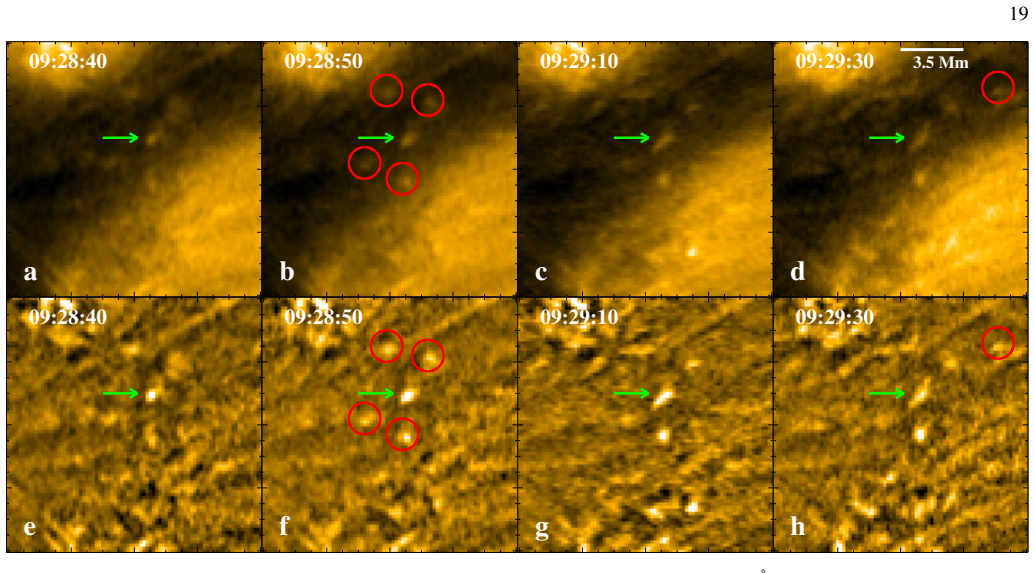
Lemen, J. R., Title, A. M., Akin, D. J., et al. 2012, SoPh, 275, 17, doi: 10.1007/s11207-011-9776-8 19 09:28:40 a 09:28:50 b 09:29:10 c 09:29:30 d 3.5 Mm 09:28:40 e 09:28:50 f 09:29:10 g 09:29:30 h Figure 11.Network microflashes in network away from the plume base. Panels (a–d) show the 174 Å HRI EUV images in the FOV of the dotted-dashed white box region...
-
[25]
Lionello, R., Linker, J. A., & Miki´c, Z. 2009, ApJ, 690, 902, doi: 10.1088/0004-637X/690/1/902
-
[26]
McIntosh, S. W., Innes, D. E., de Pontieu, B., & Leamon, R. J. 2010, A&A, 510, L2, doi: 10.1051/0004-6361/200913699
-
[27]
Moore, R. L., Tiwari, S. K., Panesar, N. K., & Sterling, A. C. 2023, ApJL, 945, L16, doi: 10.3847/2041-8213/acbe46 M¨uller, D., St. Cyr, O. C., Zouganelis, I., et al. 2020, A&A, 642, A1, doi: 10.1051/0004-6361/202038467
-
[28]
Neugebauer, M., & Snyder, C. W. 1962, Science, 138, 1095, doi: 10.1126/science.138.3545.1095.a
-
[29]
1968, SoPh, 3, 321, doi: 10.1007/BF00155166
Newkirk, Gordon, J., & Harvey, J. 1968, SoPh, 3, 321, doi: 10.1007/BF00155166
-
[30]
Ning, Z., Innes, D. E., & Solanki, S. K. 2004, A&A, 419, 1141, doi: 10.1051/0004-6361:20034499 N´obrega-Siverio, D., Joshi, R., Sola-Viladesau, E., Berghmans, D., & Lim, D. 2025, A&A, 702, A188, doi: 10.1051/0004-6361/202555357
-
[31]
Osterbrock, D. E. 1961, ApJ, 134, 347, doi: 10.1086/147165
-
[32]
Panesar, N. K., Hansteen, V . H., Tiwari, S. K., et al. 2023, ApJ, 943, 24, doi: 10.3847/1538-4357/aca1c1
-
[33]
Panesar, N. K., Sterling, A. C., & Moore, R. L. 2018a, ApJ, 853, 189, doi: 10.3847/1538-4357/aaa3e9
-
[34]
Panesar, N. K., Sterling, A. C., Moore, R. L., & Chakrapani, P. 2016, ApJL, 832, L7, doi: 10.3847/2041-8205/832/1/L7
-
[35]
Panesar, N. K., Sterling, A. C., Moore, R. L., et al. 2018b, ApJL, 868, L27, doi: 10.3847/2041-8213/aaef37
-
[36]
Panesar, N. K., Tiwari, S. K., Berghmans, D., et al. 2021, ApJL, 921, L20, doi: 10.3847/2041-8213/ac3007
-
[37]
Panesar, N. K., Tiwari, S. K., Moore, R. L., & Sterling, A. C. 2020, ApJL, 897, L2, doi: 10.3847/2041-8213/ab9ac1
-
[38]
2022, ApJ, 939, 25, doi: 10.3847/1538-4357/ac8d65
Pontieu, B. 2022, ApJ, 939, 25, doi: 10.3847/1538-4357/ac8d65
-
[39]
Panesar, N. K., Sterling, A. C., Moore, R. L., et al. 2019, ApJL, 887, L8, doi: 10.3847/2041-8213/ab594a
-
[40]
Panesar, N. K., Sterling, A. C., Moore, R. L., et al. 2025, ApJ, 994, 164, doi: 10.3847/1538-4357/ae0d90
-
[41]
Parker, E. N. 1958, ApJ, 128, 664, doi: 10.1086/146579
-
[42]
Parker, E. N. 1988, ApJ, 330, 474, doi: 10.1086/166485
-
[43]
Priest, E. R., Parnell, C. E., & Martin, S. F. 1994, ApJ, 427, 459, doi: 10.1086/174157
-
[44]
Pucci, S., Poletto, G., Sterling, A. C., & Romoli, M. 2013, ApJ, 776, 16, doi: 10.1088/0004-637X/776/1/16
-
[45]
Pucci, S., Poletto, G., Sterling, A. C., & Romoli, M. 2014, ApJ, 793, 86, doi: 10.1088/0004-637X/793/2/86
-
[46]
2014, ApJ, 787, 118, doi: 10.1088/0004-637X/787/2/118
Raouafi, N.-E., & Stenborg, G. 2014, ApJ, 787, 118, doi: 10.1088/0004-637X/787/2/118
-
[47]
Raouafi, N. E., Stenborg, G., Seaton, D. B., et al. 2023, ApJ, 945, 28, doi: 10.3847/1538-4357/acaf6c R´egnier, S., Alexander, C. E., Walsh, R. W., et al. 2014, ApJ, 784, 134, doi: 10.1088/0004-637X/784/2/134
-
[48]
Richardson, I. G. 2018, Living Reviews in Solar Physics, 15, 1, doi: 10.1007/s41116-017-0011-z 20 Figure 12.The MHD model 3D field from the plume region in the 2023 October 26 observations. The radial magnetic field is shown at r= 1.006 Rs with gray scale. Selected field lines are shown from the plume region. The color on the field lines shows the radial ...
-
[49]
2020, A&A, 642, A8, doi: 10.1051/0004-6361/201936663
Rochus, P., Auch`ere, F., Berghmans, D., et al. 2020, A&A, 642, A8, doi: 10.1051/0004-6361/201936663
-
[50]
Sachdeva, N., van der Holst, B., Manchester, W. B., et al. 2019, ApJ, 887, 83, doi: 10.3847/1538-4357/ab4f5e
-
[51]
2017, Proceedings of the Japan Academy, Series B, 93, 87, doi: 10.2183/pjab.93.006
Sakurai, T. 2017, Proceedings of the Japan Academy, Series B, 93, 87, doi: 10.2183/pjab.93.006
-
[52]
Scherrer, P. H., Schou, J., Bush, R. I., et al. 2012, SoPh, 275, 207, doi: 10.1007/s11207-011-9834-2
-
[53]
Schrijver, C. J., & De Rosa, M. L. 2003, SoPh, 212, 165, doi: 10.1023/A:1022908504100
-
[54]
V ., van der Holst, B., Oran, R., et al
Sokolov, I. V ., van der Holst, B., Oran, R., et al. 2013, ApJ, 764, 23, doi: 10.1088/0004-637X/764/1/23
-
[55]
Sterling, A. C., Moore, R. L., Falconer, D. A., & Adams, M. 2015, Nature, 523, 437, doi: 10.1038/nature14556
-
[56]
2017, ApJ, 844, 28, doi: 10.3847/1538-4357/aa7945
Martinez, F. 2017, ApJ, 844, 28, doi: 10.3847/1538-4357/aa7945
-
[57]
Sterling, A. C., Moore, R. L., Panesar, N. K., et al. 2020, ApJ, 889, 187, doi: 10.3847/1538-4357/ab5dcc
-
[58]
Sterling, A. C., Panesar, N. K., & Moore, R. L. 2024, ApJ, 963, 4, doi: 10.3847/1538-4357/ad1d5f
-
[59]
Doyle, J. G. 2018, A&A, 615, A47, doi: 10.1051/0004-6361/201629304
-
[60]
Thalmann, J. K., Tiwari, S. K., & Wiegelmann, T. 2014, ApJ, 780, 102, doi: 10.1088/0004-637X/780/1/102
-
[61]
Tian, H., McIntosh, S. W., Habbal, S. R., & He, J. 2011, ApJ, 736, 130, doi: 10.1088/0004-637X/736/2/130
-
[62]
Tian, H., DeLuca, E. E., Cranmer, S. R., et al. 2014, Science, 346, 1255711, doi: 10.1126/science.1255711
-
[63]
Tiwari, S. K., Alexander, C. E., Winebarger, A. R., & Moore, R. L. 2014, ApJL, 795, L24, doi: 10.1088/2041-8205/795/1/L24
-
[64]
2022, ApJ, 929, 103, doi: 10.3847/1538-4357/ac5d46
Berghmans, D. 2022, ApJ, 929, 103, doi: 10.3847/1538-4357/ac5d46
-
[65]
Tiwari, S. K., Panesar, N. K., Moore, R. L., et al. 2019, ApJ, 887, 56, doi: 10.3847/1538-4357/ab54c1
-
[66]
Torrence, C., & Compo, G. P. 1998, Bulletin of the American Meteorological Society, 79, 61, doi: 10.1175/1520-0477(1998)079⟨0061:APGTW A⟩2.0.CO;2 T´oth, G., van der Holst, B., & Huang, Z. 2011, ApJ, 732, 102, doi: 10.1088/0004-637X/732/2/102 T´oth, G., van der Holst, B., Sokolov, I. V ., et al. 2012, Journal of Computational Physics, 231, 870, doi: 10.101...
-
[67]
DeLuca, E. E. 2011, ApJ, 736, 3, doi: 10.1088/0004-637X/736/1/3 van der Holst, B., Sokolov, I. V ., Meng, X., et al. 2014, ApJ, 782, 81, doi: 10.1088/0004-637X/782/2/81
-
[68]
Viall, N. M., & Borovsky, J. E. 2020, Journal of Geophysical Research (Space Physics), 125, e26005, doi: 10.1029/2018JA02600510.1002/essoar.10502606.1 von Steiger, R., Schwadron, N. A., Fisk, L. A., et al. 2000, J. Geophys. Res., 105, 27217, doi: 10.1029/1999JA000358
work page doi:10.1029/2018ja02600510.1002/essoar.10502606.1 2020
-
[69]
Wang, R., Liu, Y . D., Chitta, L. P., Hu, H., & Zhao, X. 2024, Research in Astronomy and Astrophysics, 24, 125010, doi: 10.1088/1674-4527/ad8a09
-
[70]
Wang, Y . M. 1994, ApJL, 435, L153, doi: 10.1086/187617
-
[71]
Wang, Y . M. 2016, ApJL, 833, L21, doi: 10.3847/2041-8213/833/2/L21
-
[72]
2016, ApJL, 820, L13, doi: 10.3847/2041-8205/820/1/L13
Wang, Y .-M. 2016, ApJL, 820, L13, doi: 10.3847/2041-8205/820/1/L13
-
[73]
Wang, Y . M. 2020, ApJ, 904, 199, doi: 10.3847/1538-4357/abbda6
-
[74]
2022, SoPh, 297, 129, doi: 10.1007/s11207-022-02060-y
Wang, Y .-M. 2022, SoPh, 297, 129, doi: 10.1007/s11207-022-02060-y
-
[75]
Wang, Y . M., & Ko, Y . K. 2019, ApJ, 880, 146, doi: 10.3847/1538-4357/ab2add
-
[76]
Wang, Y . M., & Muglach, K. 2008, SoPh, 249, 17, doi: 10.1007/s11207-008-9171-2
-
[77]
Wang, Y . M., Warren, H. P., & Muglach, K. 2016, ApJ, 818, 203, doi: 10.3847/0004-637X/818/2/203
-
[78]
Weitz, A., Tiwari, S. K., Cauzzi, G., Reardon, K. P., & De Pontieu, B. 2025, ApJ, 988, 133, doi: 10.3847/1538-4357/ade3c1
-
[79]
1995, SoPh, 162, 189, doi: 10.1007/BF00733430
Wilhelm, K., Curdt, W., Marsch, E., et al. 1995, SoPh, 162, 189, doi: 10.1007/BF00733430
-
[80]
Withbroe, G. L., & Noyes, R. W. 1977, ARA&A, 15, 363, doi: 10.1146/annurev.aa.15.090177.002051
discussion (0)
Sign in with ORCID, Apple, or X to comment. Anyone can read and Pith papers without signing in.