REVIEW 3 minor 35 references
Subgroup analysis in randomized controlled trials with binary outcomes: dilution and logic-respecting properties
T0 review · 0 major / 3 minor · reviewed 2026-06-26 · grok-4.3
Pith's one-line read Odds ratio for overall population can change in magnitude and direction when two subgroups are combined in binary outcome trials.
desk verdict The paper adds new theorems showing the odds ratio can shift direction or dilute toward 1 when subgroups combine in binary RCTs, while relative response stays logic-respecting. read the letter →
The pith
A machine-rendered reading of the paper's core claim, the machinery that carries it, and where it could break.
The reading
What carries the argument
New theorems on the change in odds ratio and relative response when the overall population is formed by a fixed mixture of two subgroups.
What would settle it
An empirical check on trial data showing the overall odds ratio lying strictly between the two subgroup odds ratios in a case where the theorems predict it cannot.
Extended reading notes
Core claim
The central claim is that several new theorems characterize how the odds ratio for the overall population changes in both magnitude and direction when two subgroups are combined. These results confirm that the odds ratio is inappropriate as an efficacy measure in subgroup analysis with binary outcomes, whereas the relative response is appropriate. The paper presents the formal relationship between the odds ratio and the relative response and clarifies their differences in terms of the logic-respecting property and the dilution property.
Load-bearing premise
The overall population is a fixed mixture of the two subgroups with subgroup-specific response probabilities that are independent of treatment assignment.
Editorial extensions
If this is right
- The overall odds ratio need not lie between the subgroup-specific odds ratios.
- Combining subgroups can move the odds ratio toward 1 even when both subgroup odds ratios are away from 1.
- The relative response always satisfies the logic-respecting property that the overall value lies between the subgroup values.
- Under some conditions the odds ratio may approximate logic-respecting behavior.
- Efficacy conclusions drawn from pooled odds ratios can differ in direction from those in the subgroups.
Reading between the lines
- Trial reports should report relative response alongside or instead of odds ratio when subgroup analyses are presented.
- Meta-analyses that pool odds ratios across trials with differing subgroup compositions may inherit the same directional inconsistencies.
- Software for subgroup analysis could flag cases where the pooled odds ratio falls outside the subgroup range.
Editorial analysis
A structured set of objections, weighed in public.
Referee Report
Summary. The paper claims to establish several new theorems characterizing how the odds ratio for the overall population changes in both magnitude and direction when two subgroups are combined under a fixed-mixture RCT model with binary outcomes and treatment-independent conditional probabilities. It argues that these properties confirm the odds ratio is inappropriate as an efficacy measure in subgroup analysis, while the relative response is appropriate because it is logic-respecting (overall efficacy lies between subgroup efficacies) and exhibits dilution (mixing moves the measure toward 1). The work also derives the formal relationship between odds ratio and relative response, notes conditions under which the odds ratio may approximately behave as logic-respecting, and illustrates the findings with an example from clinical trial data.
Significance. If the theorems hold, the manuscript provides precise characterizations of the non-collapsibility and dilution behavior of the odds ratio (contrasted with the logic-respecting properties of relative response) under standard RCT assumptions. This strengthens existing literature on marginal versus conditional measures and could guide better practice in reporting subgroup analyses for binary outcomes in randomized trials.
minor comments (3)
- [§3] §3 (or wherever the main theorems are stated): the modeling assumptions (fixed mixture proportions, treatment-independent conditional probabilities) should be stated explicitly as a numbered assumption or definition to make the scope of the theorems immediately clear.
- [Illustrative example] The illustrative example would benefit from a table listing the subgroup-specific response probabilities, mixture weights, and computed OR and RR values so readers can directly verify the claimed changes in magnitude and direction.
- [Abstract] Abstract: the phrase 'new theorems' is used without cross-references; adding '(Theorems 1–3)' or similar would improve traceability.
Simulated Author's Rebuttal
We thank the referee for the careful reading and positive assessment of our manuscript. The summary accurately captures the main contributions regarding the logic-respecting and dilution properties of the odds ratio versus relative response under the fixed-mixture RCT model. We appreciate the recognition that the theorems strengthen the literature on marginal versus conditional measures for binary outcomes in subgroup analysis. As no major comments were raised, we will proceed with a minor revision to address any editorial or presentational suggestions.
Circularity Check
No significant circularity
full rationale
The paper derives new theorems on the non-collapsibility, dilution, and logic-respecting properties of the odds ratio versus relative response under the standard fixed-mixture RCT model with treatment-independent subgroup probabilities. These are direct mathematical characterizations from the conditional response probabilities; no parameters are fitted to data subsets, no predictions reduce to inputs by construction, and no load-bearing self-citations or imported uniqueness theorems are invoked to force the central results. The derivations remain self-contained against the stated modeling assumptions.
Assumptions & free parameters
assumptions (2)
- domain assumption Binary outcomes are modeled by subgroup-specific success probabilities that combine via fixed mixture weights to form the overall population.
- domain assumption Treatment assignment is independent of subgroup membership (standard RCT randomization).
Cite this review
Pith. "Pith review of Subgroup analysis in randomized controlled trials with binary outcomes: dilution and logic-respecting properties." pith.science (2026). https://pith.science/paper/Y7VITWEM
@misc{pith2026260617841,
  author       = {Pith},
  title        = {Pith review of: Subgroup analysis in randomized controlled trials with binary outcomes: dilution and logic-respecting properties},
  year         = {2026},
  howpublished = {\url{https://pith.science/paper/Y7VITWEM}},
  note         = {Machine review of arXiv:2606.17841}
}
read the original abstract
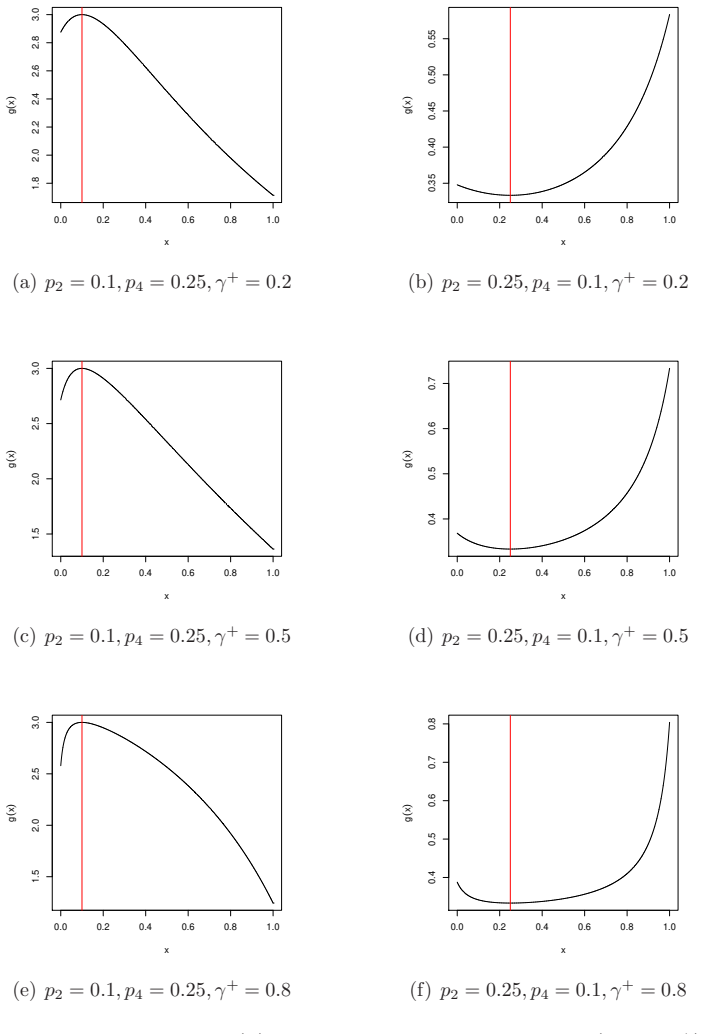
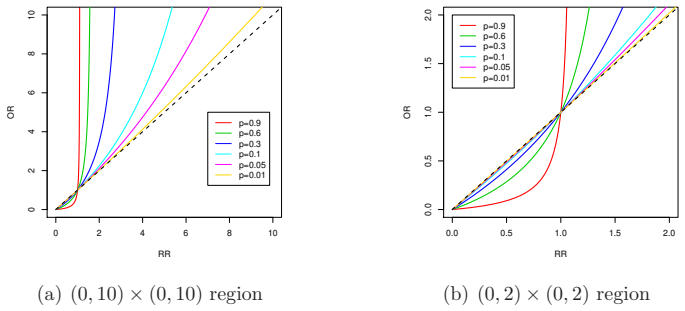
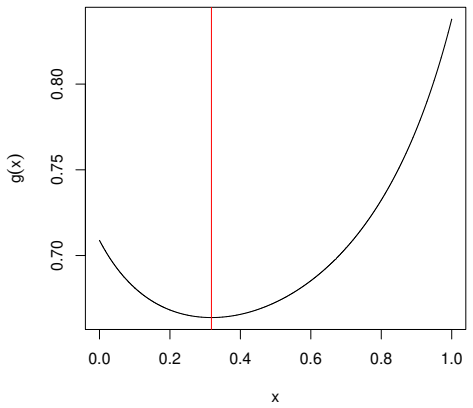
Subgroup analysis is routinely used in randomized controlled trials to examine whether treatment effects are homogeneous across patient subgroups or differ because of treatment-effect heterogeneity. In this paper, we investigate the properties of the odds ratio and the relative response in subgroup analyses with binary outcomes, extending previous work with new theoretical insights and methodological developments. We establish several new theorems that characterize how the odds ratio for the overall population changes in both magnitude and direction when two subgroups are combined. These results further confirm that the odds ratio is inappropriate as an efficacy measure in this subgroup setting, whereas the relative response is appropriate. We also present the formal relationship between the odds ratio and the relative response, and clarify their differences in terms of the logic-respecting property, that is, whether the overall efficacy lies between the subgroup efficacies, and the dilution property, that is, whether mixing subgroups moves the overall odds ratio toward 1. Although the odds ratio is generally not logic-respecting, it may behave approximately like a logic-respecting efficacy measure under certain conditions. To illustrate our findings, we present an illustrative example based on clinical trial data and discuss its implications for subgroup analysis in randomized controlled trials.
Figures
Reference graph
Works this paper leans on
-
[1]
R., Steins, M., Ready, N
Borghaei, H., Paz-Ares, L., Horn, L., Spigel, D. R., Steins, M., Ready, N. E., ... and Brahmer, J. R. (2015). Nivolumab versus docetaxel in advanced nonsquamous non-small-cell lung cancer. New England Journal of Medicine , 373(17) , 1627--1639
2015
- [2]
-
[3]
Didelez, V., and Stensrud, M. J. (2022). On the logic of collapsibility for causal effect measures. Biometrical Journal , 64(2) , 235--242
2022
-
[4]
M., and Hsu, J
Ding, Y., Lin, H. M., and Hsu, J. C. (2016). Subgroup mixable inference on treatment efficacy in mixture populations, with an application to time-to-event outcomes. Statistics in Medicine , 35(10) , 1580--1594
2016
-
[5]
Ding, Y., Wei, Y., and Wang, X. (2020). Logical Inference on Treatment Efficacy When Subgroups Exist. In Design and Analysis of Subgroups with Biopharmaceutical Applications (pp. 209-228). Springer, Cham
2020
-
[6]
A., Platt, A., and Goldstein, D
Dugger, S. A., Platt, A., and Goldstein, D. B. (2018). Drug development in the era of precision medicine. Nature Reviews Drug discovery , 17(3) , 183--196
2018
-
[7]
Freedman, D. A. (2008). Randomization does not justify logistic regression. Statistical Science , 237-249
2008
-
[8]
J., White, I
Godolphin, P. J., White, I. R., Tierney, J. F., and Fisher, D. J. (2023). Estimating interactions and subgroup-specific treatment effects in meta-analysis without aggregation bias: A within-trial framework. Research Synthesis Methods , 14(1) , 68-78
2023
Show all 35 references
-
[9]
Good, I. J. (1985). Mathematically natural generalizations of some measures of association and dependence for contingency tables. Journal of Statistical Computation and Simulation , 22 , 93-97
1985
-
[10]
J., and Mittal, Y
Good, I. J., and Mittal, Y. (1987). The amalgamation and geometry of two-by-two contingency tables. The Annals of Statistics , 15(2) , 694--711
1987
-
[11]
Greenland, S. (2011). Collapsibility. In: Lovric M. (eds) International Encyclopedia of Statistical Science . Springer, Berlin, Heidelberg
2011
-
[12]
Y., Lin, H
Han, Y., Tang, S. Y., Lin, H. M., and Hsu, J. C. (2022). Exact simultaneous confidence intervals for logical selection of a biomarker cut-point. Biometrical Journal , 64(2) , 272--289
2022
-
[13]
A., and Robins, J
Hern\' a n, M. A., and Robins, J. M. (2020). Causal Inference: What If. Boca Raton: Chapman & Hall/CRC
2020
-
[14]
J., and Suzuki, E
Huitfeldt, A., Stensrud, M. J., and Suzuki, E. (2019). On the collapsibility of measures of effect in the counterfactual causal framework. Emerging themes in epidemiology , 16(1) , 1-5
2019
-
[15]
Y., and Hsu, J
Kil, S., Kaizar, E., Tang, S. Y., and Hsu, J. C. (2022). Confident Statistical Inference with Multiple Outcomes, Subgroups, and Other Issues of Multiplicity
2022
-
[16]
Y., Man, M., Li, Y
Liu, Y., Tang, S. Y., Man, M., Li, Y. G., Ruberg, S. J., Kaizar, E., and Hsu, J. C. (2016). Thresholding of a continuous companion diagnostic test confident of efficacy in targeted population. Statistics in Biopharmaceutical Research , 8(3) , 325--333
2016
-
[17]
Liu, Y., Tian H., Hsu, J. C. (2021). Subgroups analysis for personalized and precision medicine development. Handbook of Multiple Comparisons (Editors: Xinping Cui, Thorsten Dickhaus, Ying Ding, and Jason C. Hsu) . Chapman & Hall / CRC Handbooks of Modern Statistical Methods
2021
-
[18]
Liu, Y., Wang, B., Tian, H., and Hsu, J. C. (2021). Rejoinder for discussions on correct and logical causal inference for binary and time-to-event outcomes in randomized controlled trials. Biometrical Journal , 64(2) , 246--255
2021
-
[19]
Liu, Y., Wang, B., Yang, M., Hui, J., Xu, H., Kil, S., and Hsu, J. C. (2020). Correct and logical causal inference for binary and time-to-event outcomes in randomized controlled trials. Biometrical Journal , 64(2) , 198--224
2020
-
[20]
M., Xu, H., Ding, Y., and Hsu, J
Lin, H. M., Xu, H., Ding, Y., and Hsu, J. C. (2019). Correct and logical inference on efficacy in subgroups and their mixture for binary outcomes. Biometrical Journal , 61(1) , 8--26
2019
-
[21]
Ondra, T., Dmitrienko, A., Friede, T., Graf, A., Miller, F., Stallard, N., and Posch, M. (2016). Methods for identification and confirmation of targeted subgroups in clinical trials: a systematic review. Journal of Biopharmaceutical Statistics , 26(1) , 99--119
2016
-
[22]
Pearl, J. (2009). Causality . Cambridge university press
2009
-
[23]
Pennello, G., and Xu, D. (2020). Discussion on ``Correct and logical causal inference for binary and time-to-event outcomes in randomized controlled trials'' by Yi Liu, Bushi Wang, Miao Yang, Jianan Hui, Heng Xu, Siyoen Kil, and Jason C. Hsu. Biometrical Journal , 64(2) , 225--234
2020
-
[24]
Remap-Cap Investigators. (2021). Interleukin-6 receptor antagonists in critically ill patients with Covid-19. New England Journal of Medicine , 384(16) , 1491--1502
2021
-
[25]
V., Parikh, P., Von Pawel, J., Biesma, B., Vansteenkiste, J., Manegold, C.,
Scagliotti, G. V., Parikh, P., Von Pawel, J., Biesma, B., Vansteenkiste, J., Manegold, C., ... and Gandara, D. (2008). Phase III study comparing cisplatin plus gemcitabine with cisplatin plus pemetrexed in chemotherapy-naive patients with advanced-stage non-small-cell lung can...
2008
-
[26]
O., and Kohlmann, T
Schmidt, C. O., and Kohlmann, T. (2008). When to use the odds ratio or the relative risk?. International Journal of Public Health , 53(3) , 165--167
2008
-
[27]
Szklo, M., and Nieto, F. J. (2014). Epidemiology: beyond the basics . Jones & Bartlett Publishers
2014
-
[28]
Seltman, H. (2012). Approximations for mean and variance of a ratio. unpublished note
2012
-
[29]
Y., Kaizar, E., and Hsu, J
Tang, S. Y., Kaizar, E., and Hsu, J. C. (2013). Designing studies for assessing efficacy in mixture populations. In Topics in Applied Statistics (pp. 63-73). Springer, New York, NY
2013
-
[30]
The WHO Rapid Evidence Appraisal for COVID-19 Therapies (REACT) Working Group. (2021). Association between administration of IL-6 antagonists and mortality among patients hospitalized for COVID-19: a meta-analysis. JAMA , 326(6) , 499--518
2021
-
[31]
C., Chen, W., Chew, E
Wei, Y., Hsu, J. C., Chen, W., Chew, E. Y., and Ding, Y. (2020). A simultaneous inference procedure to identify subgroups from RCTs with survival outcomes: application to analysis of AMD progression studies. arXiv preprint arXiv:2003.10528
2020
-
[32]
C., Chen, W., Chew, E
Wei, Y., Hsu, J. C., Chen, W., Chew, E. Y., and Ding, Y. (2021). Identification and inference for subgroups with differential treatment efficacy from randomized controlled trials with survival outcomes through multiple testing. Statistics in Medicine , 40(29) , 6523--6540
2021
-
[33]
Woodcock, J. (2016). ``Precision'' drug development?. Clinical Pharmacology & Therapeutics , 99(2) , 152--154
2016
-
[34]
Xi, D., and Bretz, F. (2021). Discussion on 'Correct and logical causal inference for binary and time-to-event outcomes in randomized controlled trials'. Biometrical Journal , 64(2) , 243--245
2021
-
[35]
Zhang, J., and Kai, F. Y. (1998). What's the relative risk?: A method of correcting the odds ratio in cohort studies of common outcomes. JAMA , 280(19) , 1690--1691
1998
Reviewed June 26, 2026 · model on record in the stance chip above.
Discussion (0). Sign in to comment.