Testing the Validity of Embedding-Based Similarity and Clustering for Handwritten Physics Solutions
Reviewed by Pith2026-06-30 08:38 UTCgrok-4.3pith:6OOCGJMRopen to challenge →
The pith
Text embeddings of physics exam solutions show only modest alignment with human grades and prioritize surface features.
A machine-rendered reading of the paper's core claim, the machinery that carries it, and where it could break.
Core claim
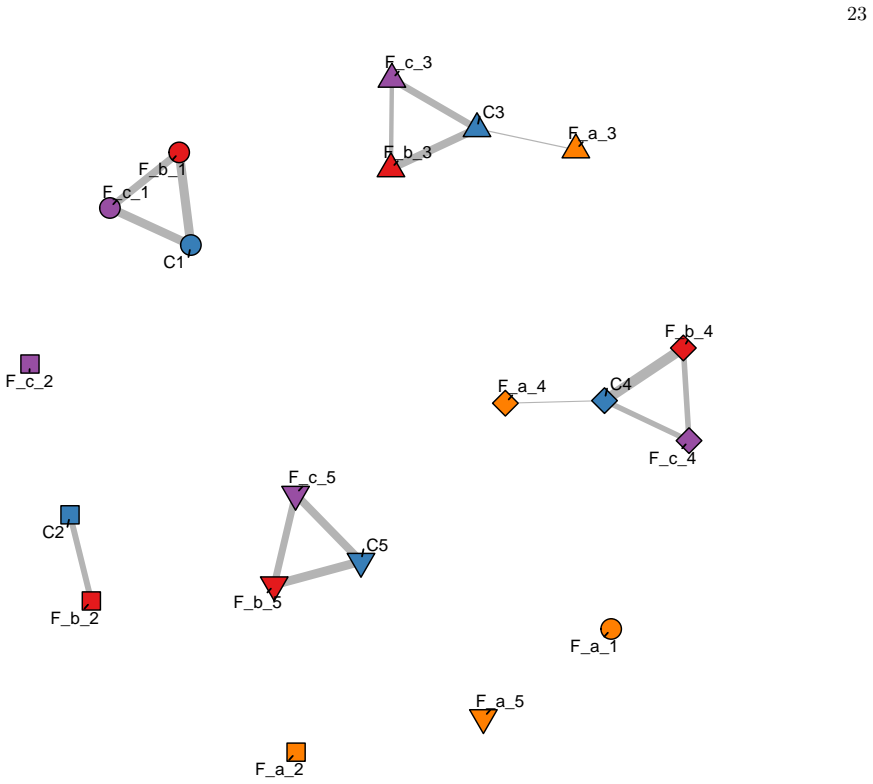
Across models, representations, and clustering choices, embedding similarity showed a consistent but modest relationship to score similarity, and the resulting clusters were score-enriched but not score-equivalent. Experiments with a synthetic data set suggest that this may be due to embeddings behaving like novices when categorizing physics-problem solutions, that is, their similarity geometry is strongly influenced by surface features rather than conceptual, semantic structure.
What carries the argument
Direct comparison of embedding-space similarity and hierarchical clusters against human-assigned scores on transcribed handwritten solutions.
If this is right
- Embeddings can support exploratory organization of collections of physics solutions.
- They enable human-in-the-loop review processes.
- They do not provide an unsupervised basis for grading without external validation against the assessment construct of interest.
Where Pith is reading between the lines
- The novice-like categorization pattern could be checked by comparing embedding clusters directly to clusters produced by novice human raters on the same solutions.
- Similar surface-feature dominance may appear when embeddings are applied to student work in other STEM subjects.
- Fine-tuning embeddings on labeled physics education data might shift the geometry toward conceptual rather than surface distinctions.
Load-bearing premise
Human-assigned scores mark the grading-relevant distinctions that embeddings should be expected to preserve.
What would settle it
An embedding model that produces clusters whose score distributions match the human score groups exactly on a held-out set of similar physics solutions without any additional validation against the assessment construct.
Figures





read the original abstract
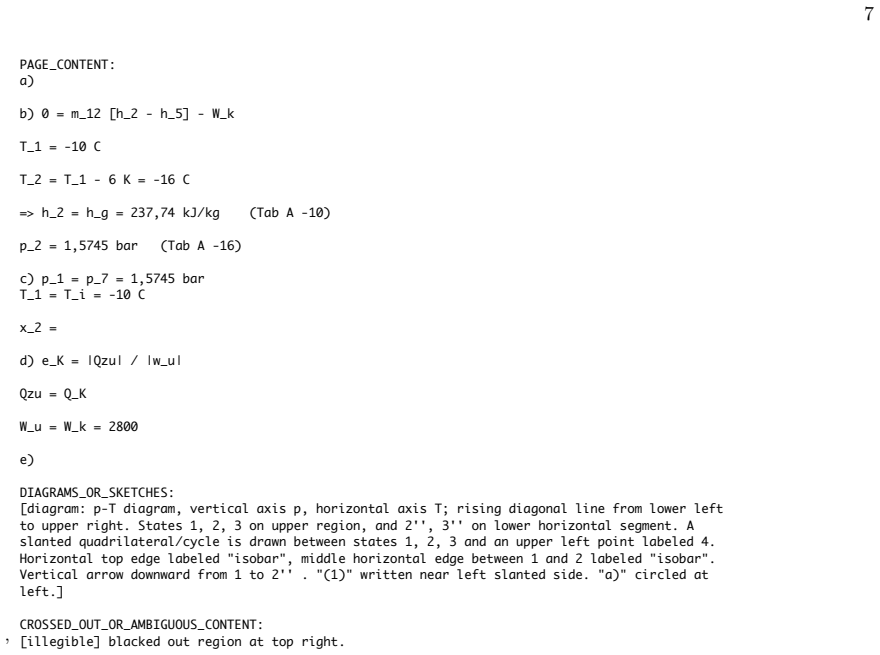
Text embeddings are increasingly used in physics education research to organize, compare, and cluster large collections of written text. Their appeal is clear: once student responses have been mapped into a vector space, similarity comparisons and clustering become computationally inexpensive. However, in assessment contexts, the relevant question is not merely whether clusters can be produced, but whether the geometry of the embedding space preserves grading-relevant distinctions. We tested this premise using 992 handwritten student-problem solutions from a high-stakes engineering thermodynamics exam, transcribed into five textual representations and embedded using nine embedding mechanisms. We compared embedding similarity and embedding-based hierarchical clusters against human-assigned scores. Across models, representations, and clustering choices, embedding similarity showed a consistent but modest relationship to score similarity, and the resulting clusters were score-enriched but not score-equivalent. Experiments with a synthetic data set suggest that this may be due to embeddings behaving like novices when categorizing physics-problem solutions, that is, their similarity geometry is strongly influenced by surface features rather than conceptual, semantic structure. These findings suggest that state-of-the-art embeddings can support exploratory organization and human-in-the-loop review of physics solutions, but they do not provide an unsupervised basis for grading without external validation against the assessment construct of interest.
Editorial analysis
A structured set of objections, weighed in public.
Referee Report
Summary. The paper empirically tests whether text embeddings preserve grading-relevant distinctions in handwritten physics solutions by comparing embedding similarities and hierarchical clusters to human-assigned scores across nine embedding models, five textual representations, and 992 solutions from an engineering thermodynamics exam. It reports modest correlations and score-enriched but not equivalent clusters, uses synthetic data to suggest surface-feature sensitivity, and concludes that embeddings are suitable for exploratory organization and human-in-the-loop review but not for unsupervised grading without external validation against the assessment construct.
Significance. If the findings are robust, this work offers valuable evidence on the practical limitations of current embedding technologies in physics education assessment contexts. The large-scale real-world dataset combined with synthetic controls provides a concrete basis for cautioning against over-reliance on unsupervised embedding methods for grading, while supporting their use in exploratory analysis. This contributes to the growing literature on AI tools in education by grounding claims in specific empirical comparisons.
major comments (2)
- [Abstract and Results] Abstract and Results: The description of a 'consistent but modest relationship' between embedding similarity and score similarity, and 'score-enriched but not score-equivalent' clusters, lacks specific quantitative metrics such as correlation coefficients (e.g., Pearson r values), confidence intervals, p-values, or exact clustering parameters (linkage method, distance metric, dendrogram cut height). Without these, the strength and consistency of the central empirical patterns cannot be fully assessed.
- [Discussion] Discussion: The claim that embeddings behave like novices by prioritizing surface features over conceptual structure, leading to mismatch with grading-relevant distinctions, rests on human scores as the ground truth proxy. No independent check (such as expert annotation of conceptual vs. surface distinctions on the real data or inter-rater reliability of scores) is reported to confirm that the scores capture the intended assessment construct rather than partial-credit or other artifacts. This makes the interpretation of the mismatch as embedding limitation rather than proxy limitation vulnerable.
minor comments (3)
- [Methods] Clarify the exact transcription process for the five textual representations and any preprocessing steps applied before embedding.
- [Figures] Ensure all figures include error bars or variability measures if multiple runs or models are compared, and label axes clearly with the specific similarity metric used.
- [References] Add citations to prior work on embedding use in education research for context on novelty.
Simulated Author's Rebuttal
We thank the referee for the constructive comments, which highlight opportunities to strengthen the quantitative reporting and clarify the evidential basis for our interpretations. We address each major comment below.
read point-by-point responses
-
Referee: [Abstract and Results] Abstract and Results: The description of a 'consistent but modest relationship' between embedding similarity and score similarity, and 'score-enriched but not score-equivalent' clusters, lacks specific quantitative metrics such as correlation coefficients (e.g., Pearson r values), confidence intervals, p-values, or exact clustering parameters (linkage method, distance metric, dendrogram cut height). Without these, the strength and consistency of the central empirical patterns cannot be fully assessed.
Authors: We agree that the absence of explicit numerical metrics limits the reader's ability to evaluate the reported patterns. In the revised manuscript we will add Pearson r values (with 95% confidence intervals and p-values) for the correlation between embedding cosine similarities and score differences, computed separately for each of the nine models and five representations. We will also document the hierarchical clustering details: Ward linkage, cosine distance, and the specific height thresholds or inconsistency coefficients used to obtain the reported cluster partitions. revision: yes
-
Referee: [Discussion] Discussion: The claim that embeddings behave like novices by prioritizing surface features over conceptual structure, leading to mismatch with grading-relevant distinctions, rests on human scores as the ground truth proxy. No independent check (such as expert annotation of conceptual vs. surface distinctions on the real data or inter-rater reliability of scores) is reported to confirm that the scores capture the intended assessment construct rather than partial-credit or other artifacts. This makes the interpretation of the mismatch as embedding limitation rather than proxy limitation vulnerable.
Authors: The scores were produced by the course instructors using a rubric that explicitly targets conceptual understanding rather than surface features. Nevertheless, we did not collect inter-rater reliability statistics or perform independent expert coding of conceptual versus surface distinctions on the 992 solutions. In revision we will add an explicit limitations paragraph acknowledging this reliance on a single set of human scores and will emphasize that the synthetic-data experiments supply an independent line of evidence for surface-feature sensitivity. We will also note that future validation could include multi-rater reliability or targeted conceptual annotation. revision: partial
Circularity Check
No circularity: direct empirical comparison to external human scores
full rationale
The paper conducts an empirical study comparing embedding similarities and hierarchical clusters directly against human-assigned scores on 992 transcribed solutions, using nine embedding models and multiple representations. No derivations, fitted parameters, self-referential predictions, or load-bearing self-citations are present. The modest correlation findings and cluster analyses are measured against an independent external benchmark (human scores), making the central claim self-contained rather than reducing to its inputs by construction. This is the expected outcome for a validation study without mathematical modeling or ansatz smuggling.
Axiom & Free-Parameter Ledger
axioms (2)
- domain assumption Human-assigned scores represent the assessment construct of interest that embeddings should preserve.
- domain assumption Transcribed textual representations preserve the information needed for semantic comparison.
Reference graph
Works this paper leans on
-
[1]
(1)". Two horizontal segments are labeled
Similarity Let xi ∈ Rd denote the embedding vector for student response i within a fixed problem, transcription condi- tion, and embedding mechanism. We computed two sim- ilarity matrices. The first was ordinary cosine similarity, scos ij = xi · xj ∥xi∥∥xj∥ . (1) 11 PROBLEM_LABELS: - 4 a) - b) - c) - d) - e) FORMULA_NARRATIVE: For part a), the student dra...
-
[2]
explain the 21 work done by a Carnot engine,
Clustering For the clustering analysis, each similarity matrix S was converted to a distance matrix Dij = 1 − Sij. (5) We then performed agglomerative hierarchical clustering using average linkage and complete linkage. These two linkage methods represent different assumptions about what should count as a coherent group: average linkage merges clusters bas...
-
[3]
J. H. Larkin and F. Reif, Understanding and teaching problem-solving in physics, European journal of science education 1, 191 (1979)
1979
-
[4]
Gok, The general assessment of problem solving pro- cesses and metacognition in physics education, Interna- tional Journal of Physics and Chemistry Education 2, 110 (2010)
T. Gok, The general assessment of problem solving pro- cesses and metacognition in physics education, Interna- tional Journal of Physics and Chemistry Education 2, 110 (2010)
2010
-
[5]
J. L. Docktor and J. P. Mestre, Synthesis of discipline- based education research in physics, Phys. Rev. ST Phys. Educ. Res. 10, 020119 (2014)
2014
-
[6]
Ince, An overview of problem solving studies in physics education., Journal of Education and Learning 7, 191 (2018)
E. Ince, An overview of problem solving studies in physics education., Journal of Education and Learning 7, 191 (2018)
2018
-
[7]
R. J. Dufresne and W. J. Gerace, Assessing-to- learn: Formative assessment in physics instruction, The Physics Teacher 42, 428 (2004)
2004
-
[8]
J. T. Laverty, W. Bauer, G. Kortemeyer, and G. West- fall, Want to reduce guessing and cheating while making students happier? give more exams!, Phys. Teach. 50, 540 (2012)
2012
-
[9]
Fakcharoenphol and T
W. Fakcharoenphol and T. Stelzer, Physics exam prepa- ration: A comparison of three methods, Physical Re- view Special Topics – Physics Education Research 10, 010108 (2014)
2014
-
[10]
Wieman and K
C. Wieman and K. Perkins, Transforming physics edu- cation, Physics today 58, 36 (2005)
2005
-
[11]
Uhden, R
O. Uhden, R. Karam, M. Pietrocola, and G. Pospiech, Modelling mathematical reasoning in physics education, Science & Education 21, 485 (2012)
2012
-
[12]
Tuminaro and E
J. Tuminaro and E. F. Redish, Elements of a cogni- tive model of physics problem solving: Epistemic games, Phys. Rev. ST Phys. Educ. Res. 3, 020101 (2007)
2007
-
[13]
R. E. Teodorescu, C. Bennhold, G. Feldman, and L. Medsker, New approach to analyzing physics prob- lems: A taxonomy of introductory physics problems, Phys. Rev. ST Phys. Educ. Res. 9, 010103 (2013)
2013
-
[14]
Singh, Assessing student expertise in introductory physics with isomorphic problems
C. Singh, Assessing student expertise in introductory physics with isomorphic problems. ii. effect of some po- tential factors on problem solving and transfer, Phys. Rev. ST Phys. Educ. Res. 4, 010105 (2008). 25
2008
-
[15]
Larkin, J
J. Larkin, J. McDermott, D. P. Simon, and H. A. Si- mon, Expert and novice performance in solving physics problems, Science 208, 1335 (1980)
1980
-
[16]
M. M. Hull, E. Kuo, A. Gupta, and A. Elby, Problem- solving rubrics revisited: Attending to the blending of informal conceptual and formal mathematical reason- ing, Phys. Rev. ST Phys. Educ. Res. 9, 010105 (2013)
2013
-
[17]
J. L. Docktor, J. Dornfeld, E. Frodermann, K. Heller, L. Hsu, K. A. Jackson, A. Mason, Q. X. Ryan, and J. Yang, Assessing student written problem solutions: A problem-solving rubric with application to introductory physics, Phys. Rev. Phys. Educ. Res.12, 010130 (2016)
2016
-
[18]
D. E. Meltzer, Relation between students’ problem- solving performance and representational format, Amer- ican journal of physics 73, 463 (2005)
2005
-
[19]
P. B. Kohl and N. D. Finkelstein, Student represen- tational competence and self-assessment when solving physics problems, Phys. Rev. ST Phys. Educ. Res. 1, 010104 (2005)
2005
-
[20]
P. B. Kohl, D. Rosengrant, and N. D. Finkelstein, Strongly and weakly directed approaches to teaching multiple representation use in physics, Phys. Rev. ST Phys. Educ. Res. 3, 010108 (2007)
2007
-
[21]
Nguyen and N
D.-H. Nguyen and N. S. Rebello, Students’ difficulties in transfer of problem solving across representations, in AIP conference Proceedings, Vol. 1179 (American Insti- tute of Physics, 2009) pp. 221–224
2009
-
[22]
B. R. Wilcox and S. J. Pollock, Coupled multiple- response versus free-response conceptual assessment: An example from upper-division physics, Physical Re- view Special Topics-Physics Education Research 10, 020124 (2014)
2014
-
[23]
F. Reif, J. H. Larkin, and G. C. Brackett, Teaching gen- eral learning and problem-solving skills, American Jour- nal of Physics 44, 212 (1976)
1976
-
[24]
Reif, Millikan lecture 1994: Understanding and teaching important scientific thought processes, Ameri- can Journal of Physics 63, 17 (1995)
F. Reif, Millikan lecture 1994: Understanding and teaching important scientific thought processes, Ameri- can Journal of Physics 63, 17 (1995)
1994
-
[25]
L. Hsu, E. Brewe, T. M. Foster, and K. A. Harper, Re- source letter rps-1: Research in problem solving, Amer- ican journal of physics 72, 1147 (2004)
2004
-
[26]
Hattie, Visible learning: A synthesis of over 800 meta-analyses relating to achievement (routledge, 2008)
J. Hattie, Visible learning: A synthesis of over 800 meta-analyses relating to achievement (routledge, 2008)
2008
-
[27]
Al-Salmani, J
F. Al-Salmani, J. Johnson, and B. Thacker, Assessing thinking skills in free-response exam problems: Pan- demic online and in-person, Phys. Rev. Phys. Educ. Res. 19, 010131 (2023)
2023
-
[28]
D. A. Kashy, G. Albertelli, G. Ashkenazi, E. Kashy, H.- K. Ng, and M. Thoennessen, Individualized interactive exercises: a promising role for network technology, in Proc. Frontiers in Education, Vol. 31 (2001) pp. 1073– 1078
2001
-
[29]
Kortemeyer, E
G. Kortemeyer, E. Kashy, W. Benenson, and W. Bauer, Experiences using the open-source learning content management and assessment system LON-CAPA in in- troductory physics courses, Am. J. Phys 76, 438 (2008)
2008
-
[30]
Risley, Motivating students to learn physics using an online homework system, Newsletter of the APS Forum on Education F all, 3 (2001)
J. Risley, Motivating students to learn physics using an online homework system, Newsletter of the APS Forum on Education F all, 3 (2001)
2001
-
[31]
Stelzer and G
T. Stelzer and G. Gladding, The evolution of web-based activities in physics at illinois, Newsletter of the APS Forum on Education F all, 7 (2001)
2001
-
[32]
R. J. Dufresne, D. Hart, J. P. Mestre, and K. Rath, The effect of web-based homework on test performance in large enrollment introductory physics courses, Journal of Computers in Mathematics and Science Teaching 21, 229 (2002)
2002
-
[33]
Fredericks, Patterns of Behavior in Online Home- work for Introductory Physics , Ph.D
C. Fredericks, Patterns of Behavior in Online Home- work for Introductory Physics , Ph.D. thesis, University of Massachusetts (2007)
2007
-
[34]
Richards-Babb, J
M. Richards-Babb, J. Drelick, Z. Henry, and J. Robertson-Honecker, Online homework, help or hin- drance? what students think and how they perform, Journal of College Science Teaching 40, 81 (2011)
2011
-
[35]
D. C. Perdian, Early identification of student perfor- mance and effort using an online homework system: A pilot study, Journal of Science Education and Technol- ogy 22, 697 (2013)
2013
-
[36]
Burkholder, J
E. Burkholder, J. Miles, T. Layden, K. Wang, A. Fritz, and C. Wieman, Template for teaching and assessment of problem solving in introductory physics, Physical Re- view Physics Education Research 16, 010123 (2020)
2020
-
[37]
E. G. Offerdahl and J. B. Arneson, Formative assess- ment to improve student learning in biochemistry, in Biochemistry education: From theory to practice (ACS Publications, Washington, DC, 2019) pp. 197–218
2019
-
[38]
T. M. Clark, C. S. Callam, N. M. Paul, M. W. Stoltzfus, and D. Turner, Testing in the time of COVID-19: A sudden transition to unproctored online exams, Journal of chemical education 97, 3413 (2020)
2020
-
[39]
T. M. Gomez, C. Luciano, T. Nguyen, S. M. Villafa˜ ne, and M. N. Groves, Student success and experience in a flipped, senior physical chemistry course spanning be- fore and after the covid-19 pandemic, Chemistry Edu- cation Research and Practice 26, 210 (2025)
2025
-
[40]
Kashy, B
E. Kashy, B. M. Sherrill, D. T. Y. Tsai, D. Weinshank, M. Engelmann, and D. J. Morrissey, Capa, an integrated computer assisted personalized assignment system, Am. J. Phys 61, 1124 (1993)
1993
-
[41]
Kashy, S
E. Kashy, S. J. Gaff, N. Pawley, W. L. Stretch, S. Wolfe, D. J. Morrissey, and Y. Tsai, Conceptual questions in computer-assisted assignments, Am. J. Phys 63, 1000 (1995)
1995
-
[42]
Warnakulasooriya and D
R. Warnakulasooriya and D. Pritchard, Learning and problem-solving transfer between physics problems us- ing web-based homework tutor, in EdMedia+ Innovate Learning (Association for the Advancement of Comput- ing in Education (AACE), 2005) pp. 2976–2983
2005
-
[43]
Gladding, B
G. Gladding, B. Gutmann, N. Schroeder, and T. Stelzer, Clinical study of student learning using mastery style versus immediate feedback online activities, Phys. Rev. ST Phys. Educ. Res. 11, 010114 (2015)
2015
-
[44]
Gutmann, G
B. Gutmann, G. Gladding, M. Lundsgaard, and T. Stelzer, Mastery-style homework exercises in intro- ductory physics courses: Implementation matters, Phys. Rev. Phys. Educ. Res. 14, 010128 (2018)
2018
-
[45]
Scott, T
M. Scott, T. Stelzer, and G. Gladding, Evaluating multiple-choice exams in large introductory physics courses, Phys. Rev. ST Phys. Educ. Res. 2, 020102 (2006)
2006
-
[46]
A. Pawl, R. Teodorescu, and J. Peterson, Assessing class-wide consistency and randomness in responses to true or false questions administered online, Phys. Rev. ST Phys. Educ. Res. 9, 020102 (2013)
2013
-
[47]
Kortemeyer, The psychometric properties of class- room response system data: a case study, Journal of Science Education and Technology 25, 561 (2016)
G. Kortemeyer, The psychometric properties of class- room response system data: a case study, Journal of Science Education and Technology 25, 561 (2016). 26
2016
-
[48]
Stewart and S
J. Stewart and S. Ballard, Effect of written presentation on performance in introductory physics, Phys. Rev. ST Phys. Educ. Res. 6, 020120 (2010)
2010
-
[49]
Davis and T
J. Davis and T. McDonald, Online, handwritten or hy- brid homework: What’s best for our students in the long run?, Journal of Online Engineering Education 7 (2016)
2016
-
[50]
D. J. Palazzo, Y.-J. Lee, R. Warnakulasooriya, and D. E. Pritchard, Patterns, correlates, and reduction of homework copying, Physical Review Special Topics – Physics Education Research 6, 010104 (2010)
2010
-
[51]
G¨ on¨ ulate¸ s and G
E. G¨ on¨ ulate¸ s and G. Kortemeyer, Modeling unproduc- tive behavior in online homework in terms of latent stu- dent traits: An approach based on item response theory, Journal of Science Education and Technology 26, 139 (2017)
2017
-
[52]
Kortemeyer, An empirical study of the effect of granting multiple tries for online homework, Am
G. Kortemeyer, An empirical study of the effect of granting multiple tries for online homework, Am. J. Phys. 83, 646 (2015)
2015
-
[53]
VanLehn, B
K. VanLehn, B. Van De Sande, R. Shelby, and S. Ger- shman, The andes physics tutoring system: An exper- iment in freedom, Advances in intelligent tutoring sys- tems , 421 (2010)
2010
-
[54]
C. M. Nakamura, S. K. Murphy, M. G. Christel, S. M. Stevens, and D. A. Zollman, Automated analysis of short responses in an interactive synthetic tutoring sys- tem for introductory physics, Phys. Rev. Phys. Educ. Res. 12, 010122 (2016)
2016
-
[55]
J. A. Shapiro, An algebra subsystem for diagnosing stu- dents’ input in a physics tutoring system, International Journal of Artificial Intelligence in Education 15, 205 (2005)
2005
-
[56]
OpenAI, ChatGPT, https://chat.openai.com/ (ac- cessed April 2024)
2024
-
[57]
OpenAI, ChatGPT, https://openai.com/research/ gpt-4 (accessed April 2024)
2024
-
[58]
OpenAI, Hello GPT-4o, https://openai.com/index/ hello-gpt-4o/ (accessed June 2024)
2024
-
[59]
J. G. Meyer, R. J. Urbanowicz, P. C. Martin, K. O’Connor, R. Li, P.-C. Peng, T. J. Bright, N. Tatonetti, K. J. Won, G. Gonzalez-Hernandez,et al., ChatGPT and large language models in academia: op- portunities and challenges, BioData Mining 16, 20 (2023)
2023
-
[60]
Kasneci, K
E. Kasneci, K. Seßler, S. K¨ uchemann, M. Bannert, D. Dementieva, F. Fischer, U. Gasser, G. Groh, S. G¨ unnemann, E. H¨ ullermeier,et al. , ChatGPT for good? on opportunities and challenges of large language models for education, Learning and individual differ- ences 103, 102274 (2023)
2023
-
[61]
Yeadon and T
W. Yeadon and T. Hardy, The impact of AI in physics education: a comprehensive review from GCSE to uni- versity levels, Physics Education 59, 025010 (2024)
2024
-
[62]
Sperling and J
A. Sperling and J. Lincoln, Artificial intelligence and high school physics, The Physics Teacher62, 314 (2024)
2024
-
[63]
Polverini and B
G. Polverini and B. Gregorcic, How understanding large language models can inform the use of ChatGPT in physics education, Eur. J. Phys. 45, 025701 (2024)
2024
-
[64]
Tschisgale, P
P. Tschisgale, P. Wulff, and M. Kubsch, Integrating ar- tificial intelligence-based methods into qualitative re- search in physics education research: A case for com- putational grounded theory, Physical Review Physics Education Research 19, 020123 (2023)
2023
-
[65]
Kieser, P
F. Kieser, P. Wulff, J. Kuhn, and S. K¨ uchemann, Ed- ucational data augmentation in physics education re- search using ChatGPT, Phys. Rev. Phys. Educ. Res. 19, 020150 (2023)
2023
-
[66]
P. Wulff, Physics language and language use in physics—what do we know and how ai might enhance language-related research and instruction, European Journal of Physics 45, 023001 (2024)
2024
-
[67]
T. H. Kung, M. Cheatham, A. Medinilla, ChatGPT, C. Sillos, L. De Leon, C. Elepano, M. Madriaga, R. Ag- gabao, G. Diaz-Candido, et al., Performance of chatgpt on usmle: Potential for ai-assisted medical education using large language models, medRxiv , 2022 (2022)
2022
-
[68]
J. Achiam, S. Adler, S. Agarwal, L. Ahmad, I. Akkaya, F. L. Aleman, D. Almeida, J. Altenschmidt, S. Alt- man, S. Anadkat, et al., GPT-4 technical report, arXiv preprint arXiv:2303.08774 (2023)
work page internal anchor Pith review Pith/arXiv arXiv 2023
-
[69]
Kortemeyer, Could an artificial-intelligence agent pass an introductory physics course?, Phys
G. Kortemeyer, Could an artificial-intelligence agent pass an introductory physics course?, Phys. Rev. Phys. Educ. Res. 19, 010132 (2023)
2023
-
[70]
L´ opez-Sim´ o and M
V. L´ opez-Sim´ o and M. F. Rezende, Challenging chat- gpt with different types of physics education questions, Phys. Teach. 62, 290 (2024)
2024
-
[71]
K. D. Wang, E. Burkholder, C. Wieman, S. Salehi, and N. Haber, Examining the potential and pitfalls of ChatGPT in science and engineering problem-solving, in Frontiers in Education, Vol. 8 (Frontiers Media SA,
-
[72]
Kortemeyer, M
G. Kortemeyer, M. Babayeva, G. Polverini, R. Widen- horn, and B. Gregorcic, Multilingual performance of a multimodal artificial intelligence system on multisubject physics concept inventories, Physical Review Physics Education Research 21, 020101 (2025)
2025
-
[73]
K¨ uchemann, S
S. K¨ uchemann, S. Steinert, N. Revenga, M. Schwein- berger, Y. Dinc, K. E. Avila, and J. Kuhn, Can Chat- GPT support prospective teachers in physics task de- velopment?, Phys. Rev. Phys. Educ. Res. 19, 020128 (2023)
2023
-
[74]
Wilson, B
J. Wilson, B. Pollard, J. M. Aiken, M. D. Caballero, and H. J. Lewandowski, Classification of open-ended responses to a research-based assessment using natural language processing, Phys. Rev. Phys. Educ. Res. 18, 010141 (2022)
2022
-
[75]
Wan and Z
T. Wan and Z. Chen, Exploring generative AI assisted feedback writing for students’ written responses to a physics conceptual question with prompt engineering and few-shot learning, Phys. Rev. Phys. Educ. Res. 20, 010152 (2024)
2024
-
[76]
Kortemeyer, Toward AI grading of student problem solutions in introductory physics: A feasibility study, Phys
G. Kortemeyer, Toward AI grading of student problem solutions in introductory physics: A feasibility study, Phys. Rev. Phys. Educ. Res. 19, 020163 (2023)
2023
-
[77]
Kortemeyer, J
G. Kortemeyer, J. N¨ ohl, and D. Onishchuk, Grading as- sistance for a handwritten thermodynamics exam using artificial intelligence: An exploratory study, Physical Review Physics Education Research 20, 020144 (2024)
2024
- [78]
-
[79]
Kortemeyer and J
G. Kortemeyer and J. N¨ ohl, Assessing confidence in ai- assisted grading of physics exams through psychomet- rics: An exploratory study, Physical Review Physics Ed- ucation Research 21, 010136 (2025). 27
2025
-
[80]
Frakn´ oi, A
´A. Frakn´ oi, A. Kornai, and Z. Zombori, Embedding mathematical formulas into vector space, in 8th Con- ference on Artificial Intelligence and Theorem Proving (2023)
2023
discussion (0)
Sign in with ORCID, Apple, or X to comment. Anyone can read and Pith papers without signing in.