REVIEW 3 major objections 4 minor 38 references
Generic properties of planar symplectic billiards
T0 review · 3 major / 4 minor · reviewed 2026-08-01 · deepseek-v4-flash
Pith's one-line read This paper proves that, for a residual set of C^∞ strongly convex planar domains, the symplectic billiard map has positive topological entropy.
desk verdict A serious, mostly correct transfer of generic billiard theory to symplectic billiards; the entropy theorem likely stands, but Proposition 7.3's proof is too quick at a coordinate singularity and should be fixed or replaced by the cited [3, Theorem 3]. read the letter →
The pith
A machine-rendered reading of the paper's core claim, the machinery that carries it, and where it could break.
The reading
What carries the argument
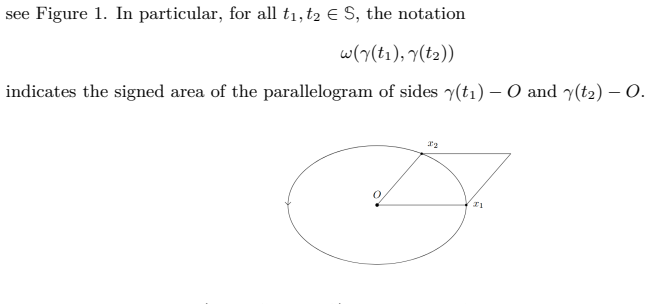
The central object is the symplectic billiard map, an area-preserving negative twist map on a phase cylinder, defined by the rule that the tangent at the middle of three consecutive boundary points is parallel to the chord joining the other two, and generated by the symplectic area between consecutive points. Four tools carry the argument: jet transversality forces periodic configurations into general position and non-degeneracy; a derivative-realization lemma lets small perturbations of the linearized map along any sufficiently long periodic orbit be produced by small boundary perturbations, with no no-focusing condition needed; a normal-form twist argument turns elliptic points into stable
What would settle it
Check the coordinate change used in the invariant-curve lemma: compute the derivative of the natural coordinate with respect to the angle coordinate at the boundary φ=π from the differential formula. If it is zero, the annulus coordinates in which the invariant-curve theorem is invoked are singular and that step of the proof does not apply; a concrete C^∞ strongly convex table for which the required invariant curves provably do not exist would directly falsify the key premise, while a proof that the twist-map hypotheses do hold at that boundary would close the gap.
Extended reading notes
Core claim
The paper proves that generic C^∞ strongly convex symplectic billiards are chaotic in a precise sense: the dynamics has positive topological entropy, meaning the number of distinguishable orbit segments grows exponentially with time. This is derived by showing that a generic table's symplectic billiard map contains a horseshoe, a compact invariant set on which the dynamics is a full shift on two symbols. The route is to make all periodic orbits non-degenerate and in general position via jet transversality, to obtain a derivative-realization lemma that controls the linearized map along periodic orbits, to show elliptic periodic points are stable, and finally to prove that hyperbolic periodic
Load-bearing premise
The argument that stable and unstable manifolds stay in a compact region, and hence that a homoclinic intersection must exist, depends on smooth invariant curves existing arbitrarily close to both boundary components of the phase space; the proof of this existence applies a twist-map invariant-curve theorem in angle coordinates that become singular at one boundary, so if those curves fail to exist the positive-entropy conclusion is not established by the stated argument.
Editorial extensions
If this is right
- If the central theorem is right, a generic smooth strongly convex table supports exponentially many periodic orbits of each sufficiently large period, since positive topological entropy implies exponential orbit growth.
- Generic symplectic billiards are neither integrable nor globally hyperbolic: stable elliptic islands and chaotic hyperbolic sets coexist.
- The derivative-realization lemma, which needs no no-focusing condition, should make local perturbation constructions in symplectic billiards simpler than the analogous constructions for classical billiards.
- Every hyperbolic periodic point of a generic table has a transverse homoclinic point, so the standard transversality picture of conservative dynamics holds in this family.
Reading between the lines
- The proof's reliance on invariant curves near the boundary is the point to test: if the coordinate singularity there can be repaired, the same strategy should work for C^k boundaries with k>5, not only for C^∞ boundaries.
- Because the local perturbation lemma avoids the no-focusing condition, symplectic billiards may be a better testbed than classical billiards for higher-dimensional or outer-billiard versions of these genericity results.
- Known integrable examples such as the circle have zero topological entropy; the theorem says they are isolated exceptions in the C^∞ topology, so the integrable–chaotic boundary in this family is topologically sharp.
- A numerical scan of small Fourier perturbations of the circle could look for the predicted horseshoes and measure how entropy grows with perturbation size, giving a quantitative check of the generic behavior.
Editorial analysis
A structured set of objections, weighed in public.
Referee Report
Summary. The paper studies generic dynamical properties of planar symplectic billiards on C-infinity strongly convex domains. Its main claims are: (i) periodic symplectic billiard orbits are in general position and non-degenerate on a residual set of domains; (ii) a Franks' lemma holds for symplectic billiards; (iii) stably hyperbolic periodic points form a hyperbolic set; (iv) elliptic periodic points are generically stable; (v) hyperbolic periodic points generically have transverse homoclinic points; and (vi) generically the symplectic billiard map has positive topological entropy. The proofs use multijet transversality, normal perturbations of the boundary via curvature changes, and external theorems of Moser, Ruessmann, and Xia-Zhang.
Significance. If the stated results hold, this is a substantial contribution to the dynamical systems literature. It develops a generic theory for symplectic billiards parallel to classical billiards, and the positive topological entropy conclusion would be a notable extension of the classical generic entropy results. The paper is ambitious and contains many independent contributions: residual genericity of non-degenerate periodic orbits, a Franks' lemma, elliptic stability, and a Kupka-Smale-type statement. The main weakness is that the proof of the crucial Proposition 7.3 is incomplete in the presented form, and the Franks' lemma proof contains a rank verification gap; both are load-bearing for stated theorems.
major comments (3)
- [Section 7, Proposition 7.3] The proof of Proposition 7.3 is not valid as written. In the (theta, phi) coordinates the preserved area form is (partial s / partial phi) d theta wedge d phi, with s = -omega(gamma'(theta), gamma(theta+phi)); since partial s / partial phi = -omega(gamma'(theta), gamma'(theta+phi)) vanishes at phi = pi, the coordinate chart is singular at the boundary component where the invariant curves are being constructed. A theorem such as Ruessmann's [31, Theorem 2] requires a genuine annulus with a nondegenerate area form and verified twist hypotheses; the first-order expansion T(theta, pi - epsilon) = (theta + pi - epsilon, pi - epsilon + O(epsilon^2)) does not establish those hypotheses. Proposition 7.3 is the only step in Theorem 7.5 that confines W^s(x) and W^u(x) to a compact sub-annulus so that the Xia-Zhang theorem [38] can be applied. The result is stated to be already proved in [3, Theore
- [Section 5, Theorem 5.1] The local surjectivity claim in the proof of Franks' lemma is not established. The three derivative matrices partial M / partial k_1, partial M / partial k_2, partial M / partial k_3 are treated as rows of a 3 by 4 matrix, and it is asserted that rank 3 follows from A_2 B_3 != 0. This is not sufficient; for example, one of the 3 by 3 minors equals -A_2 (A_2 A_3 + B_2) B_3, so the derivative vectors are dependent if A_2 A_3 + B_2 = 0. No argument is given that A_2 A_3 + B_2 is nonzero for the periodic orbits in T_1, nor is it shown that a different triple of points can be chosen when it vanishes. Without this, the inverse-function-theorem step in Theorem 5.1 is unsupported, and the deduction of Theorem 5.5 from it is also unsupported.
- [Section 5, Theorem 5.5] Theorem 5.5 is stated for every gamma in int_{C^2}(H_{>= p}), but its proof invokes Theorem 5.1, which is only proved for gamma in T_1. No argument is given that int_{C^2}(H_{>= p}) is contained in T_1, nor that Franks' lemma extends to the non-generic case. The theorem should either be formulated for gamma in T_1 intersection int_{C^2}(H_{>= p}), or a separate argument avoiding the T_1 hypothesis should be supplied.
minor comments (4)
- [Section 4, Proposition 4.8] The proof refers to subsets [0,2 pi) times (0, epsilon) and [0,2 pi) times (pi - epsilon, pi), but the phase space P_gamma was defined with s in (psi_1(t), psi_2(t)), not with s in (0, pi). Please clarify the coordinate identification used in this argument.
- [Section 6, Lemma 6.3] In the definition of B(n), the trailing '= 0' appears to be a typo. As written, B(n) is set to zero, which would make the displayed Jacobian matrix singular and contradict the invertibility claim that follows.
- [Section 7, Corollary 7.6] The step 'all periodic points are non-hyperbolic implies there is an elliptic periodic point' uses the non-degeneracy property to exclude the eigenvalue -1, since that would produce a degenerate orbit of double period. This implication should be stated explicitly for completeness.
- [Section 5, proof of Theorem 5.1] The notation A_j, B_j is used before it is introduced in the display immediately following. Please reorder the definitions for readability.
Circularity Check
No circularity: generic positive entropy is derived from external transversality, KAM, and Xia–Zhang results; self-citations are standard checkable lemmas.
full rationale
I walked the derivation chain from the residual-set constructions through the positive-entropy conclusion. The central theorems (Theorems 3.1, 3.2, 4.4, 4.7, 4.10, 5.1, 5.5, 6.4, 7.1, 7.5, and Corollary 7.6) are obtained by multijet transversality, dimension-counting submanifolds, Franks' lemma style perturbations, Moser's twist theorem, Rüssman's theorem, the Xia–Zhang homoclinic argument, and Angenent's entropy criterion. These are external benchmarks whose hypotheses do not include the paper's target conclusion. There are no fitted parameters and no 'prediction' that is equal to an input by construction: residual sets are countable intersections of open dense sets, and the arguments are perturbative rather than statistically forced. The paper cites its own prior work in a few places: [8] is used for the derivative formula Lemma 2.2 and for phase-space conventions, and [12] is cited as background/context for classical billiards and in Remark 5.6. Those uses are not load-bearing reductions: Lemma 2.2 is a direct computation from the defining generating function and is independently checkable, and [12] concerns classical billiards, not the symplectic case under study. The closest concern is Proposition 7.3, whose proof applies Rüssman's theorem in tangent-angle coordinates where the area form is degenerate at one boundary; that is a possible gap in verifying hypotheses, not a circularity, since the existence of invariant curves is not assumed in the input but is cited from external works [3] and [31]. Therefore I find no self-definitional step, no fitted input renamed as prediction, and no self-citation chain that forces the result.
Assumptions & free parameters
assumptions (9)
- standard math Multijet Transversality Theorem (Golubitsky–Guillemin [22])
- domain assumption Contreras' Theorem: every bounded stably hyperbolic family of periodic sequences in Sp(1) is uniformly hyperbolic ([16, Thm 8.1])
- domain assumption Bunimovich–Grigo Theorem 3 (sufficient condition for non-vanishing first Birkhoff coefficient) [13, Thm 3]
- standard math Moser's twist theorem [27, Thm 2.13]
- standard math Rüssman's invariant-curve theorem [31, Thm 2]
- domain assumption Lazutkin invariant-curve theorem for symplectic billiards [3, Thm 3]
- domain assumption Xia–Zhang propositions on recurrent branches and homoclinic points for twist maps [38, Prop 3.3, 4.2, Thm 4.3]
- domain assumption Angenent's criterion on essential invariant curves for zero-entropy area-preserving twist maps [5, Thm A]
- standard math Birkhoff–Smale homoclinic theorem
Cite this review
Pith. "Pith review of Generic properties of planar symplectic billiards." pith.science (2026). https://pith.science/paper/KZRKNY4B
@misc{pith2026260721223,
  author       = {Pith},
  title        = {Pith review of: Generic properties of planar symplectic billiards},
  year         = {2026},
  howpublished = {\url{https://pith.science/paper/KZRKNY4B}},
  note         = {Machine review of arXiv:2607.21223}
}
abstract
We study generic properties of planar symplectic billiards, a symplectic analogue of classical Birkhoff billiards introduced by P. Albers and S. Tabachnikov. We prove that, for a residual set of $C^\infty$ strongly convex domains, periodic symplectic billiard trajectories are in general position and non-degenerate. We also prove a Franks' lemma for symplectic billiards and deduce that stably hyperbolic periodic points form a hyperbolic set given by the closure of the set of hyperbolic periodic points. We further show that, for a residual set of $C^\infty$ strongly convex domains, elliptic periodic points are stable and hyperbolic periodic points have transverse homoclinic points. Based on these results, we conclude that --generically-- $C^\infty$ strongly convex symplectic billiard has positive topological entropy.
Figures


Reference graph
Works this paper leans on
-
[3]
Albers and S
P. Albers and S. Tabachnikov. Introducing symplectic billiards.Adv. Math., 333:822–867, 2018
2018
-
[38]
Xia and P
Z. Xia and P. Zhang. Homoclinic points for convex billiards.Nonlinearity, 27(6):1181–1192, 2014. 26
2014
-
[1]
Albers, G
P. Albers, G. Banhatti, F. Sadlo, R. E. Schwartz, and S. Tabachnikov. Polygonal symplectic billiards.Journal of Experimental Mathematics, 1(1):1–22, 2025
2025
- [2]
-
[4]
H. N. Alishah and J. L. Dias. Realization of tangent perturbations in discrete and continuous time conservative systems.Discrete and Continuous Dynamical Systems, 34(12):5359–5374, 2014
2014
-
[5]
S. B. Angenent. A remark on the topological entropy and invariant circles of an area pre- serving twist map. InTwist Mappings and Their Applications, volume 44 ofIMA Volumes in Mathematics and its Applications, pages 1–5, New York, 1992. Springer
1992
-
[6]
I. Baldomá, A. Florio, M. Leguil, and T. M. Seara. Chaoticity of generic analytic convex billiards.Preprint, 2026. https://arxiv.org/abs/2605.19897
arXiv 2026
-
[7]
Baracco and O
L. Baracco and O. Bernardi. Totally integrable symplectic billiards are ellipses.Adv. Math., 454:Paper No. 109873, 17, 2024
2024
Show all 38 references
-
[8]
Birkhoffattractorsfordissipativesymplectic billiards.Journal of Dynamics and Differential Equations, 2026
L.Baracco, O.Bernardi, A.Florio, andA.Nardi. Birkhoffattractorsfordissipativesymplectic billiards.Journal of Dynamics and Differential Equations, 2026. To appear
2026
-
[9]
Baracco, O
L. Baracco, O. Bernardi, and A. Nardi. Bialy-Mironov type rigidity for centrally symmetric symplectic billiards.Nonlinearity, 37(12):Paper No. 125025, 12, 2024
2024
-
[10]
Baracco, O
L. Baracco, O. Bernardi, and A. Nardi. Higher order terms of Mather’sβ-function for sym- plectic and outer billiards.J. Math. Anal. Appl., 537(2):Paper No. 128353, 20, 2024
2024
-
[11]
Baracco, O
L. Baracco, O. Bernardi, and A. Nardi. Area spectral rigidity for axially symmetric domains. Journal of Modern Dynamics, 2026. To appear
2026
-
[12]
Bessa, G
M. Bessa, G. Del Magno, J. L. Dias, J. P. Gaivão, and M. J. Torres. Billiards in generic convex bodies have positive topological entropy.Advances in Mathematics, 442:109592, 2024
2024
-
[13]
L. A. Bunimovich and A. Grigo. Focusing components in typical chaotic billiards should be absolutely focusing.Comm. Math. Phys., 293(1):127–143, 2010
2010
-
[14]
Buzzi, S
J. Buzzi, S. Crovisier, and T. Fisher. Local perturbations of conservative c1 diffeomorphisms. Nonlinearity, 30(9):3613, aug 2017
2017
-
[15]
J. Cheng. Variational approach to homoclinic orbits in twist maps and an application to billiard systems.Z. Angew. Math. Phys., 55(3):400–419, 2004
2004
-
[16]
Contreras
G. Contreras. Geodesic flows with positive topological entropy, twist maps and hyperbolicity. Annals of Mathematics, 172(2):761–808, 2010. 25
2010
-
[17]
M. J. Dias Carneiro, S. Oliffson Kamphorst, and S. Pinto-de Carvalho. Elliptic islands in strictly convex billiards.Ergodic Theory and Dynamical Systems, 23(3):799–812, 2003
2003
-
[18]
M. J. Dias Carneiro, S. Oliffson Kamphorst, and S. Pinto-de Carvalho. Periodic orbits of generic oval billiards.Nonlinearity, 20(10):2453–2462, 2007
2007
-
[19]
V. J. Donnay. Creating transverse homoclinic connections in planar billiards.Journal of Mathematical Sciences, 128(2):2747–2753, 2005
2005
-
[20]
Fierobe, A
C. Fierobe, A. Sorrentino, and A. Vig. Deformational spectral rigidity of axially-symmetric symplectic billiards. Preprint, arXiv:2410.13777 [math.DS] (2024), 2024
2024 arXiv
-
[21]
J. Franks. Necessary conditions for stability of diffeomorphisms.Transactions of the American Mathematical Society, 158(2):301–308, 1971
1971
-
[22]
Golubitsky and V
M. Golubitsky and V. Guillemin.Stable mappings and their singularities, volume Vol. 14 of Graduate Texts in Mathematics. Springer-Verlag, New York-Heidelberg, 1973
1973
-
[23]
P. M. Gruber. Convex billiards.Geometriae Dedicata, 33(2):205–226, 1990
1990
-
[24]
Katok and B
A. Katok and B. Hasselblatt.Introduction to the Modern Theory of Dynamical Systems, volume 54 ofEncyclopedia of Mathematics and its Applications. Cambridge University Press, 1997
1997
-
[25]
V. F. Lazutkin. Convex billiard and eigenfunctions of the laplace operator.Leningrad Univ., Leningrad, 1981
1981
-
[26]
R. Mañé. An ergodic closing lemma.Annals of Mathematics, 116(3):503–540, 1982
1982
-
[27]
Moser.Stable and random motions in dynamical systems
J. Moser.Stable and random motions in dynamical systems. Princeton Landmarks in Math- ematics. Princeton University Press, Princeton, NJ, 2001. With special emphasis on celestial mechanics, Reprint of the 1973 original, With a foreword by Philip J. Holmes
2001
-
[28]
Petkov and L
V. Petkov and L. Stojanov. Periods of multiple reflecting geodesics and inverse spectral results.American Journal of Mathematics, 109(4):619–668, 1987
1987
-
[29]
Petkov and L
V. Petkov and L. Stojanov. Spectrum of the poincaré map for periodic reflecting rays in generic domains.Mathematische Zeitschrift, 194(4):505–518, 1987
1987
-
[30]
Clark Robinson
R. Clark Robinson. Generic properties of conservative systems.American Journal of Mathe- matics, 92(3):562–603, 1970
1970
-
[31]
H. Rüssman. On the existence of invariant curves of twist mappings of an annulus. In Geometric dynamics (Rio de Janeiro, 1981), volume 1007 ofLecture Notes in Math., pages 677–718. Springer, Berlin, 1983
1981
-
[32]
K. F. Siburg.The principle of least action in geometry and dynamics.Lecture Notes in Mathematics. Springer Berlin, Heidelberg, 2004
2004
-
[33]
Stojanov
L. Stojanov. Generic properties of periodic reflecting rays.Ergodic Theory Dynam. Systems, 7(4):597–609, 1987
1987
-
[34]
Tabachnikov.Geometry and billiards, volume 30
S. Tabachnikov.Geometry and billiards, volume 30. American Mathematical Society (AMS), 2005
2005
-
[35]
Treves.Analytic partial differential equations, volume 359 ofGrundlehren der mathema- tischen Wissenschaften [Fundamental Principles of Mathematical Sciences]
F. Treves.Analytic partial differential equations, volume 359 ofGrundlehren der mathema- tischen Wissenschaften [Fundamental Principles of Mathematical Sciences]. Springer, Cham, [2022]©2022
2022
-
[36]
Tsodikovich
D. Tsodikovich. Local rigidity for symplectic billiards.J. Geom. Anal., 35(10):26, 2025. Id/No 306
2025
-
[37]
Afranks’lemmaforconvexplanarbilliards.Dynamical Systems
D.Visscher. Afranks’lemmaforconvexplanarbilliards.Dynamical Systems. An International Journal, 30(3):333–340, 2015
2015
Reviewed August 1, 2026 · model on record in the stance chip above.
Discussion (0). Continue with ORCID to comment.