REVIEW 2 major objections 7 minor 6 references
Selection-structure generalizations of the Borsuk-Ulam theorem
T0 review · 2 major / 7 minor · reviewed 2026-08-01 · deepseek-v4-flash
Pith's one-line read This paper proves that d-admissible selection structures yield Borsuk–Ulam-type covering theorems with Radon or Tverberg partitions, unifying a family of colorful and sparse results.
desk verdict Solid selection-structure Fan/Volovikov package with a real caveat: matroid and chessboard admissibility are deferred to the companion [Sob26], and the advertised corollaries hang on that. read the letter →
The pith
A machine-rendered reading of the paper's core claim, the machinery that carries it, and where it could break.
The reading
What carries the argument
The key mechanism is the d-admissible selection structure: a pair (K,L) where K is a simplicial complex on a finite set W and L is an upward-closed family of subsets, satisfying that for every U∈L and every indexed family of nonempty finite fibers D_w, the parallel-expansion complex K(U;D)—the join over the vertices of each face of K[U] of the corresponding fibers—is (d−1)-connected, and that facets of K[U] are also facets of K. This connectivity lets the proof extend a partial equivariant map over each simplex of a fine triangulation of S^d, producing a continuous odd map ψ:S^d→|K(W;E)|. Composing ψ with the linear map that sends (w,±i) to (±x^w_i,±1) yields an odd map S^d→R^d; by the Borsu
What would settle it
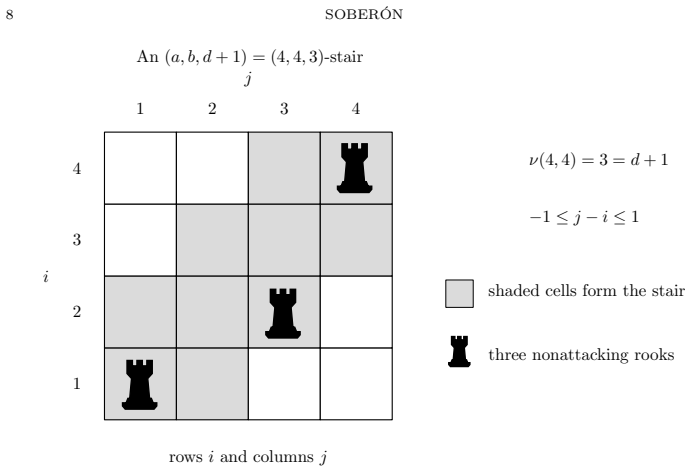
Compute the connectivity of the parallel-expansion complex K(U;D) for a specific U∈L and small fibers, for example the chessboard selection structure with d=2, |X|=|Y|=4, U a (4,4,3)-stair, and |D_w|=2 for all w; if the complex is not (d−1)-connected, the chessboard structure is not d-admissible and the chessboard Fan–Radon corollary would be false as stated.
Extended reading notes
Core claim
The paper's central claim is that d-admissible selection structures are the right general setting for a whole family of Borsuk–Ulam-type covering theorems. Theorem 3 states: if W is a finite set and Σ=(K,L) is d-admissible, then for any assignment of m points in R^{d-1} to each w∈W and any closed subsets A^w_i⊂S^d, the assumptions (i) the sphere is covered by the sets A^w_i∪(−A^w_i) for every W' whose complement is not in L, and (ii) A^u_i∩(−A^w_i)=∅ whenever {u,w}∈K, force the existence of disjoint nonempty P+,P−⊆W×[m] such that the convex hulls of the two selected point sets intersect, some x∈S^d lies in both ⋂_{P+}A^w_i and ⋂_{P−}(−A^w_i), the first-coordinate projection of P+∪P− is a fac
Load-bearing premise
The load-bearing premise is that the selection structures used in the applications—especially the matroid and chessboard ones—really are d-admissible; for those two examples the required connectivity of the parallel-expansion complexes is cited from another paper, not proved in this one.
Editorial extensions
If this is right
- The simplex specialization—W=[d+1], K the full simplex, L={W}—recovers the recent Radon-type strengthening of Fan's theorem, with P+ and P− giving intersecting convex hulls and intersecting set-intersections.
- The sparse version, with K the d-skeleton of a simplex, yields a Radon partition of exactly d+1 pairs whenever the sphere is covered by any n−d of the n labeled families.
- The matroid version, with K the d-skeleton of a matroid independence complex, yields the partition on a facet of rank d+1 whenever the covering holds for all subsets whose complement has rank at most d.
- The chessboard version, for X×Y with ν(|X|,|Y|)≥d+1, yields a placement of d+1 non-attacking rooks, a genuinely non-matroidal specialization.
- The Volovikov-type theorem, specialized to W=[n+1] and K=2^W, gives a Fan-type covering version of Volovikov's theorem whose Tverberg partitions are rainbow, and that reduces to the classical Fan theorem when r=2.
Reading between the lines
- If the cited admissibility of the chessboard and matroid structures indeed holds, the same extendability scheme should apply to other well-connected, facet-inheriting complexes—matching complexes and shifted complexes are natural next candidates for new colorful Borsuk–Ulam theorems.
- The proof's reliance on fine triangulations and a limit argument hints that the conclusion may survive for families of open or merely measurable sets with a suitable approximation, which could broaden the ham-sandwich and necklace-splitting applications beyond closed sets.
- Because the necklace theorem is restricted to r a prime power, testing the selection-structure conclusion for composite r (e.g., r=6) would reveal whether the prime-power restriction is essential or merely an artifact of Volovikov's theorem.
Editorial analysis
A structured set of objections, weighed in public.
Referee Report
Summary. The paper introduces selection structures — pairs (K,L) consisting of a simplicial complex K on a finite ground set W and an upward-closed family L of subsets — and proves two Borsuk–Ulam-type theorems governed by them. Theorem 3 (selection-structure Fan–Radon) states that, for a d-admissible selection structure, whenever closed sets A^w_i⊆S^d (w∈W, i∈[m]) satisfy a cover condition on complements of L and a disjointness condition on edges of K, one obtains disjoint nonempty P+,P−⊆W×[m] with intersecting convex hulls of associated point sets, a common intersection x∈∩_{P+}A^w_i∩∩_{P−}(−A^w_i), π1(P+∪P−) a facet of K, and π2(P+)∩π2(P−)=∅. Theorem 5 is a prime-power analogue governed by Volovikov's theorem, with r-part Tverberg partitions and q-wise label disjointness. The paper then specializes Theorem 3 to simplex, sparse, doubly-colorful, matroid, and chessboard settings (Corollaries 1–5), gives a Fan-type Volovikov corollary (Corollary 6), and derives ham-sandwich and necklace-splitting applications (Theorems 7–8). The proofs use the (d−1)-connectivity of parallel expansions K(U;D), skeleton-wise equivariant extension, Borsuk–Ulam/Volovikov, and the Sarkaria–Bárány–Onn tensoring trick.
Significance. If correct, the paper gives a unifying framework that recovers Frick and Wellner's recent Fan–Radon theorems and extends them to matroidal, sparse, and non-matroidal (chessboard) settings, together with Tverberg/Volovikov and fair-division variants. The proof of Theorem 3 is clean: it isolates the needed hypothesis (connectivity of parallel expansions), uses a standard odd-map/Borsuk–Ulam argument, and the Volovikov proof invokes the Sarkaria–Bárány–Onn tensoring correctly. The paper is also transparent about the exact sense in which it recovers the Frick–Wellner conclusion (Remark 1). The principal weakness is verification debt: the d-admissibility of the matroid and chessboard selection structures is deferred to the author's unpublished preprint [Sob26], and the arbitrary-fiber connectivity there is exactly the load-bearing input to the main theorems.
major comments (2)
- [§3, Definitions 3 and 5; Corollaries 4–5] Definition 2 requires that for every U∈L and every family D of nonempty finite fibers, the parallel expansion K(U;D) be (d−1)-connected. This is load-bearing: in the proofs of Theorem 3 (§2) and Theorem 5 (§4), the induction over skeleta extends ψ across a simplex τ because Γ(τ)=K(U(τ),D(τ)) is (d−1)- (resp. (n−1)-) connected, where the fibers D_w(τ) are arbitrary nonempty finite sets generated by the cover. For the matroid structure (Definition 3) and the chessboard structure (Definition 5), d-admissibility is asserted by citing the author's preprint [Sob26]. If [Sob26] proves connectivity only for unit fibers or for a different class of complexes, the extension step fails and Corollaries 4–5 are unsupported. Please include the admissibility proofs (or exact statements with matching hypotheses) in the manuscript, or explicitly mark Corollaries 4–5 as conditional on [Sob26]. The doubly-c
- [§2 (proof of Theorem 3); §4 (proof of Theorem 5)] The compactness step at the end of the proof of Theorem 3 ('the finiteness of W and the compactness of S^d imply by a standard argument that the same holds for some point x in the limit') is too terse for a step that delivers the conclusion x∈∩_{(w,i)∈P+}A^w_i ∩ ∩_{(w,i)∈P−}(−A^w_i). The argument should pass to a subsequence on which the pairs (P_+^α,P_−^α) are constant, note that the diameter of the containing face τ_α tends to 0 so all witnessing vertices converge to a common point x, and invoke closedness of the A^w_i. The convex-hull intersection and the facet property are preserved along the constant subsequence. The same abbreviated argument appears in the proof of Theorem 5 and should be expanded there as well.
minor comments (7)
- [Title/header] The running title contains a typo: 'GENERALIZA TIONS'. Please also check the accent formatting of the author name in the abstract.
- [§2 (proof of Theorem 3)] Notation abuses: 'we have {u,w}∈Γ(τ), which in turn implies {u,w}∈K' should be phrased in terms of the support of the face η; also the parenthetical 'D(τ) is taken as a multiset, as we want one fiber for each w∈W' is unclear, since Definition 2 states connectivity for families indexed by W while D(τ) is indexed by U(τ).
- [§3, Corollary 2] The d-admissibility of the sparse structure (K = d-skeleton of 2^[n], L = subsets of size ≥ d+1) is asserted without verification. Add a sentence: for |U|=d+1, K(U;D) is the join of d+1 nonempty fibers and hence (d−1)-connected; for |U|>d+1 it is the (d+1)-partite skeleton of the join, whose (d−1)-connectivity follows by the standard nerve/join-skeleton argument.
- [§5, Theorem 7] The final sentence 'The conclusion of Theorem 3 corresponds exactly to the desired conclusion' should be spelled out: define f(w) as the unique index i with (w,i)∈P±, and use x∈∩_{P+}A^w_i∩∩_{P−}(−A^w_i) to obtain H=∂H+∈∩_{w∈B}G_w.
- [§3, Corollary 1] In the merging argument for the diagonal case, state explicitly that after removing a duplicate same-sign label, the projection π1(P+∪P−) remains a face of K (as a subset of the original face), so the modified conclusion is legitimate.
- [§4, Corollary 6] The definition of a rainbow sequence could note that the consecutive blocks overlap in one element, matching the Bukh–Loh–Nivasch usage.
- [References] The paper depends crucially on the unpublished preprint [Sob26]; the relevant statements (with full hypotheses) should be quoted or the dependence clearly flagged in the introduction.
Circularity Check
Theorem 3 is a genuine conditional derivation; the load-bearing d-admissibility of the chessboard/matroid selection structures is deferred to the author's [Sob26], making Corollaries 3–5 conditional on that self-citation.
-
self citation load bearing
[Definition 5 / Corollary 5, Section 3]
"The existence of selection structures for chessboard complexes was also established in [Sob26]."
Corollary 5 is obtained by 'Use Theorem 3 with the selection structure from Definition 5.' The only justification that (K_st,d, L_st,d) is d-admissible is the quoted sentence referring to the author's own preprint [Sob26]. Thus the advertised chessboard Fan–Radon theorem does not follow from the present proof unless one imports d-admissibility from [Sob26]; this is load-bearing self-citation. The same pattern, in weaker form, appears in Definition 3 / Corollaries 3–4, where matroid d-admissibility is attributed to [Sob26] (with Björner's shellability cited as the underlying reason). This does not make the main conditional Theorem 3 circular, but it makes the non-simplex corollaries conditional on the author's prior work.
full rationale
The central derivation is not circular. Theorem 3 is explicitly conditional on Definition 2: the covering and disjointness hypotheses are used only to ensure U(τ)∈L and to control signs, and the d-admissibility hypothesis is exactly the (d−1)-connectivity of Γ(τ)=K(U(τ),D(τ)) used in the skeleton-induction extension of ψ. The Borsuk–Ulam theorem then provides the zero, and the convex-geometric equivalence between 0∈conv Φ(η) and the intersection of conv{x^w_i: (w,i)∈P_+} and conv{x^w_i: (w,i)∈P_-} is a standard fact, not an input. No fitted parameter is renamed as a prediction, and no conclusion of Theorem 3 is assumed in Definition 2. The simplex and sparse specializations are elementary consequences. The only issue that raises the score is that the advertised matroidal and chessboard specializations (Corollaries 3–5) rely for their d-admissibility on the author's preprint [Sob26]; Definition 5 gives no proof here and cites only that preprint. That is a support gap and a load-bearing self-citation, but it is not an internal equation-level circularity: Theorem 3's statement and proof do not presuppose those corollaries, and [Sob26] is external to this manuscript. Accordingly, the paper is substantially non-circular, with a score of 4 reflecting the deferred self-cited admissibility rather than a reduction of the main claim to its inputs.
Assumptions & free parameters
assumptions (5)
- standard math Borsuk–Ulam theorem: every continuous odd map S^d → R^d has a zero.
- standard math Volovikov's theorem (Theorem 4): every G-equivariant map G^{*(n+1)} → W_G^{⊕d}, with n=(r-1)d and G=(Z_p)^a, has a zero.
- domain assumption The complexes in Definitions 3, 4, and 5 are d-admissible (or n-admissible) selection structures.
- domain assumption Bukh–Loh–Nivasch construction: there exist m-point sequences in R^{d-1} whose only minimal Tverberg partitions into r parts correspond to rainbow subsequences.
- standard math Shellability of matroid independence complexes and chessboard complexes.
Cite this review
Pith. "Pith review of Selection-structure generalizations of the Borsuk-Ulam theorem." pith.science (2026). https://pith.science/paper/UVBK2RRN
@misc{pith2026260721410,
  author       = {Pith},
  title        = {Pith review of: Selection-structure generalizations of the Borsuk-Ulam theorem},
  year         = {2026},
  howpublished = {\url{https://pith.science/paper/UVBK2RRN}},
  note         = {Machine review of arXiv:2607.21410}
}
read the original abstract
We prove Borsuk-Ulam-type results governed by selection structures. Selection structures extend the matroidal framework for colorful theorems in discrete geometry and include non-matroidal examples such as chessboard complexes. Motivated by Frick and Wellner's Radon-type strengthening of Fan's theorem and its colorful variants, we prove selection-structure analogues whose conclusions are determined by Radon partitions. We also prove a prime-power selection-structure covering version of Volovikov's theorem, governed by Tverberg partitions. We include applications to fair partitions, including selection-structure versions of the ham sandwich and necklace splitting theorems.
Figures

Reference graph
Works this paper leans on
-
[1]
in Math.63(1987), no
[Alo87] Noga Alon,Splitting necklaces, Adv. in Math.63(1987), no. 3, 247–253. [A W86] Noga Alon and Douglas B. West,The Borsuk-Ulam theorem and bisection of neck- laces, Proc. Amer. Math. Soc.98(1986), no. 4, 623–628. MR861764 [B´ ar82] Imre B´ ar´ any,A generalization of Carath´ eodory’s theorem, Discrete Math.40(1982), no. 2-3, 141–152. MR676720 [BB79] ...
1987
-
[6]
sandwich
[ST42] Arthur H. Stone and John W. Tukey,Generalized “sandwich” theorems, Duke Math. J.9(1942), 356–359. MR7036 [Ste38] Hugo Steinhaus,A note on the ham sandwich theorem, Mathesis Polska9(1938), 26–28. [Tve66] Helge Tverberg,A generalization of Radon ’s theorem, J. London Math. Soc.41 (1966), 123–128. MR187147 [Vol96] Aleksei Yu. Volovikov,On a topologica...
1942
-
[13]
Fixed Point Theory Appl.27(2025), no
MR4770582 [FW25a] Florian Frick and Zoe Wellner,Colorful Borsuk-Ulam theorems and applications, J. Fixed Point Theory Appl.27(2025), no. 3, Paper No. 81,
2025
-
[20]
[Gal84] David Gale,Equilibrium in a discrete exchange economy with money, Internat
MR4950030 [FW25b] Florian Frick and Zoe Wellner,Covering and labeling generalizations of the Borsuk- Ulam theorem, arXiv preprint arXiv:2509.07247 (2025). [Gal84] David Gale,Equilibrium in a discrete exchange economy with money, Internat. J. Game Theory13(1984), no. 1, 61–64. [Hol16] Andreas F. Holmsen,The intersection of a matroid and an oriented matroid...
arXiv 2025
-
[411]
MR3978478 [P´ or18] Attila P´ or,Universality of vector sequences and universality of Tverberg partitions, arXiv preprint arXiv:1805.07197 (2018). [Rad21] Johann Radon,Mengen konvexer K¨ orper, die einen gemeinsamen Punkt enthalten, Mathematische Annalen83(1921), no. 1, 113–115. [RPS22] Edgardo Rold´ an-Pensado and Pablo Sober´ on,A survey of mass partiti...
arXiv 2018
-
[2003]
Lectures on topological methods in combinatorics and geometry, Writ- ten in cooperation with Anders Bj¨ orner and G¨ unter M. Ziegler. MR1988723 [McG24] Daniel McGinnis,Matroid colorings of KKM covers, arXiv preprint arXiv:2409.03026 (2024). [MS19] Fr´ ed´ eric Meunier and Francis Edward Su,Multilabeled versions of Sperner’s and Fan ’s lemmas and applicat...
arXiv 2024
Reviewed August 1, 2026 · model on record in the stance chip above.
Discussion (0). Continue with ORCID to comment.