REVIEW 2 major objections 4 minor 40 references
Strontium ${}^{1}S_{0}\!\rightarrow\!{}^{1}P_{1}$ transition frequency measurements assisted by a photonic grating chip
T0 review · 2 major / 4 minor · reviewed 2026-08-03 · deepseek-v4-flash
Pith's one-line read Two independent methods, one photonic chip, pin strontium's 461 nm transition at 650.503815(5) THz.
desk verdict First modern lab measurement of the Sr 461 nm transition frequency, with a careful covariance-based uncertainty budget; the central value is probably right, but the wavelength-meter calibration transfer to 461 nm is the one assumption to stress-test before treating the result as closed. read the letter →
The pith
A machine-rendered reading of the paper's core claim, the machinery that carries it, and where it could break.
The reading
What carries the argument
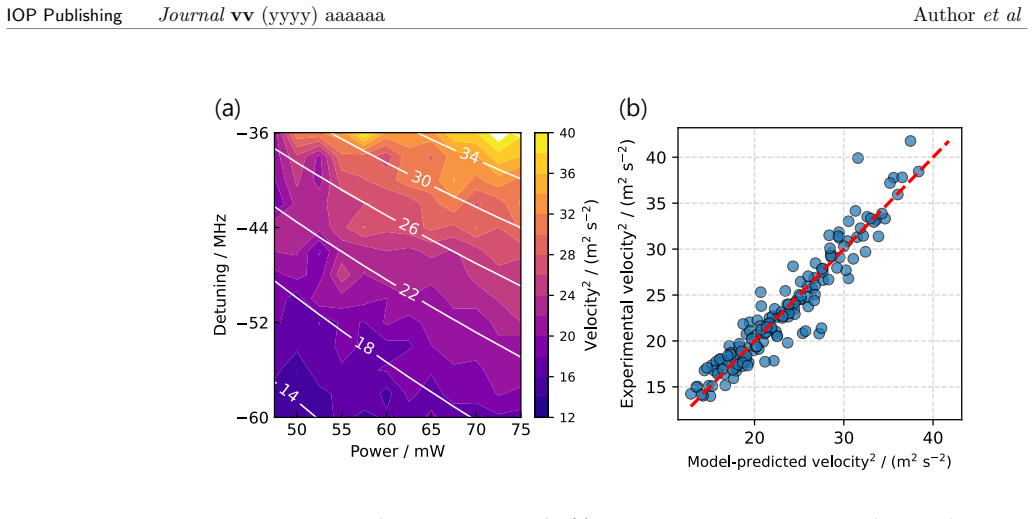
The central object is a CMOS-fabricated photonic grating chip (652 nm period, Al-coated) placed below the atoms, which simultaneously functions as the diffractive element of a 2D grating magneto-optical trap and as an end mirror whose first-order diffracted beam retro-reflects the 461 nm probe, defining a counter-propagating geometry with a 20.7° angle fixed by the grating period to better than 0.1 nm. The second load-bearing mechanism is the wavelength-meter calibration transfer model: controlled offsets at 556, 578, 759, and 778 nm map to 461 nm by the constant-fractional-error relation δf/f = constant, with a fitted transfer error of 0.048%. The data pipeline combines pixel-wise hyperfine
What would settle it
Perform a direct beat-note comparison of a 461 nm laser, frequency-doubled or comb-referenced, against the authors' stabilized probe under identical conditions; a difference larger than ~1 MHz between the comb-based reading and the wavelength-meter-derived value would disprove the fractional-error transfer model and shift the combined frequency accordingly.
Extended reading notes
Core claim
The central claim is a new value for the 88Sr 1S0 → 1P1 transition frequency: 650.503815(5) THz. It comes from four datasets — three fluorescence-spectroscopy runs in which an in-vacuum grating chip retro-reflects the probe beam (Doppler-free midpoints extracted pixel-by-pixel), and one velocity-mapping run of a 2D grating MOT — which agree and combine through a covariance-weighted mean. The value lies 345 MHz above the 1938 determination but within its expanded uncertainty, and tightens the uncertainty from 310 MHz to 5 MHz.
Load-bearing premise
The measurement rests on the assumption that the wavelength meter's error scales purely proportionally with frequency (δf/f constant) between 461 nm and the reference wavelengths; if the meter has wavelength-dependent nonlinearities that the transfer model misses, every dataset inherits the same hidden frequency shift and the quoted 5 MHz uncertainty is an underestimate.
Editorial extensions
If this is right
- Sr laser-cooling and clock experiments can adopt 650.503815(5) THz as the working reference for the 461 nm cooling/detection transition, replacing a value inherited from 1938.
- The agreement of two independent methods within error supports the chip-based architecture's suitability for compact cold-atom metrology.
- The 345 MHz offset from the 1938 center may reconcile discrepancies between observed and Ritz values in Sr spectroscopic compilations.
- The quoted 5 MHz uncertainty, dominated by the wavelength meter's 3.3 MHz absolute accuracy, sets the current practical limit of this apparatus; further gains require a comb-referenced 461 nm source.
- The measured frequency provides a fixed anchor for isotope-shift and hyperfine-structure analyses of 86Sr and 87Sr that have long been referenced to the 1938 value.
Reading between the lines
- If this value holds, previously reported Sr isotope shifts anchored to the 1938 center would shift by ~345 MHz in absolute terms, though relative isotope shifts are unaffected; absolute-energy comparisons with theory should be updated.
- The constant-δf/f wavelength-meter model could be tested directly by measuring a comb-referenced 461 nm laser against the wavelength meter, which would either validate the 5 MHz budget or reveal a missed wavelength-dependent term.
- The grating-chip retro-reflection geometry could be transferred to other species (e.g., Ca, Yb) whose cooling transitions lack a precise modern measurement, yielding similar factor-of-ten uncertainty gains on compact platforms.
- The velocity-based V1 method, being immune to absolute velocity calibration, suggests a route to frequency measurements that bypass wavelength meters entirely if the MOT velocity can be tied to a frequency comb via the cooling detuning.
Editorial analysis
A structured set of objections, weighed in public.
Referee Report
Summary. The paper reports a new absolute-frequency measurement of the 88Sr 1S0→1P1 transition at 461 nm, using two complementary methods on a grating-chip platform: spatially resolved fluorescence spectroscopy of a thermal beam with a retro-reflected probe (datasets R1–R3) and velocity mapping of a slow atomic beam from a 2D grating magneto-optical trap (dataset V1). Combining the four datasets with a covariance-based uncertainty budget and a Birge-ratio correction yields f̄88 = 650.503 815(5) THz, which improves upon the 1938 solar-spectrum value by more than a factor of 50 in uncertainty. The paper includes a detailed systematic budget with correlated terms, multi-isotope hyperfine-constrained fitting, and a wavelength-meter transfer model based on reference lasers at 556, 578, 759, and 778 nm.
Significance. If the result stands, the paper supplies a long-needed laboratory re-measurement of a foundational Sr cooling transition, replacing a nine-decade-old value with a 60-fold reduction in uncertainty. The uncertainty treatment is a genuine strength: common-mode terms are propagated through a covariance matrix, the Birge ratio is used to inflate the weighted-mean uncertainty, and the spectroscopy statistical errors are conservatively taken as pixel distributions rather than standard errors of the mean. The two methods are independent in their physics, and their consistency is encouraging. However, the absolute accuracy of the final value rests entirely on the wavelength-meter calibration chain; the validation of the fractional-error transfer model does not directly bound wavelength-dependent calibration errors at 461 nm. That gap is load-bearing for a metrology claim of this kind. The manuscript also does not provide raw data or analysis code, which limits independent verification.
major comments (2)
- [§2.3, Fig. 6] The fractional-error transfer model is the central calibration assumption. The controlled experiment applies synthetic offsets at 578 nm and observes proportional responses at 556, 578, 759, and 778 nm; this validates the response of the WLM to a change in calibration setting, but it does not establish that the residual absolute calibration error at 461 nm is exactly proportional to frequency. All four datasets share this transfer model, so a wavelength-dependent nonlinearity at 461 nm would shift every dataset by a common unknown amount, and the covariance analysis—which only includes the manufacturer's 3.3 MHz absolute-accuracy term plus 0.56–4.22 MHz transfer scatter—could underestimate the true uncertainty by more than the quoted 5 MHz. Please provide a direct 461 nm calibration against an optical frequency comb or an independently known 461 nm reference, or quantify and include a mo
- [§2.2.2, V1 model] The capture-velocity model contains an 'effective interaction length D', but D is never given a numerical value, an uncertainty, or a statement of whether it is a fitted parameter or a measured quantity. If D is free, the V1 fit has an unlisted degree of freedom; if D is fixed, its uncertainty must be propagated. The claim that the V1 result is 'scale-invariant with respect to the atomic velocity' needs to be demonstrated explicitly, for example by showing that the extracted resonance frequency is insensitive to D over a reasonable range. Although V1 carries only a 13 MHz statistical weight in the combined mean, the method is presented as an independent determination and must be fully specified.
minor comments (4)
- [§2.3] Typo: 'guarantied' should be 'guaranteed'. Also, clarify in the text or Fig. 6 that the 461 nm response is inferred, not directly measured.
- [§3.2] The statement that agreement between the two methods provides 'strong confidence in the accuracy' should be tempered: both methods share the WLM absolute-accuracy and transfer-model systematics, so the agreement validates consistency but not the absolute scale.
- [§4 / Data availability] For a metrology claim, 'data available from the corresponding author upon reasonable request' is weak. Consider depositing the processed spectra, velocity maps, and analysis code in a public repository.
- [§1] The claim of being 'the first reported laboratory re-determination since 1938' is strong. Please add a literature-search statement or soften the wording unless a comprehensive search has been performed.
Circularity Check
No significant circularity: all four frequency estimates come from fits of f0 to raw spectra/velocities; the WLM calibration is anchored to independent optical references, and self-citations are only to the grating-chip apparatus.
full rationale
The central frequency f̄88 = 650.503815(5) THz is obtained as a covariance-weighted mean of four datasets (V1, R1–R3). In the spectroscopy method (Sec. 2.1), f_88 is a free parameter of a multi-isotope pseudo-Voigt fit to CCD fluorescence spectra; in the velocity method (Sec. 2.2), f0 is a free parameter of a fit of the measured 2D-gMOT velocity map to a scattering-rate model cited from external works [31,38]. No fitted value is used as an input to the same fit. The wavelength-meter calibration (Sec. 2.3) determines a correction at 461 nm by transferring offsets measured at 556, 578, 759, and 778 nm reference lasers (Yb clock, Yb lattice, Rb two-photon, all traceable to OFC) under a fractional-error model δf/f = const. The model's validity was tested by applying synthetic calibration offsets at 578 nm and verifying the instrument's response at three other reference wavelengths; this test does not involve the Sr transition being measured and does not use the final frequency. The unvalidated extrapolation of the fractional-error model to 461 nm is a common-mode systematic-uncertainty concern, not a circular reduction. Self-references (e.g., Ref. [19]) are used for grating-chip fabrication and 2D-gMOT apparatus description, not to justify the frequency value; the velocity scaling is attributed to external Refs. [31,38]. No equation in the derivation chain is equivalent to its inputs by construction, and no prediction is obtained by renaming a fitted parameter.
Assumptions & free parameters
free parameters (1)
- Effective interaction length D in the V1 velocity model
assumptions (3)
- domain assumption Wavelength-meter frequency offsets scale as a common fractional error across wavelengths
- domain assumption The most probable velocity of atoms exiting a 2D gMOT scales as the square root of the photon scattering rate
- domain assumption Literature values for 87Sr hyperfine offsets and the 86Sr isotope shift are correct enough not to bias the fitted 88Sr center
Cite this review
Pith. "Pith review of Strontium ${}^{1}S_{0}\!\rightarrow\!{}^{1}P_{1}$ transition frequency measurements assisted by a photonic grating chip." pith.science (2026). https://pith.science/paper/DYRZFEYN
@misc{pith2026260729056,
  author       = {Pith},
  title        = {Pith review of: Strontium $^1S_0\!\rightarrow\!^1P_1$ transition frequency measurements assisted by a photonic grating chip},
  year         = {2026},
  howpublished = {\url{https://pith.science/paper/DYRZFEYN}},
  note         = {Machine review of arXiv:2607.29056}
}
abstract
We measure the absolute frequency of the ${}^{1}S_{0}\!\rightarrow\!{}^{1}P_{1}$ transition in strontium using two methods: fluorescence spectroscopy of a thermal atomic beam source from a compact low-power oven and velocity measurements of a slow atomic beam from a two-dimensional grating magneto-optical trap (2D gMOT). The measurements for both methods are performed in the same ultra-high vacuum chamber containing a diffraction grating chip which is placed below the strontium atoms that are being interrogated. The first method uses a probe laser beam incident on the grating chip such that the grating acts as an end mirror, with the first-order diffracted beam providing a retro-reflected probe beam. The counter-propagating laser beams traverse an atomic beam emitted from an oven, enabling spatially resolved fluorescence spectroscopy through CCD imaging and hyperfine-constrained multi-isotope fitting. The second method relies on a large profile cooling laser beam normally incident onto the grating chip which laser cools strontium atoms for a slow atomic beam source. The velocity of the atoms exiting the 2D gMOT is measured as a function of the laser detuning and intensity from which the resonance frequency can be estimated. The two methods are consistent within their quoted uncertainties. Using three datasets based on retro-beam spectroscopy measurements, and one dataset using slow atom beam velocity measurements, we determine the ${}^{1}S_{0}\!\rightarrow\!{}^{1}P_{1}$ transition frequency to be $650.503\,815(5)~\mathrm{THz}$. Our result provides a re-evaluation of this $461$ nm transition demonstrated on a compact laser cooling apparatus based on a diffraction grating platform.
Figures


Figures from the paper (6 more)



Reference graph
Works this paper leans on
-
[1]
Lett.28468
Courtillot I, Quessada A, Kovacich R P, Zondy J J, Landragin A, Clairon A and Lemonde P 2003Opt. Lett.28468
-
[2]
Xu X, Loftus T H, Hall J L, Gallagher A and Ye J 2003J. Opt. Soc. Am. B20968–976
-
[3]
Courtillot I, Quessada-Vial A, Brusch A, Kolker D, Rovera G D and Lemonde P 2005The European Physical Journal D - Atomic, Molecular, Optical and Plasma Physics33161–171 URLhttps://doi.org/10.1140/epjd/e2005-00058-0
-
[4]
Acta A63981–986
Poli N, Ferrari G, Prevedelli M, Sorrentino F, Drullinger R E and Tino G M 2006Spectrochim. Acta A63981–986
-
[5]
Nagel S B, Mickelson P G, Saenz A D, Martinez Y N, Chen Y C, Killian T C, Pellegrini P and Cˆ ot´ e R 2005Phys. Rev. Lett.94083004
-
[6]
Acta B551679–1692
Bushaw B A and N¨ ortersh¨ auser W 2000Spectrochim. Acta B551679–1692
-
[7]
Miyake H, Pisenti N C, Elgee P K, Sitaram A and Campbell G K 2019Phys. Rev. Res.1 033113
-
[8]
Ludlow A D, Boyd M M, Ye J, Peik E and Schmidt P O 2015Rev. Mod. Phys.87637–701
Show all 40 references
-
[9]
Hobson R, Bowden W, Vianello A, Silva A, Baynham C F A, Margolis H S, Baird P E G, Gill P and Hill I R 2020Metrologia57065026
-
[10]
Commun.42109
Le Targat R, Lorini L, Le Coq Y, Zawada M, Gu´ ena J, Abgrall M, Gurov M, Rosenbusch P, Rovera D G, Nag´ orny B, Gartman R, Westergaard P G, Tobar M E, Lours M, Santarelli G, Clairon A, Bize S, Laurent P, Lemonde P and Lodewyck J 2013Nat. Commun.42109
-
[11]
Zheng X, Dolde J, Lochab V, Merriman B N, Li H and Kolkowitz S 2022Nature602425–430
-
[12]
Photon.13714–719
Oelker E, Hutson R B, Kennedy C J, Sonderhouse L, Bothwell T, Goban A, Kedar D, Sanner C, Robinson J M, Marti G E, Matei D G, Legero T, Giunta M, Holzwarth R, Riehle F, Sterr U and Ye J 2019Nat. Photon.13714–719
-
[13]
Safronova M S, Porsev S G, Safronova U I, Kozlov M G and Clark C W 2013Phys. Rev. A 87(1) 012509
-
[14]
Kestler G, Ton K, Filin D, Safronova M S and Barreiro J T 2022Phys. Rev. A105(1) 012821
-
[15]
Ma X, Das S, Wilkowski D and Kwong C C 2025Phys. Rev. Appl.24(6) 064017
-
[16]
Kestler G, Sedlik R, Trapp E, Safronova M and Barreiro J 2026Phys. Rev. Appl.25(1) 014053
-
[17]
Kwon M, Holman A, Gan Q, Liu C W, Molinelli M, Stevenson I and Will S 2023Rev. Sci. Instrum.94013202
-
[18]
Nosske I, Couturier L, Hu F, Tan C, Qiao C, Blume J, Jiang Y H, Chen P and Weidem¨ uller M 2017Phys. Rev. A96(5) 053415 URL https://link.aps.org/doi/10.1103/PhysRevA.96.053415
-
[19]
Lee H G, Park Y H, Park C Y, Seo M H, Hong H G, Lee S B, Kwon T Y, Kang S, Seo S, Park S E, Na Y, Kang I S and Lee J H 2025Phys. Rev. Appl.24044065
-
[20]
Lett.48383–386
Pate J M, Kitching J and Hummon M T 2023Opt. Lett.48383–386
-
[21]
Sitaram A, Elgee P K, Campbell G K, Klimov N N, Eckel S and Barker D S 2020Rev. Sci. Instrum.91103202
-
[22]
Nshii C C, Vangeleyn M, Cotter J P, Griffin P F, Hinds E A, Ironside C N, See P, Sinclair A G, Riis E and Arnold A S 2013Nature Nanotechnology8321–324 URL https://doi.org/10.1038/nnano.2013.47
2013 doi
-
[23]
Imhof E, Stuhl B K, Kasch B, Kroese B, Olson S E and Squires M B 2017Phys. Rev. A96(3) 033636 URLhttps://link.aps.org/doi/10.1103/PhysRevA.96.033636
-
[24]
Bondza S, Lisdat C, Kroker S and Leopold T 2022Phys. Rev. Appl.17044002 16 IOP PublishingJournalvv(yyyy) aaaaaa Authoret al
-
[25]
Heinz A, Park A J, ˇSanti´ c N, Trautmann J, Porsev S G, Safronova M S, Bloch I and Blatt S 2020Phys. Rev. Lett.124203201
-
[26]
Sullivan F J 1938University of Pittsburgh Bulletin351–8
-
[27]
5.12), [Online]
Kramida A, Yu Ralchenko, Reader J and and NIST ASD Team 2024 NIST Atomic Spectra Database (ver. 5.12), [Online]. Available:https://physics.nist.gov/asd[2026, June 28]. National Institute of Standards and Technology, Gaithersburg, MD
2024
-
[28]
Sansonetti J E and Nave G 2010J. Phys. Chem. Ref. Data39033103
-
[29]
Commun.143080
Isichenko A, Chauhan N, Bose D, Wang J, Kunz P D and Blumenthal D J 2023Nat. Commun.143080
-
[30]
Sens.18100288
Hummon M, Bopp D, Kruse J, Yulaev A, Westly D, Srinivasan K, Aksyuk V and Kitching J 2021Meas. Sens.18100288
-
[31]
Dieckmann K, Spreeuw R J C, Weidem¨ uller M and Walraven J T M 1998Phys. Rev. A58 3891–3895
-
[32]
Lauprˆ etre T, Groult L, Achi B, Petersen M, Kersal´ e Y, Delehaye M and Lacroˆ ute C 2020OSA Continuum350–57
-
[33]
Golub G H and Pereyra V 1973SIAM Journal on Numerical Analysis10413–432
-
[34]
O’Leary D P and Rust B W 2013Computational Optimization and Applications54579–593
-
[35]
thesis Universit´ e Pierre et Marie Curie - Paris VI
Courtillot I 2003Premi` ere observation de la transition fortement interdite 1S0-3P0 du strontium, pour une horloge optique ` a atomes pi´ eg´ esPh.D. thesis Universit´ e Pierre et Marie Curie - Paris VI
-
[36]
thesis University of Innsbruck
Stellmer S 2013Quantum degenerate gases of strontiumPh.D. thesis University of Innsbruck
-
[37]
thesis University of Maryland, College Park
Elgee P K 2022Grating magneto-optical traps for strontiumPh.D. thesis University of Maryland, College Park
-
[38]
Lunden W, Du L, Cantara M, Barral P, Jamison A O and Ketterle W 2020Phys. Rev. A101 063403
-
[39]
Couturier L, Nosske I, Hu F, Tan C, Qiao C, Jiang Y H, Chen P and Weidem¨ uller M 2018 Rev. Sci. Instrum.89043103
2018
-
[40]
Kim H, Heo M S, Park C Y, Yu D H and Lee W K 2021Metrologia58055007 17
Reviewed August 3, 2026 · model on record in the stance chip above.
Discussion (0). Continue with ORCID to comment.