A Practical Framework for Sensitivity Analysis in Externally Controlled Trials: An Illustration with a Bayesian Hybrid Evidence Synthesis Case Study
Pith reviewed 2026-06-30 11:14 UTC · model grok-4.3
The pith
A three-pillar framework organizes sensitivity analyses for borrowing in externally controlled trials around appropriateness, value, and robustness.
A machine-rendered reading of the paper's core claim, the machinery that carries it, and where it could break.
Core claim
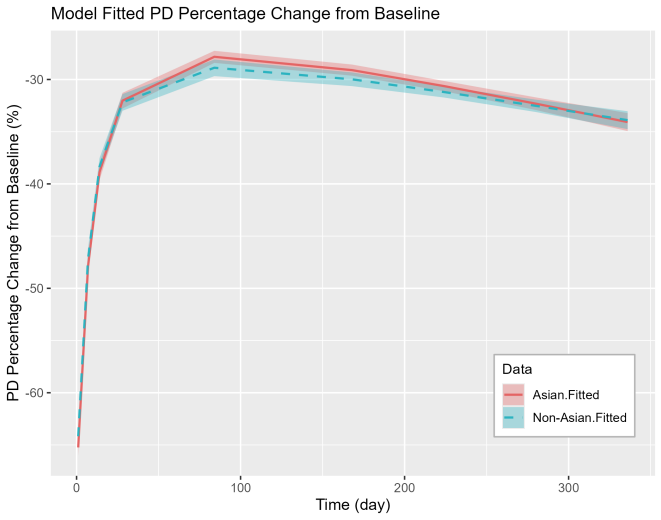
The authors introduce a three-pillar framework for sensitivity analysis in externally controlled trials that addresses three questions: was the borrowing appropriate, did it contribute meaningful value, and are the conclusions robust to perturbation. This framework consists of eight modular analyses including heterogeneity diagnostics, source influence, no-borrowing references, effective sample size, prior sensitivity, tipping points, alternative borrowing methods, and structural model sensitivity. It is illustrated through a case study with simulated data that mimics a Bayesian hybrid evidence synthesis from an ethnic-bridging regulatory submission.
What carries the argument
The three-pillar framework with its eight modular analyses for evaluating data borrowing in externally controlled trials.
If this is right
- The framework applies equally to Bayesian and frequentist borrowing approaches.
- It covers both patient-level data and hybrid aggregate-plus-individual settings.
- Regulators and sponsors can use the eight analyses as a standard set to satisfy sensitivity requirements.
- The worked example serves as a reproducible template for future ECT submissions.
Where Pith is reading between the lines
- Adopting this framework across submissions could lead to more consistent regulatory reviews of borrowing assumptions.
- The modular design allows easy addition of context-specific checks if the eight prove insufficient in practice.
- Similar structures might be developed for sensitivity analysis in other areas of clinical trial design that involve external data.
Load-bearing premise
The eight modular analyses are comprehensive enough to address all regulatory concerns about borrowing assumptions in any ECT design without needing extra checks.
What would settle it
A regulatory review of an ECT submission that used the framework but still required additional sensitivity analyses not covered by the eight modules would indicate the framework is incomplete.
Figures
read the original abstract
Externally controlled trials (ECTs), including single-arm studies augmented with historical data and hybrid randomized designs with partial external augmentation, are increasingly used when concurrent randomized controls are infeasible or unethical. Regulatory guidance from the FDA, EMA, and NMPA calls for sensitivity analysis of borrowing assumptions, yet provides no structured template for which analyses to run or how to interpret them together. We propose a three-pillar framework organized around three questions: was the borrowing appropriate, did it contribute meaningful value, and are the conclusions robust to perturbation? The framework comprises eight modular analyses covering heterogeneity diagnostics, source influence, no-borrowing references, effective sample size, prior sensitivity, tipping points, alternative borrowing methods, and structural model sensitivity. It is method-agnostic and applies to both Bayesian and frequentist borrowing in patient-level or hybrid settings. We illustrate the framework using simulated data that mimic a hybrid evidence synthesis from a historical approval of ethnic-bridging submission under a real-world-evidence regulatory pathway. That original analysis combined individual patient data from a global pivotal study and a regional real-world study with aggregate data from two published cohorts, fitted via a Bayesian longitudinal model with ethnic-difference parameters. The worked example provides a reproducible template for sensitivity analysis in ECT submissions.
Editorial analysis
A structured set of objections, weighed in public.
Referee Report
Summary. The manuscript proposes a three-pillar framework for sensitivity analysis in externally controlled trials (ECTs), organized around the questions of whether borrowing was appropriate, whether it added meaningful value, and whether conclusions are robust to perturbation. The framework consists of eight modular analyses (heterogeneity diagnostics, source influence, no-borrowing references, effective sample size, prior sensitivity, tipping points, alternative borrowing methods, and structural model sensitivity) and is presented as method-agnostic for Bayesian or frequentist borrowing. It is illustrated with simulated data mimicking a Bayesian longitudinal hybrid evidence synthesis from a historical ethnic-bridging regulatory submission.
Significance. If the framework's comprehensiveness holds, it would supply a structured, reproducible template that addresses a documented gap in regulatory guidance from FDA, EMA, and NMPA, which call for sensitivity analyses without specifying which analyses or how to integrate them. The method-agnostic design and provision of a worked example as a template are explicit strengths that could aid submissions.
major comments (2)
- [Abstract] Abstract, paragraph 2: The claim that the eight modular analyses 'comprehensively address' the three pillars and meet regulatory needs 'without requiring additional context-specific checks' is load-bearing for the central proposal but rests on a single simulated illustration of one Bayesian longitudinal hybrid design; no demonstration or discussion is supplied for frequentist borrowing, time-to-event endpoints with informative censoring, or transportability issues from unmeasured confounding between external sources.
- [Abstract] Abstract: The manuscript supplies no comparison of the proposed eight-module framework against existing sensitivity-analysis methods in the ECT or dynamic borrowing literature, leaving the practical advantage of this specific modular structure unquantified relative to prior checklists or diagnostic approaches.
Simulated Author's Rebuttal
We thank the referee for their constructive comments, which highlight important considerations for the scope and positioning of our proposed framework. We respond to each major comment below and commit to revisions that address the concerns while preserving the manuscript's core contribution.
read point-by-point responses
-
Referee: [Abstract] Abstract, paragraph 2: The claim that the eight modular analyses 'comprehensively address' the three pillars and meet regulatory needs 'without requiring additional context-specific checks' is load-bearing for the central proposal but rests on a single simulated illustration of one Bayesian longitudinal hybrid design; no demonstration or discussion is supplied for frequentist borrowing, time-to-event endpoints with informative censoring, or transportability issues from unmeasured confounding between external sources.
Authors: We acknowledge the validity of this observation: the illustration is confined to one Bayesian longitudinal hybrid example, and the abstract claim regarding comprehensiveness without additional checks is not supported by demonstrations across other settings. The framework is constructed to be modular and method-agnostic in principle, but we agree the current evidence base is narrow. We will revise the abstract to qualify or remove the phrase 'without requiring additional context-specific checks,' and we will add a dedicated subsection in the Discussion that explicitly maps how each of the eight analyses can be adapted for frequentist borrowing, time-to-event endpoints with censoring, and transportability concerns arising from unmeasured confounding. This provides practical guidance without expanding the simulation study. revision: yes
-
Referee: [Abstract] Abstract: The manuscript supplies no comparison of the proposed eight-module framework against existing sensitivity-analysis methods in the ECT or dynamic borrowing literature, leaving the practical advantage of this specific modular structure unquantified relative to prior checklists or diagnostic approaches.
Authors: The manuscript's primary aim is to supply an integrated template organized around three regulatory-relevant pillars, rather than to perform a head-to-head quantitative comparison. Existing literature tends to present isolated diagnostics (e.g., effective sample size or tipping-point methods) without a unifying structure. Nevertheless, to better situate the contribution, we will insert a concise review paragraph in the Introduction that references key prior approaches in the dynamic borrowing and ECT sensitivity literature and explains how the three-pillar modular organization differs from and extends those methods. A full comparative simulation study remains outside the scope of this work. revision: partial
Circularity Check
No circularity: conceptual framework proposal with no mathematical derivation or self-referential reduction
full rationale
The paper advances a three-pillar framework of eight modular analyses for sensitivity analysis in externally controlled trials. This is a methodological recommendation and organizational template rather than a derivation chain in which any prediction, uniqueness result, or fitted quantity is obtained from inputs that are themselves defined by the framework. The abstract and description contain no equations, no parameter fitting presented as prediction, and no load-bearing self-citations that reduce the central claim to prior author work. The assertion that the eight analyses comprehensively address the three questions is an explicit modeling choice about scope, not a circular reduction of one quantity to another by construction. The single worked example is an illustration using simulated data, not a source of fitted inputs that are then re-labeled as independent predictions.
Axiom & Free-Parameter Ledger
Reference graph
Works this paper leans on
-
[1]
2021 , howpublished =
Considerations for the Use of Real-World Data and Real-World Evidence to Support Regulatory Decision-Making for Drug and Biological Products , author =. 2021 , howpublished =
2021
-
[2]
2010 , howpublished =
Bayesian Statistics in Medical Device Clinical Trials , author =. 2010 , howpublished =
2010
-
[3]
2024 , note =
Guidance on Adaptive Designs and Bayesian Methods for Clinical Trials of Drugs and Biologics , author =. 2024 , note =
2024
-
[4]
2000 , howpublished =
2000
-
[5]
2020 , howpublished =
Draft Guideline on the Use of Real-World Data for Medical Device Clinical Evaluation , author =. 2020 , howpublished =
2020
-
[6]
2026 , howpublished =
Data Quality Framework for. 2026 , howpublished =
2026
-
[7]
and Chen, M.-H
Ibrahim, J.G. and Chen, M.-H. and Gwon, Y. and Chen, F. , title =. Statistics in Medicine , year =
-
[8]
and Gsteiger, S
Schmidli, H. and Gsteiger, S. and Roychoudhury, S. and O'Hagan, A. and Spiegelhalter, D. and Neuenschwander, B. , title =. Biometrics , year =
-
[9]
and Carlin, B.P
Hobbs, B.P. and Carlin, B.P. and Mandrekar, S.J. and Sargent, D.J. , title =. Biometrics , year =
-
[10]
and Stukalov, A
Plummer, M. and Stukalov, A. and Denwood, M. , title =. 2019 , note =
2019
-
[11]
International Ophthalmology , year =
Hu, YW and others , title =. International Ophthalmology , year =
-
[12]
Advances in Therapy , year =
Sng, CA and others , title =. Advances in Therapy , year =
-
[13]
2016 , note =
Poisot, T and Sachse, R and Ashander, J and Galili, T , title =. 2016 , note =
2016
-
[14]
and others , title =
Li, J. and others , title =. Cost Effectiveness and Resource Allocation , year =
-
[15]
and Meng, X.-L
Gelman, A. and Meng, X.-L. and Stern, H. , title =. Statistica Sinica , year =
-
[16]
and Thall, P.F
Morita, S. and Thall, P.F. and M\". Determining the effective sample size of a parametric prior , journal =. 2008 , volume =
2008
-
[17]
and Rubin, D.B
Liublinska, V. and Rubin, D.B. , title =. Statistics in Medicine , year =
-
[18]
and Hogan, J.W
Daniels, M.J. and Hogan, J.W. , title =
-
[19]
, title =
Watanabe, S. , title =. Journal of Machine Learning Research , year =
-
[20]
and Hwang, J
Gelman, A. and Hwang, J. and Vehtari, A. , title =. Statistics and Computing , year =
-
[21]
and Rubin, D.B
Gelman, A. and Rubin, D.B. , title =. Statistical Science , year =
-
[22]
and Sheiner, L.B
Holford, N.H.G. and Sheiner, L.B. , title =. Clinical Pharmacokinetics , year =
-
[23]
Considerations for the Design and Conduct of Externally Controlled Trials for Drug and Biological Products , year =
-
[24]
2024 , howpublished =
2024
-
[25]
General Clinical Pharmacology Considerations for Pediatric Studies of Drugs, Including Biological Products , year =
-
[26]
Reflection Paper on the Use of Extrapolation in the Development of Medicines for Paediatrics , year =
-
[27]
1998 , howpublished =
1998
-
[28]
2017 , howpublished =
2017
-
[29]
Technical Guidelines for Real-World Data Used to Generate Real-World Evidence (Trial) , year =
-
[30]
Using big data to emulate a target trial when a randomized trial is not available , journal =
Hern. Using big data to emulate a target trial when a randomized trial is not available , journal =. 2016 , volume =
2016
-
[31]
Target Trial Emulation: A Framework for Causal Inference From Observational Data , journal =
Hern. Target Trial Emulation: A Framework for Causal Inference From Observational Data , journal =. 2022 , volume =
2022
-
[32]
and Robertson, S.E
Dahabreh, I.J. and Robertson, S.E. and Steingrimsson, J.A. and Stuart, E.A. and Hern. Extending inferences from a randomized trial to a new target population , journal =. 2020 , volume =
2020
-
[33]
and Bareinboim, E
Pearl, J. and Bareinboim, E. , title =. Statistical Science , year =
-
[34]
Pharmaceutical Statistics , year =
Lin, Junjing and Gamalo-Siebers, Margaret and Tiwari, Ram , title =. Pharmaceutical Statistics , year =
-
[35]
and Miao, W
Li, X. and Miao, W. and Lu, F. and Zhou, X.-H. , title =. Biometrics , year =
-
[36]
and Pang, H
Valancius, M. and Pang, H. and Zhu, J. and Cole, S.R. and Jonsson Funk, M. and Kosorok, M.R. , title =. Biometrics , year =
-
[37]
and Berry, S
Viele, K. and Berry, S. and Neuenschwander, B. and Amzal, B. and Chen, F. and Enas, N. and Hobbs, B. and Ibrahim, J.G. and Kinnersley, N. and Lindborg, S. and Micallef, S. and Roychoudhury, S. and Thompson, L. , title =. Pharmaceutical Statistics , year =
-
[38]
and Liu, J
Yuan, J. and Liu, J. and Zhu, R. and Lu, Y. and Palm, U. , title =. Journal of Biopharmaceutical Statistics , year =
-
[39]
and Yang, S
Gao, C. and Yang, S. and Shan, M. and Ye, W. and Lipkovich, I. and Faries, D. , title =. Biometrika , year =
-
[40]
and Yang, S
Zhu, K. and Yang, S. and Wang, X. , title =. Forty-second International Conference on Machine Learning , series =. 2025 , url =
2025
-
[41]
and Karlsson, M.O
Ravva, P. and Karlsson, M.O. and French, J.L. , title =. Statistics in Medicine , year =
-
[42]
and Turek, D
de Valpine, P. and Turek, D. and Paciorek, C.J. and Anderson-Bergman, C. and Lang, D.T. and Bodik, R. , title =. Journal of Computational and Graphical Statistics , year =
discussion (0)
Sign in with ORCID, Apple, or X to comment. Anyone can read and Pith papers without signing in.