REVIEW 4 major objections 5 minor 1 cited by
A Multi-tiered Solution for Personalized Baggage Item Recommendations using FastText and Association Rule Mining
T0 review · 4 major / 5 minor · reviewed 2026-08-10 · deepseek-v4-flash
Pith's one-line read The paper claims that a four-phase system combining FastText embeddings and association-rule mining can turn airline baggage rules and user search histories into personalized packing recommendations that respect carry-on, check-in, and…
desk verdict A competent engineering write-up of a FastText-plus-Apriori baggage recommender, but the effectiveness claims rest on evaluation metrics computed over programmatically generated synthetic transactions, so the research contribution as argued does not hold up. read the letter →
The pith
A machine-rendered reading of the paper's core claim, the machinery that carries it, and where it could break.
The reading
What carries the argument
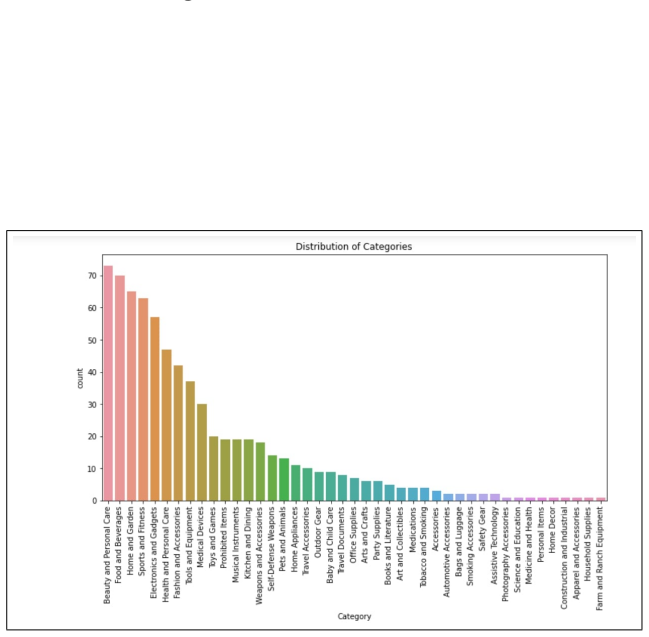
The machinery is a four-phase pipeline. Phase I loads pre-trained FastText word embeddings, tokenizes user input, and computes cosine similarity against item embeddings to find top-N similar items and assign one of 43 categories. Phase II adds a content-based recommender that records user searches with timestamps into a history file. Phase III converts that history into one-hot encoded transactions, applies the Apriori algorithm to find frequent itemsets, and generates association rules with confidence and lift thresholds. Phase IV feeds a user query through both the FastText similarity scorer and the association rules to return recommended items. The load-bearing pieces are the mean-embedding similarity calculation, the Apriori frequent-itemset mining, and the mapping from item combinations to synthetic user IDs used to evaluate the rules.
What would settle it
Take a real search log, mine association rules on the first half, and evaluate Phase-IV recommendations on the second half against a popularity baseline; if the rule-based recommendations do not beat the baseline in hit rate or relevant rank, the claimed effectiveness is not supported.
Extended reading notes
Core claim
The central claim is that a baggage item recommender can be built without any existing baggage dataset or user preference data: web-scraping airline guidelines supplies the item vocabulary, pre-trained FastText embeddings supply semantic similarity between user inputs and item names, and Apriori association rules mined from user search histories supply item complementarity. The paper's Phase-IV combines these signals so that, when a traveler enters an item, the system returns the item's carry-on, check-in, or prohibited status, its category, top similar items, and items that co-occur in past searches. The paper argues that the resulting suggestions are relevant and effective, as evidenced by association-rule metrics on 109,878 user transaction IDs and by a comparative run on a standard market-basket dataset.
Load-bearing premise
The load-bearing premise is that the synthetic user transaction IDs, formed by enumerating item combinations, stand in for real traveler behavior, so the association rules and metrics reveal genuine preferences rather than artifacts of the combination generator.
Editorial extensions
If this is right
- A traveler searching for an item can immediately see whether it belongs in carry-on, check-in, or the prohibited list, as well as similar items from the same category.
- The system keeps learning: every new search updates the user history file, so future recommendations reflect accumulated item associations.
- Items not present in the airline vocabulary can still be matched by embedding similarity, since FastText works on multi-word and unseen item names.
- The same pipeline transfers to retail market-basket data, where it produces association rules with comparable metrics.
- With a longer search history, the mined rules become denser, and the paper's Figure 11 indicates that the model gives better results as user history grows.
Reading between the lines
- A stricter test of the personalization claim would split a real user search log into a rule-mining set and a held-out evaluation set, and compare Phase-IV recommendations against a popularity baseline; the current evaluation uses the same file for both mining and scoring, so the reported metrics are partly an artifact of the generation procedure.
- The synthetic transaction IDs built from all item combinations in Table 11 mean the 'user' in this paper is a set enumeration, not a person; before deployment, one would want to confirm that real travelers actually search for and pack items in combinations the way the one-hot encoded transactions assume.
- Because FastText similarity can match an out-of-vocabulary query to known items, the same embedding layer could be repurposed as a live updater that checks new airline restriction text against the existing vocabulary.
- The reported comparison to market-basket data suggests the method is domain-agnostic; a testable extension is to apply the same two-signal pipeline to hotel amenity or tour packing contexts and see whether the rule metrics remain meaningful.
Signed reviews
Editorial analysis
A structured set of objections, weighed in public.
Referee Report
Summary. The paper proposes a four-phase baggage item recommendation system (ATRS) for air travelers, combining FastText word embeddings with Association Rule Mining. Phase-I computes cosine similarities over pre-trained FastText embeddings; Phase-II adds a user search history in the form of timestamped item interactions; Phase-III converts that history into transactions and applies the Apriori algorithm; Phase-IV merges the FastText similarity scores with the mined association rules to produce recommendations. The dataset is a scraped list of 712 baggage items with carry-on, check-in, prohibited, and category labels. The evaluation reports support, confidence, lift, leverage, and conviction on a synthetic user_searches.csv file built from arbitrary item combinations, and compares these values with a market-basket dataset. The abstract and conclusion claim that the system ensures efficient luggage space utilization, weight-limit compliance, and an enhanced travel experience, and that the results demonstrate effective, personalized recommendations.
Significance. If validated, the system would address a relatively unexplored niche: concrete, item-level packing recommendations for air travelers. The paper's strengths are its clearly described four-phase architecture, the reproducible algorithmic presentation (Algorithms 1-4), and a potentially useful scraped dataset of airline baggage rules. However, the central claim of effectiveness is not established. The evaluation metrics are computed on the same synthetic transactions used to learn the association rules, and Section 7.5 explicitly concedes that no user preference data exist and that transaction IDs are treated as users. The reported all-1.0 confidence values are consequences of the transaction-generation procedure, not evidence of recommendation quality. No held-out evaluation, user study, baseline comparison, or statistical assessment is provided. The paper is best read as a system proposal with an illustrative demonstration, not as a validated recommendation system.
major comments (4)
- [Section 7.4, Table 10; Section 7.5] The effectiveness claims in the abstract and Section 7.6 are not supported by the reported evaluation. Section 7.5 states that no user preference data are available and that transaction IDs are treated as users, with item combinations generated from singletons up to combinations of all 712 items (Table 11). Algorithm 4 and Table 10 then report support, confidence, lift, and leverage computed on this same synthetic user_searches.csv. These metrics are in-sample statistics of the transaction-generation process, not measurements of recommendation quality, so they cannot establish that the system provides relevant, personalized suggestions. A meaningful evaluation would require held-out transactions, real user judgments, or at least a baseline recommender.
- [Section 5.1, Challenge IV; Section 7.5] The personalization constraint stated in Section 3.3 is not demonstrated. Challenge IV describes populating user search history only for items not already in the dataset, and Section 7.5 explains that UIDs are generated from arbitrary item combinations. The system therefore has no actual user profile or preference signal; the recommendations reduce to content similarity plus association rules on synthetic transactions. The paper's own limitation statement in Section 7.5 acknowledges this, but the conclusion still claims personalized recommendations.
- [Algorithm 4; Table 10] The reported association-metric values are an artifact of threshold settings and data construction. With min_support=0.1 and min_confidence=0.5 applied to transactions formed by enumerating all item combinations, rules such as {Piano, Coffee} have support 0.5, confidence 1.0, and lift 2.0 because every combination containing the antecedent also contains the consequent by construction. These values do not reflect meaningful co-occurrence in traveler behavior and are not evidence that the rules generalize.
- [Section 7.4, Table 12, Figure 11] The comparison with market-basket data does not validate the model. Table 12 reports support, confidence, and lift for milk/ground beef rules from store_data.csv, but comparing these in-sample metrics with Table 10 across different datasets cannot establish which recommender is better. No error bars, statistical tests, or held-out evaluation are provided, and Figure 11 is described only by color rather than by quantitative axes, making the comparative claim unverifiable.
minor comments (5)
- [Section 6.6 and Section 7.4] The paragraph beginning 'The algorithm utilizes Python libraries and techniques to process user search data' is repeated nearly verbatim in both sections; one copy should be removed.
- [Tables 10 and 12] Table 12 lists UID 1 twice, and Table 10 contains truncated itemset entries ('pi...') and an ellipsis row; the tables should be cleaned so that every row is legible and non-redundant.
- [Table 1] Several related-work entries do not match their cited sources; for example, the 'Brown et al. (2021)' row describes a hybrid expert-system and LLM approach but cites an LLM training-data extraction paper, and other entries appear to be mismatched. The authors should verify every related-work citation.
- [Throughout] The manuscript contains many typographical and formatting errors, including 'Thispaperintroduces' in the abstract, 'convictions' for 'conviction' in Section 7.6, and inconsistently rendered equations in Section 3.3; a careful copy-edit is needed.
- [Section 8.2] The privacy and anonymization measures are described as properties of the data-handling model, but the experiments use synthetic UIDs rather than real user data; this section should be framed as design commitments rather than implemented, evaluated protections.
Circularity Check
The system's effectiveness is evaluated with support/confidence/lift computed on the same synthetic user_searches.csv from which the association rules were mined; high metric values are in-sample artifacts of the generation process.
-
fitted input called prediction
[Section 7.4 'Phase-IV Results analysis', Algorithm 4, and Section 6.7 'Evaluation of the Recommendation Model']
"df ← Read CSV file (csv_file); ... Apply Apriori to transactions_df with min_support; ... association_rules ← Generate rules from frequent_itemsets with min_confidence; ... The evaluation metrics are calculated, visualized using a bar plot, and printed to assess the quality and effectiveness of the association rules in generating relevant recommendations for users."
Algorithm 4 loads user_searches.csv, mines frequent itemsets with min_support=0.1 and generates rules with min_confidence=0.5. The evaluation metrics (support, confidence, lift, leverage; Table 10 and Figure 11) are then computed on the same user_searches.csv file. Because every reported rule already satisfies the thresholds used to generate it, high confidence/lift values (e.g., confidence 1.0, lift 2.0 for {Piano,Coffee}) are guaranteed in-sample summaries of the training transactions, not measurements of recommendation quality against real traveler preferences or held-out data. The 'effectiveness' claim therefore reduces to properties of the input file by construction.
-
self definitional
[Section 7.5 'Why ATRS is Required' and Table 11]
"In our scenario, we do not have access to user preference data. Instead, we treat transaction IDs as representing users. ... The various item combinations, ranging from a single item up to a combination of 712 items in our approach, represent different user scenarios."
Table 11 defines each user ID as an item combination, so 'user search history' is literally the enumerated transactions user_searches.csv. Any 'personalized' recommendation made from rules mined on those transactions is self-referential: the user is the item set, and the association rules describe the same arbitrary combinations used to define the user. The claim that the system handles 'diverse user preferences' is therefore a restatement of the combination-generation process, not evidence derived from actual traveler behavior.
full rationale
The paper's pipeline (FastText similarity in Phase-I/II, Apriori in Phase-III/IV) is not circular in its internal computation: embeddings and association-rule mining are standard algorithms applied as described. However, the central effectiveness claim is evaluated entirely in-sample on the synthetic user_searches.csv that also produced the rules. Section 7.5 explicitly states there is no user preference data and that transaction IDs are treated as users, with Table 11 showing UIDs are arbitrary item combinations. Thus the support/confidence/lift/leverage numbers in Table 10 and Figure 11 are descriptive statistics of the generated training file, forced by the min_support/min_confidence thresholds (0.1/0.5) in Algorithm 4. No held-out ground truth or real-user evaluation is reported, so 'relevant suggestions' and 'enhanced travel experience' reduce to the properties of the synthetic transactions rather than to independent predictive success. There is no load-bearing self-citation chain; the citations to the authors' own prior work (e.g., [41]) are contextual and not used to justify the central result. The circularity is therefore concentrated in the evaluation design, making the effectiveness claim partially circular (score 6) rather than a complete derivation from self-citation (score 8-10).
Assumptions & free parameters
free parameters (2)
- min_support =
0.1
- min_confidence =
0.5
assumptions (5)
- domain assumption Pre-trained FastText embeddings provide meaningful semantic similarity between baggage item names
- domain assumption The scraped TSA, IATA, and DGCA airline baggage lists are accurate, complete, and representative of real baggage rules
- ad hoc to paper Synthetic user transaction IDs constructed from item combinations represent real traveler preferences
- ad hoc to paper Association-rule metrics computed on the training data measure recommendation quality
- standard math Apriori algorithm and support, confidence, lift, and leverage definitions are standard and correctly computed
invented entities (1)
-
Synthetic user transaction IDs (UIDs) derived from item combinations
Cite this review
Pith. "Pith review of A Multi-tiered Solution for Personalized Baggage Item Recommendations using FastText and Association Rule Mining." pith.science (2026). https://pith.science/paper/32HZWV5E
@misc{pith2026250109359,
  author       = {Pith},
  title        = {Pith review of: A Multi-tiered Solution for Personalized Baggage Item Recommendations using FastText and Association Rule Mining},
  year         = {2026},
  howpublished = {\url{https://pith.science/paper/32HZWV5E}},
  note         = {Machine review of arXiv:2501.09359}
}
read the original abstract
This paper introduces an intelligent baggage item recommendation system to optimize packing for air travelers by providing tailored suggestions based on specific travel needs and destinations. Using FastText word embeddings and Association Rule Mining (ARM), the system ensures efficient luggage space utilization, compliance with weight limits, and an enhanced travel experience. The methodology comprises four phases: (1) data collection and preprocessing with pre-trained FastText embeddings for text representation and similarity scoring (2) a content-based recommendation system enriched by user search history (3) application of ARM to user interactions to uncover meaningful item associations and (4) integration of FastText and ARM for accurate, personalized recommendations. Performance is evaluated using metrics such as coverage, support, confidence, lift, leverage, and conviction. Results demonstrate the system's effectiveness in providing relevant suggestions, improving customer satisfaction, and simplifying the packing process. These insights advance personalized recommendations, targeted marketing, and product optimization in air travel and beyond.
Figures


Figures from the paper (8 more)




Forward citations
Cited by 1 Pith paper
-
Hard Rules, Soft Preferences: Bridging Reasoning, Learning, and Optimization for Personalized Packing Checklist Generation
A three-stage hybrid system combining symbolic rules, preference learning, and CP-SAT optimization generates packing checklists that are both personalized and guaranteed to satisfy hard travel constraints.
Reference graph
Works this paper leans on
-
[12]
In: 30th USENIX Security Symposium (USENIX Se- curity 21)
Carlini, N., Tramer, F., Wallace, E., Jagielski, M., Herbert-Voss, A., Lee, K., Roberts, A., Brown, T., Song, D., Erlingsson, U., et al.: Extracting training data from large language models. In: 30th USENIX Security Symposium (USENIX Se- curity 21). pp. 2633–2650 (2021)
work page 2021
-
[1]
Expert Systems with Applications96, 506–521 (2018)
Afzal, M., Ali, S.I., Ali, R., Hussain, M., Ali, T., Khan, W.A., Amin, M.B., Kang, B.H., Lee, S.: Personalization of wellness recommendations using contextual inter- pretation. Expert Systems with Applications96, 506–521 (2018)
work page 2018
-
[2]
IEEE Access 8, 125076–125096 (2020)
Al-Tashi, Q., Abdulkadir, S.J., Rais, H.M., Mirjalili, S., Alhussian, H.: Approaches to multi-objective feature selection: A systematic literature review. IEEE Access 8, 125076–125096 (2020)
work page 2020
-
[3]
Alves, P., Martins, H., Saraiva, P., Carneiro, J., Novais, P., Marreiros, G.: Group recommender systems for tourism: how does personality predict preferences for attractions, travel motivations, preferences and concerns? User Modeling and User- Adapted Interaction33(5), 1141–1210 (2023)
work page 2023
-
[4]
Probabilistic FastText for Multi-Sense Word Embeddings
Athiwaratkun, B., Wilson, A.G., Anandkumar, A.: Probabilistic fasttext for multi- sense word embeddings. arXiv preprint arXiv:1806.02901 (2018)
work page Pith review arXiv 2018
-
[5]
User Modeling and User-Adapted Interaction pp
Barile, F., Draws, T., Inel, O., Rieger, A., Najafian, S., Ebrahimi Fard, A., Hada, R., Tintarev, N.: Evaluating explainable social choice-based aggregation strategies for group recommendation. User Modeling and User-Adapted Interaction pp. 1–58 (2023) Title Suppressed Due to Excessive Length 43 Algorithm 4:Phase-IV Fast Text and ARM based recommendations...
work page 2023
-
[6]
User Modeling and User-Adapted Interaction pp
Bernardis, C., Cremonesi, P.: Nfc: a deep and hybrid item-based model for item cold-start recommendation. User Modeling and User-Adapted Interaction pp. 1–34 (2022)
work page 2022
-
[7]
Wireless Communications and Mobile Computing2019 (2019)
Bin, C., Gu, T., Sun, Y., Chang, L., Sun, L., et al.: A travel route recommendation system based on smart phones and iot environment. Wireless Communications and Mobile Computing2019 (2019)
work page 2019
Show all 62 references
-
[8]
Knowledge-based systems46, 109–132 (2013)
Bobadilla, J., Ortega, F., Hernando, A., Gutiérrez, A.: Recommender systems sur- vey. Knowledge-based systems46, 109–132 (2013)
2013
-
[9]
Expert systems with applications41(16), 7370–7389 (2014)
Borràs, J., Moreno, A., Valls, A.: Intelligent tourism recommender systems: A survey. Expert systems with applications41(16), 7370–7389 (2014)
2014
-
[10]
Encyclopedia of library and information systems69(Supplement 32), 175–186 (2000)
Burke, R.: Knowledge-based recommender systems. Encyclopedia of library and information systems69(Supplement 32), 175–186 (2000)
2000
-
[11]
User modeling and user-adapted interaction12, 331–370 (2002)
Burke, R.: Hybrid recommender systems: Survey and experiments. User modeling and user-adapted interaction12, 331–370 (2002)
2002
-
[13]
Neural Computing and Appli- cations 34(10), 7691–7709 (2022)
Cepeda-Pacheco, J.C., Domingo, M.C.: Deep learning and internet of things for tourist attraction recommendations in smart cities. Neural Computing and Appli- cations 34(10), 7691–7709 (2022)
2022
-
[14]
In: Proceedings of the 25th ACM SIGKDD International Conference on Knowledge Discovery & Data Mining
Chen, L., Tong, X., Yuan, M., Zeng, J., Chen, L.: A data-driven approach for multi-level packing problems in manufacturing industry. In: Proceedings of the 25th ACM SIGKDD International Conference on Knowledge Discovery & Data Mining. pp. 1762–1770 (2019)
2019
-
[15]
In: Proceedings of the fourth ACM conference on Recommender systems
Cremonesi, P., Koren, Y., Turrin, R.: Performance of recommender algorithms on top-n recommendation tasks. In: Proceedings of the fourth ACM conference on Recommender systems. pp. 39–46 (2010)
2010
-
[16]
In: Artificial Intelli- gence and Machine Learning in the Travel Industry: Simplifying Complex Decision Making, pp
Dadoun, A., Defoin-Plate, M., Fiig, T., Landra, C., Troncy, R.: How recommender systems can transform airline offer construction and retailing. In: Artificial Intelli- gence and Machine Learning in the Travel Industry: Simplifying Complex Decision Making, pp. 93–107. Springer (2023)
2023
-
[17]
In: 2019 IEEE International Confer- ence on Big Data (Big Data)
Diouf, R., Sarr, E.N., Sall, O., Birregah, B., Bousso, M., Mbaye, S.N.: Web scrap- ing: state-of-the-art and areas of application. In: 2019 IEEE International Confer- ence on Big Data (Big Data). pp. 6040–6042. IEEE (2019)
2019
-
[18]
Expert Systems with Appli- cations 149, 113301 (2020)
Esmaeili, L., Mardani, S., Golpayegani, S.A.H., Madar, Z.Z.: A novel tourism rec- ommender system in the context of social commerce. Expert Systems with Appli- cations 149, 113301 (2020)
2020
-
[19]
Research Journal of Applied Sci- ences, Engineering and Technology4(5), 500–509 (2012)
Esmaeili, L., Minaei-Bidgoli, B., Alinejad-Rokny, H., Nasiri, M.: Hybrid recom- mender system for joining virtual communities. Research Journal of Applied Sci- ences, Engineering and Technology4(5), 500–509 (2012)
2012
-
[20]
In: Web Information Systems and Mining: International Conference, WISM 2011, Taiyuan, China, September 24-25, 2011, Proceedings, Part I
Esmaeili, L., Nasiri, M., Minaei-Bidgoli, B.: Personalizing group recommendation to social network users. In: Web Information Systems and Mining: International Conference, WISM 2011, Taiyuan, China, September 24-25, 2011, Proceedings, Part I. pp. 124–133. Springer (2011)
2011
-
[21]
IEEE Access 9, 41833–41843 (2021)
Gao, Q., Liang, P.: Airline baggage appearance transportability detection based on a novel dataset and sequential hierarchical sampling cnn model. IEEE Access 9, 41833–41843 (2021)
2021
-
[22]
Journal of Intelligent Information Systems pp
Gupta, S., Kaur, K., Jain, S.: Eqbal-rs: Mitigating popularity bias in recommender systems. Journal of Intelligent Information Systems pp. 1–26 (2023) Title Suppressed Due to Excessive Length 45
2023
-
[23]
Knowledge and Information Systems 64(4), 963–993 (2022)
Halder, S., Lim, K.H., Chan, J., Zhang, X.: Efficient itinerary recommendation via personalized poi selection and pruning. Knowledge and Information Systems 64(4), 963–993 (2022)
2022
-
[24]
Information Sciences482, 248–265 (2019)
Jiang, J.Y., Li, C.T., Lin, S.D.: Towards a more reliable privacy-preserving recom- mender system. Information Sciences482, 248–265 (2019)
2019
-
[25]
International Journal of Contemporary Hospitality Management30(3), 1621–1645 (2018)
Jung, T.H., Lee, H., Chung, N., tom Dieck, M.C.: Cross-cultural differences in adopting mobile augmented reality at cultural heritage tourism sites. International Journal of Contemporary Hospitality Management30(3), 1621–1645 (2018)
2018
-
[26]
Journal of Intelligent Information Systems pp
Khurana, P., Gupta, B., Sharma, R., Bedi, P.: Session-aware recommender sys- tem using double deep reinforcement learning. Journal of Intelligent Information Systems pp. 1–27 (2023)
2023
-
[27]
SmartCR4(3), 211–229 (2014)
Kumar, V., Minz, S.: Feature selection. SmartCR4(3), 211–229 (2014)
2014
-
[28]
In: 2017 4th International Conference on Industrial Engineering and Applications (ICIEA)
Lee, C.I., Hsia, T.C., Hsu, H.C., Lin, J.Y.: Ontology-based tourism recommenda- tion system. In: 2017 4th International Conference on Industrial Engineering and Applications (ICIEA). pp. 376–379. IEEE (2017)
2017
-
[29]
Bioinformatics34(4), 652–659 (2018)
Lever, J., Gakkhar, S., Gottlieb, M., Rashnavadi, T., Lin, S., Siu, C., Smith, M., Jones, M.R., Krzywinski, M., Jones, S.J.: A collaborative filtering-based approach to biomedical knowledge discovery. Bioinformatics34(4), 652–659 (2018)
2018
-
[30]
In: UMAP (Extended Proceedings) (2016)
Lim, K.H.: Personalized recommendation of travel itineraries based on tourist in- terests and preferences. In: UMAP (Extended Proceedings) (2016)
2016
-
[31]
Knowledge and Information Systems54, 375–406 (2018)
Lim, K.H., Chan, J., Leckie, C., Karunasekera, S.: Personalized trip recommenda- tion for tourists based on user interests, points of interest visit durations and visit recency. Knowledge and Information Systems54, 375–406 (2018)
2018
-
[32]
Revista de la Facultad de Ingenieria32(8), 229–236 (2017)
Liu, Y., Zhang, Q.: Research on association rules mining algorithm based on large data. Revista de la Facultad de Ingenieria32(8), 229–236 (2017)
2017
-
[33]
Expert systems with applications 40(9), 3532–3550 (2013)
Lucas, J.P., Luz, N., Moreno, M.N., Anacleto, R., Figueiredo, A.A., Martins, C.: A hybrid recommendation approach for a tourism system. Expert systems with applications 40(9), 3532–3550 (2013)
2013
-
[34]
IEEE Communica- tions Magazine55(9), 16–24 (2017)
Mehmood,Y.,Ahmad,F.,Yaqoob,I.,Adnane,A.,Imran,M.,Guizani,S.:Internet- of-things-based smart cities: Recent advances and challenges. IEEE Communica- tions Magazine55(9), 16–24 (2017)
2017
-
[35]
Journal of Intelligent Information Systems54, 297–316 (2020)
Mendoza, M., Torres, N.: Evaluating content novelty in recommender systems. Journal of Intelligent Information Systems54, 297–316 (2020)
2020
-
[36]
CRC press (2014)
Moens, M.F., Li, J., Chua, T.S.: Mining user generated content. CRC press (2014)
2014
-
[37]
Artificial intelligence review13, 393–408 (1999)
Pazzani, M.J.: A framework for collaborative, content-based and demographic fil- tering. Artificial intelligence review13, 393–408 (1999)
1999
-
[38]
User Model- ing and User-Adapted Interaction pp
Pelánek, R., Effenberger, T., Jarušek, P.: Personalized recommendations for learn- ing activities in online environments: a modular rule-based approach. User Model- ing and User-Adapted Interaction pp. 1–32 (2024)
2024
-
[39]
IEEE Network33(2), 4–5 (2019)
Qian, Y., Wu, D., Bao, W., Lorenz, P.: The internet of things for smart cities: Technologies and applications. IEEE Network33(2), 4–5 (2019)
2019
-
[40]
In: 2020 International Conference on INnovations in Intelligent SysTems and Applications (INISTA)
Qurashi, A.W., Holmes, V., Johnson, A.P.: Document processing: Methods for semantic text similarity analysis. In: 2020 International Conference on INnovations in Intelligent SysTems and Applications (INISTA). pp. 1–6. IEEE (2020)
2020
-
[41]
In: 2022 IEEE 7th International conference for Convergence in Technology (I2CT)
Ravi, M., Negi, A., Chitnis, S.: A comparative review of expert systems, recom- mender systems, and explainable ai. In: 2022 IEEE 7th International conference for Convergence in Technology (I2CT). pp. 1–8. IEEE (2022)
2022
-
[42]
Information Processing & Management57(1), 102078 (2020) 46 Mudavath Ravi and Atul Negi
Renjith, S., Sreekumar, A., Jathavedan, M.: An extensive study on the evolution of context-aware personalized travel recommender systems. Information Processing & Management57(1), 102078 (2020) 46 Mudavath Ravi and Atul Negi
2020
-
[43]
Tourism Management66, 85– 93 (2018)
Rezaei, J., Kothadiya, O., Tavasszy, L., Kroesen, M.: Quality assessment of airline baggage handling systems using servqual and bwm. Tourism Management66, 85– 93 (2018)
2018
-
[44]
In: Handbook of e-Tourism, pp
Ricci, F.: Recommender systems in tourism. In: Handbook of e-Tourism, pp. 457–
-
[45]
Proceedings, vol
Ricci, F., Bontcheva, K., Conlan, O., Lawless, S.: User Modeling, Adaptation and Personalization: 23rd International Conference, UMAP 2015, Dublin, Ireland, June 29–July 3, 2015. Proceedings, vol. 9146. Springer (2015)
2015
-
[46]
In: Recommender systems handbook, pp
Ricci, F., Rokach, L., Shapira,B.: Introduction torecommender systems handbook. In: Recommender systems handbook, pp. 1–35. Springer (2010)
2010
-
[47]
Hachette UK (2002)
Riedl, J., Konstan, J.: Word of mouse: the marketing power of collaborative filter- ing. Hachette UK (2002)
2002
-
[48]
Multimedia Tools and Applications 82(6), 8983–9027 (2023)
Sarkar, J.L., Majumder, A., Panigrahi, C.R., Roy, S., Pati, B.: Tourism recom- mendation system: A survey and future research directions. Multimedia Tools and Applications 82(6), 8983–9027 (2023)
2023
-
[49]
In: Proceedings of the 2nd ACM Conference on Electronic Commerce
Sarwar, B., Karypis, G., Konstan, J., Riedl, J.: Analysis of recommendation algo- rithms for e-commerce. In: Proceedings of the 2nd ACM Conference on Electronic Commerce. pp. 158–167 (2000)
2000
-
[50]
Data mining and knowledge discovery5, 115–153 (2001)
Schafer, J.B., Konstan, J.A., Riedl, J.: E-commerce recommendation applications. Data mining and knowledge discovery5, 115–153 (2001)
2001
-
[51]
Journal of Air Transport Management68, 4–13 (2018)
Shojaei, P., Haeri, S.A.S., Mohammadi, S.: Airports evaluation and ranking model using taguchi loss function, best-worst method and vikor technique. Journal of Air Transport Management68, 4–13 (2018)
2018
-
[52]
Soft Computing27(24), 19159–19177 (2023)
Song, Y., He, Y.: Toward an intelligent tourism recommendation system based on artificial intelligence and iot using apriori algorithm. Soft Computing27(24), 19159–19177 (2023)
2023
-
[53]
Communications in Statistics-Theory and Methods50(7), 1615–1628 (2021)
Ünvan, Y.A.: Market basket analysis with association rules. Communications in Statistics-Theory and Methods50(7), 1615–1628 (2021)
2021
-
[54]
Medical Image Analysis 79, 102470 (2022)
van der Velden, B.H., Kuijf, H.J., Gilhuijs, K.G., Viergever, M.A.: Explain- able artificial intelligence (xai) in deep learning-based medical image anal- ysis. Medical Image Analysis 79, 102470 (2022). https://doi.org/https: //doi.org/10.1016/j.media.2022.102470, https://www....
2022
-
[55]
In: 2014 IEEE interna- tional conference on computational intelligence and computing research
Visalakshi, S., Radha, V.: A literature review of feature selection techniques and applications: Review of feature selection in data mining. In: 2014 IEEE interna- tional conference on computational intelligence and computing research. pp. 1–6. IEEE (2014)
2014
-
[56]
Engineering4(1), 21–28 (2018)
Wang, C., Zheng, Y., Jiang, J., Ren, K.: Toward privacy-preserving personalized recommendation services. Engineering4(1), 21–28 (2018)
2018
-
[57]
IEEE network34(6), 295–301 (2020)
Wang, W., Kumar, N., Chen, J., Gong, Z., Kong, X., Wei, W., Gao, H.: Realizing the potential of the internet of things for smart tourism with 5g and ai. IEEE network34(6), 295–301 (2020)
2020
-
[58]
IEEE Internet of Things journal1(1), 22–32 (2014)
Zanella, A., Bui, N., Castellani, A., Vangelista, L., Zorzi, M.: Internet of things for smart cities. IEEE Internet of Things journal1(1), 22–32 (2014)
2014
-
[59]
Encyclopedia of big data1 (2017)
Zhao, B.: Web scraping. Encyclopedia of big data1 (2017)
2017
-
[60]
In: Proceedings of the 22nd ACM international conference on Information & Knowledge Manage- ment
Zhao, X., Zhang, W., Wang, J.: Interactive collaborative filtering. In: Proceedings of the 22nd ACM international conference on Information & Knowledge Manage- ment. pp. 1411–1420 (2013)
2013
-
[61]
Journal of Intelli- gent Information Systems51(3), 557–578 (2018) Title Suppressed Due to Excessive Length 47
Zheng, X., Luo, Y., Sun, L., Zhang, J., Chen, F.: A tourism destination recom- mender system using users’ sentiment and temporal dynamics. Journal of Intelli- gent Information Systems51(3), 557–578 (2018) Title Suppressed Due to Excessive Length 47
2018
-
[62]
User Modeling and User-Adapted Interaction11, 5–18 (2001)
Zukerman, I., Albrecht, D.W.: Predictive statistical models for user modeling. User Modeling and User-Adapted Interaction11, 5–18 (2001)
2001
Reviewed August 10, 2026 · model on record in the stance chip above.
Discussion (0). Continue with ORCID to comment.