pith. sign in

arxiv: 2607.02095 · v1 · pith:3DQZR2O5new · submitted 2026-07-02 · 💰 econ.EM · stat.ME

Granular Instrumental Variables in Large Panels: Identification and Inference Across Strong, Nearly Weak, and Weak GIV

Pith reviewed 2026-07-03 02:09 UTC · model grok-4.3

classification 💰 econ.EM stat.ME
keywords Granular Instrumental VariablesLarge PanelsInstrument StrengthDominant UnitsAsymptotic TheoryWeak InstrumentsDemand Elasticities
0
0 comments X

The pith

The GIV estimator is consistent and asymptotically normal at the √T rate when a few units dominate the aggregate, but only at slower rates or inconsistent when they do not.

A machine-rendered reading of the paper's core claim, the machinery that carries it, and where it could break.

The paper develops the asymptotic theory for granular instrumental variables in panels where both the number of units and time periods grow. It shows that instrument strength hinges on whether a few units dominate the aggregate measure. In the strong regime, standard inference works at the usual rate. In the nearly weak regime, the estimator stays consistent but converges more slowly. In the weak regime, it becomes inconsistent. The analysis also covers feasible estimators that account for first-stage estimation and recommends appropriate confidence sets for each case. This matters because many economic aggregates are driven by large players, affecting how reliably we can recover causal parameters like demand elasticities.

Core claim

When a few units dominate the aggregate, the GIV estimator is consistent and asymptotically normal at the standard √T rate. When large units stand out but do not dominate, the estimator remains consistent and asymptotically normal at a slower rate. When units are comparable in size, the estimator is inconsistent with a non-standard distribution. Wald inference is reliable only outside the weak regime. When the instrument is weak, Anderson-Rubin confidence sets are recommended. The feasible estimator attains the same rate but its asymptotic variance includes an additional term from the first-stage estimation.

What carries the argument

Granular Instrumental Variables (GIV) whose strength is determined by the presence and degree of dominant units in the aggregate.

If this is right

  • The parameter of interest remains recoverable in the nearly weak regime despite slower convergence than √T.
  • Standard errors for the feasible GIV estimator must incorporate the extra variability from constructing the instrument in a first stage.
  • Anderson-Rubin confidence sets maintain validity in the weak-instrument regime where Wald inference does not.
  • The same three-regime analysis applies when recovering short-run demand elasticities for commodities such as refined copper, crude oil, and natural gas.

Where Pith is reading between the lines

These are editorial extensions of the paper, not claims the author makes directly.

  • Dominance diagnostics could be used in practice to select between standard errors and Anderson-Rubin sets before estimation.
  • The regime framework may extend to other aggregate instruments or to settings with time-varying dominance.
  • Researchers studying cross-sectional dependence in macro panels could test for the presence of the nearly weak regime to interpret reported convergence rates.

Load-bearing premise

The classification of panels into strong, nearly weak, and weak regimes according to the relative sizes of units in the aggregate correctly governs the asymptotic behavior of the estimator.

What would settle it

A Monte Carlo experiment or empirical panel in which all units have comparable size, showing that the GIV point estimate fails to converge to the true parameter or that Wald intervals have incorrect coverage.

Figures

Figures reproduced from arXiv: 2607.02095 by Gokul Gopalan Ramachandran.

Figure 1
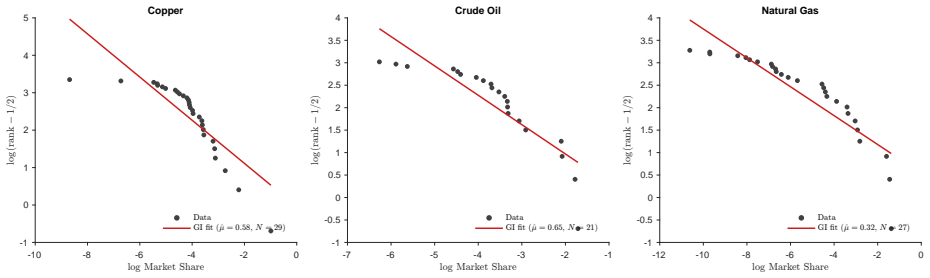
Figure 1. Figure 1: Log-rank versus log-share for the supply panels used in GIV estimation. Each [PITH_FULL_IMAGE:figures/full_fig_p033_1.png] view at source ↗
Figure 2
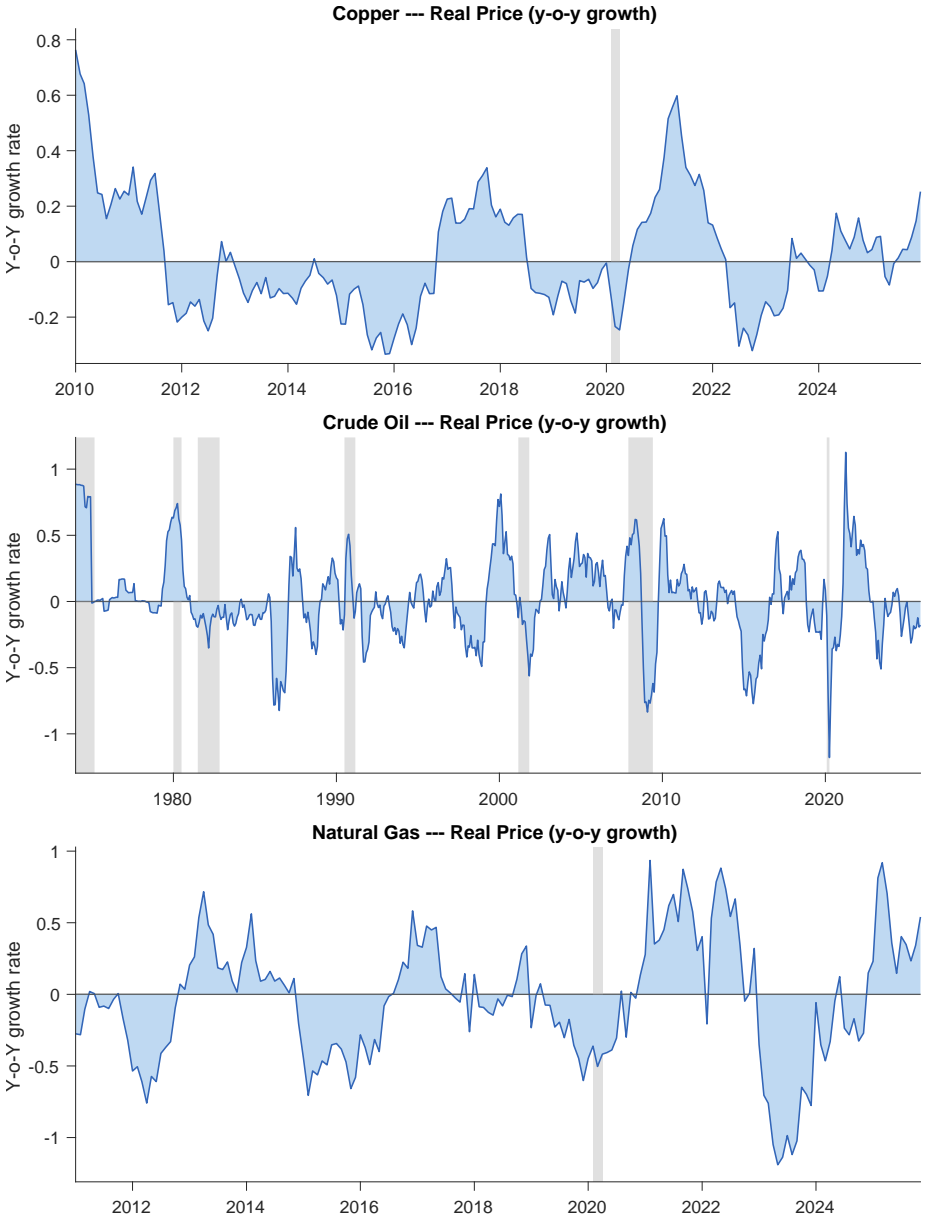
Figure 2. Figure 2: Year-on-year real price growth rates. Copper: January 2009–December 2025 [PITH_FULL_IMAGE:figures/full_fig_p098_2.png] view at source ↗
read the original abstract

I develop the asymptotic theory of instrument strength for Granular Instrumental Variables (GIV) in large panels with both $N$ and $T$ growing. The strength of the GIV depends on the presence of dominant units. I formalise what dominance means and characterise three regimes of instrument strength. When a few units dominate the aggregate, the instrument is strong. The GIV estimator is consistent and asymptotically normal at the standard $\sqrt{T}$ rate. When large units stand out but do not dominate, the instrument weakens. But I show that the parameter of interest remains recoverable. The GIV estimator remains consistent and asymptotically normal, now at a rate slower than $\sqrt{T}$. When units are comparable in size and none stands out, the instrument is weak in the standard sense. The GIV estimator is inconsistent and has a non-standard distribution. Wald inference is reliable only outside the weak regime. When the instrument is weak, I recommend Anderson-Rubin confidence sets. In practice, the instrument must be constructed in a first stage. I show that the feasible estimator attains the same rate, but its asymptotic variance picks up an additional term from the first-stage estimation. Valid inference must use standard errors that account for this term. I apply the GIV estimator with the correct standard errors to recover the short-run demand elasticities of three commodities: refined copper, crude oil, and natural gas.

Editorial analysis

A structured set of objections, weighed in public.

Desk editor's note, referee report, simulated authors' rebuttal, and a circularity audit. Tearing a paper down is the easy half of reading it; the pith above is the substance, this is the friction.

Referee Report

0 major / 3 minor

Summary. The manuscript develops the asymptotic theory of Granular Instrumental Variables (GIV) in large N,T panels. It formalizes dominance of units in the aggregate and characterizes three regimes of instrument strength: strong (a few units dominate, yielding consistency and asymptotic normality at the √T rate), nearly weak (large units stand out but do not dominate, yielding consistency and asymptotic normality at a slower rate), and weak (units comparable in size, yielding inconsistency and a non-standard limiting distribution). The paper shows that Wald inference is reliable only outside the weak regime and recommends Anderson-Rubin confidence sets when the instrument is weak; it also derives the asymptotic behavior of the feasible two-step estimator that accounts for first-stage construction of the instrument and applies the corrected procedure to short-run demand elasticities for refined copper, crude oil, and natural gas.

Significance. If the derivations hold, the paper supplies a practically relevant extension of IV asymptotics to the granular setting that is common in macro and industrial-organization panels. The explicit trichotomy of regimes, together with the feasible-estimator correction and the recommendation for Anderson-Rubin sets, gives applied researchers concrete guidance on when standard errors are valid and when they are not. The three-commodity application demonstrates that the corrected GIV procedure can be implemented on real data.

minor comments (3)
  1. [Abstract] The abstract states that the feasible estimator 'attains the same rate' as the infeasible one but does not restate the precise rate (e.g., T^{1/3} or T^{2/5}) that applies in the nearly-weak regime; adding this sentence would improve readability.
  2. [Section 2] Section 2 (or wherever the dominance measure is introduced) would benefit from an explicit statement of the normalization used for the size vector s_i so that readers can immediately verify whether the three regimes are exhaustive and mutually exclusive.
  3. [Empirical application] In the empirical application, the paper reports point estimates and standard errors but does not show the first-stage F-statistic or the estimated dominance measure for each commodity; adding these diagnostics would help readers assess which regime applies in practice.

Simulated Author's Rebuttal

0 responses · 0 unresolved

We thank the referee for the careful and accurate summary of our manuscript, as well as for the positive assessment of its significance and practical relevance. The recommendation of minor revision is noted. No specific major comments were raised in the report.

Circularity Check

0 steps flagged

No significant circularity; derivation self-contained from stated assumptions

full rationale

The paper derives the trichotomy of instrument strength regimes (strong, nearly weak, weak) and the associated rates of consistency/asymptotic normality directly from formal definitions of dominance in large N,T panels and the construction of the GIV instrument. No step reduces a target parameter to a fitted quantity by construction, renames a known result, or relies on a load-bearing self-citation whose content is unverified. The central claims follow from the model's assumptions without circular reduction, consistent with the reader's assessment of score 2.0 as minor at most.

Axiom & Free-Parameter Ledger

0 free parameters · 1 axioms · 0 invented entities

Based on abstract only; the central claim rests on standard panel IV assumptions plus the new dominance characterization that defines the regimes.

axioms (1)
  • domain assumption Standard panel data assumptions for identification and asymptotics of instrumental variables estimators, including relevance and exogeneity conditions adapted to the granular setting.
    Invoked to derive consistency and distributional results across the three regimes.

pith-pipeline@v0.9.1-grok · 5786 in / 1161 out tokens · 20789 ms · 2026-07-03T02:09:21.797005+00:00 · methodology

discussion (0)

Sign in with ORCID, Apple, or X to comment. Anyone can read and Pith papers without signing in.

Reference graph

Works this paper leans on

39 extracted references · 16 canonical work pages · 1 internal anchor

  1. [1]

    Eigenvalue ratio test for the number of factors

    Seung C Ahn and Alex R Horenstein. Eigenvalue ratio test for the number of factors . Econometrica, 81 0 (3): 0 1203--1227, 2013. ISSN 0012-9682

  2. [2]

    The macro-financial effects of international bank lending on emerging markets

    Iñaki Aldasoro, Paula Beltr \' a n, Federico Grinberg, and Tommaso Mancini-Griffoli. The macro-financial effects of international bank lending on emerging markets . Journal of International Economics, 142: 0 103733, 2023

  3. [3]

    Estimators for the parameters of a single equation in a complete set of stochastic equations

    T Anderson and H Rubin. Estimators for the parameters of a single equation in a complete set of stochastic equations . The Annals of Mathematical Statistics, 21: 0 570--582, 1949

  4. [4]

    GMM with Nearly-Weak Identification

    Bertille Antoine and Eric Renault. GMM with Nearly-Weak Identification . Econometrics and Statistics, 2021

  5. [5]

    Large market asymptotics for differentiated product demand estimators with economic models of supply

    Timothy B Armstrong. Large market asymptotics for differentiated product demand estimators with economic models of supply . Econometrica, 84 0 (5): 0 1961--1980, 2016. ISSN 0012-9682

  6. [6]

    Natural gas price elasticities and optimal cost recovery under consumer heterogeneity: Evidence from 300 million natural gas bills

    Maximilian Auffhammer and Edward Rubin. Natural gas price elasticities and optimal cost recovery under consumer heterogeneity: Evidence from 300 million natural gas bills . Technical report, 2018

  7. [7]

    Zipf Distribution of U.S

    Robert L Axtell. Zipf Distribution of U.S. Firm Sizes . Science, 293 0 (5536): 0 1818--1820, 2001. ISSN 0036-8075, 1095-9203. doi:10.1126/science.1062081. URL https://www.science.org/doi/10.1126/science.1062081

  8. [8]

    Inferential Theory for Factor Models of Large Dimensions

    Jushan Bai. Inferential Theory for Factor Models of Large Dimensions . Econometrica, 71 0 (1): 0 135--171, 2003. ISSN 0012-9682. doi:https://doi.org/10.1111/1468-0262.00392. URL https://onlinelibrary.wiley.com/doi/abs/10.1111/1468-0262.00392

  9. [9]

    Determining the Number of Factors in Approximate Factor Models

    Jushan Bai and Serena Ng. Determining the Number of Factors in Approximate Factor Models . Econometrica, 70 0 (1): 0 191--221, 2002. ISSN 0012-9682. doi:https://doi.org/10.1111/1468-0262.00273. URL https://onlinelibrary.wiley.com/doi/abs/10.1111/1468-0262.00273

  10. [10]

    Inferential Theory for Granular Instrumental Variables in High Dimensions

    Saman Banafti and Tae-Hwy Lee. Inferential Theory for Granular Instrumental Variables in High Dimensions . arXiv preprint arXiv:2201.06605, 2022

  11. [11]

    Structural Interpretation of Vector Autoregressions with Incomplete Identification: Revisiting the Role of Oil Supply and Demand Shocks

    Christiane Baumeister and James D Hamilton. Structural Interpretation of Vector Autoregressions with Incomplete Identification: Revisiting the Role of Oil Supply and Demand Shocks . American Economic Review, 109 0 (5): 0 1873--1910, 5 2019. doi:10.1257/aer.20151569. URL https://www.aeaweb.org/articles?id=10.1257/aer.20151569

  12. [12]

    A Full-Information Approach to Granular Instrumental Variables

    Christiane Baumeister and James D Hamilton. A Full-Information Approach to Granular Instrumental Variables . Technical report, Working Paper, UCSD, 2023

  13. [13]

    Asset insulators

    Gabriel Chodorow-Reich, Andra Ghent, and Valentin Haddad. Asset insulators . The Review of Financial Studies, 34 0 (3): 0 1509--1539, 2021. ISSN 0893-9454

  14. [14]

    Subexponentiality of the product of independent random variables

    D B H Cline and G Samorodnitsky. Subexponentiality of the product of independent random variables . Stochastic Processes and their Applications, 49 0 (1): 0 75--98, 1994. ISSN 0304-4149. doi:https://doi.org/10.1016/0304-4149(94)90113-9. URL https://www.sciencedirect.com/science/article/pii/0304414994901139

  15. [15]

    On a Theorem of Breiman and a Class of Random Difference Equations

    Denis Denisov and Bert Zwart. On a Theorem of Breiman and a Class of Random Difference Equations . Journal of Applied Probability, 44 0 (4): 0 1031--1046, 2007. ISSN 00219002. URL http://www.jstor.org/stable/27595905

  16. [16]

    Probability: theory and examples

    Richard Durrett. Probability: theory and examples . Duxbury Press, Belmont, Calif, 2nd ed edition, 1996. ISBN 9780534243180

  17. [17]

    Matrix theory

    Joel N Franklin. Matrix theory . Courier Corporation, 2012

  18. [18]

    Power Laws in Economics and Finance

    Xavier Gabaix. Power Laws in Economics and Finance . Annual Review of Economics, 1 0 (1): 0 255--294, 2009. doi:10.1146/annurev.economics.050708.142940. URL https://www.annualreviews.org/doi/abs/10.1146/annurev.economics.050708.142940

  19. [19]

    The Granular Origins of Aggregate Fluctuations

    Xavier Gabaix. The Granular Origins of Aggregate Fluctuations . Econometrica, 79 0 (3): 0 733--772, 2011. ISSN 0012-9682. doi:10.3982/ECTA8769

  20. [20]

    Rank — 1/2: A Simple Way to Improve the OLS Estimation of Tail Exponents

    Xavier Gabaix and Rustam Ibragimov. Rank — 1/2: A Simple Way to Improve the OLS Estimation of Tail Exponents . Journal of Business & Economic Statistics , 29 0 (1): 0 24--39, 2011. ISSN 07350015. URL http://www.jstor.org/stable/25800776

  21. [21]

    Granular Instrumental Variables

    Xavier Gabaix and Ralph S J Koijen. Granular Instrumental Variables . Journal of Political Economy, 132 0 (7): 0 728743, 7 2024. ISSN 0022-3808, 1537-534X. doi:10.1086/728743. URL https://www.journals.uchicago.edu/doi/10.1086/728743

  22. [22]

    Granular Credit Risk

    Sigurd Galaasen, Rustam Jamilov, Ragnar Juelsrud, and Hélène Rey. Granular Credit Risk . Technical Report w27994, National Bureau of Economic Research, Cambridge, MA, 10 2020. URL http://www.nber.org/papers/w27994.pdf

  23. [23]

    Global Portfolio Rebalancing and Exchange Rates

    H Hau, H Rey, and N Camahno Neto. Global Portfolio Rebalancing and Exchange Rates . Review of Financial Studies, 2022. ISSN 0893-9454

  24. [24]

    Granular shocks to corporate leverage and the macroeconomic transmission of monetary policy

    Fédéric Holm-Hadulla and Claire Th \" u rw \" a chter. Granular shocks to corporate leverage and the macroeconomic transmission of monetary policy . 2024

  25. [25]

    Matrix analysis

    Roger A Horn and Charles R Johnson. Matrix analysis . Cambridge University Press, Cambridge ; New York, 2nd ed. edition, 2012. ISBN 9781139776004

  26. [26]

    Limit theorems for network dependent random variables

    Denis Kojevnikov, Vadim Marmer, and Kyungchul Song. Limit theorems for network dependent random variables . Journal of Econometrics, 222 0 (2): 0 882--908, 2021. ISSN 0304-4076. doi:https://doi.org/10.1016/j.jeconom.2020.05.019. URL https://www.sciencedirect.com/science/article/pii/S0304407620302402

  27. [27]

    A meta-analysis on the price elasticity of energy demand

    Xavier Labandeira, José M Labeaga, and Xiral L \' o pez-Otero. A meta-analysis on the price elasticity of energy demand . Energy Policy, 102: 0 549--568, 2017. ISSN 0301-4215. doi:https://doi.org/10.1016/j.enpol.2017.01.002. URL https://www.sciencedirect.com/science/article/pii/S0301421517300022

  28. [28]

    Subglobal climate agreements and energy‐intensive activities: an evaluation of carbon leakage in the copper industry

    Bruno Lanz, Thomas F Rutherford, and John E Tilton. Subglobal climate agreements and energy‐intensive activities: an evaluation of carbon leakage in the copper industry . The World Economy, 36 0 (3): 0 254--279, 2013. ISSN 0378-5920

  29. [29]

    HAR inference: Recommendations for practice

    Eben Lazarus, Daniel J Lewis, James H Stock, and Mark W Watson. HAR inference: Recommendations for practice . Journal of Business & Economic Statistics , 36 0 (4): 0 541--559, 2018. ISSN 0735-0015

  30. [30]

    Nonparametric econometrics: theory and practice

    Qi Li and Jeffrey Scott Racine. Nonparametric econometrics: theory and practice . Princeton University Press, Princeton, N.J, 2007. ISBN 9780691121611

  31. [31]

    Expectations and bank lending

    Yueran Ma, Teodora Paligorova, and José-Luis Peydro. Expectations and bank lending . University of Chicago, Unpublished Working Paper, 2021

  32. [32]

    The two-parameter Poisson-Dirichlet distribution derived from a stable subordinator

    Jim Pitman and Marc Yor. The two-parameter Poisson-Dirichlet distribution derived from a stable subordinator . The Annals of Probability, pages 855--900, 1997. ISSN 0091-1798

  33. [33]

    Heterogeneity-robust granular instruments

    Eric Qian. Heterogeneity-robust granular instruments . arXiv preprint arXiv:2304.01273, 2023

  34. [34]

    On the subspaces of L p (p> 2) spanned by sequences of independent random variables

    Haskell P Rosenthal. On the subspaces of L p (p> 2) spanned by sequences of independent random variables . Israel Journal of Mathematics, 8 0 (3): 0 273--303, 1970. ISSN 0021-2172

  35. [35]

    Understanding Market Sensitivity: Estimation of Supply and Demand Elasticities for Non-Fuel Minerals

    Elina Shojaeddini, Elisa Alonso, Nedal T Nassar, David Pineault, Shayla M Allen, Joshua L Brainard, David M McCaffrey, Timothy M O'Brien, Arturo J Padilla, and James W Ryter. Understanding Market Sensitivity: Estimation of Supply and Demand Elasticities for Non-Fuel Minerals . Mineral Economics, 38: 0 985--996, 2025. doi:10.1007/s13563-025-00537-3

  36. [36]

    Instrumental Variables Regression with Weak Instruments

    Douglas Staiger and James H Stock. Instrumental Variables Regression with Weak Instruments . Econometrica, 65 0 (3): 0 557--586, 1997. ISSN 00129682, 14680262. doi:10.2307/2171753. URL http://www.jstor.org/stable/2171753

  37. [37]

    Forecasting using principal components from a large number of predictors

    James H Stock and Mark W Watson. Forecasting using principal components from a large number of predictors . Journal of the American statistical association, 97 0 (460): 0 1167--1179, 2002

  38. [38]

    A survey of weak instruments and weak identification in generalized method of moments

    James H Stock, Jonathan H Wright, and Motohiro Yogo. A survey of weak instruments and weak identification in generalized method of moments . Journal of business & economic statistics , 20 0 (4): 0 518--529, 2002. ISSN 0735-0015

  39. [39]

    Asymptotic theory for econometricians

    Halbert White. Asymptotic theory for econometricians . Emerald, Bingley, rev. ed edition, 2001. ISBN 9780127466521