Computed tomography medical image reconstruction on affordable equipment by using out-of-core techniques
Pith reviewed 2026-05-25 14:18 UTC · model grok-4.3
The pith
A QR factorization method with out-of-core techniques reconstructs high-quality CT images quickly on standard hardware.
A machine-rendered reading of the paper's core claim, the machinery that carries it, and where it could break.
Core claim
The paper claims that a new reconstruction method based on the QR factorization, implemented with out-of-core techniques, is very efficient on affordable equipment consisting of standard multicore processors and standard Solid-State Drives, allowing it to boost the performance of reconstructions and implement a reliable and competitive method that reconstructs high-quality CT images quickly.
What carries the argument
QR factorization implemented with out-of-core techniques to process large matrices without loading them entirely into RAM.
If this is right
- Algebraic CT reconstruction becomes fast enough for routine clinical workflows on affordable equipment.
- High-quality images remain obtainable while using fewer projection views than traditional analytical methods.
- The approach eliminates the need for specialized accelerators or very large memory banks during reconstruction.
- Daily clinical practice can adopt algebraic methods without incurring high hardware costs or long wait times.
Where Pith is reading between the lines
- The same out-of-core strategy could be applied to other matrix factorizations used in algebraic tomography.
- Medical imaging centers without access to GPUs or large servers might adopt algebraic techniques more readily.
- Further tuning of the out-of-core block size could yield additional speedups on consumer-grade SSDs.
Load-bearing premise
The out-of-core version of QR factorization keeps the image quality of algebraic reconstruction while delivering the claimed speed gains on ordinary computers.
What would settle it
Execute the out-of-core QR method on standard multicore hardware with limited RAM and compare both the peak signal-to-noise ratio of the resulting CT images and the wall-clock runtime against a conventional in-core algebraic solver on the same data.
Figures
read the original abstract
As Computed Tomography (CT) scans are an essential medical test, many techniques have been proposed to reconstruct high-quality images using a smaller amount of radiation. One approach is to employ algebraic factorization methods to reconstruct the images, using fewer views than the traditional analytical methods. However, their main drawback is the high computational cost and hence the time needed to obtain the images, which is critical in the daily clinical practice. For this reason, faster methods for solving this problem are required. In this paper, we propose a new reconstruction method based on the QR factorization that is very efficient on affordable equipment (standard multicore processors and standard Solid-State Drives) by using out-of-core techniques. Combining both affordable hardware and the new software, we can boost the performance of the reconstructions and implement a reliable and competitive method that reconstructs high-quality CT images quickly.
Editorial analysis
A structured set of objections, weighed in public.
Referee Report
Summary. The manuscript proposes a QR-factorization-based algebraic method for CT image reconstruction that employs out-of-core techniques to achieve practical performance on commodity multicore CPUs and standard SSDs, thereby enabling high-quality low-dose reconstructions without specialized accelerators or large RAM.
Significance. If the performance and quality claims are substantiated, the work would lower the barrier to algebraic reconstruction in clinical settings by demonstrating that out-of-core linear-algebra techniques can deliver usable run times on affordable hardware.
major comments (2)
- [Abstract] Abstract: the claims that the method is 'very efficient' and reconstructs 'high-quality CT images quickly' are unsupported by any quantitative data (wall-clock times, RMSE/PSNR values, or comparisons against FBP or other algebraic solvers).
- [Results / Experiments] The central performance claim requires that the out-of-core QR implementation on the system matrix A preserves numerical stability while overcoming I/O latency on SSDs; no section supplies timings on the exact hardware class advertised or quantifies the I/O overhead for the sparse projection matrices involved.
minor comments (1)
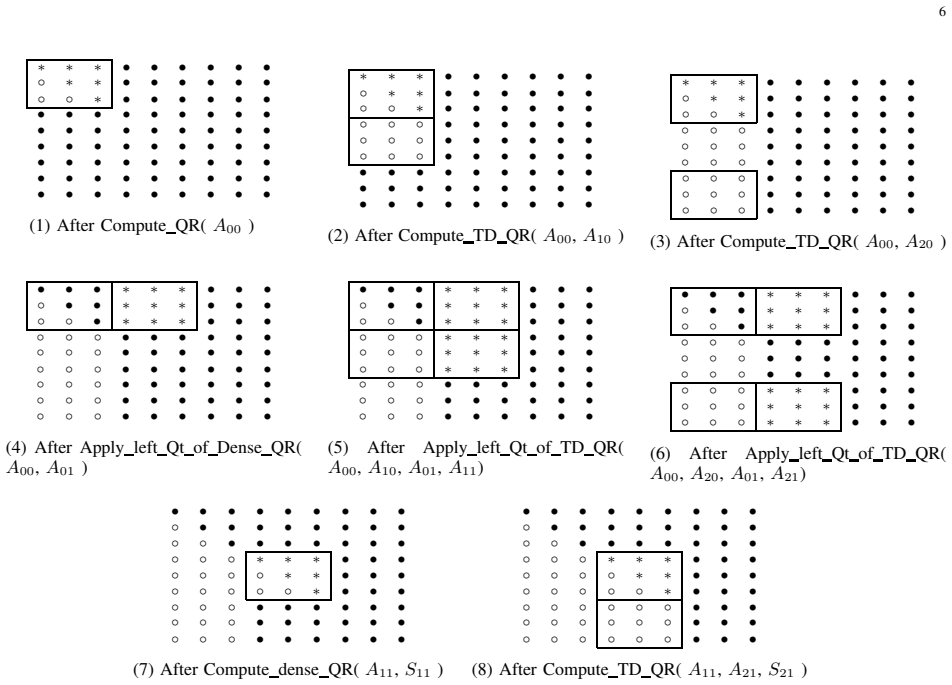
- Notation for the system matrix A and the block partitioning used in the out-of-core QR is not introduced until late; an early diagram or pseudocode would improve readability.
Simulated Author's Rebuttal
We thank the referee for the constructive feedback. We address the major comments point by point below and will revise the manuscript to better substantiate the performance claims with quantitative data.
read point-by-point responses
-
Referee: [Abstract] Abstract: the claims that the method is 'very efficient' and reconstructs 'high-quality CT images quickly' are unsupported by any quantitative data (wall-clock times, RMSE/PSNR values, or comparisons against FBP or other algebraic solvers).
Authors: We agree that the abstract would benefit from explicit quantitative support. The results section of the manuscript reports wall-clock times, quality metrics, and comparisons, but these were not summarized in the abstract. We will revise the abstract to include key numbers (e.g., reconstruction times on the target hardware and RMSE/PSNR values versus FBP) while preserving the overall length. revision: yes
-
Referee: [Results / Experiments] The central performance claim requires that the out-of-core QR implementation on the system matrix A preserves numerical stability while overcoming I/O latency on SSDs; no section supplies timings on the exact hardware class advertised or quantifies the I/O overhead for the sparse projection matrices involved.
Authors: The experiments were run on standard multicore CPUs with SSDs as described. We will expand the results section to explicitly report numerical stability indicators (e.g., residual norms or condition-number checks) and provide a breakdown of I/O versus compute time for the sparse matrices, including additional tables if needed to quantify overhead. revision: yes
Circularity Check
No circularity: engineering application of known QR and out-of-core techniques
full rationale
The paper proposes an out-of-core QR factorization method for algebraic CT reconstruction on commodity hardware. No derivation chain, equation, or claim reduces to its own inputs by construction. The abstract and description present the approach as a direct combination of standard linear-algebra routines with I/O optimizations; no self-definitional relations, fitted parameters renamed as predictions, or load-bearing self-citations appear. Performance claims are externally falsifiable on the advertised hardware class and do not rely on internal redefinitions.
Axiom & Free-Parameter Ledger
axioms (1)
- domain assumption Algebraic methods such as QR factorization can reconstruct high-quality CT images from fewer views than analytical methods.
Lean theorems connected to this paper
-
IndisputableMonolith/Foundation/RealityFromDistinction.leanreality_from_one_distinction unclear?
unclearRelation between the paper passage and the cited Recognition theorem.
We propose a new reconstruction method based on the QR factorization that is very efficient on affordable equipment... by using out-of-core techniques.
-
IndisputableMonolith/Cost/FunctionalEquation.leanwashburn_uniqueness_aczel unclear?
unclearRelation between the paper passage and the cited Recognition theorem.
A = QR ... X = R^{-1}(Q^T B)
What do these tags mean?
- matches
- The paper's claim is directly supported by a theorem in the formal canon.
- supports
- The theorem supports part of the paper's argument, but the paper may add assumptions or extra steps.
- extends
- The paper goes beyond the formal theorem; the theorem is a base layer rather than the whole result.
- uses
- The paper appears to rely on the theorem as machinery.
- contradicts
- The paper's claim conflicts with a theorem or certificate in the canon.
- unclear
- Pith found a possible connection, but the passage is too broad, indirect, or ambiguous to say the theorem truly supports the claim.
Reference graph
Works this paper leans on
-
[1]
A. C. Kak and M. Slaney, Principles of Computerized Tomographic Imaging . SIAM, jan 2001, vol. 33
work page 2001
-
[2]
Projected cancer risks from computed tomographic scans performed in the united states in 2007,
A. B. De Gonz´ alez, M. Mahesh, K.-P . Kim, M. Bhargavan, R. Lewis, F. Mettler, and C. Land, “Projected cancer risks from computed tomographic scans performed in the united states in 2007,” Archives of internal medicine , vol. 169, no. 22, pp. 2071–2077, 2009
work page 2007
-
[3]
Cancer risks from diagnostic rad iology,
E. Hall and D. Brenner, “Cancer risks from diagnostic rad iology,” The British journal of radiology , vol. 81, no. 965, pp. 362–378, 2008
work page 2008
-
[4]
X. Tang, J. Hsieh, R. A. Nilsen, S. Dutta, D. Samsonov, and A. Hagiwara, “A three-dimensional-weighted cone beam filte red backprojection (CB-FBP) algorithm for image reconstruction in volumetric CT helical scanning,” Physics in Medicine & Biology , vol. 51, no. 4, p. 855, 2006
work page 2006
-
[5]
T. Zhuang, S. Leng, B. E. Nett, and G.-H. Chen, “Fan-beam a nd cone-beam image reconstruction via filtering the backpro jection image of differentiated projection data,” Physics in Medicine & Biology , vol. 49, no. 24, p. 5489, 2004
work page 2004
-
[6]
A combination-weighted Feldkamp-based reconstr uction algorithm for cone-beam CT,
S. Mori, M. Endo, S. Komatsu, S. Kandatsu, T. Y ashiro, and M. Baba, “A combination-weighted Feldkamp-based reconstr uction algorithm for cone-beam CT,” Physics in Medicine & Biology , vol. 51, no. 16, p. 3953, 2006
work page 2006
-
[7]
Iterative re construction techniques for computed tomography part 1: technical princ iples,
M. J. Willemink, P . A. de Jong, T. Leiner, L. M. de Heer, R. A . Nievelstein, R. P . Budde, and A. M. Schilham, “Iterative re construction techniques for computed tomography part 1: technical princ iples,” European radiology, vol. 23, no. 6, pp. 1623–1631, 2013
work page 2013
-
[8]
M. J. Willemink, T. Leiner, P . A. de Jong, L. M. de Heer, R. A . Nievelstein, A. M. Schilham, and R. P . Budde, “Iterative re construction techniques for computed tomography part 2: initial results in dose reduction and image quality,” European radiology, vol. 23, no. 6, pp. 1632–1642, 2013
work page 2013
-
[9]
Algebraic reconstruction in CT from lim ited views,
A. H. Andersen, “Algebraic reconstruction in CT from lim ited views,” IEEE Transactions on Medical Imaging , vol. 8, no. 1, pp. 50–55, 1989
work page 1989
-
[10]
A. H. Andersen and A. C. Kak, “Simultaneous algebraic re construction technique (SART): a superior implementation of the ART algorithm,” Ultrasonic Imaging, vol. 6, no. 1, pp. 81–94, 1984
work page 1984
-
[11]
W. Y u and L. Zeng, “A Novel Weighted Total Difference Bas ed Image Reconstruction Algorithm for Few-View Computed To mography,” PLoS ONE , vol. 9, no. 10, 2014
work page 2014
-
[12]
Iterative reconstruction from few-view projections,
L. Flores, V . Vidal, and G. V erd ˜Ao, “Iterative reconstruction from few-view projections,” Procedia Computer Science, vol. 51, pp. 703–712, 2015
work page 2015
-
[13]
Parallel CT image reconstruction based on GPUs,
L. A. Flores, V . Vidal, P . Mayo, F. Rodenas, and G. V erd´ u , “Parallel CT image reconstruction based on GPUs,” Radiation Physics and Chemistry, vol. 95, pp. 247–250, 2014. 12
work page 2014
-
[14]
M. Chillar´ on, V . Vidal, D. Segrelles, I. Blanquer, and G. V erd´ u, “Combining grid computing and Docker containers for the study and parametrization of CT image reconstruction methods,” Procedia Computer Science , vol. 108, pp. 1195–1204, 2017
work page 2017
-
[15]
Total V ariation-Stokes Strate gy for Sparse- View X-ray CT Image Reconstruction,
Y an Liu, Zhengrong Liang, Jianhua Ma, Hongbing Lu, Ke Wa ng, Hao Zhang, and W. Moore, “Total V ariation-Stokes Strate gy for Sparse- View X-ray CT Image Reconstruction,” IEEE Transactions on Medical Imaging , vol. 33, no. 3, pp. 749–763, mar 2014
work page 2014
-
[16]
J. Tang, B. E. Nett, and G.-H. Chen, “Performance compar ison between total variation (TV)-based compressed sensin g and statistical iterative reconstruction algorithms,” Physics in Medicine and Biology , vol. 54, no. 19, pp. 5781–5804, oct 2009
work page 2009
-
[17]
Low-Dose Micro-CT Imaging for V ascul ar Segmentation and Analysis Using Sparse-View Acquisitions,
B. V andeghinste, S. V andenberghe, C. V anhove, S. Stael ens, and R. V an Holen, “Low-Dose Micro-CT Imaging for V ascul ar Segmentation and Analysis Using Sparse-View Acquisitions,” PLoS ONE , vol. 8, no. 7, p. e68449, jul 2013
work page 2013
-
[18]
Improved compressed sensing-based algorithm for spa rse-view CT image reconstruction
Z. Zhu, K. Wahid, P . Babyn, D. Cooper, I. Pratt, and Y . Car ter, “Improved compressed sensing-based algorithm for spa rse-view CT image reconstruction.” Computational and mathematical methods in medicine , vol. 2013, p. 185750, mar 2013
work page 2013
-
[19]
I. Sechopoulos, “A review of breast tomosynthesis. Par t II. Image reconstruction, processing and analysis, and ad vanced applications,” Medical physics , vol. 40, no. 1, 2013
work page 2013
-
[20]
CT Image Reconstruction fro m Sparse Projections Using Adaptive TpV Regularization
H. Qi, Z. Chen, and L. Zhou, “CT Image Reconstruction fro m Sparse Projections Using Adaptive TpV Regularization.” Computational and mathematical methods in medicine , vol. 2015, p. 354869, may 2015
work page 2015
-
[21]
M. J. Rodr´ ıguez-Alvarez, F. Sanchez, A. Soriano, L. Mo liner, S. Sanchez, and J. M. Benlloch, “QR-factorization Al gorithm for Computed Tomography (CT): Comparison with FDK and Conjugate Gradien t (CG) Algorithms,” IEEE Transactions on Radiation and Plasma Medical Sciences, vol. 2, no. 5, pp. 459–469, 2018
work page 2018
-
[22]
CT image recons truction with SuiteSparseQR factorization package,
M. Chillar´ on, V . Vidal, and G. V erd´ u, “CT image recons truction with SuiteSparseQR factorization package,” Radiation Physics and Chemistry, 2019
work page 2019
-
[23]
CT Medical Imaging Reconstruction Using Direct Algebraic Method s with Few Projections,
M. Chillar´ on, V . Vidal, G. V erd´ u, and J. Arnal, “CT Medical Imaging Reconstruction Using Direct Algebraic Method s with Few Projections,” in Computational Science – ICCS 2018 . Cham: Springer International Publishing, 2018, pp. 334–3 46
work page 2018
-
[24]
An improved algorithm for reprojecting ray s through pixel images,
P . Joseph, “An improved algorithm for reprojecting ray s through pixel images,” IEEE Transactions on Medical Imaging , vol. 1, no. 3, pp. 192–196, 1982
work page 1982
-
[25]
Image Quality Metrics: PSNR vs. SSI M,
A. Hore and D. Ziou, “Image Quality Metrics: PSNR vs. SSI M,” in 2010 20th International Conference on Pattern Recognition . IEEE, aug 2010, pp. 2366–2369
work page 2010
-
[26]
S. Toledo and F. Gustavson, “The design and implementat ion of solar, a portable library for scalable out-of-core li near algebra computations,” Proceedings of the Annual W orkshop on I/O in Parallel and Dis tributed Systems, IOPADS , 08 1998
work page 1998
-
[27]
E. D’Azevedo and J. Dongarra, “Design and implementati on of the parallel out-of-core ScaLAPACK LU, QR, and Cholesk y factorization routines,” Concurrency - Practice and Experience , vol. 12, pp. 1481–1493, 12 2000
work page 2000
-
[28]
POOCLAPACK: Paralle l Out-of-Core Linear Algebra Package,
W. C. Reiley and R. A. van de Geijn, “POOCLAPACK: Paralle l Out-of-Core Linear Algebra Package,” Department of Compu ter Sciences, The University of Texas at Austin, Tech. Rep. CS-TR-99-33, 1 999
-
[29]
Parallel out-of-cor e computation and updating the QR factorization,
B. C. Gunter and R. A. van de Geijn, “Parallel out-of-cor e computation and updating the QR factorization,” ACM Transactions on Mathematical Software, vol. 31, no. 1, pp. 60–78, March 2005
work page 2005
-
[30]
Rapid development of high-performance out-of-core solv ers,
T. Joffrain, E. S. Quintana-Ort´ ı, and R. A. van de Geijn , “Rapid development of high-performance out-of-core solv ers,” in Proceedings of PARA 2004, ser. LNCS, no. 3732. Springer-V erlag Berlin Heidelberg, 2 005, pp. 413–422
work page 2004
-
[31]
Parall el out-of-core Cholesky and QR factorizations with POOCLAP ACK,
B. C. Gunter, W. C. Reiley, and R. A. van de Geijn, “Parall el out-of-core Cholesky and QR factorizations with POOCLAP ACK,” in Proceedings of the 15th International Parallel and Distrib uted Processing Symposium (IPDPS) . IEEE Computer Society, 2001
work page 2001
-
[32]
G. Quintana-Ort´ ı, F. D. Igual, M. Marqu´ es, E. S. Quint ana-Ort´ ı, and R. A. V an de Geijn, “A runtime system for progr amming out-of-core matrix algorithms-by-tiles on multithreaded architectur es,” ACM Transactions on Mathematical Software (TOMS) , vol. 38, no. 4, p. 25, 2012
work page 2012
-
[33]
Using desktop computers to solve large- scale dense linear algebra problems,
M. Marqu´ es, G. Quintana-Ort´ ı, E. S. Quintana-Ort´ ı, and R. van de Geijn, “Using desktop computers to solve large- scale dense linear algebra problems,” The Journal of Supercomputing , vol. 58, no. 2, pp. 145–150, Nov 2011
work page 2011
-
[34]
Out-of-Core Computation of the QR Fac torization on Multi-core Processors,
M. Marqu´ es, G. Quintana-Ort´ ı, E. S. Quintana-Ort´ ı, and R. A. van de Geijn, “Out-of-Core Computation of the QR Fac torization on Multi-core Processors,” in Lecture Notes in Computer Science 5704, Euro-Par’2009, (Ed s. H. Sips, D. Epema, H. -X. Lin) , 2009, pp. 809–820
work page 2009
-
[35]
G. Lauritsch and H. Bruder, “FORBILD Head Phantom.” [On line]. Available: http://www.imp.uni-erlangen.de/phan toms/head/head.html
-
[36]
K. Y an, X. Wang, L. Lu, and R. M. Summers, “Deeplesion: au tomated mining of large-scale lesion annotations and unive rsal lesion detection with deep learning,” Journal of Medical Imaging , vol. 5, no. 3, p. 036501, 2018
work page 2018
discussion (0)
Sign in with ORCID, Apple, or X to comment. Anyone can read and Pith papers without signing in.