Spatial Partial Functionalization of Neural Networks based on Noise Fields
Pith reviewed 2026-06-25 21:39 UTC · model grok-4.3
The pith
Spatially structured noise can assign different functions to overlapping subnetworks within one neural network.
A machine-rendered reading of the paper's core claim, the machinery that carries it, and where it could break.
Core claim
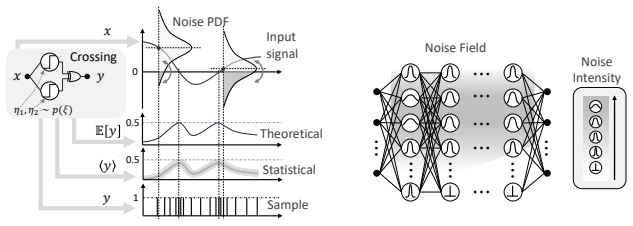
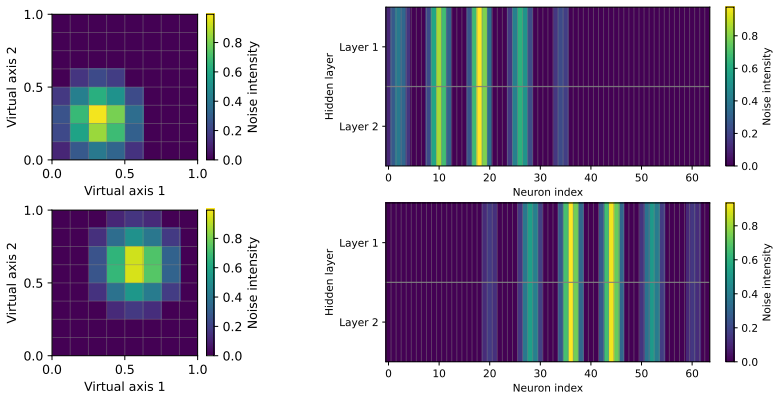
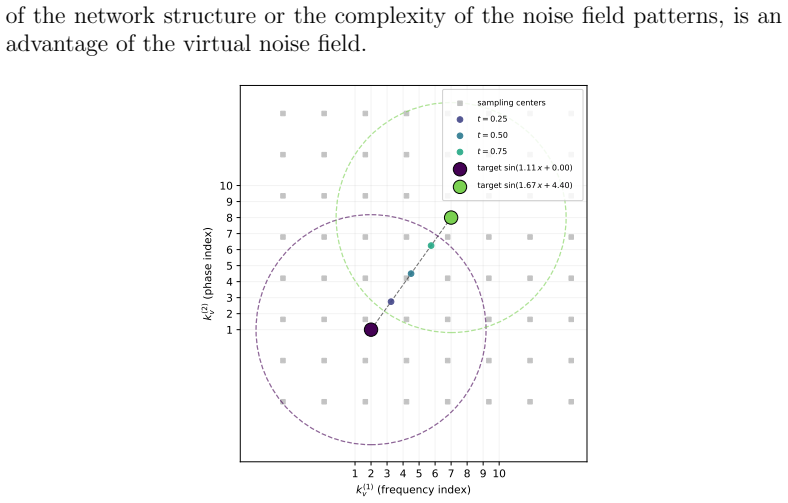
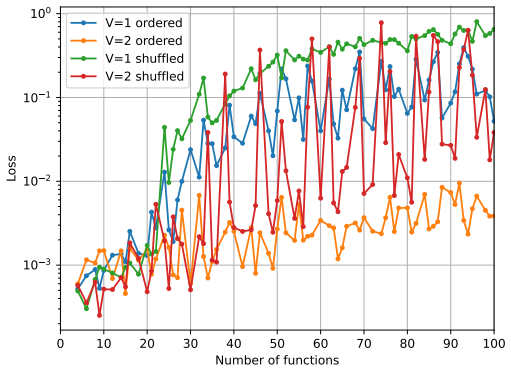
By modulating a crossing activation function with virtual noise fields—an auxiliary continuous space that produces spatially varying noise—the network can store multiple functions such that each function is learned primarily by the subnetwork activated at its assigned noise location; memory capacity rises when the geometry of the noise fields mirrors the proximity relations among the target functions and falls when the geometries are mismatched.
What carries the argument
The virtual noise field, an auxiliary continuous space used to generate spatially structured noise that activates partially overlapping subnetworks via the crossing activation function.
If this is right
- Multiple functions can be stored in a single set of weights by pairing each function with a distinct noise-field location.
- Capacity increases when noise-field geometry reflects proximity among the functions being learned.
- Mismatched noise-field geometry reduces the number of functions that can be stored independently.
- Structured noise can act as a topology selector that chooses which subnetwork computes each function.
Where Pith is reading between the lines
- The same principle might allow a network to switch among learned behaviors simply by changing the applied noise pattern at test time.
- If extended to image or sequence data, noise fields could be shaped by the data’s own spatial or temporal structure rather than chosen by hand.
- The approach offers a continuous alternative to discrete routing methods such as mixture-of-experts without requiring an explicit router network.
Load-bearing premise
The crossing activation function, in its sample, statistical, or analytical form, lets different noise fields drive largely independent learning of multiple functions with little cross-talk.
What would settle it
Run the one-dimensional approximation tasks with noise-field locations that match functional proximity yet observe no gain in the number of functions that can be stored without interference, or observe that mismatched locations produce no drop in capacity.
Figures
read the original abstract
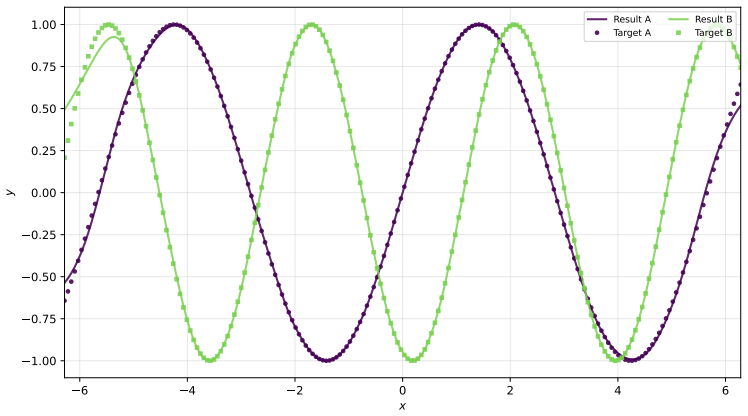
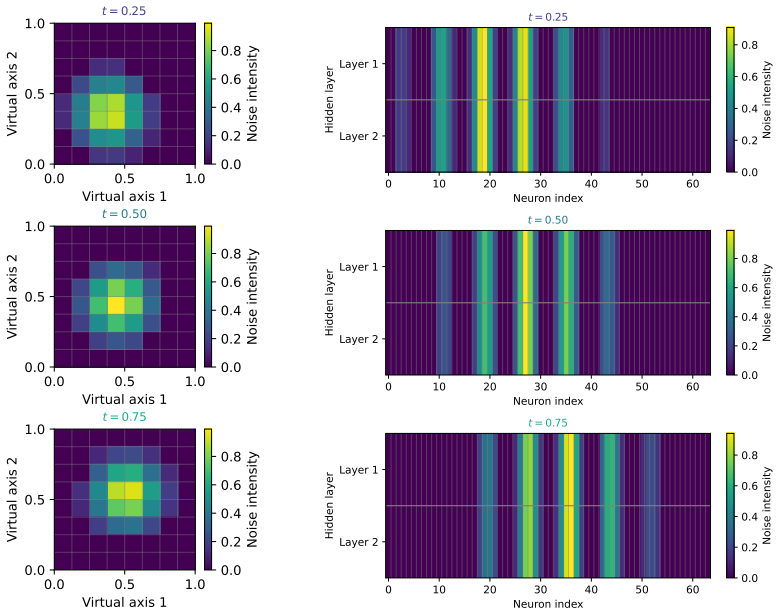
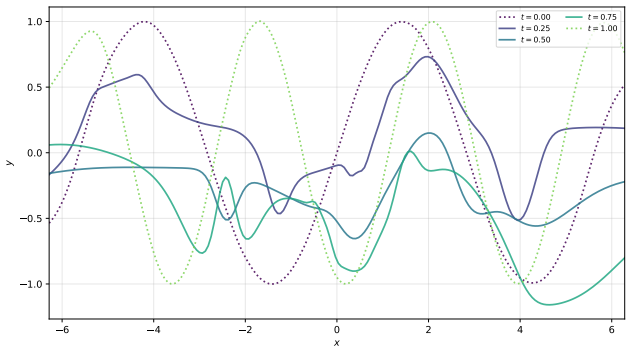
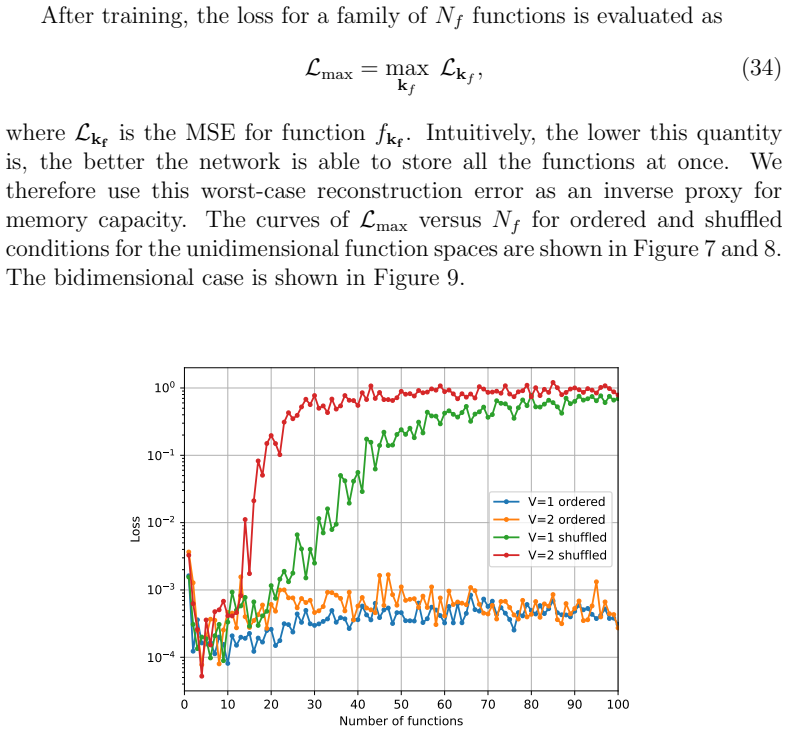
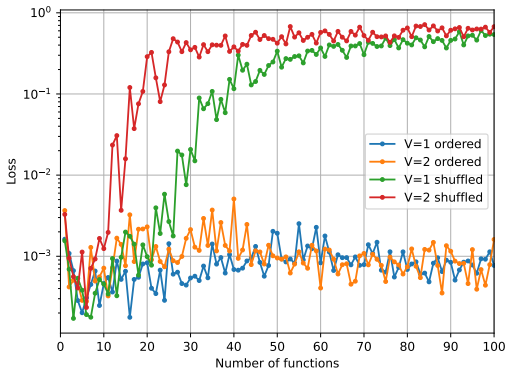
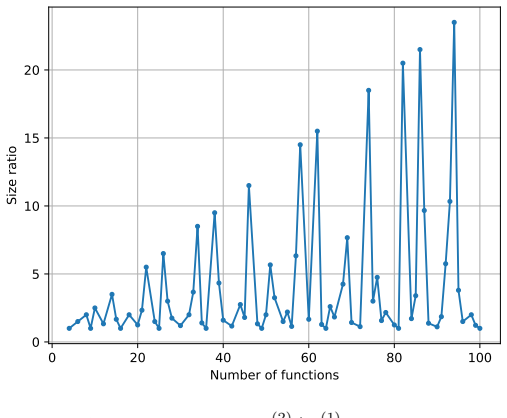
Noise in neural computation is typically regarded as a disturbance, but its spatial distribution may also actively regulate which parts of a network participate in computation. This paper investigates the spatial partial functionalization of Noise-modulated Neural Networks using noise fields. We first present an activation function suitable for this goal, the crossing activation function, using the sample-level, statistical-level, and analytical-level implementations, and examine parameter reuse across these implementations. We then introduce a virtual noise field, an auxiliary continuous space for generating spatially structured network noise fields that activate partially overlapping subnetworks. Using one-dimensional function approximation tasks, we evaluate how multiple functions can be stored in a single network when each function is assigned to a different noise-field location. The results show that memory capacity improves when the spatial arrangement of noise fields reflects the proximity relationships among the functions to be learned, whereas mismatches in noise field structure can reduce effective capacity. These findings suggest that structured noise can serve not only as a perturbation but also as a topology-defining factor for functional subnetwork selection.
Editorial analysis
A structured set of objections, weighed in public.
Referee Report
Summary. The paper claims that a crossing activation function (implemented at sample-level, statistical-level, and analytical-level) combined with virtual noise fields enables spatial partial functionalization of neural networks. In 1D function approximation tasks, assigning functions to noise-field locations whose spatial arrangement matches the proximity relationships among the target functions improves memory capacity, while mismatches reduce effective capacity; structured noise thus acts as a topology-defining factor for subnetwork selection.
Significance. If the central empirical claim holds after verification, the work introduces two new concepts (crossing activation function and virtual noise field) and supplies initial evidence that noise can be harnessed to regulate functional subnetwork participation without explicit architectural partitioning. This perspective on noise as an active selector rather than pure perturbation could inform multi-task and continual-learning designs. The manuscript already supplies three distinct implementations of the crossing function and reports parameter-reuse comparisons, which are concrete strengths.
major comments (2)
- [1D function approximation tasks evaluation] The strongest claim—that capacity scales with spatial-proximity matching of noise fields—requires that the crossing activation function (across its three implementations) produces sufficiently independent subnetwork activation with negligible cross-interference. The 1D function-approximation evaluation provides no explicit quantification of cross-interference (e.g., performance drop when noise fields overlap versus when separated) and no ablation that removes the crossing mechanism, so the observed capacity difference could arise from task-specific regularization rather than the intended spatial partial functionalization.
- [Abstract and experimental description] The abstract and evaluation report positive results on capacity improvement yet supply no details on controls, baselines, error bars, or exact experimental conditions. This absence directly limits verification of the central empirical claim.
minor comments (1)
- [Abstract] The abstract states that parameter reuse across the sample-level, statistical-level, and analytical-level implementations is examined; the main text should include the concrete reuse metrics or tables that support this examination.
Simulated Author's Rebuttal
We thank the referee for the constructive comments, which highlight areas where additional evidence and clarity will improve the manuscript. We address each major comment below and commit to revisions that directly target the concerns raised.
read point-by-point responses
-
Referee: [1D function approximation tasks evaluation] The strongest claim—that capacity scales with spatial-proximity matching of noise fields—requires that the crossing activation function (across its three implementations) produces sufficiently independent subnetwork activation with negligible cross-interference. The 1D function-approximation evaluation provides no explicit quantification of cross-interference (e.g., performance drop when noise fields overlap versus when separated) and no ablation that removes the crossing mechanism, so the observed capacity difference could arise from task-specific regularization rather than the intended spatial partial functionalization.
Authors: We agree that explicit quantification of cross-interference and an ablation of the crossing mechanism are needed to isolate the contribution of spatial partial functionalization. In the revision we will add (i) direct comparisons of performance for overlapping versus spatially separated noise fields and (ii) an ablation replacing the crossing activation with a standard activation while keeping all other elements fixed. These additions will test whether the observed capacity differences are attributable to the intended mechanism rather than incidental regularization. revision: yes
-
Referee: [Abstract and experimental description] The abstract and evaluation report positive results on capacity improvement yet supply no details on controls, baselines, error bars, or exact experimental conditions. This absence directly limits verification of the central empirical claim.
Authors: We accept that the current abstract and experimental section lack sufficient detail for independent verification. We will revise the abstract to summarize the evaluation protocol and expand the experimental section to report all controls, baselines (including standard multi-task and single-network baselines), error bars from repeated runs with different seeds, network architectures, training hyperparameters, and precise definitions of the three crossing-function implementations and virtual noise-field generation. revision: yes
Circularity Check
No significant circularity; empirical claims rest on independent experiments
full rationale
The paper defines a new crossing activation function (with sample-, statistical-, and analytical-level implementations) and virtual noise fields as auxiliary constructs, then reports empirical memory-capacity results from 1D function-approximation tasks. No load-bearing step equates a prediction to a fitted input, renames a known result, or reduces the central claim to a self-citation chain; the reported capacity differences are presented as experimental outcomes rather than algebraic identities or self-referential definitions.
Axiom & Free-Parameter Ledger
invented entities (2)
-
crossing activation function
no independent evidence
-
virtual noise field
no independent evidence
Reference graph
Works this paper leans on
-
[1]
M. E. Raichle, The brain’s dark energy, Science 314 (5803) (2006) 1249–
2006
-
[2]
URLhttps://www.science.org/doi/abs/10.1126/science.1134405
arXiv:https://www.science.org/doi/pdf/10.1126/science.1134405, 31 doi:10.1126/science.1134405. URLhttps://www.science.org/doi/abs/10.1126/science.1134405
-
[3]
N. K. Logothetis, What we can do and what we cannot do with fmri (6 2008). doi:10.1038/nature06976
-
[4]
L. C. Katz, C. J. Shatz, Synaptic activity and the construc- tion of cortical circuits, Science 274 (5290) (1996) 1133–1138. doi:10.1126/science.274.5290.1133. URLhttps://www.science.org/doi/abs/10.1126/science.274.5290.1133
-
[5]
Architectures of neuronal circuits
L. Luo, Architectures of neuronal circuits, Science 373 (6559) (2021) eabg7285. doi:10.1126/science.abg7285. URLhttps://www.science.org/doi/abs/10.1126/science.abg7285
-
[6]
C. I. Bargmann, Beyond the connectome: How neuromodula- tors shape neural circuits, BioEssays 34 (6) (2012) 458–465. doi:https://doi.org/10.1002/bies.201100185. URLhttps://onlinelibrary.wiley.com/doi/abs/10.1002/bies.201100185
-
[7]
Marder, Neuromodulation of neuronal circuits: Back to the future, Neuron 76 (1) (2012) 1–11
E. Marder, Neuromodulation of neuronal circuits: Back to the future, Neuron 76 (1) (2012) 1–11. doi:https://doi.org/10.1016/j.neuron.2012.09.010. URLhttps://www.sciencedirect.com/science/article/pii/S0896627312008173
-
[8]
D. V. Buonomano, W. Maass, State-dependent computa- tions: Spatiotemporal processing in cortical networks (2 2009). doi:10.1038/nrn2558
-
[9]
A. S. Morcos, C. D. Harvey, History-dependent variability in population dynamics during evidence accumulation in cortex, Nature Neuroscience 19 (2016) 1672–1681. doi:10.1038/nn.4403
-
[10]
A. Destexhe, M. Rudolph-Lilith, Neuronal Noise, 1st Edition, Springer Series in Computational Neuroscience, Springer US, 2012. doi:10.1007/978-0-387-79020-6
-
[11]
R. M. Birn, The role of physiological noise in resting-state functional connectivity, NeuroImage 62 (2) (2012) 864–870. doi:https://doi.org/10.1016/j.neuroimage.2012.01.016. 32
-
[12]
A. A. Faisal, L. P. J. Selen, D. M. Wolpert, Noise in the ner- vous system, Nature Reviews Neuroscience 9 (4) (2008) 292–303. doi:10.1038/nrn2258
-
[13]
A. R. McIntosh, N. Kovacevic, R. J. Itier, Increased brain signal variability accompanies lower behavioral variability in de- velopment, PLOS Computational Biology 4 (7) (2008) 1–9. doi:10.1371/journal.pcbi.1000106. URLhttps://doi.org/10.1371/journal.pcbi.1000106
-
[14]
D. D. Garrett, N. Kovacevic, A. R. McIntosh, C. L. Grady, The modulation of bold variability between cognitive states varies by age and processing speed, Cerebral Cortex 23 (3) (2012) 684–693. doi:10.1093/cercor/bhs055. URLhttps://doi.org/10.1093/cercor/bhs055
-
[15]
J. S. Nomi, T. S. Bolt, C. C. Ezie, L. Q. Uddin, A. S. Heller, Moment-to- moment bold signal variability reflects regional changes in neural flexi- bility across the lifespan, Journal of Neuroscience 37 (22) (2017) 5539–
2017
-
[16]
URLhttps://www.jneurosci.org/content/37/22/5539
arXiv:https://www.jneurosci.org/content/37/22/5539.full.pdf, doi:10.1523/JNEUROSCI.3408-16.2017. URLhttps://www.jneurosci.org/content/37/22/5539
-
[17]
L. Gammaitoni, P. H¨ anggi, P. Jung, F. Marchesoni, Stochas- tic resonance, Reviews of Modern Physics 70 (1998) 223–287. doi:10.1103/RevModPhys.70.223
-
[18]
Wiesenfeld, F
K. Wiesenfeld, F. Moss, Stochastic resonance and the benefits of noise: from ice ages to crayfish and SQUIDs, Nature 373 (6509) (1995) 33–36
1995
-
[19]
Benzi, A
R. Benzi, A. Sutera, A. Vulpiani, The mechanism of stochastic reso- nance, Journal of Physics A: Mathematical and general 14 (1981) 453– 457
1981
-
[20]
R. Benzi, G. Parisi, A. Sutera, A. Vulpiani, Stochastic resonance in climatic change, Tellus 34 (1) (1982) 10–16. arXiv:https://onlinelibrary.wiley.com/doi/pdf/10.1111/j.2153- 3490.1982.tb01787.x, doi:https://doi.org/10.1111/j.2153- 3490.1982.tb01787.x. URLhttps://onlinelibrary.wiley.com/doi/abs/10.1111/j.2153-3490.1982.tb01787.x 33
-
[21]
Fauve, F
S. Fauve, F. Heslot, Stochastic resonance in a bistable system, Physics Letters A 97 (1983) 5–7
1983
-
[22]
B. McNamara, K. Wiesenfeld, R. Roy, Observation of stochastic resonance in a ring laser, Phys. Rev. Lett. 60 (1988) 2626–2629. doi:10.1103/PhysRevLett.60.2626. URLhttps://link.aps.org/doi/10.1103/PhysRevLett.60.2626
-
[23]
P. S. Landa, P. V. E. McClintock, Vibrational resonance, Jour- nal of Physics A: Mathematical and General 33 (45) (2000) L433. doi:10.1088/0305-4470/33/45/103. URLhttps://doi.org/10.1088/0305-4470/33/45/103
-
[24]
A. Guderian, G. Dechert, K.-P. Zeyer, F. W. Schneider, Stochas- tic resonance in chemistry. 1. the belousov-zhabotinsky reaction, The Journal of Physical Chemistry 100 (11) (1996) 4437–4441. arXiv:https://doi.org/10.1021/jp952243x, doi:10.1021/jp952243x. URLhttps://doi.org/10.1021/jp952243x
-
[25]
M. D. McDonnell, L. M. Ward, The benefits of noise in neural systems: bridging theory and experiment, Nature Reviews Neuroscience 12 (7) (2011) 415–425. doi:10.1038/nrn3061
-
[26]
F. Moss, L. M. Ward, W. G. Sannita, Stochastic resonance and sensory information processing: a tutorial and review of application, Clinical Neurophysiology 115 (2) (2004) 267–281. doi:https://doi.org/10.1016/j.clinph.2003.09.014. URLhttps://www.sciencedirect.com/science/article/pii/S1388245703003304
-
[27]
Douglass, L
J. Douglass, L. Wilkens, E. Pantazelou, F. Moss, Noise enhancement of information transfer in crayfish mechanoreceptors by stochastic reso- nance, Nature 365 (6444) (1993) 337–340
1993
-
[28]
J. Levin, J. Miller, Broadband neural encoding in the cricket cercal sensory system enhanced by stochastic resonance, Nature 380 (1996) 165–168. doi:10.1038/380165a0
-
[29]
M. D. McDonnell, D. Abbott, What is stochastic resonance? definitions, misconceptions, debates, and its relevance to biology, PLoS Comput Biol 5 (5) (2009) e1000348. 34
2009
-
[30]
A. Priplata, J. Niemi, M. Salen, J. Harry, L. A. Lipsitz, J. J. Collins, Noise-enhanced human balance control, Phys. Rev. Lett. 89 (2002) 238101. doi:10.1103/PhysRevLett.89.238101. URLhttps://link.aps.org/doi/10.1103/PhysRevLett.89.238101
-
[31]
L. Mart´ ınez, T. P´ erez, C. R. Mirasso, E. Manjarrez, Stochastic res- onance in the motor system: Effects of noise on the monosynap- tic reflex pathway of the cat spinal cord, Journal of Neurophysiology 97 (6) (2007) 4007–4016. arXiv:https://doi.org/10.1152/jn.01164.2006, doi:10.1152/jn.01164.2006. URLhttps://doi.org/10.1152/jn.01164.2006
-
[32]
P. Jung, P. H¨ anggi, Amplification of small signals via stochastic resonance, Phys. Rev. A 44 (1991) 8032–8042. doi:10.1103/PhysRevA.44.8032. URLhttps://link.aps.org/doi/10.1103/PhysRevA.44.8032
-
[33]
B. McNamara, K. Wiesenfeld, Theory of stochastic resonance, Phys. Rev. A 39 (1989) 4854–4869. doi:10.1103/PhysRevA.39.4854. URLhttps://link.aps.org/doi/10.1103/PhysRevA.39.4854
-
[34]
Zozor, P.-O
S. Zozor, P.-O. Amblard, Stochastic resonance in discrete time nonlinear ar(1) models, IEEE Transactions on Signal Processing 47 (1) (1999) 108–
1999
-
[35]
doi:10.1109/78.738244
-
[36]
W. Maass, Networks of spiking neurons: The third generation of neural network models, Neural Networks 10 (9) (1997) 1659–1671. doi:https://doi.org/10.1016/S0893-6080(97)00011-7. URLhttps://www.sciencedirect.com/science/article/pii/S0893608097000117
-
[37]
F. Ponulak, A. Kasi´ nski, Introduction to spiking neural networks: In- formation processing, learning and applications, Acta neurobiologiae ex- perimentalis 71 (2011) 409–33. doi:10.55782/ane-2011-1862
-
[38]
Deep learning in spiking neural networks , volume=
A. Tavanaei, M. Ghodrati, S. R. Kheradpisheh, T. Masquelier, A. Maida, Deep learning in spiking neural networks, Neural Networks 111 (2019) 47–63. doi:https://doi.org/10.1016/j.neunet.2018.12.002. URLhttps://www.sciencedirect.com/science/article/pii/S0893608018303332 35
-
[39]
M. Ozer, M. Perc, M. Uzuntarla, Stochastic resonance on new- man–watts networks of hodgkin–huxley neurons with local pe- riodic driving, Physics Letters A 373 (10) (2009) 964–968. doi:https://doi.org/10.1016/j.physleta.2009.01.034. URLhttp://www.sciencedirect.com/science/article/pii/S0375960109000905
-
[40]
M. Ozer, M. Perc, M. Uzuntarla, E. Koklukaya, Weak signal propagation through noisy feedforward neuronal networks, Neuroreport 21 (5) (2010) 338–343. doi:10.1097/wnr.0b013e328336ee62. URLhttp://europepmc.org/abstract/MED/20186108
-
[41]
S. Ikemoto, F. DallaLibera, K. Hosoda, Noise-modulated neural net- works as an application of stochastic resonance, Neurocomputing 277 (2018) 29 – 37. doi:https://doi.org/10.1016/j.neucom.2016.12.111
-
[42]
S. Ikemoto, Noise-modulated neural networks for selectively functional- izing sub-networks by exploiting stochastic resonance, Neurocomputing 448 (2021) 1–9. doi:https://doi.org/10.1016/j.neucom.2020.05.125. URLhttps://www.sciencedirect.com/science/article/pii/S0925231221004379
-
[43]
Y. Bengio, N. L´ eonard, A. Courville, Estimating or propagating gra- dients through stochastic neurons for conditional computation (2013). arXiv:1308.3432. URLhttps://arxiv.org/abs/1308.3432
Pith/arXiv arXiv 2013
-
[44]
M. Courbariaux, I. Hubara, D. Soudry, R. El-Yaniv, Y. Bengio, Bina- rized neural networks: Training deep neural networks with weights and activations constrained to +1 or -1 (2016). arXiv:1602.02830. URLhttps://arxiv.org/abs/1602.02830
Pith/arXiv arXiv 2016
-
[45]
J. H. Lee, T. Delbruck, M. Pfeiffer, Training deep spiking neural networks using backpropagation, Frontiers in Neuroscience Volume 10 - 2016. doi:10.3389/fnins.2016.00508. URLhttps://www.frontiersin.org/journals/neuroscience/articles/10.3389/fnins.2016.00508
-
[46]
E. O. Neftci, H. Mostafa, F. Zenke, Surrogate gradient learning in spik- ing neural networks: Bringing the power of gradient-based optimization to spiking neural networks, IEEE Signal Processing Magazine 36 (6) (2019) 51–63. doi:10.1109/MSP.2019.2931595. 36
-
[47]
Rybicki, Y
L. Rybicki, Y. Sugita, J. Tani, Reinforcement learning of multiple tasks using parametric bias, in: 2009 International Joint Conference on Neural Networks, IEEE, 2009, pp. 2732–2739. 37
2009
discussion (0)
Sign in with ORCID, Apple, or X to comment. Anyone can read and Pith papers without signing in.