Research Progress on Solar Small-Scale Dynamo
Pith reviewed 2026-07-03 05:20 UTC · model grok-4.3
The pith
Observations and simulations indicate that small-scale dynamo action produces most of the magnetic energy in the quiet Sun.
A machine-rendered reading of the paper's core claim, the machinery that carries it, and where it could break.
Core claim
The small-scale solar dynamo operates efficiently in the photosphere and convection zone, self-excitedly generating and sustaining the substantial, cycle-independent magnetic flux observed throughout quiet regions through turbulent motions.
What carries the argument
The small-scale dynamo, a process in which convective turbulence stretches, folds, and twists magnetic field lines to amplify magnetic energy against ohmic diffusion.
If this is right
- Small-scale fields constitute the majority of magnetic energy in the quiet Sun.
- These fields participate in coronal heating.
- They contribute to solar wind acceleration.
- They shape the distribution of solar radiation.
Where Pith is reading between the lines
- Global solar magnetic models may require explicit local dynamo contributions to match observed flux distributions.
- The same turbulent amplification process could be tested in simulations of other convective stars.
- Higher-resolution observations could map the three-dimensional topology of these fields more directly.
Load-bearing premise
The cited body of observations, theory, and simulations gives a representative picture of the field without major selection bias or omission of conflicting evidence.
What would settle it
A full-disk quiet-Sun flux measurement that yields total magnetic energy far below the levels sustained in current small-scale dynamo simulations, or emergence rates that track the eleven-year cycle closely.
Figures
read the original abstract
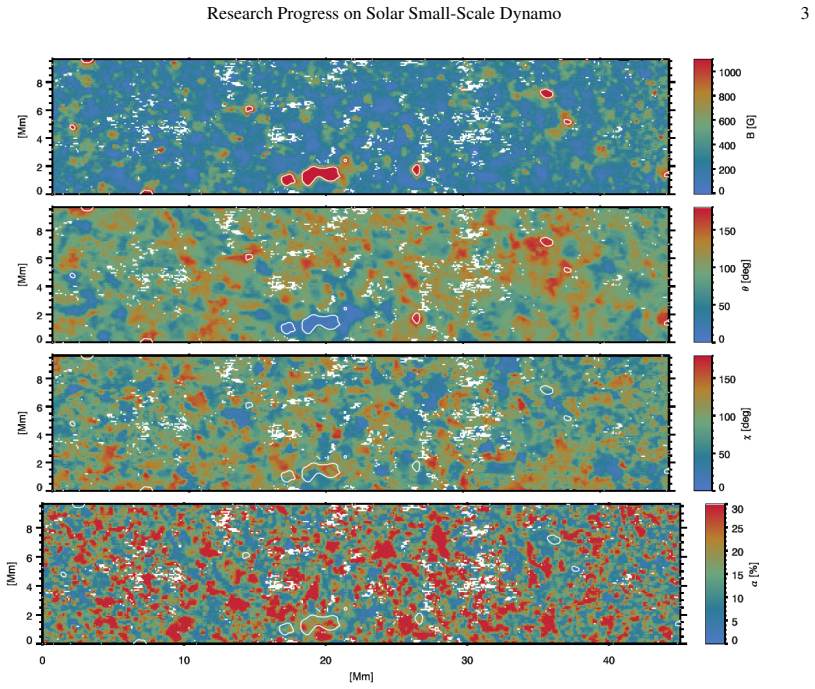
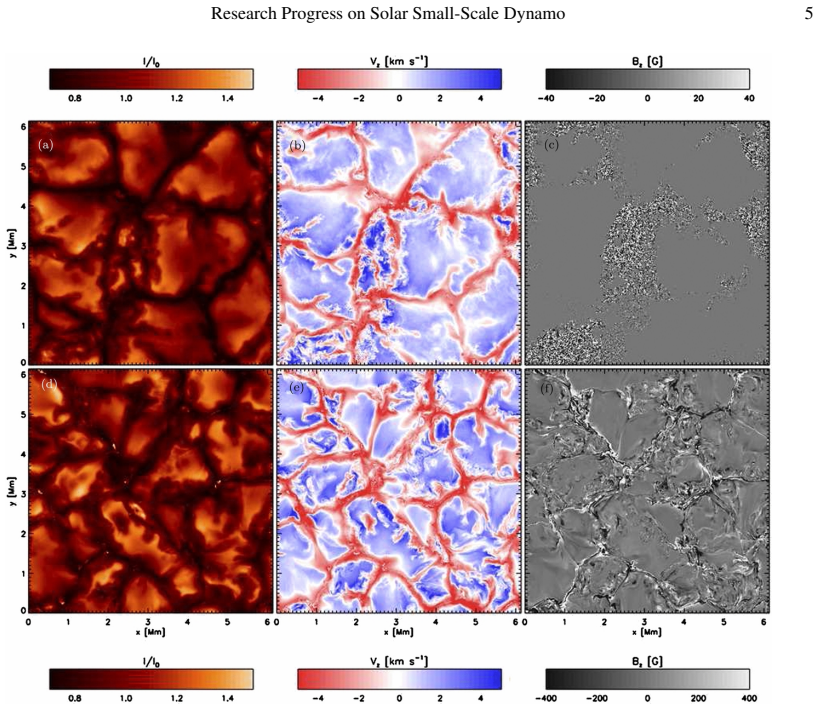
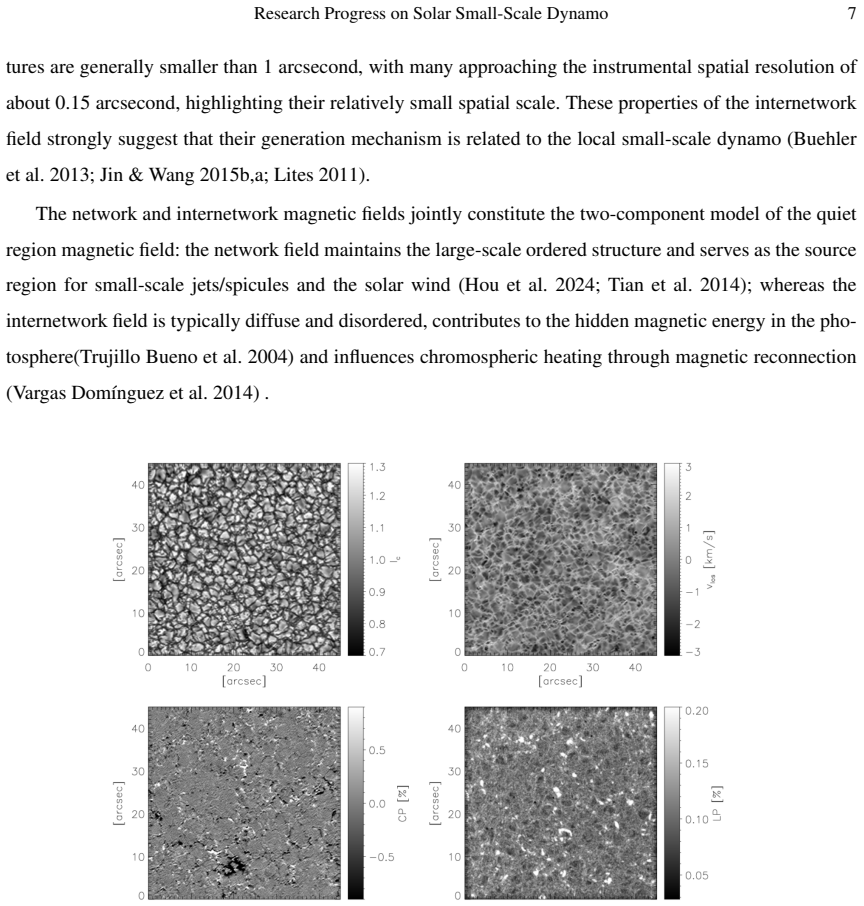
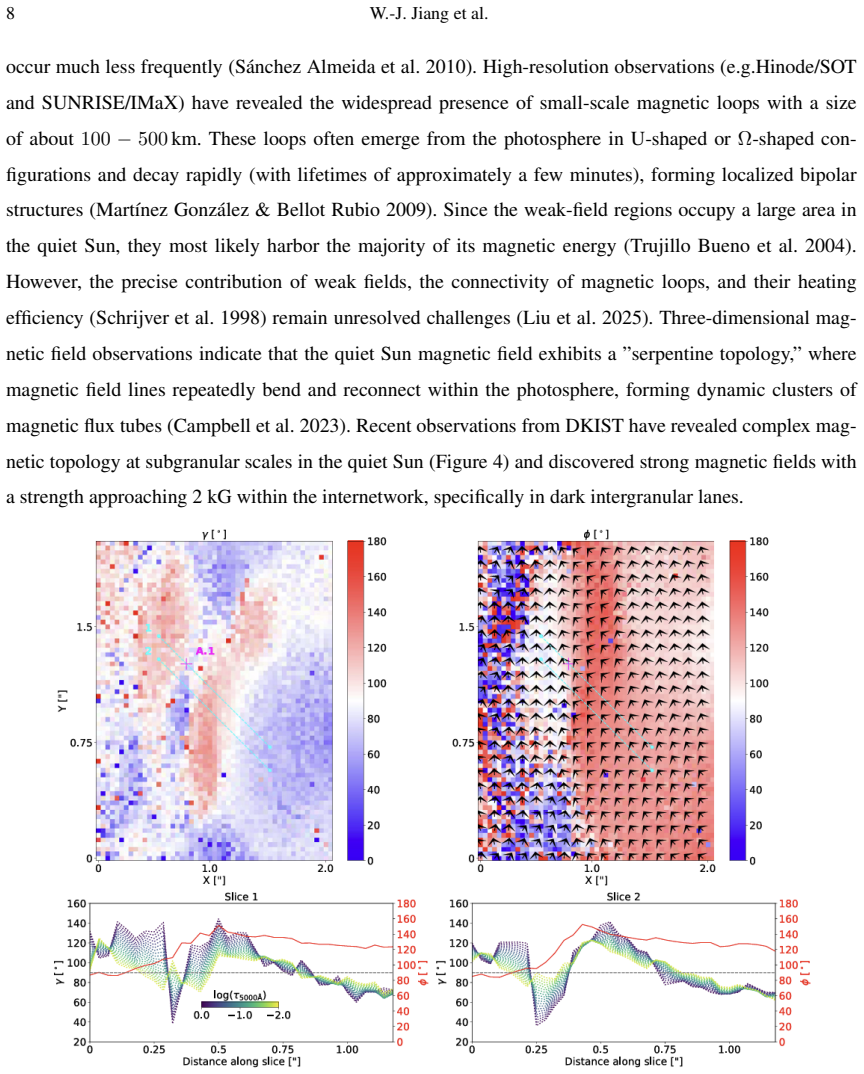
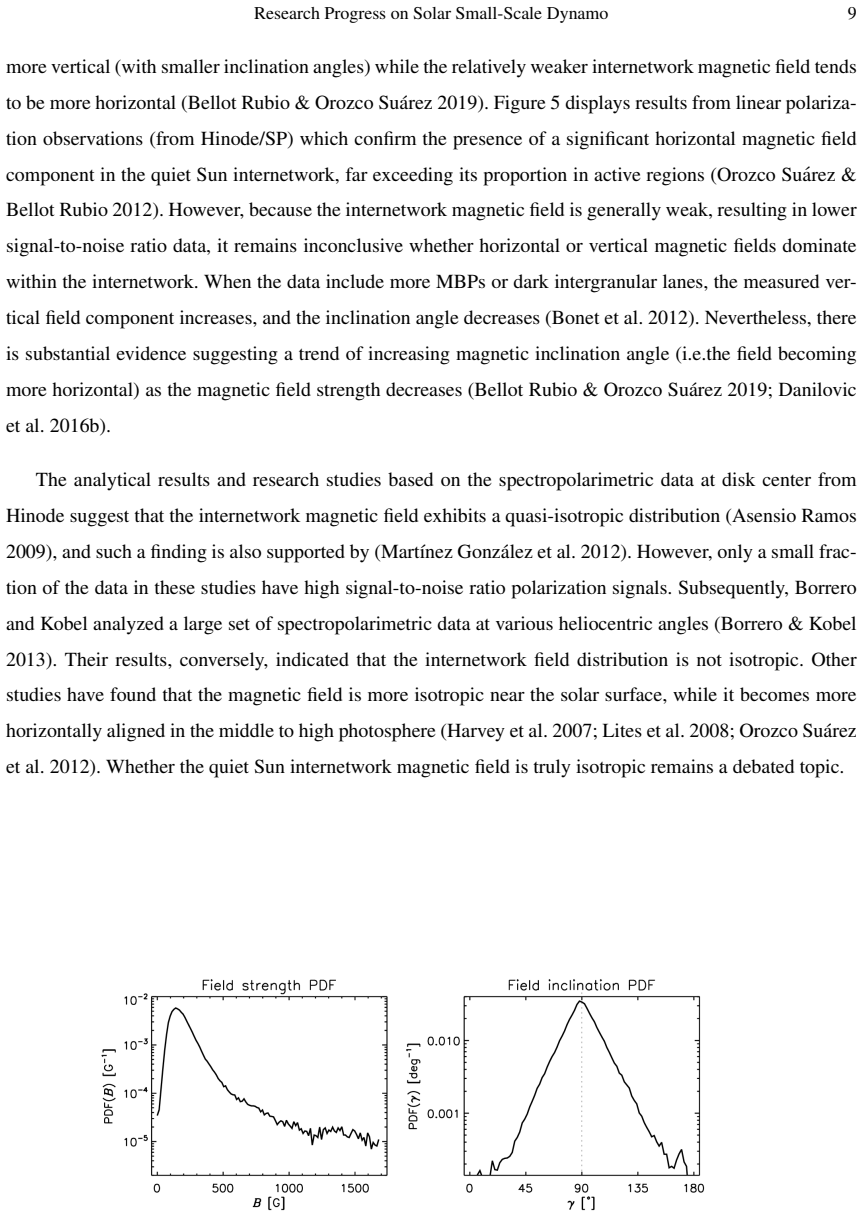
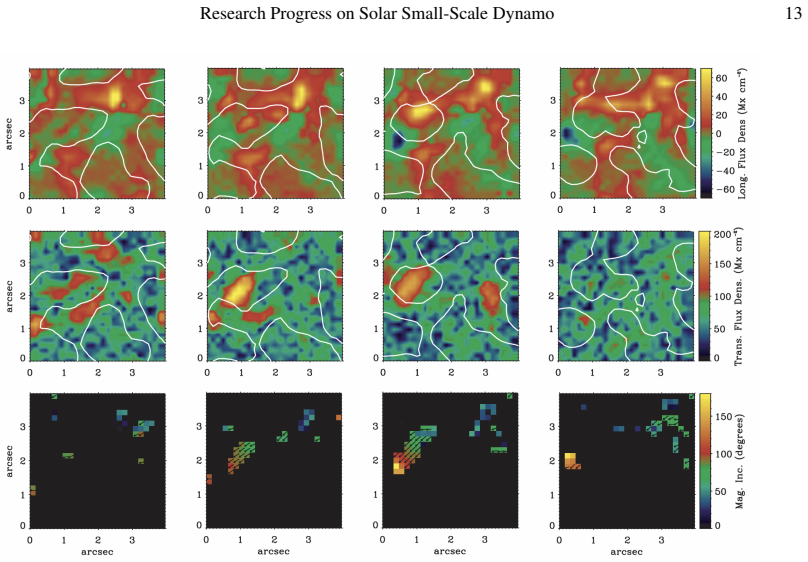
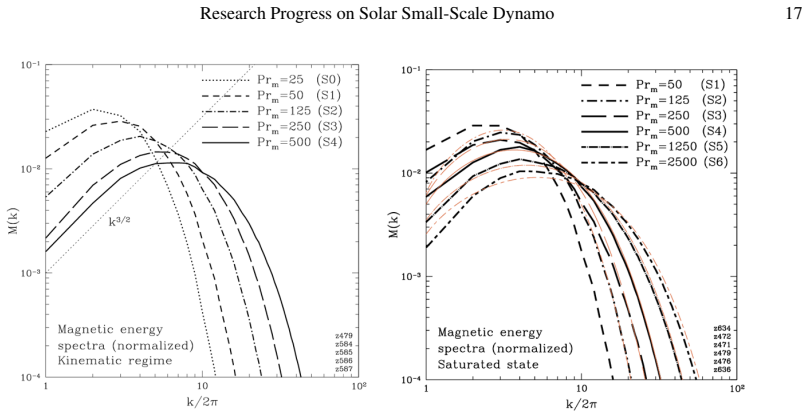
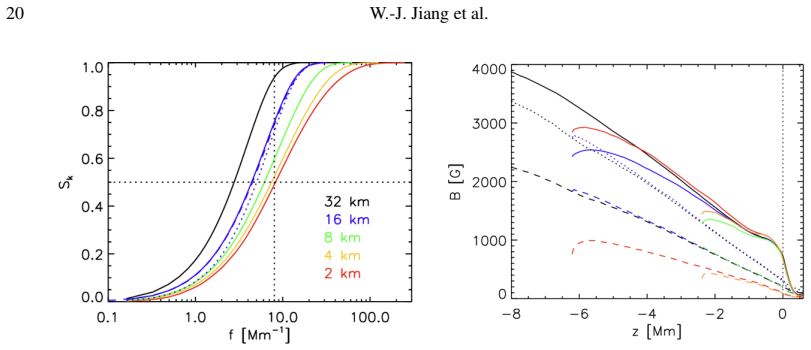
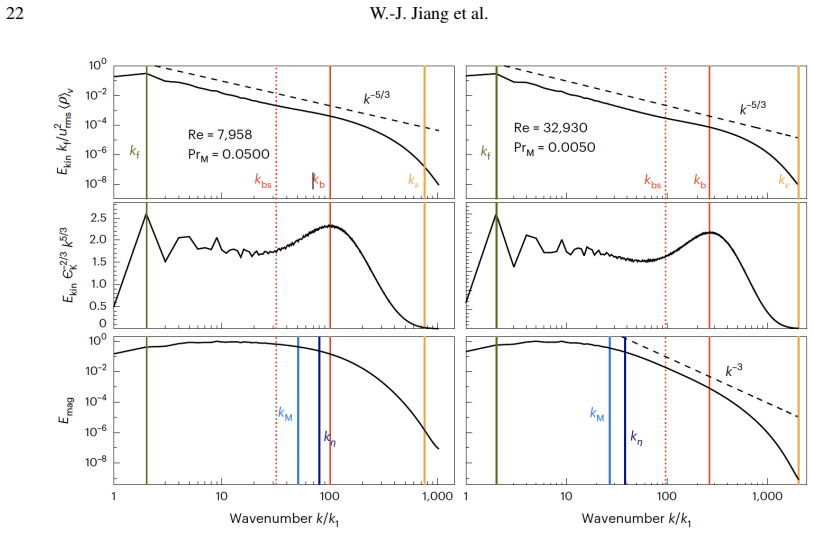
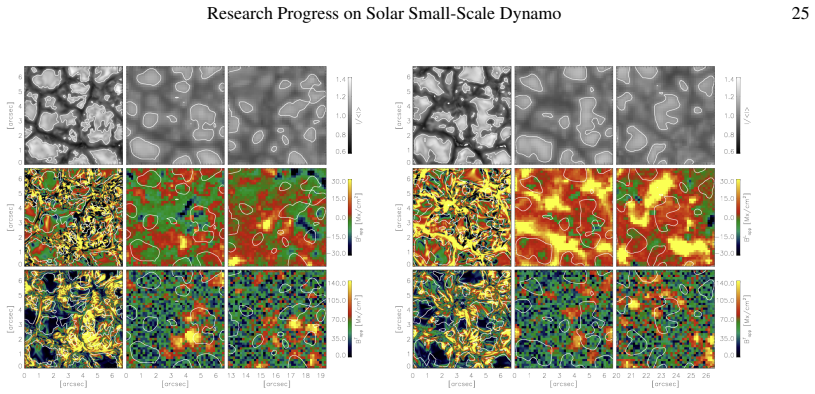
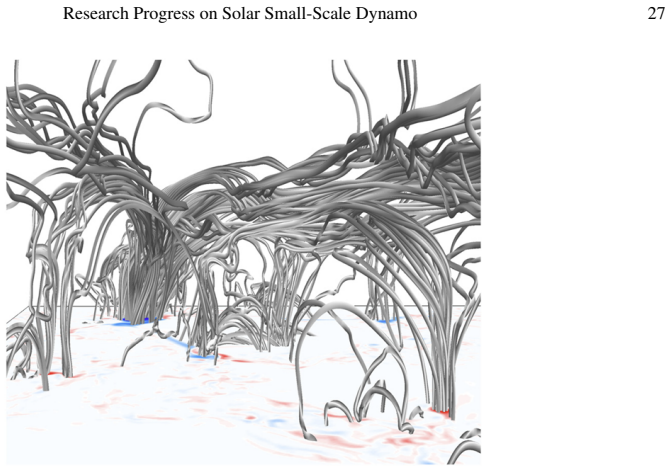
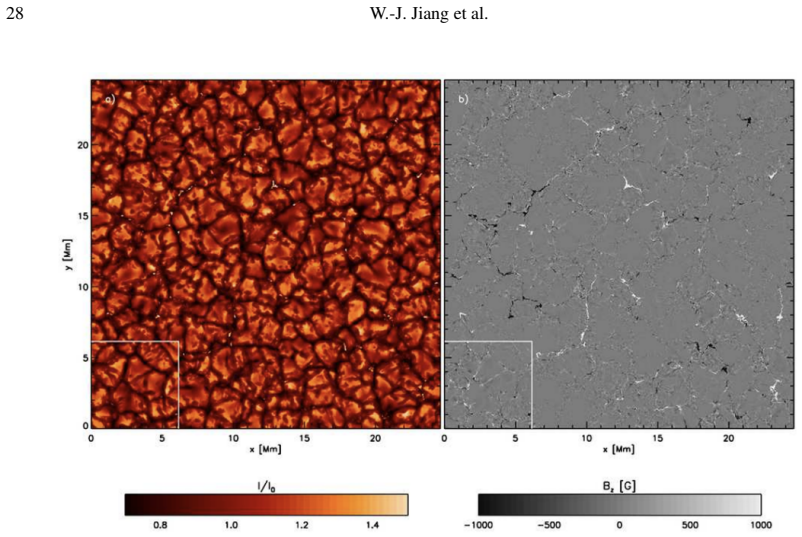
The small-scale solar dynamo theory, as the core mechanism explaining the origin of the persistent, disperse weak magnetic field in the quiet Sun regions, has made significant progress over the past three decades in the fields of observation, theory, and simulation. Breakthrough observations from high-resolution space-based and ground-based telescopes have revealed that the quiet Sun is ubiquitously populated by highly dynamic, mixed-polarity and possibly predominantly horizontal magnetic structures with complex topology. These observations confirm that their total magnetic flux is substantial, with a high and widely distributed magnetic flux emergence rate, strongly suggesting a local dynamo effect independent of the solar cycle and driven by intense turbulence and convection. Theoretical studies indicate that even in the challenging low magnetic Prandtl number ( Pm << 1) environment of the solar photosphere and convection zone, turbulent motions can self-excitedly convert kinetic energy into magnetic energy through the stretching, folding, and twisting of magnetic field lines. MHD simulations have successfully reproduced observed features, demonstrating that a pure small-scale dynamo can operate efficiently and sustain magnetic fields even in an open, stratified solar environment incorporating realistic physical processes. Current research strongly suggests that small-scale magnetic fields constitute the majority of the magnetic energy in the quiet Sun and also influence coronal heating, solar wind acceleration, and radiation distribution. This article conducts a literature review centered on observations, theoretical models, and numerical simulations of the small-scale dynamo, organizing and discussing the relevant research history and progress. Finally, it summarizes the content and provides an outlook on future research from multiple perspectives.
Editorial analysis
A structured set of objections, weighed in public.
Referee Report
Summary. The manuscript is a narrative literature review summarizing three decades of progress on the solar small-scale dynamo. It covers high-resolution observations revealing ubiquitous mixed-polarity, possibly horizontal magnetic structures in the quiet Sun with high flux emergence rates independent of the solar cycle; theoretical arguments that turbulent convection can drive dynamo action even at low magnetic Prandtl number (Pm << 1); and MHD simulations that reproduce observed mixed-polarity fields in open, stratified domains. The review concludes that small-scale fields likely constitute the majority of magnetic energy in the quiet Sun and influence coronal heating, solar wind acceleration, and radiation.
Significance. If the cited body of work is representative, the review would offer a useful synthesis for solar physicists by highlighting the case for local dynamo action decoupled from the global cycle and by pointing to connections with upper-atmosphere energetics. The manuscript correctly notes the enabling role of recent high-resolution data and realistic simulations.
major comments (2)
- [Abstract] Abstract: the assertion that 'current research strongly suggests that small-scale magnetic fields constitute the majority of the magnetic energy in the quiet Sun' rests on an unquantified selection of supportive studies (flux emergence rates, low-Pm theory, MHD runs reproducing mixed-polarity fields) without a systematic literature survey, citation counts, or explicit treatment of papers favoring recycled global-dynamo flux or alternative interpretations of Hanle/Zeeman signals.
- [Abstract] Abstract/Conclusion: the review states it 'organizes and discusses the relevant research history and progress' but provides no methods for literature selection and no discussion of contradictory or alternative results, which directly affects the defensibility of the 'strongly suggests' claim.
minor comments (1)
- [Abstract] Abstract: the adverb 'self-excitedly' is nonstandard; rephrase for clarity (e.g., 'turbulent motions can self-excite the conversion of kinetic energy into magnetic energy').
Simulated Author's Rebuttal
We thank the referee for these detailed comments on the abstract and scope. The points are well taken: the phrasing 'strongly suggests' in the abstract is not accompanied by an explicit literature-selection protocol or balanced treatment of opposing interpretations, which weakens the claim. We will revise the manuscript to qualify the language, add a short methods paragraph on literature selection, and incorporate discussion of alternative views (recycled global-dynamo flux and differing Hanle/Zeeman interpretations). These changes will be made in the abstract, introduction, and conclusion.
read point-by-point responses
-
Referee: [Abstract] Abstract: the assertion that 'current research strongly suggests that small-scale magnetic fields constitute the majority of the magnetic energy in the quiet Sun' rests on an unquantified selection of supportive studies (flux emergence rates, low-Pm theory, MHD runs reproducing mixed-polarity fields) without a systematic literature survey, citation counts, or explicit treatment of papers favoring recycled global-dynamo flux or alternative interpretations of Hanle/Zeeman signals.
Authors: We agree that the absolute phrasing is not justified by a quantitative survey. The manuscript is a narrative review that synthesizes key observational, theoretical, and simulation results published over three decades; it does not claim to be exhaustive or meta-analytic. In revision we will (i) soften the abstract sentence to 'the body of work reviewed here indicates that small-scale fields likely dominate the magnetic energy budget in the quiet Sun', (ii) add a brief paragraph in the introduction describing the criteria used to select the cited literature (focus on high-resolution observations post-2010, low-Pm theory, and stratified MHD simulations), and (iii) insert a short subsection discussing papers that attribute quiet-Sun flux to recycled global-dynamo remnants and alternative interpretations of Hanle depolarization signals. These additions will make the evidential basis explicit. revision: yes
-
Referee: [Abstract] Abstract/Conclusion: the review states it 'organizes and discusses the relevant research history and progress' but provides no methods for literature selection and no discussion of contradictory or alternative results, which directly affects the defensibility of the 'strongly suggests' claim.
Authors: The absence of an explicit selection protocol and of counter-arguments is a genuine limitation of the current draft. We will add a one-paragraph 'Literature selection and scope' subsection at the end of the introduction that states the review is narrative rather than systematic, lists the main search terms and time window used, and acknowledges that papers arguing for dominant recycled flux or different Hanle/Zeeman diagnostics are not comprehensively covered. In the conclusion we will add a sentence noting that the relative contribution of local versus recycled flux remains an active debate. These revisions directly address the referee's concern about defensibility. revision: yes
Circularity Check
No circularity: review summarizes external literature without derivations or self-referential predictions
full rationale
This is a narrative literature review that organizes and discusses existing observations, theoretical models, and MHD simulations from the broader field. No new quantitative predictions, derivations, or first-principles results are presented that could reduce to fitted parameters or self-citations by construction. The central synthesis statement ('Current research strongly suggests...') is explicitly framed as a summary of cited external work rather than an internal derivation. No equations, ansatzes, or uniqueness theorems are introduced within the paper. Self-citations, if present, are not load-bearing for any claimed result. This matches the default expectation for non-circular papers and aligns with the provided reader's assessment of score 0.0.
Axiom & Free-Parameter Ledger
Reference graph
Works this paper leans on
-
[1]
Abramenko , V. I. 2024, in IAU Symposium, Vol. 365, Dynamics of Solar and Stellar Convection Zones and Atmospheres, ed. A. V. Getling & L. L. Kitchatinov , 261
2024
-
[2]
2015, , 522, 188
Amari , T., Luciani , J.-F., & Aly , J.-J. 2015, , 522, 188
2015
-
[3]
2009, , 701, 1032
Asensio Ramos , A. 2009, , 701, 1032
2009
-
[4]
Asensio Ramos , A., & Mart \' nez Gonz \'a lez , M. J. 2014, , 572, A98
2014
-
[5]
Batchelor , G. K. 1950, Quarterly Journal of the Royal Meteorological Society, 76, 133
1950
-
[6]
2019, Living Reviews in Solar Physics, 16, 1
Bellot Rubio , L., & Orozco Su \'a rez , D. 2019, Living Reviews in Solar Physics, 16, 1
2019
-
[7]
M., et al
Berghmans , D., Auch \`e re , F., Long , D. M., et al. 2021, , 656, L4
2021
-
[8]
A., Cabello , I., & S \'a nchez Almeida , J
Bonet , J. A., Cabello , I., & S \'a nchez Almeida , J. 2012, , 539, A6
2012
-
[9]
M., Jafarzadeh , S., Sch \"u ssler , M., & Solanki , S
Borrero , J. M., Jafarzadeh , S., Sch \"u ssler , M., & Solanki , S. K. 2017, , 210, 275
2017
-
[10]
M., & Kobel , P
Borrero , J. M., & Kobel , P. 2011, , 527, A29
2011
-
[11]
M., & Kobel , P
Borrero , J. M., & Kobel , P. 2013, , 550, A98
2013
-
[12]
M., Mart \' nez-Pillet , V., Schlichenmaier , R., et al
Borrero , J. M., Mart \' nez-Pillet , V., Schlichenmaier , R., et al. 2010, , 723, L144
2010
-
[13]
2011, , 741, 92
Brandenburg , A. 2011, , 741, 92
2011
-
[14]
2019, , 879, 57
Brandenburg , A., & Rempel , M. 2019, , 879, 57
2019
-
[15]
2012, , 169, 123
Brandenburg , A., Sokoloff , D., & Subramanian , K. 2012, , 169, 123
2012
-
[16]
2005, , 417, 1
Brandenburg , A., & Subramanian , K. 2005, , 417, 1
2005
-
[17]
Buehler , D., Lagg , A., & Solanki , S. K. 2013, , 555, A33
2013
-
[18]
o gler , A., & Sch \
Cameron , R., V \"o gler , A., & Sch \"u ssler , M. 2011, , 533, A86
2011
-
[19]
J., Keys , P
Campbell , R. J., Keys , P. H., Mathioudakis , M., et al. 2023, , 955, L36
2023
-
[20]
2010, Astronomische Nachrichten, 331, 636
Cao , W., Gorceix , N., Coulter , R., et al. 2010, Astronomische Nachrichten, 331, 636
2010
-
[21]
1999, , 515, L39
Cattaneo , F. 1999, , 515, L39
1999
-
[22]
2007, , 666, L137
Centeno , R., Socas-Navarro , H., Lites , B., et al. 2007, , 666, L137
2007
-
[23]
2020, Living Reviews in Solar Physics, 17, 4
Charbonneau , P. 2020, Living Reviews in Solar Physics, 17, 4
2020
-
[24]
2021, , 656, L7
Chen , Y., Przybylski , D., Peter , H., et al. 2021, , 656, L7
2021
-
[25]
A., Karelsky , K
Chernyshov , A. A., Karelsky , K. V., & Petrosyan , A. S. 2008, , 686, 1137
2008
-
[26]
S., Dogiel , V., Ko , C
Chernyshov , D., Cheng , K. S., Dogiel , V., Ko , C. M., & Ip , W. H. 2009, in The Extreme Sky: Sampling the Universe above 10 keV, 75
2009
-
[27]
Origin of Hydrogen Ionization in the 1 pc Galactic Central Region
Chernyshov , D. O., Leung , G. C. K., Cheng , K. S., Dogiel , V. A., & Tatischeff , V. 2014, arXiv e-prints, arXiv:1412.2740
work page internal anchor Pith review Pith/arXiv arXiv 2014
-
[28]
Cheung , M. C. M., & Isobe , H. 2014, Living Reviews in Solar Physics, 11, 3
2014
-
[29]
P., Zhukov , A
Chitta , L. P., Zhukov , A. N., Berghmans , D., et al. 2023, Science, 381, 867
2023
-
[30]
Choudhuri , A. R. 2013, in IAU Symposium, Vol. 294, Solar and Astrophysical Dynamos and Magnetic Activity, ed. A. G. Kosovichev , E. de Gouveia Dal Pino , & Y. Yan , 37
2013
-
[31]
W., White , S
Cliver , E. W., White , S. M., & Richardson , I. G. 2024, , 961, L46
2024
-
[32]
2016 a , , 594, A103
Danilovic , S., Rempel , M., van Noort , M., & Cameron , R. 2016 a , , 594, A103
2016
-
[33]
Danilovic , S., Sch \"u ssler , M., & Solanki , S. K. 2010 a , , 513, A1
2010
-
[34]
2016 b , , 593, A93
Danilovic , S., van Noort , M., & Rempel , M. 2016 b , , 593, A93
2016
-
[35]
2010 b , , 723, L149
Danilovic , S., Beeck , B., Pietarila , A., et al. 2010 b , , 723, L149
2010
-
[36]
G., Lites , B
de Wijn , A. G., Lites , B. W., Berger , T. E., et al. 2008, , 684, 1469
2008
-
[37]
2018, , 863, 164
del Pino Alem \'a n , T., Trujillo Bueno , J., S t e p \'a n , J., & Shchukina , N. 2018, , 863, 164
2018
-
[38]
2011, , 733, 90
Dikpati , M. 2011, , 733, 90
2011
-
[39]
2007, Science, 318, 1572
Erd \'e lyi , R., & Fedun , V. 2007, Science, 318, 1572
2007
-
[40]
2008, , 676, 680
Fan , Y. 2008, , 676, 680
2008
-
[41]
2009, Living Reviews in Solar Physics, 6, 4
Fan , Y. 2009, Living Reviews in Solar Physics, 6, 4
2009
-
[42]
2014, , 789, 35
Fan , Y., & Fang , F. 2014, , 789, 35
2014
-
[43]
M., & Krieger , A
Golub , L., Davis , J. M., & Krieger , A. S. 1979, , 229, L145
1979
-
[44]
R., del Toro Iniesta , J
Go s i \'c , M., Bellot Rubio , L. R., del Toro Iniesta , J. C., Orozco Su \'a rez , D., & Katsukawa , Y. 2016, , 820, 35
2016
-
[45]
R., Orozco Su \'a rez , D., Katsukawa , Y., & del Toro Iniesta , J
Go s i \'c , M., Bellot Rubio , L. R., Orozco Su \'a rez , D., Katsukawa , Y., & del Toro Iniesta , J. C. 2014, , 797, 49
2014
-
[46]
G., Schmidt , W., & Schleicher , D
Grete , P., Vlaykov , D. G., Schmidt , W., & Schleicher , D. R. G. 2017, , 95, 033206
2017
-
[47]
F., Gowardhan , A
Grinstein , F. F., Gowardhan , A. A., & Wachtor , A. J. 2011, Physics of Fluids, 23, 034106
2011
-
[48]
J., Schrijver , C
Hagenaar , H. J., Schrijver , C. J., & Title , A. M. 2003, ApJ, 584, 1107
2003
-
[49]
W., Branston , D., Henney , C
Harvey , J. W., Branston , D., Henney , C. J., Keller , C. U., & SOLIS and GONG Teams . 2007, , 659, L177
2007
-
[50]
1973, , 28, 61
Harvey , K., & Harvey , J. 1973, , 28, 61
1973
-
[51]
Hazra , G., Nandy , D., Kitchatinov , L., & Choudhuri , A. R. 2023, , 219, 39
2023
-
[52]
2022, , 933, 199
Hotta , H., Kusano , K., & Shimada , R. 2022, , 933, 199
2022
-
[53]
2014, , 786, 24
Hotta , H., Rempel , M., & Yokoyama , T. 2014, , 786, 24
2014
-
[54]
2015, , 803, 42
Hotta , H., Rempel , M., & Yokoyama , T. 2015, , 803, 42
2015
-
[55]
2016, Science, 351, 1427
Hotta , H., Rempel , M., & Yokoyama , T. 2016, Science, 351, 1427
2016
-
[56]
2024, Nature Astronomy, 8, 1246
Hou , C., He , J., Duan , D., et al. 2024, Nature Astronomy, 8, 1246
2024
-
[57]
S., Xia , L., et al
Huang , Z., Madjarska , M. S., Xia , L., et al. 2014, , 797, 88
2014
-
[58]
J., & Yokoyama , T
Iida , Y., Hagenaar , H. J., & Yokoyama , T. 2012, , 752, 149
2012
-
[59]
J., & Yokoyama , T
Iida , Y., Hagenaar , H. J., & Yokoyama , T. 2015, , 814, 134
2015
-
[60]
2009, , 495, 607
Ishikawa , R., & Tsuneta , S. 2009, , 495, 607
2009
-
[61]
2010, , 713, 1310
Ishikawa , R., Tsuneta , S., & Jur c \'a k , J. 2010, , 713, 1310
2010
-
[62]
B., Schekochihin , A
Iskakov , A. B., Schekochihin , A. A., Cowley , S. C., McWilliams , J. C., & Proctor , M. R. E. 2007, , 98, 208501
2007
-
[63]
H., Cameron , R
Jiang , J., Hathaway , D. H., Cameron , R. H., et al. 2014, , 186, 491
2014
-
[64]
2019, , 871, 16
Jiang , J., Song , Q., Wang , J.-X., & Baranyi , T. 2019, , 871, 16
2019
-
[65]
L., & Wang , J
Jin , C. L., & Wang , J. X. 2012, , 745, 39
2012
-
[66]
L., & Wang , J
Jin , C. L., & Wang , J. X. 2015 a , , 807, 70
2015
-
[67]
2019, Research in Astronomy and Astrophysics, 19, 069
Jin , C.-L., & Wang , J.-X. 2019, Research in Astronomy and Astrophysics, 19, 069
2019
-
[68]
L., Wang , J
Jin , C. L., Wang , J. X., Song , Q., & Zhao , H. 2011, , 731, 37
2011
-
[69]
2015 b , , 806, 174
Jin , C., & Wang , J. 2015 b , , 806, 174
2015
-
[70]
2009, , 690, 279
Jin , C., Wang , J., & Zhao , M. 2009, , 690, 279
2009
-
[71]
2026, ApJS, 283, 33
Jin , C., Zhou , G., Hu , J., & Wang , J. 2026, ApJS, 283, 33
2026
-
[72]
a pyl \"a , P. J., K \
K \"a pyl \"a , P. J., K \"a pyl \"a , M. J., & Brandenburg , A. 2018, Astronomische Nachrichten, 339, 127
2018
-
[73]
a pyl \"a , P. J., K \
K \"a pyl \"a , P. J., K \"a pyl \"a , M. J., Olspert , N., Warnecke , J., & Brandenburg , A. 2017, , 599, A4
2017
-
[74]
Kazantsev , A. P. 1968, Soviet Journal of Experimental and Theoretical Physics, 26, 1031
1968
-
[75]
V., Collados , M., Solanki , S
Khomenko , E. V., Collados , M., Solanki , S. K., Lagg , A., & Trujillo Bueno , J. 2003, , 408, 1115
2003
-
[76]
2017, , 604, A66
Khomenko , E., Vitas , N., Collados , M., & de Vicente , A. 2017, , 604, A66
2017
-
[77]
2025, , 697, A29
Khomenko , E., Vitas , N., Collados , M., & Modestov , M. 2025, , 697, A29
2025
-
[78]
2026, arXiv e-prints, arXiv:2604.01718
Kitchatinov , L. 2026, arXiv e-prints, arXiv:2604.01718
-
[79]
N., Kosovichev , A
Kitiashvili , I. N., Kosovichev , A. G., Mansour , N. N., & Wray , A. A. 2011, , 727, L50
2011
-
[80]
N., Kosovichev , A
Kitiashvili , I. N., Kosovichev , A. G., Mansour , N. N., & Wray , A. A. 2015, , 809, 84
2015
discussion (0)
Sign in with ORCID, Apple, or X to comment. Anyone can read and Pith papers without signing in.