REVIEW 4 major objections 3 minor 17 references
A lower bound on critical points of the electric potential of a knot
T0 review · 4 major / 3 minor · reviewed 2026-08-14 · deepseek-v4-flash
Pith's one-line read The paper proves that for any knot $K$, the electric potential of a uniform charge on $K$ has at least $2t(K)+2$ critical points, where $t(K)$ is the tunnel number, linking electrostatics to a topological invariant.
desk verdict A genuinely new inequality and a clever Morse-theoretic idea, but the proof as written has a load-bearing gap around the Morse perturbation that the author needs to fix. read the letter →
The pith
A machine-rendered reading of the paper's core claim, the machinery that carries it, and where it could break.
The reading
What carries the argument
The central object is the electric potential $$\Phi(x) = \$int_0^{{2\pi}}$ \frac{|r'(t)|}{|x-r(t)|}dt$$ on the complement of the knot, which is smooth and harmonic. The machinery is Morse theory on a compact knot complement: the potential is proper with gradient transverse to the boundary, so Morse inequalities and the Euler-characteristic identity apply; harmonicity forces every interior critical point to have index 1 or 2. The load-bearing geometric mechanism is that the one-dimensional unstable manifolds of the index-2 critical points form arcs whose union with the knot has handlebody complement, i.e., a tunneling; the stable manifolds of the index-1 critical points form arcs to infinity that allow a deformation retraction to a wedge of circles.
What would settle it
Numerically integrate $\nabla \Phi$ for a trefoil parametrization and count the zeros of the electric field; a count of 3 or fewer, including the point at infinity, would contradict the theorem's lower bound of 4.
Extended reading notes
Core claim
Central claim (Theorem 1.1): for every knot $K$, $cp(K) \geq 2t(K)+2$, where $cp(K)$ is the smallest number of critical points of the electric potential over all parametrizations in the knot's isotopy class, and $t(K)$ is the tunnel number. The proof constructs a tunneling from the unstable manifolds of the index-2 critical points, which forces the number $m_2$ of such points to be at least $t(K)$. Harmonicity of the potential gives the Morse count $m_1 - m_2 = 1$, and adding the mandatory critical point at infinity yields $cp(K) = m_0 + m_1 + m_2 + m_3 \geq 1 + (m_2+1) + m_2 + 0 = 2t(K)+2$.
Load-bearing premise
The proof assumes the electric potential can be perturbed to a Morse function without losing the harmonicity that guarantees every interior critical point has index 1 or 2; if that is impossible, the count $m_1 - m_2 = 1$ could fail.
Editorial extensions
If this is right
- For any knot with tunnel number $t$, the electric potential has at least $2t+2$ critical points; in particular, every non-trivial knot has at least four.
- The number of index-2 critical points (saddle-type equilibria) is itself at least the tunnel number, since their unstable manifolds form a tunneling.
- No parametrization in the isotopy class can reduce the equilibrium count below $2t(K)+2$, because the bound holds for all of them.
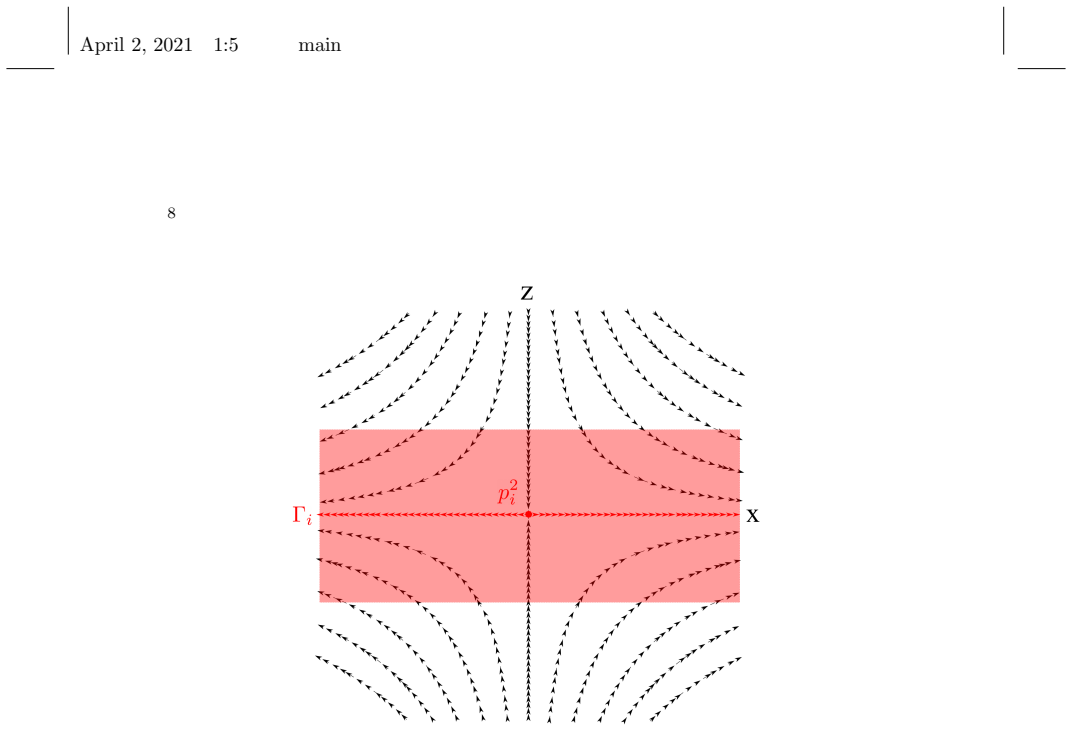
- For the unknot, the bound reduces to $cp \geq 2$, matching the picture of one critical point at infinity plus one interior saddle.
Reading between the lines
- A numerical computation of the electric potential for torus knots, whose tunnel number is 1, could test whether the lower bound $4$ is ever exceeded or is sharp for that family.
- The proof's arc construction suggests a dictionary between electrostatic equilibria and handlebody decompositions that may extend to links or to knots in other 3-manifolds, replacing tunnel number with the Heegaard genus of the exterior.
- If for some knot a parametrization achieves exactly $2t(K)+2$ critical points, then the electrostatic count would realize the tunnel number geometrically, making $cp(K)$ equal to $2t(K)+2$ rather than merely bounded by it.
Signed reviews
Editorial analysis
A structured set of objections, weighed in public.
Referee Report
Summary. The paper studies the electric potential Φ of a knot K, defined by a line integral over a parametrization of K, and claims a lower bound cp(K) ≥ 2t(K) + 2 on the minimal number of critical points among all parametrizations in the isotopy class, where t(K) is the tunnel number. The proof strategy is Morse-theoretic: Section 2 argues that a harmonic potential has only index-1 and index-2 finite critical points (with the point at infinity serving as an index-0 critical point), giving m1 − m2 = 1; Section 3 uses the unstable manifolds of index-2 critical points to construct a tunneling with m2 arcs and the stable manifolds of index-1 critical points to show the complement deformation retracts to a handlebody, yielding m2 ≥ t(K); combining these gives the claimed inequality.
Significance. If the theorem were established, it would provide a new and attractive connection between critical points of an electrostatic potential and a classical knot invariant, with a surprisingly clean lower bound. The overall Morse-theoretic plan is creative and the paper is clearly written. However, the proof as written contains a load-bearing, unsupported step—the perturbation of Φ to a Morse function that preserves the harmonicity-based index restrictions—and the treatment of the point at infinity conflicts with standard facts about harmonic functions. The topological construction of the tunneling also requires more careful justification. These issues prevent the paper from being accepted in its current form.
major comments (4)
- [Section 2 ("we may assume the electric potential Φ is Morse by adding a perturbation if necessary")] This step is not justified. A generic perturbation of a smooth function is not harmonic, so Lemma 2.2's use of harmonicity to restrict critical point indices to {1,2} (plus ∞ of index 0) does not apply to the perturbed function; equation (2.1) then gives only m0 − m1 + m2 − m3 = 0, not m1 − m2 = 1. Moreover, a small perturbation of a non-Morse function can reduce the number of critical points (for example, f(x) = x^3 has one degenerate critical point, while f(x) = x^3 + εx has none for ε > 0), so a lower bound for the perturbed function would not by itself bound cp(K). The paper must either prove that a generic parametrization yields a Morse potential, or treat degenerate critical points directly (for example, via stratified Morse theory) and show that the identity m1 = m2 + 1 survives. Since the final inequality cp(K) ≥ 2t(K) + 2 rests on m1 = m2 + 1, this is load-bearing.
- [Section 1 and Lemma 2.2 (point at infinity)] The claim that Φ is smooth on S^3 − K with Φ(∞) = 0 is false as stated. In stereographic coordinates y = x/|x|^2 near infinity, the leading term of Φ is length(K)|y|, which is not differentiable at y = 0; in addition, a nonconstant harmonic function on S^3 − K cannot attain an interior minimum at ∞ by the maximum principle. Thus ∞ is not a Morse critical point of index 0, and the count m0 = 1 used in the final display cp(K) = m0 + m1 + m2 + m3 is unsupported. If one instead removes a neighborhood of ∞ and treats the boundary contribution, that boundary term is not analyzed anywhere in the paper.
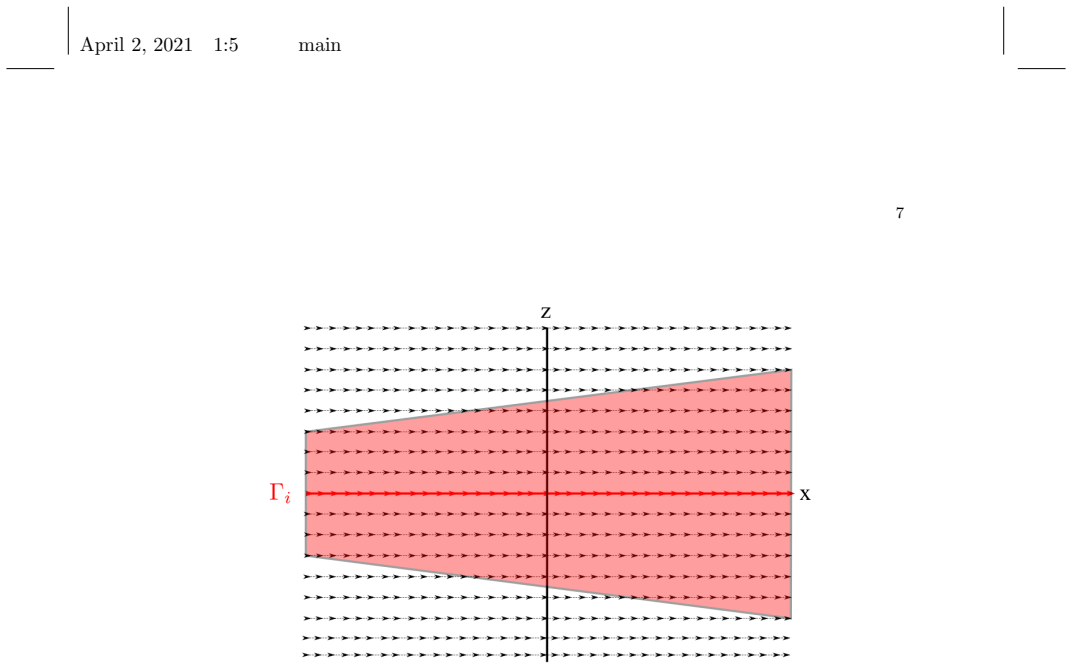
- [Section 3.2, Lemma 3.1 (slanted tube)] The "slanted tube" defined by y^2 + z^2 = (1/(2x) + 1)^2 is not well-defined on the stated interval −1 < x < 1 because 1/(2x) has a pole at x = 0. The argument that the gradient points inward throughout the tube because it points inward at one point is not a proof unless the condition is verified for every boundary point; for the tube y^2 + z^2 = 1 a direct computation works, but the slanted version is not addressed. The subsequent smoothing of the piecewise-smooth boundary is deferred to "mollifiers" with no details, and the smoothness and finiteness of the first hitting time C(x) in Section 3.3 are merely asserted. These gaps concern the construction of the tunneling from the Γ_i arcs and are needed for the deformation retraction argument.
- [Section 1 and Section 3.3 (definition of handlebody vs. homotopy equivalence)] The paper defines a handlebody as a space "homotopic to the three dimensional ball with solid handles attached," but the standard definition is homeomorphic to such a space. The deformation retraction in Section 3.3 shows only that the complement S^3 − (K ∪ Γ) is homotopy equivalent to the handlebody B. Homotopy equivalence to a handlebody is not the same as being a handlebody, so the conclusion m2 ≥ t(K) requires an additional argument (for example, that a compact, irreducible 3-manifold with connected boundary and free fundamental group is a handlebody, or an explicit construction of a Heegaard splitting). As written, this is a load-bearing gap in the proof of m2 ≥ t(K).
minor comments (3)
- [Section 2 (compact manifold with boundary)] The assertion that the standard Morse theorems hold on the compact manifold with boundary because the gradient is "transversely intersecting the boundary" needs a reference or proof; the behavior of the electric potential's gradient on the torus boundary of the tubular neighborhood of K is not analyzed.
- [Section 3.2 (notation)] The notation "∂Γ_i" for the tube around Γ_i is an abuse of notation; the tube is not the boundary of the unstable manifold. This should be clarified to avoid confusion.
- [Introduction] The phrase "zeros of the electric field" in the first paragraph should be "critical points of the potential" to match the rest of the paper and the actual definition of cp(K).
Circularity Check
No significant circularity: the lower bound is derived from standard Morse theory and the definition of tunnel number, not from the conclusion.
full rationale
The paper's derivation is self-contained in the relevant sense. cp(K) is defined as the minimal number of critical points over parametrizations, and the proof legitimately fixes a parametrization attaining that minimum; the subsequent inequality is a lower bound on that minimal quantity, not an assumption of the conclusion. Lemma 2.2 uses the facts that the electric potential is harmonic and that the knot complement has Euler characteristic zero to obtain m1 - m2 = 1; this is a standard Morse-theoretic count, not a restatement of Theorem 1.1. The construction in Section 3 builds a tunneling from the unstable manifolds of index-2 critical points, giving t(K) ≤ m2, and then combines this with Lemma 2.2 to count critical points; the final inequality 1 + (m2+1) + m2 + 0 = 2m2+2 ≥ 2t(K)+2 is pure arithmetic from those independent inputs. There are no fitted parameters, no quantities defined in terms of the target invariant, and no load-bearing self-citations: the cited results (Morse theory, Waldhausen's theorem, homology of knot complements, Milnor's normal form) are external textbook or classical results. The concerns about whether a generic Morse perturbation preserves harmonicity are substantive mathematical-correctness objections, but they are not circularity: even if the argument is flawed, it does not reduce to assuming Theorem 1.1 or to renaming an input as a prediction. Accordingly, no circular step meeting the evidentiary standard of the review is present.
Assumptions & free parameters
assumptions (4)
- ad hoc to paper The electric potential Φ is smooth and harmonic on S^3 - K and can be perturbed to a Morse function while preserving the critical point indices used in the proof.
- domain assumption The point at infinity in S^3 serves as a well-defined critical point of index 0 of the extended potential.
- standard math Morse-Smale rearrangement provides a gradient-like perturbation with the same critical points and indices and transverse stable and unstable manifolds.
- ad hoc to paper A deformation retraction of S^3 - A onto a handlebody B implies the complement of K ∪ Γ is a handlebody, i.e. the Γ arcs form a tunneling.
Cite this review
Pith. "Pith review of A lower bound on critical points of the electric potential of a knot." pith.science (2026). https://pith.science/paper/DA6TLV5M
@misc{pith2026190801942,
  author       = {Pith},
  title        = {Pith review of: A lower bound on critical points of the electric potential of a knot},
  year         = {2026},
  howpublished = {\url{https://pith.science/paper/DA6TLV5M}},
  note         = {Machine review of arXiv:1908.01942}
}
abstract
Given a knot $K$ parametrized by $r: [0,2\pi] \to \mathbb{R}^3$, we can define the electric potential on its complement by $\Phi(x) = \int_0^{2\pi} \frac{|r'(t)|}{|x - r(t)|}dt$. Physicists and knot theorists want to understand the critical points of the potential and their behavior. The tunneling number $t(K)$ of a knot is the smallest number of arcs one needs to add to a knot so the complement is a handlebody. We show the number of critical points of the potential is at least $2t(K) + 2$. The result is proven using Morse theory and stable manifold theory.
Figures

Reference graph
Works this paper leans on
-
[1]
K. L. Baker, T. Kobayashi, and Y. Rieck, The spectrum of the growth rate of the tunnel number is infinite. Proc. Amer. Soc. 144 (2016). pp. 3609-3618
work page 2016
-
[2]
G. Burde and H. Zieschang, Knots. de Gruyter Studies in Mathematics. (Walter de Gruyter, 2003)
work page 2003
-
[3]
Clark, The Heegaard genus of manifolds obtained by surgery on links and knots
B. Clark, The Heegaard genus of manifolds obtained by surgery on links and knots. International Journal of Mathematics and Mathematical Sciences. 3 (1980). pp. 583-589
work page 1980
-
[4]
J. Milnor, Morse Theory. Annals of Mathematics Studies. 51 (Princeton University Press, New Jersey, 1963)
work page 1963
-
[5]
Nicolaescu, An Invitation to Morse Theory
L. Nicolaescu, An Invitation to Morse Theory. Universitext. (Springer, 2007)
work page 2007
- [6]
-
[7]
Scharlemann, Heegaard splittings of compact 3-manifolds
M. Scharlemann, Heegaard splittings of compact 3-manifolds. https://arxiv.org/abs/math/0007144
-
[8]
Schleimer, Waldhausen's Theorem
S. Schleimer, Waldhausen's Theorem. Geometry & Topology Monographs. 12 (2007). pp. 299-317
work page 2007
Show all 17 references
-
[9]
Stein and R
E. Stein and R. Shakarchi, Princeton Lectures in Analysis III: Real Analysis. (Princeton University Press, New Jersey, 2005)
2005
-
[10]
write newline
" write newline "" before.all 'output.state := FUNCTION blank.sep after.quote 'output.state := FUNCTION fin.entry output.state after.quoted.block = 'skip 'add.period if write newline FUNCTION new.block output.state before.all = 'skip output.state after.quote = after.quoted.blo...
-
[11]
Lorentz and D
R. Lorentz and D. B. Benson, Deterministic and nondeterministic flow-chart interpretations, J. Comput. System Sci . 27 (1983) 400--433
1983
-
[12]
M. J. Beeson, Foundations of Constructive Mathematics (Springer, Berlin, 1985)
1985
-
[13]
K. L. Clark, Negations as failure, in Logic and Data Bases , eds. H. Gallaire and J. Winker (Plenum Press, New York, 1973), pp. 293--306
1973
-
[14]
Joliat, A simple technique for partial elimination of unit productions from LR(k) parsers, IEEE Trans
M. Joliat, A simple technique for partial elimination of unit productions from LR(k) parsers, IEEE Trans. Comput . C-27 (1976) 753--764
1976
-
[15]
Dolve, Unanimity in an unknown and unreliable environment, in Proc
D. Dolve, Unanimity in an unknown and unreliable environment, in Proc. 22nd Annual Symposium on Foundations of Computer Science , Nashville, TN (Oct. 1981), pp. 159--168
1981
-
[16]
Tamassia, C
R. Tamassia, C. Batini and M. Talamo, An algorithm for automatic layout of entity relationship diagrams, in Entity-Relationship Approach to Software Engineering , Proc. 3rd Int. Conf. on Entity-Relationship Approach , eds. C. G. Davis, S. Jajodia, P. A. Ng and R. T. Yeh (North...
1983
-
[17]
W. L. Gewirtz, Investigations in the theory of descriptive complexity, Ph. D. Thesis, New York University (1974)
1974
Reviewed August 14, 2026 · model on record in the stance chip above.
Discussion (0). Continue with ORCID to comment.