On relations of anisotropy and linear inhomogeneity using Backus average
Pith reviewed 2026-05-25 16:27 UTC · model grok-4.3
The pith
Averaging isotropic layers with linear velocity increase produces explicit relations among anisotropy measures and inhomogeneity coefficients.
A machine-rendered reading of the paper's core claim, the machinery that carries it, and where it could break.
Core claim
Application of the layer-averaging procedure to isotropic layers whose velocities increase linearly with depth produces an equivalent anisotropic medium in which the anisotropy measures satisfy algebraic relations with the linear inhomogeneity coefficients, forming a system of three equations for nine unknowns that can be further constrained by independent seismological observations from field data.
What carries the argument
The layer-averaging procedure applied to isotropic layers whose velocities increase linearly with depth.
If this is right
- The anisotropy measures become expressible in terms of the linear coefficients once the system is made well-posed by external constraints.
- The equations supply a direct test of whether observed anisotropy in a given region is consistent with the linear inhomogeneity model.
- Field data from two measurement methods can be inserted into the system to evaluate the validity of the derived relations for that region.
Where Pith is reading between the lines
- Satisfaction of the equations would indicate that the linear velocity trend alone suffices to produce the observed anisotropy through layering.
- The same algebraic structure could be examined for sequences whose velocity variation deviates from strict linearity to quantify the effect of that deviation.
- The reduction from nine to fewer independent parameters may simplify inversion procedures that must recover both anisotropy and inhomogeneity from surface data.
Load-bearing premise
The velocity field of the constituent isotropic layers increases linearly with depth.
What would settle it
Comparison of the nine parameters measured independently in a sedimentary sequence known to follow linear velocity trends against the three derived equations to check for consistency.
Figures
read the original abstract
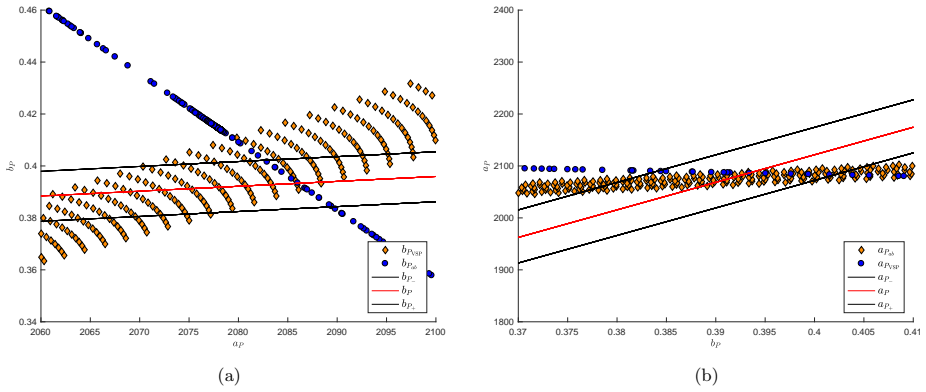
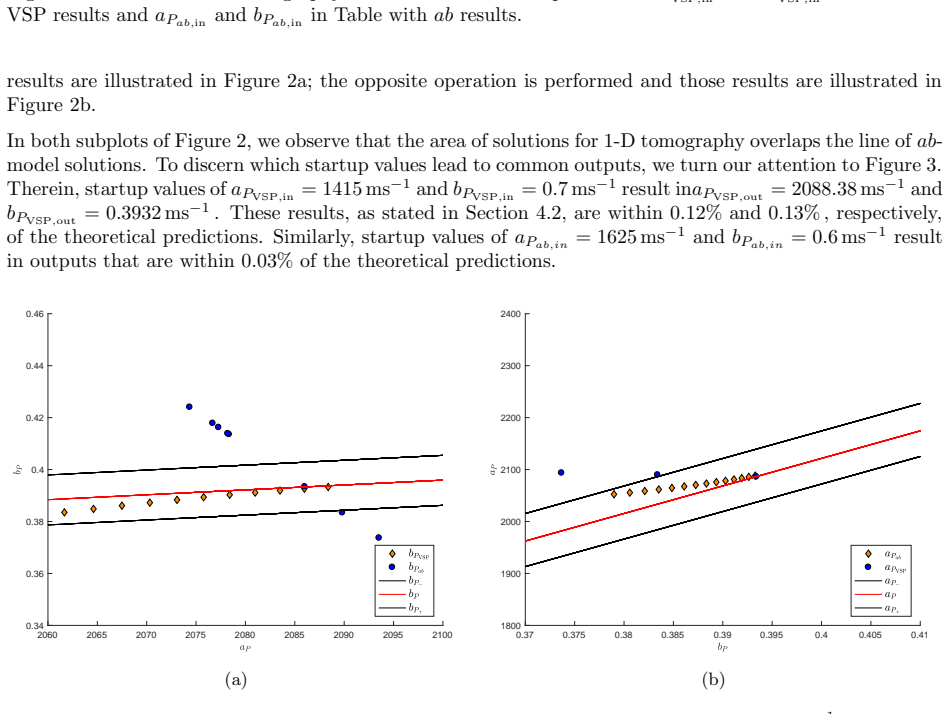
The anisotropy of an equivalent medium resulting from the Backus (1962) average is induced by the vertical inhomogeneity among its constituent layers. The velocity field of the constituent isotropic layers increases linearly with depth, which is assumed to be a good seismological description of sedimentary layers Slotnick (1959). We derive an analytical relationship between the anisotropy, characterized by the Thomsen (1986) parameters, and the linear inhomogeneity parameters, which forms a system of three equations for nine unknowns. To obtain well-posedness, we constrain the problem by considering two seismological methods applied to field data. We use the results from the two methods, for a particular region of interest, to assess the validity of the analytical relation.
Editorial analysis
A structured set of objections, weighed in public.
Referee Report
Summary. The paper derives an analytical relationship between Thomsen (1986) anisotropy parameters and linear inhomogeneity parameters by applying the Backus (1962) average to a stack of isotropic layers whose P- and S-wave velocities increase linearly with depth (Slotnick 1959). This produces a system of three equations in nine unknowns. The underdetermined system is then closed by incorporating results from two independent seismological methods applied to field data from a specific region, and those same results are used to assess the validity of the derived relation.
Significance. If the derivation is correct and the field-data test is independent, the work supplies an explicit analytical bridge between observed effective anisotropy and the underlying linear velocity gradient in sedimentary sequences. This could be useful for interpreting seismic data in basins where linear velocity trends are a reasonable first-order model. The attempt to link theory directly to field observations is a positive feature, though its value hinges on the independence of the validation step.
major comments (2)
- [Validation procedure] Validation procedure (text following the derivation): the three-equation system is both closed and validated using results from two seismological methods applied to the same region. The manuscript must demonstrate that these methods are independent of the linear-inhomogeneity assumption and of each other; otherwise the consistency test is circular and does not constitute an external check on the analytical relation.
- [Derivation section] Derivation of the three equations (central analytical section): the mapping from the Backus-averaged stiffnesses to the Thomsen parameters is stated to exist, but the explicit algebraic steps, any intermediate approximations, and the precise definitions of the nine linear-inhomogeneity parameters are not reproduced in sufficient detail for independent verification. Without these, the claim that the system is exactly three equations in nine unknowns cannot be assessed.
minor comments (2)
- [Abstract] Abstract: the citation “sedimentary layers Slotnick (1959)” is missing the preposition “(after” or equivalent; the reference should be formatted consistently with the rest of the manuscript.
- [Notation and symbols] Notation: the nine linear inhomogeneity parameters are introduced without a compact table or explicit list of symbols; a short table would improve readability.
Simulated Author's Rebuttal
We thank the referee for the constructive comments. We address each major comment below. We agree that additional detail in the derivation and explicit discussion of method independence will strengthen the manuscript, and we will incorporate these changes in the revision.
read point-by-point responses
-
Referee: [Validation procedure] Validation procedure (text following the derivation): the three-equation system is both closed and validated using results from two seismological methods applied to the same region. The manuscript must demonstrate that these methods are independent of the linear-inhomogeneity assumption and of each other; otherwise the consistency test is circular and does not constitute an external check on the analytical relation.
Authors: We appreciate the referee's emphasis on avoiding circularity. The two seismological methods draw on distinct datasets and processing approaches that do not invoke the linear velocity-gradient model; their independence is documented in the source publications from which the field results are taken. In the revised manuscript we will add a short subsection that explicitly states the assumptions of each method and confirms that neither presupposes linear inhomogeneity, thereby establishing that the consistency check with the derived relations is external. revision: yes
-
Referee: [Derivation section] Derivation of the three equations (central analytical section): the mapping from the Backus-averaged stiffnesses to the Thomsen parameters is stated to exist, but the explicit algebraic steps, any intermediate approximations, and the precise definitions of the nine linear-inhomogeneity parameters are not reproduced in sufficient detail for independent verification. Without these, the claim that the system is exactly three equations in nine unknowns cannot be assessed.
Authors: We agree that the central derivation would benefit from expanded algebraic detail. The nine unknowns are the intercept and gradient coefficients for V_P, V_S and density together with the three Thomsen parameters; the mapping proceeds from the Backus formulas for the effective C_ij, through the standard definitions of ε, δ and γ, after substitution of the linear velocity model. In the revision we will insert the complete step-by-step algebra (including any weak-anisotropy approximations) either in the main text or as a new appendix so that the reduction to three equations in nine unknowns can be verified independently. revision: yes
Circularity Check
No significant circularity in derivation chain
full rationale
The central derivation applies the Backus average to isotropic layers whose velocity increases linearly with depth (external citation to Slotnick 1959) to obtain explicit analytical relations between the resulting Thomsen parameters and the linear inhomogeneity parameters, yielding a system of three equations in nine unknowns. This step is a direct mathematical consequence of the averaging operator under the stated velocity model and does not reduce to a fit, self-definition, or prior result by the same authors. The subsequent constraint of the underdetermined system via two external seismological methods applied to field data is presented as an independent validation step rather than part of the derivation itself; no self-citation load-bearing, ansatz smuggling, or renaming of known results appears in the abstract or described chain. The construction remains self-contained against the external benchmarks of Backus averaging and the linear-velocity model.
Axiom & Free-Parameter Ledger
free parameters (1)
- linear inhomogeneity parameters
axioms (2)
- domain assumption Backus (1962) average produces the equivalent anisotropic medium from the layered isotropic stack
- domain assumption Velocity increases linearly with depth in sedimentary layers (Slotnick 1959)
Lean theorems connected to this paper
-
IndisputableMonolith/Cost/FunctionalEquation.leanwashburn_uniqueness_aczel unclear?
unclearRelation between the paper passage and the cited Recognition theorem.
We derive an analytical relationship between the anisotropy, characterized by the Thomsen (1986) parameters, and the linear inhomogeneity parameters, which forms a system of three equations for nine unknowns.
-
IndisputableMonolith/Foundation/DimensionForcing.leanalexander_duality_circle_linking unclear?
unclearRelation between the paper passage and the cited Recognition theorem.
The velocity field of the constituent isotropic layers increases linearly with depth (Slotnick 1959).
What do these tags mean?
- matches
- The paper's claim is directly supported by a theorem in the formal canon.
- supports
- The theorem supports part of the paper's argument, but the paper may add assumptions or extra steps.
- extends
- The paper goes beyond the formal theorem; the theorem is a base layer rather than the whole result.
- uses
- The paper appears to rely on the theorem as machinery.
- contradicts
- The paper's claim conflicts with a theorem or certificate in the canon.
- unclear
- Pith found a possible connection, but the passage is too broad, indirect, or ambiguous to say the theorem truly supports the claim.
Reference graph
Works this paper leans on
-
[1]
Backus, G. E. (1962). Long-wave elastic anisotropy produced by horizontal layering. Journal of Geophysical Research , 67(11):4427--4440
work page 1962
-
[2]
Canada- N ewfoundland & L abrador O ffshore P etroleum B oard website
C-NLOPB. Canada- N ewfoundland & L abrador O ffshore P etroleum B oard website. https://www.cnlopb.ca
-
[3]
Enachescu, M. E. (2011). Petroleum exploration opportunities in area `` C '' - F lemish pass/ N orth C entral R idge: C alls for bids NL 11-02. url: https://www.nr.gov.nl.ca/nr/invest/enachescu_NL1102Flemish.pdf
work page 2011
-
[4]
Ikon Science and Nalcor Energy (2016). Regional rock physics analysis of offshore N ewfoundland and L abrador: U nlocking the shelf-to-deep-transition. http://exploration.nalcorenergy.com/wp-content/uploads/2017/01/RockPhysics.pdf
work page 2016
-
[5]
Slawinski, M. A. (2018). Waves and rays in seismology: A nswers to unasked questions . World Scientific, 2nd edition
work page 2018
-
[6]
Slawinski, R. A. and Slawinski, M. A. (1999). On raytracing in constant velocity-gradient media: C alculus approach. Canadian Journal of Exploration Geophysics , 35(1/2):24--27
work page 1999
-
[7]
Slotnick, M. M. (1959). Lessons in seismic computing . Society of Explorational Geophysicists
work page 1959
-
[8]
Thomsen, L. (1986). Weak elastic aniostropy. Geophysics , 51(10):1954--1966
work page 1986
discussion (0)
Sign in with ORCID, Apple, or X to comment. Anyone can read and Pith papers without signing in.