Towards a taxonomy of atlases and of morphisms between them
Pith reviewed 2026-05-25 15:32 UTC · model grok-4.3
The pith
Atlases for manifolds and fiber bundles can be treated as primary objects that form categories with functors between them.
A machine-rendered reading of the paper's core claim, the machinery that carries it, and where it could break.
Core claim
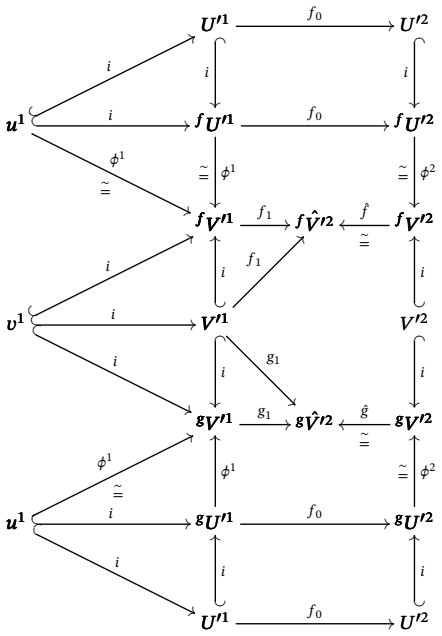
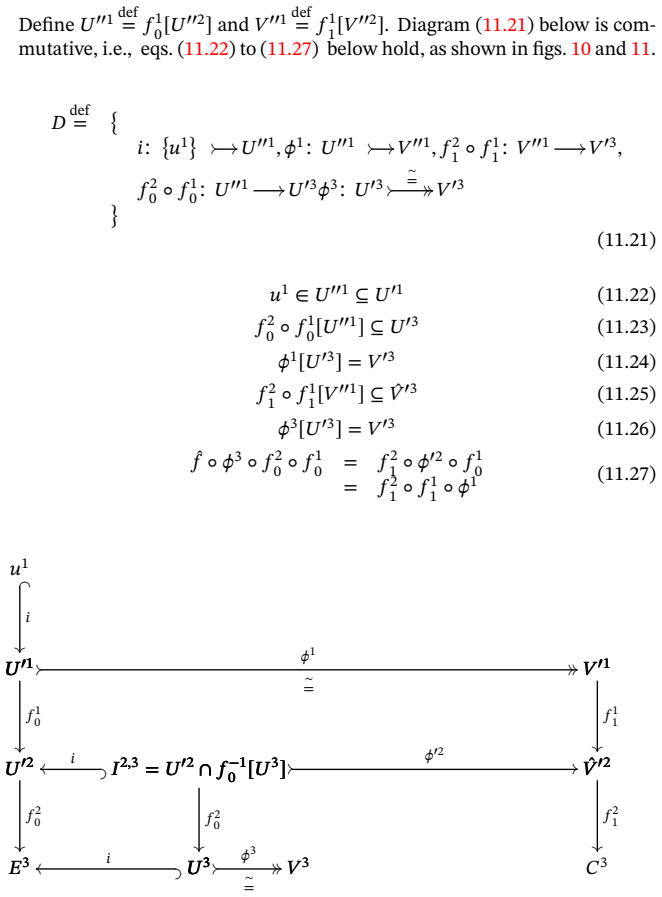
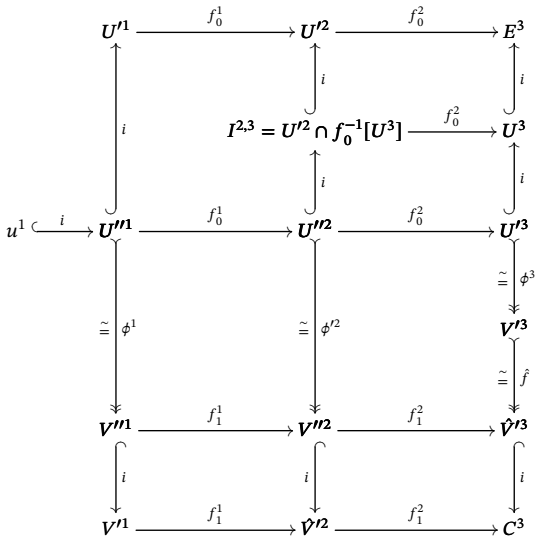
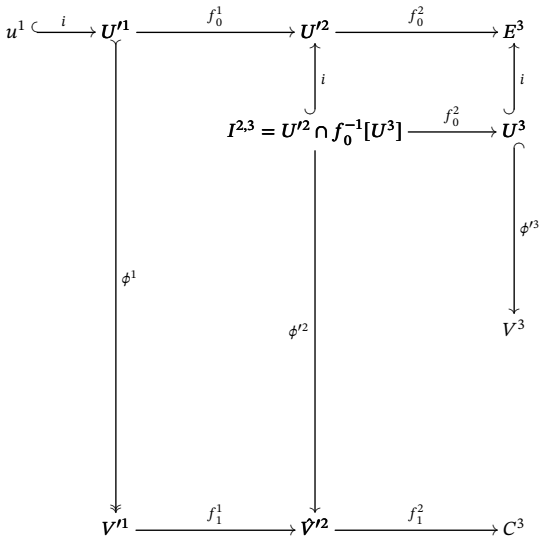
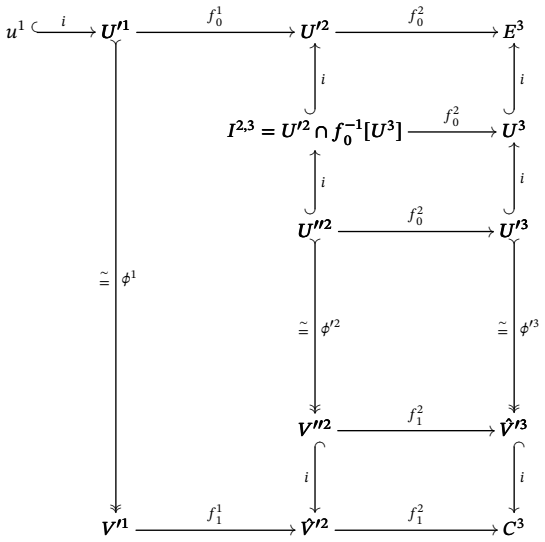
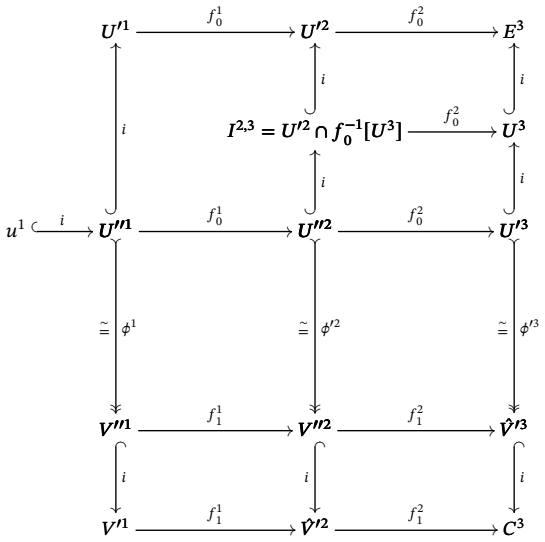
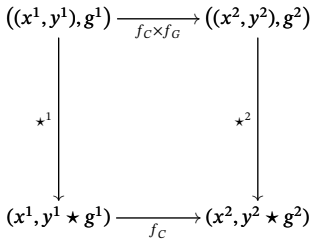
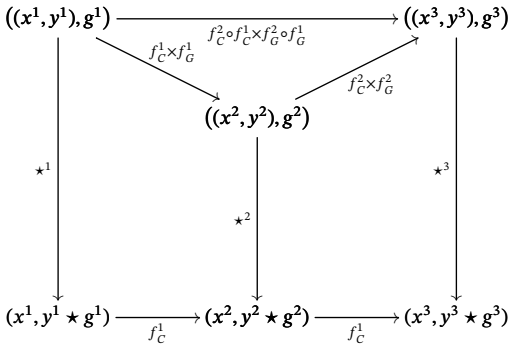
Manifolds and fiber bundles are both defined in terms of equivalence classes of atlases or in terms of maximal atlases, with the atlases treated as mere adjuncts. This paper presents a unified view of atlases for manifolds and fiber bundles as mathematical entities in their own right by defining some convenient notation, defining categories of atlases, and defining functors among them.
What carries the argument
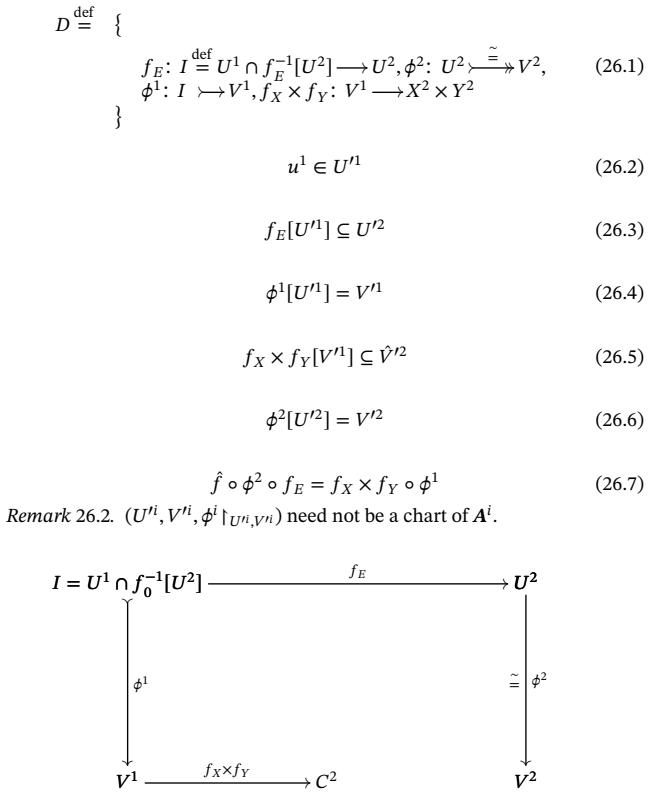
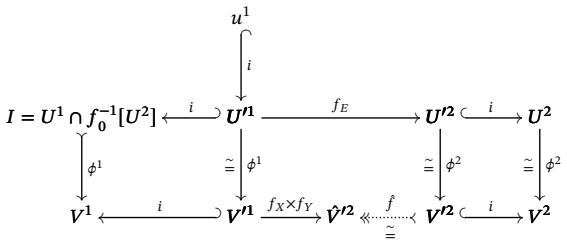
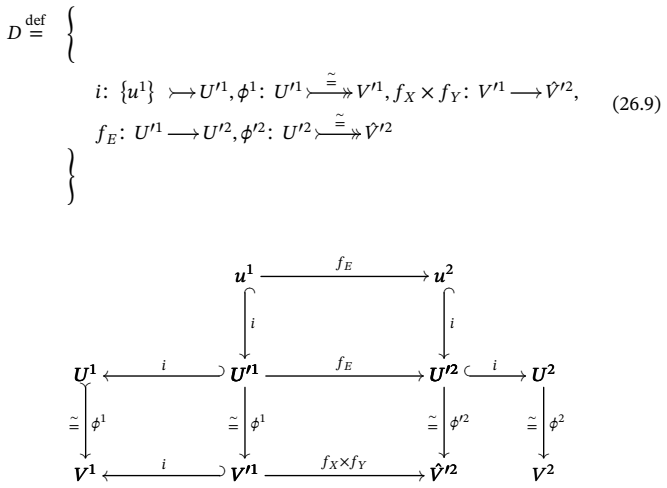
Categories of atlases whose objects are atlases (or their equivalence classes) and whose morphisms are the compatible transition maps, which carry the unification by supporting functors that relate manifold atlases to fiber-bundle atlases.
If this is right
- Morphisms between atlases can be studied directly without first passing through the manifolds or bundles they determine.
- Functors between the categories provide a systematic way to translate constructions from one setting to the other.
- The taxonomy classifies atlases by the properties of their morphisms rather than only by the spaces they cover.
- The same categorical language applies uniformly to both manifolds and fiber bundles, reducing the need for separate formalisms.
Where Pith is reading between the lines
- The categorical structure on atlases could make transition-function identities into statements about commuting diagrams rather than ad-hoc checks.
- Invariants of manifolds or bundles might be recoverable as categorical invariants of their atlas categories.
- The approach may extend naturally to other objects defined by local charts, such as orbifolds or stratified spaces.
Load-bearing premise
The parallels between manifolds and fiber bundles are strong enough that a single categorical treatment of their atlases will be more useful than the existing separate treatments.
What would settle it
An explicit pair of atlases, one manifold and one fiber bundle, for which the proposed category morphisms or functors fail to reproduce the standard smooth or bundle maps between the spaces they define.
Figures
read the original abstract
Manifolds and fiber bundles, while superficially different, have strong parallels; in particular, they are both defined in terms of equivalence classes of atlases or in terms of maximal atlases, with the atlases treated as mere adjuncts. This paper presents a unified view of atlases for manifolds and fiber bundles as mathematical entities in their own right. It defines some convenient notation, defines categories of atlases and defines functors among them. The paper "Local Coordinate Spaces: a proposed unification of manifolds with fiber bundles, and associated machinery" (Arxiv:1801.05775) introduced some of the ideas presented here, but many of the details are not needed there. This paper fleshes out the concepts in more detail than would be relevant there.
Editorial analysis
A structured set of objections, weighed in public.
Referee Report
Summary. The manuscript proposes a unified categorical framework for atlases of manifolds and fiber bundles by defining them as mathematical entities in their own right rather than mere adjuncts. It introduces convenient notation, defines categories of atlases (for both manifolds and fiber bundles), and constructs functors among these categories, fleshing out ideas from the author's prior preprint arXiv:1801.05775.
Significance. If the constructions hold, the taxonomy supplies an explicit categorical language for comparing atlases and their morphisms across geometric structures, which could support unified statements about manifolds and bundles. The paper ships explicit definitions and category-theoretic constructions rather than derived theorems; this is a strength for reproducibility of the framework itself.
minor comments (2)
- The introduction could more explicitly delineate which definitions and functors are new relative to arXiv:1801.05775 versus those carried over, to clarify the incremental contribution.
- Notation for the categories and functors should be introduced with a small concrete example (e.g., the atlas category for R^n) to aid readability for readers outside the immediate subfield.
Simulated Author's Rebuttal
We thank the referee for their positive assessment of the manuscript, the summary of its contributions, and the recommendation for minor revision. No specific major comments appear in the report.
Circularity Check
No significant circularity
full rationale
The paper's central contribution consists of definitions for categories of atlases and functors among them, building on a prior preprint by the same author. No derivation chain, predictions, or first-principles results are claimed that could reduce to inputs by construction. The work is explicitly taxonomic and definitional; the self-citation introduces background ideas but does not serve as a load-bearing justification for any theorem or uniqueness claim. No self-definitional, fitted-input, or ansatz-smuggling patterns appear.
Axiom & Free-Parameter Ledger
axioms (2)
- standard math Standard axioms of category theory (objects, morphisms, composition, identities) apply to the newly defined categories of atlases.
- domain assumption Manifolds and fiber bundles can be presented via equivalence classes of atlases or via maximal atlases.
invented entities (1)
-
Categories of atlases (for manifolds and for fiber bundles)
no independent evidence
Reference graph
Works this paper leans on
-
[1]
[Adámek,Herrlich,Strecker,1990] Jiří Adámek, Horst Herrlich, George E. Strecker. Abstract and Concrete Categories The Joy of Cats, John Wiley and Sons,Inc.,1990. [Kelley,1955] John L. Kelley,General Topology, D. Van Nostrand Company (/f_irst edition),1955. [Kobayashi,1996] Shoshichi Kobayashi, Katsumi Nomizu,Foundations of Differ- ential Geometry, Volume I...
work page 1990
-
[2]
[MacLane,1998] Saunders Mac Lane, Categories for the Working Mathemation, 2ndedition,ISBN0-387-98403-8,Springer-Verlag,1998. [Metz,2018] Shmuel (Seymour J.) Metz, Local Coordinate Spaces: a pro- posed uni/f_ication of manifolds with /f_iber bundles, and associated machinery, Arxiv:1801.05775 ,2018 [Steenrod,1999] Norman Steenrod, The Topology Of Fibre Bun...
work page internal anchor Pith review Pith/arXiv arXiv 1998
discussion (0)
Sign in with ORCID, Apple, or X to comment. Anyone can read and Pith papers without signing in.