Techno-economic analyses for vertical use cases in the 5G domain
Pith reviewed 2026-05-25 17:46 UTC · model grok-4.3
The pith
Techno-economic analyses reveal cost trade-offs for 5G deployments across four vertical use cases.
A machine-rendered reading of the paper's core claim, the machinery that carries it, and where it could break.
Core claim
The paper establishes that initial results for long range connectivity and emergency support networks provide the cost trade-offs in different deployment options and cost sensitivity to some of the parameters, within a network deployment framework covering common centralization strategies and the main cost factors for the four verticals chosen to reflect environments from megacities to underserved areas.
What carries the argument
The network deployment framework, which incorporates common centralization strategies and the main cost factors for the four vertical use cases.
If this is right
- Cost trade-offs exist between different deployment options for long range connectivity and emergency support.
- Costs show sensitivity to certain parameters in these networks.
- The framework applies to verticals spanning dense urban to remote areas.
- Analyses support decision-making for 5G-NR deployments in automotive, smart city, long range, and emergency scenarios.
Where Pith is reading between the lines
- Extending the analysis to automotive and smart city verticals would complete the picture for all four.
- The cost models could be tested against real deployment data to validate assumptions.
- These trade-offs might inform prioritization of centralization strategies in future 5G planning.
- Similar techno-economic approaches could apply to other emerging wireless technologies beyond 5G-NR.
Load-bearing premise
The main cost factors and centralization strategies chosen for the four verticals are representative enough that the reported trade-offs will hold under real deployment conditions.
What would settle it
A detailed cost audit or simulation of an actual long-range connectivity 5G deployment that shows cost differences outside the ranges predicted by the sensitivity analysis.
Figures
read the original abstract
This paper provides techno-economic analyses on the network deployments to cover 4 key verticals, under 5G-NR. These verticals, namely Automotive, Smart city, Long range connectivity and Disaster and emergency support, were chosen to reflect the ONE5G project objective of investigating environments from densely populated cities (''Megacity'') to large underserved areas. The work presented covers the network deployment framework including common centralization strategies and the main cost factors. Initial results presented for long range connectivity and emergency support networks provide the cost trade-offs in different deployment options and cost sensitivity to some of the parameters.
Editorial analysis
A structured set of objections, weighed in public.
Referee Report
Summary. The manuscript presents techno-economic analyses for 5G-NR network deployments across four verticals (Automotive, Smart city, Long range connectivity, and Disaster and emergency support) chosen to span dense urban to underserved environments under the ONE5G project. It outlines a deployment framework with common centralization strategies and main cost factors, then reports initial cost trade-offs across deployment options and parameter sensitivities specifically for the long-range connectivity and emergency support cases.
Significance. If the underlying models prove robust and the assumptions hold, the work could supply practical guidance on cost-effective 5G vertical deployments by quantifying trade-offs between options and highlighting sensitivities, directly supporting engineering decisions in the ONE5G context.
major comments (2)
- [Abstract and initial results section] Abstract and the section presenting initial results for long range connectivity and emergency support: the abstract states that results exist but supplies neither the cost model equations, the data sources, nor any error bars; the central claim therefore cannot be verified from available text.
- [Deployment framework section] Deployment framework section: the main cost factors and centralization strategies chosen for the four verticals are presented without external benchmarks or sensitivity to alternative selections, so it is unclear whether the reported trade-offs will hold under real deployment conditions.
Simulated Author's Rebuttal
We thank the referee for the detailed review and constructive comments on our manuscript. We address each major comment below and indicate the revisions we will make.
read point-by-point responses
-
Referee: [Abstract and initial results section] Abstract and the section presenting initial results for long range connectivity and emergency support: the abstract states that results exist but supplies neither the cost model equations, the data sources, nor any error bars; the central claim therefore cannot be verified from available text.
Authors: We agree that the abstract and initial results section would benefit from additional detail to support verification. The manuscript focuses on high-level trade-offs and sensitivities derived from the ONE5G scenarios; to address this point we will expand the relevant sections in the revision to include the key cost model equations, explicit data sources, and error bars or uncertainty ranges for the reported results. revision: yes
-
Referee: [Deployment framework section] Deployment framework section: the main cost factors and centralization strategies chosen for the four verticals are presented without external benchmarks or sensitivity to alternative selections, so it is unclear whether the reported trade-offs will hold under real deployment conditions.
Authors: The framework draws directly from the ONE5G project requirements and standard 5G centralization approaches. We acknowledge that adding external benchmarks and sensitivity to alternatives would strengthen the presentation. In the revised manuscript we will incorporate references to relevant external benchmarks and extend the sensitivity analysis to alternative centralization strategies and cost-factor selections. revision: yes
Circularity Check
No significant circularity identified
full rationale
The paper is an engineering modeling exercise that selects cost factors, centralization strategies, and deployment options for four 5G verticals, then reports trade-offs and sensitivity results for two of them. No equations, fitted parameters renamed as predictions, or load-bearing self-citations appear in the provided text; the analysis is framed as project-tied sensitivity work rather than a derivation chain. The central claims rest on explicit modeling choices and parameter sweeps that remain externally falsifiable, satisfying the self-contained criterion.
Axiom & Free-Parameter Ledger
Reference graph
Works this paper leans on
-
[1]
For the traffic model, devices were considered to emit 32 bytes messages every 2 hours
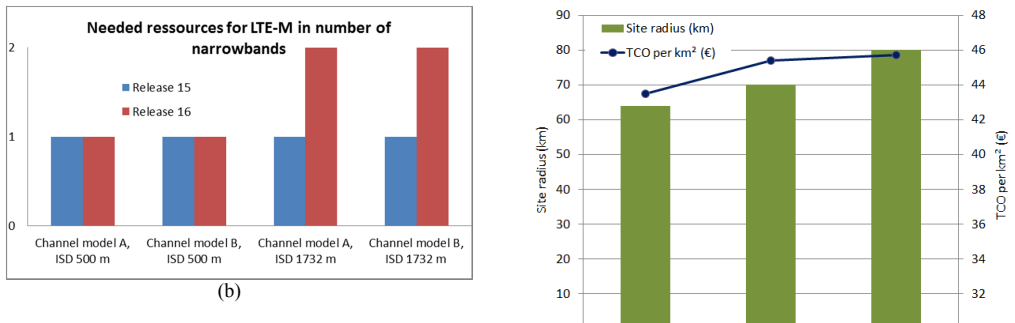
Ericsson carried out non-full buffer system simulations considering two different inter-site distances (ISDs) and two different channel models. For the traffic model, devices were considered to emit 32 bytes messages every 2 hours. For NB-IoT (LTE-M respectively) the results have shown that 1 to 15 PRBs (1 to 3 narrowbands respectively) would be necessary...
work page 2020
-
[2]
ONE5G project website, https://one5g.eu/
-
[3]
Scenarios, KPIs, use cases and baseline system evaluation
ONE5G deliverable, D2.1 - “Scenarios, KPIs, use cases and baseline system evaluation”, Nov. 2018
work page 2018
-
[4]
3GPP TR 21.915, Release description, Release 15, available at https://www.3gpp.org/DynaReport/21-series.htm
-
[5]
Use case description, spectrum considerations and feasibility analysis
mmMAGIC, Deliverable 1.4, “Use case description, spectrum considerations and feasibility analysis”, June 2017
work page 2017
-
[6]
Study on New Radio Access Technology; Radio Access Architecture and Interfaces (Release 14)
3GPP Technical Report TR38.801, “Study on New Radio Access Technology; Radio Access Architecture and Interfaces (Release 14)”, available at: https://www.3gpp.org/ftp/Specs/archive/38_series/38.801/
-
[7]
Mobile IoT in the 5G Future – NB-IoT and LTE-M in the context of 5G
GSMA publication, “Mobile IoT in the 5G Future – NB-IoT and LTE-M in the context of 5G”, April 2018
work page 2018
-
[8]
IMT-2020 self evaluation: mMTC non-full buffer connection density for LTE-MTC and NB-IoT
3GPP R1-1809780, “IMT-2020 self evaluation: mMTC non-full buffer connection density for LTE-MTC and NB-IoT”, source Ericsson, RAN1 meeting #94
work page 2020
discussion (0)
Sign in with ORCID, Apple, or X to comment. Anyone can read and Pith papers without signing in.