REVIEW 3 major objections 2 minor 1 cited by
Unprecedent fast winking of solar flares triggered by bursty magnetic reconnection
T0 review · 3 major / 2 minor · reviewed 2026-06-29 · grok-4.3
Pith's one-line read High-cadence UV observations of 31 solar flares show flare ribbon kernels that wink on and off in 2-3 seconds and slip at up to 1800 km/s, indicating plasmoid-driven 3D bursty reconnection.
desk verdict New high-cadence kernel measurements are the solid part; the direct link to plasmoid-driven 3D reconnection is an interpretation that skips the needed checks against waves or LOS effects. read the letter →
The pith
A machine-rendered reading of the paper's core claim, the machinery that carries it, and where it could break.
The reading
What carries the argument
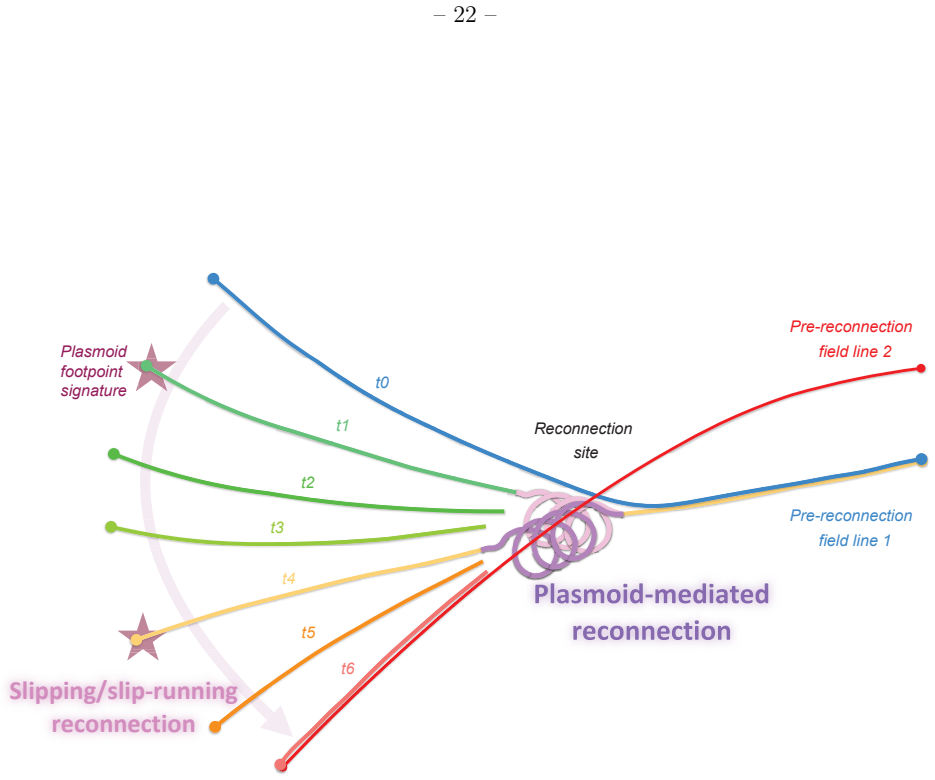
Plasmoid formation inside a three-dimensional reconnecting coronal current sheet, which repeatedly modulates energy deposition and drives the observed kernel motions and brightness changes.
What would settle it
High-resolution coronal imaging that shows no plasmoids or no 3D reconnection geometry during flares that nevertheless exhibit the same 6-24 second kernel winking and slipping.
Extended reading notes
Core claim
The central claim is that the observed quasi-periodic pulsations with periods of 6-24 seconds, the unprecedently fast winking of individual kernels on 2-3 second timescales, and the rapid slipping motions are produced by the coupled effects of plasmoid formation and three-dimensional magnetic reconnection inside the overlying coronal current sheet, thereby furnishing strong observational evidence for 3D bursty reconnection.
Load-bearing premise
The quasi-periodic winking and slipping cannot be produced by wave propagation, steady reconnection with periodic particle injection, or simple line-of-sight superposition of unrelated sources.
Editorial extensions
If this is right
- Energy is deposited only inside small localized patches of the ribbon that persist for just 2-3 seconds.
- Individual kernels move along the ribbon at speeds from 20 km/s to 1800 km/s.
- The 6-24 second periods reflect the characteristic timescale of plasmoid formation and ejection.
- The bursty nature of the kernels is a direct consequence of three-dimensional reconnection geometry.
- Ribbon fine structure therefore serves as a visible tracer of coronal current-sheet dynamics.
Reading between the lines
- Similar short-timescale kernel winking may appear in other reconnection-driven events such as coronal mass ejections or magnetospheric substorms if observed at comparable cadence.
- Numerical models of solar flares will need to resolve three-dimensional plasmoid dynamics to reproduce the observed 2-3 second heating episodes.
- Future instruments with sub-second cadence could test whether even shorter winking periods exist and whether they scale with the size of the reconnecting current sheet.
Signed reviews
Editorial analysis
A structured set of objections, weighed in public.
Referee Report
Summary. The manuscript reports the first statistical study of 31 solar flares observed with IRIS (cadence ≤2.5 s), identifying quasi-periodic pulsations in ribbon kernels with periods of 6-24 s, spatial scales of 480-1200 km, heating times as short as 2-3 s, and slipping motions at 20-1800 km s^{-1}. These features are interpreted as providing strong observational evidence for plasmoid formation coupled with 3D bursty magnetic reconnection in the overlying coronal current sheet.
Significance. If the causal interpretation holds, the work would supply useful observational constraints on the fine-scale, bursty dynamics of flare reconnection. The sample of 31 events and the reported timescales are strengths, but the absence of quantitative tests against alternatives limits the immediate significance.
major comments (3)
- [Abstract] Abstract (final paragraph): The assertions that the observations 'strongly imply a joint picture' and 'provide strong observational evidences of 3D bursty reconnection' are not secured by the data, because no quantitative forward modeling, period-matching to simulations, or statistical test is presented to exclude alternative explanations such as wave propagation, periodic particle injection from a steady site, or line-of-sight superposition effects.
- [Results] Results (31-event sample): No uncertainties or error bars are reported on the measured periods (6-24 s), kernel sizes (480-1200 km), heating times (2-3 s), or slipping speeds (20-1800 km s^{-1}), and the text provides no description of how selection effects or projection effects were excluded; these omissions are load-bearing for the statistical claims.
- [Discussion] Discussion: The shortest heating time of 2-3 s is used to argue for localized energy deposition due to plasmoid-mediated reconnection, yet no comparison is made to expected timescales under competing models, leaving the uniqueness of the interpretation untested.
minor comments (2)
- [Title] Title contains a spelling error: 'Unprecedent' should read 'Unprecedented'.
- [Abstract] Abstract: The phrase 'unprecedent fast ``winking" process' contains a spelling error and awkward construction.
Simulated Author's Rebuttal
We thank the referee for the constructive report. We address each major comment below and indicate where revisions will be made to the manuscript.
read point-by-point responses
-
Referee: [Abstract] Abstract (final paragraph): The assertions that the observations 'strongly imply a joint picture' and 'provide strong observational evidences of 3D bursty reconnection' are not secured by the data, because no quantitative forward modeling, period-matching to simulations, or statistical test is presented to exclude alternative explanations such as wave propagation, periodic particle injection from a steady site, or line-of-sight superposition effects.
Authors: We agree the original wording was too assertive. The paper is an observational study whose strength lies in the first statistical sample of 31 events showing consistent short periods, small spatial scales, brief heating times, and fast slipping. These match signatures reported in 3D reconnection simulations, but we performed no new forward modeling or formal hypothesis tests. In revision we will replace 'strongly imply' and 'strong observational evidences' with 'suggest' and 'provide observational support for', while retaining the description of the measured properties. We view this as an honest reflection of the work's scope. revision: partial
-
Referee: [Results] Results (31-event sample): No uncertainties or error bars are reported on the measured periods (6-24 s), kernel sizes (480-1200 km), heating times (2-3 s), or slipping speeds (20-1800 km s^{-1}), and the text provides no description of how selection effects or projection effects were excluded; these omissions are load-bearing for the statistical claims.
Authors: This point is correct. The submitted text reports ranges without accompanying uncertainties or a methods subsection on biases. We will add (i) error bars derived from IRIS spatial resolution (~0.33 arcsec), temporal cadence, and kernel-fitting procedures, and (ii) a dedicated paragraph describing the event-selection criteria (clear kernel visibility in ≥3 frames, disk-center preference to reduce projection) together with checks against AIA context data. These additions will be placed in the Results section. revision: yes
-
Referee: [Discussion] Discussion: The shortest heating time of 2-3 s is used to argue for localized energy deposition due to plasmoid-mediated reconnection, yet no comparison is made to expected timescales under competing models, leaving the uniqueness of the interpretation untested.
Authors: We will expand the Discussion to include explicit timescale comparisons. Typical coronal wave periods at the observed spatial scales exceed 24 s, and steady reconnection lacks a natural mechanism for the observed quasi-periodic on/off behavior. The combination of winking plus rapid slipping is also difficult to reconcile with line-of-sight superposition alone. We will cite relevant simulation papers that report plasmoid formation on ~few-second timescales. While this does not constitute a full statistical exclusion of every alternative, it strengthens the case for the proposed interpretation. revision: partial
Circularity Check
No circularity: direct measurements independent of interpretive claim
full rationale
The paper reports measured quantities (periods 6-24 s, kernel scales 480-1200 km, heating times 2-3 s, slipping speeds 20-1800 km s^{-1}) from IRIS UV observations of 31 flares. These are presented as empirical results. The suggestion that they imply plasmoid-mediated 3D reconnection is an interpretive statement in the abstract, not a derivation that reduces those measurements to fitted parameters or self-citations by construction. No equations, ansatzes, or load-bearing self-citations appear in the provided text that would force the observations from the model. The work is self-contained as an observational report.
Assumptions & free parameters
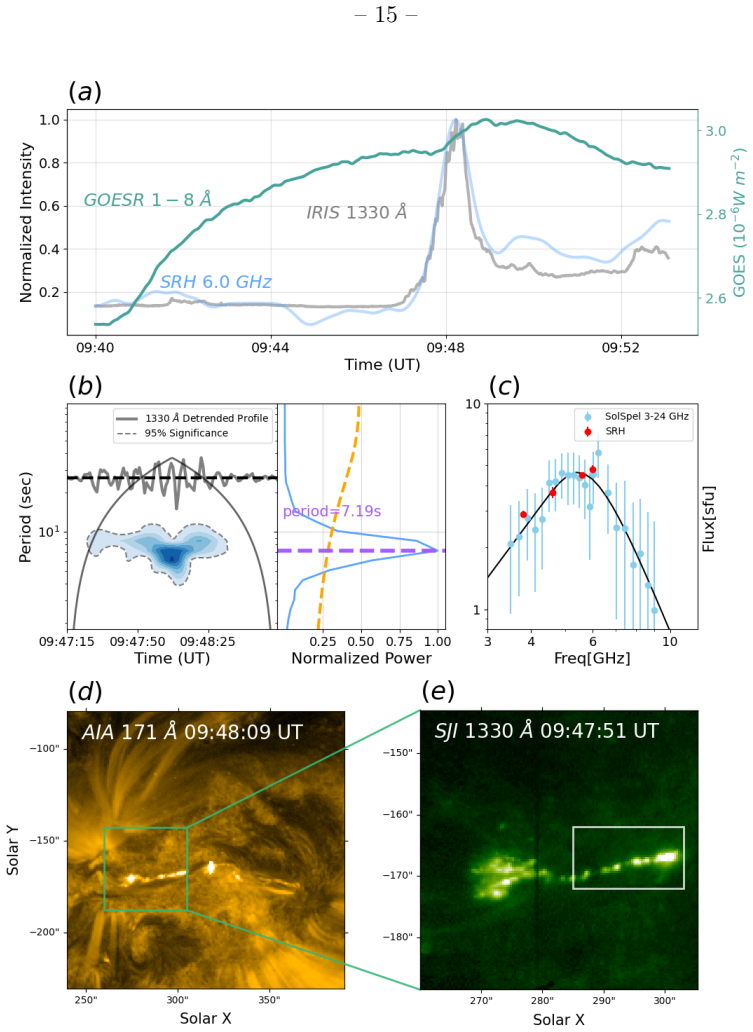
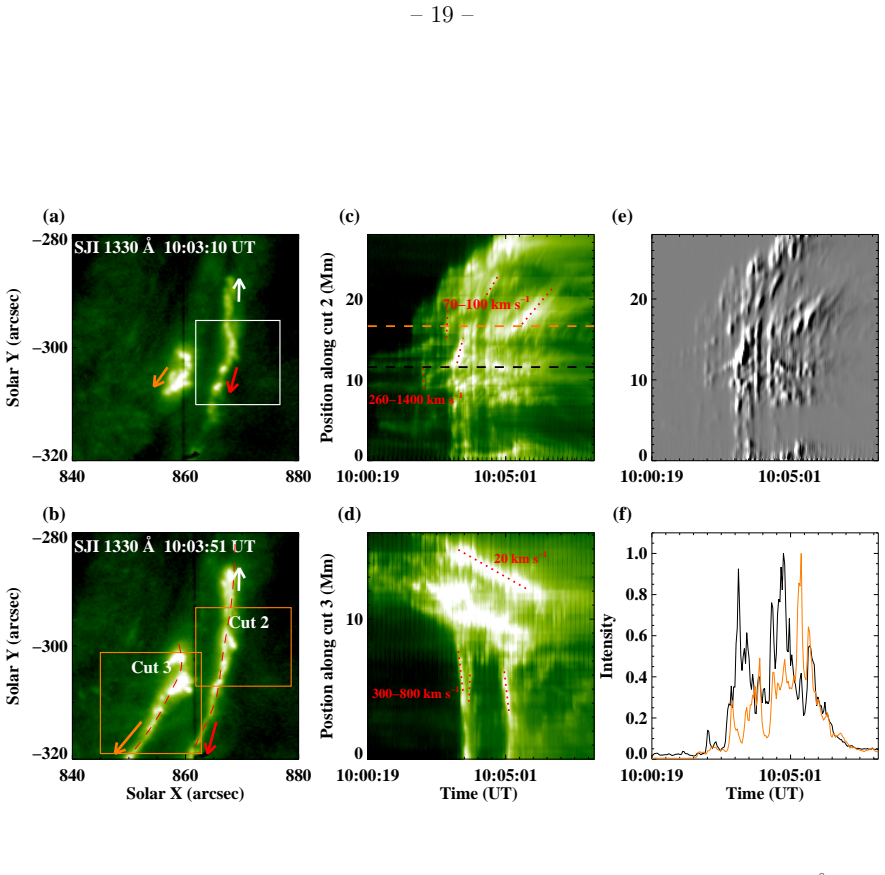
assumptions (1)
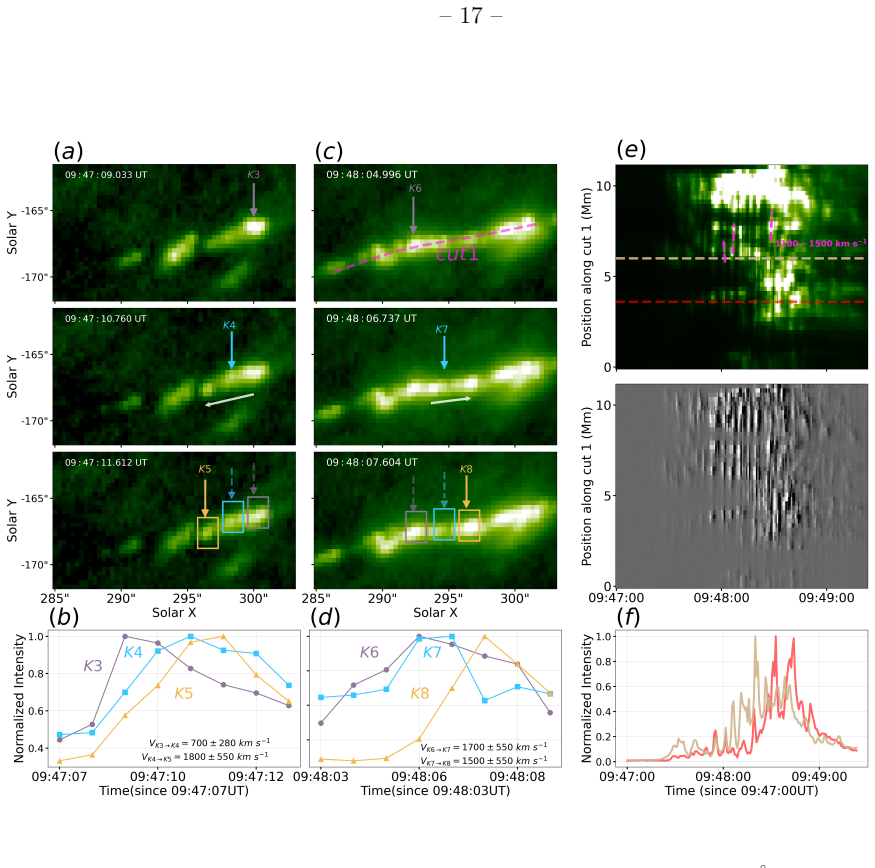
- domain assumption Standard assumptions of solar atmospheric physics (optically thin UV emission, reconnection in coronal current sheets) are invoked to link observed kernel behavior to reconnection.
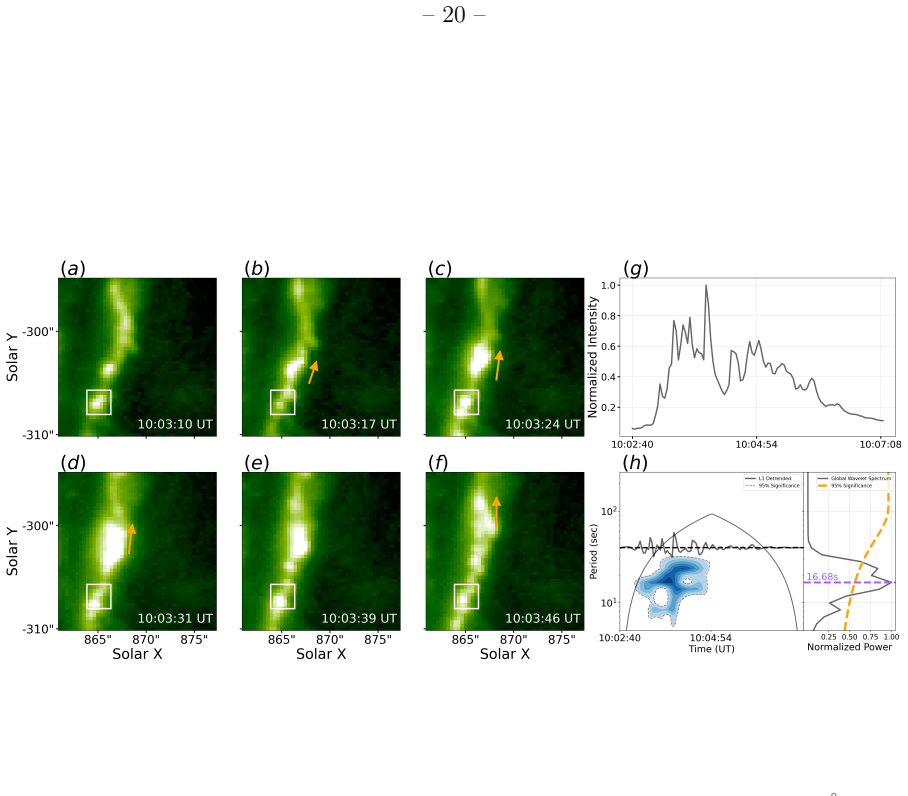
Cite this review
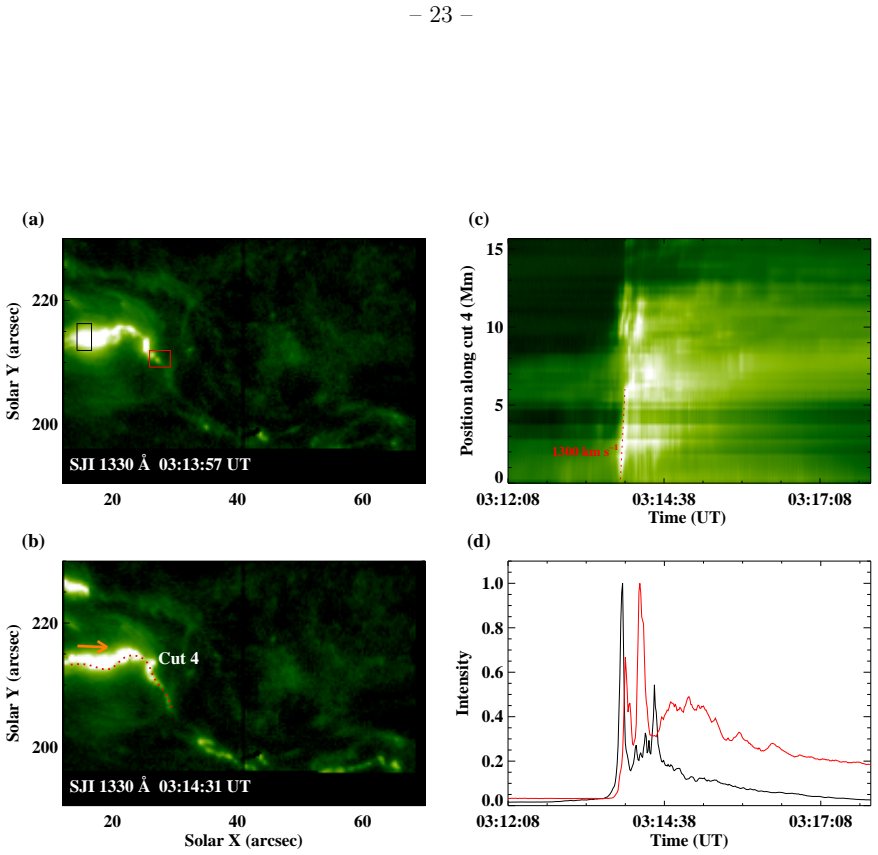
Pith. "Pith review of Unprecedent fast winking of solar flares triggered by bursty magnetic reconnection." pith.science (2026). https://pith.science/paper/GXL6CRKK
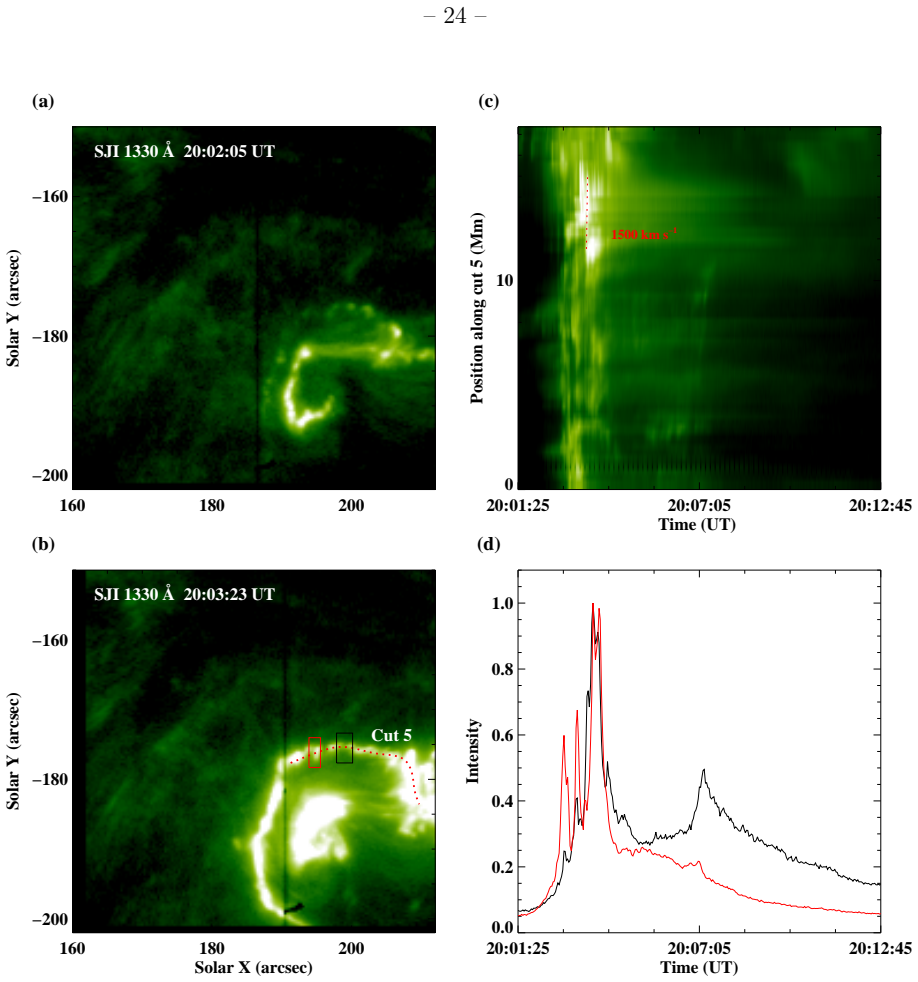
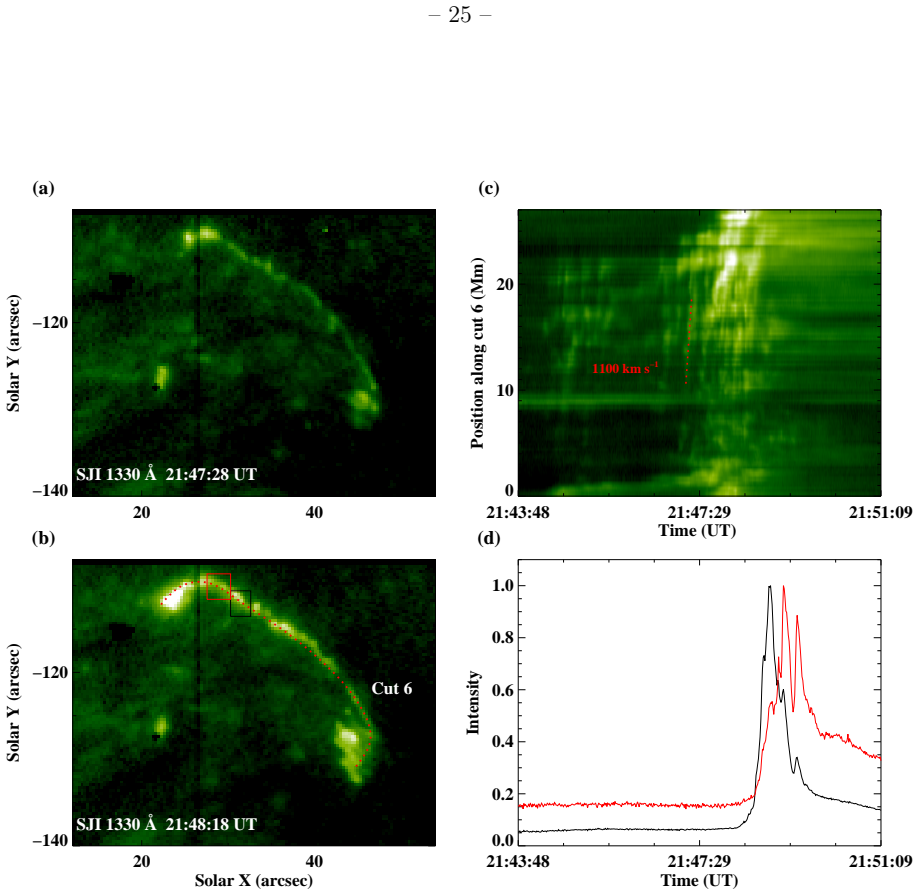
@misc{pith2026260627641,
  author       = {Pith},
  title        = {Pith review of: Unprecedent fast winking of solar flares triggered by bursty magnetic reconnection},
  year         = {2026},
  howpublished = {\url{https://pith.science/paper/GXL6CRKK}},
  note         = {Machine review of arXiv:2606.27641}
}
abstract
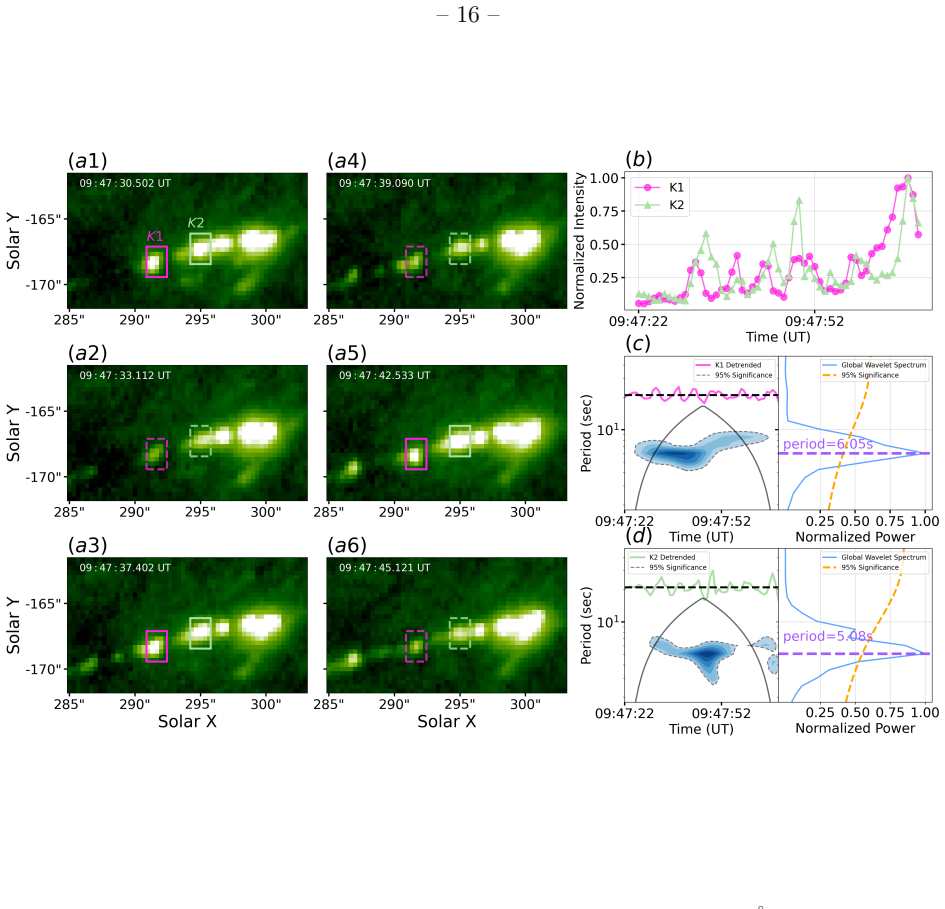
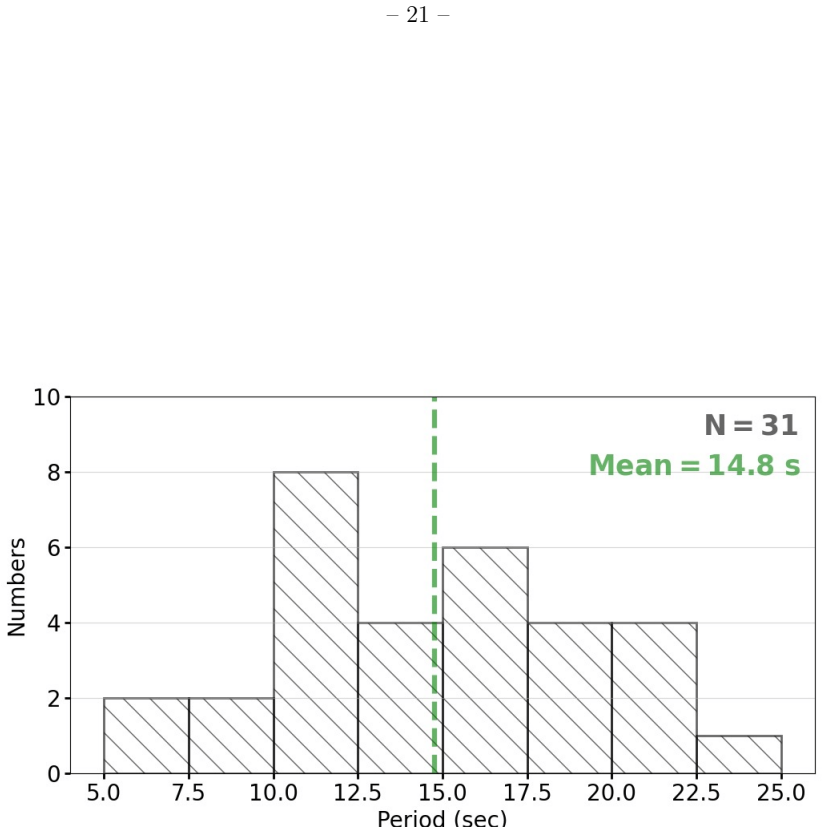
Flare ribbons form as a result of energy deposition associated with particles accelerated in low layers of the solar atmosphere. The fine-scale structures of flare ribbons, also called ribbon kernels, offer a potentially powerful diagnostic of the flare reconnection process, however to date the dynamic evolution of ribbon kernels has not been fully characterized in statistical studies. Here, we checked the state-of-the-art observations (cadence $\leq$ 2.5 seconds) of solar flares in the ultraviolet from space by Interface Region Imaging Spectrograph (IRIS) over the past 12 years. Our results showed the first statistical study of multiple spatially-resolved flare kernel quasi-periodic pulsation events for 31 flares, with the period of 6-24 seconds. The ribbon kernels have a spatial scale of 480$-$1200 km and some kernels exhibit unprecedent fast ``winking" process, i.e., quasi-periodic pulsation-like flashing of individual kernels. The shortest heating time reaches about 2$-$3 s, implying that the energy is deposited only in a small localized region within flare ribbons, persisting for only a few seconds. Meanwhile, some ribbon kernels were observed to slip along the ribbon at speeds of 20-1800 km s$^{-1}$. These observations strongly imply a joint picture for the dynamics and the bursty nature of ribbon kernels as being due to coupled effects of plasmoid formation and three-dimensional (3D) magnetic reconnection in the overlaying coronal current sheet. We suggest that the observed flare behaviors provide strong observational evidences of 3D bursty reconnection.
Figures
Figures from the paper (8 more)
Forward citations
Cited by 1 Pith paper
-
Electron Acceleration and Plasma Heating in an Impulsive Confined C-class Solar Flare
In the early impulsive phase of confined C2.8 flare SOL2023-03-19, nonthermal electron flux scales with emission measure and low-energy cutoff with temperature under nearly collisionless conditions, with QPPs likely s...
Reference graph
Works this paper leans on
-
[1]
2020, Solar-Terrestrial Physics, 6, 2,
Altyntsev, A., Lesovoi, S., Globa, M., et al. 2020, Solar-Terrestrial Physics, 6, 2,
2020
-
[2]
& Zimovets, I
Artemyev, A. & Zimovets, I. 2012, Sol. Phys., 277, 2,
2012
-
[3]
2026, Nature Astronomy, 10,
Ashfield, W., Polito, V., L¨ orinˇ c ´ ık, J., et al. 2026, Nature Astronomy, 10,
2026
-
[4]
2005, A&A, 444, 3,
Aulanier, G., Pariat, E., & D´ emoulin, P. 2005, A&A, 444, 3,
2005
-
[5]
2006, Sol
Aulanier, G., Pariat, E., D´ emoulin, P., et al. 2006, Sol. Phys., 238, 2,
2006
-
[6]
1983, Physics of Fluids, 26, 11,
Bhattacharjee, A., Brunel, F., & Tajima, T. 1983, Physics of Fluids, 26, 11,
1983
-
[7]
R., Longcope, D
Brannon, S. R., Longcope, D. W., & Qiu, J. 2015, ApJ, 810, 1,
2015
-
[8]
2019, ApJ, 878, 2,
Chen, X., Yan, Y., Tan, B., et al. 2019, ApJ, 878, 2,
2019
Show all 62 references
-
[9]
A., Yu, S., et al
Collier, H., Hayes, L. A., Yu, S., et al. 2024, A&A, 684, A215. – 12 – Collier, H., Krucker, S., Hayes, L. A., et al. 2026, arXiv:2603.12178. Corchado Albelo, M. F., Kazachenko, M. D., & Lynch, B. J. 2024, ApJ, 965, 1,
2024 arXiv
-
[10]
T., Antiochos, S
Dahlin, J. T., Antiochos, S. K., Wyper, P. F., et al. 2025, ApJ, 993, 1,
2025
-
[11]
C., Priest, E
Demoulin, P., Henoux, J. C., Priest, E. R., et al. 1996, A&A, 308,
1996
-
[12]
M., Lemen, J
De Pontieu, B., Title, A. M., Lemen, J. R., et al. 2014, Sol. Phys., 289, 7,
2014
-
[13]
2014, ApJ, 784, 2,
Dud ´ ık, J., Janvier, M., Aulanier, G., et al. 2014, ApJ, 784, 2,
2014
-
[14]
2025, Sol
Dud ´ ık, J., Aulanier, G., L¨ orinˇ c ´ ık, J., et al. 2025, Sol. Phys., 300, 10,
2025
-
[15]
J., Matthews, S
French, R. J., Matthews, S. A., Jonathan Rae, I., et al. 2021, ApJ, 922, 2,
2021
-
[16]
2023, Sol
Gan, W., Zhu, C., Deng, Y., et al. 2023, Sol. Phys., 298, 5,
2023
-
[17]
A., Inglis, A
Hayes, L. A., Inglis, A. R., Christe, S., et al. 2020, ApJ, 895, 1,
2020
-
[18]
S., et al
Hou, Z., Tian, H., Madjarska, M. S., et al. 2024, A&A, 687, A190. Huang, J., Kontar, E. P., Nakariakov, V. M., et al. 2016, ApJ, 831, 2,
2024
-
[19]
2013, A&A, 555, A77
Janvier, M., Aulanier, G., Pariat, E., et al. 2013, A&A, 555, A77. Jel ´ ınek, P., Karlick´ y, M., Van Doorsselaere, T., et al. 2017, ApJ, 847, 2,
2013
-
[20]
2021, Frontiers in Physics, 9,
Jiang, C., Chen, J., Duan, A., et al. 2021, Frontiers in Physics, 9,
2021
-
[21]
Kliem, B., Karlick´ y, M., & Benz, A. O. 2000, A&A, 360,
2000
-
[22]
2022, Nature Communications, 13,
Kou, Y., Cheng, X., Wang, Y., et al. 2022, Nature Communications, 13,
2022
-
[23]
T., & Dahlin, J
Kumar, P., Karpen, J. T., & Dahlin, J. T. 2025, ApJ, 980, 2,
2025
-
[24]
S., Prasad, A., et al
Kumar, S., Nayak, S. S., Prasad, A., et al. 2021, Sol. Phys., 296, 1,
2021
-
[25]
R., Title, A
Lemen, J. R., Title, A. M., Akin, D. J., et al. 2012, Sol. Phys., 275, 1-2,
2012
-
[26]
Y., Nakariakov, V
Li, D., Kolotkov, D. Y., Nakariakov, V. M., et al. 2020, ApJ, 888, 2,
2020
-
[27]
2025, Journal of Geophysical Research (Space Physics), 130, 4, e2025JA033772
– 13 – Li, D., Yuan, D., Yan, J., et al. 2025, Journal of Geophysical Research (Space Physics), 130, 4, e2025JA033772. Li, T., Hou, Y., Yang, S., et al. 2018, ApJ, 869, 2,
2025
-
[28]
2021, Proceedings of the Royal Society of London Series A, 477, 2249, 20200949
Li, T., Priest, E., & Guo, R. 2021, Proceedings of the Royal Society of London Series A, 477, 2249, 20200949. Li, T. & Zhang, J. 2015, ApJ, 804, 1, L8. Lin, J. & Forbes, T. G. 2000, J. Geophys. Res., 105, A2, 2375 Litvinenko, Y. E. 1996, ApJ, 462,
2021
-
[29]
2019, ApJ, 881, 1,
L¨ orinˇ c ´ ık, J., Aulanier, G., Dud ´ ık, J., et al. 2019, ApJ, 881, 1,
2019
-
[30]
2025, Nature Astronomy, 9,
L¨ orinˇ c ´ ık, J., Dud ´ ık, J., Sainz Dalda, A., et al. 2025, Nature Astronomy, 9,
2025
-
[31]
2026, arXiv:2604.17330
L¨ orinˇ c ´ ık, J., Collier, H., Polito, V., et al. 2026, arXiv:2604.17330. Lu, L., Li, D., Ning, Z., et al. 2021, Sol. Phys., 296, 8,
2026 arXiv
-
[32]
2022, ApJ, 940, 2,
Luo, Y., Chen, B., Yu, S., et al. 2022, ApJ, 940, 2,
2022
-
[33]
McAteer, R. T. J., Young, C. A., Ireland, J., et al. 2007, ApJ, 662, 1,
2007
-
[34]
K., Pontin, D
Mondal, S., Srivastava, A. K., Pontin, D. I., et al. 2024, ApJ, 977, 2,
2024
-
[35]
K., Pontin, D
Mondal, S., Srivastava, A. K., Pontin, D. I., et al. 2025, ApJ, 989, 2,
2025
-
[36]
Nakariakov, V. M. & Melnikov, V. F. 2009, Space Sci. Rev., 149, 1-4,
2009
-
[37]
2015, ApJ, 799, 1,
Ni, L., Kliem, B., Lin, J., et al. 2015, ApJ, 799, 1,
2015
-
[38]
2022, Sol
Ning, Z., Wang, Y., Hong, Z., et al. 2022, Sol. Phys., 297, 1,
2022
-
[39]
& Longcope, D
Parker, J. & Longcope, D. 2017, ApJ, 847, 1,
2017
-
[40]
D., Thompson, B
Pesnell, W. D., Thompson, B. J., & Chamberlin, P. C. 2012, Sol. Phys., 275, 1-2,
2012
-
[41]
Pietrow, A. G. M., Druett, M. K., & Singh, V. 2024, A&A, 685, A137. Pontin, D. I. 2011, Advances in Space Research, 47, 9,
2024
-
[42]
Pontin, D. I. & Priest, E. R. 2022, Living Reviews in Solar Physics, 19, 1,
2022
-
[43]
Priest, E. R. 1985, Reports on Progress in Physics, 48, 7,
1985
-
[44]
2015, ApJ, 810, 2,
– 14 – Savcheva, A., Pariat, E., McKillop, S., et al. 2015, ApJ, 810, 2,
2015
-
[45]
Schindler, K., Hesse, M., & Birn, J. 1988, J. Geophys. Res., 93, A6,
1988
-
[46]
& Magara, T
Shibata, K. & Magara, T. 2011, Living Reviews in Solar Physics, 8, 1,
2011
-
[47]
Singh, V., Scullion, E., Botha, G. J. J., et al. 2025, arXiv:2507.01169. Sobotka, M., Dud ´ ık, J., Denker, C., et al. 2016, A&A, 596, A1. Su, Y., Zhang, Z., Chen, W., et al. 2024, Sol. Phys., 299, 10,
2025
-
[48]
1987, ApJ, 321,
Tajima, T., Sakai, J., Nakajima, H., et al. 1987, ApJ, 321,
1987
-
[49]
2025, A&A, 693, A8
Thoen Faber, J., Joshi, R., Rouppe van der Voort, L., et al. 2025, A&A, 693, A8. Tian, H., Young, P. R., Reeves, K. K., et al. 2016, ApJ, 823, 1, L16. Titov, V. S., Hornig, G., & D´ emoulin, P. 2002, Journal of Geophysical Research (Space Physics), 107, A8,
2025
-
[50]
2021, ApJ, 923, 2,
Wang, Y., Cheng, X., Ding, M., et al. 2021, ApJ, 923, 2,
2021
-
[51]
Wyper, P. F. & Pontin, D. I. 2021, ApJ, 920, 2,
2021
-
[52]
D., Cauzzi, G., et al
Yadav, R., Kazachenko, M. D., Cauzzi, G., et al. 2025, ApJ, 989, 2,
2025
-
[53]
2022, Nature Communications, 13,
Yan, X., Xue, Z., Jiang, C., et al. 2022, Nature Communications, 13,
2022
-
[54]
2015, ApJ, 800, 2,
Yang, L., Zhang, L., He, J., et al. 2015, ApJ, 800, 2,
2015
-
[55]
2020, ApJ, 897, 1,
Ye, J., Cai, Q., Shen, C., et al. 2020, ApJ, 897, 1,
2020
-
[56]
2019, ApJ, 886, 2, L25
Yuan, D., Feng, S., Li, D., et al. 2019, ApJ, 886, 2, L25. Zhang, Y., Li, T., Hou, Y., et al. 2025, ApJ, 982, 1, L9. Zhao, J., Gilchrist, S. A., Aulanier, G., et al. 2016, ApJ, 823, 1,
2019
-
[57]
V., McLaughlin, J
Zimovets, I. V., McLaughlin, J. A., Srivastava, A. K., et al. 2021, Space Sci. Rev., 217, 5,
2021
-
[58]
– 15 – Fig
This preprint was prepared with the AAS L ATEX macros v5.2. – 15 – Fig. 1.— Context observations of Event 1 on 2024 August
2024
-
[59]
K3” to “K5
(a) IRIS SJI 1330 ˚A images showing one episode of the apparent slipping motion from kernel “K3” to “K5”. The solid colored arrows mark the approximate location of the kernel along the direction of its motion (white arrow), while the dashed colored ones indicate its approximat...
2024
-
[60]
winking” and slipping processes of the western ribbon. The FOV is shown by the white square in Figure 5(a). Panels (a), (c) and (e) show the “bright
(a)-(f) IRIS SJI 1330 ˚A images simultaneously showing the “winking” and slipping processes of the western ribbon. The FOV is shown by the white square in Figure 5(a). Panels (a), (c) and (e) show the “bright” times at white squares. Orange arrows denote the apparent slipping ...
2025
-
[61]
Orange arrow denotes the slipping direction of ribbon kernels
(a)-(b) IRIS SJI 1330 ˚A images showing two flare ribbons. Orange arrow denotes the slipping direction of ribbon kernels. (c) Stack plot along cut 4 in panel (b) showing multiple-stripe pattern. (d) The integrated intensity profiles within black and red rectangles in panel (a). ...
2025
-
[62]
(c) Stack plot along cut 5 in panel (b) showing multiple-stripe pattern
(a)-(b) IRIS SJI 1330 ˚A images showing the circular flare ribbon. (c) Stack plot along cut 5 in panel (b) showing multiple-stripe pattern. (d) The integrated intensity profiles within the black and red rect- angles in panel (b). The period of the pulsations is about 19 s. An an...
2024
Reviewed June 29, 2026 · model on record in the stance chip above.
Discussion (0). Continue with ORCID to comment.