Notes from the Physics Teaching Lab: Rubidium Atomic Spectroscopy
Pith reviewed 2026-07-01 01:58 UTC · model grok-4.3
The pith
A commercial diode laser spectroscopy instrument enables detailed rubidium atomic experiments with measurement and analysis examples for teaching labs.
A machine-rendered reading of the paper's core claim, the machinery that carries it, and where it could break.
Core claim
The paper establishes that the commercial diode laser spectroscopy instrument supports a range of rubidium atomic spectroscopy experiments, with explicit examples of how to carry out the measurements and perform the associated data analysis.
What carries the argument
The commercial diode laser spectroscopy instrument that performs diode-laser-based rubidium spectroscopy.
If this is right
- Instructors obtain ready-to-use measurement examples for lab curricula.
- Students can follow explicit procedures for acquiring and analyzing atomic spectra.
- Teaching labs can implement the experiments without additional development.
- Data analysis methods demonstrated apply directly to student reports.
Where Pith is reading between the lines
- The same instrument and example format could support spectroscopy experiments on other alkali atoms.
- Collected student data from these labs might allow comparison of measurement precision across institutions.
Load-bearing premise
That the commercial instrument is available and already installed for use in university teaching labs.
What would settle it
A direct test showing that the described rubidium spectroscopy measurements and analysis steps cannot be reproduced with the instrument.
Figures
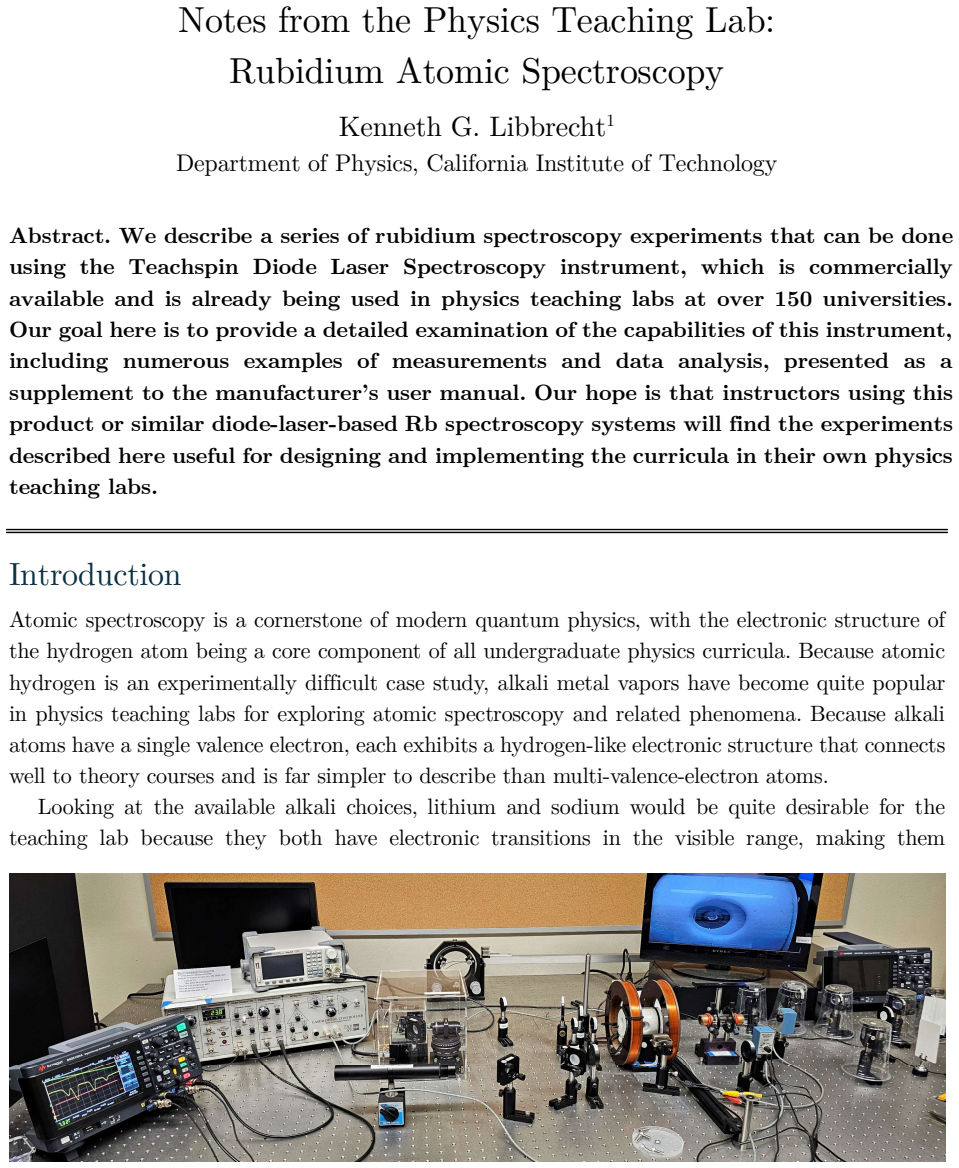
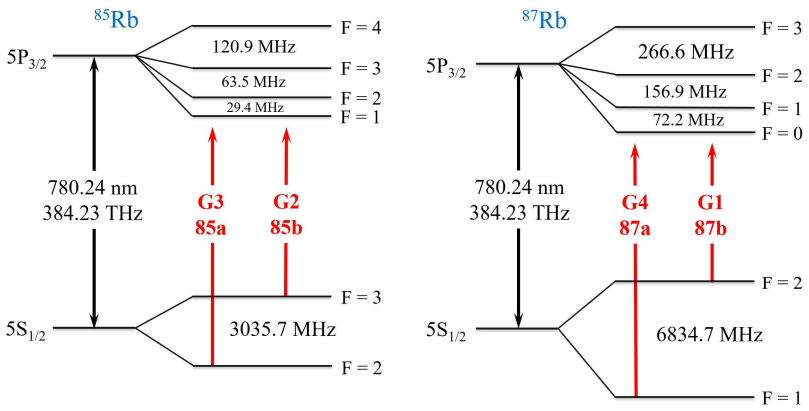
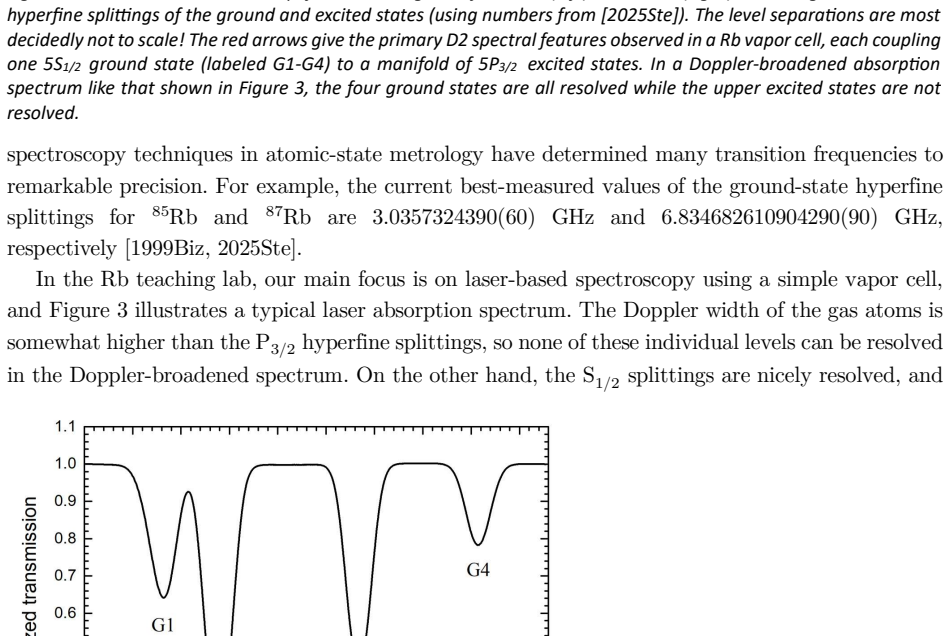
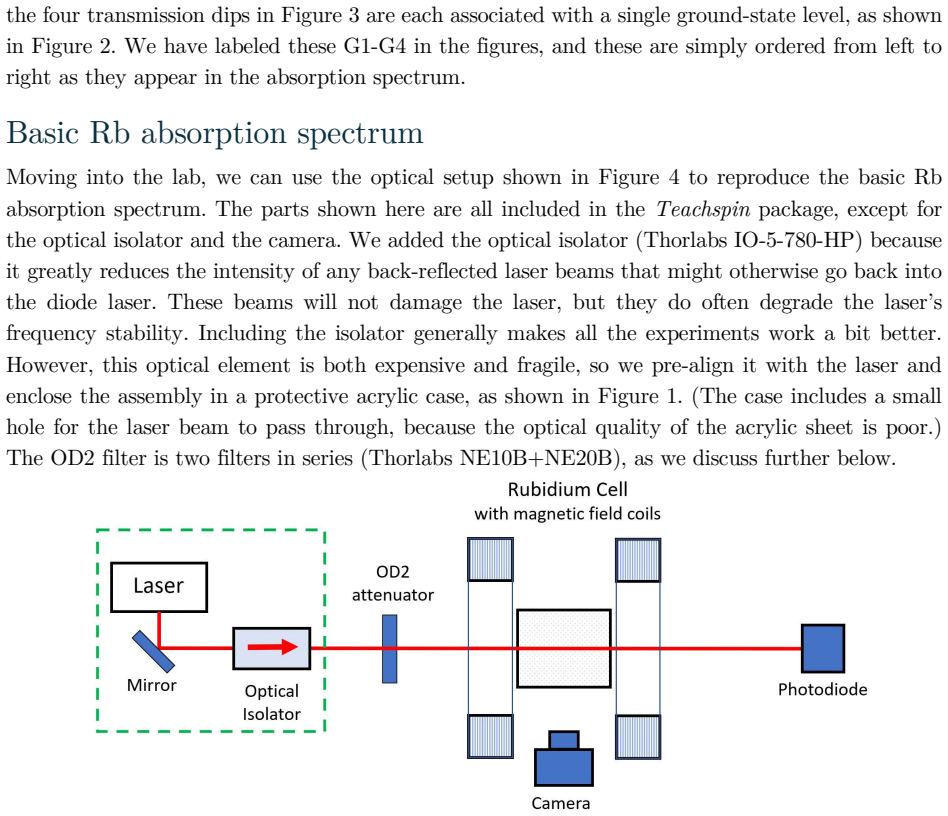








read the original abstract
We describe a series of rubidium spectroscopy experiments that can be done using the Teachspin Diode Laser Spectroscopy instrument, which is commercially available and is already being used in physics teaching labs at over 150 universities. Our goal here is to provide a detailed examination of the capabilities of this instrument, including numerous examples of measurements and data analysis, presented as a supplement to the Teachspin users manual. Our hope is that instructors using this product or similar diode-laser-based Rb spectroscopy systems will find the experiments described here useful for designing and implementing the curricula in their own physics teaching labs.
Editorial analysis
A structured set of objections, weighed in public.
Referee Report
Summary. The manuscript describes a series of rubidium atomic spectroscopy experiments performable with the Teachspin Diode Laser Spectroscopy instrument. It supplies detailed examples of measurements and data analysis procedures as a supplement to the commercial user's manual, with the goal of assisting instructors who use this or similar diode-laser Rb systems in designing physics teaching lab curricula.
Significance. If the described examples are accurate and complete, the work provides a practical pedagogical resource that could aid lab implementation at institutions already equipped with the instrument. The explicit focus on data analysis examples rather than new physical results is a modest strength for an educational note; no machine-checked proofs, parameter-free derivations, or falsifiable predictions are present.
minor comments (2)
- [Abstract] Abstract: the assertion that the instrument 'is already being used in physics teaching labs at over 150 universities' is presented without citation or supporting reference; adding a source would strengthen the claim of widespread availability.
- [Abstract] The manuscript states its intent to provide 'numerous examples of measurements and data analysis' but the abstract itself contains none; ensure the full text supplies concrete, reproducible procedures with sample data or analysis steps that instructors can directly follow.
Simulated Author's Rebuttal
We thank the referee for their review and positive recommendation for minor revision. The assessment correctly identifies the manuscript as a practical supplement to the Teachspin manual focused on data analysis examples for teaching labs.
Circularity Check
No derivations, predictions, or equations; purely descriptive educational supplement
full rationale
The paper is an educational note describing standard Rb spectroscopy measurements and data analysis on a commercial Teachspin instrument already installed in many labs. It advances no physical claims, derivations, quantitative predictions, or novel results. The central goal (detailed examples as a teaching aid) contains no load-bearing steps that reduce to self-definition, fitted inputs, or self-citation chains. No equations or predictions exist that could exhibit circularity by construction.
Axiom & Free-Parameter Ledger
Reference graph
Works this paper leans on
-
[1]
On a new action that light undergoes when passing through some metallic vapors in a magnetic field
[1897Daw] H. G. Dawson, On the numerical value of ∫ exp(𝑥ϵ)փ Ј 𝑑𝑥, Proc. London Math. Soc. s1- 29, 519–522 (1897). [1898Mac] D. Macaluso and O. M. Corbino, Sopra una nuova azione che la luce subisce attraversando alcuni vapori metallici in un campo magnetico (Translation: “On a new action that light undergoes when passing through some metallic vapors in a...
discussion (0)
Sign in with ORCID, Apple, or X to comment. Anyone can read and Pith papers without signing in.